


Despite his evil notoriety, Epstein was afraid of Nigerian scammers
By Ibrahym El-Caleel
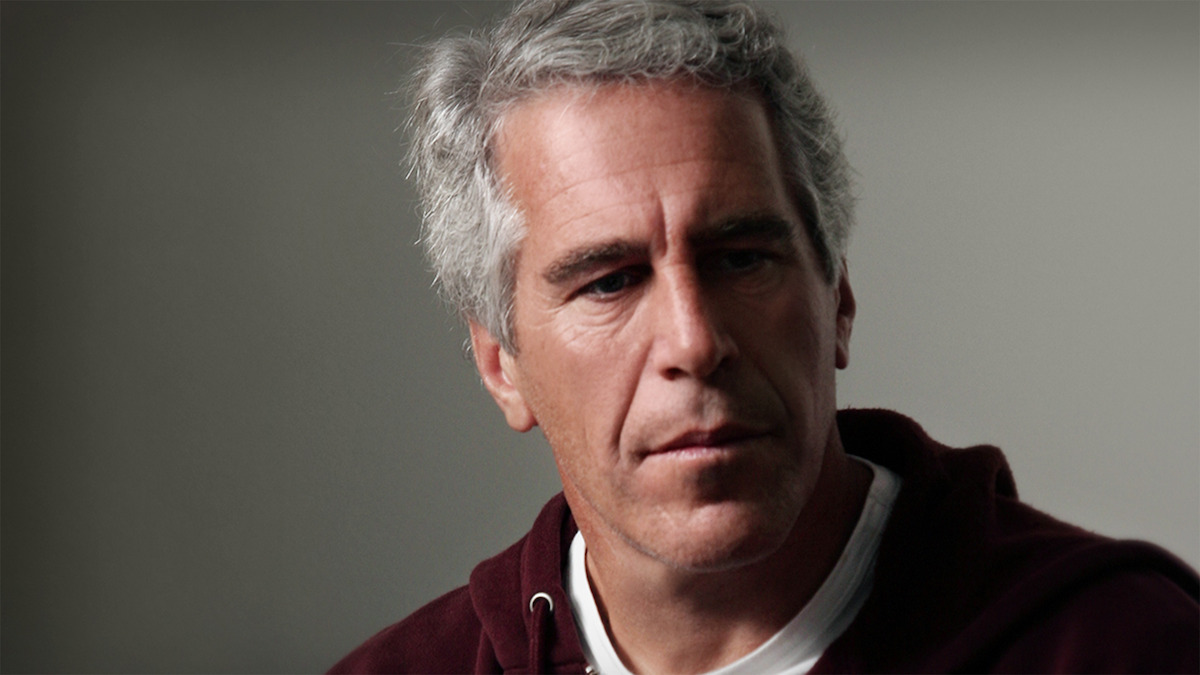
Jeffery Epstein, despite being a MOSSAD agent who successfully lured high profile individuals and world leaders into his web to obtain their dirty secrets, was afraid of Nigerians scamming him in oil deal.
Epstein is afraid of Nigerians. Hehe.
Ladies and gentlemen, I want to officially tell you that I am also afraid of Nigerians from now going forward.
But jokes aside, Nigerians are a special breed. If a Nigerian decides to settle for anything, he ensures that he masters it to the best of his or her ability.
In the wake of the US’s disregard for Nigeria’s sovereignty in December last year, I read a post on X made by a security analyst. The handle is @GallantDaletian, and he opined that yes, the US military might have the tech, air power, and naval dominance, but when it comes to guerrilla and asymmetric warfare, the Nigerian military is a force to be reckoned with!
He said, the US may have advanced technology, drones, and aircraft carriers, but Nigeria’s military has mastered the art of unconventional warfare, leveraging local knowledge and intelligence to outmaneuver adversaries.
It’s not about comparing strengths, but acknowledging different areas of expertise. Nigeria’s focus on regional security, counter terrorism, and peacekeeping has earned it respect, while the US excels in global reach and high tech warfare.
Clearly Jeffery Epstein, despite his notoriety, believes that the fear of Nigerians is the beginning of wisdom. Sharp guy.
Ukraine slams Infantino over comments on possible Russia ban lift
By Sabiu Abdullahi
Ukraine’s sports minister has criticised Fifa president Gianni Infantino over comments suggesting that world football’s governing body could reconsider the ban placed on Russia, describing his remarks as “irresponsible” and “infantile.”
Russian national teams and clubs were suspended by Fifa and Uefa in February 2022 following Russia’s invasion of Ukraine, a decision that has kept the country out of major tournaments, including the 2022 World Cup, Euro 2024 and the 2026 World Cup.
Despite the ongoing war, Infantino said the ban “has not achieved anything” and “has just created more frustration and hatred,” adding that “having girls and boys from Russia being able to play football games in other parts of Europe would help.”
Reacting in a post on social media, Ukraine’s sports minister, Matvii Bidnyi, said: “Gianni Infantino’s words sound irresponsible – not to say infantile,” adding that they “detach football from the reality in which children are being killed.”
Bidnyi stated that more than 650 Ukrainian athletes and coaches, including over 100 footballers, have been killed since the start of the war, and added: “War is a crime, not politics,” insisting that Russia’s flag and national symbols “have no place among people who respect values such as justice, integrity and fair play.”
Serhii Palkin, chief executive of Ukrainian club Shakhtar Donetsk, also condemned Infantino’s comments, saying they “represent a complete detachment from reality” and amount to “an attempt to pretend that war and aggression do not exist.”
He warned that football cannot ignore events outside the pitch, stating: “Football cannot exist outside reality and it has no right to turn a blind eye to evil,” while stressing that any move to reintegrate Russia would carry “responsibility for complicity in the silencing of war crimes.”
Although Russia has played matches against some non-Western nations outside the Fifa and Uefa framework, the ban remains in place, even as Ukraine continues to oppose any steps toward Russia’s return to international sport.
Saudi Arabia moves to issue passports for millions of camels
By Sabiu Abdullahi
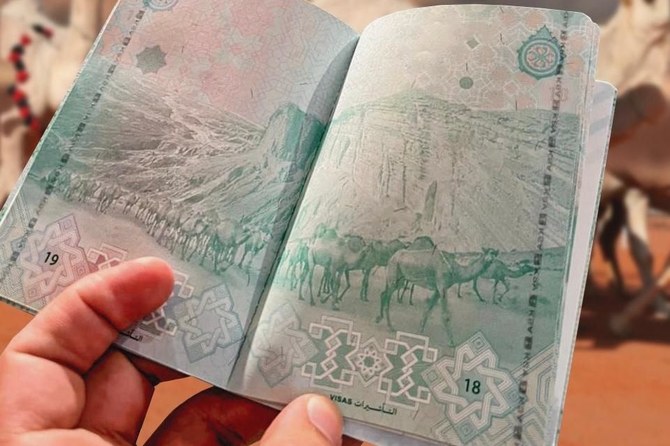
Saudi Arabia has announced plans to introduce official passports for millions of camels across the kingdom as part of efforts to improve oversight and management of its prized livestock.
The Ministry of Environment, Water and Agriculture said the move would help raise standards in the sector and create a dependable national record, noting that the initiative would increase “productivity and efficiency in the sector and build a reliable reference database for camels.”
A social media post released by the ministry on Tuesday showed the proposed document, which appears as a green passport bearing the Saudi coat of arms and a golden image of a camel.
According to state-owned broadcaster Al Ekhbariya, the passport will “contribute to organizing sales and trading operations by regulating trade and transportation, providing official documentation, protecting the rights of owners, and facilitating proof of ownership.”
Government estimates in 2024 placed the camel population at about 2.2 million, underscoring the importance of the animals, which have served as transport, symbols of status and key drivers of a lucrative breeding industry in the kingdom for centuries.
Saif al-Islam Gaddafi, son of former Libyan leader, killed in Zintan
By Hadiza Abdulkadir
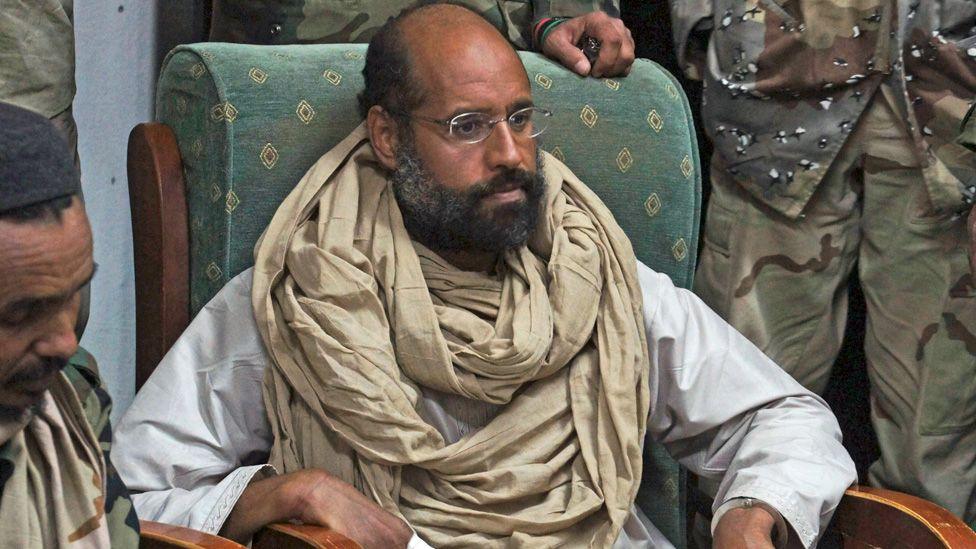
Saif al-Islam Gaddafi, the son of Libya’s former leader Muammar Gaddafi, has been killed in the western Libyan town of Zintan, according to local authorities and sources close to the family.
He was reportedly shot after armed men stormed his residence, disabling security cameras before opening fire. The circumstances surrounding the attack remain unclear, and no group has claimed responsibility so far.
Once seen as his father’s political heir, Saif al-Islam became a central and controversial figure following the 2011 uprising that ended the Gaddafi regime. He was captured that year, later sentenced to death in absentia for war crimes, and released in 2017 under an amnesty law.
In recent years, he had sought a return to politics, including an unsuccessful attempt to run in Libya’s postponed presidential election.
Libya’s Attorney General has announced an investigation into the killing. Analysts say his death could have political implications in a country still struggling with deep divisions and instability more than a decade after the revolution.

Saving the tax reform from the ‘Fake News’ industry
By Isah Kamisu Madachi
The furore over whether the tax laws should be implemented has passed. The nationwide discussions about the discrepancy between the gazetted version and the version passed by the National Assembly have also faded. January 1 has come and gone, and many changes, especially around digital transactions, are already beginning to manifest, as provided for under the new tax law. The consolidated tax laws under the tax reform regime are now in force, and as a citizen, I hope they are backed by strong accountability mechanisms and oversight to ensure that collected taxes are used for the right purposes.
However, I observed a major policy gap in the final moments of the law’s implementation, which, if left unaddressed, could not only undermine the law’s effectiveness but also cause greater harm to its objectives. If I were to estimate, I would say that less than 5% of Nigerians understand what the new tax law contains, how it works, and what it does not do. This knowledge gap has created a fertile ground for misinformation, disinformation, and fake news.
In the past few days, I have personally encountered many people who told me they had withdrawn all the money saved in their bank accounts and converted it to cash. They said they no longer trust cashless transactions. Some were told that every transaction, regardless of the amount, would incur a flat ₦50 fee.
Others were also told that keeping money in their accounts would result in monthly deductions, or that 5% of their savings would be deducted each month for tax. None of these claims could be traced to any provision of the law, yet they are widely shared with absolute confidence.
Another unfortunate experience was my encounter with a young and vibrant POS agent from whom I regularly withdraw cash. He told me he had shut down his business. According to what he was told, every ₦500,000 transaction would attract ₦15,000 in tax, every ₦5 million would attract ₦250,000, and any transaction above ₦1,000 would automatically be charged ₦50.
He was also told these deductions would be accumulated and collected at the end of the month, and that’s what frightened him most. He used to make transactions averaging ₦50 million per month. With this information, he now chose to abandon his livelihood. Whether these claims are true or false is not the most important when one considers the damage such misinformation is already causing.
There is also a growing narrative, particularly on social media, that every transaction must now be clearly explained in the narration section. People are being told they must specify whether the money is for savings, shopping, gifts, rewards, profit, or salary. A counter-narrative exists saying this is false. Sadly, the average Nigerian does not know which version to believe. In an environment where official clarity is weak, rumours travel faster than facts.
If I were to document all the misinformation circulating about the new tax law, it would take more than a newspaper opinion. New versions emerge almost every hour. The most alarming outcome of this misinformation is how people are altering their economic behaviour. Businesses are being abandoned. Trust in digital finance is being eroded. People are deserting the cashless system out of fear, believing their money is no longer safe in the banking system.
The only effort I am aware of to address this information gap is the reported engagement of social media influencers to enlighten the public. If this effort has begun, it is not enough. If it has not, then it is urgently needed. But beyond influencers, one must ask: what happened to local radio stations? Radio remains the primary source of information for millions of Nigerians, especially in rural areas. The law should be broken down and discussed in local languages on local radio.
There are also a proliferation of online television platforms operating across social media spaces. The tax reform committee should collaborate strategically with them to explain the law in simple, creative ways. Influencers alone cannot carry this burden. Public communication must be broader, more structured, and more deliberate.
The Federal Ministry of Information also plays a central role here. There is an urgent need for a simplified version of the tax law, as well as translations into local languages, and for their dissemination in collaboration with state ministries of information. Students, heads of households, community leaders, traders, and small business owners must all be deliberately engaged. Town hall meetings, especially in peri-urban communities, should be organised. They are necessary to counter the scale of misinformation already circulating.
When people are largely unaware of what a law entails, dysfunction is inevitable. The law may exist, but its implementation will be undermined by fear, resistance, and unintended consequences. By the look of things, those who understand the new tax law are currently the fewest in Nigeria, even among the highly educated. If this gap remains wide open, the law may struggle to achieve its intended outcomes.
Now that it’s here, I hope, and I genuinely pray, that if effectively implemented and properly communicated, the new tax laws will become one of the long-awaited channels for fixing many of Nigeria’s challenges. But without deliberate public education, I doubt if the policy can yield the desired result.
Isah Kamisu Madachi is a public policy enthusiast and development practitioner. He writes from Abuja and can be reached via: isahkamisumadachi@gmail.com.
African men recount how Russia lured them into Ukraine war
By Sabiu Abdullahi
African men searching for work are being misled, pressured and pushed into combat roles in Russia’s war in Ukraine, leaving many dead, injured or missing, according to accounts from victims, returnees and families.
For Anne Ndarua, the pain is constant. Tears fill her eyes whenever she speaks about her only son, Francis Ndung’u Ndarua, a 35-year-old Kenyan who travelled to Russia six months ago after being promised employment as an electrical engineer. Today, she does not know whether he is alive.
Anne said she last spoke directly with Francis in October. Since then, there has been no contact, apart from disturbing videos that later circulated online and revealed what several African families now describe as a lethal recruitment scheme.
According to a CNN report, Anne received a video in December from an unknown Kenyan number. In the footage, Francis warns fellow Africans against travelling to Russia in search of work. He says job seekers are being forced into the Russian military and sent to fight in Ukraine.
“You’ll end up being taken to the military even if you’ve never served in the military, and you’re taken to the frontline battle. And there are true killings,” he says in the video. “Many friends have died in the name of money.”
About a week later, another video appeared online. It shows Francis in military uniform with what appears to be a landmine strapped to his chest. He looks visibly terrified while a Russian-speaking man shouts racist insults and says Francis will be used as a “can-opener” to break through Ukrainian positions.
“It’s so traumatising,” Anne told CNN. She said she could not watch the clip after her daughter described it to her. Anne explained that speaking publicly was her last hope of prompting action from authorities in Kenya and Russia.
“I’m appealing to the Kenyan and Russian governments to work together to bring those children home,” she said. “They lied to them about real jobs and now they’re in war with their lives in danger.”
Before leaving Kenya, Francis lived with his mother in a small settlement outside Nairobi and had no job. Anne said he paid about $620 to a local agent who claimed he could arrange legitimate work in Russia. She later became alarmed when her son reported that he had been pushed into military training shortly after arriving.
Anne said Francis spent only three weeks in basic training before being deployed to the front lines in Ukraine.
A broader CNN investigation points to widespread recruitment of African men by agents linked to Russia. These recruiters allegedly promise civilian jobs, high wages and Russian citizenship, yet many recruits end up conscripted into one of the world’s deadliest conflicts.
CNN reviewed hundreds of chat messages, visas, military contracts, flight records and hotel bookings, and interviewed African fighters and those who managed to return home. The findings describe deception, pressure, unpaid salaries, racism and extreme risk.
Although precise numbers are unknown, governments in Kenya, Uganda, South Africa and Botswana have confirmed that dozens, and possibly hundreds, of their citizens have been drawn into Russia’s war. Media reports across Africa tell similar stories, which have led several governments to warn citizens against suspicious job offers linked to Russia.
Russia’s Defence and Foreign Ministries did not respond to CNN’s requests for comment. The Russian embassy in Nairobi also declined to comment.
CNN spoke with 12 African fighters still in Ukraine, from Ghana, Nigeria, Kenya and Uganda. All said recruiters initially offered civilian roles such as drivers, factory workers, technicians or security guards. They were promised signing bonuses of up to $13,000, monthly pay of up to $3,500 and Russian citizenship after completing service.
Instead, they said they were forced into the army on arrival, given minimal training and sent to combat zones. Several said they were compelled to sign contracts written only in Russian, without translators or legal advice. Many also reported that their passports were seized.
Despite Russian law requiring foreign recruits to understand the language, none of the Africans interviewed said they spoke Russian.
Several fighters said promised payments never arrived. Some accused recruiters or fellow soldiers of stealing money from their bank accounts.
“One Russian soldier forced me at gunpoint to give him my bank card and PIN,” one African fighter told CNN anonymously. “Nearly $15,000 was withdrawn. I’ve been here seven months, and I haven’t been paid a single cent.”
He added that four men who travelled to Russia with him have since died.
Documents examined by CNN indicate that the contracts are far more restrictive than advertised. They include open-ended combat duties, strict loyalty clauses and financial penalties for leaving. The contracts also allow authorities to restrict movement, seize passports and impose long-term secrecy obligations. Promises of retraining or civilian employment are only available after at least five years of service and under limited discharge conditions.
On social media, a different message circulates. In one popular video, a Nigerian man in Russian military uniform encourages Africans to enlist, describing the process as “very, very easy and very good, no stress.” Other clips appear in Igbo, Swahili, Twi and Pidgin English. Ghanaian soldier Kwabena Ballo boasts in one TikTok video: “My salary can feed your father, mother and whole family for two or three years.”
Most African fighters interviewed by CNN reject this portrayal. They described constant danger, racial insults from commanders, unpaid wages and bodies of fellow Africans left on the battlefield for months. Some spoke of colleagues who lost limbs without compensation and suffered severe psychological distress.
“The war here is very hot, and many people are dying on both sides,” said the only African fighter who told CNN he intended to complete his contract. “This was not what these guys expected.”
Despite such accounts, Russian state media continues to highlight African recruits as honoured volunteers. Lawmakers praise them publicly, while televised citizenship ceremonies present Russia as inclusive.
Patrick Kwoba, a 39-year-old Kenyan carpenter, said he believed the online images. After seeing an African friend in the Russian army appearing prosperous on social media, he paid an agent $620 and was promised a $23,000 signing bonus.
“I thought I was going to be a security guard, not a combatant,” Kwoba said in Nairobi after escaping.
He described his four months in Ukraine as “hell.” After three weeks of training, he was sent to the front and later injured during a Ukrainian drone and grenade attack.
“When I asked for first aid using the code ‘3-star,’ my Russian partner chased me away and started shooting at me,” he said.
Kwoba escaped during recovery leave in St. Petersburg and made his way to the Kenyan embassy in Moscow. Embassy officials helped him return home with temporary travel papers.
“So long as you’ve stepped in the Russian military, you escape or you die,” he said. “If you finish your contract, they still force you to stay.”
Kwoba still needs surgery to remove shrapnel from his body and says he is lucky to be alive.
Another returnee, 32-year-old Kenyan photographer Charles Njoki, applied through a Russian army recruitment portal to support his pregnant wife. He sold his car to fund the journey and arrived in Russia within a week. While he was in training, his wife miscarried, news he learned days later because recruits’ phones had been taken away.
Njoki was injured in a drone strike and now lives with permanent damage to his hand and spine. He believes African fighters were deliberately placed in the most dangerous positions.
“They tell you that you’ll guard places, not fight,” he said. “But you end up on the front line.”
US sends military team to Nigeria as attacks by insurgent groups escalate
By Anas Abbas
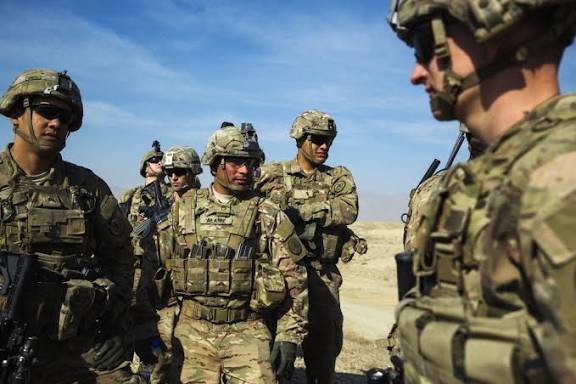
The United States has deployed a small contingent of military personnel to Nigeria in a move officials say is intended to strengthen cooperation against extremist violence in the West African country.
Gen. Dagvin R.M. Anderson, commander of the U.S. Africa Command (AFRICOM), confirmed the deployment on Tuesday, saying the team arrived after discussions between U.S. and Nigerian authorities on intensifying efforts to counter threats from Boko Haram, the Islamic State West Africa Province (ISWAP) and other armed groups.
The deployment is the first acknowledgment of U.S. forces on the ground in Nigeria since America carried out airstrikes there on Christmas Day, targeting fighters linked to the Islamic State. While details about the size, exact mission and location of the U.S. team have not been released, military officials describe their role as focused on intelligence support, coordination and enhancing Nigerian capabilities rather than leading combat operations.
Nigeria faces persistent insecurity across its north and northwest, where Boko Haram and ISWAP factions have intensified attacks on military convoys and civilian communities. These groups have waged an insurgency for nearly two decades, displacing millions and forcing the government to seek varied forms of assistance to suppress the violence.
The move follows growing diplomatic engagement between Abuja and Washington. In recent months, U.S. officials have reportedly urged Nigeria to take stronger action against extremist violence, even as the Nigerian government rejects accusations that it is failing to protect vulnerable populations. Nigerian authorities emphasize that operations target all armed groups that threaten security, irrespective of the victims’ religious identities.
The U.S. has also conducted surveillance flights over Nigeria from bases in neighboring countries, a precursor to the December airstrikes. Those strikes reportedly killed multiple militants in Sokoto State, conducted in coordination with Nigerian forces.
While the current deployment is limited in scope, it marks a notable shift toward deeper military cooperation between the two countries at a time when Nigeria’s security challenges remain acute.
Epstein considered Nigerian oil deal but raised concerns over possible fraud
Newly released documents have revealed email exchanges between late financier Jeffrey Epstein and an associate, David Stern, over a possible business venture involving Nigeria’s crude oil.
The materials are reportedly part of a broader set of records made public by the United States Federal Bureau of Investigation under the Epstein Files Transparency Act.
According to Premium Times in Nigeria, an email dated 20 September 2010 showed Mr Stern informing Mr Epstein of what he described as a lucrative opportunity in brokering or flipping Nigerian crude oil.
The correspondence said a contact identified as “PA” suggested meetings with individuals who had access to buy the oil and resell it to China, with projected profits running into millions of dollars.
“PA has asked me to see a guy who has access to Nigerian oil, and when selling it to China (or somebody else), F. can make around $6m.”
Despite the promise of high returns, doubts were clearly expressed in the exchange.
“This seems very fishy (as my boss JEE would say),” Mr Stern wrote.
Nigeria, which remains Africa’s largest oil producer, has long battled problems of opacity in its oil sector. Illegal trading on the black market has persisted for decades, while attempts by successive governments to enforce transparency have recorded limited success. The Nigerian National Petroleum Company Limited only began publishing audited accounts in recent years.
The email conversation between Mr Epstein and Mr Stern was among several communications uncovered in the newly released files. Before his death in July 2019, Mr Epstein exchanged messages with members of his wealthy and influential circle on business interests, investment prospects, and planned visits. Nigeria featured in several of these discussions.
In another exchange from 2010, Mr Epstein received a message from George Reenstra, founder of Aircraft Service Group, an American aircraft servicing firm. Mr Reenstra informed him of an urgent trip to Nigeria to meet then-President Goodluck Jonathan.
“I unexpectedly must leave this evening for Nigeria. I have tried hard to delay this trip but it is with the the country President and I have no alternative,” Mr Reenstra wrote on 27 September 2010, about four months after Mr Jonathan assumed office. There is no confirmation that the meeting with the Nigerian president eventually took place.
Mr Reenstra also assured Mr Epstein that arrangements for their ongoing business discussions had been delegated.
“I have passed all the documentation to my partner, Jon Parker, and he will be able to assist you in completing the transaction. I will have email access but not the ability to open attachments. Hopefully we can resolve the contract issues and get the funds into deposit early this week per our telephone and e-mail exchanges of last week,” he added.
Mr Epstein was awaiting trial on sex trafficking and conspiracy charges, to which he pleaded not guilty, when he died in custody in 2019. His death, ruled a suicide, intensified public pressure for the release of records detailing his activities and associations.
The calls grew louder after President Donald Trump returned to office, as many believed the public deserved a full account of the financier’s network. The latest documents indicate that several figures linked to Mr Trump had interacted with Mr Epstein over the years. Mr Trump has acknowledged knowing Mr Epstein but insists he severed ties long before the financier’s arrest.
The files also reference prominent global figures, including former US President Bill Clinton, technology billionaire Elon Musk, and Britain’s Prince Andrew, Andrew Mountbatten-Windsor. Mr Epstein maintained close ties with many wealthy and powerful individuals.
Among the documents is correspondence showing an invitation for Mr Epstein to dine at Buckingham Palace. In another exchange, he offered to introduce Prince Andrew to a 26-year-old Russian woman. Photographs in the files appear to show the prince kneeling over an unidentified woman lying on the floor.
Prince Andrew previously claimed he had no contact with Mr Epstein after a visit to the financier’s New York residence in December 2010. However, the documents indicate emails were exchanged in February 2011.
Mr Musk’s name also appeared multiple times, including messages from 2012 to 2013 in which he discussed the possibility of visiting Mr Epstein’s Caribbean island. In 2019, the Tesla chief publicly distanced himself from Mr Epstein, describing him as “obviously a creep” who “tried repeatedly to get me to visit his island.” He said he declined the invitations.
The records further revealed that the current US Secretary of Commerce, Howard Lutnick, arranged a visit to Mr Epstein’s island in 2012. They also showed cordial exchanges between Mr Epstein and Steve Bannon, a former adviser to Mr Trump.
In a January 2019 email, Mr Epstein asked Mr Bannon if he had received an Apple Watch sent as a Christmas gift. Days later, he invited him to “come join” him in New York.
The latest disclosures have renewed scrutiny of Mr Epstein’s far-reaching connections and the extent of his dealings across business, politics, and international networks.
Nigeria’s untapped wealth: Zakat and Waqf as tools for national renewal
By Abdullahi Abubakar Lamido
This week marks a historic milestone for Islamic social finance in Nigeria. For the first time, the Association of Zakat and Waqf Operators in Nigeria (AZAWON) has declared a National Zakat and Waqf Week, running from January 30th to the following weekend. Across the country, more than 70 member organisations are participating through various programmes. The goal is simple but urgent: to educate, enlighten, and reawaken Muslims to the power and relevance of zakat and waqf in today’s world.
In Gombe State, the Zakah and Waqf Foundation is leading a series of activities during the week, including khutbahs, public lectures, zakat disbursement programmes, advocacy visits, and radio and television engagements. One of the key events was an invited guest Friday khutbah I delivered at Fuad Lababidi Mosque, carrying a message many communities desperately need to hear: that zakat and waqf are not just religious rituals but economic systems designed to build strong, self-reliant societies.
A central theme of the sermon was that Islam does not accept poverty as destiny, nor hunger as a permanent condition. Allah says, “Take from their wealth a charity by which you purify them and cause them to grow” (Qur’an 9:103), and He reminds us, “The example of those who spend their wealth in the way of Allah is like a seed that grows seven ears; in every ear are a hundred grains” (Qur’an 2:261).
The verses above show that giving in Islam is not a loss but rather a source of growth, purification, and multiplication. Islam built a community where the wealthy bear responsibility for the vulnerable, the strong uplift the weak, and wealth circulates rather than remaining locked in a few hands. Two of the greatest tools for achieving this are zakat and waqf.
Many people today see zakat only as short-term relief — food packs, cash support, or emergency help. While these are important, zakat in its full vision is far greater. It is a poverty-reduction system, a wealth-redistribution mechanism, and a tool for economic empowerment. When properly managed, zakat can fund small businesses for the poor, provide tools and equipment for tradespeople, support education and skill development, and help recipients become earners. In other words, zakat is meant to move people from dependency to productivity.
Globally, experts estimate that billions of dollars in zakat are paid annually by Muslims, and if organised professionally and invested productively, this wealth could significantly reduce poverty across the Muslim world.
If zakat is the fuel of social protection, waqf is the engine of long-term development. Waqf, or Islamic endowment, is a form of continuous charity where an asset is dedicated for the sake of Allah and its benefits are used for the public good. Historically, waqf funded universities and schools, hospitals and clinics, roads, bridges, and water systems, orphan care and social welfare, as well as libraries and centres of knowledge.
For centuries, Muslim civilisation ran on waqf. In places like the Ottoman Empire, vast portions of public services, including education and healthcare, were financed through endowments rather than government budgets. In many classical Muslim cities, it was possible for a person to be born in a waqf-supported hospital, educated in a waqf-funded school, work in a waqf-funded market, and even be buried using waqf land — all without costing the state.
The Nigerian reality today presents serious challenges: youth unemployment, underfunded schools, poor healthcare access, and widespread poverty. Yet Islam has already placed in our hands the tools to respond. The khutbah stressed that we must stop seeing development as the government’s responsibility alone. Islamic civilisation flourished not only because of governments but also because of community-driven institutions like zakat and waqf.
The message echoed across the nation. In Abuja, Alhabibiyyah Islamic Society, through its Zakat and Waqf Unit, organised a major programme to mark its 5th Zakat and Waqf Day and the 15th Public Zakat Disbursement on 31st January 2026. The event drew national attention, with the National Chairman of AZAWON, Malam Muhammad Lawal Maidoki (represented by Honourable Balarabe Shehu Kakale), delivering the keynote address. A high-level panel discussion followed on the theme “Zakat, Waqf and the New Tax Regime,” where I served as a panellist alongside Taiwo Oyedele, Chairman of the Presidential Fiscal Policy and Tax Reforms Committee (represented), Hajiya Adama of Al-Ikhlas Waqf Trust, Borno, and Barrister Dele Oye, Founder of Dele Oye & Associates. My contribution once again emphasised the strategic developmental and civilisational roles of zakat and waqf, highlighting practical ways these instruments can be used to address our numerous socioeconomic challenges in a structured, sustainable manner.
The implications are clear. Zakat institutions must move toward professional management, proper data systems, and empowerment-based programmes that help beneficiaries start businesses and become self-reliant. Waqf must also evolve beyond its limited perception. Instead of restricting waqf to graveyards and mosques, communities can establish rental properties, shopping complexes, farms and orchards, schools, and clinics with income-generating arms. The profits can then fund education, healthcare, scholarships, and social welfare on a permanent basis. Families can dedicate houses or land as waqf, mosques can initiate community waqf projects, businesspeople can create corporate waqf funds, and professionals can contribute their expertise in management and governance.
The National Zakat and Waqf Week is therefore more than a ceremonial event; it is a wake-up call. If Muslims in Nigeria pay zakat correctly and channel it productively, establish and manage waqf professionally, and build partnerships between scholars, business leaders, and experts, then by Allah’s permission, we can see reduced poverty, more jobs for youth, better schools and hospitals, and stronger, more dignified communities.
The revival of zakat and waqf is not just about charity; it is a strategy for economic revival and social stability. As emphasised in the khutbah and in the Abuja panel discussion, empowering the Muslim community will not happen through speeches alone, but through planning, management, transparency, and trust. The tools are already in our hands. The question is whether we will use them.
Amir Lamido, PhD, wrote from Abuja, Nigeria.
Nigeria is now global reference for credible reform leadership—World Bank
By Sabiu Abdullahi
The World Bank has described Nigeria as a country increasingly cited around the world as a model of steady and credible reform leadership.
This is contained in a statement signed by Bayo Onanuga, Special Adviser to the President on Information and Strategy, dated February 3, 2026.
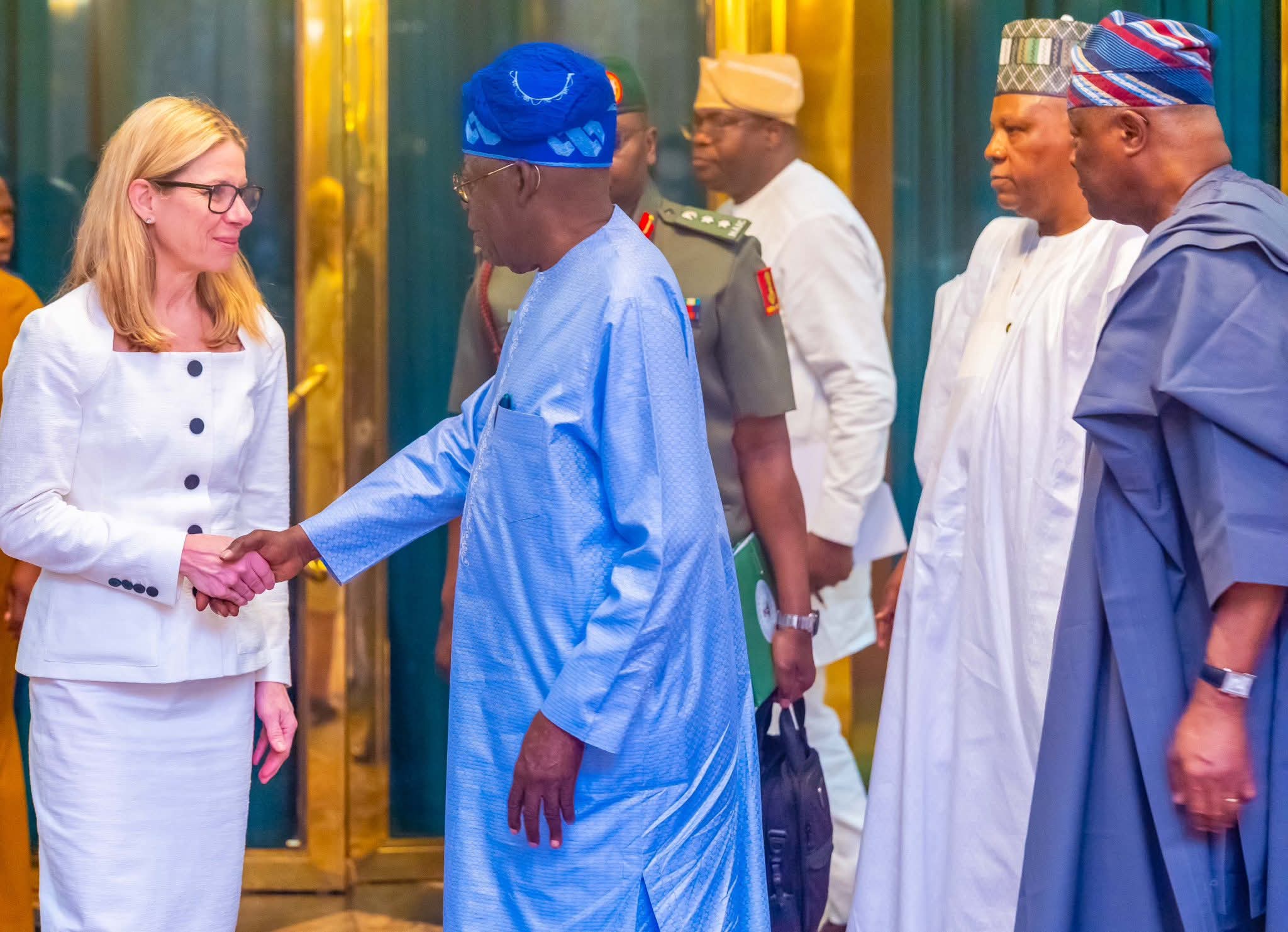
The remark came from the World Bank’s Managing Director of Operations, Anna Bjerde, during a meeting with President Bola Ahmed Tinubu and Vice President Kashim Shettima at the State House in Abuja on Tuesday. Other officials of the Bank accompanied her to the meeting.
Bjerde praised Nigeria’s reform efforts over the past two years, with emphasis on the government’s determination to remain consistent despite economic pressures. She said the approach and the visible outcomes had strengthened confidence among investors, policymakers and players in the private sector.
She also drew attention to the upcoming Country Partnership Framework, which she said aligns closely with Nigeria’s own development agenda, especially the target of achieving a $1 trillion Gross Domestic Product and 7 per cent economic growth.
President Tinubu reaffirmed his administration’s commitment to the reform agenda and acknowledged the difficulties that accompanied the process. He said “there will be no turning back.”
The President explained that although the removal of fuel subsidy and the unification of exchange rates initially pushed inflation upward, the situation has improved, with inflation easing and the naira showing signs of stability. He added that the developments have helped to boost investor confidence and improve the business environment.
According to President Tinubu, the reforms are built on transparency, accountability and policy stability.
He identified agriculture as a major focus of his administration and said investments have been directed toward the sector through the establishment of zonal mechanisation centres, improved seed development and better access to fertilisers. He noted that support from the expanding petrochemical industry has also helped to improve output and encourage farmers to form strong cooperatives.
“Nigeria is the heart of the continent, and we must do what’s necessary to strengthen the economy, particularly looking at the young population of this country, looking at the vast area of arable lands.
“How do we employ mechanisation and make agriculture easier? I have embarked upon that. We have created zonal mechanisation centres to help the farmers,” he said.
President Tinubu urged the World Bank to strengthen its partnership with Nigeria through faster financing, reduced bureaucracy, shared development models, effective risk management and improved capacity building to support inclusive growth.
In her remarks, Bjerde stressed the need to improve access to finance for small, medium and large enterprises, with special attention to mid-sized businesses, which she described as critical to job creation.
She also commended Nigeria’s emphasis on early childhood development and described it as vital to long-term productivity. She assured the country of the Bank’s continued support in that area.
“Many countries around the world, even middle-income and upper-middle-income countries, are suffering again with rising levels of stunting. And here, we’ve identified early childhood development as a strong entry point. So, all of this, to say we’re looking forward to a new country partnership framework,” she said.
Bjerde restated the World Bank Group’s commitment to a programme that reflects Nigeria’s priorities and combines public and private sector support. She added that the Bank, through the International Development Association, the International Bank for Reconstruction and Development and the International Finance Corporation, stands ready to sustain support for Nigeria’s reform agenda.
The Minister of Finance and Coordinating Minister of the Economy, Wale Edun, as well as the Deputy Chief of Staff to the President, Ibrahim Hassan Hadejia, attended the meeting.