Religion

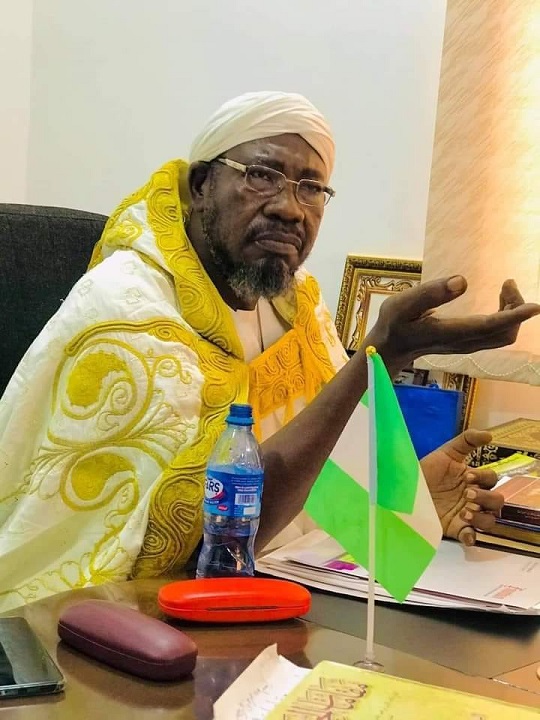
Sheikh Nuru Khalid: The way they and I see it

By Bilyamin Abdulmumin

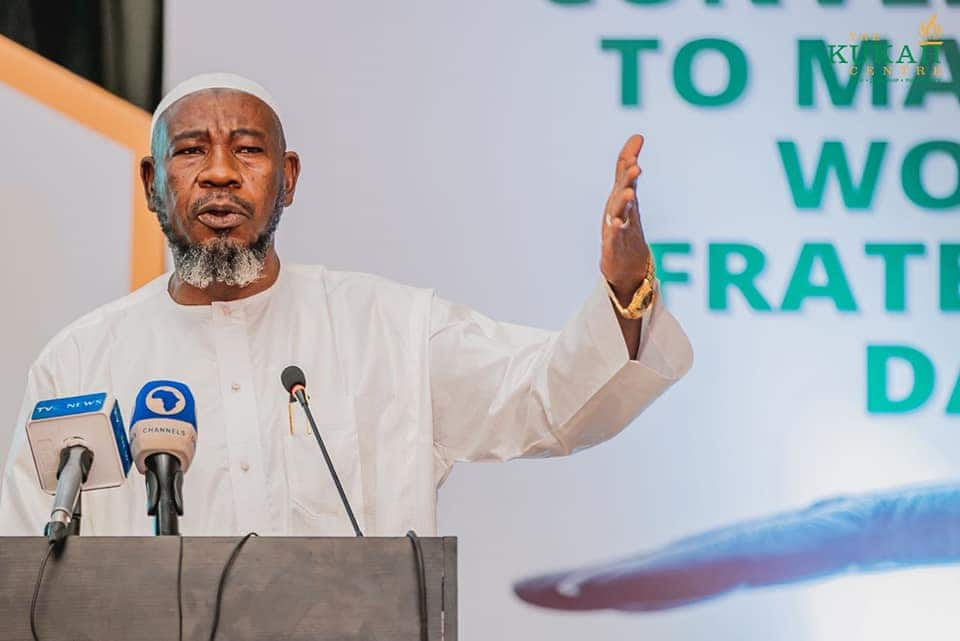
The nation has woken up with yet another round of controversial news, as the committee to the National Assembly mosque, Apo legislative quarters Abuja, deemed it fit to suspend the renowned Islamic cleric Sheikh Nuru Khalil before sacking him later. The committee cited incitement and lack of showing remorse as reasons for the suspension and the final sacking, respectively.

Last week’s Friday prayer sermon the Sheikh delivered was the action that earned him the sack. In the sermon, reeling from the Abuja-Kaduna train attack tragedy, the Sheikh supported a boycott of the upcoming 2023 general election should the government fail to protect the lives of Nigerians. This message immediately went viral to generate a heated debate among the public on social media.

Those who support the message have some reasons. Because it was just history that repeated itself; before the 2015 general election, Nigeria, especially the North, was literally on fire. Amidst the chaos majority of the northern Islamic clerics openly criticized the government of the day – PDP, while drumming support for the opposition – APC.

Fast forward, seven years later, the table has turned. The APC is in charge, and similar to the eve period of the 2015 general election, the insecurity is threatening the country again. So, for this category of view, what is good for the goose should also be good for the gender.

Some try to strike a balance. According to these people, the Sheikh’s sermon was right, but they argue that leadership comes with responsibility. So, a leader with a large audience has both privilege and responsibility. Some of these responsibilities are eschewing opinion, unlike any ordinary person who doesn’t mince words. In other words, the Sheik should have a tread with caution. 

Some categories look at it from the extremism tendency. According to them, some extremists, such as Muhammad Yusuf, the Boko haram leader, started as a spokesperson to the masses. First, he became a fierce critic of the government, but later, when his antics escalated to insurgency, those masses clapping for him became the most victims in the end.

Some sought to politicize the controversy. According to them, the Sheikh has pitched a tent around the opposition – PDP, so they claim he has been a critic of the Buhari government for the last seven years. These critics sealed their arguments with the allegations that the Sheikh was appointed an Imam at a mosque built by Atiku Abubakar, a new Jumu’at Mosque behind the Central Bank Nigeria (CBN) Quarters, Abuja.

The peculiarity of any argument is that if anyone is allowed to explain his view, one will somehow see a reason for their claim. The above four viewpoints on the same thing are good examples.

By and large, if there is anything this raging debate achieved, it is one thing: it made Nigerians forget the series of other pressing issues like the ASUU strike, fuel scarcity, the naira to dollar depreciation, VP Osinbajo, Minister Pantami, and Farooq debates, even the plight of the actual victims of the attack (may theirs be a speedy release, harmless). One Nigerian coined this scenario: “one rising issue after another makes Nigerians forget their suffering; Nigerians live for the moment.”

Bilyamin Abdulmumin is a PhD candidate in Chemical Engineering at ABU Zaria. He is also an activist for a better, informed society.

On Sheikh Nuru Khalid’s dismissal

By Usama Abdullahi

Two things are so sure in life. The first is we are all going to die someday. The second is a person is most likely to suffer for being honest at all times. However, in this recent case of Sheikh Nuru Khalid, we can attest to the second fact.

You don’t expect anything good from people who hate hearing and being told the truth. It doesn’t surprise me to see Sheikh Nuru Khalid being unfairly relieved of his role as the Chief Imam of the Apo Legislative Mosque by the Mosque Committee under the chairmanship of Senator Dan Sadau.

For that’s what you get when you decide to stick with the truth. My fear is not him being fired for speaking against the cruelty of this present government but how politicians manipulate our religious leaders. They use them as baits to help tame or silence the veracious clerics who speak truth to power. This has been the norm for many years now. What makes it look appalling is that those easily manipulated clerics reduce themselves to mere sycophants.

Aside from getting lured into misquoting the Holy Books and preaching only what best suits the hearing of their political godfathers, they try to persuade their followers to believe all the rubbishes they preach. So, to be sincere, I wasn’t surprised when I learnt of the dismissal of the “Digital Imam” over his true statement about the government. It’s not like what the media paints. His sermons weren’t anti-government. 

Yes, his Friday sermon was just a simple reminder and awareness of how to call our hardened and irresponsible government to task. Sheikh Nuru Khalid doesn’t speak for himself alone. He represents the voice of the oppressed masses who brought this government to power through their votes. Only the patriotic and religious ones will fully understand what he preaches. They are the only ones who will realise that this government doesn’t care about the plight of the poor citizens who voted them to power.

It’s so disappointing that he got sacked because of his intestinal fortitude and truthfulness. I saw this coming, considering how fierce he’s lately been in criticising this government for their failure to secure the lives of the people they had sworn to defend. I see his calculated dismissal as more of a  politically advised plan to compel him to complete silence so that they will continue to suppress us by being neglectful regarding safeguarding our vulnerable lives without him chastising them for their ugly sins.

What frustrates me more is knowing that his dismissal letter was full of grammatical inaccuracies and negotiated by people who are said to be genuine Muslims. Yet, their actions betray their faith and academic standings. Islam neither promotes nor tolerates such despicable acts. It’s the religion of peace. Hence, there’s no room for what they did in Islam.

We should be happy that he still breathes because we have seen how some of his likes were slain for saying the same thing. In case you forget, truth-telling cost Sheikh Jaafar and Albany Zaria their noble lives. So, it’s little wonder that the Digital Imam was just sacked. We’ll never get it better by hiding under the pretence of religion to promote and cover up the faults and interests of those usually self-seeking politicians. Accordingly, it’s unfair to deny our clerics the podium to speak truth to power simply because of political gains. 

Usama Abdullahi wrote from Abuja, Nigeria. He can be reached via usamagayyi@gmail.com

Pantami and the bitter taste of politics (I)

By Aminu Nuru

Isa Ali Ibrahim Pantami’s odyssey into public service, and mainstream politics in Nigeria by extension, is so far filled with notable controversies that muddy the stream of his public image despite being received and welcomed with a reservoir of goodwill and optimistic anticipations by many Nigerians.

Although some people may argue that, before Pantami’s appointment to public office, there were members of the Federal Executive Council (FEC) equally knowledgeable in the matters of Islam and could be regarded as scholars in their own rights. Still, the fact is that both Mallam Aminu Kano and Senator Bello Maitama Yusuf made a name for themselves in politics and public service before Islamic scholarship and preaching. Or, to say it better, the duos are more widely known for their political engagements than anything else. Thus, they were seen as full-time politicians in the public eye. While Pantami, on the other hand, got his fame strictly from Islamic teachings and discourses.

Therefore, Pantami is a trailblazer who pioneered a cause in Nigerian polity – a revolution of Islamic clerics from Northern Nigeria joining national politics and public service. This position naturally accords him the status of a role model for subsequent clerics from the North that are willing to join public service in the future.

Though preaching and propagation of Islam would have played a role in Pantami’s rise to prominence and subsequent appointment into Nigerian public service, the controversial minister, to be fair, has demonstrated some degree of competency and seems to be averagely prepared, to say the least,  to the job he has been offered as the Director-General of NITDA  and later Minister of Communication and Digital Economy. In the same vein, he has also recorded some achievements so far. Unfortunately, however, a series of controversies are beginning to overshadow these achievements, which are at the same time complicating his polity. Still, some of these complications may not be disconnected from his past. On the contrary, they could be best appreciated if one revisits and analyses the context and content of his previous preaching vis-à-vis the atmospheric politics of the time.

Efforts to corroborate the exact date Pantami made his debut into the realm of Islamic preaching in his first preaching base – Bauchi – proved abortive. But what is certain was the unique style he adopted in delivering lectures, Tafseer sessions and Friday sermons, which promptly endeared him in the hearts of the local audience.

In the early 2000s, most Western-styled educated Muslims were looking for a fresh voice in Islamic preaching and seemed to be tired of the “oldies” and their archaic modus. They wanted something different and were eager to access the new approach that analyses and interprets contemporary issues from Islam’s perspectives. They were looking for an Islamic preacher to address and speak to them in the manner and tongues they would align and reason with. A preacher that could, for example, scrutinize the EU’s foreign policies and the US invasion of the Middle East and validate his points with the verses of the Holy Qur’an.

In Pantami, they saw the exponent of those ideals. This was due to his ability to demonstrate basic knowledge of global politics, international relations, and science and technology through the lenses of the Quran and Hadith. In addition, he commanded a very good English Language (a rare talent among Islamic clerics at the time). He exhibited a charming oratory skill sauced with puritanical diction – a personal endowment and enchantment that he consciously or subconsciously deployed to arrest, startle, and move his audience. The eloquence with which Pantami delivered his sessions was what stood him out among his contemporaries. Consequently, Pantami became the darling of Muslim populations in Bauchi and beyond for this and other intellectual traits. The Western-styled educated populations saw a 21st-century Islamic cleric of their dream in his shape.

As an influential preacher with access to grass-root populations, his pulpit echoed a dissenting voice against the government of the day. He was explicitly critical of PDP’s government at both the state and national levels and openly promoted the presidential ambition of General Muhammadu Buhari (GMB). It is on record that Pantami was not the only cleric to uphold the candidature of GMB via his pulpit; other clerics had also promoted him with equal conviction. However, Pantami’s open romanticism and penchant for the General were so extreme that when his old “friend” – Governor Isa Yuguda – fell out with Buhari’s ANPP and decamped to PDP, Pantami was not reluctant to denounce this move. Therefore, he launched out series of attacks and criticisms of the Yuguda administration in his Friday sermons (despite being a back-door “friend” of the Yuguda administration).

In an article titled “Nigerian Politicians and Hypocrisy”, Pantami wrote: “I do not know a profession anywhere in the world that is full of professionals who fulfil all the characteristics and signs of hypocrites aptly described by our infallible Prophet like Nigerian politicians in the corridors of power, particularly the companions of the largest, and probably the most dangerous party in Africa (PDP)” (Premium Times, 2012).

Nobody felt Pantami was not doing the right thing among the population. He was even celebrated and eulogized for his vilification of the PDP’s government and support for GMB. His effort was appreciated as a selfless service to the poor masses. He was practically dancing to the bits of the society. Naturally, this created a public image for Pantami – an image of an honest Islamic cleric who told the truth to power (PDP’s government?). 

Considering this background, it is not entirely out of sight if some groups work to step back on Pantami’s toes now that he has been appointed a Minister of the Federal Republic of Nigeria. They would not also relent to feed him the same bitter pills of politics through (de)constructive criticism, malice and deliberately cooked scandals. Therefore, it is not a surprise if, for example, some pundits dug into his past utterances to make the polity difficult for him now. Or it is not least expected if some of his critics alleged that he used the garment of Islamic preaching to reach where he is now – an allegation echoed loudly by his fellow preacher and former neighbour in Bauchi. This particular preacher believes that Pantami is not worthy of being considered an Islamic cleric simply because he did not attend any Islamic school.

This allegation could be dismissed as sheer envy, especially as it comes from a fellow Salafi cleric who does not hide his aspersion of the minister. Reputable Islamic scholars have, time without number attested to Pantami’s intellectual prowess and competence in Islamic scholarship. Besides, altogether, he has tackled those accusations cleverly by not quitting the teaching of Islam even after being appointed a Minister.

The accusation that may have firmly stood is how Pantami’s pulpit swiftly changed from being a pro-people voice to one with less interest in the matters of governance and the governed. There’s no more dissent voice against the government. Even the choice of his texts for his ta’alims at Annur Mosque were deliberately strategic in the sense that their content analysis and commentary of moral truth and calls for proper conduct may not be extended explicitly to subjects within the present government. From their titles, both Kindness to Parents and Kindness to Relatives and Loved Ones would surely give a soft landing for anybody willing to avoid activism in his preaching.

His defenders may argue that Pantami now has unlimited access to the government. Therefore, he can channel his grievances privately, but the atrocities for which he vilified the previous government have also been committed, doubled and tripled by the present administration. Morality demands that he does more than voice his anger privately, considering his earlier vituperation.

One would think he will not hesitate to relinquish anything that has to do with this administration to demonstrate his unreserved solidarity for the masses. But, unfortunately, Pantami – an erstwhile vibrant advocate of good governance – is not the man to surrender power for posterity. Therefore, while it may not be the wisest decision to leave the government to demonstrate his pro-masses stand, Pantami should do better in making patriotic moves decisions no matter whose ox is gored. He could do that while avoiding avoidable controversies and political tussles that may tarnish his image and the institution he represents.

Aminu Nuru wrote from Bauchi. He can be contacted via aminuahmednuru@gmail.com.

Sacred Sound Emission: Untangling human corruption from divine injunction

By Binyamin Lawal

Researchers often point to the dominance of virtual culture and modes of visual perception that organise everyday life. However, in a place like Nigeria, “public sound is a far greater presence and comes to constitute the ambient environment” (Larkin 2014: 992). Out of these multiple sounds, those disbursed with a glaring presence are those emanating from the sacred spaces. As a focal space for the generation of piety, one wonders whether such disbursement of sounds ‘piety’ is indeed achieved. This is one of the questions we should reflect on as we step into the month of Ramadan.   

Ramadan is the ninth month of the Islamic calendar in which fasting (Arabic: saum) is prescribed for Muslims so as to attain the status of Al-Muttaqūn (the pious: those who fear Allah and abstain from sins and evil deeds) (see Q 2: 183). Due to the special position of the month, Muslims live a substantial part of the year attached to it. They either pray to witness the month or pray that Allah accepts their acts of worship during the month. 

Now, as the month of Ramadan begins, we need not only to reflect on improving our piety but cultivating attitudes of not inflicting harm to people as well. In other words, while we encourage people to come closer to Allah through good conduct, we should refrain from other actions capable of eating up our good deeds. 

While Ramadan is the season where Muslims come closer to Allah and increase their piety – as stated above, activities that cause inconvenience to others must be avoided since avoiding the infliction of harm to humans is in itself an act of worship (Ibadah). Against this backdrop, the usage of loudspeakers, especially at night, needs to be regulated during the month and particularly the last ten days. In this regard, I would like to recount – from my memory – what I heard from a Kano-based Islamic scholar who responded to a question on the emission of sounds far beyond the sacred space.

In his response, he pointed out that doing that causes a lot of inconvenience to people around. As such, it is ‘unlawful’. He explained that some might want to pray in their houses, and the sound of the recitation dominating the public space will not allow them to have the needed silent atmosphere. Others may just want to sleep. Both are denied the silence and decorum they genuinely deserve.

In this regard, we should also be mindful of those willing to engage in prayers the whole night but cannot due to the kind of work/business they do during the day. After all, in their case, doing the work during the day to keep up their responsibilities is wajib (compulsory), while the prayers are recommended.

The night, as we know, is a special time to seek closeness to Allah, at the same time, a period of rest; “And We have made your sleep as a thing for rest, and We have made the night as a covering (through its darkness)” (Q 78: 9-10). Sleep, which is meant to be a rest, as stated in verse 9, is complemented by the covering provided by the darkness of the night to give us respite from the exertions of the day. That must be respected as we engage in our Qiyāmul-lail.

Furthermore, the Sheikh emphasised that our public spaces are shared between Muslims and Christians who don’t partake in Ramadan activities, so why incommodes them? In addition, one could also think of the sick persons whose sleep may be interrupted. Observing the act closely, one fears the salient intent of presence-making or show-off, an act that is seriously frowned at. “Say: “Will you inform Allah of your religion while Allah knows all that is in the heavens and all that is in the earth, and Allah is All-Knowing of everything” (Q 49:16).

Binyamin Lawan is a PhD student in Islamic Studies and wrote via abinyaminlawal@gmail.com.

Breaking: Ramadan crescent sighted in Saudi Arabia

By Muhammadu Sabiu

The crescent, which signifies the beginning of the month of Ramadan, has been sighted in Saudi Arabia, Haramain Sharifain confirmed in a statement on its verified Facebook page today.

“Crescent was SEEN in Saudi Arabia today. Subsequently, the month of Sha’ban completes 29 days today and tomorrow, i.e. Saturday, 2nd April 2022, will be the first day of Ramadan 1443,” the statement read.

This marks the beginning of the Muslims’ act of fasting for 29 or 30 days, not only in Saudi Arabia but across the world.

It can be recalled that even in Nigeria, the Sultan of Sokoto, Alhaji Abubakar Sa’ad III, has urged the Muslim faithful to come out today in search of the Ramadan crescent.

Is prayer genuinely worthless? 

By Usama Abdullahi

I came across a post from a supposedly intelligent person in which he foolishly stated that prayer is worthless and doesn’t count. What surprises me more is that he’s a practising Sufi Muslim. It’s hard to believe that Sufism teaches people to utter things or act contrary to the teachings of Islam. Even though I’m neither a pro-Sufism nor share similar ideologies with any of them, I still don’t think Sufism teaches people to behave and write irrationally as that self-deluded person. 

He believes that being realistic or pragmatic is the only solution to the everyday security challenges troubling this country. While I agree with him that being practical is one of the surest ways that could help bring such age-long challenges into a state of discontinuity, yet, on the other hand, I disagree with him that our prayers are usually obsolete and worthless. Perhaps unknown to him, prayer is but a spiritual tool that fends, heals and grants the guided people some peace of mind.

Prayer is a beautiful and easiest way of expressing our deeply felt gratitude to God for his mercies upon our dear lives. It describes how thankful, devoted and religious we are towards our creator. The problem with that person is that he’s shifted his focus on God and thinks that his so-called realistic mind provides him with the answers to all the lingering security threats we are experiencing in this country. Well, that’s the biggest blunder one could ever make. 

When we stray or rather deviate from the right course, our minds often tell us things differently. Our minds would make us feel liberal and lure us into acting in the wrong way. Sometimes it makes us view things narrowly, which is not how they seem in reality. It simply corrupts and deceives us. The manner we reason speaks volumes about how we often tend to foresee the future.

As humans, we are capable of being wrong at any time. But it is funnily unrealistic to believe that your ideology is always appropriate and should be followed. Over the years, I have come to terms with the belief that one with higher academic qualifications doesn’t mean they are the most knowledgeable among people. I respect people’s opinions, but only when they appear rational. Abusive and persuasive views are sure to be avoided because they can instigate hostile disagreement among people like this.

I don’t see prayer as a worthless thing. Even if I feel it doesn’t count, I will keep on praying. Indeed, I believe in the miracle of prayers. I know God answers prayer. He has told us in the Holy book that we should supplicate and call on him whenever we get into trouble or need something. My or your prayers might be delayed but not rejected. When this happens, the Holy book always reminds us to be patient because patience pays. 

And prayer is also an act of worship. Moreover, it shows the level of one’s faith in God. I know we cannot pray all of our problems away without being pragmatic in confronting and dealing with them. Yet that shouldn’t give us the green light to decidedly underestimate the power of prayer, for it’s a natural remedy on its own. 

Prayer saved Prophet Isa (Jesus) from the brink of crucifixion. Prayer protected  Prophet Muhammad (S.A.W) and his companions against their ruthless foes. Prayer saved Prophet Abraham when thrown into the fire by his people and prayer attracted God’s sympathy and mercy over Prophet Yunusa (Jonah) when he got drown and swallowed by a whale. Despite going through hell, Yunusa still prayed to God and was happily rescued afterwards. So, how would you expect me to buy into your notion that prayer is worthless?

Usama Abdullahi wrote from Abuja, Nigeria. He can be reached via usamagayyi@gmail.com.

Waqf would have saved the situation!  

By Abdullahi Abubakar Lamido

Alhaji Abdullahi (not a real name) is a rich man from Northern Nigeria, famous for his multidimensional philanthropy. He was, at a time, among the three richest men in his town. He came from a polygamous family and was the 14th child of his dad. He was the only rich man. Being polygamous himself, he has close to 20 children from three wives. As the only well-to-do in his extended family, his house is like a local government secretariat, always jam-packed with visitors from among family members. This is in addition to dozens of his “sons and daughters” born by his brothers and sisters, who reside in his house, under his total care. But Alhaji takes care of them all; feeding, clothing, education, healthcare, Sallah clothes, etc. He does that with all pleasure. After all, he has the means, and of course, the heart, as a wealthy businessman.

Here is a religious, wealthy man and an influential politician cum Islamic scholar. He has built several schools and mosques, sponsored the education of many orphans, given capital to many people, sponsored the marriages of many poor girls, and sponsored dozens of people to hajj. He is one of the best philanthropists you can think of. After all, that is what is expected of an affluent Islamic scholar. His school was once among the best two primary and secondary schools in the town. When he singlehandedly built it about two decades ago (he had built others much earlier), he would pay teachers’ salaries, buy uniforms for the students, and give them other learning materials. He loves the Qur’an, being also a hafidh himself. And he would provide copies of the Qur’an to all the hundreds of his pupils. This is in addition to dozens of people who rely on him for their livelihood.  

As time went by, the “law of diminishing returns” began to affect his fortunes. Gradually, he began to withdraw the subsidies from the school due to continually decreasing income and ever-expanding family financial pressure. But he wanted to maintain the good deeds. Now the school needed expansion while his pocket had experienced contraction. He gave his big land close to the school for the purpose. But no funds to build it. So, he sold another land and built it. Note that the school fees could, at best, pay salaries and take care of the running cost. Every student pays. But it is a middle-class school, so the charges cannot be high. So, he went and sold another asset, built the classes. He sold another one again and again until virtually all the sellable assets became exhausted.

One day, while sitting at home, he saw his children returning before the school closing hours. “What is going on”? He asked them. They were sent home because they did not pay school fees. This happened when he was battling with how to feed his family and settle many other bills. Alhaji never envisaged a day when his fortune would dwindle to that level. Therefore, he did not save nor invest for that rainy day. He thought he would continue to secure contracts and earn considerable resources to fund his schools and even establish more. He, in short, did not benefit from the advice of a waqf expert who could have shown him the simple way of establishing an investment waqf, using a portion of his assets, that would perpetually generate a flow of revenues. The revenues could sustainably fund his schools and other charitable interventions. 

Waqf offers a variety of ways for planning the future of your family and supporting other charitable projects sustainably. For instance, the idea of an investment/productive waqf would have perfectly saved Alhaji Abdullahi from selling and reselling his properties to expand his school. As it is, there are two forms of waqf; direct and invest waqfs.

A direct waqf is one created to provide direct welfare and societal development services. Examples are mosques, boreholes, and tuition-free schools that offer direct benefits to designated beneficiaries. An investment waqf is a money generating waqf whose revenues are dedicated to financing defined welfare and socio-economic development projects. An investment waqf can be made to fund and maintain a direct waqf.

For instance, a well-managed orchard can be dedicated as waqf such that the revenues generated from the sale of its fruits will be used to finance a tuition-free school. So, when Alhaji Abdullahi built his school, which he wanted to be a subsidized one, he could have established an investment waqf that would mature and, within some time, continue to finance the school from its proceeds. His other assets would have been saved for other equally important purposes. He could as well have saved himself from the embarrassment of the failure to pay children’s school fees later in his life when the recession hit him.

For instance, nothing stops this rich man from building rentable shops or apartments and dedicating them as waqf, such that what they generate would be divided into two; half reinvented and the other half injected into supplementing what is generated as school fees. He could as well have purchased shares of a halal company and dedicated the investment as a waqf for funding the school waqf. This way, the waqf corpus would continue to expand, and its revenues would grow sustainably. What started as a small waqf can grow into a megaproject that benefits society on a larger scale. Not only subsidies, the investment, if properly managed by trustworthy investment experts, would have funded the construction of more and more schools and the provision of scholarships, among others.

 So, if he provided subsidies at the beginning of the school, part of such funds would have been invested, and gradually he could withdraw the subsidies as the returns from investment take over the funding of the school. This way, his children could have become permanent beneficiaries of the scholarship provided by the waqf of their formerly wealthy father. Better still, he could have simply established a family waqf (a topic for another day) specifically for his children. Waqf, in short, could have saved the situation

Abdullahi Abubakar Lamido is the Chairman, Zakah and Waqf Foundation, Gombe. He can be reached via lamidomabudi@gmail.com.

Yoruba land: The effects of discord among Muslims and the way forward

By Olorunkemi Barokah

The conflict between the southwest Islamic clerics has become something anomaly that needs to be addressed before it goes out of hand. I am on the ball on the clash of interest between those clerics that could be classified under ideological differences. 

The fact that one is practising Sufism or belongs to other Islamic religious denominations does not make them deserve being open to ridicule and other forms of abuse.

I’ve seen people ridiculing themselves on social media through verbal abuse and other forms of defamation. Well! I could assume that it’s not normal because it’s causing more harm to society than expected. 

From the logical point of view, I could assume that there is no saint among the religious folks causing confusion and distractions to the Islamic community in the Yoruba land. Instead, they are birds of a feather that flock together. They are not practising the so-called religious precepts they are preaching to society.

Islamic clerics are the ones who have brought misconceptions, confusion, and division into our midst by regressing the progress of Islam in the entire Yoruba territory. Their disagreement, ideological difference, lack of unity lack of maturity have brought nothing good to the progress of the Muslim community in the Western region. That threatens the future of the Muslim generations in the entire Yoruba race.

Typically, everyone has sects since diverse ideological views dominate the world.  Everyone cannot go in the same direction. Since our beliefs, aspirations, philosophies, and perceptions cannot be equal, we are all enhanced with different uniqueness. That’s why it is likely to have different schools of thought on the same course of studies. And the fact that there are different views does not make the notions of others irrelevant. Everyone will select their preferred theories based on their preference and the evidence that each theory assumes.

However, I guess morality should be the primary element of any sectarian credo since morality is the standard by which individuals are justified. That morality is based on kindness and the state of being responsible. 

It would have been better to promote Islamic consciousness to earn unity. Promoting moral duties would be better than promoting hate, superiority complex, and ideological difference, which will never help grow the progress of the so-called religious values and precepts preached.

Furthermore, in logic, there’s likely to have an argument raised to have a logical conclusion or fact about the subject involved. But, one sure thing is that there must be fact, an affirmative fact to conclude on, and if the truth is not within the premises, the conclusion would be probable. So, in this case, one cannot force the fact. Instead, the evidence on the hypotheses will make people accept the truth.

Nevertheless, I consider many of these religious sects and their self-acclaimed scholars irresponsible. They are only forcing their ideologies on people without setting a legacy, a pace, and values that will make people accept their claimed religious righteousness. Many scholars mentioned above and sects lack logical thinking, justice, beneficence, equity, finality, tolerance veracity, and even respect for persons. In their hands is where humanity is dying.

Nonetheless, in my opinion, it is a navel-gazing and anomaly act to terrorize others to accept one perception or belief. But on the contrary, those sects have seen crucifying and denouncing those who could not concur with their views as a diabolical enemy who should be subjected to verbal abuse and ridicule.

There are many ways of convincing others to believe or accept one’s standpoint without nagging on them. And it can be done without force or verbal abuse or exposing one another to ridicule. Dialogue remains the most veritable weapon in achieving that. Even if dialogue fails, visual/physical values would never fail. Since seeing is said to be believing.

Some of the notable scholars among the most populous ones doing better in promoting Islamic values are Imam Offa, the new Grand Mufti of Yoruba Land, Sheik Muheeden Bello, Mallam Yusuff Adepoju and others. I have never seen them abusing anyone or criticizing others.

The one I will ever respect is Imaam Offa for his contributions to the progress of Islam in the region. He’s the first acclaimed scholar to build a public library that will be available for anyone irrespective of their denominations and ideology. In addition, he’s currently building a top-notch Islamic hospital for Muslim benefit. This is what should always be promoted rather than fighting on General Islamic ethics obligations and particularistic obligations.

Moreover, if all these religious sects could demonstrate unity, I believe the various issues facing Islam today in western Nigeria will be reduced and deciphered! Issues like poverty, inequality in participation, and others.

These sects have all it takes to establish free Islamic schools, hospitals, libraries, a fort that could shelter the homeless Muslims. They could also set up law firms that will help get justice for vulnerable Muslims and even provide empowerment to the Young Muslims. 

Islam in this region needs more than fighting Sufists, Hamadiyyist, Salafiyyist, etc. Islam requires the collective efforts of all those scholars to help in all the areas above. So be united and stop your terroristic approach.  Enough of this quasi-intellectualism in a self-centred manner.

Olorunkemi Barokah wrote this article via olorunkemibarokah20@gmail.com.

Al-Khatib and Al-Shiraziy: A template for humility and mutual respect

By Ibraheem El-Caleel

I have always intended to share some history on the relationship between two great Islamic scholars who lived in the same era. They are both from Shafi’i Fiqh school. I find their story inspiring, and believe sharing it might motivate some students of knowledge to emulate the legacy they left.

These two scholars are: Shaikhul Islam Abu Ishaqal Shiraziy and Al-Imamul Hafiz Al-Khatibul Baghdadiy. Due to their expansive erudition in different fields of knowledge, both have a rich biography that can barely be covered appreciably in a article. We may only cut part of the history which fits into our topic. I will share their brief biographies individually below:

Abu Ishaqal Shiraziy: His name was Ibrahiym bn Aliyyu bn Yusuf, born in 393 AH. He was a versatile scholar who specialized in Fiqh. In fact, Al-Muwaffaqul Hanafiy nicknamed him the “Amirul Mu’mineen of the Fuqaha”. He has authored several Fiqh books of Shafi’iyyah specifically, and Usulul Fiqh generally. The famous of those books is “Al-Muhazzab fiy Fiqhil Imamish Shafi’i”. Imamul Nawawiy later on authored a commentary of this book and titled it “Al-Majmu’u: Sharhul Muhazzab”. Al-Majmu’ today is arguably the most referenced and most comprehensive compendium of the Shafi’iyyah. In fact Nawawiy himself in the muqaddimah (introduction) of the book noted that, although several scholars have authored Fiqh books, the most renowned books for training Fiqh scholars are Al-Muhazzab and Al-Wasit. Al-Wasit is a fiqh book by the intellectual Imam, Abu Hamidinil Ghazali.

All these are pointers to what a legend Al-Shiraziy was in Fiqh. He made strong footprints in Fiqh and nearly considered the most productive Faqih (jurisprudent) in the 5th Century of Islamic calendar. Although he was poor, he was still a zahid (ascetic), whose fear of Allah was evident in his actions. There was a time he entered a mosque and misplaced his 1 Dinar. Later on, he remembered and he went back to the mosque. He met 1 Dinar in the same spot he left but he became sceptical whether it was actually his1 Dinar or a 1 Dinar of someone else; since he is not the only person who could have forgotten 1 Dinar in the masjid. He left it there without picking it up. He didn’t want to consume from anything illegitimate (haram) or vague (shubha). Allahu Akbar. 1 Dinar (an equivalent of about N1,300 today).

Al-Khatibul Baghdadiy: His name was Abubakar bn Ahmad bn Ali, born in 392 AH. He was a versatile scholar with specializations in Hadith and Hadith Sciences, then General History. Imamul Dhahabi called him “the seal of the Hadith Masters”. It was said that since the death of Imamul Daraqutniy, Baghdad had not witnessed a great scholar of Hadith like Al-Khatib al-Baghdadiy. He was a man who dedicated his entire life to scholarship. He once studied the entire Sahihul Bukhariy from the female scholar Karimah Al-Marwaziyyah in just 5 days. For a second time during Hajj, he again studied the entire Sahihul Bukhariy in just 3 days from Imam Isma’il bn Ahmad Al-Naisaburiy! In Al-Dhahabi’s record, this is the fastest learning rate ever heard in history. I remember Dr Kabir Asgar in one of his Mustalahul Hadith classes suggesting that perhaps the reason why Al-Khatib learnt Sahihul Bukhariy twice from these two scholars was because he wanted to get a shorter chain of narration. Both Karimah and Isma’il were students of Al-Kushmeehaniy, who was a student of Firabriy, and Firabriy is a direct student of Imamul Bukhari. So Al-Khatib was motivated to learn Sahihul Bukhari twice from those two scholars just to have a direct short chain between him and Imamul Bukhari and perhaps an ijazah (license).

It was narrated that some Jews once brought a document to the Leader of State, claiming that it is a letter of Prophet Muhammad (Peace be upon Him), where he waived jizyah (tribute) from the people of Khaibar. They said it was the handwriting of Sayyidna Aliyyu bn Abi Talib and with some companions as witnesses. The Leader didn’t deny it, but he referred them to Al-Khatib, to investigate the trueness of this letter before it can be implemented. Al-Khatib looked at the document attentively, then he said, “it is fake!”. He was asked; how did you know that it is fake? He said, they placed Mu’awiyah bn Abi Sufyan as witness, and Mu’awiyah accepted Islam in the year of Conquest (8AH), and Khaibar was liberated in the year 7AH (before Mu’awiyah accepted Islam). They also mentioned Sa’ad bn Mu’adh as a witness, while Sa’ad actually died two years before the liberation of Khaibar. People were astonished of how Al-Khatib Al-Baghdadiy exposed this fraud.

Al-Khatib was a prolific author who didn’t miss a single aspect in Hadith Sciences without authoring a whole book on it. Abubakar bn Nuqtah said, “every sincere person knows that scholars of Hadith who came after Al-Khatib are indebted to his works”.
You can read further about the biographies of these scholars from “Siyar A’alamin Nubala” of Imamul Dhahabi and “Tabaqaat Al-Shafi’iyyah” of Imam Tajuddeen Al-Subkiy.

These are some of the lessons I would like to highlight about their stories:

Despite the fact that Al-Khatib was one year older than Al-Shiraziy, he still learnt Hadith from him. Meaning Al-Khatib was a student of Imam Abu Ishaqal Shiraziy. Age should never be a reason why you discriminate against a teacher, or a scholar.

There was a time Al-Shiraziy was narrating a hadith where Bahru bn Kunaiz was part of the chain of narrators. So he turned towards his student, Al-Khatib and asked him, what can you say about this narrator? Al-Khatib said, if you would permit me, then I will explain. The teacher (Al-Shiraziy) humbly came and sat among the students, then Al-Khatib gave a detailed explanation of this narrator. His teacher (Al-Shiraziy) praised him for this, saying, “This is the Daraqutniy of our time!”. The key lesson here is: as a teacher, do not feel shy or too arrogant to learn an aspect of knowledge from one of your students. If you know your student has more knowledge than you in a specific field, there is no reason why you shouldn’t learn from him. Also, as a student, do not feel so high of yourself because you have a better edge than your teacher in a specific field of knowledge. It should never decrease the respect you have for that teacher.

Despite the fact that Abu Ishaqal Shiraziy was a poor man, he didn’t follow ‘politicians’ to bootlick them to give him material benefits, to go for Hajj. He died without making it to Hajj even though he was a great Imam of Fiqh. He managed himself with the little that Allah has blessed him with. So as a scholar or student of knowledge, do not disgrace your image by frequenting politicians and leaders to beg them for financial enablers. Poverty doesn’t reduce your worth, but bootlicking does.

As we have seen in the case of Al-Khatib, there is no harm for a scholar to make himself available to offer scholarly assistance to the government of his city, state or country. Politicians should also learn that scholars are a great resource for you to utilize in effective leadership. They help you refine raw issues for ready, instant implementation.

Humility, simplicity and respecting people does not reduce your image. It rather boosts your image. This is why as part of a hadith in Sahihu Muslim, the Prophet (Peace be upon him) said, “وَمَا تَوَاضَعَ أَحَدٌ لِلَّهِ إِلاَّ رَفَعَهُ اللّهَ”. Meaning, “… and one who shows humility, Allah elevates him in the estimation (of the people).” These two scholars are both high-ranking, but they exude visible rays of humility. Today, more than 1,000 years after their deaths, their names are still mentioned in high regards.

May Allah grant Al-Jannatul Firdaus to the Imams Al-Khatibul Baghdadiy and Abu Ishaqal Shiraziy; and us. May Allah grant us humble hearts and zeal to learn from their depths of knowledge and good characters. Amin.

Ibrahiym A. El-Caleel

JIBWIS tackles CAN, cautions against fanning embers of disunity in Nigeria

By Uzair Adam Imam

The National leadership of Jama’atu Izalatul Bid’ah wa Ikamatus Sunna (JIBWIS), has urged the Christian Association of Nigeria (CAN) to desist from sticking its nose into politics.

Recently, CAN said that there must be a presidential power shift to a Christian to succeed President Buhari in 2023, a comment that continues to generate mixed reactions from Nigerians.

But in a statement on Thursday, 10th March, 2023, the National Leader of the JIBWIS, Sheikh Abdullahi Bala Lau, said the decision as to who should succeed who should be the business of registered political parties not CAN’s.

Bala Lau warned that CAN should not abdicate its responsibility of preaching peace and national stability for politics.

Bala Lau said: “The attention of JIBWIS Nigeria has been drawn to the widely circulated news of Christian Association of Nigeria insisting on a Christian successor for President Muhammadu Buhari in 2023.

“This is as ill-timed as it is dangerous. The position of CAN as widely reported by Nigerian newspapers has elicited reactions that seem to have further overheated the polity. Jibwis Nigeria notes that this, a wrong move, is what you get when religious leadership indulges in decidedly-partisan campaigns.”

According to Bala Lau, CAN’s campaign of the presidential power shift to a Christian successor will not augur well for the country.

He added, “Like any responsible organisation, JIBWIS Nigeria carefully reviews the implication of CAN’s campaign for a shift of Presidential power to a Christian in 2023 with deep concern.

“To begin with, the campaign in favour of a Christian successor for President Buhari does not make sense, if we reflect on the historical reality of where and how power has resided in recent years.”

“It is common knowledge that from 1999 to date, we had Christians dominating the democratic space for 14 years. Break it down: Chief Olusegun Obasanjo, a Christian was in power for 8 years and Dr Goodluck Jonathan had 6 years. Conversely, if we look closely, the Nigerian Presidents who were Muslims were two – Alhaji Umaru Musa Yaradua governed for 2 years and Muhammadu Buhari is now in his second term of 8 years. Unlike CAN, JIBWIS Nigeria is not mounting undue pressure on any political party or group by insisting on a Muslim candidate as a matter of entitlement. All we ask for is that political parties must insist on a competent, capable and upright Nigerian to be fielded.”

“CAN should not court the trouble of the nation’s political party leadership, who have the mandate to screen and nominate candidates and wait for the final verdict of the voters.”

“Most importantly, CAN should be viewed as a respected religious association and not a political party with mandate to determine what qualifies one to be a Buhari successor,” Lau concluded.