Religion

Gov. Yusuf hosts Ulama for Iftar, announces plans to transform Kofar Mata Eid ground into modern Islamic centre

By Hadiza Abdulkadir

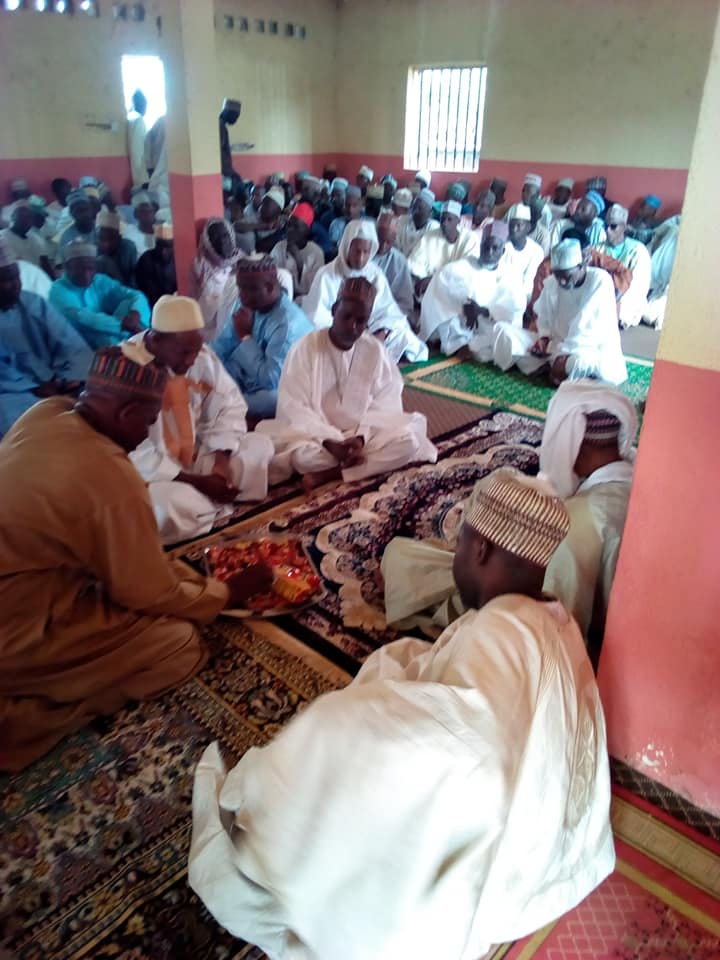
Kano State Governor Abba Kabir Yusuf reinforced his administration’s dedication to fostering religious harmony and development during an Iftar gathering at the Government House on Saturday, which celebrated the 15th day of Ramadan. 

The event welcomed prominent members of the Council of Ulama and Imams, offering a platform to strengthen unity and recognize the vital role of religious leaders in promoting peace within the community. 

In a significant announcement, Governor Yusuf revealed plans to transform the Kofar Mata Eid Prayer Ground into an International Islamic Conference Centre. He explained that the venue, utilized only twice a year for Islamic gatherings, will be repurposed into a world-class facility to support ongoing religious activities, scholarly discussions, and community engagement. 

“The foundation stone-laying ceremony for the Centre is set to occur two weeks after Eid al-Fitr, after which it will be handed over to the Ulama for management,” the governor stated, outlining his vision for a lasting religious infrastructure in the state. 

Additionally, Governor Yusuf affirmed his commitment to renovating all Friday mosques across Kano State and ensuring they meet proper worship standards. He instructed the Commissioner for Religious Affairs to compile a list of mosques requiring urgent government intervention. 

In further developments, a new, larger Friday Mosque at the Government House is currently under construction. It aims to accommodate more worshippers and enhance spiritual activities in the region. 

Expressing gratitude for the ongoing support of religious leaders, Governor Yusuf urged them to continue promoting unity and peaceful coexistence among the populace, highlighting the importance of collaboration between government and religious institutions. 

During the gathering, Sheikh Muhammad Nasir Adam, Imam of Sheikh Ahmad Tijjani Mosque, praised the governor’s vision, emphasizing Islam’s encouragement of charitable acts, such as feeding those who fast and nurturing places of worship. 

He reassured the governor of the Ulama’s steadfast support and prayers for the advancement of Kano State. Members of the Shari’a Commission, the Executive Council, and other distinguished figures attended the Iftar event. 

Governor Yusuf reiterated his administration’s strong ties with the Council of Ulama, assuring them that their contributions will continuously inform government policies to ensure lasting peace, stability, and religious harmony in Kano State. 

World leaders, UN chief mark International Day to Combat Islamophobia

By Muhsin Ibrahim

World leaders, including United Nations Secretary-General António Guterres, took to social media on Friday to mark the International Day to Combat Islamophobia, calling for unity and action against discrimination.

In a post on X (formerly Twitter), Guterres emphasized the need to address rising anti-Muslim hate worldwide. “Islamophobia is an affront to human rights and the values of the UN. We must stand together to promote tolerance, understanding, and mutual respect,” he wrote.

Several heads of state and government officials echoed similar sentiments. Canadian Prime Minister Justin Trudeau reaffirmed his country’s commitment to fighting religious discrimination, while Turkish President Recep Tayyip Erdoğan called for global solidarity against Islamophobia.

The International Day to Combat Islamophobia was designated by the UN in 2022 and is observed annually on March 15. It aims to raise awareness of prejudice against Muslims and promote inclusive societies.

Advocacy groups have urged governments to go beyond statements and implement concrete policies to tackle hate crimes and discrimination against Muslims.

The eternal quartet: Understanding the hadith debate in northern Nigeria

By Ibraheem A. Waziri

Last week, the Muslim online community in Northern Nigeria was abuzz with a debate between two prominent scholars: Shaykh Prof. Ibrahim Saeed Ahmad Maqari, Imam of the National Mosque, and Shaykh Prof. Sani Rijiyar Lemo, a well-known teacher and writer. They are discussing hadiths—sayings of the Prophet Muhammad—and their reliability. 

Maqari insists that only Mutawatir hadiths, which are passed down by many narrators, are certain. In contrast, Ahad hadiths, coming from fewer narrators, lack certainty; Da’if hadiths are doubtful; and Maudu’ hadiths are fabricated. Rijiyar Lemo argues that Ahad hadiths with strong chains—like those found in Bukhari or Muslim—are as trustworthy as Mutawatir hadiths, also rejecting both Da’if and Maudu’ hadiths.

This may appear to be a new split in Islam, but it isn’t. It’s an old debate reemerging, reflecting four fundamental ways we think: reason, belief, doubt, and rejection. Maqari and Rijiyar Lemo each adhere to one of four classic Muslim paths. Let’s simplify it to demonstrate that this isn’t a crisis—it’s just part of our nature.

The Scholars’ Stances: Old Roots, Modern Voices

Maqari aligns with the Ash’ari and Maliki approach. He’s cautious: only Mutawatir hadiths, widely shared and undeniable, confirm the Prophet’s words, especially for core beliefs. Ahad might be true but aren’t certain, Da’if are shaky, and Maudu’ are fabrications. His stance is logical, demanding solid proof.

Rijiyar Lemo takes the Athari and Salafi route. He’s straightforward: Ahad hadiths with strong chains are as good as Mutawatir—no need for a crowd if the narrators are reliable. He discards Da’if and Maudu’, trusting the vetting process.

This echoes a thousand years of Muslim thought, split into four theological groups—Mu’tazila, Ash’ari, Maturidi, Athari—and four legal schools—Hanafi, Maliki, Shafi’i, Hanbali. Maqari’s Ash’ari/Maliki; Rijiyar Lemo’s Athari/Salafi. The others linger in the background, forming four ways to see faith.

 The Fourfold Lens: A Universal Impulse

This isn’t just about hadiths—it’s how we view everything, through four lenses:

– Reason: “Prove it—how many narrators? Are they solid?” Maqari’s fans value his logic, insisting on Mutawatir’s wide agreement for certainty over Ahad’s limited sources.

– Belief: “My scholar says it’s true.” Rijiyar Lemo’s supporters trust a single Sahabi’s word if the chain is sound, no extra proof needed—just faith in the process.

– Doubt: “Are we sure? What if it’s wrong?” Questions linger for those unsure about either side.

– Rejection: “This is outdated nonsense.” Some walk away entirely.

Northern Nigeria’s Muslim online space shows all four: some cite Mutawatir facts for Maqari, others trust Rijiyar Lemo’s Salafi roots, a few question both, and some dismiss it outright. These align with the four schools, too. Picture a grid—reason on one side, revelation on the other—yielding four pairs:

– Reason + Reason: Hanafi and Mu’tazila  

  Hanafis use analogy and judgment for rules; Mu’tazila apply logic to beliefs like free will. They’re strict: theology needs Mutawatir or Ahad with three-plus narrators; rules use authenticated Azizi (strong Ahad). Reason leads.

– Reason + Revelation: Maliki and Ash’ari

  Malikis mix reason with Medina’s practices; Ash’aris back faith—like God’s traits—with logic. Maqari fits here: Mutawatir for beliefs, authenticated Ahad for rules like prayer times. Revelation guides reason.

– Revelation + Reason: Shafi’i and Maturidi

 Shafi’is prioritize hadiths and Qur’an, sorted logically; Maturidis use reason within scripture’s bounds. Mutawatir for theology, authenticated Ahad for rules like fasting. Revelation’s first, reason aids.

– Revelation + Revelation: Hanbali and Athari

Hanbalis stick to texts; Atharis take the Qur’an and hadiths as is. Rijiyar Lemo’s here: authentic Mutawatir or Ahad work for both beliefs and rules. Revelation rules.

Maqari’s Ash’ari/Maliki stance demands Mutawatir for certainty; Rijiyar Lemo’s Athari/Salafi view accepts authentic Ahad.

Four Across the Ages

Four isn’t just in this debate—it’s a pattern across time and cultures. In the West, psychologist Carl Jung saw four as a symbol of wholeness, like in mandalas or personality types—thinking, feeling, sensing, and intuiting. Stephen R. Covey’s four quadrants divide tasks by urgency and importance, offering a complete way to manage life. Game theory maps four outcomes—win/win, win/lose, lose/win, lose/lose—covering all possibilities in decisions, much like Karl Popper’s fourfold reasoning tests ideas through trial, error, doubt, and rejection. Four directions—north, south, east, west—guide us; four elements—fire, earth, air, water—once explained the world; four schools shape Islam. Even a Sudanese Sufi song by Abdurrahim Albur’iy, Misr al-Mu’mina, celebrates four in nature and Islamic history:

“We call upon You with the four and the four books,  

And the 114 surahs [Qur’an],  

With the six angels and the four noble ones,  

With our Prophet Muhammad and the four caliphs,  

And the six after them and the four imams,  

And the seven jurists and our four poles,  

The pegs of the earth in the four directions,  

The substitutes and the ten chiefs in four,  

Preserve my three and four limbs,  

And keep our four sides from the resting place,  

Remove the body’s illness in its four temperaments,  

Bless our week until Wednesday (fourth day),  

The ninety days of the year in four,  

And our seven seas and our four rivers,  

We are saved from four and gathered with four.”

Fours—caliphs, books, rivers—tie faith and life together across time.

Philosophy Meets Faith: Why Four?

Why four? It’s simple and complete. Two (yes/no) is too basic, three (yes/maybe/no) lacks balance, and five’s cluttered. Four’s just right: two ways to agree (reason, belief), one to question (doubt), one to reject. Like a square, it’s steady, covering all sides—seen in nature, history, and our debates.

Nothing New Under the Sun

Don’t let Northern Nigeria’s Muslim online space hype fool you—this is old news. Ash’ari scholars like al-Ghazali sought proof, like Maqari; Athari ones like Ibn Taymiyya trusted texts, like Rijiyar Lemo. Mu’tazila favored reason; Maturidi blended it with faith. Four schools, four views—same as today.

It’s loud now because Maqari’s at the National Mosque, and Rijiyar Lemo’s books reach many. People care about the Prophet’s words. But it’s not a new split—just two notes in an old four-part tune.

Takeaway: Embrace the Quartet

Don’t worry about this debate. It’s not Islam breaking—it’s alive, with views fitting four natural slots: Maqari’s logic, Rijiyar Lemo’s trust, plus doubt and rejection. Next time Northern Nigeria’s Muslim online space heats up—over hadiths or anything—spot these four: thinkers, believers, questioners, and naysayers, blending into many combinations. It’s how we work. Maqari and Rijiyar Lemo pick two corners of a square we’ve all been drawing forever. It’s not chaos—it’s our pattern.

Hey, Nigerian Christians, it’s time to stop the bigotry

By Ammar M. Rajab

The recent uproar among some Nigerian Christians over the decision by the states of Katsina, Kebbi, and Bauchi to close schools for the holy month of Ramadan serves as yet another reminder of the deep-seated prejudice that certain Christians in Nigeria have toward anything associated with Islam and Muslims. This decision to observe the holiday is neither new nor illegal; it is well within the rights of these states, just as Christian-majority states regularly declare holidays during Christian celebrations.

Let me be clear — the schools are not closing arbitrarily. This decision is part of the officially approved academic calendar and coincides with the globally recognized Islamic holy month. Ramadan is not just about fasting; it is a profoundly spiritual time when Muslims dedicate themselves to prayer, charity, and community service. In a region where the vast majority are Muslims, it is reasonable to make space for religious observance. Why, then, does this simple act provoke such unnecessary outrage from some Christian voices?

This hypocrisy becomes even more pronounced when one considers that Christian-majority states have done the same, if not more. Just a few months ago, in December 2024, the Governor of Benue State, Hyacinth Alia, declared a two-week holiday for civil servants to celebrate Christmas and New Year. Nobody raised an eyebrow. This is not unusual.

Cross River State has also been declaring extended holidays for Christmas and the famous Calabar Carnival since 2004. These are Christian holidays observed in Christian-majority states, and nobody labels it religious bigotry. But when Muslim states exercise the same right, it suddenly becomes a national scandal. Why the double standard?

This selective outrage reflects the deep-seated bigotry that some Nigerian Christians have toward Muslims. Any policy, tradition, or cultural expression associated with Islam is instantly deemed backward, oppressive, or indicative of religious dominance. In contrast, similar practices from Christian communities are regarded as cultural pride and religious freedom. Why this hypocrisy? Why the persistent anger whenever Muslim states make decisions that align with their people’s beliefs? What exactly is the issue?

Enough is enough. Nigerian Muslims are not second-class citizens. The constitution guarantees freedom of religion and allows states to make decisions that reflect their people’s cultural and religious identities. If Christian states can observe Christian holidays without controversy, then Muslim states can observe Islamic holidays without needing to apologize to anyone. No group has a monopoly on public holidays, religious expression, or cultural identity.

It’s time for Nigerian Christians who participate in this unnecessary provocation to cease this religious bigotry. Live and let live. Respect the rights of others just as you expect your own rights to be respected. Nigeria is a multi-religious, multi-ethnic country, and it can only thrive when we all honour each other’s beliefs and traditions.

If you can celebrate Christmas and Easter with state-backed holidays in Benue, Cross River, and many other Christian-majority states, then Muslims can celebrate Ramadan in their own way as well. Anything less is not just hypocrisy—it’s outright bigotry. And it’s time for all of us to say: enough is enough.

Ammar M. Rajab wrote from Kaduna, Nigeria.

Al-Azhar at 1085: Celebrating its global legacy and services to Northern Nigeria

By Umar Sheikh Tahir

Al-Azhar was commissioned on the 9th of Ramadan 361H/ 972AD by the Fatimids in Cairo, Egypt. The name is derived from the holy Prophet’s (PBUH) daughter’s name, Fatimah al-Zahrā alayha al-Salam. The institution is one of the most prominent centers of Sunni Islam in the Muslim world. It serves as both a mosque and a university, and it is recognized as the world’s first university operating initially inside the grand mosque of al-Azhar. 

The institution is a beacon of our enduring legacy and tradition, showcasing our continuous connection and shared heritage. Its services extend not only to educational, spiritual, and theosophical but also humanitarian services to mankind around the globe. It is followed by Zaytuna in Tunisia and Qarawiyin in Morocco. 

As we celebrate the 1085th anniversary of Al-Azhar’s establishment, this article recognizes the significant contributions of Nigerians in the past and Al-Azhar’s contributions to our educational system in contemporary northern Nigeria. Finally, it highlights Al-Azhar alumni who have been instrumental in providing valuable services and whose excellence has made our nation proud. 

1.     Royal Contributions to Al-Azhar in the Past

Classical Azhar constituted several Ruwaq or Arwiqah Corridors/Hostels. These Corridors were named to symbolize the strong ties to some nations worldwide. A few of these names were dedicated to West African communities, such as “Ruwāq al-Barnāwī,” “Ruwaq Dakarinah Darfur,” “Ruwaq al-Barābirah,” and “Ruwaq al-Dakārinah Salih.” These names primarily related to precolonial Saharan and Sub-Saharan empire states, currently representing West African nation states. The closest to Nigeria is Ruwāq al-Barnawi, honoring Black African students from the Kanem Borno subregion in modern-day Northern Nigeria. This medieval hostel now serves as a lecture hall. This recognition stemmed from the strong relationships between Al-Azhar’s leadership and the Kanem Borno royal family. 

Mai Idris b. ‘Alī (1564-1596) spent tons of gold in Cairo, some of which went to endowing the Al-Azhar institution alongside other expenses such as hostels for Borno students and lodges for Kanem-Borno pilgrims to Hajj. This gesture echoes the famous history of Mansa Musa, who made gold depreciate by 25% in Cairo during his famous Hajj travel and stayover. 

Another substantial endowment was the Ibn al-Rashiq School, founded with support from Kanem Borno during the Ayyubi regime in 567-648/around the 12th AD. The institution served as a school and provided services to Hajj travelers from the Kanem-Borno area. In the 18th century, Muhammad bn Muhammad al-Fullānī Al-Kashnāwī’s impactful visit and teaching at Al-Azhar Mosque showcased the enduring influence he had on the institution and its scholars. He was so esteemed that they pursued him to stay until the end of his life, and he was buried in the Graveyard called Bustān al-Ulamā. 

 2. Al-Azhar’s Global Services

Since its inception, Al-Azhar has connected with the world, including our locality, in many ways. Al-Azhar sends teachers to the United States of America, Europe, Asian nations, African countries, and remote rural places. They were sent to the elementary and high schools worldwide, including Nigeria, to teach Islamic studies, the Arabic language, Basic Sciences, and Technology. Nigeria received more than a hundred teachers before, but the number recently decreased to less than 40 teachers due to insurgencies, as I inquired through the Embassy last year. 

However, in May 2016, the Grand Imam of Al-Azhar, Shaykh Ahmad al-Tayyib, visited Nigeria. During his visit, he announced increased scholarships for Nigerian students to Al-Azhar University, covering not only Islamic sciences and humanities but also natural sciences, technology, engineering, and medical schools.

3. Celebrating Excellent Nigerian Alumni in the Past and the Present

I cannot celebrate this milestone without acknowledging some Azhar alumni who have made Nigerians proud. This section highlights the achievements of selected Nigerian students, both past and present, who have excelled there, showcasing their academic prowess and impact on Nigerian society, especially those in prominent national positions.

Among the notable contemporary alums, Ambassador Abdullahi Yalleman and Dr. Hadi Sheikh Tahir graduated at the top of their classes. The former had the honor of receiving his award from former Egyptian President Hosni Mubarak, while the latter was accepted as a Ph.D. student directly from Al-Azhar to the University of Glasgow in Scotland. 

I apologize for not listing more excellent names here, as many deserving individuals come to mind among the outstanding alums I know personally. I will briefly mention a few sectors where Azhar alumni contribute to our society. For instance, most university lecturers, especially in the linguistics and Islamic studies departments, and leaders of colleges of education, are Azhar graduates. The leading Imam of the National Mosque and the founder of the first female-only university in Nigeria is also an Al-Azhar alumnus. Indeed, in the late 1940s, Nigerians celebrated the first female student admitted to the University of Ibadan, and now look at where we are with the contributions of Azharis. 

The leadership of the Sheikh Tahir Bauchi Islamic Center for Quranic Memorization and Islamic Studies consists of Azharis, including the Chairman, Vice Chairman, Secretary, and several directors, all of whom are graduates of al-Azhar. In fact, the Director of Education and School Services for this foundation oversees over 1,500 schools across West African countries and is also an Azhari. The world’s wealthiest Black person is Nigerian and among the alums of al-Azhar. Additionally, the former world champion of Arabic poetry in Abu Dhabi in 2022 is a Nigerian Azhari from Kano. You can also find them in mosques, performing well and serving local communities everywhere. The list can go on and on. 

This brief exploration has inspired me to write in detail in the future to celebrate our local leaders who are Azhar alumni and provide services to our beloved nation through various mediums.  

4. Hausa Language in Al-Azhar Media

Hausa was selected among other languages to serve as a medium of broadcast on Azhar Media TV for educational, intellectual, and spiritual enrichment, as well as to promote peace, featuring standard Islamic texts that cover all sciences in local languages worldwide. Nigerian students were among the qualified scholars leading these teachings for the benefit of Hausa-speaking communities in West Africa. This initiative was part of the office of former Mufti Prof. Emeritus Shaykh Ali Jum`ah, aiming to advocate for Al-Azhar’s methodology of moderate Islam in opposition to extremist views that fuel insurgencies. It was planned that the audio and video content of these teachings would be distributed to local Hausa-speaking communities. 

Today, I extend my congratulations to our Grand Imam, the alumni, and the wider Muslim community on this anniversary. As I reflect on my graduation from Al-Azhar 15 years ago, I appreciate the significance of 1,085 years of intellectual pursuit, the creation of a lasting legacy, engagement with global intellectual institutions, and the dissemination of knowledge throughout the world. 

I join the parents of our children in these urban and rural communities, along with Nigerian students in Azhar receiving full scholarships with free accommodations, in expressing our gratitude to the leadership and administration of Azhar and those Azhar teachers. The Egyptian embassies process the teachers’ paperwork, manage their placements, and report to the leadership above them—our dear Grand Imam. 

Thank you, Azhar, with our spirits before our tongues, and may God preserve you for the Ummah of Islam!

Umar Sheikh Tahir is a PhD Candidate at Columbia University, New York, USA. He can be reached via ust2102@columbia.edu.

Mosques speak: The legacy of Dr. Yakubu Adamu (Mai Masallaci), a faith builder

By Usman Abdullahi Koli

Have you ever walked into a mosque and sensed its walls whispering stories? Stories of faith, of community, of lives transformed? One quiet afternoon in Bauchi, as the sun cast long shadows across the courtyard of a newly renovated mosque, I found myself in the middle of such a conversation. But this was no ordinary dialogue. 

The mosque itself began to speak, its voice a blend of gratitude and reverence, joined by the echoes of countless lives impacted by one man—Dr. Yakubu Adamu, the Commissioner of Finance and Economic Development, affectionately known as Mai Masallaci.

The mosque’s voice was calm yet commanding, like the adhan that calls the faithful to prayer. “Sit,” it seemed to say, “and listen to the story of a man who saw me not as a crumbling structure but as a sanctuary of hope. 

When Dr. Yakubu Adamu first approached me, I was in ruins—my walls cracked, my roof leaking, my courtyard silent. But he saw beyond my decay. He saw the souls who gathered within me, the prayers that rose from my floors, and the community that depended on me. With his hands, he rebuilt me. With his heart, he revived me. And with his faith, he reminded me of my purpose—to be a house of Allah, a home of unity and hope.”

I leaned in, captivated, as the mosque continued: “But he did not stop with me. He traveled across the state, seeking out my brothers—mosques that had been forgotten and abandoned. He gave them new life, not just as structures, but as symbols of faith and community. He understood that building a mosque is a bridge between this world and the hereafter.”

Then, another voice joined the conversation—a gentle, heartfelt murmur that seemed to come from the air around us. It was the voice of his philanthropic gestures, the countless acts of kindness that had touched thousands of lives.  

“He is not just a builder of mosques,” the voice said. “He is a builder of lives. I have seen him provide food for the hungry, scholarships for the bright but needy, and medical care for the sick. I have watched him sit with the poor, listen to their struggles, and offer material support and hope. He does not see charity as an obligation; he sees it as a privilege, a way to draw closer to Allah.”

The mosque nodded in agreement, its dome catching the sunlight like a crown. “Yes,” it said. “He is a man who understands that true success lies in serving others. His humanitarian services are not just acts of kindness; they are acts of worship.”

As the conversation deepened, the voices grew more numerous, each adding a layer to the story of Dr. Yakubu Adamu. The students he had supported spoke of his belief in education as a tool for empowerment. The elderly he had cared for praised his compassion and respect for the aged. The farmers he had assisted shared stories of his commitment to economic development and self-sufficiency. And through it all, one theme emerged: Dr. Adamu is a man who lives for others, a man whose life is proof of the teachings of Islam.

Now glowing with pride, the mosque turned to me and said, “But perhaps what sets him apart is his humility. He does not seek recognition or praise. He works quietly, tirelessly, knowing that his true reward lies with Allah. He is a leader who leads by example, a servant who serves with love, and a believer who lives by faith.”

As the sun began to set, casting a golden hue over the mosque’s courtyard, I felt a profound awe. This was not just a story of a man; it was a story of a legacy—a legacy of faith, service, and humanity. Dr. Yakubu Adamu is not just a commissioner but a guardian of the people, a protector of the faith, and a pillar of hope.

The mosque, its voice now a whisper, offered a final thought: “Tell the world about him. Let them know that in a time when selflessness is rare, Dr. Yakubu Adamu stands as a reminder of what it means to live a life of purpose. Inform them that his work is not just for this world but for the hereafter. And convey that we, the mosques and the hearts he has touched, are forever grateful.”

As I left the mosque that evening, the call to Maghrib prayer echoed through the streets, reminding me of the divine connection that Dr. Yakubu Adamu has strengthened through his work. His story is not just one of bricks and mortar, food and medicine, or governance and development. It is a story of faith, love, and a man who has dedicated his life to improving this world and the hereafter. May Allah bless him, protect him, and grant him the highest place in Jannah. Ameen.

Usman Abdullahi Koli wrote via mernoukoli@gmail.com.

Nuhu Ribadu for President 2031?

By Zayyad I. Muhammad

The Nigerian political landscape is never short of intrigue, speculation, and high-stakes maneuvering. The latest storm centers around Mallam Nuhu Ribadu, Nigeria’s National Security Adviser (NSA), and allegations made by his ‘former’ ally and friend, Mallam Nasir El-Rufai, the former governor of Kaduna State.

El-Rufai has accused Ribadu of secretly positioning himself for a presidential bid in 2031, alleging that he is working to eliminate key northern politicians before the elections. In an Arise TV interview, El-Rufai said:

“Somebody wants to destroy my reputation. Why? Nuhu Ribadu wants to be president in 2031. He has to eliminate every northerner that he thinks is on the radar.”

These allegations have sparked intense debate, given Ribadu’s current position as the NSA, one of the most powerful offices in the country. The role demands absolute loyalty to the sitting president, and any sign of personal political ambition would be politically dangerous.

However, Ribadu has vehemently denied the claims, dismissing any suggestion that he is planning a presidential run in 2031. In his response, he stated:

“For the avoidance of doubt, I want to put it on record that I have never discussed running for president in 2031 with anybody.”

Currently, President Bola Ahmed Tinubu is in the second year of his first term and is widely anticipated to run for reelection in 2027. If he wins, his administration would extend until 2031. Considering this timeline, it seems premature for anyone in Tinubu’s inner circle—particularly someone in such a sensitive position as the NSA—to be planning a presidential bid so early.

To be fair to Ribadu, every seasoned political observer knows he is too intelligent and experienced to make such a politically reckless move. Launching a presidential campaign while still serving in a crucial role would create unnecessary distractions, fuel rivalries, and generate deep animosities within the government. It would also call his loyalty to Tinubu into question.

So why is Ribadu being linked to 2031?

First, his close relationship with President Tinubu has earned him the title of Tinubu’s golden boy (Dan Fulani). His reputation as a disciplined, intelligent,  experienced, and competent leader makes him a natural contender in any discussion about potential successors. Any rising political figure will inevitably attract speculation in a political climate where future ambitions are often carefully managed behind closed doors but widely discussed publicly by everyday people.

Second, the political class understands that succession planning is always at play, even when not publicly acknowledged. While Ribadu may not currently campaign for the presidency, political opportunities can arise unexpectedly. Nigerian politicians are known for their ability to seize the moment when the circumstances align, even if it was not originally in their plans.

Politics is unpredictable, and today’s denials can quickly become tomorrow’s declarations. Whether or not Nuhu Ribadu harbors presidential ambitions, the reality is that he possesses the qualities of a strong contender—experience, credibility, and proximity to power. If the opportunity presented itself, would he take it?

Only time will tell. But one thing is sure: The road to 2031 has already begun, and the political maneuvering will only intensify in the coming years.

Zayyad I. Muhammad writes from Abuja via zaymohd@yahoo.com.

Christmas and Easter Holidays: Why our school system should be reviewed

Prof. Abdussamad Umar Jibia

Throughout the week, discussions have arisen following the Christian Association of Nigeria’s (CAN) rejection of the closure of schools in some predominantly Muslim states in the North. In that context, I came across another article published by the Daily Trust on the same topic, written by a Muslim, or at least someone with a Muslim name; I cannot ascertain his faith.

This morning, I took some time away from assessing my students to read the articles. It is unfair to respond to a statement that one has not read. 

I read the press release by CAN a few times over, hoping I might find some wisdom. Unfortunately, I couldn’t. CAN is its usual self, apprehensive of anything Islamic out of fear of losing relevance. 

Christianity in Nigeria, as I often say, is merely surviving due to the presence of Islam. For instance, if Muslims were to cease going on hajj, all the Christian pilgrims’ boards, including the central one in Abuja, would naturally wither away. It is only when Muslims discuss Shariah that Christians recall the existence of Ecclesiastical law, which many of them know little about. The examples are numerous.

This time around, CAN understands that closing schools “for an extended period disrupts academic schedules and threatens the educational advancement of millions of students”. What CAN has forgotten is that Nigerian schools have always been closed for the same “extended period” of at least one month since our colonial days for Christian festivals. In fact, the Nigerian school calendar is designed to close all schools for at least two weeks each for Easter and Christmas celebrations. 

The Christian holidays have been officially recognised and embedded in our school calendar in a so-called secular country. If CAN were concerned about religious balance, as they falsely claim, they would have advocated for the cancellation of the Christmas and Easter holidays and proposed something neutral.

Archbishop Daniel Okoh, the signatory to the press release, wanted Nigerians to believe that the closure of schools during Ramadan would compromise the education of Christian children and devalue Christian communities in the North. This is an admission by the CAN President that the education of Nigerian Muslim children has always been compromised and that Nigerian Muslims have no value in Nigeria since their children are forced to remain out of schools for Christian festivals.

I am waiting for the CAN President and his team to go to court as they have threatened. What I would like to assure them is that Nigerian Muslims are now wiser. CAN hasn’t yet seen anything. All traces of Christianity as imposed on other Nigerians must be removed from our national life. It is just a matter of time.

The opening argument of the Daily Trust writer is that there is no single injunction in Islam mandating the closure of schools during Ramadan. I wish he would tell us where Islam mandates the closure of schools for Christmas and Easter. Islam is a complete way of life. Isn’t that what he is trying to argue? Does Islam not prevent us from blindly copying Jews and Christians?

From the beginning, Muslims have paid for the unity of the North and, indeed, Nigeria with their religion and, in some instances, their blood. This must stop at some point. If we are to remain united, then the rights of Muslims must be acknowledged and granted.

The people who colonised us were Christians. This explains why Christianity is ingrained in almost every aspect of our national life. Now that Muslims are expressing dissent, some people are calling for unity. A shared Northern identity? Yes. One Nigeria? Yes. One religion? No, we are Muslims and will not continue to accept the imposition of another religion upon us.

Finally, let me call on our Governors and, indeed, the Federal Government to embark on a comprehensive reform of our school system to align it with our values and beliefs. All neocolonial items should be removed.

Prof. Abdussamad Umar Jibia can be contacted via aujibia@gmail.com.

MURIC calls out CAN for overstepping in Muslim concerns

By Abdullahi Mukhtar Algasgaini

The Muslim Rights Concern (MURIC) has responded to the Christian Association of Nigeria (CAN) regarding four northern states’ decision to close schools until after Ramadan.

Bauchi, Katsina, Kano, and Kebbi are among the states involved. These states announced the closure of schools until the end of the Ramadan fasting period.

The Director of MURIC, Professor Ishaq Akintola, accused CAN of interfering in Muslim matters and Islam. He argued that this indicated that CAN wants to speak on behalf of both Christians and Muslims, which he believes is inappropriate.

MURIC called on CAN to focus on its own affairs and refrain from commenting on matters that are not of concern to it.

JUST IN: Sultan announces start of Ramadan Saturday

By Uzair Adam

The Sultan of Sokoto and President-General of the Supreme Council for Islamic Affairs, Alhaji Muhammad Sa’ad Abubakar III, has declared Saturday, March 1, as the first day of Ramadan.

He made the declaration in a nationwide broadcast, stating that the Sultanate Council’s moon sighting committee had received credible reports from traditional rulers and religious leaders across the country confirming the sighting of the new crescent.

The Sultan urged Muslims to dedicate themselves to worship during the holy month and use the period to pray for Nigeria and its leaders.

He also called for peaceful coexistence among citizens and encouraged wealthy individuals to support the less privileged in observing the fast with ease.

While praying for God’s guidance and wisdom for the nation’s leaders, he emphasized the importance of unity and compassion during Ramadan.