Opinion

Zaria LGA Election: Engr. Jamil Ahmad Muhammad’s plans for his people

By Ishaq M. Sani

 To surmount all challenges, the good people of Zaria deserve the best leadership at the local government executive council. Therefore, it’s imperative to bring in competent, young, and vibrant representation to the good people of Zaria local government. 

The good people of Zaria equally need a leader who can foster a harmonious synergy between the local, state, and federal governments, paving the way for remarkable achievements, transformative development, and a brighter future—a leader with a proven track record of driving impactful changes and advancing grassroots priorities. With Engr Jamil piloting the affairs of the cosmopolitan Zaria, an era for Pressing forward in the direction of progressive outcomes and solid attainments for the good people of Zaria is possible. 

However, Jaga’s socio-political background and mentorship from both the executive governor, Mal Uba Sani, and the speaker of the House of Representatives, Hon. Abbas, as Deputy chief of staff, have instilled in him the values of honesty, inclusivity, and open-mindedness to diverse views, contributing to effective governance. 

Ahead of the October Kaduna LGA elections 2024, a vote for Engr Jamil is a victory for addressing critical issues relating to Human Capital Development, Infrastructure Development, Security, Agriculture, Environmental management, Climate change, greenfield initiatives, Trade and Investment, and Robust Citizen engagements.

His focus on human capital development emphasised this: Engr Jamil is set to ensure education/scholarship, health, and social investment. He has tagged “Education: Knowledge and Skills Acquisition for the Future.” He is also Ensuring that scholarship opportunities are expanded to less privileged students to support lifelong learning. 

Elucidating impacting measures, combined with a continuous programme to improve teachers’ quality and teaching standards to ensure that basic education investments produce the desired learning outcomes in line with the sustainedmanifesto of his excellency Mal Uba Sani. Moving further, Zaria needs a well-equipped leader to support entrepreneurship in ICT, which is necessary for stimulating innovation and economic growth. 

Focus on Health ensures access to quality care in the health sector to consolidate the remarkable achievements recorded by Sen Mal Uba Sani, the state government leader, and Speaker Abbas’s critical interventions. Zaria looks forward to robust social investment through social welfare and liberating empowerment through dedicated funds for women and youth. 

The Zaria infrastructural development is also expected to focus on investment in sustainable environmental infrastructure such as water supply, sewage and solid waste management, and adequate infrastructure such as culverts, drainage and connecting roads/bridges for job creation, taking centre stage. 

The mission is to collaborate with the neighbouring LGAs and state and federal governments to continually improve the quality of connecting roads and ensure the expansion of the local electricity infrastructure, especially across Dembo, Wucicciri, and Dutsen Abba, among others. 

Furthermore, it promotes environmental conservation and sustainability, protecting Zaria’s natural resources and ensuring the sustenance of the conditions for economic dynamism through investments, vibrant commercial activities, skills development, and job opportunities.

However, like many other local governments, Zaria has been one of the hotbeds of security threats in Zone 1 of Kaduna state in the last eight years, with attacks happening on a regular basis. I commend the Governor and the honourable speaker for their robust efforts in maintaining the peace and stability of the state within their first year in office. 

Moreover, Engr. Jamil is expected to ensure a secure, peaceful, and united Zaria LGA. Effective collaboration between the state and federal government will ensure the deployment of security personnel and equipment for adequate security in the local government. Deep intelligence gathering through collaboration with traditional, religious, and community leaders will support security agencies. 

In light of the preceding, the competitive advantage of Zaria’s growth potential in the agricultural sector is viable through effective utilisation of agro-ecological zones, rising youthful population, irrigated farming opportunities while transitioning from subsistence to commercial agriculture and leveraging linkages with local manufacturing in the promotion of agri-business.   

Finally, Zaria envisions a leader who is committed to providing all-inclusive and diverse representation, Feedback mechanisms, and accountability processes, ensuring effective engagement with all communities for equity, responsiveness, collaboration, and accountability; this is possible when Engr Jamil is given the mandate. 

 Join Engr Jamil Ahmad Muhammad on this great journey…

Ishaq MSani writes from the office of the APC chairmanship Candidate, Zaria local government. Strategic communication directorate

Addressing mental health issues in Nigeria

By Aminat Adebesin Adebisi 

Nigeria, known for its vibrant culture and resilient people, is grappling with a pressing concern: mental health issues. Conditions such as depression, anxiety, and substance abuse affect millions, particularly the youth. Despite alarming statistics, the topic remains shrouded in stigma and silence.

Personal Experience

I have witnessed firsthand the devastating impact of mental health stigma. A close friend struggled with depression for months, hiding her pain behind a mask of smiles. For her, seeking help felt like a sign of weakness, and she wasn’t ready to open up. As I watched the twinkle in her eye fade, I wondered how I could have helped her escape the darkness.

Alarming Statistics

According to a 2019 report by the World Health Organization (WHO), depression is the leading cause of disability in Nigeria, with 1 in 5 Nigerians suffering from mental health disorders. The National Mental Health Survey (2018) reveals that 22% of Nigerians experience depression, while 30% struggle with anxiety.

Barriers to Seeking Help

Limited awareness, stigma, and entrenched cultural beliefs hinder individuals from seeking help. In Nigeria, voicing mental health concerns can lead to gossip, judgment, or even rejection. This silence forces many to suffer in isolation.

Breaking the Silence

To combat the rising rates of depression, we must take the following steps:

  • Establish Support Groups: Create social support networks with trusted, informed individuals to encourage open conversations.
  • Raise Awareness: Leverage organisations like the Nigerian Mental Health Association, the Federal Ministry of Health, and media outlets to promote understanding of mental health issues.
  • Integrate Education: Incorporate mental health education into school curricula to empower students and reduce stigma from a young age.
  • Engage Community Leaders: Collaborate with community leaders and influencers to promote discussions around mental health.
  • Improve Accessibility: Develop affordable and accessible mental health services to ensure that help is within reach for everyone.

Together, we can create a Nigeria where mental health discussions are embraced with empathy rather than met with stigma. By breaking the silence, we can offer support and hope to those affected, fostering a healthier, more understanding society.

Aminat Adebesin wrote via adebesinaminat2018@gmail.com.

If wishes were horses: Tribute to Prof. Musa Auyo

By Khaleed Suleiman Abdul

We thank Allah for a life well spent. Indeed, from Allah we come, and to him we shall return. Professor Musa Abdu Auyo’s death is undoubtedly one of the few transitions that shocked Bayero University Kano and the entire academic circle within and outside Nigeria. 

The Comrade, as we fondly called him, was an unrepentant freedom fighter and social justice crusader. His uncommon spirit of tolerance and forgiveness earned him popularity among different classes of people. In fact, he is a man of the people, and the turnout of people from all walks of life who paid their last respects during his internment testified to that.

My first close encounter with him was when he and a few other individuals helped me secure admission into Bayero University. That was about three decades ago, 1993 – 1994, to be precise. From then on, the relationship knew no boundary and continued to wax stronger until his death.

I always recall with joy how he facilitated the securing of admission for ten qualified candidates in different departments and faculties whose credentials were forwarded to him by my humble self.

His simplicity and sense of accommodation enabled him to act or respond with dispatch to any request I put before him, particularly on student admission or counselling issues.

He once said, “As a lecturer, I don’t have much financially to give, but when it comes to securing admission or imparting knowledge to people, I must do my best”.

Comrade was always ready and willing to help you irrespective of your tribe, religion, class, or age. He believed that society must change positively through education and the creation of public awareness. 

His exemplary, simple lifestyle contributed immensely to our conduct. 

He taught us the spirit of accountability, answerability, patriotism, and sympathy in the common person.

The late academic guru was bereaved by two wives and nine blessed and educated children. One of them is completing her PhD, and others have or are doing their master’s degree and undergraduate programs in different fields of human endeavour. May God Almighty protect and guide them, ameen.

Professor Musa Auyo graduated in library and information sciences from the prestigious Bayero University Kano, received a master’s degree in the same field from Ahmadu Bello University Zaria, and received a PhD from BUK. He has also been a professor from the same institution lately.

He was the Head of the Department of Library and Information Sciences, Dean of the faculty of education, Bayero University librarian, one-time pioneer librarian at Federal University Kafin Hausa, and, very recently, chairman of the Board College of Education, Gumel, Jigawa State.

Despite all these academic responsibilities, the late professor still found time to belong to associations within and outside the university walls. 

I remember as a student, whenever a symposium was organised, and comrade Auyo and the likes of Prof. Ibrahim Bello-Kano (IBK), late Auwalu Umar, and Auwalu Kawu of sociology were to make a presentation, the theatre always appeared too small to accommodate the mammoth crowd of students anxious to hear words of wisdom from the effervescent cum erudite scholar.

His belief in public education and enlightenment led him to champion the establishment of the Auyo Youth Association (AYA), Hadejia Youth Organization, and Literacy Club Society of Bayero University (LICSOBUK) in which I worked closely with him to champion the cause but was short-lived immediately after we graduated.

He was a great pillar, a beacon who nurtured and groomed students and intellectuals within and outside the campus. Some of his students today are professors doing well in their chosen professions. They include professors Abbas Mai Dabino and Baffa Abubakar, to mention a few.

I recall with pride how the late Professor Auyo, as a crusader of social justice and other sound-minded intellectuals in the Senate, saved many students from rustication for merely embarking on a lack of electricity and water protest in the new campus, where the Vice Chancellor insisted that the students must be punished. 

However, these noblemen, including the late professor, stood their ground to ensure no student fell prey to victimisation.

In conclusion, filling the vacuum created by your demise will be very difficult. Your contribution to education, community development, social justice, mentoring, and nurturing within the university perimeter and across society will remain indelible in our memory.

We pray to almighty God to grant you the highest level of Jannah, peace, and everlasting Rahma in your grave until we meet and part no more. Alhamdulillahi!

Khaleed Suleiman Abdul (Sardauna of Gwagwarwa) wrote via akhaleed431@gmail.com.

Climate Change: Nigerians in the rainy season

By Umar Fatima Shehu

The weather and environment have hindered people’s health due to rapid rainfall, dam overflow, bushy environment, and unclean water.

According to the Reliefweb report, some states in the northern part of Nigeria have been experiencing continuous rainfall, which has caused drainage blockages, floods, crop loss, and soil erosion in states such as Kano, Borno, Adamawa, Yobe, Bauchi, Sokoto, Zamfara, and Jigawa.

KANO

Obstruction of drainages, a bushy environment, and unclean water are affecting the people’s health in Kano, as there are few drainage provisions. 

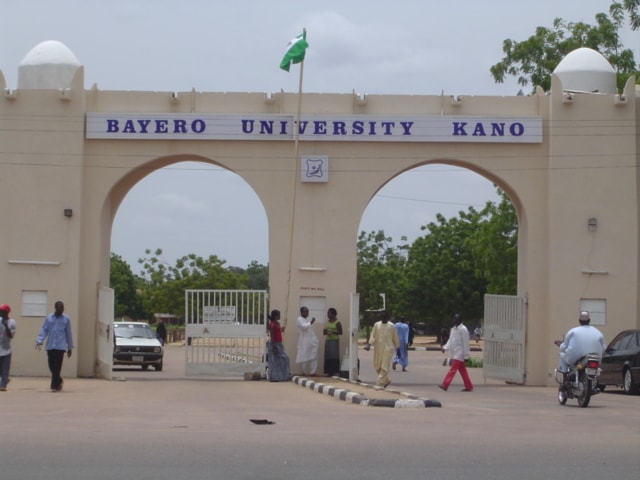
At Bayero University Kano, this closure has affected the flow of waste products from the hostel latrines. The male hostels (Aliko Dangote, El-El-Kamis) and some of the female hostels are affected by this issue, which is not harmful to the health of the students residing and passing along the building.

Due to unknown circumstances, the management of the university has not been providing sufficient water to the hostels, leading to students fetching water from unclean sources such as rainwater from the rooftop of the hostel building, broken pipes surrounded by stagnant water, etc.

The closure of drainages and bushy environment has led to too much stagnant water around the university. This water helps to generate more mosquitoes and reptiles. The high rate of students visiting the school clinically is evidence of a lack of environmental hygiene. Several students have been diagnosed with malaria, fever, typhoid, cough, etc.

BORNO

The ancient city of Borno, Maiduguri, was flooded due to the overflow of the Alau Dam in Konduga. This led to home loss, missing relatives, and destruction of amenities, including health facilities.

According to a report by the Nigeria Health Watch, over 400,000 people are displaced. The state is at a high risk of infectious disease outbreaks because of camp crowdness, lack of clean drinking water, unhygienic conditions, shortage of health facilities, etc.

According to Chachu Tadicha, deputy director of program operations/humanitarian at Save the Children,” the flood has posed a serious risk to food security because crops in the field have been severely damaged. With this, there will be an increasing rate of malnutrition.”

The flood has contaminated the environment with specks of dirt from the disposals and drainages, which has caused stagnant water to serve as a breeding ground for mosquitoes. The Coordinating Minister of Health and Social Welfare stated, “Chlorine tablets, anti-malaria treatment, bednet, etc., are being sent from other states to Maiduguri to address the potential increase in malaria cases.”

WAKE UP CALL

Dams and riverbank overflow caused most flood incidents. The Federal and State governments should work to prevent the reoccurrence of such incidents again in the country by ensuring the appropriate use of signed bills for their purpose.

On the catastrophic flooding in Maiduguri

By Abdurrahman uba wada

Maiduguri, the capital of Nigeria’s Borno State, experienced severe flooding following the collapse of the Alau Dam. The disaster submerged homes, displaced families, and crippled vital infrastructure, creating a crisis of historic proportions.

Aisha Mohammed, a resident of the hard-hit Gwange area, described the rapid onset of the floodwaters, which left little time for her family to escape. Neighbourhoods like Fori, Galtimari, and Bulabulin were severely affected.

State Commissioner for Information and Internal Security, Usman Tar, issued an urgent evacuation order, stressing the importance of moving to higher ground immediately. This event echoed the 1994 Alau Dam failure that submerged half the city. Prof. Ibra Baba Goni, a hydrologist at the University of Maiduguri, emphasised the dam’s critical role in flood control, water supply, and irrigation.

Local authorities and the National Emergency Management Agency (NEMA) worked tirelessly to respond, but the scale of the disaster was overwhelming. Flooding disrupted water supply, paralysed transportation, and forced school and business closures. Climate change played a significant role.

Prof. Peter Akpodiogaga-a Ovuyovwiroye Odjugo from the Nigerian Meteorological Agency (NiMet) noted a 20% increase in extreme rainfall events over the past decade. Maiduguri’s situation was particularly dire due to strained infrastructure from years of conflict.

Relief efforts continued, with experts considering long-term solutions like upgrading the dam, improving drainage, and relocating vulnerable communities. Community spirit remained strong, with local youth groups assisting evacuations and neighbouring states pledging support. The Borno State Emergency Management Agency established relief centres, accepting food, water, and medical supply donations.

The Alau Dam collapse highlighted Maiduguri’s vulnerability to natural disasters. As waters receded, the city faced rebuilding and reimagining a resilient future.

Restoring values: An urgent appeal to address the moral crisis in Northern Nigeria

By Usman Abdullahi Koli, ANIPR 

In recent days, a deeply troubling trend has emerged across Northern Nigeria, posing significant threats to the region’s cultural and religious values. The widespread sharing of explicit videos on social media, particularly involving young women and even some public figures, has become a glaring concern. 

Platforms like TikTok and others, once heralded for fostering connection and creativity, have instead become vehicles for spreading inappropriate content, undermining our society’s foundation of moral values. This surge in immoral behaviour, coupled with the increasing acceptance of homosexuality, has shaken the Hausa community and the wider Northern Nigerian populace, challenging the region’s long-held traditions and values.

The cultural landscape of Northern Nigeria, built upon the principles of modesty, family honour, and religious piety, is now facing an unprecedented moral challenge. The platforms meant to uplift and connect opened doors for behaviours that deeply conflict with societal norms. The impact is felt by the individuals whose private lives are exposed, and their families suffer great shame, dishonour, and social rejection. In our conservative culture, where family honour holds immense weight, such incidents leave scars that can last generations.

The trauma experienced by the victims of these scandals is profound. These young individuals—many of whom are our sisters, nieces, and neighbours—face a harrowing journey of social alienation, emotional distress, and, at times, extreme psychological harm. Many become pariahs in their communities, carrying the burden of shame for something often beyond their control. The emotional fallout extends far beyond the individual, reaching into the lives of their families, who must endure the humiliation and stigma of public disgrace. In many cases, these families are ostracised, their reputations tarnished, and the emotional pain magnified by societal rejection.

Celebrities, who once stood as role models in the region, are now increasingly caught in public scandals. Pursuing fame and social media attention has driven many into compromising situations where private missteps become public spectacles. However, this issue is not limited to public figures. Individuals, particularly the youth, fall victim to the same trend every day. With explicit content becoming a misguided path to popularity, the consequences for these young men and women are devastating. They are lured by social media’s fleeting attention and false validation, only to face lifelong consequences.

This cultural shift highlights the urgent need for action. The Northern region has always prided itself on its deep-rooted values, with religious and community leaders playing a pivotal role in upholding societal norms. It is now more crucial than ever for these leaders to address the current moral decay head-on. Sermons in mosques, community dialogues, and family interventions must be leveraged to instil the principles of modesty, self-discipline, and respect for personal and communal dignity. Our traditional and religious leaders must take charge of restoring our moral compass.

In addition, government action is essential. The laws concerning cybercrimes must be revisited and strengthened to address this modern menace. In collaboration with cybersecurity experts, law enforcement must actively track down perpetrators and hold them accountable for their actions.

The North has a rich history of valuing human dignity, and it cannot afford to watch idly as the viral spread of immoral content erodes this dignity. Efforts should be made to regulate social media platforms with stricter controls to prevent the proliferation of explicit content. The government must work alongside tech experts and media platforms to introduce more stringent oversight mechanisms.

Furthermore, education is key in combating this growing trend. Our youth, the future of Northern Nigeria, must be educated about the consequences of their online actions. Digital literacy programs, responsible internet use workshops and safety awareness campaigns must be rolled out to ensure that young people understand the permanence of their actions in the digital world. They must be taught to value their privacy, dignity, and the cultural norms passed down through generations.

At the heart of this crisis is a deeper cultural challenge. As we embrace modernity and technology, we must not lose sight of the cultural and religious values that define us. The youth must be reminded of their responsibilities to themselves, their families, their communities, and their faith. The glorification of immoral behaviour on social media, driven by the pursuit of viral fame, is a dangerous trend that must be reversed.

The current situation is a collective societal issue that requires a united front. Everyone, from religious leaders to parents and government officials to the tech community, has a role to play in addressing this growing menace. Preserving our moral and cultural fabric depends on our ability to act swiftly and decisively. We must safeguard our values and protect our youth from the dangers of a world that increasingly disregards modesty, respect, and human dignity.

The Northern Nigerian community cannot afford to sit idly by as its values are eroded. The trauma inflicted on the victims of these scandals is real, but with decisive action, future incidents can be prevented. It is up to all of us to reclaim our moral values, protect our cultural heritage, and ensure that the youth are guided toward a future grounded in respect, honour, and integrity.

Usman Abdullahi Koli wrote via mernoukoli@gmail.com.

Artificial Intelligence

Artificial Intelligence: A double-edged sword of progress

By Zainab Abubakar Abba

The advent of artificial intelligence (AI) has revolutionized many aspects of our lives, from healthcare and finance to transportation and education.

As AI systems become increasingly sophisticated, the ethical implications of their development and deployment have sparked intense debate.

The ethics of AI are complex and multifaceted, raising fundamental questions about the nature of intelligence, autonomy, and human responsibility.

One of the primary concerns surrounding AI is its potential impact on human agency. As machines assume tasks traditionally performed by humans, there is a risk that individuals will become increasingly dependent on technology, relinquishing control over critical decision-making processes. This could lead to a loss of autonomy, as humans become relegated to secondary roles, with AI systems dictating the terms of our interactions.

Furthermore, AI systems are only as unbiased as the data used to train them. If this data is tainted by existing societal prejudices, AI will perpetuate and amplify these inequalities, exacerbating issues such as racial and gender discrimination.

For instance, facial recognition algorithms have been shown to exhibit racial biases, misidentifying individuals from diverse ethnic backgrounds. Similarly, AI-powered hiring tools have been found to favor male candidates over female ones.

Another critical issue is accountability. As AI systems assume greater autonomy, it becomes increasingly challenging to assign responsibility for their actions. In the event of an AI-related accident or malfunction, who bears the blame: the developer, the user, or the machine itself? This ambiguity undermines the principles of moral accountability, creating a regulatory vacuum that must be addressed.

The potential consequences of advanced AI are equally unsettling. The prospect of superintelligent machines capable of surpassing human intelligence raises existential questions about humanity’s future. Will these machines prioritize human well-being, or will they pursue goals inimical to our interests? The lack of clarity surrounding AI’s long-term goals and motivations necessitates cautious consideration.

To mitigate these risks, developers and policymakers must prioritize transparency, explainability, and accountability in AI development. This involves implementing rigorous testing protocols, ensuring diversity in training data sets, and establishing clear guidelines for AI decision-making.

Moreover, ongoing dialog between stakeholders—including developers, ethicists, policymakers, and the public—is essential for fostering a shared understanding of AI’s ethical implications.

Ultimately, the ethics of artificial intelligence are inextricably linked to our collective values and aspirations. As we navigate this uncharted territory, we must recognize that AI is not a neutral entity but a reflection of our own biases, strengths, and weaknesses. By acknowledging these complexities and engaging in thoughtful deliberation, we can harness AI’s transformative potential while safeguarding human dignity and agency.

Zainab Abubakar Abba wrote from Bayero University, Kano, via zainababba19@yahoo.com.

For PWDs in Nigeria to live a fulfilled life

By Fatimat Ibrahim Abedoh,

In 2022, Crystal Asige, a visually impaired woman, was nominated to the 4th Senate in Kenya’s 13th Parliament to represent people with disabilities and special interest groups. Picked by the Orange Democratic Party (ODM), she was sworn in alongside 66 other Senators on September 8, 2022. 

Despite her disability, Asige was seen for her potential and allowed to thrive, becoming a role model for many in similar circumstances. She has been excelling ever since. In contrast, Nigeria has a significant population of about 35 million people with disabilities, yet they are still mistreated, shunned, and disregarded. 

No public space, transit system, or infrastructure in Nigeria is designed with PWDs in mind, reflecting the height of their struggles. It is no secret that life in Nigeria is challenging, but for PWDs, it is twice as difficult.

PWDs in Nigeria face numerous challenges and barriers to full inclusion and participation in society, issues that are not discussed enough. Individuals, private organisations, and public institutions are often unwelcoming, making it difficult for PWDs to thrive in all aspects of life. 

This lack of accessibility constrains their potential and strips them of the platform to live and contribute meaningfully to society—whether in education, politics, employment, or social activities.

Their fundamental human rights are severely violated, as being disabled often equates to being treated as less than human. This is why many PWDs resort to begging for survival. But they need more than a pity party; they deserve respect and inclusion.

Recently, a PWD faced discrimination at an eatery. Adebola Daniel, son of former Ogun State Governor Gbenga Daniel, recounted his humiliating experience at the KFC outlet in the Murtala Muhammed Airport via his X handle (@DebolaDaniel). A wheelchair user, Daniel described the incident as the worst public humiliation he had ever faced. 

He explained that due to the out-of-service lift to the airport lounge, he decided to wait at the KFC outlet with his wife and three brothers. However, this simple choice turned into a “colossal mistake,” as he put it.

His tweets partly read: “Being disabled often rolls over my spirit, leaving behind a trail of shattered dignity and forgotten humanity. Nowhere more so than in Nigeria. To be disabled in Nigeria is to be undesirable, unwelcome, and unaccepted… Today, I faced the worst sort of public humiliation that I have ever experienced. To think that this happened at an international brand, KFC, at an international airport – Murtala Muhammed Airport, Lagos – is unthinkable.”

Daniel’s case gained public attention, mainly because of his family background, prompting the Federal Airports Authority of Nigeria (FAAN) to shut down the outlet and demand an apology. But what about the millions of other PWDs who have faced similar or worse situations? Who listens to them, and who takes action on their behalf?

Since Asige entered the Senate in Kenya, she has been able to sponsor three bills that the Kenyan government has enforced, all tailored to the interests and welfare of persons with disabilities. These are the Persons with Disabilities Bill 2023, the Kenyan Sign Language Bill 2023, and the Startup Bill 2022. 

She continues to work in the interest of Kenyan youths and those across Africa. In Nigeria, former President Muhammadu Buhari passed the Discrimination Against Persons with Disabilities (Prohibition) Act into law in 2018. Yet, six years later, it has not been fully implemented.

Adequate funding for education, assistive technology, and other essential resources for PWDs is urgently needed. Nigeria practices representative democracy, and PWDs deserve to be heard, seen and listened to. They need representation in the Senate or the House of Representatives to amplify their voices. 

PWDs are capable of much more than their disabilities, and no one can represent them better than one of their own.

Fatimat Ibrahim Abedoh is a fellow at PR Nigeria’s Young Communication Fellowship.

Curtailing the spread of banditry in Nigeria 

By Habibu Bawa 

Banditry is fast becoming a household name in Nigeria. The  Northwest and parts of north-central Nigeria have been the worst hit since 2012.

Fast forward, bandits have attacked numerous communities across Nigeria, destroying a lot of homes, farms, and markets, killing and kidnapping in schools and highways, which made life unbearable for rural and semi-urban communities. 

According to Ibrahim Dosara, former Commissioner of Information in Zamfara State, between 2011 and 2019, bandits killed at least 2,619 people, kidnapped 1,190, and maimed and displaced hundreds of thousands in Zamfara State alone.

Many describe these attacks as an escalation of farmer-herder conflicts, ethno-religious crises, or a result of population pressure and climate change, which made former President Muhammadu Buhari propose 10,000 hectares per state for rural grazing areas, although unsuccessful, and President Tinubu’s Ministry for Livestock Development.

While past and current governments have made efforts to address banditry, little has been done to support the victims or tackle the root causes of the issue. For successful disease control, the pathogens, vectors, and symptoms have to be addressed while measures are taken to boost the immune system.

For example, the government often mobilises troops, which is usually announced and broadcasted after media reports of bandit attacks. Meanwhile, victims are left to languish in IDP camps. This situation is akin to guarding stables after the horses have escaped.

After each attack, the once agrarian victims battle scanty food, inadequate water supply, and diseases, while some state governments grant amnesty to bandits, leaving victims with only empty promises to rebuild their lives.

Nigeria has helped several other African countries in peacebuilding and peacekeeping, which proves Nigeria’s ability to curtail whatever crisis may arise internally. Thus, banditry is not beyond its control, but success requires sincerity of purpose and decisive actions.

First, the government should use every available means to block arms and ransoms from bandits, as ransom fuels banditry while firearms drive it. A 2019 research by Beacon Consults found over 6 million firearms in circulation in Nigeria, with only one-tenth in the hands of federal security agents. Communities should be educated on the effects of ransom, and severe punishments should be imposed on those who pay ransom.

Secondly, victims should be allowed to exercise their natural right to self-defence, and any funds earmarked for negotiating with bandits should be redirected toward rebuilding the lives and communities of the victims.

Lastly, the government should identify and eliminate bandit sponsors, sympathisers, negotiators, informants, trainers, and advisers. This will hinder the bandits’ ability to recruit, escape, re-strategize, or ethnicise their atrocities.

To end banditry, bandits must be treated as terrorists. Banditry is the greatest threat to Nigeria’s sovereignty today. The military should be well-equipped and deployed to take decisive action. A repentant bandit is one who has joined his ancestors.

Habibu Bawa is a fellow of the PR Nigeria Young Communication Fellowship.

Open letter to Gombe State Governor

Dear Sir,

I hope this message finds you well. I write to bring to your attention the constant road traffic accidents at the Malam-Inna junction along Gombe State University’s second gate. 

Sir, in less than two days, I’ve witnessed about two fatal road traffic accidents at that junction. Although no life was lost, the degree of injuries was sustained by the casualties. Some were taken to hospital in a stupor. 

Within my few weeks of staying in Gombe, I observed that Malam-Inna junction isn’t the only place witnessing incessant road traffic accidents but an extensively considerable number of roads in Gombe. This is because of motorists’ high rate of reckless driving in the city of Gombe. 

Motorists are driving at high speed, jeopardising people’s lives and properties daily. However, most road users in Gombe drive aggressively and don’t care about committing traffic offences. These problems are escalating daily, and if care isn’t taken, they will become a calamity to the good people of Gombe state. 

Sir, as a father and commander in charge of the affairs of Gombe State, I believe you have a responsibility to protect your people. Protection of people isn’t limited to exterminating criminality in society but also to eradicating every act that will likely affect the well-being of the people. Road safety legitimately falls into this category.

To sum up, your Excellency needs to create a legislative framework that will govern the behaviour of road users in Gombe State. This should be done by establishing a new agency that will be saddled with the responsibility of enforcing traffic laws among road users in Gombe State. 

The new agency should develop practical traffic laws that align with the Federal Road Safety Corps (FRSCN) to curtail reckless driving and traffic offences and enhance both motorists’ and pedestrians’ safety in Gombe State.

The creation of this agency will help promote a culture of respect and responsibility between road users. The agency should be charged with punishing traffic law offenders using fines, license seizure, and prosecution. This will improve adherence to traffic laws and, subsequently, the state’s IGR.

When established, the new agency will create jobs among the Gombe youths and play a vital role in managing the flow of vehicles and busy roads in Gombe State.

Traffic rules are necessities that governments must enforce to ensure a secure and orderly atmosphere for their people. 

Road safety is paramount. As a concerned leader who genuinely cares for his people, I am optimistic that you’ll urgently investigate this matter and take the necessary action. 

Thank you, and God bless.

Sunusi Abubakar Birnin Kudu wrote from Arawa B. Gombe State via muhammadsunusi29@gmail.com.