Opinion

Tuition hike: Fire from Kaduna to Niger

Ibrahim Yahaya

A proverbial Hausa dictum states that ‘If you see your neighbour’s beard go in flames, you should wet yours’. For instance, this can be simplified to mean that if you notice the car in front of you crash because of high speed, you should apply the brakes. Emphasis is on being cautious and proactive at all times. But that was not the case with the people of Niger State, at least in terms of action as Kaduna went ablaze.

When news broke out about the hike in tuition fees in Kaduna State, the internet went agog, followed by public uproar and protests. And…. as you would expect, nothing more than grouses here and there as parents were forced to comply with the increment or keep their wards outside the walls of the varsity.

The decision stood, despite the opposition, protests, and ‘aluta gra-gra‘. But, like an infectious disease, it has now spread its tentacles to the neighbouring Niger State. So much for solidarity, eh?

In the cold hours of Wednesday, 4th August 2021, another shocker hit the public space. This time, Ibrahim Badamasi Babangida University, Lapai, Niger State, followed suit in the tuition hike competition, with a staggering increment somewhat above 150%!

Where do we go from here?

The students are confused. The parents and guardians are even more so. There is fear that there would be a repeat of Kaduna State which appears to be the vanguard in the hiking tournament.

Agreed, education is expensive. But the same ought to be made affordable in the interest of social growth and development. No society prospers on gargantuan illiteracy, and none ever will. So, isn’t it ironical that a region (North) already struggling with many out of school persons and abject under-development is striving so hard to make education unaffordable? Does it make any sense?

For the umpteenth time, where do we go from here?

How can a state deem it fit to impose above 150% increment in tuition fee where the same state is struggling to meet the minimum wage mandate? For a while now, this same state has failed to pay 100% salary, for God’s sake. Look at Borno State, for instance; it is a region blighted by insecurity, yet they pay wages in full when due and equip their educational institutions with state of the art facilities without resorting to milk the lot on educational grounds. So what is wrong with Niger State, please?

It wouldn’t be long before conspiracy theories begin to fly here and there, justifiably. And, don’t be shocked to see the lot argue that an agenda is being pursued to deny the poor access to education despite it (education) being a fundamental human right. It is bad enough that graduates roam the streets without meaningful jobs. But, I hate to think of a scenario where those roaming the streets are aggrieved students compelled to drop out of school due to ill-advised policy/policies by those in the corridors of power.

Now that the fire has reached Niger State, our neighbours should better wet their “bear-bear” by supporting them to help persuade the government to reverse this increment.

This fire should be extinguished here and now!

Yahaya Ibrahim can be reached via yahayaibrahim006@gmail.com.

Fulani as Endangered Species in Nigeria (I)

By Ahmadu Shehu, PhD.

It is generally considered an impossible hyperbole when the current trajectory of ethnic profiling against the Fulani people in Nigeria is linked with the road to Kigali. But, except something drastic is done, for most dispassionate observers, this is as sure as the sun rises from the east. Therefore, as Mbororo (i.e. a herdsman), I write from experience to call the attention of Nigeria and the world to the danger facing not only the Fulani but also millions of Nigerians who look like them. With this article, I hope to save the world from escapism and blame-game when our negligence eventually allows the deed.

Let me quickly disabuse the minds of my audience. I do not stand for any criminal, regardless of ethnic, religious or regional background. I do not also hold excuses, whatsoever, for any form of criminality. However, the world needs to understand that the unfolding events in Nigeria are beyond ordinary and are very alarming, even intimidating for every Fulani person of whatever background and socioeconomic status. We are all sinking into a dark hole, scared of what tomorrow may hold for our children or us for simply being Fulani and herders.    

The Rwandan, Bosnian and Burmese genocides, and indeed the worst human tragedies in history, such as the Holocaust in Europe, are all events no one anticipated as possible outcomes of “simple” stereotypes, ethnic and social profiling. For instance, when the Rwandan actors of genocide characterised the Tutsis as cockroaches, not even the victims of that profiling imagined that they were meant to be crushed and eliminated like cockroaches without a drop of human sympathy. But such is the power of language. Its control over our minds and worldviews means that our emotions and worldly experiences are conceptualised, i.e. conceived, and coded, i.e. expressed, based on metaphors that underlie our bodily experiences. This is the subject of Conceptual Metaphor theory[1]

The world looked on as the influential media of Nazi Germany propagated hateful stereotypes against the Jews, poisoning the minds of the majority, providing a fertile ground for the emergence of one of the most despicable men in history, Adolf Hitler, as the Chancellor of Germany. Coming to power under these circumstances, Hitler had all he needed to implement his long-desired goal of “cleansing Europe” from the Jews.

It began by implementing bigoted policies, such as boycotting Jewish businesses and isolating the Jewish population in segregated ghettos, followed by the policy of extermination fondly described as “the solution to the Jewish question” in Europe. The so-called “Jewish question” tells you that Jews were objectified, problematised and removed entirely from the human society of Europe. It went to the extent that most people saw them as a nuisance, a source of their problems, and therefore, unsympathetic to their course. Today, there is seemingly a sad “question of the Fulani problem” in Nigeria, on which the dubious media and politicians thrive.

Today’s Nigeria is to a Fulani what Rwanda of the 1990s was to a Tutsi. The prerequisites for the looming disaster have been met and are consistently, persistently and comprehensively being propagated, promoted and disseminated. Of this, the world must not claim ignorance. Despite their historical contributions to the Nigerian and African civilisations, the economic value chains they have helped sustain and subsidise for centuries, the scholarship they have institutionalised on the continent, and their passionate, patriotic contributions in the creation and growth of this entity called Nigeria, the Fulani are today being commodified and dehumanised in deliberate ethnic profiling.

Like the Jews in Europe, Fulani folks are the herders of Nigeria, holding the largest share in the country’s livestock sector. Unfortunately, this cultural means of livelihood has fallen under persistent attacks and other bigoted attempts to impoverish the herding population. Once the most prosperous, most self-reliant and wealthy in northern Nigeria, millions of the Fulani people have become destitute, impoverished by the twin evils of bad governance and climate change. The results of this are apparent: many have turned to criminality as means of survival. Instead of treating the root causes of this menace, the Nigerian governments at all levels have resorted to criminalising every Pullo and whoever that looks like “them”.  

At every checkpoint of the Nigerian security agencies, one demography is a primary target: The Fulani. The state that has deliberately refused to educate and enlighten them, despite being the highest tax-paying single ethnic group, has turned its security agencies into lions that hunt and extort these vulnerable citizens without discrimination. Police stations, prisons and other detention centres around this country are filled with innocent, young Fulanis without being charged or tried.

The results of this indiscriminate maltreatment are blanket distrust, anxiety and hopelessness that eventually provide the basis for these people to see no reason to abide by the law. Such people are hardened and no longer fear the law, for whatever the law was to do against them for being criminals have been meted against them as innocent citizens. They have lost their livelihood and now their dignity. They have nothing to lose for being a criminal or even a terrorist. This natural law of social injustice applies to all human beings, regardless of ethnic, religious or other backgrounds. 

Similar policies to those deployed to ensure the exclusion of Jews and their final settlement into ghettos designed for their final extermination have long been propagated in Nigeria. It is no coincidence that ethnic warlords who gained political power in Plateau and other middle-belt states in 1999 orchestrated the indigene–settler dichotomy deeply rooted in the hatred for peace-loving neighbouring ethnic groups, perceived as prosperous minorities.

False stories of dominance have been normalised and entrenched in the minds of unsuspecting innocent citizens for political purposes. This deliberate and dangerous xenophobia have plunged these areas into endless ethnoreligious crises, animosities and restlessness. The far more dangerous outcome from this is the reactionary tendencies that have continued to be the basis for the emergence of ethnic chauvinists and bigots as leaders, ala Jonah Jang and that buffoon called Samuel Ortom, the governor of Benue State.

The decades of cattle route blockades across the country has confided herders, who are mostly the disadvantaged category of the Fulani people, to the deserts. More than anyone else, livestock herders cannot do without water and green vegetation. Those are the only sources of livelihood for their stock and subsequently their only means of subsistence and culturally the essence of their lives. But, of course, a country such as Nigeria that cannot help cater for its human population may not be expected to care for its environment – forests, waterways, trees, vegetation have all disappeared, leaving us on drylands. These social and ecological factors have pushed millions of Nigerians whose livelihoods depend on the livestock to possible extinction. I will show you how.

My father had three herds of cattle and two of sheep. Each pack was around 70 to 80 heads of cattle. Each cattle would approximately sell for 80 – 100 thousand naira. Do the math. From the late ’80s to the early 2000s, less than ten cattle were left in my extended family. Add this to family growth and needs. Now you can imagine! Our family had moved thousands of kilometres through these years, from Maini in Niger to Dapci in Yobe, up to the Mambilla Plateau, down to Banyo, Doualayel in Cameroon, and finally Mamukan in Jada LGA, all in search of pastures to nurture the cattle.

With everything lost to the criminal state actors, ethnic discords, climate change and economic instability, an ever-growing family of four is now over twenty and can no longer sustain its only means of livelihood. Sad as this may sound, my story is humane and less tragic than what the herders go through today. The rate at which herders lose their means of subsistence is alarming. By a stroke of a police pen or at gunpoint by cattle rustlers or kidnappers, a Fulani may lose everything he ever worked for to escape detention or rescue himself or his loved ones. Why are we surprised at the natural consequences of this cruelty?       

What has been discussed so far may seem to be based on the unintended consequences of a dysfunctional state, corruption, population explosion, climate change, and the failure of the Nigerian state to implement developmental and social programs for its citizens, which arguably affect all citizens, albeit disproportionately. However, the resulting crises have provided fertile ground and ample opportunity for bigoted politicians to seize power and deliberately formulate and implement desperate, dangerous, racist, chauvinistic policies aimed at ethnic cleansing of the herders’ population. Mind you, herders, not Fulani population, for now, because the road to Kigali is systematic. This is the subject of the second part of this essay.        

Dr Ahmadu Shehu is a nomad cum herdsman, an Assistant Professor at the American University of Nigeria, Yola, and is passionate about the Nigerian project. You can reach him at ahmadsheehu@yahoo.com.


[1] If you are interested in the details of this theory, read Lakoff & Johnson, 1980.

Who is behind the NDA invasion?

By Abdulhaleem Ishaq Ringim

The invasion of the Nigerian Defence Academy (NDA) is indeed embarrassing and extremely unsettling. But what is more unsettling is the fact that this high-level security breach is said to be orchestrated by “bandits”. While I had never underestimated these bandits’ lethality and offensive capacity, I still find it hard to believe they planned this attack. 

And here is why: 

Although most of us are unaware of the very nuanced categorisation of bandit groups operating in Northwest and Northcentral Nigeria, still, whenever we hear the word “bandit”, our minds go to the Fulani militias that have been meting out mayhem on innocent civilians. 

Channels TV reported that “The bandits who came in a vehicle were said to have passed through the security gate into the academy, disguised in military uniforms, after which they proceeded to the officers’ quarters.”

And this is where the question mark is. 

A Fulani person is the most recognisable of all the ethnic groups in Nigeria by his physique, phenotype and accent. And with the high level of stereotypes and profiling of members of this ethnic group as even innocent Fulanis on the streets get harassed, it makes it hard to believe that a vehicle full of bandits (of Fulani extraction) passed through the gates of NDA without being recognised and raising the suspicion of the guards. The press statement released by the academy also described the invaders as “Unknown Gunmen” instead of “Bandits”. 

However, this is not only the reason that informs my suspicion. 

The Nigerian terrorism network has been very volatile lately owing to the recent escalation of the rift between the two major terrorist organizations in Nigeria —the late Shekau-led Jama’tu Ahlis Sunna Lidda’awati wal-Jihad (JAS) and Al-Barnawi-led Islamic State in West Africa Province (ISWAP) — who were initially a single entity until they split in 2016 due to certain ideological differences and have been fighting each other since then. This rift, escalation of which has been attributed to the Nigerian Armed Forces Operation Hadin Kai spearheaded by the late Chief of Military Defense Brig. Gen Abdulrahman Kuliya was what consumed Abubakar Shekau in May 2021 and rendered his faction rather defenceless. 

Following this incidence, it was reported that more than a thousand JAS fighters have surrendered to the Nigerian Army – a gesture most people believe to be a positive sign and a product of enhanced military offensives against the terror groups. 

However, that is hardly the case, for, after Shekau’s death, ISWAP received some JAS commanders and fighters that pledged allegiance to their leader Al-Barnawi and then issued an ultimatum to those who refused while assuring them of continuous attacks. This is actually what motivates them to surrender to the Nigerian Army to leverage on the Nigerian Government’s amnesty program, the Operation Safe Corridor, and escape ISWAP’s wrath. But even before this incidence, defection from JAS to ISWAP was common among commanders and fighters, as in the case of Adamu Bitri in 2019. 

In December 2020, I explained in an article titled “Insecurity in North-West: Armed Banditry or Boko Haram Expansionism” the operational dynamics of all the three terrorist groups — JAS, ISWAP and Ansaru — in the Northwest and the possibility of them executing expansionist agenda in North-West Nigeria through infiltration, training, assimilation and arms supply. Before the fall of Shekau, reports suggested that the JAS and Ansaru groups had closer ties with bandit gangs in North-West. Adamu Bitri, for example, while he was with JAS, was instrumental in forging an alliance between JAS and bandit groups. He later moved to ISWAP before he died. It is believed that he might have shifted the allegiance of some of the bandit gangs he was in contact with to ISWAP. 

With Shekau’s death and the subsequent carpet-crossing of his commanders (some of whom are the keepers of the link between JAS and the bandit gangs in the North West just as Adamu Bitri) to the ISWAP side, there is a high possibility that bandits who were initially aligned to JAS are now under ISWAP’s control. Also, some JAS fighters who refused to surrender to both ISWAP and the Nigerian Army might consider joining bandit gangs in the northwest, just as it was the case for some fighters who fled ISWAP to join bandit groups before this recent incident. 

With the possible control ISWAP might have gotten over a greater number of bandit groups in the North-West due to recent events, the NDA invasion makes me wonder if it is just ISWAP’s way of signalling their newest expansionist achievement and presence in the North-West by staging such an operation in usual “bandit” territory perhaps with the help of the bandits, for the attack was done in usual ISWAP style of attacking military bases. And whether it is indeed purely a “bandit” affair or ISWAP’s or both, it signals a failure of our government, a serious increase in security vulnerability in the country and calls for renewed strategic action against bandits, the broader terrorism network in Nigeria and their expansionist tendencies. 

Abdulhaleem Ishaq Ringim is a political and public affairs analyst. He writes from Zaria and can be reached through haleemabdul1999@gmail.com.

Media as watchdog: foe to government, friend to masses

By Ishaq Habeeb

The media serves as the fourth estate, or the fourth arm of government, that works to ensure that the rights and privileges of Nigerian citizens; rights such as freedom of expression, freedom of information, among others, are well protected and granted under the provisions of the constitution of the Federal Republic of Nigeria.

The media carry out the daunting task of holding the government accountable for their deeds, misdeeds, actions or inactions, by informing and educating the citizenry about the state of the nation, which motivates people to insist that the government keep its campaign promises and are sticking to the rule of law in ways that wouldn’t tamper with the lives and well-being of the citizenry.

In present-day Nigeria, however, practising balanced journalism is arguably one of the most demanding jobs, as Journalists are torn between two dilemmas. On the one hand, they have to own up to their responsibility of informing the people of daily happenings and state of the nation, being as informative and as accurate as possible while at it.

While on the other hand, they can’t do that now without inadvertently giving criminal elements, e.g., bandits, unmerited media popularity. This subsequently encourages them and their heinous activities, plus undermining government efforts in tackling the state of wanton insecurity, currently bedevilling us in Nigeria.

Take today, for example, virtually every news media platform in the country is carrying a headline detailing reports of bandits’ attack on the Nigerian Defence Academy (NDA) in Afaka, Kaduna state. In the attack, two or so officers were reportedly shot dead and one other allegedly abducted.

Recently, rumours were that the APC government, in its autocratic fashion, attempts to gag Nigeria’s media from reporting successful terror attack stories. It is part of its efforts to demoralise the terrorists, instead of emboldening them with catchy news headlines by the media, especially about such embarrassing attacks on key federal facilities as NDA and/or it’s personnel, whenever there’s any.

The policy, undemocratic as it may seem, may not be entirely misplaced. However, if there’s strong political will, the government can do a lot better in handling the insecurity problem than just gagging the news media for simply doing their job legitimately.

As i penned this, the bandits that attacked, killed and kidnapped Nigerian army personnel today, at their strongest base, are probably out there somewhere right now, reading the trending news headlines, gloating, having a house party and perhaps, promoting their daredevil commandants behind the brazen attack on Nigeria’s strongest military facility, for their dare devilishness.

Now you can see how the media, by simply doing their job, are inadvertently giving the bandits undeserved media popularity, which is what the government was thinking – in their narrow approach – when they moved to regulate the way media reports such news, which is, of course, morale-depleting for the security operatives and morale-boosting for the terrorists.

Ishaq Habeeb is a pubic affairs analyst and a freelance journalist; he writes from Nigeria and can be reached through simplyishaqhabeeb@gmail.com.

CBN abandons non-interest loan facility for Nigerian Muslims

By Muhammad Abdurrahman

Despite millions of applications by Nigerian Muslims for the Central Bank of Nigeria’s interest-free interventions, the apex bank decides to discard this critical project.

A year ago, on July 24, 2020, the Central Bank of Nigeria (CBN) unveiled series of guidelines for the non-interest financial interventions under its Agri-Business, Small and Medium Enterprise Investment Scheme (AGSMEIS), Micro, Small and Medium Enterprises Development Fund (MSMEDF), the Accelerated Agricultural Development Scheme (AADS) and host of others. Millions of Nigerians, especially Muslims guided by the sermons of prominent clerics and the assistance of many Muslim IT specialists and academics, applied for these CBN’s interventions.

Nevertheless, more than a year later, there has not been any information or explanation from the CBN regarding these crucial programmes. As a result, Nigerians are now left only with speculations, which are gradually gaining ground.

Many people alleged that some interests within the bank and the country’s financial architecture sabotage the interventions, with all the consequences on the Federal Government’s acclaimed concern for integrated development.

In a statement signed by the National Secretary-General of the Da’awah Coordination Council of Nigeria (DCCN), Engr Ahmad M.Y. Jumba said, “It will be a great disservice for the Federal Government, which has been widely applauded for this milestone, to allow this intervention to end up in the dustbin of calculatingly sabotaged policies and programmes. If the CBN is serious, why then the delay in implementation even as it continues to implement other programmes?

“The Da’awah council calls on the authorities concerned to expedite action and make those interventions immediately available, accessible and affordable. At a time when many Nigerians are suffering from extreme poverty and hunger, when small businesses are crumbling due to lack of capital, when millions of youth are roaming the streets with no jobs and no access to start-ups; at this time of hyperinflation amidst dwindling incomes, we find it suicidal for the CBN to remain conspicuously silent about a programme that has all it takes to support Nigerians get out of poverty and put our dear nation on the path of inclusive growth and sustainable development,” Jumba lamented.

Some applicants contacted by The Daily Reality cried out that as is the norm for Muslim faithful, they had resorted to prayers and anticipation for God’s intervention. On this note, Jumba also added that:

“It is our hope that the Federal Government will fulfil its promise by directing the CBN to immediately release the modalities for accessing those interventions in the shortest possible time.

“We will call on all religious leaders, Imams, in particular, to use their pulpits and deliver QUNUT against any person who is deliberately engaged in sabotaging the interventions,” Jumba concluded.

Elitism and the future of Nigerian masses

By Salisu Yusuf

Saturday, the 21st of August, 2021, marks a black day in our march towards achieving social equilibrium among Nigeria’s two social classes: the poor and the elites. The picture on social and conventional media of President Buhari, former President Jonathan, Atiku Abubakar, Femi Fani-Kayode, etc., dining, laughing, exchanging banter, posing for the camera at Bichi speaks volumes on the future of the masses in Nigeria.

On the one hand, these men would quarrel, argue and set their followers against each other just to win elections. But, on the other hand, they shower elitist solidarity to one another when anyone in the circle is celebrating or mourning. Alas, it’s the poor who’s socially excluded even though it’s through him they rode to power. 

While the glitz and glamour were going on at Bichi and Aso Villa, in Batsari, Danmusa and many palaces, people are running for their lives; some are bereaving the dead ones. Moreover, many are abducted by bandits. For example, over 150 Islamiyya students from Attagina (Tegina) in Niger State were, for months, in captivity. Six died, including a three-year-old boy. What do you think if these children belong to the upper class? It’s high time our politicians show class, empathy and maturity.

Today, Nigeria represents every aspect of George Orwell’s Animal Farm. “All animals are equal, but some animals are more equal than others,” says the satiric work! Clover, one of the most loyal and hardworking characters, symbolises the Nigerian poor. For the poor is the only symbol of loyalty and toil to the Nigerian state like Clover. Clover’s realisation toward the end of the novel of betrayal of the so-called revolution depicts the current sad reality:” if she herself had any picture of the future, it had been a society of animals set free from hunger and the whips, all equal, each working according to his capacity, the strong protecting the weak.” 

Photos of the number of jets grounded at Aminu Kano International Airport on social media depicts the sad reality. On the one hand, it reveals the massive gap between the elites and the poor. But, on the other hand, it reveals the security situation in the country and why our elites are reluctant to address it; they travel on planes, we travel by road, where kidnappers set up roadblocks. 

From the wedding scene, receptions, the phones distributed, to Abuja where the bride is conveyed, the glamour exhibited reflects how far we’ve regressed to the version of 18th-century capitalist Britain and its attendant ‘Enclosure System’. Oliver Goldsmith sums up our predicament in his famous ‘The Deserted Village’ when he says, ” to see profusion one cannot share, to see ten thousand baneful arts combined.. to pamper luxury and thin mankind.” 

Today, there are designated federal parastatals and ministries such as Petroleum, Finance, CBN, Federal Inland Revenue, etc., where the children of the poor can’t work; for them, these covetous places are uncharted territories. They’re meant for the rich.

Today, our leaders are attributed with everything elitist and why elitism represents. One salient legacy our man will be remembered is his earnest response to elites’ birthdays. They’re the hallmarks of elitism because they’re the only group who celebrate it. However, a poor isn’t after birthdays; he contends with his security and daily bread in a hostile socio-economic environment. Thus, he neither gets the bread nor feels secured; he’s barred from farming by a group that catches him and demands a ransom from his low-income family members who are too hungry to pay.

Sadly, the so-called ardent supporters couldn’t differentiate between sad reality and fantasy. Those who sometimes cried in the past, when we were in the new normal, can’t cry now when the new not normal sets in. We’re besieged from every angle of our home. The attack on the Nigerian Defence Academy (NDA) this week is the last straw…the definition of Nigeria and what it symbolises: chaos.

The government has so far mastered the art of rhetoric. They can rhetorically speak in the language the criminals understand; but can’t speak in the language the Talakawa understand: that provides the basic social services.

Never in the history of politics in Nigeria has a political figure garnered so much goodwill and solidarity from the poor like President Buhari. But, alas, the goodwill and the solidarity aren’t reciprocated. A conscientious man can’t sleep soundly when his subjects are daily hunted like dogs. Those poor masses who toil and sweat… 

As for now, the hope of the poor is so slim, for hunger, bandits, and elites besiege him.

Salisu Yusuf writes from Katsina. He can be reached via salisuyusuf111@gmail.com.

Nigerian Railways: Plea to include SOKEZA

Bilyamin Abdulmumin

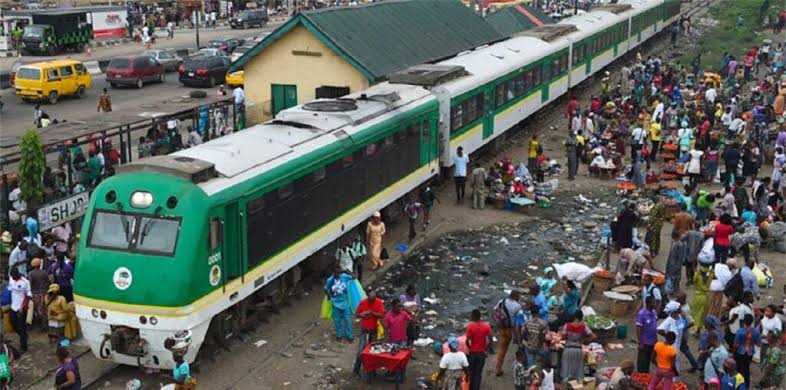
Compared to the road, rail is the most preferred means of transportation, safety, security, economy, and comfort.

This particular means of transportation can be a way of improving the life of connected regions. With the railway development, goods are easily transported out, which maximize income. Therefore, goods from other areas are easily shifted in better cost of goods and services for the local masses.

The prosperity of the cities where the rail stations are located, when in full function is made from heaven. 

During its heyday, Kaura in Zamfara State was a farm produce hub bustling with social and economic activities though it has become a caricature of its former self.

Like Kaura, the Zaria railway station was once a vibrant centre. A visit to the site now could quickly bring the prosperous memory back to life. In nostalgia, a friend narrated how the Zaria Nigeria Railway Corporation (NRC) staff attracted a lot of pride and glamour, therefore becoming a dream of every unemployed person.

Since coming into power, President Muhammad Buhari made it clear that railway construction will top his priority. The president argued that it could be accessed by both the poor and wealthy compared to airlines, which only elites can access.

There are signs of commitment towards this vision of President Muhammad Buhari as various activities toward the railway construction are undertaken by his government.

There are four major lines: Lagos-Kano, Warri-Itakpe, Port Harcourt-Borno, and Katsina-Maradi.

The first segment of Lagos-Kano, Abuja -Kaduna was started by the previous administrations and completed by the present. President Buhari made this point clear at the commissioning of the Abuja-Kaduna segments, perhaps to water down the heat of the debate the project generated from the public.

The second segment of Lagos-Kano, Lagos-Ibadan, was newly constructed and commissioned by this administration which earned them considerable goodwill.  While the third segment, Kano-Kaduna, was flagged off this year, the Abuja-Kaduna and Lagos-Ibadan were commissioned in 2016 and 2021, respectively. This 1300km standard gauge rail, when completed together with other segments, will connect states of Oyo, Osun, Ekiti, Kwara, Niger, Lagos, Kaduna and Kano 

Itape-Warri, inaugurated early this year, connects to the Lagos-Kano line. This brought two other states of Delta and Edo to the federal line

Port Harcourt-Borno traverse almost all the south-eastern and north-eastern states of Nigeria: Abia, Anambra, Imo, Ebony, Enugu, Rivers, Benue, Nasarawa, Jos, Bauchi, Kaduna, Gombe, Yobe and Borno 

Katsina-Maradi was flag off earlier this year. It connects two more other states of Katsina and Jigawa to the national rail line

From the four railways mentioned, virtually all the Nigerian states were connected to the federal rail (including some states outside the country), but Kebbi, Sokoto and Zamfara, fondly called SOKEZA, are conspicuously left out

It is imperative to consider this region for at least two reasons. First, as an agriculture hub, the SOKEZA holds a vital position in the federal government drive for agriculture revolutions, so providing an effective means of transportation will go a long way to complement their work. Second, unfortunately, this region is not doing well based on the numerous human development index given by United Nations Development Programs (UNDP), such as education and per capita income. However, this wallowing at the bottom of the human development index can be reversed with infrastructure development such as railway development.

The nine senators, 25 members of the house of representatives from the region, appear not to be doing enough lobbying on the issue.

A glimpse of hope came in 2017, during the Minister of Transportation courtesy visit to the Sultan of Sokoto, where he confirmed the Federal Executive Council (FEC) approval to construct the rail lines to link the three states.

The minister also said, if the SOKEZA is connected, “then, President Buhari’s mandate of connecting all the 36 states of the Federal through railway would be achieved.”

President Buhari later promised the crowd of supporters gathered at Halliru Abdu Stadium, Birnin Kebbi, during the 2019 general election campaign that “My administration will extend the railway project to Kebbi State, which will come from Gusau to reach Sokoto and finally Kebbi State.” 

Four years after the FEC approval and three years since the presidential campaign promise, the flag off to Kebbi-Sokoto-Zamfara-Zaria remains more like a fantasy.

For the spirit of the average 1.5 million voters who have been standing still behind the president in each of his five presidential aspirations, the federal government should consider a speedy commitment to connecting the SOKEZA to the national rail network.

Bilyamin Abdulmumin is a PhD candidate in Chemical Engineering at ABU Zaria. He is also an activist for a better, informed society.

Nigeria Jubilee Fellows Programme: Why you should apply

By Ishaka Mohammed

After many fruitless applications, job seekers in Nigeria get frustrated. As some delve into crime, others retire to idleness, leaving everything to fate. Neither of these options is advisable. Nevertheless, there’s no need to stop trying. The following instances might suffice.

In Nigeria, being called a SAN comes with prestige. The bearer of the title is an experienced legal practitioner, considered professionally (and to a large extent, economically) successful. It means Senior Advocate of Nigeria (SAN), yes? But, no, there’s a different angle to it.

Many young Nigerians can bear an unfortunate version of the acronym SAN. They don’t have to study law, not to talk of being called to the Bar.

To cut it short, a guy and two ladies meet (for the first time). In response to the question of what he does for a living, he replies, “I’m a SAN.” The ladies are amazed due to his age, so they try to congratulate him, but his conception of the acronym fills the scene with abundances of laughs. He gently says, “I am a Senior Applicant of Nigeria (SAN).” The guy has applied for many jobs, but he has yet to secure employment. After listening to his story, the ladies offer him a job.

That’s in a Nollywood movie, though. Now, let’s discuss reality. A friend and former colleague is currently an officer in the Nigerian military. At a point in his life, he handed copies of his credentials to a cybercafé attendant and asked him to keep applying for jobs that matched the credentials; he would pay after every application. That was after being tired of visiting the café all the time.

Road Safety, Prison Service (now Correctional), Navy, name it — my friend had sat tests or gone for physical screenings, but none had worked in his favour. He was literally tired, so exhausted that when he was called for a physical screening after his last application, he had concluded to ignore it. If not for the timely intervention of his family, he wouldn’t have gone for the screening. He made it afterwards and the rest is history.

The above instances clarify that you have no reason to give up. You don’t have to wait for the required “connection”. Keep trying. Thomas Edison once said, “Our greatest weakness lies in giving up. The most certain way to succeed is always to try just one more time.” That one more time might be the last effort required. That one more time shouldn’t be about today or tomorrow; it shouldn’t be about the number of attempts; it should simply be about whether or not you have attained your desired goal.

As a Nigerian, you can irrevocably say that many things have gone wrong in your country. The rate of unemployment is high and scary. Thanks to members of the political elite, who are busy hijacking what is meant for the citizenry.

Attempting to minimise unemployment in the country, successive governments have come up with beneficial programmes targeting the youth. However, the politicisation of selection processes and inconsistent remunerations have sabotaged the otherwise commendable initiatives. For instance, many of the past N-Power volunteers are still owed stipends after one year of exiting the programme. And even while in the scheme, a significant number of these youth often received overdue allowances. What about the Special Public Works Programme for 774,000 unskilled labourers? The three-month programme ended in March 2021, but many of the beneficiaries have yet to be paid. It’s worth stressing that each beneficiary is entitled to just N60,000 (spread across three months).

Despite the ugly situations in Nigeria, try this one. In collaboration with the United Nations Development Programme (UNDP), the Federal Government of Nigeria is enrolling 20,000 recent graduates in full-time paid employment for twelve months. In addition, the Nigeria Jubilee Fellows Programme is for young graduates.

I partook in a briefing session on Zoom with one of the programme’s team members, Erere Oghoghome, on Tuesday the 17th of August, 2021. According to her, the programme will engage 100,000 people across five years, and the first cohort will be inducted by October 2021. That means the call for applications will be out in the coming weeks. Every eligible and interested person is expected to have developed a craving for a particular skill.

Aside from being paid employees for the period of the programme, fellows stand the chance of being retained by their host organisations. Plus, they’ll join the alumni network upon completion of the programme, and the team will be the first choice for organisations seeking personnel to fill vacancies.

The basic requirements are: graduated not earlier than 2017, less than 30 years of age, unemployed, and possessing NYSC discharge or exemption certificate.
At this juncture, I implore anyone who meets the requirements to keep tabs on the UNDP in Nigeria for this rare opportunity. It might just be that one more step to their dream job.

Other than using the experience to land a job after the programme, one can deploy the skill, money, or both in self-employment. Remember, fellows will be paid as graduate employees, not given stipends.

Therefore, it’s vital that unemployed graduates apply for the programme. There’s no harm in trying.

Ishaka Mohammed writes from Kaduna. He can be contacted via ishakamohammed39@gmail.com.

On Kannywood and Sadiya Haruna

By Bashir Shu’aibu Jammaje

Some people or newspapers apply a form of persuasion that is often used in media to further some agenda, such as a personal, political, or business, by evoking an emotional or obligable response from the audience. That is, ‘propaganda’, in layman’s terms. 

Today, various amounts of modern media can be used to supply propaganda to its intended audience, such as radio, television, films posters, handouts, music, to name a few. It is perplexing to see a well-known media like BBC Hausa doing that. I became overwhelmed when I see their post on the case of Sadiya Haruna and the Kano State Hisbah Corps – and not ‘Board’. Kwankwaso removed them from being a board, some say, to intentionally make them less powerful. Why?

I have never seen Sadiya Haruna in a Kannywood film. I then got to the comment section of the BBC Hausa post and read Abba Almustapha’s words, asking them to give him an example of a single film she has ever appeared in. I gave him a call to confirm if she has ever performed in a Kannywood film. His answer was a definite no. 

I only know Sadiya as a popular online sex counsellor for men and women via her social media pages. And, she makes Wakokin Yabo, ‘songs of praise’ videos along with Hafeez Abdullahi.

Since the birth of Kannywood in the early 1990s, it is purportedly founded as a reaction to the imported foreign films, mainly from India and America, that the society, in general, sees as culturally and religiously unsuitable for them. The filmmakers are being accused of so many bad things that they try a lot to hide other nasty things that happen in our society – and we all know that. I’m not, in any way, standing up for them, just that it is high time some people brought their intense hatred towards Kannywood down. And besides, Islam is a social religion – its very purpose is to intervene in human affairs.

Finally, I think BBC Hausa and others should tell Kannywood they are sorry for coming up with a chance to paint them in a bad light.

Bashir Shu’aibu Jammaje writes from Jammaje Academy. He can be reached via bashjam90@gmail.com.

Yusuf Buhari Wedding: PMB’s ‘letter’ to Nigerians

By Aminu Nuru

Fellow Nigerians, 

It has become necessary for me to write this letter, having heard the grunts of some Nigerians on what they described as ‘glitz’ and ‘glamour’ wedding ceremonies and events of my son, Yusuf.

It is important to clarify why I choose to write on this topic while there are more pressing issues endangering the peace and stability of our dear nation. I decide to write to you because I consider this grunt to be directly aiming to attack my integrity and the reputation I built in my more than five decades of selfless service to the country.

Forgive me if I sound harsh in this letter; I am still shocked by the killings of innocent Muslim travellers in Jos. As it stands today, I could barely eat well. I hope you noticed how starved I look at the venue of the wedding Fatiha and later at the Presidential dinner in honour of the bride and groom. I could not even stand on my feet, just as everyone did to welcome the new couple.

Fellow Nigerians, you should understand by this time the personality traits of your President. I am a terrible introvert, a man of few words. This is a confession, and you may think it is a deficiency. Still, I am content with it, for silence teaches me how to be calm and concentrated in a time of turmoil, endure and be patient in critical situations, and reflect and find solutions in the face of problems. Besides, I believe that not every moment is worth or requires me to write or speak to my people. 

Please don’t misconstrue my silence as a trick to shield my leadership shortcomings. I may not be a perfect leader, but, deep down, I know I am patriotic, and my intentions are pure, and I always strive to give the best to my people. This is not seif-romanticism; a half an hour heart-to-heart interview with my dear wife would unveil to you how tirelessly I work for a better Nigeria, sometimes even at her detriment.

Back to the main matter, I write you this letter. I understand that many of you took to social media to criticise my only son, Yusuf Muhammadu Buhari. There are even false accusations by some pundits that public funds are used to sponsor wedding events.

Let me set the record straight: it is in your interest to know that no kobo from the public treasury was used to finance any wedding event. Therefore, these allegations are groundless, baseless and mischievous. I will be the last President to approve public funds for the wedding of my son.

I understand that my success in life, especially in the political gallery of Nigeria, has made so many people have deep-seated envy for me. But, if not for that, how can you accuse a tested and trusted leader, who has the mandate of his people twice, for embezzlement and misappropriation? Or am I not blessed enough – in wealth and friends – to give a befitting wedding to my only son? 

If your memory fails you, let me quickly remind you that I was a former Petroleum Minister, Governor of the North-Eastern region, Chairman of Petroleum Trust Fund (PTF) and  Head-of-State. In addition to this, I have inherited a large farm from my father, which I personally run to date. I think someone with this pedigree can legitimately afford all that we have seen in the events of Yusuf’s wedding.

I could understand that some of you were perplexed that we can afford to pay five hundred thousand naira (₦500 000) as dowry for our son, but do you bother to check the price of an average well-fed cow in the market today? We have not fewer than a hundred heads of cows on our farm in Daura. So a simple check will cure your deliberate ignorance.

Lately, I learned that you were also worried that iPhones were shared with family and friends at the wedding dinner held at the Presidential Villa in honour of the bride and groom. I think I will blame myself for your worries here. My failure to write about myself extensively, which will give you a glimpse of the circle of wealthy friends I keep, results in your fears. Let me be blunt with you here, my friends immensely donated to the wedding. Just imagine what could be donated to a person of my calibre on the occasion of his only son’s wedding. The party of donations we saw at the burial ceremony of Obi Cubana’s mother was undoubtedly a child play.

Fellow Nigerians, as a democratic leader, I acknowledged and acted upon your grunts accordingly. Let me say this for the last and the repeated time: public treasury is a trust; I cannot temper with it to satisfy my personal or family needs. I have never used public office to enrich myself or anyone. It pains me to come across those false allegations that public funds are used to sponsor the wedding.

And for those that falsely accused me – the purveyors of falsehoods – I leave you with the lines from the poem of my late comrade – Jiya Mamman Vatsa – titled “Judgement Day Na Wa”.

Aminu Ahmed Nuru can be reached via aminuahmednuru@gmail.com.