Opinion

Massive extortion on Nigerian highways: A travelogue

By Tordue Simon Targema

Although extortion by security agents mounting roadblocks on Nigerian highways is not a new phenomenon, the trend has assumed an alarmingly worrisome dimension recently. A foreigner plying Nigerian roads in a commercial vehicle would think Nigerian security agents are double-tasked to be collecting taxes as well from drivers! Perhaps, the confidence which the officers demonstrate while collecting the illegal money and the coercive techniques which they deploy in doing so will dispel any doubt from the foreigner that such money is illegal and extortionist in nature. Sadly, this is the situation motorists and commuters on Nigerian highways have found themselves in.

I have extensively travelled across Nigeria. As an academic staff of a university, I have the privilege of travelling across the country. For instance, after obtaining my bachelor’s degree in the northeast, I moved to the northwest and obtained a master’s degree, and am currently pursuing my doctorate degree in the south-south. This has given me extensive exposure to Nigerian roads. Also, I have attended several academic conferences in each of the six geopolitical zones. My experience on Nigerian roads is a very horrible one, made so by a multiplicity of factors such as the deplorable nature of the roads and massive extortion by security agents. These have made the thought of travelling in Nigeria by road a dreaded one even to people who are extremely adventurous by nature, to talk less of those who have a phobia for travelling.

My experience on a recent trip to one of the south-south states from the northeast spurred me to pen down this piece. In what appeared to be a painfully interesting drama series, we watched cheerfully, albeit in deep anguish as our driver bargained with our security agencies who, I learnt, have raised the charge from the normal 50 naira to 100 naira, a development that did not go down well with commercial drivers. My driver was highly agitated paying the new charge but could not help it. He devised all possible gimmicks to resist it which could not help out. First, he attempted evading as many of these checkpoints as he could- army, police, civil defence, immigration, road safety and vigilante, custom, produce tax force ….name it! But this strategy usually backfired, as each of the checkpoints he evaded would call the very next checkpoint ahead and ask them to bundle us right back.

In no time, he realized that this was not by any means a workable strategy, and with intense pressure from the equally agitated passengers, decided to cooperate. Of course, he had to, because the few experiences we had with the checkpoints he evaded were terrible, as the security agencies were utterly aggressive and would at each of such instances traumatize him, heap up charges against him and intimidate him as much as they could to coerce him into submission. Worst of all, each of those checkpoints he evaded demanded – and actually collected from him – far more than their normal 100 naira. To cap it all, he nearly had an accident in the process of evading one of such checkpoints! Obviously, evading the checkpoints was not the way to go; a different strategy was, thus, imminent.

Mind game, pleading, teasing and joking with the security agencies was the next strategy. At each of the checkpoints, he would use any of these he felt was the most appropriate. For instance, if he had discovered by virtue of experience, appearance or instinct that a certain officer was a northerner, he was sure to use emotional appeal as a way to escape the payment. Language would have been a formidable force in this regard but for the obsession of our officers with money who would still insist he tip them after the pleasantries. You would feel their whole being and soul depend squarely on the illicit money they collect from drivers! Well, on a handful of occasions, this strategy worked and he was waived the charge.

Teasing and joking with the security operatives was the next strategy, but after it, they would always ask: anything for the boys? In such cases, our driver would retort: oga, when I de return, I’ll see you. At this, some would let go, but most would remind him that that is what he said while he was coming down! In such unfortunate cases, he would have no escape but to cooperate.

Another strategy he adopted was to tell them he had no change. In such cases, he would give them a thousand naira note to prove he has no change. This was a counterproductive strategy and in no time, he had to drop it, perhaps, forced by pressure from passengers because it was time-wasting. Why? Upon receipt of the thousand naira note, the officers would not let him go with it, but reluctantly look for change from their previous collections and give him. In the event they did not get it there, they would have to wait until collections from other drivers coming behind us complete the change! This generated intense condemnations of the passengers who felt that he was wasting their time and asked him to be cooperating or if indeed he had no change as he claimed, look for change at a filling station. Of course, the driver himself was pissed off with the attitude of the officers and had no choice but to change strategy.

Next was the use of prospective NYSC members as a bargaining point. This strategy worked for him significantly- not without difficulties though. Luckily for him, he had about four prospective NYSC members from the south-south deploying to their orientation camp as his passengers. Trust our smart driver; it took him no time at all to activate this as a point of a bargain! Oga, na kopas I carry ooo, he would tell each officer that rudely returned his 50 naira. Boom! Questions from all angles would start pouring out: kopa never pay for their transport? Na for free you carry them? Blablabla. At these, he would strongly insist that the prospective corps members were government properties, that the car he was driving is a government vehicle (the car actually had SURE-P inscribed on it), and that the officers too are government agents, hence, there is no point collecting much from him for conveying the corps members to their orientation camp. This would usually weaken the officers who would never give up but instead, as a final push, return to us: where are the kopas? At this we would all chorus: na we ooo! Of course, even those of us that were not corps members would join in to add to the echo. They would then tease us, ask us some few jovial questions, collect the 50 naira and then we move.

This was one of his most effective strategies. Despite its seeming efficiency, some of the rude officers would outrightly reject his 50 naira, ask him to go and park and delay us until he gets the sense in his head to give them their rightful 100 naira. Indeed, it was their entitlement. A look at the manner in which it was being demanded and collected dispels every doubt that such collections are illicit. At some of the checkpoints, the officers would, without saying anything else, ask the driver to go and park. At such points, he would oblige, park his vehicle, come down and walk up to them to give them their due. I found this arrogant and irritating too. Why? If you are shameless enough to descend so low and extort poor commercial drivers, then you should be prepared to keep aside all silly notions of pride and dignity and take it right there on the road before the prying eyes of passengers and all onlookers. But some of our pompous officers feel they are above this, and would rather the driver park, walk back and pay them their dues. No thought of the delay such would cause the commuters, no. they simply wanted their money and nothing else!

In one of the states in the north-central region, this worrisome trend has assumed yet another funny dimension. Trucks (used for pushing water and other commodities) are used at checkpoints, perhaps, because they are easier to push and much more flexible than logs of woods. Still in the same state, the officers- almost at each checkpoint- have engaged the services of jobless young men who stand on the road and coordinate the illicit deal for them. At these points, such young men are as pitiless and brutal as the sun or heavy rain on a lone traveller in the heart of a desert. They would neither listen to any plea nor get amused by the jokes of the driver. Never would they give in to any of his antics or gimmicks, worst of all, they have scant or no regard at all for NYSC! If anything, the mention of it gets them irritated. They got our driver really hard at this. Who be kopa? Na weting kopa de give me? They would ask him. And their gallant officers were ever ready to step in should any driver underrate them. Perhaps, the driver understood that they are traps to lure the wrath of the officers. He would oblige, give them the 100 naira once all tricks fail and then they would pull away their trucks and we would move on.

As we drove deeper into the night, the due increased. Rightfully, it increased to 200 naira, then 300 naira. It got to a point where we had to go down and collectively beg the officers that we are NYSC members deploying to our orientation camp, that they should give us consideration. They first turned deaf ears at us- perhaps, out of guilt- but later allowed our driver to pass. Clearly, our infuriated driver saw that he would not continue at that pace. He had to find a town nearby, parked at a filling station and we passed the night there.

You would think the proliferation of security checkpoints on our highways is an assurance of safety! At this, I bet my last kobo that you are woefully wrong. Around 4:30 am, we hit the road again. At the first checkpoint after we took off, an officer- after collecting his due – whispered to the driver that the road was not safe. Armed robbers were on operation some miles away! Armed robbers with this heavy security presence? I asked myself. The driver had to stop again. At first, we thought it was a lie but could not take the risk of defying the caution, so we stayed there till daybreak. Around 6:00 am, we continued and, lo and behold, came to the spot of the armed robbers’ operation! Two 18-seater buses stood there, their front tires flattened with bullets and the windscreen pierced through with bullets too. No passenger was wounded, even as they stood there, traumatized. They were unlucky. They got robbed. An old woman who could not stand the trauma fainted and was rushed to the nearby hospital afterwards. We stopped by and the stranded passengers eagerly narrated their ordeals. We couldn’t help out because our vehicle had no space for more passengers, and so, we only kept them solidarity companionship of about five minutes and moved on.

No doubt, the rising tide of insecurity contributes significantly to the deployment of security operatives on the highways. This explains why their presence is most conspicuous in conflict-tone and banditry-ridden states. Little wonder too that they feel their services on the roads are indispensable and they should be handsomely appreciated or rewarded by the people they protect. Now, I am not disputing this fact, neither I’m I underrating their importance. But I feel strongly that the government whose primary prerogative is to secure the lives and property of citizens should saddle the responsibility of catering for the welfare and incentives of the security operatives they deploy on the highways squarely, and not to push it to vulnerable drivers and commuters.

Of course, commuters bear the financial burden too, indirectly through arbitrary increments and hikes of transport fares. A friend of mine boarded a commercial bus and was charged 6,050 naira as transport fare. Curiously, he asked what the 50 naira on top is meant for and was promptly told it will be used for settling security operatives at checkpoints. I do not envy Nigerian commercial drivers, I really don’t. Jalingo to Porthacourt for instance has way over a hundred security checkpoints. Imagine giving 100 naira at each of the checkpoints, that’s way over 10,000 naira. In essence, an average commercial driver uses the transport fare of about two passengers just for settling security operatives at checkpoints. This is outrageous and really unfortunate, to imagine that the cost of spare parts has skyrocketed to an unprecedented degree. I won’t talk of fuel and lubricants required to service the vehicles. I began to ponder: what do the drivers take home after giving returns to their companies, fuelling the vehicles, minor and major repairs here and there, and settling our officers on the highways? No answer came in handy. I simply shook my head and redirected my thoughts to the music in my earpiece. That made more sense and in no time, I got engrossed in my thoughts and forgot about the security men as though they never existed.

It is sad to admit that although our security operatives deserve our daily prayers due to the danger they face daily confronting bandits and terrorists here and there, this extortionist tendency has taken away the public sympathy they deserve and earn them a curse and disrespect from commuters and drivers. This is very bad. It is about time the government checked the rising trend. In the interest of our commercial drivers and commuters, all forms of extortion on the highways must be abolished. Government should be prepared to shoulder the responsibilities of our officers on the highways and when that is done, deal decisively with officers found extorting vulnerable passengers.

I must confess that this is one area president Muhammadu Buhari’s administration has dashed my expectations woefully. In 2015, just before his inauguration, I recall travelling to another part of the country. A security officer was boisterously threatening to beat up our driver for refusing to give him his due. The sharp reaction of our young driver created a scene and in no time, the officer trumped up charges that never existed on the young man- driving licence, manifest, vehicle papers, commuters’ national identification documents, bla-bla-bla. He eventually got the driver who succumbed to the pressure that was already mounting and paid the due.

After we passed, I told the elderly man seating beside me with an air of confidence: the General has come, let me see how they will do this come next month. The old man chuckled and asked me: you think so? I replied in the affirmative. He smiled again and, with a tone of indifference, told me that nothing would actually change. In fact, he charged me to expect the worst. A conversation ensured and I tried my best to explain to him that although I was not president Buhari’s fan and did not think I will ever be, I was confident that once he takes over, all forms of extortions- especially the obvious ones like those on the highways would cease with immediate effect. The old man simply dismissed my argument in a predictive tone:  well, time shall tell better. I affirmed his submission and hoped for a day when extortion on the highways would become a thing of the past in Nigeria, a day that has refused to, and seem never to arrive anytime soon.

Concerned authorities should note that while this day delays its arrival, the effects on commercial drivers and commuters are, at the moment, unbearable. The time to end extortion on our highways is now. By the way, the deplorable condition of our roads is one other thing that usually stress-out life from commuters! In my next article, I shall relieve my experience on the Jalingo-Numan and Odukpani-Uyo roads. I am sure you will find it heart touching too, for now, I leave you in peace.

Tordue Simon Targema writes from the Department of Mass Communication, Taraba State University Jalingo. Email: torduesimon@gmail.com.

General Muhammadu Buhari as Sheikh Gumi’s Waterloo

By Abdulrahman Yunusa

Like anyone in this sinful world, one must get in touch with one unforgettable phenomenon in his life, and such experience will hunt them throughout their lives. So, Sheikh Abubakar Gumi might not be an exception because even prophets, who are the best people, get tested with many tragedies. As one Hadith entails, “Ashaddul Balaa al Anbia, thummal Amsal fal amsal”.

Gumi was a man with an impeccable personality and exceptional habits. He is the only Sunni cleric with almost all Awliya qualities: his kindness to his family and students was phenomenal. His worldly abstinence “Zuhud” is second to none, and his vision as a scholar was solid.

Perhaps of all the men of class and honour and men of power and money that late Sheikh Gumi lived and mingled with during his life, he had no open enemy. As I’m speaking to you, Gumi was the most respected cleric in the history of Nigeria, for he was blessed with many natural gifts.

He lived a well amusing as well as exciting life. His reputation cut across boundaries. None among politicians and merchants ever pointed him with an accusing finger, yet almost every responsible man befriended him. Not only politicians but even scholars did that full of humility.

Based on the intriguing accounts I have read so far in Ismaila A. Tsiga’s work, Where I Stand, even the father of the notable Islamic scholar, Isyaka Rabi’u, once eulogised Gumi and showered him with excellent remarks. Moreover, as a learned person, Sheikh Rabi’u didn’t hesitate to honour the scholarly correction issued to him by Gumi.

The same happened in his student-teacher relationship with Sheikh Malam Nasir Kabara, who taught him some books in his house. Later on, Gumi entertained his case while serving as Northern Nigerian Grand Khadi. Also, Malam Nasir kept Gumi in high regard till the day death took them apart.

However, throughout Gumi’s life journey, since the early 1920s, nobody had ever deemed it fit to belittle his personality or maltreat him as a person until when he met dictator General Muhammadu Buhari, who became his waterloo and a sign of divine test. You know, none among sincere men of God has ever lived a trial-free, tragedy-free life. So, his collision with Buhari at that moment was a blessing to him.

Although, one shouldn’t forget that Gumi had enjoyed the companionship of many past Nigerian presidents. He embarked on his advisory journey on national and religious matters before Nigerian independence.

As such, he had good contact with Sardauna. Most of his enthralling life voyage begins with Sardauna, then followed by General Yakubu Gowon. Gen. Gowon’ Christianity did not hinder him from seeing Gumi with the respectful lens as his predecessors. The same way he went with Gen. Murtala, Gen. Obasanjo and Alhaji Shehu Shagari. Nonetheless, Buhari deliberately disgraced him for not kowtowing to accept all his hogwash and twaddle policies to deal with some men.

Therefore, as Buhari failed to honour his intellectual sagacity at that moment, he went further by ditching his head by incarcerating him, holding his salary as a source of living. He even went out of focus helter-skelter to cease his visa. What a sad moment for a kind soul like Gumi’s. When did advising and cautioning leaders become an offence?

No, only those with knowledge and honour easily identify men of their calibre and confer them the burden of respect and altruism they deserve. Unfortunately, the man Gumi met around that particular junta was quite ignorant of knowledge and honour.

Lastly, Gumi endured all the persecutions and enjoyed them good fate until he bid a farewell to this wicked world. However, that never stopped him from achieving his life goals, of which receiving the King Faisal Award topped most of his achievements.

Surely history will forever remember this Buhari as rude and unfair to the most celebrated Sunni scholar in Nigeria. May Allah keep the soul of Malam Gumi in Jannah, amin.

Abdulrahman Yunusa is a political and public affairs analyst. He writes from Bauchi and can be reached through abdulrahmanyunusa10@gmail.com.

On DCP Abba Kyari’s FBI indictment

By Ahmad Ganga

The arrest of Raymond Abbas, aka Hushpuppi, and the FBI’s revelation that indicted DCP Abba Kyari of being an accomplice to Hushpuppi’s fraudulent activities have exposed the naivety of some Nigerians on social media. Perhaps due to ingrained hatred for the incumbent government or the person of Kyari, many people are vindictively calling for Kyari to “surrender” himself to the FBI. However, this agency has no locus standi to carry out an arrest operation on foreign soils without the consent of the host countries.

Assuming the allegations raised by the FBI is true, America has no authority to arrest Kyari since the crime he was alleged to have committed is on Nigeria’s soil —not the US. Unless Nigeria Police Service Commission constitutes a panel to investigate whether the allegations are true or not; and that he’s found guilty before Nigeria’s government takes further action, the American government has no legal right to dictate whether DCP Kyari is guilty. And this requires due process under the 1999 Constitution of the Federal Republic of Nigeria — not US or FBI’s laws.

However, DCP Kyari has a fixed location which means he’s not on the run. Moreover, since a court in the US granted the arrest warrant — not Nigeria and Abba Kyari is not an American citizen —which gives him the right to fair hearing according to the laws of this land, it’s absurd to see Nigerians haggling to the bone marrow, saying Kyari is guilty of the allegations raised against his personality —even before Nigeria’s government enquires to know whether it’s true or not. But then Nigerians glorify anything foreign as though the foreign lands’ decision is a divine revelation.

I am not in support of Kyari’s heinous relationship with Hushpuppi, neither do I side with many sadists calling for his head. However, I believe there is more than meets the eye to this revelation. Let Nigeria decides whether DCP Kyari is guilty or not through an impending panel of investigation. At the moment, I can’t entirely agree with anyone saying DCP Kyari is culpable until proven by a grand jury.

Ahmad Ganga is a legislative assistant at the House of Representatives, Federal Republic of Nigeria. He can be reached via ahmadgangaa@gmail.com.

Kyari isn’t a saint, but let’s reason as Nigerians — Salisu Uba Kofar Wambai

Abba Kyari’s predicament will evoke, in some manner, watertight interpretation by the conspiracy theorists. They can have a soft landing and safe haven to drive their points homes. The US recently denied Nigeria access to purchase helicopters that would aid adequately in fighting the Boko Haram terrorists, bandits, and kidnappers who become a sharp thorn in the country’s flesh. The US scuttled the arms deal with Nigeria, citing the human rights abuses and violations, among others, as its reasons. Is the accusation valid? No! The Information minister falsifies it. 

Before Nigeria heal, recuperate, and move on, the shocking revelation of FBI reports that squarely and directly without evasion indicted the super cop Abba Kyari who has been vibrantly a leading figure in battling those violent crimes are gravelling the peace of the country. Though this isn’t the first time the Federal Bureau of Investigation (FBI), a federal law enforcement agency that’s principal investigator of the Justice Department in the US, accuse Nigeria’s top official.

The current speaker of the House of Representatives was once charged until it was proved that the accusation was baseless, unfounded. The same happened to the late Senator Buruji Kashimu, who was accused of drug trafficking. His extradition to the US failed due to intricacies and involution associated with that international law. The chairman of Air Peace, Allen Onyema, was equally indicted by the FBI and the Americans demanded him to be extradited. It was later discovered that he’s ingenuously sinless. He was vindicated as innocent. Therefore,  the FBI isn’t always correct and voracious, as many Nigerians assumed.


However, even if the alleged report of Kyari’s indictment proved to be flawless and accurate, Nigeria must borrow or take up an American approach. I said so because it will be a lame decision for the country to get rid of such an adept and proficient police officer in these trying moments. Forget about Kperogis and Ochonus, who are not within reach of kidnappers and bandits, who write from their comfort zones in the US, calling for the super cop’s head. Don’t be prey to their flakes.


When former American President, Bill Clinton, was indicted for having an illicit sexual relationship with his secretary within the sacred white house, Monica Kalawesky, the indictment was proved beyond a reasonable doubt. Yet, the US assembly was sagacious in its judgement. They weighed Clinton’s advantage as well as his shortcomings. They had prioritised his advantages and didn’t impeach him, and he later continued to become one of the finest and successful presidents in American history. 

However, in this present critical moment of insecurity eating deep into Nigeria’s flesh, such as dreaded terrorists of Boko Haram in the northeast, bandits and kidnappers in the north-west and north-central and secessionists in the entire south, to get rid of Kyari for his alleged accomplice offence with the notorious Yahoo Boy — Hushpuppi — will come with consequences. Therefore, Nigeria must prioritise its National interest.

The US let go of the culpability of Saudi Arabia when Jamal Khashoggi was butchered in Turkey for the simple reason that they had wanted to pursue their billions of dollars deal (arms purchase) with Saudis. National interest always comes first.


Kyari has, in his two decades of service, done a superb and groundbreaking job in bringing the level of violent crimes in Nigeria down. His record is today the top desirable one in the police force. Notably, the Nigerian Government and all its institutions have never found him wanting in all these two decades of service. Kyari has been consistent with his career and currently heading a formidable team that has become criminals’ nightmare. It will be uncanny and suicidal to let him go for the funny accusation of a Yahoo Boy having telephone communication with him outside Nigeria. I urge the Nigeria Police Force to review the report of the FBI about the super cop.


Nevertheless, the FBI report is right or wrong; the officer should be given a top security operation to lead to “fatigue” for the mere mention of his name in the indictment report. After all, Kyari should try to eschew any nexus with people that can easily make others see him as a dissenter. His recent public appearance with Obi Cubana can be a massive slap on his personality.


One lesson Nigerians will learn from this saga is that our culture of highhandedness with the public office should be dropped. Public servants used to be like emperors, especially when they proved to be worthy and successful. It happened with Bank chiefs, politicians etc. Let us have strong institutions.

Salisu Uba Kofar-Wambai is a PhD student at the Department of Mass Communication, Bayero University, Kano. He can be reached via salisunews@gmail.com.

Nigeria should shop for weaponry elsewhere

By Tajuddeen Ahmad Tijjani

Various reports revealed that US senators are planning to halt the agreed sales of warplanes to the Federal Republic of Nigeria on human rights concerns. This unpopular decision leaves many Nigerians in awe, wondering why would the so-called peace-loving United States do that to a nation bedevilled by security challenges, ranging from violent secessionists, killer herdsmen, banditry, kidnapping and Boko Haram — an insurgency that consumes more than 36,000 lives from 2009 to date. 


The number one enemy of Nigeria is insecurity, as the country’s security agencies are having difficulty in surmounting the problem over the years. No doubt, the government of the federation is trying everything humanly possible to end the ugly trend. However, the challenge continues to prove insurmountable, mainly due to the lack of state-of-art weaponry in the country’s arsenal. Understanding this particular shortcoming forces the Buhari administration to shop for sophisticated armouries from the United States of America – a perceived important ally of the Nigerian state. Unfortunately, the bilateral relationship that exists for decades between the US and Nigeria that is expected to play a significant role in facilitating the arms deals and intelligence sharing has been disregarded by these US senators.


Suffice to say; this is not the first time the US turns down Nigeria’s demand for war gadgets on the purported account of human rights records. Denying Nigeria’s request during the Jonathan administration was undoubtedly one of the significant factors that made Nigerian forces deficient in combating Boko Haram, hence leaving the insurgency to prevail then. Now we are faced with many other terrorist acts; we cannot afford to experience the repetition of what happened before. Therefore, to accomplish this task of securing the territorial integrity of our nation, we must think outside the box and source alternatives to acquire sophisticated war gadgets that would help us eliminate terrorists and terrorism in the African most populace nation.


Ostensibly, America is not helping matters in our war against insurgency. No good ally would deny Nigeria a purchase of weapons at this challenging moment of turmoil. As a matter of urgency, the federal government should leave America and shop for the needed warplanes elsewhere. We can try the likes of Russia, China, Japan, South Korea or Germany to have expeditious delivery and usage because they are best with sophisticated ware fare all over the world.  

It’s high time for Nigeria and Africa to realise that some Western countries are not interested or concerned about our peaceful coexistence. It’s, therefore, significant to give priority to research and development to find ways to save ourselves from such last hour denials. Relying on the US to help us address the multiple security challenges in Nigeria and Africa is becoming suicidal. We must find some better allies that would be ever willing to help us out of any predicament unconditionally.


Tajuddeen Ahmad Tijjani writes from Galadima Mahmud Street K/Kaji Azare, Bauchi State.

Electronic transmission of results: Is APC jittery?

By Lawan Adamu Usman

The glimmers of hopes that the country will have a free and fair election in the 2023 general election have been dashed by our senators. Section 52(3) of amendment bill 2021 which will provide room for the electronic transmission of election results from the polling unit, received a kiss of death by the APC senators after a rowdy session in the senate. In 2015, when president Jonathan introduced the card reader machine, which was part of the technology drive to checkmate multiple voting and detect elections fraud and ensure a free and fair election, the APC, which was desperate to clinch to power, commended the bold initiative. There is no gainsaying the fact, APC was the beneficiary of the card reader machine in the 2015 general election. The election victories recorded by the party across the country could be credited to such technological innovation.  

Little wonder, many Nigerians expected President Muhammadu Buhari to maintain the momentum in 2019 by passing section52(3) of the electorate act into laws, which will pave the way for electronic transmission of results. However, President Buhari failed to convince Nigerians why he could not approve the bill, cited short of time as the reason ahead of the 2019 general election. Also, our lawmakers’ lack of political will to unanimously agree and take a common position for the quick passing of the bill is unfortunate. While other African countries have since embraced technology and reformed their electorate process in tandem with the best global practice, some unpatriotic senators are dragging us to the medieval period.

By its name, the Independent National Electorate Commission (INEC) should act independently according to the laws that established it. For the Senate to insist that INEC should collaborate with the Nigeria Communication Commission (NCC) on the possibility of adequate network coverage in the country and seek its approval before it adopts electronic transmission of results raises serious suspicion on its part. 

The million naira questions begging for answers are: why the majority of APC senators voted against the electronic transmission of results? Are they acting on the script of their party to frustrate any genuine efforts to have a credible and acceptable poll in 2023? It is either the ruling party plans to rig the 2023 elections as suspected, or it is jittery that the electronic transmission of results will expose it to serious defeat.

Civil societies organisations and Nigerians should wake up and reject this glaring rape of our democracy. Democracy the world over thrives and flourishes based on free and fair elections. This can only be achieved if INEC is allowed to conduct credible elections and transmitted the results electronically as obtained in other democratic climes.

Lawan Adamu Usman (aka Mr LA) writes from Kaduna State. He can be reached via imustapha650@gmail.com.

Emir of Muri’s Eid speech and matters therein

By Abdulrazak Iliyasu Sansani 

The Emir of Muri, HRH Alhaji Abbas Njidda Tafida OFR, as it is the tradition, delivered an Eid ul-Adha speech to his subjects to celebrate the event. As it is the norm, the Emir does so in both of the Eids in his palace, in Jalingo, the Taraba State capital. Accordingly, the people of Muri Emirate every year eagerly look forward to attending his court to listen to his Eid speech for the contextual significance of such addresses. 

The last one which was delivered, after the Eid prayers, was not overly different from any he had made before in terms of the tone except for those, who had not been following the Emir’s activities, especially Sallah speeches. Sarkin Muri Alhaji Abbas Njidda Tafida OFR has been known to have a reputation for blunt speaking, fearlessness, and daring to a fault. He has indeed followed in the footsteps of his famous forefathers, Hamman Ruwa dan Usman, Abu Bakar dan Hamman Ruwa, Muhammadu Nya dan Abi Bakar, and his grandfather, Muhammadu Mafindi dan Muhammadu Nya and indeed, all other emirs of Muri emirate whose place in history has long been cemented for bravery. 

The names mentioned above are not the chronological representation of the noble people who have ruled Muri, the Emirs of Muri or rightly Lamibe Muri in Fulfulde. Instead, this is just a sample of the historical antecedents of the current Emir, which is apparent to many. So, this digression towards memory lane is for the consumption of those who barely know him. 

Lamido Abbas Njidda Tafida OFR has never been known to mince words. He spoke and spoke truth to power without any element of fear, which for me is the hallmark of a good leader. When I saw the video clip of the said speech the next day after Sallah, I listened to what I thought my leader or leaders anywhere should speak to a large extent in this highly demanding moment in our history as an independent entity.  Nigeria is on the edge of the precipice. I have always believed that the avalanche of security challenges bedevilling this country makes every contribution towards getting us out of the woods worth considering before making decisions. 

I believe the Emir of Muri was disappointed, appalled, and outraged at the spate of insecurity confronting his emirate in particular and the nation as a whole, which led him to deliver the speech. He acted as anticipated of leaders, especially of his nature, the traditional rulers, whom so many have opined to understand better their domains than any other constituted authority of whatever magnitude. Whereas this may not be applicable in all places, it is to a large extent. 

Yes, His Royal Highness, Lamido Alh Abbas Tafida OFR made some rather harsh points, which I understood as someone speaking from the point of view of a leader enraged by hardened criminals who have held our people to ransom. So, he made comments which were largely misconstrued or deliberately taken out of context to suit a specific agenda, script, or scheming of those who don’t mean well for anyone. Some tabloids, blogs, newspapers, etc., reported that the Emir of Muri had given a 30-day ultimatum to Fulani to leave his emirate or be evicted, eliminated, and all sorts of strong, wordy, and sensational headlines that are in line with what they perhaps want, which are all false.  

For some, it doesn’t matter the fact that the Emir of Muri himself is Fulani and could not have issued an ultimatum to all Fulanis, which will include himself. He won’t do that and not for any sentimental reason. But for equity and justice. He certainly won’t issue an ultimatum to any other tribe. However, this doesn’t matter to some, who are hell-bent on making the Fulanis scapegoats for every misfortune that befalls them. 

Of course, some so many kidnappers are Fulani by tribe, so many bandits are Fulanis, and indeed other criminal activities, which the Fulanis engage in. I can’t write any percentage here because I don’t know the percentage. However, it is also true that all tribes are involved in all of these acts of criminality. In light of this, I will concentrate on what directly connects to the speech made by our revered leader, the Lamido of Muri. It won’t be wide of the mark if the Fulanis are said to be the majority embroiled in all these. I think it is the crux of the matter being discussed, the Emir of Muri’s Sallah day speech. 

As a royal father, especially the overall leader of all Fulanis in Taraba State, it is only right that he spoke his mind and made it vivid that he is disappointed with those Fulanis who engage in these nefarious activities. This is the right step to take, and he boldly took it. But, unfortunately, it is left for others who prefer to play politics with everything to proceed when their houses are not just literally on fire but also their entire emirates, chiefdoms, kingdoms, local governments, states, or even the country as the case may be, is sitting firmly on a powder keg. 

If there is any moment to act, it is at this decisive moment. Any other moment we aren’t guaranteed. If the sight of a hapless woman running and leaving her children despite the well-known affection that exists between children and mothers, don’t throw you into inconsolable grief then, I am sure the sight of any of those condemned criminals harassing your loved ones while asking you to raise ‘astronomical figures’ in currency, at a time when feeding any meal at all three times a day is fast becoming the exclusive of a few: this is the height of callousness and should be collectively confronted by all citizens without adding any ethnic colouration to it. 

Criminals, as I have always maintained are nothing, but criminals. Any other thing is secondary. You may not understand this now. However, I pray you never have to face them, but asking anyone who has been a victim of kidnapping, banditry, or even terrorism knows for a fact that there is no special treatment for victims based on ethnicity, faith, or region, at least to the best of my knowledge based on my interactions with some victims and the literature I have consumed in that regards. Unique treatments are the only figment of the imagination of some of us law-abiding citizens, who those contemptible people haven’t caught, but sit behind their keyboards, write columns, or even go to national television to eulogise those criminals because of their ill-thought-out affinity with these beasts. When you are caught, God forbid, everything will be crystal clear. I hope it doesn’t get to that. 

It is not enough to merely hope. We are doomed if the only thing we could do is hope without holding our government accountable so they can do even more to win these wars. The worst mistake we could make is paying lip service to this predicament because our kinsmen are involved, some adherents of our faith are part of it, or to achieve a sinister motive. There is only one result coming our way with this mindset, a certain outcome of unimaginable proportion: by then, the deed would have been done, and we cannot turn the tide.

We must unite, cooperate with security personnel to arrest the array of security challenges we are battling with; when we fail to do so because we fear for our lives, we shouldn’t live under any illusion that we are secure with that miscalculation, for no one knows the next victim. But one thing is sure we will all die one day, for some of us, we believe at the appointed time. The bandits and terrorists that sack villages and go about maiming, eliminating, or leaving deep scars on us have one life too. However, with more beneficial civil-security relations and a better understanding among all Nigerians, we stand a tremendous chance of getting the right result. 

The Emir of Muri as a sage has come out to take practical steps. Where he erred in that speech by resulting in generalisation, the Emir has already made amends. He summoned a meeting of the Fulani leaders where he admonished them using verses from the Holy Qur’an and other sources of knowledge for the benefit of what we all seek, peace.  For his intentions from the get-go were clear. 

The speech was delivered to find lasting solutions and should be firmly situated in its context bearing in mind that we are on the verge of self-destruction as a nation. Therefore, it was done to seek the return of peaceful, serene, and lively emirate where people will go to sleep with their two eyes closed, where our widow’s mite would not be used to settle some kidnappers even when we are barely surviving, where criminals would not be given any breathing space because they are our relatives, purportedly share the same faith with us, or for whatever reason. I long for this day when criminals will be criminals and rightly dealt with as such. 

It should be noted that the vast majority of the Fulanis, like all other ethnic groups, are law-abiding citizens. Therefore, it is up to all Fulanis, the security personnel, and Nigerians, in general, to work amicably to return Nigeria to the path of sanity, meaningful life, and mutual respect for one another. May the reign of Emir of Muri, HRH Alh Abbas Njidda Tafida OFR belong, as he recently clocked 33 years on the throne of his forefathers.  May his Emirate continue to prosper, and may the good triumph over evil everywhere. 

Abdulrazak Iliyasu Sansani wrote from Tukari B, Jalingo, Taraba State. He can be reached via abdulrazaksansani93@gmail.com.
Mr President, please, let them go!

By Muhammad Tsaure

The Biafra saga is no longer South East or South-South issue; instead, it has culminated into something more devastating and absolute hatred to Buhari in particular and Northern Nigeria in general.  I garnered series of experiences primarily based on the discussion I held with a significant number of people from the southeastern region. I learned from them that they mainly think the North doesn’t want them to leave the union because the proportionate percentage of the country’s GDP comes from their region. Thus, if they secede, the North will be left bankrupt and nowhere to turn to.

Unknown to many of those people, this thought is nothing short of ignorance about the exact nature of Northern Nigeria. The North is endowed with whatever a country needs to survive, prosper and develop. We are not parasites, as they claim. But, if they want to go, please, let them go in peace. Nigeria doesn’t necessarily need Igbos to survive.

The North has come of age now; we can fend for ourselves and don’t need any region to live and survive as a country. Whoever wants to go, let them go. The North has treated Igbo people with dignity, love and leniency. The entire Biafra States are not up to Kaduna State in terms of population as well as geography.

In 2015 I was at the Niger-Delta University (NDU) at Wilberforce Island for a conference organised by the Literary Society of Nigeria. After presenting my research paper entitled “Diaspora Literature: A Protest Literature or Romanticism?” We went along with other colleagues to Yenagoa (the capital city of Bayelsa State) to explore or otherwise become a group of tourists. But, to my amazement, the entire Bayelsa State is not up to Bichi local government area in Kano or Funtua local government of Katsina State. Yet, they have three Senators; representing Bayelsa Central, Bayelsa West and Bayelsa East and five Members House of Representatives, and one minister of State on Petroleum.

The conference lasted for six days, and I visited the entire eight (8) local government areas of Bayelsa State. You hardly believe whether or not people are living in some of these local governments. Houses scattered, each community has its language or dialect.

The same week I came back home, I went to Bichi local government of Kano state to verify my assumption or guess. On reaching there, the conclusion I had to make was that Bichi local government is far larger in terms of population, buildings, and whatever one could think of than Bayelsa State. And nobody in the North ever complains about that.

Muhammad Tsaure is the Principal of Government Secondary School, Tsaure. He can be reached via 76muhammadtsaure@gmail.com.

Why are northern players always absent or underdogs in the Nigerian national team?

By Salisu Uba Kofar-Wambai

It is very mind-blowing to view a national football team that ideally suppose to possess the quality of national outlook looking so sectional and tribal. Unfortunately, for quite a long time, the Nigerian football national team has been dominated by only what we called “southern players” at almost every level.

One will wonder why the utmost and utterly lopsidedness? After all, with its advantages, thanks to its vast population over the South, northern Nigeria has the upper hand to have more visibility in such national assignments. However, the reverse is always the case. Is that signifying that the northern folks lack interest in sports, especially football? Or does it mean that the North is consciously hiding its light under a bushel? NO! 

If one wakes up at dawn in northern cities and towns, the young, agile athletes are often the first people to meet exercising to their respective football pitches.

Moreover, the geographical advantage in terms of the landmass, with all the potentialities of its flatness, accurate for football arena and pitches against terrain nature and scarcity of southern land is another pointer that ought to have shot north ahead.

It is an indisputable fact that if you take around northern states, you will invariably discover that numerous football clubs are established in several places in the region. You will find players who can match the skills and talents of Messi, Ronaldo, Zidane, Figos, but all – or most – go nowhere. They mostly played in their small villages and ended up uncelebrated.

In Kano alone, the heart of the North, there are more than thousands of clubs playing in different levels and capacities. The Sports Ministry is, year-in-year-out, organising leagues for these clubs from league A to Z. These clubs produce young talents that can play at every level of football worldwide.

With globalisation and communication technologies taking centre stage of our lives, if one goes to viewing centres, where foreign leagues matches are shown, the story and impression one will get is that football has become part and parcel of our youths’ routine. It’s now popular culture. Football is always the topic of discussion on the lips of northern youth. Therefore, the football obsession comes in both ways – theoretical and practical, respectively. But why northern players are almost absent or underdogs in the national team?

And again, with football now going lucrative venture that quickly shoots up people to billionaire charts, with the abject poverty bedevilling the north and youth joblessness, sports can do a lot towards alleviating these monsters if taken significantly.

The central question is why many a time Kano clubs are the favourites and always win all Nigerian secondary schools? I think the appropriate answers to these questions are:

The North should embrace sports as a way of livelihood like its southern counterparts and encourage its youth to put in their best. The North should also give them support in terms of mentorship, send people of interest, read coaching courses, and, of course, financial assistance. Our well-to-do and government should facilitate our talents to get contracts in Europe through agents that secure clubs for players.

Our soccer administrators should make it compulsory for every coach vested with the responsibility of forming teams, especially in the under-17 and under-20, to always go round Nigeria for the players’ selection process. In most cases, those coaches sit back in their regions, select players from the South because they have already stereotyped northerners as worthless in that respective. And it is mostly the players of these levels that graduate into senior national teams levels and secure lucrative contracts to play in the prestigious leagues of Europe.

Northern youth should also try to go off weeds smoking; it is unfortunate to see a talented footballer and later find out that he’s a weed smoker. Most of them end up without achieving anything for obvious reasons. They should equally try to finish their secondary schools and be ready to go anywhere to play and show their resilience.

And above all, parents should pray for the guidance of their kids.

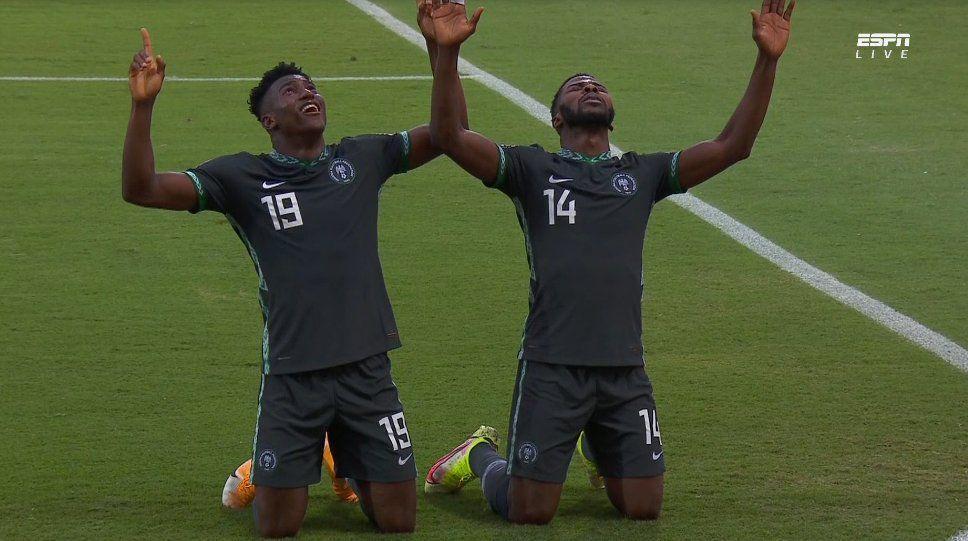
By doing this, I think the North will avoid the situation we are currently experiencing where northerners are a dot in the circle in the team of players representing Nigeria in the ongoing Olympics games in Japan.

Salisu Uba Kofar-Wambai is a PhD student at the Department of Mass Communication, Bayero University, Kano. He can be reached via salisunews@gmail.com.

EndSARS protest and more lessons to learn

By Lawi Auwal Yusuf

For any right-thinking, upright government with the political will, the EndSARS protests was not an incidence to be taken for granted or forgotten. On the contrary, the turmoil was the greatest challenge of Nigeria in 2020 after the Covid-19 epidemic. There are lessons to learn. It deserves special attention, critical thinking and drastic measure, not an indifferent and lackadaisical attitude.

It was a phenomenon that has shown that things are not well in this country. And it sent a strong and clear message that poverty, inequality, mass joblessness and underemployment are at their highest pinnacle. It manifested the annoyance, frustration and anger in the citizens of this dystopian country.

The hopeless, idle and ratty youths have fed up with their misery, plight, wretchedness, redundancy and unhappy dire future. This means that Nigerians are irritated and have despaired with the long-anticipated miracle change promised by the Buhari administration and his mega-merger party. This rebellion had evidently signalled the administration’s failure and its vague, obsolete and unrealistic policies that should be thrown overboard and swiftly replaced or radically reviewed.

A similar event like SARS brutally led to more than a decade of wars and fracases in many countries of the Middle East. What sparked off the disturbances was just even more trivial than what caused the EndSARS protests in Nigeria, where the SARS operatives slew a suspect extrajudicially.

The Arab Spring, which started in 2011, was ignited when a cop molested a fruit-seller on the street of Tunis. Muhammad Al-Bouazizi, a breadwinner, set himself ablaze in protest of confiscating his wares by the police from which he made his ends meet and put food on the table for his family and his aged parents.

After intense pressure from millions of demonstrators that took to the streets of the country’s metropolitan cities, it resulted in the ouster of the then authoritarian President of Tunisia, Zainul Abidin Ben Ali. And subsequently, these protests proliferated in neighbouring countries. Similarly, it led to the fall of other long-ruling regimes and sit-tight dictators like Muammar Gaddafi of Libya, Hosni Mubarak of Egypt and later Muhammad Mursi, Abdallah Saleh of Yemen, Sa’ad Hariri and Hassan Diab of  Lebanon, Umar Al-Bashir of Sudan, Abdulaziz Bouteflika of Algeria, Blaise Compaore of  Burkina Faso and the currently embattled Bashar Assad of Syria. And most recently, Ibrahim Boubacar Keita of Mali, a West  African country and a member of the CEDEAO (ECOWAS) and a neighbour to Nigeria with the closest proximity to Nigeria among the mentioned states.

And I am sure it is unarguable that police in Nigeria are more hostile, ruthless, brutal and more corrupt than these countries. Nevertheless, their leaders were more committed to developing their economies and serving their masses than the Nigerian unpatriotic, unmindful, extravagant and wanton politicians. Their leaders were more just, accountable, transparent, modest, nationalist, less corrupt and materialistic and love their people more than our leaders do. Moreover, their masses are far better off than Nigerians. Despite these, their people revolted against them, and it is the wish and age-long dream of  Nigerians to have leaders like that of those countries so that our country can reach their level of development. And one may think that if genuine and urgent efforts are not made to resolve the problems of this country, it may be next.       

Furthermore, the EndSARS resistance has shown that Nigerian politicians are no longer running the country’s affairs with the mandate and consent of the people because they believed that they are deceived and betrayed by politicians. Thus, democracy is an illusion as it has metamorphosed into a democratic dictatorship.

Lastly, as every Nigerian is responsible and must be blamed for the nation’s state and as we have all paid the price for this destructive behaviour of these youths, change must begin with each and every one of us. Therefore, on the part of the government, I suggest it should convene a conference and bring together technocrats from different professions like sociologists, economists, political scientists, security experts and so on to assess the situation and its causes come up with solutions to avert any future reoccurrences.

Lawi Auwal Yusuf Maikanawa writes from Kano. He can be reached via laymaikanawa@gmail.com.