Opinion

On the need to establish the Federal Medical Center Rigasa

By Abdullahi Yusuf

In our dear country Nigeria, the responsibility of providing health care to local communities is shouldered upon Local Governments through primary health care. State Governments are responsible for taking care of any facility under secondary health care, while Federal Government on the other hand is responsible for handling Tertiary Health Care Institutions which include (federal or state) university teaching hospitals or Federal Medical Centers (FMCs).

Contemporarily, there are 22 FMCs in Nigeria located in different states of the federation. In operationalizing the policy of providing health care services to Nigerian citizens, the Federal Government decided to establish one tertiary health institution in each state in which FMCs were established in states that do not have a University teaching hospital. However, there was an exception in the case of Lagos State which has both a University Teaching Hospital and FMC at the same time. This might be due to its population density and the commercial activities in the state.

Kaduna is the third most populous state in Nigeria with more than 5 million people as per 2006 census data. The number could be double today. Rigasa, a ward under the Igabi Local Government Area, is considered the fastest developing area in terms of population, with approximately 3 million people according to Wikipedia.

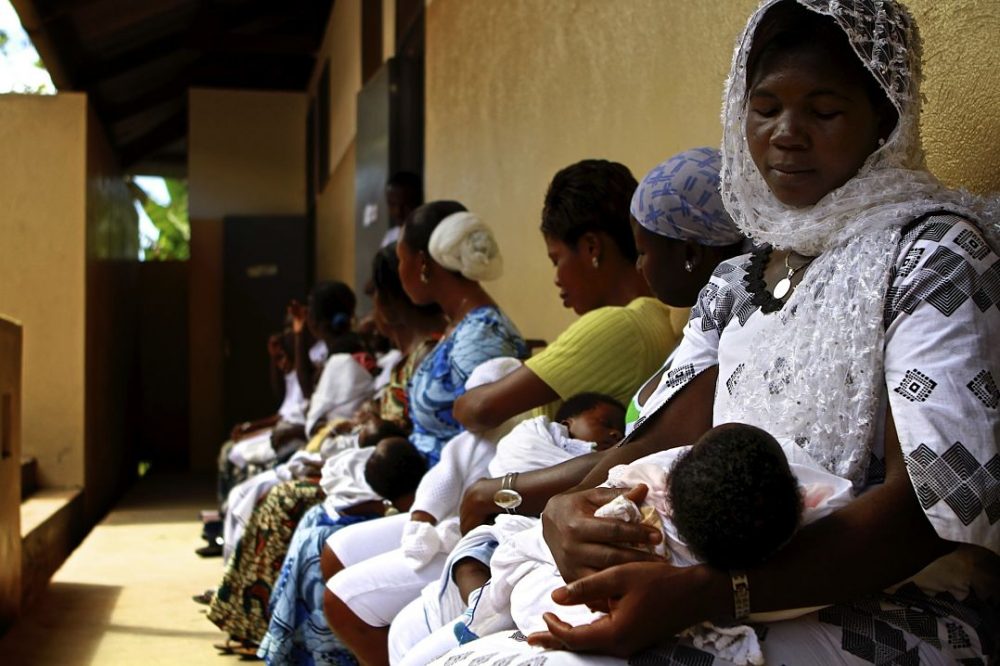
People living in Rigasa commonly faced limited access to good health care, having just two primary health care centres and one general hospital which are not enough to cater for the health need of the populace. There are quite a numbers of private hospitals which supports the provision of health care to the people of the community but could only be patronized by well-to-do members of the society.

With regards to the limited accessibility of quality health services by the people of Rigasa, the senator representing Kaduna central Mallam Uba Sani sponsored a bill for an Act to establish the Federal Medical Center Rigasa. According to him, this will bring much-needed relief to inhabitants of the hugely populated area, who for long have to travel long distances to get medical attention. This is a commendable effort by Senator Uba Sani and history will never forget his kind gesture towards the people of Igabi Local government and Kaduna State at large.

In 2019, if we can remember, Senator Uba Sani raised a motion with regards to a measles outbreak in Wusar village, which is under the Gwaraji ward of Igabi LGA. The Senate directed the Center for Disease Control (NCDC) and National Primary Health Care Development Agency to take measures that would address the outbreak. It also directed the NCDC to set up an office in the local government as a matter of urgency.

The bill for an Act to establish Federal Medical Center Rigasa passed its first reading on the 19th of November, 2019. And subsequently, passed its second reading on the 17th of December, 2019. The bill passed its third reading on the 3rd of December, 2020. It is currently awaiting assent by President Muhammadu Buhari, which will pave the way to the commencement of the work.

The boon of establishing FMC Rigasa can not be overemphasized as it will bridge the gap of accessibility of quality health care services by the people of the community and the state at large. It will also provide easy access to more sophisticated healthcare services by making available technologically advanced machines and equipment for the diagnosis and treatment of diseases of all kinds. It will also provide intensive manpower in taking care of patients and operationalizing the sophisticated health care services.

Socioeconomically, the establishment of FMC Rigasa will undoubtedly boost the macro and micro economy of the state by reducing the rate of unemployment among the graduates, promoting business activities of SMEs and increasing revenue generation for the state government. The huge economic impact of the Rigasa Train Station on the inhabitants of Rigasa and Kaduna State at large is obvious to all. Moreover, this impact will surely duplicate itself beyond expectation when the FMC is established.

It has been a well-known fact that Rigasa inhabitants are die-hard supporters of President Muhammadu Buhari, and they have never compromised their support regardless of the situation of the country. This is a great chance for  Mr President to reciprocate the gesture and prove his appreciation for his long-standing support by okaying the bill for commencement of work.

In conclusion, I will like to appeal to all concerned individuals who in one way or the other can support the actualization of this dream to help in pushing this agenda till it becomes a reality. Kaduna state government under the leadership of Mallam Nasir ElRufai have done a lot for Rigasa. Still, we will not relent in soliciting this one more favour concerning actualizing FMC Rigasa. Zazzau Emirate under the leadership of Amb Ahmad Nuhu Bamalli as well can help in facilitating this agenda, and finally Federal Ministry of Health under the leadership of the Honourable Minister of Health, Dr Osagie Ehanire should kindly help in facilitating the actualization of FMC Rigasa.

Abdullahi Yusuf is a student in Human Kinetics and Health Education Department, Bayero University Kano. He wrote from Rigasa, Kaduna, via abdoolphd@gmail.com.

Will Mai-Mala walk the talk?

By Kasim Isa Muhammad

Yobe State students across Nigeria were left with questions about the silence of the Yobe state scholarship board and the state government itself. The students filled out all the requirements and paid money to complete the registration. Since then, not even a cough, nobody has heard from the scholarship board. The students gave different excuses for the board until things reached a confusing level.

Meanwhile, the Yobe state government has not yet released any information about the scholarship board. His Excellence, Mai Mala Buni, as executive governor, and be seen as responsible for all matters around the state in Yobe and should have to call upon the board and question them about the approved funds for the scholarship. Still, the views turned out to be different. 

However, the students are in high demand for scholarships to cover some of their academic programs. Even if there is any problem, the board or state ministry of finance should release a statement to convince the students and acknowledge their whereabouts.

The school tuition fees are rapidly increasing because of the current economic impact on Nigeria. Some students look forward to the scholarship as a means to support them in one way or another. Silence is never an answer because the past administration has never failed the students in paying scholarships.

The one thousand-dollar question is: where do the good people of Yobe donate the funds meant for fostering the state’s educational sector in the form of an educational appeal fund?

Therefore, It is a good idea for the government of Yobe State to form a high-powered committee laden with a task to look after the issues pending.

Kasim Isa Muhammad wrote from Potiskum, Yobe state.

Why do students hate or fail mathematics?

By ImamMalik Abdullahi Kaga

Many students across Nigerian schools hate the king of subjects – mathematics. Mathematics is a subject that has application in most things, if not everything, in our life. Yet it is loved by few. Why?

The application of mathematics is there in every aspect of our life. Mathematics is crucial for industries, artisans, doctors, engineers, and many others. Yet, despite the vast and promising applications of the subject in our day-to-day activities, many students find it uninteresting. However, as a 200-level student, it is among the most straightforward and exciting subjects I enjoy. The reasons for the aversion towards mathematics include the teachers’ teaching methodology, students’ attitude towards the subject, poor reading culture, and lure of peer mates.                                                                                                                                                  

Some teachers (trained ones) employed to teach this almighty subject do not teach from the background. On the other hand, some are not trained and qualified to teach the subject. We cannot deny the fact that not all that are practising the noble profession of teaching are teachers. The majority have found themselves in the cause accidentally. This results in their inability to carry out the job correctly. It is becoming rare seeing a well-trained mathematics graduate teaching the students because the untrained ones are displacing them. And this applies not only to mathematics but to other subjects too. It is worrisome to notice that most of our schools produce students with a minimal or poor background in mathematics. The truth is that our schools are invaded by non-professionals parading themselves as teachers.                     

Students’ lack of seriousness and keenness on the subject cannot be over-emphasized. In this world of technology, students face many distractions which cause hindrances to their studies. Students nowadays are addicted to phones. They prefer surfing the internet and social media, playing games, watching the so-called series films, listening to music to devoting time to practising the subject. With this attitude, no student will perform excellently in this subject because mathematics requires constant practice.                                                                        

These days, students are not keen on their studies, so they barely read their books. In the past, students worked hard; some even read harder than their teachers. This helped them understand mathematics and other subjects, and then a holistic knowledge and solid background. Ours is entirely different. We hardly ever find students that have devoted keen interest in reading the subject in the six-year academic program at the secondary level. Still, they expect to score a credit pass in the subject.                                                

In some instances, fellow students discourage others in their crew from being focused on the study of mathematics in our schools. Some of the students in question, either out of sheer laziness or fear, would not devote their time and energy to the subject, which is one of the reasons for the mass failure in the subject in recent times. It is a fact that once a student hates a topic, he will equally hate the teacher, resulting in a large group of students who develop an aversion toward learning the subject. Another disturbing aspect is the influence of peer groups that lure others who might have an interest in this subject to go to games, parties and others. This has ignited lugubrious discouragement to others.                                                                    

Another disturbing aspect is the kind of textbooks used in schools. Unemployed folks searching for jobs plagiarize the works of hardworking researchers and sell them to schools. You will believe me that the books in circulation in various schools are full of silly pictures instead of extensive clarifications about the topics contained.

ImamMalik Abdullahi Kaga wrote from Borno State University via abdullahiimammalik@gmail.com.

Professor J.B Adeyanju: An Iroko has fallen

By Zakariyya Shu’aib Adam

It was the first Monday of the first semester in 500 level in the Faculty of Veterinary Medicine, Usmanu Danfodiyo University, Sokoto [U.D.U.S]. As usual, all students who successfully passed 400 level were happy because they have now acquired “stay apparatus.” By stay apparatus, I am referring to the mechanism that enables horses to rest for a long time and have a nap while standing. In this context, it means 500 and 600 level students will no longer be withdrawn from the faculty regardless of the number of courses they failed. In other classes, once a student fails seven courses in a session, he will be asked to withdraw to another faculty.

The first lecture we had in 500 level was on Anaesthesiology. We were expecting a familiar lecturer from the Department of Surgery and Radiology when an agile old man dressed in a knee-length kaftan with a lab coat entered the class. He was averagely tall but wasn’t familiar to anyone of us. Morning lectures usually begin at 8:00 am but this old man was in the class before the time. When latecomers came, he allowed them entry to the class but spent some minutes grumbling as usual of an old person. He disallowed us to jot, yet emphasised on listening to what he was saying. We noticed his name on the chest pocket of his lab coat. Wow! He was the famous professor John Bayo Adeyanju, the great veterinary surgeon talked about by our lecturers.

When he was done with the lecture, the Head of Department of Surgery and Radiology, professor A.S Yakubu came to the class and gave us a brief highlight of Adeyanju’s academic life. He told us that Adeyanju was his supervisor at P.G level and that he taught virtually all professors and doctors in the faculty including the highly cerebral professors A.I Daneji, U.M Chafe and L.B Tekdek. He was one of the early graduates of D.V.M from Ahmadu Bello University, Zaria. He acquired his MSc and PhD in the United States and was a fellow, College of Veterinary Surgeons of Nigeria. Adeyanju was one of the founding fathers of the Faculty of Veterinary Medicine in U.D.U.S. He was one time the Head, Department of Surgery and Radiology and the Director, Veterinary Teaching Hospital. He was a professor for more than three decades.

He taught in many Veterinary Colleges and Universities in Nigeria. He had practiced surgery in Nigeria, Zimbabwe and the United States. He outclassed many professors in both academics and practice. He was arguably the best veterinary surgeon in Nigeria. We were told that whenever he was to perform a surgical procedure, he would not administer any postoperative antibiotic as it is routinely done because he was sure of the sterility of the surgical site and the surgical environment. However, he advised us to give aggressive postoperative antibiotic because in Nigeria, due to the sorry state of our universities and health care systems, it is difficult to evade postsurgical wound infection without antibiotics.

Before his return to U.D.U.S on contract, we heard many tales about him. It was said that he was forcefully retired from the academia by the late Gen. Sani Abatcha as a result of a dissension they had. Although Adeyanju was old (almost 80 years old at the time of his death), he was always punctual to the class. He never missed class. Whenever he noticed that there was no lecturer in the class, he will enter and teach. In his class, every student must dress formally. Lab coats must be fully buttoned and must carry nametags. Clinical students (500 and 600 level) must carry along their thermometers and stethoscopes at all time for emergency purposes.

Professor J.B Adeyanju was a man of wisdom. His method of teaching was unique. He gave little notes and spent much time explaining. He made sure we understand a topic before he moved to another. As an elderly person with an ocean of experience, his teaching hours were full of admonishment. He spoke in parable with an authoritative voice and will often repeat his sentences. That was why many of us memorized most of his favourite quotations. At the beginning, many of us were not at home with the way he did things because we felt that his complaints were much, although it was typical of old people. As time goes on, he became the students’ favourite lecturer.

The great Adeyanju was a conscientious old timer. He always wanted to see things right. One evening after clinical posting, I pulled off my shoes and wore slippers. I equally unbuttoned my lab coat and loosened my necktie. Unfortunately, I met Adeyanju on my way to the hostel. I greeted him but he kept mute as if he did not heard me. When a classmate who was in a formal wears greeted him, he answered, smiled at him and said: “Good boy, you look smart.” A classmate told me that he met Adeyanju with an unbuttoned lab coat. Adeyanju called him and said: “My friend, button up your lab coat. You do not have a broad chest.”

Although Adeyanju may be seen as a strict person, he was equally simple with a good sense of humour. He was used to saying that surgeons speak with their hands. During a surgery practical, he caught a student talking. He came to the student and said: “You talk more than an average woman.” We bursted out laughing. After some time, he came back and saw the student quiet. He sighed and said: “I have sedated him.” He once saw me yawning in the class and thought I was sleeping. He asked me to come out to the stage and spell my name while doing waist twisting. As I began, Adeyanju giggled and the class laughed hysterically.

When we were in Small Animal Clinic, a cat was presented with a complaint of laceration on its right hind limb after it got attacked by hoodlums. I took the history of the case from the client. When Adeyanju came, he summoned us to his office. He asked me to brief him on the history of the case. When I began, I noticed that he was staring at me. I got confused and forgot the correct word to qualify the wound. I said “the hind limb was chopped off by hoodlums”. He furiously shouted at me saying: “Can’t you speek English? Oya! Say it in your native language.”

Adeyanju was a caring teacher. When our teacher M.S Abubakar became professor, he was extremely happy because Abubakar was his former student. He hugged him and asked students to snap them together. He was very close to professors A.S Yakubu and Salisu Buhari. When they completed their fellowship, they were unable to attend the ceremony in Abuja. Adeyanju graced the occasion and brought their certificates to Sokoto. He handed over the certificates to them on a ceremonious day.

Few weeks later, he fell sick and was hospitalised at Usmanu Danfodiyo University Teaching Hospital [U.D.U.T.H]. It was said that he drove himself to the hospital. Professor A.S Yakubu took us to the hospital to see how he was doing. We were frightened when we discovered that the agile and energetic old man could not talk but waved his hands. We prayed for his quick recovery and left the hospital pitifully.

Baba Adeyanju (as we fondly call him) passed away in the evening of Thursday 23rd December 2021. His body was laid to rest but the knowledge he imparted will remain with us and shall be passed to the next generation.

Adieu to the best veterinary surgeon in Nigeria.

Zakariyya Shu’aib Adam is a final year veterinary medical student and writes from City Campus, Usmanu Danfodiyo University, Sokoto. He can be reached through zakariyyashuaib2020@gmail.com

Is this inflation a global problem?

By Salisu Yusuf

I was discussing with a friend who’s an auto broker and an arbitrage specialising in buying and selling goods from Benin Republic, Niger Republic and Nigeria. Our topic of discourse was the so-called global inflation put forward recently by the pro-government campaigners to defend our economic limbo.

From around 2000 to date, he argued cogently, the prices of goods and services were stable and fixed in Niger, Benin and Saudi Arabia – the economic reference points and benchmarks of our so-called economic analysts. They depend blindly on the economic malfeasance that befalls our country. The only change, he argued, is the exchange rate of our Naira to any foreign monetary denominator as our Naira plunges daily in value due mainly to our poor economic managers.

For example, around 2000, the tokunbo golf car was sold at 800,000 CFA Francs. Each 1000 CFA francs was exchanged then at ₦600. So, around that time, you could buy the car brand at around ₦768,000. Today, the same car is sold at the same 800,000 CFA francs. What only changes is the rate of exchange due to the Naira depreciation. Each 1000 CFA francs is exchanged at ₦960 instead of ₦600. So, the same car sold at ₦768,000 is now sold at ₦1.7m in the Benin Republic. 

Moreover, a bag of rice that could be purchased at 18,000 CFA francs, equivalent to ₦10, 800, for the CFA francs, was sold at a lower rate. Today, the same bag of rice is sold at the same price of 18 CFA francs as two years ago, but at a high price of around ₦22,080 because of the Naira devaluation.

Some people measure this so-called global inflation theory with the price of a meal in  Saudi Arabia. A friend once told me that a meal in a Saudi Arabian restaurant could cost you ₦5000, whereas ₦1000 could buy you a meal in Nigeria. I laughed at his low-level economic analysis. The ₦5000 Saudi meal is only realised if you exchange it for our depreciated Naira. If you calculate the number of Saudi Riyals exchanged for the ₦5000 is a low amount for a  person living in Saudi Arabia. In other words, the Saudi Riyal is only valuable if, and only if it’s changed to Naira! This is the same economic scenario I explained earlier in the CFA francs/naira ratio. 

The rate of exchange between Naira and Riyal, CFA Francs/ Naira, explains the economic limbo being faced by our country. This further illustrates the Federal Government’s resolve to increase the Hajj value-added tax from 5 per cent to 15 per cent. Moreover, it also hints at the government’s Hajj subsidy removal – hence, the exponential rise in 2022 Hajj fares to nearly ₦2.5m for the participating Nigerian pilgrims.

In the Niger Republic, prices of commodities are stable and fixed, as they do not fluctuate like in Nigeria. This is because President Bazoum manages the economy well; the government implements a protectionist economic policy, where Nigeriene goods are protected against their Nigerian counterparts through restrictions against export or putting high tariffs and handicaps placed through import quotas. Though many Nigerienes export petroleum in massive quantity from Nigeria, President Bazoum has restricted exporting of gas to Nigeria and restricts its consumption internally. Defaulters are taxed. Sometimes the products and their means of transportation are confiscated by gendarmes. 

Meanwhile, the high inflation rate has affected the price of our internal commodities. For instance, the gas imported from Niger is much cheaper than ours in Nigeria. Daily, hundreds of motorcycle riders import the Nigeriene gas on a large scale without paying any import tariff. Antithetically, Nigerian petroleum products are being exported into Niger without paying for excision to the Federal Government because of the border closure. 

Therefore, smugglers from, especially Niger, play their trump cards as they usually export our products freely, sell them in CFA francs at an exponential price in Niger, come back to our border and exchange the CFA into Naira, rebuy our commodities and go back to sell at a bargain price.

While we expect Mr President to cap up his swansong with a socio-economic legacy, we are daily disappointed that the man will finally end his tenure as a colossal failure, a disappointment to a poor talaka that stood blood, toil, tears and sweat to vote for this man.

Salisu Yusuf wrote from Katsina via salisuyusuf111@gmail.com.

Brain Drain: Who is to blame for the mortal exodus of Nigerian doctors? 

By Dahiru Mamman 

Undoubtedly, one cannot overemphasize the importance of health. Doctors ensure that we stay healthy and when we are knocked down by diseases, no matter how severe, they perform their magic to lift us. According to Mahatma Gandhi, “the best way to find yourself is to lose yourself in the service of others.” This is what doctors across the globe do: service to humanity.

Although we get graduates annually, doctors are still insufficient not only in Nigeria but across the globe. These numbers are supposed to increase with the number of universities that offer medicine and other related courses, colleges of health and schools of nursing and midwifery. Still, unfortunately, it is not the case as our health sector is threatened by a ‘mortal exodus’ of health workers, which is termed “brain drain” in the health sector. 

Recent reports from different media outlets show that no less than 727 Nigerian-trained medical doctors have relocated to the United Kingdom between December 2021 and May 2022. Between March 2021 and March 2022, at least 7,256 Nigerian nurses have left for the United Kingdom. This statistics is only on the migration to the United Kingdom. What about those that moved to other parts of the world? Most doctors were reported to have moved during the period the federal government failed to pay their hazard allowance.

With a winsome smile, I was pleased that we have home-trained medical personnel that are fit to work abroad, especially in places as advanced as the United kingdom. But on the flip side, my winsome face turns gloomy because our beloved nation is losing the scarce service of the medical personnel to countries that are supposedly ahead of us. So who should we hold responsible for the ongoing migration, the leaders or doctors? 

The question is, should the physicians and other medics move in search of greener pasture because they are not paid hazard allowance or because the health sector is crumbling? One could answer in the affirmative because scholars like Adams Smith, when propounding price (for goods and services) theory, said the higher the risk involved in a job, the greater the rewards or pay if you wish.

So, doctors are exposed to severe danger because they fight a battle against soldiers they can’t see: microorganisms (viruses, bacteria, fungi etc.). Hence, they deserve a decent salary. But should the pay be the criteria for doctors to work? What about the oath they swore during their various inductions to “….treat human beings because it affects family members and economic stability….” 

Should those in charge of the doctors’ welfare (government and other stakeholders) relent because their job is supposed to make them selfless? In negation, as they work round the clock to ensure that citizens are healthy for self and economic development, somebody has to look after their welfare since they also have a family to cater for. Aside from catering for their welfare, who should be responsible for providing infrastructure, medical equipment and instruments for treating the sick? We can say those that swore the oath to protect the lives of citizens are. 

My call to the doctors is that they wear the white coat and scrubs with dignity and pride and strive to make the profession worth practising in the country. Even though the practice still saves lives away from home, they should know that they owe the service more to the country.

To those in charge, efforts should be made to do well by the medics to avoid further migration. Leaders, they say, make choices that keep them awake at night, and if they sleep well, it means they are not getting the job done. Hence, the situation should be tackled in a way that favours the masses.

If the issue remains unchecked, the wealthy will continue to relish in the comfort of seeking medical attention abroad while the masses or less privileged live in despair.

Mamman, a corps member, writes from Abuja and can be reached via dahirulawal90@gmail.com.

ASUU strike and Nigerian students’ dilemma

By Aliyu Idris

The trouble with Nigeria is simply and squarely a failure of leadership. The Nigerian problem is the unwillingness or inability of its leaders to rise to the responsibility, to the challenge of personal example which are the hallmarks of true leadership. – Chinua Achebe.

It’s exactly four months since universities were shut down due to the lingering ASUU Strike. It’s disheartening for millions of university students like me in Nigeria who are at home idle; their fundamental rights to education are thwarted.

The government and politicians are busy with their political and elections shenanigans and do not bother to look into the menace of these excessive strikes.

None of the aspirants vying for the presidential throne has talked about curtailing the ASUU strike. This is utterly devastating. I always think about who to vote for regarding the issue of education in Nigeria.

To be candid, I don’t know how will this country continue to survive when its education sector is crippled. When the aviation sector wanted to embark on strike, the issue was solved a day before the strike because it’s not the education sector, which is too ironic for Nigeria.

The elections misdemeanour is their concern now. They invest heavily in politics and neglect education and other relevant sectors that will foster the country forward. The strike may be over soon or next year after the elections.

Let’s turn to the Lord (Allah) in prayers to give us the best leaders who have the country at heart, fulfil our vision and mission, and make our country great.

Aliyu Idris is a student of Bayero University Kano and can be reached via his email: aliyuidris063@gmail.com.

If Nigerians are normal, APC will never be voted again

By Aliyu Nuhu

There is no way Nigerians will vote APC back to power if the country is a normal society with normal people. But the people voting our leaders are not the ones reading this write up. They are the people who vote with their stomach instead of their conscience. Stomach infrastructure is very much around and it is the reason why governors will be the deciding factor in who becomes the Nigeria’s president.

Here are APC failures and why Nigerians are not happy with it. But first let’s mention the areas the government made some progress.

This government built infrastructure. It is the best in Africa by regional standard. More are needed but within its two terms it completed Kaduna-Abuja railway and kept it running. It completed Itakpe-Aladja rail and it is operating. It built in record time Ibadan-Lagos railway and it is running. It has started Kano-Kaduna rail, Kano-Katsina-Maradi rails. It has almost completed second Niger bridge. It has almost completed Lagos-Ibadan express. It has gone far in building Kano-Kaduna-Abuja express. It has almost completed Kano-Maiduguri express. It has expanded and improved all the international airports to very high standards. Aminu Kano international airport, Nnamdi Azikwe international airport, Murtala Muhammed international airport, Portharcourt international airport and Enugu international airport. There are many roads that cannot be mentioned. In terms of infrastructure, APC has developed Nigeria.

Economic development is about infrastructure. That has been achieved to a modest standard. The next government will build on it. That is how societies develop.

However, the areas of failures are here but not according to their importance though.

1- Electricity: APC did not build power plants and did not build transmission infrastructure. The Siemens $2.3 bn power deal is still on paper. The government inherited 4000mw Electricity generation and today we have national grid collapse and abysmal 2000mw generation. Nigeria can never grow without electricity. Any claim of growing the economy is simply preposterous.

2- APC did not build refineries. The country is still shamelessly importing fuel. Petroleum products are the country’s biggest import and biggest waste of foreign earnings. Whatever the country gains in exporting crude oil is wasted in importing refined petroleum products in the most corrupt and dubious style. Nigeria will never grow by importing a commodity it has in abundance and has comparative advantage over 160 countries. Because Nigeria imports fuel the commodity is never enough nor available.

3- Insecurity: by any standard, Nigeria is among the most violent countries on Earth. The whole country is circled by terror so much that killing of 40 worshippers is quickly overshadowed by more violent events. Most of Nigeria’s roads are taken over by bandits. People no longer travel for normal living. A journey from Abuja to Kaduna is becoming a suicide mission.

4- Bad economy: the economic health indicators are level of poverty, inequality, corruption, hunger unemployment, inflation, interest rates, foreign exchange rate and volume of international trade. There is no space to take each of them but in a nutshell Nigeria is simply facing economic crisis.

5- Education: APC inherited university strikes and is bequeathing university strikes. Primary school enrollment is at its worst level with 12 million children roaming thr streets. Child education is the telescope used in looking at the future of a nation. If the children who will be around in the future are not getting education, then it is easy to know the kind of Nigerians in the next 20 years.

6- Health: the hospitals are still what they were before APC or even worse. No equipments, no trained personnel, no drugs and no electricity. Nigerians travel outside for medical treatment and those that have no money stay and die.

7- Corruption: this government is gradually overtaking PDP in official stealing. The little gain made in jailing few governors has been reversed by the departing president who made fight against corruption his cardinal goal.

These are just few areas critical to nation’s life that makes APC a terrible choice for Nigerians. But unfortunately and very sadly APC may still remain in power because of a weak opposition. If the small parties don’t merge and present a single candidate in PDP there is no way APC will not form the next government. Mark my words. No political party can take on APC alone.

Between citizen and parachute journalism 

By Abdullahi A. Maiwada

“‘Parachute Journalism’ trivialize and sensationalize events that are more complex than a 30-second clip can capture” – Thomas L. McPhail.

However, this era of social media has made citizen journalists more dangerous than parachute journalists. While practitioners of the former are utterly ignorant about the basic principles of the profession, the latter is about placing journalists into an area to report on stories with little knowledge or experience. Lack of knowledge and tight deadlines often result in inaccurate or distorted news reports, especially during breaking news. 

While citizen journalists lack the fundamentals of news judgement, one cannot neglect their relevance in the business of news reportage. In some cases, the traditional media rely on citizen journalists for updates about issues in the form of eyewitness reports. 

The above implies that both parachute journalism and citizen journalism are interrelated at specific points. In most cases, their characteristics can be catastrophic and misleading instead of informing and educating. 

Even though I am not a fan of CNN, my recent update about the strategies by the new CEO Chris Licht making frantic efforts to redefine the usage of breaking news is a step in the right direction. “Moving away from alarming news distributing styles”, he said.

Both citizen journalists and mainstream media have fallen into the trap of fake news and hate speech precipitated by digital media. This is to satisfy the urge to take the lead in breaking the news.

In the word of my journalism lecturer Dr Kola Adesina “no time to think syndrome”. The outcome is having limited know-how to strike a balance between speed and accuracy. Thanks to convergence which created a blurry line between mainstream and digital media.

The primary reason we dish out content is to inform and not disinform, misinform and mal-inform. Why can’t we think twice and have a sober reflection before writing or talking? We should endeavour always to put a round egg in a round peg to avoid misleading society towards the direction of Rwanda. 

Influential media effect theories are still relevant in the digital age. The hypodermic needle/bullet, agenda-setting theories and the likes play a critical role in shaping the perception of the gullible and media illiterates who form the majority in our society. 

I have encountered a colleague who changed his perception of Russia based on an American movie. We have so many of them out there.

Finally, I will end my piece with the saying of our beloved Prophet (SAW). “Whoever believes in Allah and the day judgment should utter what is righteous or keep mute”. Gbam!!!

Abdullahi A. Maiwada is a superintendent of Customs attached to the Public Relations Unit, Nigeria Customs Service Headquarters, Abuja.

More clarifications ahead of 2023

By Amir Abdulazeez

When President Obasanjo carelessly picked Goodluck Jonathan to serve as Umaru ‘Yaradua’s potential Vice President in 2007, little did we know that the politics of choosing running mates would later become complex and problematic. The death of Umaru, the ascension of Jonathan, the surprising emergence of Namadi Sambo and Patrick Yakowa becoming the first Christian Civilian Governor of Kaduna State would all combine to later add more relevance to the politics of running mate selection. In 2014, APC had more headaches picking a presidential running mate than the presidential candidate himself. It took them so much time and effort that one thought they would organize a new convention for that purpose.

Today, the Muslim-Muslim ticket debacle is the bane of Nigerian political discourse. While clamouring for fairness and balance, which are needed for a fragile system like Nigeria’s, we should also remember that from 1999 to date, no religion can claim any net gain from this Nigerian version of democracy. Ordinary followers of all faiths have been victims of bad governance, even pagans. We have suffered so much that if a pagan/pagan ticket will eradicate insecurity, fix the economy and bring development while being fair to all interests and affiliations, we should allow it. Therefore, the choice is between searching for solutions and satisfying sentiments; we seem to favour the latter.

A section of public commentators and spectators are already suggesting a walkover for Atiku Abubakar in the 2023 polls. That is the biggest complacency I have ever seen in contemporary Nigerian politics. How can you be facing a ruling party with almost 65% of political stakeholdership in the country and be expecting to have a walkover? Atiku is an institution, but his successes in the last two PDP primaries are more financial supremacy than political dominance. That aside, barring a Buhari-like scenario, Atiku will make a good president. He is perhaps the only fully independent candidate with a clear and accessible blueprint since 2007. In 2011, he had a better manifesto and approach than President Goodluck Jonathan; he only lost the PDP primaries to the power of incumbency. By the way, what happened to the Jonathan 2023 candidacy?

From 1992, this is Atiku’s 7th attempt at the Presidency, with 2019 being his closest to success. Many believe 2023 is his year, and so many apparent factors call for optimism in his camp. However, two fundamental things may haunt Waziri; (in)consistency and (un)popularity. Buhari and Tinubu are successfully reaping the harvests of consistency and perseverance; they stuck to opposition politics all their lives. Atiku should’ve remained in opposition when he decamped to Action Congress in 2007 or should’ve stayed in the ruling PDP when he decamped back in 2011. Ambition had kept him running from one place to another, making him neither establishment nor anti-establishment. The second question is whether there is a single state in Nigeria in which Atiku can secure one million votes or more in 2023? I hope we all remember Dr Rabi’u Kwankwaso’s 3-K States theory?

Tinubu’s boast in Ogun State over his role in the emergence of Buhari as President needs some revisiting and clarification. To avoid doubt, Muhammadu Buhari did not lose the 2003 presidential elections; it was brutally rigged to return Obasanjo for a second term. 2003 will easily enter the list of the worst elections in modern world history. In 2007, the results of the presidential election were simply written, so we can’t even call that election not to talk of who won or lost. I have never relied on 2003 and 2007 election figures for research or serious analysis because they are primarily fabricated. The 2011 elections were relatively fair, but at least 40% of the vote was rigged, written, or inflated, especially in the South-South and South-East.

In the circumstances like these, we cannot comfortably declare Buhari a loser of all the previous elections he contested and only became a winner when he met Tinubu. Although 2015 was indeed the weakest version of political Buhari, it was confirmed that he had lost hope and that the APC merger spearheaded by Tinubu was what brought him back to life. But it is also true that so many other factors other than Tinubu contributed crucially to Buhari’s victory. One major one was the abysmal performance of Goodluck Jonathan. One, however, is that, without Tinubu’s support, it would’ve been near impossible for Buhari to emerge APC flagbearer against the financial powerhouses in Kwankwaso and Atiku.

This brings us to the argument that access to public funds is why some candidates (not aspirants) are stronger than others. Supporters of a particular presidential candidate even claimed that if their man had equal access to public funds, he would be better than certain candidates. This is laughable; a debate like this will take us nowhere. Just campaign for your candidate and persuade people to vote for him. If we are talking about the abuse of people’s trust and the utilization of our commonwealth for personal political development, none of the prominent politicians in Nigeria will come out clean. So, let us not deceive ourselves and others.

Where are our smaller political parties who had spent most of their last four years fighting INEC over deregistration? This is a reasonable amount of time they would’ve spent coming together to form a strong bloc. In case we don’t know, 74 of them were deregistered for failing to meet the requirements to continue to exist as political parties. About 10 to 15 of the currently existing will be due for deregistration by this time next year. Instead of them to consider merging to form a decent alternative, they’ll rather hang on only to be fighting a legal survival battle with INEC next year. As the strongest and largest intellectual organization in West Africa, I don’t even know why ASUU is yet to form a political party or adopt any of the smaller parties to set up a path towards satisfying their own demands all by themselves instead of waiting and hoping for a hopeless Federal Government.

Why is nobody talking about the enormous task ahead of the next president, whom credible international reports suggest will have to use 100% of his revenue in servicing (not repaying) debts by 2024? To execute projects or even pay salaries, the next government may have to borrow further. Nigeria is in trouble. We are drowning in the ocean of foreign debts. Meanwhile, we are concerned over a presidential candidate’s religion more than his ability to bring us out of this mess. Buhari has failed because Jonathan had built a solid foundation for that failure. Now he has built a worse foundation for his successor. The possibility and danger of the next president, irrespective of his affiliation and preparedness to economically be worse than Buhari, is imminent. May God help us.

All of the political dynamics of today are closely related to 1999, some a bit earlier. Suppose you have not directly experienced Nigerian political development from 1999 with a mix of some pre-1999 historical knowledge. In that case, you will find it difficult, if not impossible, to connect specific dots that you see today. Extensive and intensive reading may help, but politely interacting with veterans will do better. Unfortunately, social media, where most of the political debates occur, is dominated by youths who knew little or nothing pre-2011 and don’t invest significant time in reading but trying to engage or even confront the same veterans that would’ve been their best opportunity at understanding the genesis of the current situation.

There are some visible changes in Nigeria’s socio-political spaces, although not new but have taken a different twist from the previous. The renewed order is the attempt to criminalize certain political choices against others. Between 2014 to 2018, discourses were dominated by hate, campaigns of calumny, fabrications and outright abuse. Today, political promoters are trying hard to make it appear that only their candidates are good enough, and any other choice is treason. This is extremism. Let’s be careful, everything is a matter of opinion, and everyone is entitled to his.

Twitter: @AmirAbdulazeez