News

Police arrest fake officers extorting citizens in Kano, other states

By Uzair Adam

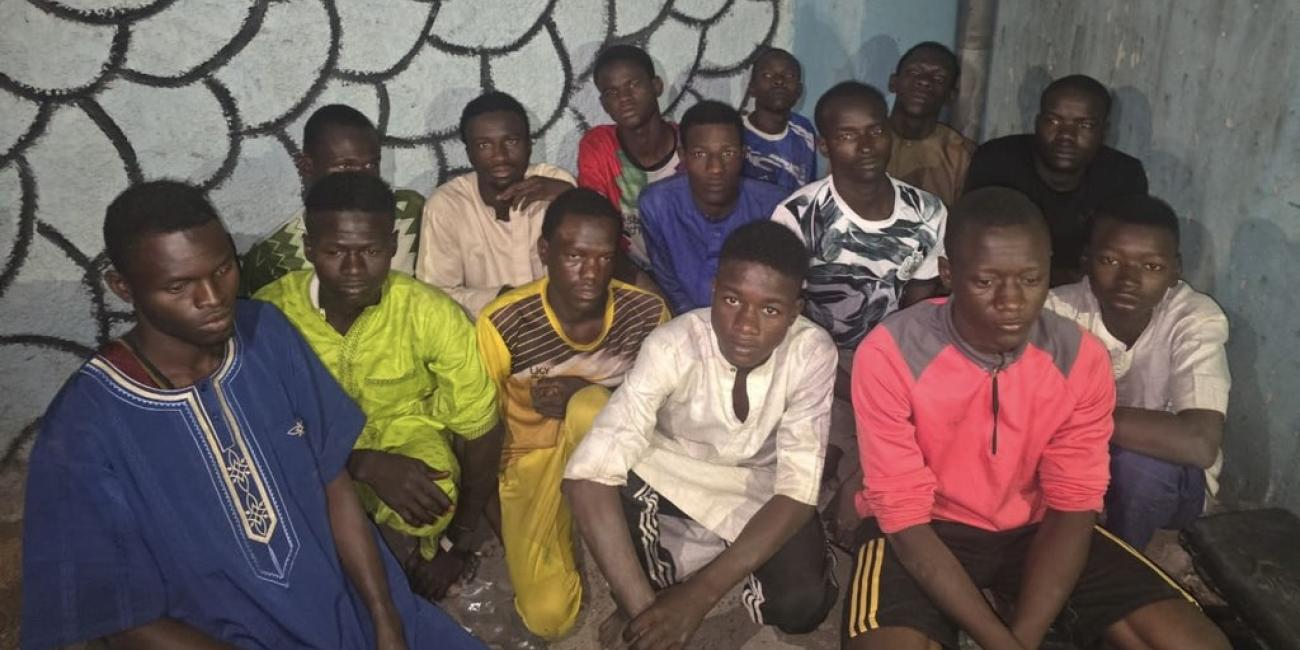
The Kano State Police Command has arrested five members of a criminal syndicate that specialized in impersonating police officers to extort unsuspecting citizens across Kano, Kaduna and Katsina States.

In a statement released on Saturday, the Command’s Spokesman, SP Abdullahi Haruna Kiyawa, said the suspects were apprehended on Thursday, October 16, 2025, around 1:00 p.m., following credible intelligence.

Those arrested were identified as Aliyu Abbas (35), Sani Iliyasu (47), Ashiru Sule (41), Abubakar Yahaya (45), and Adamu Kalilu (45).

They were nabbed by operatives of the Special Intervention Squad (SIS) while parading themselves as police officers.

According to the statement, several incriminating items were recovered from the suspects, including a fake police warrant card, handcuffs, CFA 2,500, mutilated naira notes of various denominations, and a blue Peugeot 406 with registration number NSR-188-BD used for their operations.

“During investigation, the suspects confessed to engaging in a series of impersonations using the fake warrant card to extort innocent citizens and carry out other criminal acts in Kano, Katsina, and Kaduna States,” the statement added.

SP Kiyawa said the suspects would be charged to court upon the completion of the investigation.

The Commissioner of Police, CP Ibrahim Adamu Bakori, reiterated the Command’s commitment to protecting lives and property, warning that the police would not tolerate any form of criminal impersonation or illegal activity in the state.

He further urged residents to remain vigilant and report any suspicious movements or persons to the nearest police station.

Nigerian chemist advances research on carbon conversion for sustainable energy future

By Rabiu Elkanawi

Mr Sulaiman Abbas, a Nigerian-born researcher, is contributing significantly to scientific innovation with his groundbreaking work that has the potential to transform global approaches to climate change.

Abbas, having obtained his MSc from Tianjin University in China, co-authored a highly cited paper on interface engineering for the electrocatalytic reduction of carbon dioxide (CO₂). His research investigates the potential of meticulously engineered nanomaterials and catalyst interfaces to transform CO₂, a significant factor in climate change, into useful fuels and industrial chemicals.

“I have consistently demonstrated a commitment to identifying solutions in the face of challenges,” Abbas stated. 

In Nigeria, industries and power stations emit significant quantities of CO₂, which is frequently regarded merely as waste. My research aims to convert waste gas into valuable resources for energy production and manufacturing.

This study elucidates the engineering of metal–metal, metal–oxide, and molecular interfaces to facilitate the efficient breakdown of CO₂, addressing the resilient chemical bonds that complicate its processing. Abbas’s research enhances catalyst performance, indicating novel methods for producing clean fuels, chemicals, and power storage systems, while simultaneously decreasing greenhouse gas emissions.

Nigeria’s reliance on oil and gas causes environmental issues like rising emissions. Abbas’ research suggests capturing CO₂ from industries, developing low-carbon sectors for green jobs, and rural electrification using CO₂ conversion with solar and wind energy.

Mr Abbas is pursuing a PhD in Solid State Chemistry at the University of Cincinnati and is part of international networks on sustainability and clean energy. His work highlights a circular carbon economy, where Nigeria and developing nations turn environmental challenges into innovation catalysts.

In the pursuit of carbon-neutral technologies, innovators such as Mr Abbas demonstrate that Nigeria’s emerging scientists are prepared to take a leadership role.

Nigerian Army rescues 21 kidnap victims, Chinese nationals

By Abdullahi Mukhtar Algasgaini

Troops of the Nigerian Army have rescued 21 individuals who were held captive by bandits, some for more than four months.

The group of freed hostages includes four Chinese nationals.The rescue was carried out on October 17 by a combined force from the 12 Brigade in Lokoja and the 22 Armoured Brigade in Ilorin, operating under the 2 Division/Sector 3 of Operation FANSAN YAMA.

According to an army press release signed by Lieutenant Colonel Polycarp Okoye, the victims—comprising 14 men, 5 women, 1 infant, and the four Chinese citizens—were abducted from various locations across Kwara and Kogi States.

The military stated that its “intensified offensive” pressure forced the bandits to abandon their captives, leading to their rescue.

Following their release, the victims received immediate first aid and were evacuated to a military medical facility for treatment.

Officials reported that many were physically weak and unable to walk without assistance due to extreme exhaustion but are now responding positively to medical care.

Major General CR Nnebeife, the General Officer Commanding the 2 Division, sympathized with the victims and reassured the public of the army’s commitment to its ongoing campaign.

“The Division remains committed to sustaining the ongoing onslaught against all criminal elements,” Major General Nnebeife stated.

“There will be no hiding place for bandits and other criminals within the Division’s Area of Responsibility.”

The GOC also acknowledged the support of the Nigerian Air Force and other security agencies in the successful operation, directing his troops to “maintain the tempo” to restore peace and security in the region.

The rescued victims are expected to be reunited with their families after making a full recovery.

Kaduna State approves new salary structure for 3 tertiary institutions

By Abdullahi Mukhtar Algasgaini

Senator Uba Sani, the Governor of Kaduna State, has approved a new salary structure for three major tertiary institutions in the state.

The approval covers academic and non-academic staff of Nuhu Bamalli Polytechnic, the Shehu Idris College of Health Sciences and Technology, and the College of Education, Gidan Waya.

This decision brings to an end a 15-year-long struggle by the staff of these institutions, who have been demanding a review of their remuneration package.

The new salary structure is expected to align their pay with contemporary economic realities and improve morale.

While the specific details of the new salary scale were not immediately released, the approval is seen as a major victory for the educational sector in the state and a fulfillment of the government’s commitment to the welfare of its workforce.

Nigeria Customs Service warns public against fake appointment letters

By Sabiu Abdulahi

The Nigeria Customs Service (NCS) has cautioned the public against a fake appointment letter currently circulating on social media, describing it as a scam.

In a statement titled “SCAM ALERT!!!”, the Service clarified that it is “not issuing appointment letters at this stage of its recruitment exercise.” It further emphasized that the letters in circulation are “FAKE and should be disregarded.”

The NCS explained that the recruitment process is still ongoing and has not reached the stage of issuing appointment letters.

It stated that “the ongoing recruitment process is still at the examination stage; the Superintendent Cadre recently completed their CBT across the six geopolitical zones, while the Inspector and Customs Assistant Cadres also just concluded their online CBT.”

According to the Service, the fake letters are “another attempt by fraudsters to mislead unsuspecting applicants.”

The NCS urged applicants and the general public to remain calm, avoid sharing unverified information, and rely only on official updates from its verified communication channels.

It advised the public to follow the Nigeria Customs Service on its authentic social media platforms and website.

N-Power: Court sets date for suit against humanitarian affairs ministry

By Abdullahi Mukhtar Algasgaini

The National Industrial Court in Abuja has scheduled a hearing in a lawsuit filed against the Federal Ministry of Humanitarian Affairs and Poverty Alleviation.

According to a court notice, the case (NICN/ABJ/214/2025), brought by Maidu Shehu and nine others, will be mentioned before the court on Tuesday, November 4, 2025.

The notice, dated September 1, 2025, and addressed to the claimants’ counsel, A.A. Hikima, Esq., directs all parties to appear before the court sitting in Garki, Abuja, for the proceedings.

The suit names the Federal Ministry of Humanitarian Affairs and Poverty Alleviation and three other defendants, though the specific details of the claimants’ grievances were not disclosed in the notice.

The upcoming mention is typically a procedural hearing to address pre-trial matters and prepare the case for a full trial.

Presidential pardon list under final review, no inmates released yet—AGF

By Abdullahi Mukhtar Algasgaini

The Federal Government has clarified that no inmates have been released under the recent presidential pardon, as the process is still undergoing a final administrative review.

In a press statement on October 16, 2025, the Attorney-General of the Federation and Minister of Justice, Prince Lateef Fagbemi (SAN), stated that the exercise is at its last stage to ensure full compliance with legal and procedural requirements.

The clarification comes amid public speculation regarding the implementation of the clemency approved by the President following the Council of State’s endorsement.

Fagbemi explained that the final step involves issuing the formal instruments for the release of each beneficiary.

This stage, he noted, allows for a final verification of the list to correct any potential errors before the documents are sent to the Controller-General of Corrections for action.

“This verification process is part of the standard protocol and reflects the government’s commitment to transparency and due diligence,” the AGF stated.

He reiterated that the process is not delayed but is meticulously following the law to ensure only duly qualified individuals benefit.

“The rule of law does not rush; it ensures fairness,” Fagbemi said, adding that the public would be duly informed once all checks are concluded.

The Minister also appreciated the public’s vigilance, noting that such engagement strengthens institutional integrity and demonstrates a collective care for justice and good governance.

Senate confirms Prof. Amupitan as INEC chairman

By Uzair Adam 

The Senate has confirmed Professor Joash Ojo Amupitan, SAN, as the new Chairman of the Independent National Electoral Commission (INEC).

The confirmation followed a three-hour screening session at the Senate Chamber on Thursday, during which lawmakers grilled the nominee of President Bola Tinubu on several issues regarding electoral integrity and independence.

After the session, Senate President Godswill Akpabio put the confirmation to a voice vote, and the “ayes” carried the day without any objection. Akpabio, thereafter, urged Amupitan to ensure that votes count under his leadership.

During the screening, Amupitan dismissed claims that he served as Legal Counsel to the All Progressives Congress (APC) during the 2023 Presidential Election Petition Tribunal or at the Supreme Court. 

He noted that the law reports of those proceedings were publicly available for anyone to verify.

The new INEC Chairman pledged to ensure credible elections where losers would freely congratulate winners, stressing that such outcomes would strengthen democracy and national development. 

He also vowed to prioritise logistics, safeguard election materials through technological innovations, and intensify voter education.

Amupitan entered the chamber at 12:50 p.m. after a motion by Senate Leader Opeyemi Bamidele (APC, Ekiti Central) was seconded by Minority Leader Abba Moro (PDP, Benue South) to suspend Order 12 and admit him into the chamber.

Before the questioning session began, Akpabio informed his colleagues that Amupitan had been cleared by the Office of the National Security Adviser (NSA), the Department of State Services (DSS), and the Inspector-General of Police, confirming he had no criminal record.

President Bola Tinubu had earlier written to the Senate seeking Amupitan’s screening and confirmation as INEC Chairman in accordance with Section 154 (1) of the 1999 Constitution (as amended).

In his letter, Tinubu urged the Senate to expedite action on the confirmation process, attaching Amupitan’s curriculum vitae for consideration.

Akpabio subsequently referred the President’s request to the Committee of the Whole, which concluded the legislative process with the confirmation on Thursday.

Kano govt sues Ganduje, sons over alleged N4.49bn fraud, moves to reclaim Dry Port shares

By Uzair Adam 

The Kano State Government has instituted a high-profile suit before the State High Court, seeking to recover its 20 per cent equity stake in Dala Inland Dry Port Limited and reclaim funds allegedly misappropriated to the tune of N4,492,387,013.76.

According to court documents, the defendants in the charge include the former Governor of Kano State, Dr. Abdullahi Umar Ganduje; his sons, Umar Abdullahi Umar and Muhammad Abdullahi Umar; former Special Adviser to the Governor, Abubakar Sahabo Bawuro; former Executive Secretary of the Nigerian Shippers Council, Hassan Bello; a legal practitioner, Adamu Aliyu Sanda; and Dala Inland Dry Port Limited.

The Daily Reality reports that the defendants are facing a ten-count charge bordering on criminal conspiracy, misappropriation of public funds, breach of trust, and conflict of interest.

The court record indicates that the suit was filed on October 13, 2025.

According to the charge sheet, the defendants allegedly conspired to fraudulently transfer 80 per cent of the shares in Dala Inland Dry Port Limited, including the state government’s 20 per cent equity, to private entities under the fictitious name “City Green Enterprise” in an attempt to conceal the company’s actual ownership.

The prosecution further alleged that the defendants diverted over N4.49 billion of Kano State funds to execute infrastructure projects such as a double carriageway, electricity supply, and perimeter fencing at the dry port for their personal and family benefit.

In addition, the defendants were accused of abuse of office and conflict of interest, allegedly using their official positions to manipulate public resources for private gain, contrary to financial and constitutional provisions.

The prosecution listed several key witnesses, including the lead investigating officer who uncovered the alleged fraudulent transactions, and an early stakeholder in the project who was reportedly sidelined during the equity transfer process.

The summary of evidence alleges that the defendants used sham entities and proxies to conceal ownership of the Dala Inland Dry Port shares, diverted public funds to family-owned firms and personal businesses, coerced the original project founders into relinquishing control, created false documents to mislead regulators, and facilitated the diversion of N750 million through Safari Textile Ltd (STL Enterprise).

The prosecution will also present evidence showing that the 4th defendant conducted a review confirming the Kano State Government’s 20 per cent stake in the dry port, in line with a policy document initiated under former President Olusegun Obasanjo.

It further alleged that the purported transfer of shares was executed without the consent of other board members, and that the former governor, Abdullahi Ganduje, acted unilaterally to facilitate the move.

Although no date has been fixed for the hearing, the matter has been assigned to Kano State High Court 2, presided over by Justice Yusuf Ubale.

Time to revive house-to-house weekly sanitation: A call for cleaner communities

By Halima Abdulsalam Muhd

For decades, many Nigerian communities benefited from a rigorous weekly sanitation exercise led by duba gari or community health monitors who inspected homes and surroundings for hygiene compliance. These dedicated individuals went from house to house, checking toilets, kitchens, bedrooms, and waste disposal areas. Offenders were fined ₦50, a penalty that not only discouraged negligence but also ensured that communities maintained high sanitation standards.

Today, however, that once-vibrant practice has largely disappeared, leaving neighbourhoods grappling with mounting sanitation challenges, from blocked drainage to increased cases of cholera and malaria. Residents and experts alike are calling for the revival of this community-driven initiative.

Voices from the Community

Malama Hadiza Musa, a trader in Naibawa, recalled how effective the system used to be. “When the duba gari came every week, we had no choice but to clean up. Everywhere was tidy, even the backyards. Now, people dump refuse carelessly, and it is affecting all of us,” she lamented.

Mr Aliyu Garba, a retired civil servant, shared similar sentiments, “Back then, sanitation was part of our lives. Today, gutters are clogged, and mosquitoes breed everywhere. We need to bring back that system before things get worse.”

For Zainab Abdullahi, a mother of four, the absence of weekly inspections has created health concerns for families. Children now play around in dirty environments. If sanitation checks were still happening, parents would take cleaning more seriously.”

Community leader Malam Ibrahim Tukur believes the fines encouraged responsibility, “₦50 may look small today, but it carried weight at that time. It wasn’t about the money—it was about discipline. People feared being fined, so they kept their homes clean.”

Meanwhile, younger residents like Suleiman Adamu, a university student, argue that modern approaches should complement the old system, “We can bring it back, but alongside awareness campaigns and community waste management systems. Punishment alone may not be enough.”

Expert Perspectives

Environmental experts warn that abandoning structured sanitation monitoring has far-reaching effects.

Dr Fatima Yakubu, an environmental health specialist, emphasised the connection between sanitation and public health: “Poor sanitation directly contributes to outbreaks of cholera, typhoid, and malaria. Weekly inspections used to act as preventive measures. Reviving them could save lives and reduce health costs.”

Similarly, Prof. Emmanuel Okafor, an environmental scientist at Ahmadu Bello University, stressed the economic implications, “Communities spend more on healthcare when sanitation breaks down. By reinstating duba gari inspections, we are not just promoting cleanliness—we are reducing disease burden and increasing productivity.”

The Way Forward

Local governments, community associations, and traditional rulers are being urged to reintroduce house-to-house sanitation, perhaps updating the fines to reflect current realities while also integrating modern waste management solutions.

As Mrs Aisha Danladi, a public health advocate, put it, “We need a collective effort. The duba gari system worked before; it can work again. Our health and environment depend on it.”

Halima Abdulsalam wrote from Bayero University, Kano, via haleemahm42@gmail.com.