National

You can add some category description here.

Kano fire outbreak: Tinubu dispatches Shettima to Kano with financial relief for victims

By Abdullahi Mukhtar Algasgaini

In the wake of a devastating fire that ravaged Singer Market in Kano, President Bola Ahmed Tinubu has directed Vice President Kashim Shettima to lead a high-powered Federal Government delegation to the state to commiserate with affected traders and pledge immediate financial support.

The delegation is scheduled to depart Abuja on Monday to assess the situation firsthand. The visit aims to convey the President’s condolences over the weekend blaze that consumed billions of Naira in goods and property at one of Nigeria’s largest food markets.

According to a statement from the State House, the Vice President will pledge federal financial assistance to help alleviate the suffering of the victims and collaborate with the Kano State Government to facilitate the swift reopening of the market.

The high-level team comprises key figures from the legislature and emergency services. Members include the Speaker of the House of Representatives, Tajudeen Abbas; Deputy Senate President, Senator Barau Jibrin; Senator Kawu Ismaila; and Rep. Abubakar Kabir Bichi, Chairman of the House Committee on Appropriations. The Minister of Humanitarian Affairs, Dr. Bernard M. Doro, and the Director-General of the National Emergency Management Agency (NEMA), Mrs. Zubaida Umar, are also part of the entourage.

The fire, which ignited on Saturday evening and persisted into Sunday morning, caused widespread destruction. President Tinubu, who had previously spoken via telephone with Kano State Governor Abba Kabir Yusuf, expressed deep concern over the incident, noting his alarm that this marked the second fire at the same market in less than two weeks.

In response to the recurring incidents, the President has ordered a comprehensive investigation to determine the root causes of the frequent market fires that continue to plunge traders into despair.

36 killed as bandits raze Niger communities in 3-hour attack

By Abdullahi Mukhtar Algasgaini

Gunmen suspected to be Boko Haram terrorists have killed 36 people and destroyed over 50 houses in a three-hour rampage on two communities in Borgu Local Government Area of Niger State.

The attack, which targeted Tungan Makeri and Nkpaso villages in Konkoso Ward, has left the communities deserted as all women and children have fled for safety.

According to local sources, the death toll rose from 26 on Saturday to 36 by Sunday morning as more bodies were recovered from surrounding bushes. Several residents remain unaccounted for.

“As of this morning, we have recovered 36 bodies, some of them from the nearby bushes. Many people are still missing, and we don’t know whether they were taken away by the terrorists or not,” said Musa, a community source from Tungan Makeri.

The attackers, who operated freely for over three hours, slaughtered residents and set buildings ablaze without encountering any resistance. Tungan Makeri bore the brunt of the assault, with more than 50 houses either destroyed or burnt down.

“We have been burying our dead since yesterday. All the women and children have left. No security agent has visited the communities since the attack began,” Musa lamented.

As of Sunday afternoon, neither the state government nor the police had issued any statement regarding the massacre. Multiple attempts to reach the Chairman of Borgu Local Government Area, Mallam Nasiru Mohammed, proved unsuccessful.

The Borgu kingdom, encompassing Borgu and Agwara Local Government Areas, has witnessed escalating terrorist violence in recent months. The region has seen scores killed, many abducted, and properties worth millions of naira destroyed.

Notable previous incidents include the abduction of over 300 students from Papiri Missionary School in Agwara Local Government last November. Unconfirmed reports suggest over ₦1 billion in ransom was paid for their release after one month in captivity.

In January, terrorists also razed a cattle market in Kasunwa Deji, killing seven people and stealing numerous cattle.

Concerned political and traditional leaders in the kingdom have urgently appealed to the Federal Government to deploy security agents and establish a military base in the area.

Speaking to journalists, the leaders described the situation as “not only worrisome but scary,” noting that the entire Borgu kingdom has been under siege for the past three months.

Remi Tinubu defends Muslim-Muslim ticket, says Muslims outnumber Christians in Nigeria

By Sabiu Abdullahi

First Lady Remi Tinubu has justified her husband, President Bola Tinubu’s Muslim-Muslim ticket, saying Muslims outnumber Christians in Nigeria. She made the remarks during her visit to the United States.

A pastor in the Redeemed Christian Church of God (RCCG), Mrs Tinubu told The Free Press that the decision for a Muslim-Muslim ticket in the 2023 election was political.

Explaining the choice, she said, “Let’s face it, the Muslims are more than us. If a southerner wants to run for president, politics is a game of numbers. You have to pick another Muslim. You can’t pick a Christian.”

The first lady also highlighted her role in the Presidential Villa, saying she attends to the interests of both Christians and Muslims. “I’m a Christian in the presidential villa. I take care of the interests of Christians, and I also take care of Muslims. That is what life should be. We have to respect everybody, irrespective of religion,” she said.

Mrs Tinubu, who attended the National Prayer Breakfast in the U.S., added that her trip was partly to address claims circulating on social media about alleged Christian genocide in Nigeria. She said the campaign followed her husband’s government navigating the country out of economic challenges marked by rising food prices and a declining naira.

In another interview with The Hill, Mrs Tinubu described global concerns over Christian persecution in Nigeria as “based on propaganda.”

She also urged the U.S. to intensify military strikes against terrorists and bandits in northern Nigeria, describing previous Christmas Day military actions ordered by former President Donald Trump as a “blessing” to the country.

Suspected BH fighters kiII 21 in fresh Niger State attacks

By Sabiu Abdullahi

Suspected Boko Haram fighters carried out fresh assaults in parts of Borgu and Agwara Local Government Areas of Niger State late Friday night.

The attacks were disclosed by security reporter and analyst, Comrade Zakari Y. Adamu Kontogora, through a post on his Facebook page where he detailed the incident.

He reported that the armed men moved across several communities. They opened fire on residents and set houses ablaze during the raids.

Quoting security operatives who spoke with his newspaper, he said no fewer than 21 people lost their lives after the gunmen invaded Konkoso community.

The sources also revealed that the assailants extended their attacks to nearby settlements such as Pissa, Zango and Tungan Maƙeri. Casualties were recorded in the affected villages. Properties were destroyed as homes and shops were burnt.

Residents were said to be gripped by fear as the attackers reportedly remained within the general area as of the time this report was filed.

There has been no official statement yet from security authorities regarding the incident or the number of casualties recorded.

SHOCKING: BH insurgents claim 176 abducted in Kwara, release video

By Sabiu Abdullahi

Suspected Boko Haram insurgents have circulated a video showing a large number of women and children said to have been abducted from Kaiama Local Government Area of Kwara State.

The footage, which lasts one minute and 17 seconds, was published by Sahara Reporters. It shows dozens of female captives and minors assembled in an open location while an unidentified speaker questions them. The face of the speaker was not shown in the clip.

During the exchange, the speaker asked the victims, “Where were you abducted?”

They responded, “From Woro.”

He followed up with another question, “Which local government?” and they replied, “Kaiama.”

“Which state?” he pressed.

“Kwara,” the captives answered in unison.

The speaker then asked, “How many are you?” Two women answered, “176.”

After the responses, the unidentified speaker accused the Federal Government of downplaying the number of abductees.

“You can see that your infidel government lied to people that you are not more than 30,” he said.

The video ended shortly after the remark.

As at the time this report was filed, neither the Federal Government nor the Kwara State Government had confirmed the authenticity of the footage or the number of victims mentioned by the insurgents.

Security agencies have also not released any official statement in reaction to the claims.

The incident has sparked renewed anxiety over insecurity in Kwara State. The North-Central state has not been widely known as a major centre of Boko Haram operations when compared with states in the North-East.

Sowore alleges security, political links in Dadiyata abduction

By Sabiu Abdullahi

Human rights activist and former presidential candidate, Omoyele Sowore, has alleged that top security and political figures were involved in the abduction of social media influencer, Abubakar Idris Dadiyata, who has been missing since 2019.

Sowore made the claims in a post published on his Facebook page, where he directly accused former Kaduna State governor, Nasir El-Rufai, of having knowledge of the incident.

According to him, Dadiyata’s abduction was “a joint operation carried out by the Nigeria Police Force,” which he alleged was ordered by former Kano State governor, Abdullahi Umar Ganduje, with El-Rufai’s full awareness at the time both leaders were influential figures in the ruling All Progressives Congress (APC).

Sowore further alleged that those he accused “didn’t just know who took Dadiyata, they likely knew why, where, and what was done to him afterwards.”

He added that the prolonged silence surrounding the case raises grave concerns, stating that “the most chilling possibility is that they murdered him and dumped him in a shallow grave somewhere, hoping time would erase the crime.”

The activist also linked the incident to what he described as a pattern of state repression, claiming he was abducted the same night in 2019 from a hotel in Lagos.

He alleged that his own arrest was carried out by operatives of the Department of State Services on the orders of then President Muhammadu Buhari, alongside former DSS Director-General Yusuf Bichi, former Attorney-General Abubakar Malami, former Chief of Staff Abba Kyari, and ex-Central Bank Governor Godwin Emefiele, whom he accused of funding the operation.

Sowore said the presence of CCTV footage at the Lagos hotel where he was arrested served as evidence that prevented what he implied could have been a worse outcome.

He concluded his statement by urging continued public attention to the case, declaring that Nigeria “must not move on from this,” and reiterating the long-running social media campaign hashtag #WhereIsDadiyata.

As of press time, the individuals and institutions named in Sowore’s statement have not publicly responded to the allegations. Dadiyata, a vocal government critic, was abducted by unknown gunmen in August 2019, and his whereabouts remain unknown despite repeated calls for investigation and accountability.

Embassy of Japan in Nigeria announces 6th Japanese language speech contest for Nigerian learners

By Sabiu Abdullahi

The Embassy of Japan in Nigeria has announced a call for entries for the 6th edition of its Nihongo Speech Contest, inviting Nigerian students and enthusiasts of the Japanese language to demonstrate their speaking skills.

In a notice published on its official website on January 28, 2026, the embassy said the competition is aimed at promoting Japanese language learning in Nigeria while providing a platform for learners to gain recognition for their proficiency.

According to the announcement, the contest will begin with a preliminary round requiring applicants to submit a recorded video of their speech in Japanese. The submission deadline is February 22, 2026. Only candidates selected from this stage will proceed to the final phase.

The main round of the competition will take place as a live event on March 14, 2026, in Abuja, where shortlisted participants will present their speeches before judges and invited guests.

Eligibility And Categories

The embassy stated that the contest is open to Nigerian citizens residing in the country. However, Japanese language teachers and past winners of the Best Performance Award at the contest are not eligible to participate.

Participants will compete in two categories:

Beginner Category: For applicants who have never stayed in Japan, have stayed for less than one month, or have not studied Japanese at university level.

Experienced Category: For those who have spent one month or more in Japan, such as for academic exchange programmes, or have studied Japanese at the university level.


Application And Video Guidelines

Applicants are required to upload their speech videos to a cloud storage platform, social media page, or YouTube, and then submit the link through the embassy’s designated application form.

The embassy outlined specific technical and content requirements for submissions:

-Only one video is permitted per applicant.

-Speeches must be delivered in Japanese and must not exceed three minutes.

-Themes are open, but topics reflecting original ideas rather than simple travel experiences in Japan may score higher.

-Videos must be recorded in a single take without editing, using a static camera.

-File size must not exceed 1GB.

+Accepted formats are MP4 or MOV.


Promoting Language And Cultural Exchange

The Nihongo Speech Contest forms part of the embassy’s cultural and educational outreach initiatives designed to strengthen linguistic and cultural ties between Japan and Nigeria.

Japanese language education has continued to grow in Nigeria in recent years, with speech contests, scholarships, and exchange programmes serving as key avenues for engagement between both countries.

Interested applicants are expected to complete their submissions on or before February 22, 2026, ahead of the live finale scheduled for March in Abuja.

University don warns against ‘anti-Islamic election dates’

By Sabiu Abdullahi

A Nigerian university lecturer, Mubarak Ibrahim Lawan, has raised concerns over the scheduling of the 2027 general elections in Nigeria, describing the dates as anti-Islamic and warning that they could spark religious conflict in the country.

In a Facebook post, Lawan criticized the decision to hold the gubernatorial election in the middle of Ramadan and the presidential election on the eve of Eid. He wrote:

“Let Mr. President know that the anti-Islamic election dates set by the Islamophobe, Amupitan, would surely ignite a religious war in the country. To every responsible Muslim, the sacrosanctity of Ramadan is inviolable and, inserting gubernatorial election in the middle of it and the presidential one on the eve of Eid is no different from desecrating the holiness of the month.”

Lawan argued that the timing of the elections could disenfranchise Muslim voters, who may prioritize religious observance over participating in the polls. He added:

“Similarly, this is a criminally insidious way of disenfranchising the Muslim Community as they would surely choose to stay on the holy course and neglect the worldly one, especially on the presidential election day, the eve of Eid. Therefore, we unequivocally disagree and uniformly ask for review of the undue dates.”

The lecturer also expressed concern over the apparent lack of response from northern political representatives, suggesting that the proposed schedule could advantage southern candidates. He stated:

“In the same vein, this dating is anti-northern blog. I wonder why no northern governor, senator or member of the house of representative is yet to attack the proposal. If they think that this dating has only an anti-Islamic agenda they are wrong. I believe, should the elections hold on the dates so far given, voter apathy would be remarkably seen everywhere in the North and that would be an advantage to the South. So, we do not agree!”

Lawan’s post reflects growing debate among civil society groups and political commentators about the potential impact of the election timetable on voter participation and national cohesion.

At the time of filing this report, neither the presidency nor the Independent National Electoral Commission (INEC) had responded to the concerns raised by Lawan.

Tension mounts over elections-during-Ramadan schedule, lawyer says Muslim voters targeted

By Sabiu Abdullahi

A human rights lawyer, Barrister Abba Hikima, has called on the Independent National Electoral Commission to reconsider the administrative decision to fix Nigeria’s national election during the Ramadan fasting period.

Hikima made the appeal in a Facebook post, where he warned that maintaining the proposed schedule could reinforce claims of religious bias if not urgently reviewed.

He wrote: “Unless Professor Amupitan intends to lend credence to the lingering agitation that he harbours certain bias against Muslims, he must immediately review the administrative decision of fixing Nigeria’s national election in Ramadan.”

The lawyer explained that Ramadan is a period of compulsory fasting for Muslims. He said the exercise comes with significant physical demands. According to him, the realities of election voting in Nigeria — including long queues, heat exposure, transportation difficulties, and extended physical exertion — place fasting Muslims under serious strain.

Hikima stated: “While Ramadan is a period of compulsory fasting for Muslims, characterized by intense physiological demands and requiring adherents to abstain from food and drink from dawn to dusk, voting, especially in Nigeria, entails long queues, prolonged exposure to heat, transportation challenges, and extended physical exertion- conditions wholly incompatible with the demands of fasting Muslims. Both activities are constitutionally protected by Nigeria’s constitution and INEC is duty bound to uphold them.”

He further argued that election scheduling remains an administrative action that can be reviewed in the public interest. He urged the Commission to consider adjusting the date to protect both religious freedom and civic rights.

In his words: “The fixing of an election date is an administrative decision subject to review in the broader public interest. In order to preserve the religious freedom and civic participation rights of more than half of the voting population, prudence dictates that the Commission reassess the proposed date and consider scheduling it either before the commencement of Ramadan or after the completion of the fasting period. Nothing in the Constitution bars the Commission from making such an adjustment in the interest of fairness, inclusivity, and national cohesion.”

Hikima warned that failure to make such an adjustment could discourage voter turnout among fasting Muslims.

He added: “Failure to do this would disproportionately burden fasting citizens which amounts to about 55 percent of the population and ultimately defeat INEC’s statutory duty to encourage voter participation.”

As of the time of filing this report, neither the Commission nor Professor Amupitan had issued an official response to the concerns raised.

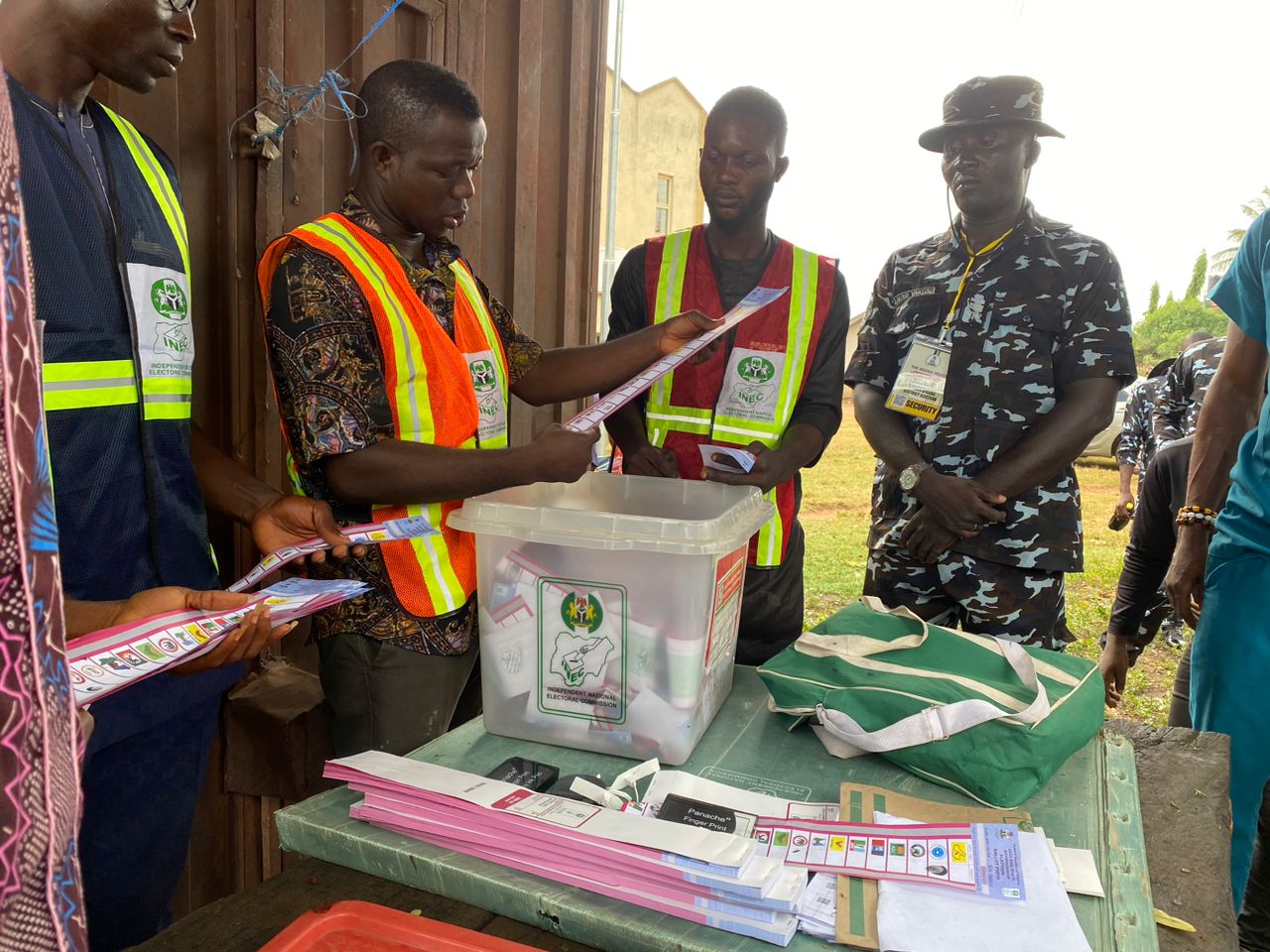
INEC under fire for slating 2027 general elections to hold during Ramadan


Public reactions have continued to trail the decision to fix Nigeria’s 2027 general elections within the holy month of Ramadan, with commentators and political figures raising concerns about possible implications for voter participation.

A Facebook user, Ibrahim A. Khaleel, was among the early voices to criticize the development. In a widely shared post, he questioned the rationale behind scheduling the elections during the fasting period, arguing that leaders who genuinely prioritize nation-building would have avoided such timing.

> “If our politicians were sincere and truly had nation-building at heart, the INEC Chairman, Professor Amupitan, would have been greatly surprised. Why then fix the 2027 election in the month of Ramadan?”


He stressed that fasting should not prevent civic engagement, citing Islamic history.

> “Fasting is not a death sentence. Muslims even fought the Battle of Badr in the month of Ramadan in the 2nd year after Hijrah (2 AH). So what is a democratic election where people only have to stand in line?”


Khaleel, however, suggested that economic hardship and public distrust in leadership could discourage turnout, alleging that inducements have often influenced voter mobilization.

“Even pasta and seasoning cubes would have to be very convincing to bring the masses out to vote. If one bag of pasta brought Mr. ‘Raw Material’ to the voting line in 2023, then it will have to be doubled now. At least two bags, with two packs of seasoning cubes added. Maybe that will motivate Mr. ‘Raw Material,’ the friend of Nigerian Democrats!”


He also drew parallels with Muslims in conflict zones, arguing that faith and perseverance endure despite hardship.

“Have Muslims in Gaza not been facing killings since October 7, 2023? They have observed Ramadan twice in the midst of this unjust war, yet they did not lose hope and they did not give up. So why should we fail to come out and vote?”


Adding to the discussion, former presidential aide Bashir Ahmad issued a formal public appeal to Independent National Electoral Commission (INEC), urging the electoral body to reconsider the dates.

In his statement, Ahmad acknowledged the announcement of February 20 and March 6, 2027, for the Presidential/National Assembly and Governorship/State Assembly elections respectively, but noted the religious significance of the period.

“This is a respectful observation following the announcement of February 20th and March 6th, 2027, as the date for the next Presidential and National Assembly and Governorship and State Assembly elections respectively. The proposed dates fall within the holy month of Ramadan, a period during which many Muslims devote significant time to fasting, prayer, and spiritual reflection.”


He warned that the timing could pose participation challenges for Muslim voters.

“If the intention is to encourage full and inclusive participation in the electoral process, scheduling such a critical national exercise during Ramadan may present challenges for a large segment of the population. Many Muslims tend to reduce engagement in demanding worldly activities during this period in order to focus on religious obligations.”


Ahmad further urged electoral authorities to weigh inclusiveness in their considerations.

“Given the significant Muslim population in this country, it may be worthwhile to reconsider the timing to ensure broader participation and convenience for all citizens. I do hope this observation will be taken in the spirit of inclusiveness and national cohesion.”


The debate continues to generate mixed reactions across social media and political circles, with some Nigerians supporting a review of the dates for inclusivity, while others insist that religious observance should not hinder democratic participation.