National

You can add some category description here.

One Killed, 48 Rescued as Troops Repel Terrorist Attack in Zamfara

By Sabiu Abdullahi

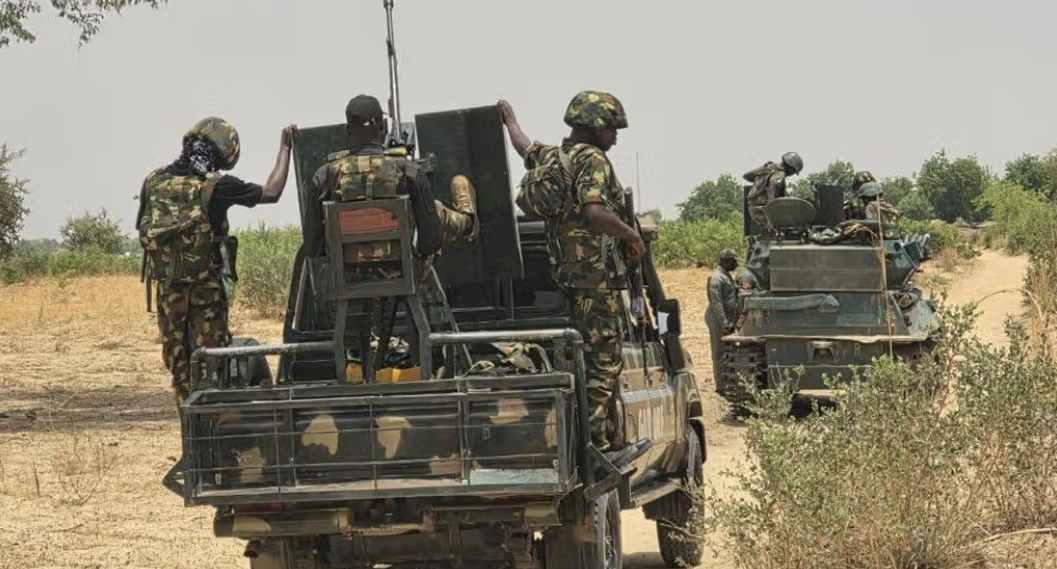
Troops of the Joint Task Force North-West under Operation FANSAN YAMMA have rescued 48 abducted residents after repelling a terrorist attack on Magami village in Kaura Namoda Local Government Area of Zamfara State.

The operation followed a distress call received in the early hours of Sunday, July 26, which reported that dozens of armed terrorists had stormed the community.

In a statement issued on Sunday, the Media Information Officer of Operation FANSAN YAMMA, Aliyu Danja, said the attackers arrived on about 40 motorcycles and abducted several villagers.

According to him, the assailants assembled the victims with the intention of taking them into a nearby forest, while another group remained at the edge of the village to guard the motorcycles.

Danja said troops responded swiftly to the emergency and confronted the attackers.

“On arrival at the scene, the troops immediately engaged the terrorists in a fierce firefight, forcing them to abandon the kidnapped victims and flee into the surrounding bush,” Danja said.


“The prompt intervention led to the successful rescue of all 48 abducted civilians.”


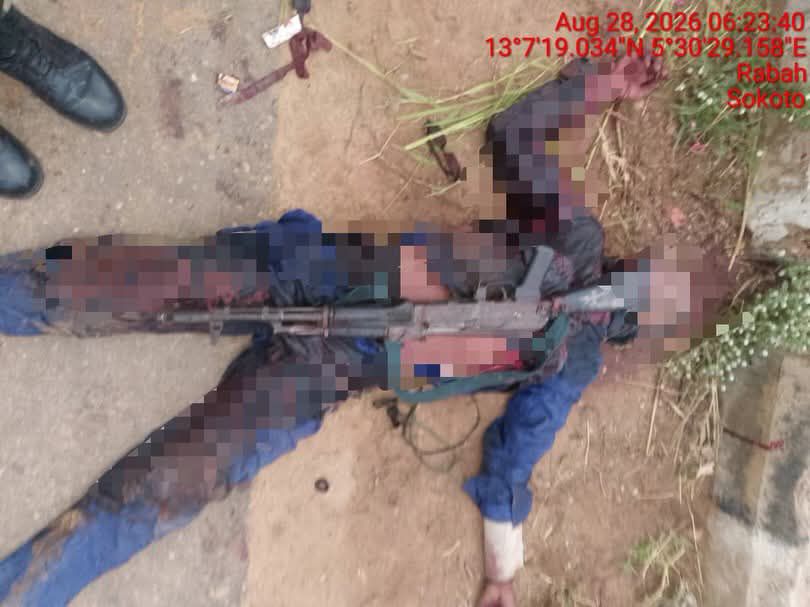
He disclosed that one resident lost his life during the attack, while two others sustained gunshot wounds.

The injured victims were evacuated to the General Hospital in Kaura Namoda, where they are receiving treatment.

Following the operation, security personnel carried out patrols across the area to prevent another attack and maintain a security presence in the community.

The military command praised the troops for their performance during the operation.

“The Theatre Command commends the gallantry and professionalism of the troops for this successful operation and reassures residents of the North West of its unwavering commitment to protecting lives and property,” the statement added.


Danja also urged residents to continue supporting security agencies with useful and timely information to strengthen ongoing operations against terrorist groups in the North-West.

“Sustain the momentum in ridding the north-west of terrorist elements.”

INEC Insists On Voter Registration Deadline As Opposition Seeks Extension

By Sabiu Abdullahi

The Independent National Electoral Commission (INEC) has maintained that the Continuous Voter Registration (CVR) exercise will end today, July 26, despite calls from opposition political parties and civil society organisations (CSOs) for an extension to allow more eligible Nigerians to register ahead of the 2027 general elections.

In a notice posted on its X account on Saturday, the commission said registration centres across the country would operate from 9 a.m. to 3 p.m. on the final day of the exercise.

“Your future won’t wait. Neither should you. The Continuous Voter Registration (CVR) exercise ends Sunday, 26 July 2026,” the commission stated.

INEC also advised prospective voters to complete their registration through its online CVR portal or visit designated registration centres and INEC offices nationwide for physical assistance.

The commission explained that the Electoral Act requires it to suspend voter registration, voter register updates and revisions 90 days before an election. The measure allows time for data cleaning, printing of Permanent Voter Cards (PVCs) and other election preparations.

INEC National Commissioner Mohammed Haruna said there would be no extension beyond the deadline because the commission must begin processing the data collected.

“By midnight on Sunday, voter registration ends. There won’t be any extension. There are so many things that we need to do at the back end. We have to draw a line; otherwise, we won’t be able to produce a clean copy of what has been posted,” he said.

Haruna said the commission’s Information Technology Department and Voter Registration Department would immediately begin reviewing the records after registration closes.

He explained that the Automated Biometric Identification System would detect and remove multiple registrations before the provisional voters’ register is published for public scrutiny.

“We have this automatic biometric system that will check whether somebody has registered more than once. They will publish the register for claims and objections. That is, if anybody thinks a name shouldn’t be on the register, or if he has some claims, for instance, that his name has been omitted or some of his details are incorrect,” he said.

Haruna added that the total number of newly registered voters would only be available after biometric verification and the claims and objections process.

“So, it’s after all that has been done that we will have a final figure, which we will now add to the existing 93 million or so. That will then become the voters’ register. We are mandated to give every political party a copy ahead of the election,” he added.

The Chief Press Secretary to the INEC Chairman, Dayo Oketola, also defended the decision. He said the commission acted in line with the law and its election timetable. He dismissed concerns about technical challenges and insisted the registration portal was capable of handling applicants throughout the exercise.

According to him, the commission had already extended the exercise and conducted nationwide voter education campaigns to encourage participation.

“The states have pictorial evidence of the awareness campaigns and voter education carried out by the commission,” he added.

Meanwhile, INEC disclosed that it had registered 2,970,257 eligible Nigerians as of July 17, 2026, during Phase III, Week Nine of the CVR exercise. The figure includes both online and physical registrations. However, the commission said the data remains provisional until the completion of claims, objections and biometric verification.

The statistics showed that 970,865 people completed registration online, while 2,000,092 registered physically. Women accounted for 1,561,765 registrants, while 1,409,192 men completed the process.

Young people between the ages of 18 and 34 made up the largest group of registrants with 2,003,183 registrations. Students formed the biggest occupational category with 695,026 registrations, followed by business owners with 626,523.

Kano recorded the highest number of registrations with 234,305, followed by Lagos with 140,546 and Edo with 139,313. Bauchi recorded 96,061 registrations, while Borno had 44,866.

Despite INEC’s position, several opposition parties and civil society organisations urged the commission to extend the exercise.

African Democratic Congress (ADC) National Publicity Secretary Bolaji Abdullahi argued that voter registration should not be restricted to fixed timelines.

“We have also mobilised people across the country to INEC to register, but you know it is not easy for people to abandon their daily work to go and queue for hours at INEC offices for registration. What we have done is mobilise our people at the grassroots level,” he said.

The National Publicity Secretary of the Taminu Turaki-led faction of the Peoples Democratic Party (PDP), Ini Ememobong, said many Nigerians had lost confidence in the electoral process.

“Nigerians are discouraged, and this is putting them off registering. Unless INEC clearly demonstrates that it is impartial and capable of conducting credible elections, it will continue to have a negative impact on participation,” he said.

Labour Party National Publicity Secretary Obiora Ifoh also criticised the planned closure.

“The name of the exercise is Continuous Voter Registration, and we should start with the name and allow people who have an interest in participating in the election to register.

“I don’t see how people registering even up to December can obstruct what INEC is doing, so long as those people are not going to contest elections.

“It is only in Nigeria that electoral umpires put barriers in place to keep people from participating. In most other countries, once you have a national identity, it is enough for you to vote, but here they are making it a big deal.

“I don’t know where the idea of stopping people from participating in the CVR comes from or how it will help INEC. Millions of Nigerians will turn 18 by December. Are they saying those people should not register?” Ifoh said.

Civil society organisations also backed calls for an extension.

President of Women Arise for Change Initiative, Dr Joe Okei-Odumakin, said the commission should consider keeping registration open for a few more weeks because about six months remain before the elections.

“Given that there are six clear months before the general elections, there may be a need to relax the closure of voter registration for some more weeks.

“It should not be in response to the demand of political parties but in response to the need to make our democratic process more participatory. Such an extension may be effective for new voters at INEC offices nationwide only,” she said.

Chairman of the BallotEyes Working Group, Olasupo Abideen, described the closure as premature.

“To be honest, when we say something is continuous, it should be continuous voter registration. Because the moment INEC closes the portal, especially with more than six months before the election, I think it is wrong,” he said.

Executive Director of the Socio-Economic and Civic Rights Advocacy, Emmanuel Olowu, also questioned the legal basis for ending the exercise several months before the elections.

“If the law allows registration to continue until no later than 90 days before the election, why has INEC ended the exercise about 180 days before polling? What legal, administrative or logistical reasons justify this early closure?” Olowu asked.

However, the All Progressives Congress (APC) and Yiaga Africa supported INEC’s decision.

APC National Vice Chairman (South-East), Dr Ijeomah Arodiogbu, said the commission requires a deadline to complete election preparations.

“Talking about an extension; we are willing to indulge the other political parties because they would otherwise complain that INEC is biased against them. Meanwhile, INEC gave equal time to all the political parties, and they failed to do the needful but preferred to spread false narratives to deceive the people.

“INEC also gave an extension for the upload of candidates, and we welcomed it even though we had met the initial timeframe. If it is the decision of INEC and it will not affect its programme, we have no objection,” he said.

Yiaga Africa Executive Director Samson Itodo also defended the commission’s decision.

“The commission requires sufficient time to clean the register, adjudicate claims and objections, remove duplicates, print voter registers and complete other pre-election preparations. While the closure may disappoint some prospective voters, certainty and adherence to the electoral timetable are essential for effective election planning,” he said.

Tinubu Hails Umahi At 63, Praises Performance As Works Minister

By Sabiu Abdullahi

President Bola Tinubu has congratulated the Minister of Works, David Umahi, on his 63rd birthday, describing him as one of the top-performing members of his cabinet.

Umahi, a former governor of Ebonyi State, turned 63 on Saturday, July 25, 2026.

In a statement issued by the President’s Special Adviser on Information and Strategy, Bayo Onanuga, Tinubu praised the minister for his commitment to infrastructure development and his approach to supervising road projects across the country.

The President described Umahi as “one of my outstanding, hardworking ministers” and said the former Ebonyi governor remains committed to delivering quality infrastructure.

Tinubu also said the minister is “passionate about the job and delivering durable roads and bridges that will last for about a century”.

The President commended Umahi’s “passion, dedication to duty, and deep sense of patriotism.”

He also urged the minister to sustain the pace of road construction, rehabilitation and project delivery in line with his administration’s plan to improve the quality of life of Nigerians and stimulate economic growth.

“As a minister, he does not just sit in his office or rely on reports from subordinates; he is constantly on the road, personally monitoring construction work nationwide to ensure compliance with specifications and approvals,” Tinubu said.

The President congratulated Umahi and his family on the occasion and wished him good health and renewed strength “as he continues to serve the nation”.

Before his appointment as Minister of Works, Umahi represented Ebonyi South Senatorial District in the Senate. He also served as governor of Ebonyi State for two terms from 2015 to 2023.

NIMC Act 2026: Implications for Nigeria’s Identity Future

By Muhammad Mikail

On June 26, 2026, President Bola Ahmed Tinubu signed the National Identity Management Commission (NIMC) Act 2026 into law at the State House in Abuja, before an audience that included the trailblazer DG/CEO of the National Identity Management Commission, NIMC, Engr, Abisoye Coker-Odusote, the Senate President, the Deputy Speaker of the House, the Attorney General, the Minister of Interior, and a World Bank representative. The gathering was deliberately high-profile: the new law closes a 19-year gap in Nigeria’s identity system and reshapes how citizens, businesses, and the government will trust each other online. The Act officially repeals and replaces the NIMC Act of 2007, which had governed Nigeria’s identity system and remained untouched even before smartphones, biometric enrolment, or mobile banking became part of everyday Nigerian life.

For most citizens, the significance of a piece of legislation like this is easy to miss. And very few people will ever read its full text. This new Act 2026 determines how easily a young graduate opens a bank account, how a small trader secures a loan, how a Nigerian abroad renews a passport, and how confidently anyone can prove who they are, online or in person.

Why the Old Law Had to Go

When the original NIMC Act was passed in 2007, Nigeria had no national-scale biometric enrolment infrastructure and no meaningful digital economy to speak of. That changed dramatically over almost the two decades that followed: the National Identification Number (NIN) became mandatory for SIM registration, passport applications, bank account opening, and voter registration. As digital services multiplied, the risks also did. Identity theft, fraudulent NIN registrations, and the phishing of biometric data became live problems that the 2007 framework was never built to address. It had nothing to say about digital credentials, cybersecurity obligations, or how private companies overseeing NIN-linked data should behave. The new Act closes that gap. Thus far, officials and legal analysts point to four structural shifts at the heart of the reform:

NIMC becomes Nigeria’s digital trust authority. The single biggest change is the designation of NIMC as the Root Certification Authority for Nigeria’s National Public Key Infrastructure (PKI) and Digital Public Infrastructure (DPI). In practical terms, NIMC now controls the digital “keys” that make online transactions verifiable and trustworthy. 

“One Person, One Identity” is now the law. The NIN is formally established as Nigeria’s foundational identity credential, with the NIMC empowered to enable secure, interoperable data exchange among government agencies, financial institutions, and private-sector organisations that previously operated on fragmented, disconnected systems.

Data protection gets real teeth. The 2026 Act aligns NIMC’s practices with the Nigeria Data Protection Act (NDPA) and international privacy standards, meaning biometrics, addresses, and linked credentials must now be processed and stored under legally defined rules with NIMC committing to audit enrolment partners and third-party integrators more closely.

Penalties are sharper, and enforcement powers wider. Companies now face fines running into tens of millions of naira, while offences such as impersonation, multiple registration, and unauthorised access to identity data attract custodial sentences. NIMC’s investigative powers now extend to search, seizure, and, subject to judicial authorisation, data decryption.

The Commission’s board has also been reconstituted to include representatives from 14 government institutions, including INEC, the Nigeria Police Force, the DSS, the EFCC, the Central Bank of Nigeria, and the Office of the National Security Adviser. This signals that identity management is now of huge government concern.

The Implications for Identity Development

For nearly twenty years, Nigeria’s identity system evolved in a fragmented manner. NIN requirements were bolted agency by agency, without a unifying legal architecture. The 2026 Act gives that patchwork a single statutory backbone.

ID analysts rank Nigeria among Africa’s most mature digital identity ecosystems, alongside Kenya, Ethiopia, and South Africa. A legally grounded, PKI-backed identity system positions Nigeria for cross-border interoperability at a moment when West African economic integration is deepening, becoming a potential regional asset. The law also explicitly widens access for Nigerians in the diaspora, an acknowledgement that identity is a right and the attendant ID infrastructure needs to follow citizens wherever they live.

What It Means for Nigeria’s Digital Economy

The government have tied the Act directly to Nigeria’s ambition of building a one-trillion-dollar economy, arguing that a trusted, interoperable identity layer is a precondition for the digital services that ambition depends on. When banks, telecoms, insurers, and government agencies can all verify identity against a single authoritative source rather than duplicating know-your-customer processes, transaction costs fall, and fraud becomes harder to commit. Analysts following the reform expect it to strengthen the investment case for fintech expansion, e-commerce, and digital lending. These are sectors that all depend on being able to cheaply and quickly verify that the person on the other end of a transaction is real. Reduced duplication across agencies is also expected to improve the efficiency of public service delivery more broadly, from tax administration to social intervention programmes that need to verify beneficiaries accurately.

What It Means for the Everyday Nigerian and Legal Resident

Easier, wider access to services: With the NIN legally cemented as the reference point for passports, bank accounts, insurance, tax filing, and credit applications, NIMC has stated that citizens, including those in the diaspora, can expect easier and convenient access to identity-linked services, and stronger interoperability means fewer redundant registrations across agencies.

Stronger data protection: For the first time, there is a clear legal obligation governing how a Nigerian’s biometric and personal data must be managed, whether by NIMC itself or by any private company plugging into its verification infrastructure. 

Higher stakes, and higher expectations. The Act’s tougher penalties offer citizens greater protection against identity fraud. Also, to meet with President Tinubu’s directive of enrolling every Nigerian by the end of 2026 means NIMC would need to register more than three million people every month, DG/CEO NIMC said in an interview on Channels TV recently that NIMC is collaborating with partners under the World Bank-supported Nigeria Digital Identification for Development (NDID4D) Project to accelerate nationwide enrolment. This offers real hope of inclusion, particularly for rural and lower-income Nigerians who remain hardest to reach. 

The road ahead 

The NIMC Act 2026 is, by most independent accounts, a genuinely significant piece of reform. It closes a legal vacuum that persisted across four presidential administrations and a mobile internet revolution, the original drafters of the NIMC Act 2007 never anticipated. But the law itself only creates the scaffolding. The harder work of auditing enrolment partners, enforcing data-breach penalties, and reaching citizens outside the system remains.

Conclusively, I urge the NIMC, critical stakeholders and relevant agencies, organisations, CSOs and players in the ID ecosystem to support the NIMC and ensure the ACT of 2026 ultimately strengthens public trust, serves as a means to encourage nationwide enrolment for the NIN, and ensures the institutions enforcing it are themselves held to account. Ultimately, we must collectively ensure that all intended benefits, services, and access that the Act 2026 brings becomea lived reality for the average Nigerian and legal resident, and not another entry on the country’s lengthy list of good intentions.

Muhammad Mikail is a communications professional and writes from Abuja. He can be reached via muhammadnmikail.mm@gmail.com

FRSC Challenges Court Verdict Barring Patrols on Kano State Roads

By Uzair Adam 

The Federal Road Safety Corps (FRSC), Kano Sector Command, has announced plans to appeal the judgment of the Federal High Court in Kano that barred its personnel from operating on state and local government roads, limiting their activities to federal highways.

The judgment, delivered on Thursday by Justice M. S. Shuaibu, followed a suit instituted by Kano-based lawyer, Barrister Abba Hikima, who challenged the legality of FRSC checkpoints mounted on township roads in July 2025. 

He argued that motorists were being stopped despite committing no traffic offences.

In his ruling, Justice Shuaibu held that the FRSC acted beyond the powers granted to it by law by operating on state roads. 

He further ruled that the Corps’ actions infringed on citizens’ constitutional rights to personal liberty and freedom of movement as guaranteed under Sections 35 and 41 of the 1999 Constitution.

The court granted all the reliefs sought by the plaintiff, including a perpetual injunction restraining the FRSC from operating on state and local government roads in Kano. 

It also ordered the Corps to publish a public apology in a national newspaper and awarded N800,000 in damages and costs.

Reacting to the judgment, the Public Education Officer of the Kano Sector Command, CRC Abdullahi Aliyu Labaran, said the Corps respects the decision of the court but believes the ruling has been widely misunderstood.

He explained that the judgment did not invalidate the FRSC Establishment Act, 2007, but only restricted the Corps’ operations in Kano to federal highways pending further legal action.

According to him, the FRSC will continue to patrol major federal roads within the state, including the Kano–Zaria Road, Kano–Katsina Road, Kano–Maiduguri Road, Kano Western Bypass, Airport Road and Murtala Mohammed Way.

Labaran expressed concern over social media posts encouraging motorists to resist FRSC officers, warning that such actions could lead to unnecessary confrontations, threaten public order and endanger lives.

He added that the Corps decided to challenge the ruling because it believes its defence was not adequately considered during the proceedings.

Pending the outcome of the appeal, the FRSC assured members of the public that it would continue to carry out its statutory responsibilities professionally and within the confines of the law on federal highways across Kano State.

The Corps also urged motorists to cooperate with its personnel and disregard what it described as misleading online interpretations of the court’s judgment.

FG Arraigns Three over Oyo School Abduction, Terrorism Charges

By Uzair Adam

The Federal Government has arraigned three men before the Federal High Court in Abuja over their alleged involvement in the abduction of pupils and teachers from schools in Orire Local Government Area of Oyo State, as well as terrorism-related offences.

The defendants — Abdulrazak Umar, also known as Abu Khalifa or Abu Khalid, Yunusa Musa (also known as Yunusa bin Musa), and Shamsu Adamu Sani (also known as Abu Itisar) — were charged on Friday in a 10-count charge filed by the Federal Government.

The charges stem from the May 15, 2026 attack in which gunmen invaded three schools in Oyo State and abducted several pupils and teachers.

One of the victims, teacher Michael Oyedokun, was killed while in captivity, while the remaining hostages regained their freedom after spending 56 days in the forest during a security operation.

According to the charge sheet, the three suspects, all residents of Suleja Local Government Area of Niger State, allegedly conspired with three other suspects — Muhammad Sani, Jibril Mohammed and Ibrahim Khabab — between January and May 2026 to carry out the kidnapping.

The prosecution further alleged that the defendants aided the abduction by supporting those responsible for the attack and deliberately withheld information about the identities and activities of the alleged masterminds despite having prior knowledge of the plot.

They were also accused of failing to alert security agencies about both the planned kidnapping and those behind it, an offence said to contravene the Terrorism (Prevention and Prohibition) Act, 2022.

In another count, the Federal Government alleged that the three men professed membership of Darul Salam, described in the charge as an affiliate of Jama’atu Ansarul Muslimina Fi Biladis Sudan (Ansaru), a proscribed terrorist organisation in Nigeria.

The charge further singled out Abdulrazak Umar, accusing him of operating a WhatsApp group titled “The Oneness of Allah is the Foundation of Peace,” through which he allegedly provided training and instructions to terrorists and incited members to commit acts of terrorism.

Umar was also accused of engaging in illegal gold mining activities in streams located in Chaza area of Suleja Local Government Area between 2024 and 2026 without lawful authority.

The offences are said to violate provisions of the Terrorism (Prevention and Prohibition) Act, 2022, the Cybercrime (Prohibition, Prevention, etc.) Act, 2015, and the Miscellaneous Offences Act.

Kano Court Rules FRSC Has No Authority On State, Local Govt Roads

By Uzair Adam 

The Federal High Court in Kano has ruled that the Federal Road Safety Corps (FRSC) has no legal authority to carry out enforcement operations on roads under the control of the Kano State Government or its local government councils.

In a judgment delivered on Thursday, Justice M. S. Shuaibu held that the commission acted beyond its statutory powers when its personnel stopped, questioned and delayed motorists on township roads in Kano in July 2025.

The suit was instituted by Kano-based lawyer, Abba Hikima, who challenged the legality of the commission’s operations on state roads, arguing that FRSC officials violated his fundamental rights by demanding his driver’s licence and interrogating him despite the absence of any traffic offence.

The court agreed with the applicant, ruling that the actions of the FRSC officers violated the rights to personal liberty and freedom of movement as guaranteed under Sections 35 and 41 of the 1999 Constitution.

Justice Shuaibu granted all the major reliefs sought by Hikima, including a perpetual injunction restraining FRSC personnel from stopping, harassing or interfering with motorists on Kano State roads without lawful authority.

The court also ordered the commission to publish a public apology in a national newspaper and awarded the applicant N800,000 as damages and litigation costs.

The dispute arose in July 2025 after FRSC operatives mounted checkpoints on township roads within Kano metropolis, where they stopped motorists to demand driver’s licences and question them even when no primary traffic offence had been committed.

Hikima maintained that the FRSC’s powers are limited to federal highways and do not extend to roads under state or local jurisdiction, a position the court upheld in its judgment.

Athena Centre Launches Governance Institute, Appoints 4 Senior Officials

By The Daily Reality


The Athena Centre for Policy and Leadership has inaugurated the Alhaji Gidado Idris Institute of Governance and Public Policy as part of efforts to strengthen governance research, public policy development and institutional capacity across Africa.


This was contained in a statement signed by Paul Liam, Media and Communications Officer of the Athena Centre for Policy and Leadership.

The organisation also announced the appointments of 4 senior officials. They include 3 institute directors and a new Head of the Athena Election Observatory.

The new institute is named after the late Alhaji Gidado Idris, who served as Secretary to the Government of the Federation and Permanent Secretary under several civilian and military administrations.

According to the Centre, the institute will serve as its flagship platform for governance research, public policy innovation and institutional performance.

Speaking on the development, the Chancellor of the Athena Centre for Policy and Leadership, Osita Chidoka, OFR, said the initiative reflects the organisation’s belief that Africa’s development depends largely on strong institutions.

“Nations do not transform because they have more policies; they transform because they build stronger institutions capable of implementing those policies with integrity, competence and public accountability. The Alhaji Gidado Idris Institute is our contribution to that institutional future. It is a future in which government works more effectively for citizens, public trust is strengthened, and evidence consistently informs decision-making,” Chidoka said.

The Centre appointed Professor Temitayo Shenkoya as Director of the Arthur Nwankwo Institute for Education and Intellectual Freedom. Shenkoya is a scholar in public policy, governance and innovation with more than 20 years of experience in academia, government and development practice. He currently serves as Professorial Researcher and Regional Director for Africa at Chungnam National University in South Korea. He has also worked with the Abuja Technology Village Foundation, UNICEF Nigeria and the Daejeon Metropolitan Government. He will coordinate the institute’s 2026 programme titled Fixing Nigeria’s Schools: Accountability and Digital Transformation.

Dr Danjuma Iyaji was named Director of the Olikoye Ransome-Kuti Institute for Health and Social Equity.

He is a health economist and monitoring, evaluation, research and learning specialist with nearly 20 years of experience. He has held technical and research positions at the Society for Family Health, the Aig-Imoukhuede Foundation and the Lagos Chamber of Commerce and Industry.

He has also taught at the Nigerian Army University Biu, Kogi State University and Salem University. He will lead the 2026 programme, Expanding Access to Affordable Healthcare and Nutrition in Nigeria.

The Athena Centre also appointed Dr Christiantus I. Anyanwu as Director of the Alhaji Gidado Idris Institute of Governance and Public Policy. Anyanwu is a political scientist, governance specialist and public policy scholar.

He previously served as a Senior Lecturer at Veritas University, Abuja, and as a Senior Research Fellow at the Athena Centre. His first assignment will focus on the institute’s programme, Making Government Work for Citizens at Every Level.

Sarah Eke was appointed Head of the Athena Election Observatory. A member of the Centre’s founding team, she has more than 6 years of experience in programme management, election audits, governance and public policy analysis.

She previously worked as a Senior Adviser and Coordinator on a presidential campaign. At the Athena Centre, she has led election analysis and post-election assessments in Bayelsa, Imo, Kogi, Edo, Ondo and Anambra states. She will oversee election audits, electoral data analytics and evidence-based electoral reform.

Chidoka said the appointments demonstrate the Centre’s commitment to combining academic excellence with practical policy expertise.

“Our ambition is not simply to produce research,” he said. “It is to produce ideas that influence policy, institutions that strengthen governance, and leaders who transform society. These appointments represent an investment in that mission.”

The Athena Centre for Policy and Leadership describes itself as an independent, non-partisan think tank that promotes good governance, evidence-based public policy and ethical leadership across Africa through research, executive education and strategic dialogue.

World Bank Says 79% of Nigerians Remain Poor or Vulnerable Despite Tinubu’s Claim of Reforms

By Sabiu Abdullahi

The World Bank has stated that about 79% of Nigerians are either living in poverty or remain at risk of falling into poverty despite the economic reforms introduced by President Bola Tinubu’s administration over the past three years.

The assessment appears in the World Bank’s newly approved Country Partnership Framework for Nigeria (2026–2032) and the accompanying Streamlined Country Diagnostic, which examined the country’s economic performance and development challenges.

According to the report, 61% of Nigerians currently live below the poverty line, while 33% are classified as ultra-poor and unable to meet their minimum food needs.

The World Bank acknowledged that the Federal Government’s reforms have improved several macroeconomic indicators. It said economic growth rose from 3.5% in the first half of 2024 to 3.9% during the same period in 2025. It also noted that foreign reserves have exceeded $42 billion, fiscal deficits have declined, and investor confidence has improved.

Despite those gains, the institution said the benefits have not yet translated into better living conditions for many Nigerians because major structural challenges remain.

The report stated: “Thirty-three per cent of its population is ultra-poor (food insecure by age-weighted caloric intake), 61 per cent is below the poverty line, and 79 per cent is near poor (below the poverty line or vulnerable to falling back into poverty).

“Despite recent bold reforms stabilising the economy and laying the groundwork for the Renewed Hope Agenda, significant structural challenges remain,” it said.

Tinubu Says Nigeria’s Economy Has Recorded Steady Growth After Three Years Of Reforms

By Sabiu Abdullahi

President Bola Tinubu has said his administration’s financial and fiscal reforms have placed Nigeria’s economy on a path of steady growth after three years in office.

The president made the remarks on Wednesday at the State House in Abuja when he received a delegation from Deloitte Africa led by its Chief Executive Officer, Ruwayda Redfearn.

According to Tinubu, although the reforms came with initial difficulties, they have strengthened the country’s economic foundation and created conditions for long-term growth.

“We are following the example of Deloitte’s greatness to change things from the foundation, building the necessary future for our people,” Tinubu said.

“Yes, reforms are difficult. It has not been a McDonald’s customer relationship but a harvester of good things, if implemented well, and that is what we are about.

“Thank you for your partnership in paying attention to what we are doing here, as we have heard from the honourable minister of finance about the fiscal, revenue and tax reforms that have taken place and are moving the nation forward.

“The reforms on revenue will continue to stimulate growth. And the effect of the reform? Yes, some issues are difficult to take the bitter medicine, but it is working well. For the economy, Nigeria is making serious foundational progress.”

The president stated that the reforms have improved Nigeria’s fiscal and revenue systems, repositioned financial institutions and enhanced the country’s competitiveness. He also urged Deloitte Africa to support the government’s efforts by investing in youth development and job creation.

“The family of Deloitte; you just reminded me of my cradle years in accountancy and where I cut my childhood accounting teeth in Chicago,” he said.

“Deloitte has a good training programme, and I believe you will continue to reflect that.”

Minister of Finance and Coordinating Minister of the Economy, Taiwo Oyedele, also encouraged the firm to prioritise programmes that build the capacity of young Nigerians.

Speaking on behalf of the firm, Redfearn reaffirmed Deloitte Africa’s commitment to supporting the Federal Government’s reform agenda.

“We are before you to say that we want to serve,” she said.

“We have a local team on the ground that is ready, as well as the global firm, to support you and support your administration as you lead the country.”

She disclosed that Deloitte employs more than 500,000 people worldwide, including over 6,000 in Africa, and generated $74 billion in revenue in 2025.

Also speaking, the Chief Executive Officer of Deloitte West Africa, Yomi Olugbenro, said the firm is prepared to deploy its international experience to support Nigeria’s economic transformation.

“We do believe that with the capabilities that the firm has all over the world, with the half a million people that our CEO spoke about, we have use cases, examples and experiences of how we supported nations all around the world, so Nigeria will definitely benefit from those experiences,” Olugbenro said.

“So that is why we are here, and we welcome the invitation that you may grant us as to where exactly you want us to support you.”