National

You can add some category description here.

Aisha Yesufu Challenges FG to Release CCTV Footage of Oyo School Kidnappers

By Sabiu Abdullahi

Human rights activist Aisha Yesufu has called on Nigerian authorities to release CCTV footage that could identify those responsible for the recent abduction of schoolchildren and teachers in Oyo State.

Yesufu made the demand in a post on her verified X account on Saturday. Her comments came after the Minister of Aviation and Aerospace Development, Festus Keyamo, criticised the presidential candidate of the Nigeria Democratic Congress (NDC), Peter Obi, over an alleged violation of parking regulations at the Nnamdi Azikiwe International Airport in Abuja.

Keyamo had asked Obi to apologise to airport authorities and pay a ₦25,000 fine for the alleged breach.

The exchange followed recent remarks by Obi, who claimed in an interview that the Federal Government, led by the All Progressives Congress (APC), was targeting him. He also alleged that he has continued to face intimidation and harassment.

Reacting to the development, Yesufu questioned the government’s priorities and urged security agencies to focus on more pressing security concerns.

She wrote, “Pathetic cowards! Let them bring out the CCTV of the kidnappers that took away children in Oyo or of the ones that have been terrorising citizens.

“Majoring in the minor is all they are freaking good at.”

All Abducted Ogbomoso Pupils, Teachers Regain Freedom, Presidency Confirms

By Sabiu Abdullahi

The Presidency has confirmed that all the pupils and teachers abducted in Orire, Ogbomoso area of Oyo State have regained their freedom.

The announcement came on Friday through the Special Adviser to the President on Information and Strategy, Bayo Onanuga, who disclosed that security agencies rescued the victims.

However, the Presidency did not provide details of the operation that led to their release.

“Finally, all the kidnapped pupils and teachers in Orire, Oyo have been rescued by our security agencies,” Onanuga wrote in a post on X.

The abduction had raised concerns among residents and attracted national attention. Authorities are yet to release additional information on the rescue operation or the condition of the victims.

Nigerian Military Arrest Chadian Woman Allegedly Transporting Drugs, Alcohol to Terrorists in Borno

By Sabiu Abdullahi

Troops of Operation Hadin Kai have arrested a 48-year-old Chadian woman who was allegedly transporting illicit drugs, alcoholic drinks and other prohibited items to terrorist groups operating in the Lake Chad Islands.

The arrest took place on Thursday during a search operation along the Maiduguri–Monguno road in Borno State, according to a statement issued on Friday by the Acting Military Information Officer of Operation Hadin Kai, Lieutenant Colonel Mohammed Goni.

Goni said soldiers stopped a suspicious vehicle heading towards Kwatan Doron Baga in Kukawa Local Government Area, where they apprehended the suspect.

“The suspect, identified as Mrs Rachael Samuel (48), a Chadian national from Kelo in Chari-Baguirmi Province, Republic of Chad, was arrested while conveying the prohibited items,” the statement said.

He added that preliminary investigations suggested the items were meant for locations within the Lake Chad Islands, an area where terrorist groups are known to operate.

Security operatives recovered seven compressed bundles of suspected Cannabis sativa weighing about 30 kilogrammes, two 10-litre containers of hydromercuric chloride, popularly called “Suck and Die”, one carton containing 48 bottles of dry gin and 61 bottles of herbal alcoholic beverages. The military said the seized items have an estimated street value running into millions of naira.

Other items recovered include a mobile phone, two Automated Teller Machine (ATM) cards, personal belongings and cash.

The military said the suspect remains in custody, while the recovered exhibits have been secured ahead of their transfer to the appropriate law enforcement agency for further investigation and possible prosecution.

Goni said the operation reflects the determination of Operation Hadin Kai to block supply routes that sustain terrorist activities. He explained that intelligence reports have consistently indicated that terrorist groups depend on illicit drugs and intoxicants to stimulate fighters, reduce fear and support violent attacks.

“By intercepting the consignment before it reached its destination, the troops have disrupted another critical aspect of the terrorists’ support network,” the statement added.

“The Theatre Command commends the vigilance and professionalism of the troops and assures the public that operations against terrorists and their collaborators will continue relentlessly.

“The public is encouraged to continue providing timely and credible information to security agencies in support of ongoing efforts to restore lasting peace and security across the North East.”

Senate Urges FG to Stop Reintegrating Repentant Terrorists

By Uzair Adam 

The Senate has called on the Federal Government to discontinue the rehabilitation and reintegration of repentant Boko Haram members and other violent criminals, arguing that the policy has failed to curb insecurity across the country.

The resolution followed a motion on the rising cases of attacks, abductions and killings involving serving and retired military personnel, including the late former Director of Defence Information, retired Major General Rabe Abubakar.

The motion, sponsored by the Chairman of the Senate Committee on Army, Senator Abdulaziz Yar’Adua (APC, Katsina), received unanimous support during Tuesday’s plenary.

Lawmakers condemned the continued rehabilitation of former Boko Haram fighters, bandits, kidnappers and other criminal elements under the Federal Government’s deradicalisation programme. Several senators linked the persistent security crisis, particularly in northern Nigeria, to the release of individuals described as repentant criminals back into society.

The Senate expressed concern over what it described as the deteriorating security situation, warning that the growing attacks on serving and retired military officers represent a dangerous dimension to the country’s security challenges.

It cited the killing of retired Major General Richard Duru in Owerri after a reported ransom payment of $50,000, the murder of retired Brigadier General O.M. Harlord Udokwere in Abuja, the 56-day captivity of former NYSC Director-General, retired Brigadier General Maharazu Tsiga, and the death of retired Major Aja while in captivity in Kogi State.

According to the lawmakers, the attacks pose a significant threat to national security because many of the victims previously held sensitive operational, intelligence and command positions.

The Senate observed a minute of silence in honour of Major General Rabe Abubakar and other Nigerians killed by terrorism, insurgency, banditry, kidnapping and other violent crimes. 

It also urged the Federal Government to ensure that perpetrators are arrested and prosecuted.

The Red Chamber further called on security and intelligence agencies to strengthen intelligence gathering, surveillance, threat assessment and early warning mechanisms, while urging the government to accelerate the deployment of modern security technology to combat terrorism, banditry and kidnapping.

The resolution comes despite the existence of Operation Safe Corridor, a Federal Government initiative launched in 2016 to deradicalise, rehabilitate and reintegrate former Boko Haram combatants who voluntarily surrendered. 

While officials have credited the programme with encouraging thousands of insurgents to abandon violence, concerns have persisted over reports of some beneficiaries allegedly returning to criminal activities.

Reacting to the Senate’s position, security analyst and Associate Professor at the University of Namibia, Dr. Babayo Sule, described the resolution as unfortunate and potentially counterproductive.

He argued that the deradicalisation programme was introduced only after military operations failed to bring lasting peace, stressing that rehabilitation and reconciliation remain recognised components of counter-insurgency strategies worldwide.

Rather than scrapping the initiative, Sule urged lawmakers to investigate its shortcomings and strengthen its implementation. He also called for greater oversight of Operation Safe Corridor and similar reconciliation programmes in states affected by insurgency.

According to him, abandoning the programme without addressing the underlying challenges could further worsen insecurity, as the country currently lacks sufficient capacity to defeat insurgents solely through military means.

Why Nations Succeed, and Why Nigeria Still Struggles?

By Zayyad I. Muhammad

What makes other countries continue to develop and achieve sustainable success is their ability to pursue collective and common goals across all socioeconomic sectors. When the people and their leaders share a clear national vision and work towards common objectives, the country naturally excels in development, whether in education, human capital, infrastructure, technology, innovation, or national pride.

Many countries are made up of people from different cultures, races, religions, and ethnic backgrounds. Yet, when it comes to national goals and objectives, they stand united as one nation, driven by a shared sense of purpose and commitment to progress. Their diversity becomes a source of strength rather than division because the national interest comes first.

One of Nigeria’s greatest challenges is the absence of strong national goals and objectives that are genuinely shared by all citizens. As a nation, we often struggle to build consensus around long-term priorities that transcend politics, ethnicity, religion, and regional interests.

Ironically, one of the few areas where Nigerians consistently demonstrate unity is sports, especially football. If Nigeria could cultivate the same level of collective commitment, patriotism, and shared purpose in education, human capital development, innovation, infrastructure, and economic growth as it does in football, the country would make remarkable progress and achieve far greater national development.

Another irony of Nigeria’s politics is that many leaders champion national unity while they occupy positions at the centre of government. They speak the language of inclusion, national cohesion, and collective progress because they represent the entire federation. However, the moment many of them leave office or slip out of public view, they often retreat into ethnic or regional politics, becoming champions of sectional interests rather than national ones. This inconsistency weakens nation-building, deepens divisions, and makes it difficult to sustain a truly national agenda.

Nigeria’s progress depends not only on good leadership but also on a shared national consciousness. The country needs leaders and followers who will remain committed to national unity and development regardless of whether they hold public office. Likewise, citizens must place the Nigerian project above ethnic, religious, and regional considerations. Only when our collective interest consistently outweighs our individual or sectional interests can Nigeria unlock its immense potential and achieve the level of sustainable development seen in many successful nations.

 Zayyad I. Muhammad writes from Abuja via zaymohd@yahoo.com.

ICPC Nabs Ex-Minister Nnaji Over Certificate Forgery at Abuja Airport

By Abdullahi Mukhtar Algasgaini

The Independent Corrupt Practices and Other Related Offences Commission (ICPC) has arrested former Minister of Science, Technology and Innovation, Mr. Geoffrey Uchechukwu Nnaji, over allegations of certificate forgery and submission of a false National Youth Service Corps (NYSC) discharge certificate.

The arrest was executed on Wednesday at the Nnamdi Azikiwe International Airport, Abuja, upon the former minister’s arrival into the country. Operatives of the Department of State Services (DSS) assisted in apprehending Mr. Nnaji before handing him over to the anti-graft agency.

The ICPC had previously invited the former minister for questioning through a formal letter referenced ICPC/HC/CSTF/GUN/GBT/T.1/VOLV16, dated 15 May 2026. The invitation was delivered to his known addresses in Abuja and Enugu, as well as through his email, but Mr. Nnaji failed to appear on the scheduled dates.

Following his refusal to honour the invitations, the Commission secured a bench warrant from the Federal High Court in Abuja (Suit No: FHC/ABJ/CS/1160/2026) on 11 June 2026, authorising his arrest.

The allegations against the former minister include:

1· Forgery of academic credentials, specifically a degree certificate from the University of Nigeria, Nsukka (UNN)

2· Submission of a false NYSC Discharge Certificate during his ministerial screening in 2023Mr.

Nnaji is currently in custody at the ICPC headquarters in Abuja as investigations continue.

The Commission has assured the public that the matter will be pursued diligently in accordance with the law.

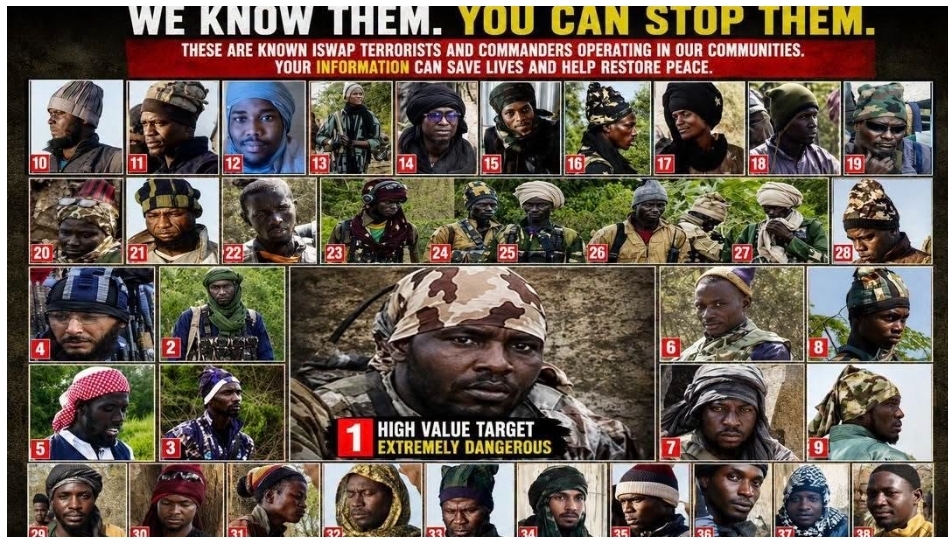
Seven Boko Haram, ISWAP commanders Arrested After Returning From Hajj Using NIMC Database — Minister

By Anwar Usman

The Minister of Interior, Dr Olubunmi Tunji-Ojo, said on Friday that Nigeria’s integrated identity management system led to the arrest of seven suspected Boko Haram and ISWAP commanders returning from the 2026 Hajj pilgrimage.

‎The minister made this known at the Presidential Villa, Abuja, shortly after President Bola Tinubu signed the National Identity Management Commission Act 2026 into law, as contained in a statement signed by the President’s aide, Bayo Onanuga.

According to him, the suspects were arrested last Thursday at the Katsina airport after returning from Saudi Arabia and were subsequently handed over to the Department of State Services.

He said the arrests were successful as a result of integrating the National Identity Management Commission database with the Nigeria Immigration Service database and connecting it to Interpol.

The statement in part reads, ”I know, sometime ago, the Senate President was alarmed by how some terrorists went on pilgrimage, wondering how they crossed our borders. We inherited a fractured system.

‎”But I’m happy to tell you that even last week, Thursday, seven of the known commanders of Boko Haram and ISWAP at the point of coming back from Mecca were arrested in Katsina at the airport and were handed over to the DSS.

‎”This is only possible because NIMC’s ID is already connected with the immigration database, and it’s already speaking to even the Interpol 24/7, and we have been able to automate this,” the minister said.

According to the minister, the newly signed NIMC Act would further strengthen Nigeria’s security architecture by improving the harmonisation of identity databases and strengthening inter-agency collaboration.

‎He further revealed that the law will enhance the integrity of the National Identity Number system while boosting the country’s capacity to combat identity theft, terrorism, financial crimes and other security threats.

He said that before Tinubu’s government, identity management systems were fragmented, noting that services such as passport issuance and driver’s licence processing were disconnected from the national identity database.

President Tinubu signed the NIMC Act 2026 on Friday. In attendance were the Senate President, Godswill Akpabio, the Deputy Speaker of the House of Representatives, Benjamin Kalu, and other senior government officials.

Presidency Renames PTDF College in Kaduna After Shehu Musa Yar’Adua

By Muhammad Abubakar

The Federal Government has renamed the PTDF College of Petroleum and Energy Studies in Kaduna in honour of the late Nigerian statesman, Shehu Musa Yar’Adua.

According to a statement issued by the management of the Petroleum Technology Development Fund (PTDF), the institution will now be known as the General Shehu Musa Yar’Adua University of Geological Sciences and Engineering Technology. The renaming follows a presidential directive by Bola Ahmed Tinubu.

PTDF said the decision recognises Yar’Adua’s contributions to national unity and Nigeria’s democratic development. The fund assured stakeholders that all academic programmes, partnerships, and institutional operations would continue without disruption under the university’s new identity.

The institution is expected to maintain its focus on research, specialised training, and engineering technology development aimed at supporting Nigeria’s oil, gas, and renewable energy sectors.

Christian Elders Urge FG To Deploy Forest Guards To Sambisa Over Rising Insecurity

By Sabiu Abdullahi

Christian elders from Borno and Adamawa states have appealed to the Federal Government to deploy forest guards to Sambisa Forest as part of efforts to strengthen security and intensify the fight against insurgency in the North-East.

The appeal was made in Abuja after a three-day fasting and prayer programme organised by Marghi leaders. The gathering also focused on prayers for the safe return of schoolchildren reportedly abducted in parts of Borno and Oyo states.

The elders called on the authorities to “flood Sambisa Forest with forest guards now” to help flush out terrorists and reduce attacks on communities in the region.

Their appeal follows the reported abduction of between 42 and 51 children, most of them toddlers and primary school pupils, by suspected Boko Haram insurgents in Mussa town of Askira/Uba Local Government Area of Borno State on May 15, 2026. The incident affected communities within the Mussa, Birri and Shikarkir areas.

Reports also indicated that bandits attacked Ahoro-Esinele and nearby communities in Oriire Local Government Area of Oyo State on the same day. About 46 people, including pupils, secondary school students and a toddler, were allegedly taken away during the attack.

Speaking for the Marghi community in Abuja, Elder Gambo Kadir said the security situation in the affected areas is more severe than many people realise. He claimed that numerous incidents are never officially documented.

Kadir noted that local government areas such as Madagali, Gwoza, Askira/Uba and Chibok have faced repeated attacks for more than a decade. He said the recent abduction in Mussa highlights the continuing security challenges confronting residents.

He also criticised the government’s strategy against insurgency. According to him, suspected terrorists are being rehabilitated instead of facing stronger measures.

The community leader further disclosed that another abduction was reported in Kirchiga town in Borno State shortly after the incident in Mussa.

The elders urged the Federal Government to increase the presence of security personnel in communities located around Sambisa Forest, especially in Madagali, Askira/Uba, Chibok and Gwoza.

They also called for improved intelligence gathering and the deployment of modern technology to support efforts aimed at rescuing abducted victims and tackling insurgency across the region.

Kemi Badenoch Blames Poor Policies For Nigeria’s Electricity Challenges

By Sabiu Abdullahi

Kemi Badenoch, leader of the United Kingdom’s Conservative Party, has attributed Nigeria’s long-running electricity problems to what she described as poor public policy, despite the country’s abundant oil and gas resources.

Badenoch made the remarks during a recent interview with The Spectator, where she reflected on her upbringing and discussed a range of issues.

According to her, the presence of natural resources alone does not guarantee development if government policies fail to support their effective use.

“My belief that we need to drill our oil and gas comes from growing up in a country… Nigeria is an oil-producing country that has never had electricity,” she said.

“It is very easy to have resources under the ground, but stupid public policy means that you can’t use them,” she added.

Her comments come at a time when Nigeria continues to face persistent power supply shortages despite reforms and the privatisation of the electricity sector over the years.

Available data shows that the country’s electricity generation has largely remained between 3,500 and 5,000 megawatts, a figure many analysts consider inadequate for a population estimated at more than 250 million people.

Meanwhile, President Bola Ahmed Tinubu recently assured Nigerians that his administration would continue efforts to tackle the challenges facing the power sector.