National

You can add some category description here.

Police Hijab: Ignore Adegboruwa’s razzmatazz – MURIC

Mr. Ebun-Olu Adegboruwa (SAN) has declared the recently approved hijab by the Nigerian Police as illegal. The legal luminary made the declaration in a public statement issued yesterday, March 5, 2022. However, the Muslim Rights Concern (MURIC) has responded by telling the Nigerian Police to ignore Adegboruwa’s comment.

MURIC spoke on Sunday, March 6, 2022, through its chairman in Akwa Ibom State, Ustadh Jibril Ayu-Akpanim.

The statement reads :

“Mr Ebun-Olu Adegboruwa (SAN) yesterday declared the recently approved hijab by the Nigerian Police as illegal. Of course, we know his antecedents. He has never shown any support for the civil rights struggles of Nigerian Muslims. His opposition to the approval of the hijab in the police force is therefore understandable. Adegboruwa is simply staying in character. Our considered opinion is that the Nigerian Police should ignore his razzmatazz.

“How can a whole SAN oppose a matter of fundamental human rights? It is paradoxical that those who know the law are the ones who adopt prejudice against civil rights matters. Adegboruwa’s vituperation sprang from personal acrobatic religiosity. His articles and comments on the hijab crisis in Kwara and other places symptomize bias, intolerance and pathological hatred for Muslims.

“Is this the same senior lawyer who has been articulate on human rights in Nigeria all these years? We are appalled that he has elected selective justice. It means Adegboruwa’s definition of human rights is exclusive. Muslims must not enjoy human rights. Muslims have no place in his concept of equal rights, freedom and justice. Adegboruwa has exposed himself as a Muslim-hater nulli secundus.

“Adegboruwa should be stripped of his SAN title. A senior lawyer who ignored the tyranny of school principals and teachers who have been persecuting innocent school girls over an ordinary headscarf for decades but jumps up within 24 hours to oppose a window of liberty for them does not deserve the highest decoration in his profession.

“The SAN is asking how Catholics and Anglican women police should dress now that their Muslim colleagues have been allowed to use hijab. He should tell us how catholic and Anglican policewomen dress in Britain, America, Canada, etc. By the way, is Adegoruwa telling us that he has never seen pictures of Mary, the mother of Jesus (peace be upon him)? Has he ever seen Mary without a hijab on her head? Bigotry is indeed an almost incurable disease.

“Adegboruwa should ask catholic and Anglican policewomen to demand their own form of dress code if such a thing exists in real life. He will be surprised to see that Nigerian Muslims will not oppose their demand. Islam condemns pettiness and selfishness. It teaches Muslims to live and let others live. Anyway, Adegboruwa may advise Catholic and Anglican policewomen to dress like Mary, the much-honoured mother of Jesus (peace be upon him).

“Adegboruwa should know that the current uniform of the police satisfies Nigerian Christians because it was designed ab initio by the British colonialists who, essentially, were Christians. That is why Nigerian Christians have never complained about uniforms in schools and security agencies.

“Muslim interest was not taken into consideration by the colonialists when they were designing uniforms for schools and the security agencies. Justice and the need for inclusiveness demand that the design should be reviewed in the post-independence period. That is why even the recent approval must be seen as belated.

“Quarter-finally, has Adegboruwa forgotten the outcome of the hocus pocus created in Osun State when the court approved hijab and the Christian Association of Nigeria (CAN) incited Christian students to wear ridiculous garbs like a church choir, Sango, Oya and masquerade dresses to school? How long did it last? He should go to the state today to see how the female Muslim students shine with their hijab. No matter how fast falsehood runs and for how long, the truth will catch up with it in a single day.

“Semi-finally, we advise Adegboruwa to go to court if he feels so strongly that Muslim female policewomen have no right to use hijab. He may also want to go further by approaching the international court at the Hagues to stop British, American and Canadian policewomen and soldiers from using the same. Islamophobia in the legal profession is not new to us. The Amasa Firdaus matter on our minds. The learned silk may do well to consult his colleagues at the highly esteemed Council of Legal Education and the Body of Benchers before plunging into his prejudiced, ill-advised, ill-fated and anti-Muslim adventure.

“Finally, we congratulate all female Muslim policewomen in Nigeria on their newly won freedom. Nigerians have seen many of them on the streets wearing the hijab with their uniform in the past few days. They look awesome, fantabulous, fantasmagoric and fantaslamic. We urge them to continue using it. Without a court pronouncement, no lawyer from anywhere can force them to remove it. Not even a SAN.”

Nigeria drops to sixth position in Global Terrorism Index

By Muhammad Sabiu

Nigeria is now ranked sixth in the Global Terrorism Index, as the country’s struggle against Boko Haram insurgents gains more victories.

According to the report, Nigeria fell two spots from fourth place, which it had held since 2017.

Nigeria, Syria, and Somalia are the only countries among the ten countries most hit by terrorism to increase their scores from 2020 to 2021, according to the Global Terrorism Index (GTI) issued by the Institute for Economics and Peace (IEP), an independent and non-profit think tank.

The report reads, “Total deaths from terrorism in Nigeria fell to 448 in 2021, the lowest level since 2011. Terror-related casualties dropped by almost half compared with the previous year.

“However, the number of terrorist attacks increased by 49 per cent between 2020 and 2021. 36 per cent of attacks were claimed by ISWAP, Boko Haram being responsible for eight percent and 44 percent not attributed to any group.”

FG moves to extradite Abba Kyari to US

By Sumayyah Auwal Ishaq

The process for the extradition of the suspended Commander of the Police Intelligence Response Team, Deputy Commissioner of Police (DCP) Abba Kyari, to the United States got underway on Thursday, March 22, 2022.

The Federal Government of Nigeria, through the office of the Attorney-General of the Federation and Minister of Justice, Abubakar Malami (SAN), has filed an application before the Chief Judge of the Federal High Court in Abuja for Kyari’s extradition. The AGF said the application followed a request by the Diplomatic Representative of the U.S. Embassy in Abuja.

Recall that a jury filed an indictment against Kyari with the approval of the U.S. District Court and demanded Kyari stand trial for conspiracy to commit wire fraud, money laundering and identity theft perpetrated by Abass Ramon, aka Hushpuppi and four others.

ASUU seeks withdrawal of El-Rufa’i ABU degree

By Ahmad Deedat Zakari

The Academic Staff Union of Universities (ASUU) Ahmadu Bello University branch has advised the institution to withdraw the degree it awarded Kaduna State Governor, Malam Nasir Ahmad El-Rufai.

This was contained in a statement jointly signed by the Chairman and Secretary of ABU-ASUU, Haruna M. Jibril and Hussain A. Abdullahi, released to the public on Wednesday, March 2, 2022.

The statement is an aftermath of a congress meeting held by the union at the Abdullahi Smith Lecture Theatre in ABU.

The union said it discussed the attempt of Elrufai to illegally and forcefully take over lands belonging to ABU despite a court order restraining him from doing so.

According to the Union, El-Rufai’s actions are in contravention of the requirement of character by the institution before awarding a degree. Therefore it becomes necessary to ask for his degree certificate to be withdrawn.

The statement partly reads: “The ASUU- ABU branch at its congress meeting of March 2, 2022, deliberated on the matter of the attempt by Nasiru El-Rufai, the Executive Governor of Kaduna State, to illegally and forcefully in utter disregard of an order by a competent court of law, take over lands belonging to the Ahmadu Bello University, an institution of the Federal Republic of Nigeria and a historic and premier University.”

According to the Union, as contained in the statement, the Congress, therefore, resolved to seek the withdrawal of the El-Rufai degree certificate.

Job for sale: Jobseekers recount travails in Nigeria

By Uzair Adam Imam

Jobseekers in Nigeria have narrated harrowing tales of how job offer sale decimates their chances of securing jobs in a country where the national economy has remained increasingly stagnant.

According to a recent report by Bloomberg, unemployment in Nigeria has surged to the second-highest on the global list, jumping to 33.3%.

Graduates, who took to social media to condemn the menace, decried how bribery, corruption and politics militate against the growth of institutions in the country.

They argued that buying and selling of job offers are affecting almost all the institutions in the country, as it will be at the expanse of merit and skills

Fraud in employment is believed to be the reason the standard of education in the country continues to witness a fatal decline, and unemployment rises at child’s Christmas wishes.

Graduates narrate harrowing experiences

Every year Nigerian institutions produce thousands of graduates who come out to compete for the few available job opportunities.

A graduate, Usman Bello Balarabe, said that he was once asked to pay N1.2 million for a lecturing job offer.

Immediately he returned to Nigeria from India after bagging his Master’s degree. He was greeted with an outrageous N1.2 million job offer to teach at a Federal University in northern Nigeria.

Balarabe, who was initially over-excited, said his hope was dashed upon learning that it was a give-and-take offer, as he had to break the bank if he indeed wanted to land the job. 


He said, “I was all smiling when I was told, until when I heard him saying that I have to pay N1.2 million to get that offer. The amount shocked me to the marrow”.

Auwal Mukhtar Usman, a university lecturer, said recently someone shopped her job offer for N3.5 million.

He said, “A lady recently confided in me that she bought her offer for about N3.5 million to teach in one federal government agency. It’s equally disheartening how these politicians connive with the university administrators by allocating slots for them. In the end, it is the University that suffers.”

A.S Mohammed also shared his experience, saying that a lecturing offer was advertised to him for N1.5 million in June last year.

He added, “I was asked to bring a potential buyer for a lecturing job offer at the Federal University, Dutsen-Ma, for N1.5 million; no discount whatsoever.

“And it didn’t matter what course the buyer studied or what class of degree he graduated with. That incident stroke me dumb with surprises and left me paralyzed. It took me almost a month to recover from that shock.”

Pay, get promoted

From job offer sale things are worsening to ‘promotion’ for sale, as workers at various institutions in the country pay to get promoted. 

Sa’idu Mustapha Buhari argued that it is not only job offer that is sold, but also promotions are purchased.

He said, “It is not only job offers that are sold.  Promotion, advancement, transfer, release for training, among others, have their prices in some sectors.

“Though fixing Nigeria must be a collective effort, people as individuals must change.

“The bitter part of the story is that: everyone works for himself, not for the people. The sense of nationalism is totally absent among us. That’s why I support the mantra: CHANGE BEGINS WITH ME…If any Nigerian applies this, Nigeria will be fixed,” he added.

Also commenting, a media consultant, Yahya Abdurrahman, stated that the fraud is not only rocking not only the education sector.

He said, “The deeper you dig, the more worrisome information you would come across. Unfortunately, the rot is also prevalent in the Nigerian Police, Customs Service and other Security affiliated Agencies.”

EFCC partners with NYSC to fight corruption

By Ahmed Deedat Zakaria

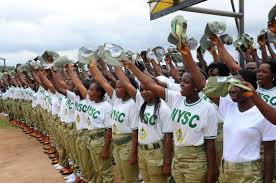
The Economic and Financial Crimes Commission (EFCC) signed a Memorandum of Understanding with the National Youth Service Corps (NYSC). The MoU aims at a partnership that combats financial crimes. 

The EFCC Chairman, Abdulrashid Bawa, received the Director-General of NYSC, Major-General Shuaibu Ibrahim, at the EFCC headquarters in Abuja on Monday, February 21, where the MoU was signed. 

Addressing the audience at the event, Mr Bawa said the document is important as it will guide the two agencies on what is expected of them.

“We are delighted to have you. NYSC has been part of us from the beginning, as we have always had the opportunity of welcoming corps members to help us in one area or another where we have gaps in our staff, even though the sensitivity of what we do requires trained officers, but they are actually helping us a lot,” he said.

Bawa also commended the role of corps members in the fight against corruption.

“Corps members are agents of enlightenment. I want to assure you that our collaboration will address fraudulent acts, and I assure you that we will continue to sensitize members of the public on the dangers of corruption,” he said.

On the other hand, Ibrahim asked for the support of EFCC in arresting online scammers attempting to defraud unsuspecting Corps Members and the public. 

“All of us have to fight corruption for the sake of our country, and I can assure you that the NYSC will play its part as enshrined in the MoU,” he said.

Light Rail: A panacea for Abuja traffic jam

By Tajuddeen Ahmad Tijjani

The increasing traffic gridlock in Abuja is simply nerve-wracking. A journey that, in normal circumstances, would have taken 30 minutes takes more than an hour now. This has not only caused daily waste of precious man-hours but has also inflicted enormous pain on commuters who have to contend with extra costs at this challenging time of a shrinking economy. It’s not a changing time for Nigeria to borrow a leaf from the developed world. We should not continue suffering since there are long-term and short-term solutions.

To be specific, here are some notable spots where heavy traffic snarls are a constant feature, which unfortunately affects the well-being of the people. They include Mararaba-Nyanya Bus Stop; AYA Roundabout along the Abuja-Keffi corridor; Madala-Zuba-Kubwa-Gwarinpa-Aso Radio Junction, along the Abuja-Kaduna corridor; and Girri Junction-Alaita-City Gate, along the Abuja-Gwagwalada corridor. Indeed, a lot of concern was raised about these notorious traffic hubs. And I can’t believe it if someone tells me the FCT administration is not aware of this development.

To be fair to the FCT minister, he’s trying, though his best is not enough. It’s gruesomely inadequate. We must come to terms with the fact that we’re in the 21st century and that new technology should be put in place to reduce the long-suffering of commuters. The axes mentioned above need to be expanded to accommodate the daily traffic volume.

I’d be willing to bet my bottom dollar that if the FCT administration built “railroad tracks” from end to end of the city, beyond a shadow of a doubt, this unbearable traffic jam would disappear in no time. Both the income and the revenue generation will increase. An uncountable number of commuters will drop their vehicles.

The transportation system will give cheerful colour, beautify the city, and compete with global best practices. Can’t we do these for the benefit of all? But, someone might decide to ask, where should we get the funds? Yes, there it is. Invite investors and strike a Public-Private Partnership. I believe we can do it. Building, operating, and transferring is one of the surest ways of getting it done. 

I urge the FCT administration to look inward and try railway tracks in the city. For instance, the same should be in place in other axes from Zuba to Dey Dey, Kubwa, Dutsen Alhaji Junction, Gwarimpa, Maitama to Mararraba, etc. It would be a life-changing event for both the government and the people. Indeed, this will enhance internally generated revenue and increase work productivity. It will be a win-win for the country.

Tajuddeen Ahmad Tijjani writes from Abuja. And can also be reached via sen.taju@gmail.com.

ASUU declares four-week warning strike

By Hussaina Sufyan Ahmed

Following up on the meeting between the Academic Staff Union of Universities (ASUU) and the federal government in the early morning of February 14, 2022, has declared a four week comprehensive and total strike.

On Monday, the President of ASUU, Prof. Emmanuel Osodeke, announced the strike at a press conference.

The strike takes effect from Monday, February 14, 2022.

He said, “The union tried to avoid the strike, but the Federal Government was unresponsive to the union’s demands.”

Prof. Osodeke also said that ASUU NEC faulted the creation of new universities.

“NEC resolved to embark on the four-week roll-over total, and comprehensive strike as the government has failed to implement the Memorandum of Action it signed with ASUU since December 2020.

Hushpuppi: Abba Kyari has a case to answer, says Malami

By Ahmad Deedat Zakari

The Minister of Justice and Attorney General of the Federation, Abubakar Malami (SAN), said reasonable grounds for suspicion had been established against the embattled Deputy Police Commissioner, Abba Kyari.

Malami disclosed this while featuring on Channels Television’s ‘Politics Today’ programme on Monday, February 7.

According to Malami, “Reasonable grounds for suspicion have been established, and that will eventually translate to the possibility of prosecution and conviction if indeed one is adjudged guilty by the law.”

The discussion became necessary due to Kyari’s alleged involvement in a $1 million scam allegedly involving the international internet fraudster, Ramon Abbas, alias Hushpuppi and five others. 

Malami also noted that justice would be done, “It is an issue that has international and national dimensions. Actions have been taken, it is a work-in-process locally and internationally, and we are doing what it takes to ensure justice is done within the context of law regardless of the personalities that are involved,” He said.

Nigerian women and the national security discourse

By Mukhtar Ya’u Madobi

In a heterogeneous society like Nigeria, where security threats are rising daily, the vital role of women in contributing to peace and security ought to be recognised and harnessed effectively.

Women are often viewed as victims of conflict. But this view masks the essential roles women play as leaders, especially in helping end conflict, developing post-conflict reintegration efforts and economic life, and even in leading the organisation of camps for internally displaced persons.

Recognising that sustainable security is not possible without the involvement of women, the United Nations in October 2000 passed Security Council Resolution 1325. The resolution calls for increased representation of women at peace negotiations and all levels of decision making regarding security. It also calls for women inclusion in post-conflict reconstruction efforts and disarmament, demobilisation, reintegration efforts; increased protection from sexual violence; and an end to impunity for crimes affecting women.

Additionally, in his words, Lene Espersen, Denmark’s minister of foreign affairs, “We are fortunate that the unique role of women as key contributors to peace and security is growing, and we already possess substantial knowledge about the critical importance of women in the prevention and resolution of conflicts and in post-conflict reconciliation and reintegration.”

That UN resolution was the first to recognise the disproportionate and unique impact of armed conflict on women and girls, acknowledge their contributions to conflict prevention, peacekeeping, conflict resolution, and peacebuilding, and highlight the importance of their equal and full participation as active agents in peace and security.

Security pundits noted that the key areas in which women could foster security include: peace decision making and peacekeeping, reconciliation, reintegration, the rule of law, and economic development. Therefore, the government of every country should recognise them with these roles and create an enabling environment for them to participate.

A report by the UN Secretary-General shows that there are a growing number of inspiring examples of women, peace and security in action across regions, but overall progress remains slow and uneven.

Meanwhile, in Nigeria, history revealed that many women had made remarkable security impacts in their desire to provide stability to their respective societies. Notable among include; Inkpi, the Princess of Igala royal family who buried herself alive to save the Igalas from the stronghold of the Junkuns, Moremi of Ile Ife, who allowed herself to be captured by the Igbos during a clash with the Yorubas. In addition, Queen Amina became the Queen of Zazzau in 1576 not because there were no strong contenders, but she emerged as the most suitable successor to the office. She proved herself a capable leader both on the home front and on the battlefield.

Under gender sensitivity and security, the National Security Strategy (NSS, 2019), a policy document designed by the Office of the National Security Adviser (ONSA), says, “Nigeria recognises that development is endangered if it is not engendered. Therefore, gender sensitivity and security will be mainstreamed into public policy to create opportunities for the advancement of women and children’s rights as well as gender equality.

“It is imperative to engage women as agents of development to ensure social inclusion, sustainable peace and the security of all segments of the society.”

Given the above, the country has already made a plan of action towards incorporating women into participation in preventing and resolving conflicts, peace negotiations, and humanitarian response, among others.

“Nigeria developed a National Action Plan (NAP) built on five important pillars; prevention, participation, protection, promotion and prosecution. These are important pillars that would strengthen gender-responsive conflict management and prevention frameworks in Nigeria,” the NSS stated.

However, the reality is that women are largely excluded from many formal peace processes. In the terrorism affected states, women and children constitute the largest internally displaced persons and refugees across the border.

Also, it is noted that women are not just victims of war; they are also agents of peace. Thus, it was stated in the NSS 2019 that appropriate legislation would be adopted to enhance gender security to promote inclusiveness across various sectors of the economy.

On its part, the United Nations has identified priority areas to “accelerate progress” on the Women, Peace and Security (“WPS”) Agenda. These include “increasing the number of women in uniformed services in peacekeeping missions and national security services.” The inclusion of these priority areas signals an important shift towards recognising that advancing women in national security services, in addition to peacekeeping operations, is critical to the broader WPS mission. To accomplish the goal of closing the women’s participation gap in uniformed and non-uniformed national security efforts, new policy planning must begin with a conversation with girls as to how they understand, define and interpret security.

It is a fact that women are the bedrock of every society, as they are involved actively in food security, economic security and political security. Thus, there should be a change in attitudes and behaviour. Individuals should learn that women are effective and should be incorporated fully and equally into participation at every decision-making level in positions having to do with peace and security issues. Furthermore, mainstreaming should be integrated into a whole-of-government approach to reform justice and security.

Mukhtar Ya’u Madobi wrote from Kano via ymukhtar944@gmail.com.