Literature

Jolly times with Poetic Wednesday

By Namse Udosen

I came across Poetic Wednesday on Facebook. It was refreshing to see young people telling their stories in verse. During the Covid-19 lockdown, I followed keenly as Eclectic voices sang tunes that ranged from despair to hope.

Poetry is a beautiful part of literature often not paid deserved attention in this climes. It breathes colours and creates philosophy. Therefore, immersing myself in the words of the poets of Poetic Wednesday provides me with a refreshing view of life in Northern Nigeria.

Aside from providing an outlet on social media for budding poets, they have organized a series of offline creative writing workshops for more than 300 secondary school students in Kano, Katsina, Yobe, and Kaduna. These workshops provide opportunities for non-formal education in creative writing. These workshops also expand the thinking range of these students and them better in their academic work. As a result, many young writers have participated in and won writing competitions which are essential for building confidence.

Poetic Wednesday has used its online presence to drive narrative around pressing societal issues in Arewa. The works have been bold and daring, covering domestic violence, Almajirci, drug abuse, and girl-child education. The conservative toga around Northern Nigeria is regularly broken by the strength of the poetry published.

I have also had the opportunity of attending some of the physical poetry events. Asides from the big players in Kaduna, they have one of the best poetry events in Kaduna.

They have been able to collaborate and partner with several literary organizations such as The Art-Muse Fair, Open Arts, Ahmadu Bello University Arts Festival (ABUFEST), Poets In Nigeria (PIN), Creative Writers Club, ABU Zaria, Minna Book and Arts Festival (MinnaBAF), For The Love of Poetry, Campus Watch, The AlhanIslam Tutoring Center, Chapter One, Open Arts, Hausa International Book and Arts Festival and several others to support and promote literary activities.

I am glad to be part of their growth and successes. I don’t know where they get their drive from, but I appreciate the sacrifices of the young men and women behind the initiative. Long live Poetic Wednesday.

Namse Udosen wrote from Kaduna via namse.udosen@gmail.com.

Who can deliver us from the clutches of tyrants in the jungle?

Nigerian Universities lament…

Are we not akin to nursing mothers?

With maternal tenderness and compassion, we breed.

Etiquettes and knowledge in our students

Isn’t it from our breast they suckle?

The milk of freedom and wisdom

To enable them differentiate right from wrong

And to make their future bright

But melancholically,  with choppers, these tyrants unceasingly chopped off our udders.

Who delivers us from the clutches of tyrants in the jungle? 

Nigerian students lament

Dear Mother, beloved patron of our course.

In every whisper, they hear your anguish

In lieu of salvation, to the ground, they malevolently choose to turn their ears.

From the serenity of academic society, they always exile us

To the ennui of waiting idly in our parents’ home

When and what will halt this malice?

When do we have our basic rights to education?

Who will shake sense in the diseased brain of these monsters?

Who can deliver us from their shackles?

Inhabitants of Northern Nigeria lament.

Our beloved students and varsities

Your blues and agonies we are sorry for…

By her visage, we say the country is extremely sick

And remedy from the omnipotent Lord we should only seek 

Strong security measures they feigned

Yet in homes, our lives are at stake

We are famished but our  farmlands irrigate with our blood

Enroute to worship, work,  business places we are waylaid

Quotidian reports place our pogroms and theft at a toll of  hundreds of thousands rate

But to the mercy of the blood-sucking beast we are always left.

Chorus: God we are helpless in the hands of tyrants. 

Only You can deliver us from the clutches of their mischief…

Abba Muhammad Tawfiq is a 500L Medical Rehabilitation Student University Of Maiduguri.

A moment with the late Abubakar Gimba

By Umar Nasale Ibrahim

Whoever wants live in the world with others after his body leaves the open space should write. A reader, they say, lives a thousand lives before he dies. A writer, as he is also a reader, lives many other lives after he dies. Thus, a writer benefits more than a reader.

Abubakar Gimba died some years back, leaving a handful of books of great might to the posterity to enjoy. Although I haven’t met him to learn of his living policies yet, he had sent them to me before he departed, reaching me late the previous year. He published many books, out of which only three came to me to read for the time being.

“Witnesses to Tears” is the first I encountered, and out of pleasure and amusement of how I enjoyed it, I looked for “Sacred Apples”. Not long after finishing it, a friend came with “Footprints”, and I snatched it to read. These are the books, out of almost twelve publications he had/has, I could lay my hands on. Reading them has been like a conversation of the admonition of how to live with others. In fact, this is my takeaway from the books.

“Footprints”, for example, is permeated with political inequities of the civilian and military governments of a fictional state I presume to be Nigeria. The political paradox discussed in the book, in the end, turned out not to be what I learned from it. The social relationship of the characters in the narration that develops its plot still fascinates me. Though in this regard, one may say that the writer is conscious of it, not all the readers may apparently take care of it.

The central home in the book is composed of two living parents with three children. Two males and a female, though the other male is much of a minor character. The female child, Farah, is a university graduate teaching at a secondary school her younger brother joins later in the book. This is one of the fascinating things the book has left me with. The male parent, Jibran, was a teacher, so his child became one. She engages in a relationship with her co-teachers, and Jibran has never been aversed in the relationship. The open-arm welcome to the teaching profession, the loving arms with which it is embraced and the burning desire to turn the lives of others in the book through the good profession is an emulable action.

That’s one. And to be precise, not to say much, the most important other issue is the interfaith relationship of the characters. Haytham and Basil are the intimate co-working mates of our female character, Farah. Haytham is a Christian and has been the boyfriend of Farah for a long time before Basil turned to show interest in her and thus married her later. The duo has become constant visitors of the house, first as friends, for courtesy and later, for a date. No matter the nature of the visit, Jibran would warmly engage them in conversation about the leadership of the country and the way out. Farah, with her father, would be supporting the country’s civilian activists to be given power, while others would intellectually be opposing her views. Usually, the conversations last long and no way in it one would dare include religion in it. The actual outlook of one’s humanity is the concern.

This was ringing in my ears while I was reading the book. Just telling me of how Gimba lived in the community he lived. And for sure, he was a religious man of dignity. But, to say he was a reader is just an insult to his reading avidity.

May Jannatul Firdaus be his current comforting home, amin

Umar Nasale Ibrahim can be reached via: umarnasaleibrahim@gmail.com.

Mentorship is all they need

By Maryam Muhammad Lawan

They both entered Ammi’s room with crestfallen faces.

“Ammi, I don’t know what’s wrong with this boy. I saw him in the afternoon wandering about the street with those ludicrous coteries and now with a gamepad instead of a book!” Yaaya exclaimed. 

Ammi sighed as if she could not utter a word.

I know she could, for she has been trying her best. Anis would only pick his book to study when Ammi sounds emphatic. Not sure if it’s hearty, for he would start to sleep shortly after he starts reading, and that will be the end. 

Yaaya broke the silence in the silent room with a query. “What exactly do you want?”

Mentorship! I answered the question for Anis quiescently.

 He continued, “Unless you straighten up and fly right, our efforts will be fruitless.”

Anis is blessed with a quick cognitive capacity but is prone to play.

 “I’ll try my best and make sure he get his acts together, but he’s listless now. Tomorrow will be a better day,” I said to myself. 

The Next Day

I stealthily entered Anis’s room and met him ironing his sport wears. 

 “This is supposed to be done before today, my friend,” I said teasingly.

 He replied amusingly, “I heard you, but not well. However, I may hear you well when you go out and say Assalaamu Alaikum.”

Deep down, I know he’s trying to requite, for this is always what I say whenever he bangs into my room without saying the Salaam. 

I went out, said the Salaam and entered. 

I soothingly asked about his preparation(s) for the forthcoming exams.

 “Which preparation?” He asked. “Y’all should know that this JAMB is just luck,” he added. 

“So you wrote the exams before, wow! What was your score? “I uttered innocuously. 

“Look, Anis, can you please give me a listening ear?” This time around, it’s more of motherly. 

He switched off the iron and turned his attention to me. 

“Last year, when I did my JAMB examination, were you not proud of my score? Were you not the one that added that to your status with ‘can ur sis be brilliant like this’ as the caption? Do you remember how that result trended? Why? It’s all because of the score, Anis. I wasn’t the only one that wrote JAMB that same year, but mine trended most.” Can you remember how I read hard? Why don’t you do that, Anis?”

The room was silent for a while.  

“There’s nothing like luck, except that in almost everything, there may be a refutation. Some candidates may prepare well, but fail, while others will pass without preparing, but this is a hen’s teeth. I want you to train hard and pray harder, please, dear. Will you do that? “ 

He astonishingly answered in the affirmation. 

“I remember how some students mocked us (me and my friends) just because we were preparing hard. How foolish? None of them scored more than 130. Karina was among them; she scored 98. I know you can still remember that. So, in case you come across those sets of people, get them the cold shoulder. But, eventually, we shall smile together,” I said. 

“It’s almost 7:30 am. Let me leave before your school bus arrives. Peace out, bro, I said and added “no procrastination please,” when exiting out of the room. 

“Anis!! I shall celebrate with you as well, “I said this when I saw him reading voraciously after coming back from Islamiya in the evening. 

I could see happiness in Ammi’s and Yaaya’s faces. 

It’s time for the Maghrib prayers, so the young boy must keep everything and pray. 

He stood up while uttering, “So help us, God.” I wasn’t the only one that said “Ameen.”

Yaaya was at the parlour, ready to move on to the mosque, while Ammi was there to pick the phone she left at the dining table. I, Yaaya and Ammi said that Ameen happily.  

The young boy moved on to the restroom to perform his ablution.

 He held Ammi and Yaaya in awe, they happily prayed for him, and they both left. 

Maryam Muhammad Lawal wrote from Kaduna via mmafamam@gmail.com.

A day in the jungle of love

By Uzair Adam Imam

Looking at her eyes, it was clear that the decision taken by her parents wasn’t favourable. Soon, a shiver began to run down my spine that I couldn’t help standing, but fell to my knees. My hands supported my head, and I quickly sank deeply into the thought of how our love led to the ruination.

Hot-felt tears had already begun racing down my innocent cheeks; I felt drunk with the world playing magic to me, turning around like a bicycle wheel peddled by a fast rider. However, I couldn’t tell about happenings around me.

I got started when her soft hands held both of mine tightly. She lifted me and drew me closer to her; then she whispered into my ears: “I can’t let you go, dear,” she said with her engrossing eyes which tore my heart out looking into mine, then continued “, All creatures have various can’t do-without things. Your love is to me as water is to a fish.”

“It’s indeed known to everyone that we love each other and no word can describe our relationship – it’s, without a doubt, incalculable and immeasurable,” I responded, paused, cleared my throat and continued, “this is our destiny, and we’ve no option but to accept it.”

“I have an idea,” she said.

“What can that be?” I quickly interrogated.

“We shouldn’t run away to save our love and get a secret marriage elsewhere,” she suggested.

“Certainly no! Love is a sacrifice, and now it’s my turn to pay you back, for I’m indebted to you beyond the settlement,” I said rather emotionally and added, “if you really love me, accept it.”

“I do for your sake. But a favour, please! Don’t forget me for whatsoever reason. For me, you’re undeletable; the blood that pumps by my heart and circulates in me.” She retorted hopefully with misty eyes.

“I won’t!” I said. “You’re indeed unforgettable. Even though the thought of losing you would have soon killed me, my life won’t be for nothing because I have very good news for my friends and relatives who have gotten their residence permit in the great beyond many years now – the story of our exemplary love,” I managed to say though in a shaky voice.

For the uncertainty on when our next meeting shall be again, we departed after getting our point across to each other. I stood to leave but only to feel forcefully halted; as I turned, it was her hand clutching the tail end of my kaftan. She smiled, then words flowed on her blessed lips, “we’re destined to each other. So I know we’ll reunite again.”

Her words created in me the reflection of the stream of affection we’ve passed through. No love tangle had ever existed in our voyage since we began crushing on each other. So that our relationship had always been quarrel-free, I found it difficult to reply to her words. Instead, I nodded and smiled warmly. But inside me, my mind grew heavier and my heartbeat at the rate of three times a second or so, I thought, making me doubt my chest’s ability to bear it.

I didn’t wait for a taxi or bus. Therefore, I made for home and arrived after a trek of more than an hour. I entered my dilapidated room, laid on my ramshackle and crumpled bed with my head conveniently placed atop a decaying pillow made of dirty old clothes, looking high up to the dusty and unworkable ceiling fan. I was, all this while, trying to discard the thought of my execrable situation with which I became like a conjoined-twin, but yet failed. My heart was enveloped with the flashback of my first encounter with Aisha, to mention her name.

After four years of silence, one blessed Monday on my way to call on my friend, I saw a pretty girl of about eighteen, the apparel of whom I instantly admired, the beauty of whom shouted for attention. I tried but failed to hide my surprise that was now all over my face, so she couldn’t notice.

As she came nearer, the pleasant scent of the Malaysian perfume, she wore struck my nostrils. She gave me an attractive, though tricky, smile.

The girl alluringly passed by without uttering a word. Her beauty is indeed beyond description. But, to my utmost surprise, seeing the girl for a brief moment, I suddenly began to feel a strange feeling descending on me. I couldn’t figure out the meaning of this peculiar feeling, but a few days later, I got to know what the feeling was all about. And I also came to know her name and her address.

She lives in a mansion and is fathered by a well-known rich man in Kano. My heart was full of fear of rejection. But interestingly enough, I was lucky! My proposal was accepted.

In the spot of our existence, we became the talk of the town, whereas our relationship travelled far on the lips of our contemporaries. Thus, she couldn’t deny me a gingering and auspicious text if she denied me her face, and so did I.

Nevertheless, no sooner had her parents stood on our path than we started calculating the ramification that led to the break-off of this journey. Love, from then, proved itself bitter, not better since it produced something short of sweet. Indeed we’re knifed apart as our dreams fell apart.

Uzair Adam Imam writes from Kano and can be reached through uzairadamimam@gmail.com.

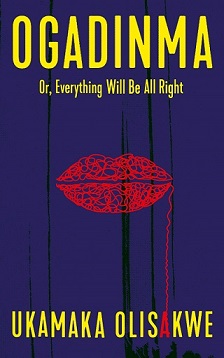
Sexual abuse and domestic violence in Olisakwe’s “Ogadinma”

By Zayd Ibn Isah 

One of the obstacles to recognizing chronic mistreatment in relationships is that most abusive men simply don’t seem like abusers. – Lundy Bancroft.

I have read many books this year, but none proved to be as poignant and challenging as Ukamaka Olisakwe’s Ogadinma. Ogadinma is loosely translated in Igbo as “Everything Will Be Alright.” The novel’s gripping story revolves around sexual molestation, domestic violence, unwanted pregnancy, torture, deprivation and emotional manipulation. It was set in the 80s during the military coups and dictatorial repression era. Against this significant backdrop of national history, Olisakwe deftly explores themes connected to the disintegration of familial bonds.

Ogadinma is a young and impressionable girl whose dream of acquiring a university degree is truncated by one Barrister Chima. Ogadinma’s father sends her to Barrister Chima’s office to help secure her admission into the University of Nigeria, Nsukka. However, the dishonourable lawyer takes advantage of the situation and has forceful sexual intercourse with the girl.

Consequently, Ogadinma gets pregnant. Fearful of her father’s reaction, she decides to terminate the pregnancy with contraceptives. When the father becomes apprehensive after his only daughter falls ill, he takes her to the hospital for treatment. However, he is pretty disappointed after the doctor carries out tests that reveal Ogadinma had done an abortion. The old man proceeds to punish Ogadinma severely before sending her packing from his home to Lagos.

In Lagos, Ogadinma has to live with her aunt and is then pressured into a marriage with Tobe. Tobe is a wealthy contractor, but his fortunes falter following his arrest by the new military government for contract fraud. As a result, Tobe has almost everything taken from him, and even his house has to be sold to facilitate his release from prison.

Out of prison, Tobe becomes a different man, a beastly drunkard. His once-loving wife becomes his favourite punch bag. Fed up with his abusive behaviour, Ogadinma runs away to her father’s place in Kano to take refuge. But the father, who is supposed to be her shield against sexual and domestic violence, sends her back to her husband. And just like that, the circle of abuse continues. Her good friend—Ejiro, warns her of the consequences of staying in an abusive marriage, especially after her sister, who tried to endure it, eventually paid with her life.

Whenever Ogadinma complains to her aunt about her husband’s abusive behaviour, she (the aunt) would always attribute it to the man’s travails and misfortunes. The aunt also advises Ogadinma to endure until the husband regains his fortunes. Ogadinma heeds this advice and takes everything in stride, patiently waiting for better times. But even when she gets pregnant, her husband continues to abuse her.

On the other hand, Tobe ventures into several businesses but fails in each turn without a significant change to his pathetic story. Things become considerably worse after a pastor accuses Ogadinma of orchestrating her husband’s misfortunes. Ogadinma is left at the mercy of this pastor for deliverance, only to still go through another round of sexual abuse.

At this point, Ogadinma musters the courage to run away from her husband’s house. She also leaves her baby in the care of Tobe and the house help. Unable to endure any form of abuse again, Ogadinma seeks solace at the house of a relative, her Aunty Okwy. Ogadinma refuses her aunt’s advice to return to her husband, even when she knows her father will not take her in. Finally, she goes back to her friend Ejiro’s house in Lagos. There, she is warmly welcomed and free to live the life she deserves afterwards.

Nowadays, we live in a society where men increasingly arrogantly take advantage of their status and privileges. Men like Barrister Chima are why young girls have become sexual prey in our tertiary institutions and workplaces. Parents who condone spousal abuse on their children also make the war against domestic violence difficult to win or even sustain. This is particularly prevalent among parents who depend upon their in-laws for sustenance. They allow their daughters to die slowly in abusive marriages because of money. It is hard to bite the hand that feeds you.

There are a plethora of cases where women receive the beating of their lives for even daring to confront their cheating husbands. We have come to lower the moral bar so that adultery is not considered taboo for men as it is for women. There is something fundamentally wrong with this. It is utterly wrong on so many levels, especially when the religiosity of our society should translate to a stronger collective sense of morality. Instead, our society and culture continue to thrive on entrenched abuse: leaders abuse their powers over the masses; men abuse the women they should love; women abuse domestic staff and children. We need to weaken this cycle of abuse. We need to stop it soon! We cannot just wait until things worsen or fall apart beyond redemption.

The first step towards tackling domestic violence is via urging victims to leave abusive marriages and seek redress in court. However, this can only work if there are heavy consequences in the form of legal punishments for the actions of abusive husbands. Parents should also stop forcing their daughters to stay with abusive husbands.

There should also be massive reforms in our criminal justice system to ensure the effectiveness of the law against domestic violence and sexual abuse. And lastly, we should always encourage victims, especially women, to speak up, to be bold enough to tell their stories with truth and without fear, just like Ogadinma.

Zayd Ibn Isah is an Officer, a law graduate and a creative writer. He is also the author of We Are All Guilty, his first fictional work.  Email: lawcadet1@gmail.com.

One last truth

By Zaynab Abdool

It’s winter morning, a new day, and I’m awake, Alhamdulillah. When my foggy gaze fell upon the aesthetic rays of sunshine that sneaked through the holes in the window, surged past the transparent curtains, and stood grandly on my bedroom’s plain wall, I couldn’t help but admire its gracious beauty while my soul sent praises to the creator of man and nature. 

‘Zainabuwa, what on earth are you still doing in bed? Reincarnating?’         

A lusty yet irritating voice accompanied by a loud knock sailed me back from my small world of imagination. That was Husna, my new friend who just moved next door a month ago. The love we both had for certain things, such as the love for books, poetry, cats, henna and hijab, truly helped blow the flames of our friendship. So, we were on good terms.    

Stepping down from my bed, I yawned lazily, ignoring the annoying voice behind the closed door. After taking off my crystalline PJ’s, I slipped on a black gown and strolled across my room to get to the door. Glowering Husna was all I saw before I was kicked aside, and the next was the elegant Husna clad in a light blue hijab that complemented her black skin, cat-walking towards my bed while reciting a poem with the zestiest voice ever:

‘Habibi, you carried          

The weight of my poem         

Like pen amidst thy fingers,          

You stole my lines, stanzas         

And my entire muse         

With just a blink.’

After listening to those lines, I was shocked out of my wits. 

‘WTF! I’ve always thought you’re only into dark poetry! Don’t tell me you wrote that piece!”

‘Babe, forget about those dark kinds of stuff, I’m a phoenix now, and I’ve finally found him,’ she said happily with stars in her eyes.

‘Him? Who?’ I asked, confused.’ My knight mana,’ she replied with a sly smile plastered on her pretty face.

‘Oh! Do you mean to tell me that you’ve found a handsome male lad in those web novels you downloaded lately?’

‘Damn! I found one last night, and he’s so damn amazing that I felt like dying in his arms…’

I scooped and sat beside her on the bed, rolling my eyes.

‘You’re a fool, you know?’, she reacted to my body language. 

‘Yeah, a pretty fool,’ I chuckled before adding: ‘You need to get back home and return after I had my breakfast. It’s hot milk and chips today.’

‘I hate milk and chips,’ she frowned.’ Oh, wow! Stay and feel at home then,’ I exclaimed gladly.

‘Stingy brat, now let’s discuss some serious kinds of stuff.’ 

‘Oh, okay, let’s discuss fast; I’m hungry,’ I yawned

‘My man’s birthday party is in five days and, of course, I will be there because I’m his queen,’ she stated happily. 

I stared blankly at her flushed face, uttering: ‘What’s she talking about,’ I thought, still finding it hard to believe what I just heard.

‘What man? What birthday party? What queen? Do you want to slay? Or you wanna join the movie industry?’ I asked hectically.

‘Yeah, babe, I wanna slay for my boo. He’s worth it,’ she replied while browsing through her phone’s gallery. ‘Here, meet my prince,’ she flashed me a photo on her screen which got me back from my blackout state. ‘Huh!’ My jaw dropped. All I saw was a bronze skin guy with dreadlocks, dressed in sophisticated cocktail attire. The stiff aura around him emits a strong ‘arrogant playboy’ vibe.

‘How on earth did she even meet him? He’s so disgusting,’ I thought. ‘Erm, hmm Husna yo…you fancy him? Erhm, I, I mean you love him?’ I asked in between stammers.

‘Yeah, I truly love him. He’s charming and amazing… He’s not what you’re thinking, Zainab. He’s an overall different person inside. Don’t judge him by his appearance.”

‘So, to you, he’s worth imitating to your future kids?’ I asked in a low muttering voice. 

‘Yes, at least that’s what I think, and nobody’s perfect anyway. So, what do you suggest I wear to the party? ‘He said I should appear as classy and sexy as possible, even though he claimed to do something about my black skin before the D-day. I still need to give in some effort, right?’

‘What nonsense!’ I thought.

‘Husna, you’ve changed,’ I whispered. She chuckled before saying, ‘love has changed me.’

‘What love? This is pure bullshit. Have your parents even acknowledged him?’ I asked, finally coming back to my senses, knowing quite well that Husna’s parents – being the typical Hausa parents who will strictly push their kids towards the Deen; the type of parents who will teach their kids that Islamic education and good morals are far more important than anything – would never acknowledge her ‘so-called boyfriend’ as their son-in-law.      

‘No! Wallahi, you’re so dumb. Can’t you understand that we are into a secret relationship?’ she almost barked. 

‘Whatever the case, you’ve to break up with that demon you call a prince. You deserve someone far better than him-someone that will accept all your flaws and appreciate everything about you, someone with the ilm to defend his religion, a man of Deen whom your kids will be so proud to call ‘papa.’ You deserve someone whose testimonials are inspiring, someone whose effect on you would extend beyond this Dunya, a man who will walk you to Jannah, a man you can hold on to, a man you can proudly call the source of your true happiness and external strength. Not someone that will encourage you to bleach your skin and change who you are, not someone that will persuade you to flaunt your beauty and mess up your goals.’ I stopped to breathe.

‘You don’t have to impress anybody, my dear, you don’t have to sacrifice your happiness to anyone-the happiness your parents put so much effort to build and protect…’ I paused again and stared blankly at the walk with misty eyes, not sparing Husna a glance.

‘Our parents had gone through a lot to make us who we are today. They have sacrificed their blood and sweat to give us happiness, yet we chose to, to…’ I paused as tears of pity flowed down my cheeks to seek solace on my lips—tears of pain, the pain of betraying their thoughts and trust.

I restricted my gaze from the plain wall and pasted it on Husna’s forlorn face. I was shocked when I saw tears rolling down her flushed cheeks.

‘But it’s a free world, Husna, and as a friend, I’ve played my role here to guide you. So now it’s left for you to decide because hell is free, anyway,’ I said as I stood up lazily, wiped my tears and walked to the door. ‘I need to get my breakfast, Habibty; feel at home,’ I said, holding the doorknob. 

‘Innalillahi, I almost destroyed my life. What was I thinking, Astagfirullah’ I heard Husna mutters to herself from behind. 

I smiled, let out a sigh of relief and closed the door behind me before walking to the kitchen in high spirit.


© Zaynab Abdool (abdullateefzainab96@gmail.com)

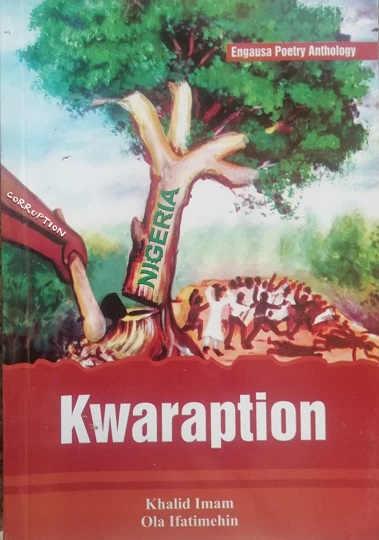
Book Review: “Kwaraption”

Book Title: Kwaraption

Editors: Khalid Imam and Ola Ifatimehin                                                                                   

Type: Anthology of poetry written in Engausa

Publisher: Whetstone Art and Information Service

Pages: 72

Year of publication: 2021

Introduction:

Although not simple to define, corruption is a major impediment and barrier to Nigeria’s progress. For many years the country suffers a lack of infrastructure and poor condition of living because of corruption, which not only stagnates the nation but also derails it from the path of progress. Although more endemic now than ever before, the story of corruption in Nigeria is at least very old.

A missionary teacher in Kano, Madam Ethel Daniel Miller (who came to Kano in 1917) in her book The change here in Kano complained of a prince from the emirate that gifted her a set of clothes for the simple reason that she is a sister to Dr Walter Miller, thinking that she could influence his choice as a successor to the throne.

Other examples can be found in fictional works such as Magana Jari Ce (1937), where Dan’iya bribed a police officer to deceive his friend, Daudu, in a story titled “An ƙi cin biri an ci dila.” The case of Obi Okonkwo in Achebe’s No longer at ease (1960) and that of The Incorruptible Judge (1962) by Olu Olagoke were just a few out of many similar cases. These are clear indications of how writers used their pen to expose and sometimes fight corruption since the beginning of Nigeria formation.

This anthology of poetry edited by indefatigable Khalid Imam and awesome Ola Ifatimehin contains 51 poems contributed by 45 poets. Nearly half of the contributors are female writers, which is a clear indication that females have come of age in terms of literature in northern Nigeria.

The title of the book “Kwaraption” is a Hausa and English attempt at pronouncing corruption. While the first, “kwara” part is just the Hausa sound of the first four letters, “corru” (in a word corruption), the second part was derived from the last for letters (ption) of the original word. In other words, kwaraption is a corrupt way of saying corruption. Instead of the editors using Hausa translation of the word corruption which is loosely translated as Cin-hanci or Rashawa, or just writing Hausa variant of corruption as kwarafshin, they decided to retain part of the original English words. This is to portray the uniqueness of the work as an anthology of poems written using Engausa which involves coding switch or mixing of languages (English and Hausa) with a view to achieving artistical beauty and increasing richness of literature.

An Appreciation of Some of the Poems in the Collection

Looking at the anthology, one can understand that the poems covered a wide range of issues of interest as far as corruption in Nigeria is concerned. Some of the issues covered are:

  1. Recognizing Nigeria as a rich country which is very blessed with both human and material resources, but whose citizens are poor because of corruption and other social vices.

“ƙasa mai albarka da albarkatu,

mai attajirai, masu ilmi da ‘yan siyasa” Hafsa Ja’afar in a poem titled Rashawa (p. 30). 

  • The state of the country as far as corruption is concern. For example, Ameer Nasir in Cutar Zamani described the country as one having expertise in corruption to the extent that it is difficult to separate us from corruption “tamkar jini da hanta” (p.17). Basheer Adam Gobir assumes that ‘almost everyone’ in the country is corrupt (p.23). Similarly, Farida Mohammed Shehuin Abin Takaice (p.24)and Khalid Imam (p.37) see corruption as a hazard whose impact is everywhere; mosque, church and in all places, and Khalid particularly described corruption as ‘flood’ that destroys (Corruption Everywhere, p.39). Khadija Hanga in her poem titled Despicable Diseases sees corruption as marriageable girl, however dubious whose main goal is to deceive “a fool”. In fact, as captured by Ola in his allegory, “Kukan Kurciya”, corruption is now “new education”. Because we are so accustomed to corruption that we are given it good names and the corrupt person were assumed to be philanthropist as captured in a poem Philanthropist na gangan (p.26) “barazanar ɗan ta’adda ba ta mayar da shi gwarzo”. Also, YZ Ya’u corroborates this in his “Sai Mai Taimako”. Umma Aliyu educates us on different forms of corruption that we don’t see as such due to level of societal decay.
  • Looking at corruption as a cause to many problems this country witnesses.  For example, in a poem “Tick” byAbubakar Isah Baba, corruption is responsible for poverty and insecurity;

It causes abubuwa masu yawa,

Poverty mai kashe gwiwa,

Insecurity mai karkatse rayuwa,

Ga misalan scandals nan da yawa.”

In “Lamentations for a Country,” Adesina Ajala blamed corruption for dividing the country along many social layers “Corruption is the common denominator that divides this land without fractions.” The division is along religious, ethnic, regional and even occupational strata. In “Gobarar Daji” Yahaya Abubakar sees corruption as “alpha and Omega”, hence, the chance of getting out of the current quagmire is very slim,

“ta yaya za mu yi rayuwa sustainable,

tattalin arziƙinmu disabled.”

Bashir Umar blames corruption for bankrolling the country such that it cannot meet its basic needs, he sees it as embarrassing that the country now relies on foreign aid for its development “wai yau ni ke neman aid from foreign organization”. The writers believed that Nigeria has taken a poisonous venom, whose effect transmitted to the children, making them engaged in killing one another “mun ɗauki kansakali, maimakon magani.” Ajuji in his “Bragging da Kayan Sata” captures an attribute of a corrupt person.

“there stand akimbo…

carrying pot belly,

like expected mother.”

  • Trying to understand the dynamism and causes of corruption is one other focus of the poets in the anthology. Amatullah Saulawa in her “We shall not be afraid” boldly says:

“yes, it is our faults,

if dictators shift gears,

we bring them back” (p.15).

This is a similar submission of Maryam Baffer in the poem “Har da ni”. However, the politicians are most blamed in the collection because they stand for it

“ko da tsiya ko da tsiya tsiya

sun kasa

sun tsare,

sun raka,

sun rabe”

as stated by Hafsa Ja’afar in Rashawa (p. 30). Lynda Mustapha in her two poems “Write it down” and “Buhu-buhun Iskanc”i blamed politicians for perpetrating corruption in the country. Moses Odozie writes on corrupt civil servants whom he nicknamed “Ɓarawo mai Biro”. Murtala Uba Mohammed, in his poem “Corrupt Nation”, believed that corruption is not limited to politicians, there is also the police, court and parents (p.51).  

  • The writers are tense of corruption and eagerly want it to end. Adesina Ajala said;

“Yaushe zamu warke daga wannan ciwon ne?

Wa zai haska fitilar gaskiya cikin wannan duhun baƙi?”.

Corruption is here seen as a wound that needs to be cured and darkness of a night that should be put in the light. In “The Oak Tree”, Aliyu voices out; “yet we hope for betterment”

  • The authors not only lamented over the problem, they also recommended some solutions to the problem. Madinah Abdussalam in his “Yours and Mine” sees the solution as public, that every person should do it himself.  He says “who will end corruption in ba mu ba”.

In “Soyyayar Corruption” by Elizabeth Zephaniah, the public is seen as a solution, she metaphorically states “yaushe za mu ga eagle na fighting corruption”. Musa Adam was also having a similar view in his “My father’s 61st Rebirth”. Some of the poets expressed unity as an important factor in the fight against corruption, “dole we have to be united” as stated by Haneefa Musa Isah in her poem “Mu haɗa kai” (p 31). Also, Sani Abdullahi Salisu in his Kwarapshin (p.61).      

Engausa

It was not surprising when I saw this anthology. This is because of my prior knowledge of the debate that started on the page of APNETi when Dr Ola began to release his poems in a fashion of code switch, mixing English with the Hausa language which Khalid and some other members called ENGAUSA and opined that it is new and welcomed development. Some members of the group, most especially Professor Yusuf Adamu objected to that saying that language blend and code switch is not new in poetry particularly among Hausa poets citing a popular line of late Nai’ibi Sulaiman Wali in his poem Damina

“… su yi kasuwa su yi kantuna,

kowa busy sai su damina.

Yaran gari ko sai bal suke,

kowa ka duba very happy…”.

Khalid and his likes were not convinced arguing that the example given is INGAUSA, different from ENGAUSA. They said INGAUSA is a Hausa poem where words and phrases are used to complement the writer’s inability to come up with the right words based on context or meaning as opposed to ENGAUSA which is a poem written specifically with two languages blending and it is purely artistical. In the introduction of this book, the editors maintained this view indicating that they had not shifted their position, more so, in an interview conducted by Ola stated that this Engausa is almost his own daughter.

While this anthology may certainly be the first collection on the ENGAUSA poem, the view that the ‘new ENGAUSA’ is different from the ‘conventional INGAUSA’ is very weak. This is because language swap in Hausa poetry is not just triggered by weakness or inability to come up with the right phrase or word in a context, it is equally deliberate. Also, when we look at recent popular Hausa songs we can see Engausa. In particular hip-hop singers such as Billy’o in his song “Rainy Season” wherein he said:

“Mosoyiya, farkon ganinki na yo confusing,

sai da zuciyata tai ta squeezing,

sai da temperature ta tai rising,

jiri nake sai ka ce na sha poising,

ni ko so nake a san ina da reason”

is a good example of Engausa. In recent, northern Nigeria’s film series such as “Son of the Caliphate” and “Gidan Danja” are also full of Engausa. In addition, Aliyu Idris aka Abdurabbihi is another example, whose poems are in a mix of Hausa, English and Arabic languages even before seeing Ola’s “Sarauniyata” which appeared first in APNETi platform. Agreed, Ola and to some extent. Khalid can take the accolades of popularizing the Engausa and APNETi for holding the first workshop to teach it. It is another issue as to whether the new Engausa has a rule or not. But it is important to state that Engausa is an attempt to mimic how we (particularly the educated elite among us) talk at home and other places.

Finally, I wish to congratulate the editors for the first Engausa anthology and the All Poet Network International (APNETi) and Centre for Information Technology and Development (CITAD) for sponsoring the publication of important literary work that can help in Nigeria’s corruption crusade. The text is truly a noble of a kind. While wishing to see more literary work of this format, I wish the editors will do more in editing the Hausa language in the subsequent publications. I noticed many orthographic errors with respect to the Hausa language, which our indefatigable Imam will share the larger blame for his expertise in the area. I also conclude with the following lines:

Mai biɗar gane corruption,

To ya ɗau wannan collection,

Hausa tare da Englishin,

Sandwich kuma conjugation,

An zubo concatenation,

Kar ku ce contamination,

An yi ne don education,

Tun da Ola ya yi motion,

Ka ga Khalid zai yi action,

An yi  don inganta nation,

Yau kwaraption mun rejection.

The reviewer, Dr Murtala Uba Mohammed, is with Geography Department, Bayero University Kano, and can be reached via murtalamuhammadu@gmail.com.
The most dreadful experience of my life

By Yahuza Abdulkadir

Many a time, I listen to people expressing their feelings and emotions, telling their beautiful and ugly stories, talking about the experiences they encountered through their journeys.

But then, there’s this story I wanted to write, but I couldn’t. Whenever I tried to, fear overwhelmed me. So, I overcame my fears and summoned the courage to write this story today.

In April 2021, while travelling to Funtua in Katsina State, I had a dreadful experience that left a big scar on my heart.

On that day, I reached Kano at around 6:30 PM and boarded the ‘Adaidata Sahu’ tricycle to Rijiyar Zaki Park because I was told that it’s only there I could get a car that would take me to Funtua by that time.

We started the journey to Funtua at around 9:00 PM. It was late and a lovely friend who happened to know how the road used to be at night advised me to stay till morning. But I couldn’t heed her advice because I wanted to reach Funtua that night and complete my assignment the following day.

I started regretting why I embarked on the journey when our car spoiled at Malumfashi. The driver tried to get the car back to work for almost an hour but no progress. Finally, he decided to walk a few metres away to get a mechanic. And we were lucky that he came back with one. After several trials, the car engine started, and it got back to work.

I can still echo the voices of the two women seated at the back, pouring blessings upon the mechanic who helped fix the car’s problem. He really tried, but God’s miracle has taken place, I believe.

As we continued the journey – chatting and listening to other passengers telling their stories, I fixed my eyes on the road, and many thoughts knocked me on the head. When I noticed no car coming from the other side of the road, fear robbed my mind. My heart kept beating. I wanted to tell the driver that I was uncomfortable with this journey, but silence kissed my lips. I kept mute for some minutes. But deep inside of me, I wasn’t feeling okay.

A few kilometres to Bakori, we spotted torchlights reflecting from a close distance. And I heard the driver saying, “Inna-lillahi Waa Inna Ilaihir-rajiun,” meaning: “From Allah we are, and unto him is our return.” He tried turning the car to escape the trap in our front, but the sound of gunshots flying in the air made him stop the car.

I couldn’t remember what happened, but I saw people with guns and torchlights telling us to get out of the car. We went out, and I was terrified. Some voices began to whisper into my ears, “Had I known, I could have stayed in Kano till the following day like my friend said, but my stubbornness got me into this, it’s not my fault; this is my fate.”

That night we were robbed. “The Children of the Night” collected all our money and that of the driver. Then, they took away our cell phones and walked into the bush, shooting in the air.

When they left, I got into the car, shivering. Then, I realized that my smartphone was inside my small travelling bag, which I kept close to where I sat. I put the phone into the bag earlier because its battery was flat. So, I was lucky that my smartphone was still with me, though they took my small phone I used for calls. I know that we were lucky enough to be alive that night.

We stayed there till dawn because our car couldn’t get back to work again. We were thinking of what to do next when a car carrying bags of maize showed up. We waved hands for the driver to stop. And he did. He got out of the car and headed to where we stood. We told him about the incident, and he showed his concern, sympathizing with us. He told our driver that he was rushing to get to his destination. Then I saw him removing some money from his pocket and offering it to our driver. The driver thanked him and asked us to do the same. This man is very kind. Humanity lies in his heart, I whispered.

We kept waiting there till an empty commercial bus came. Then, after discussing with its driver, he asked us to get in. And we headed to Funtua. Our driver left his car with the intention to get a mechanic at Funtua who could repair it.

When we reached Funtua, I wished the other passengers well and prayed for their safety everywhere they would be. Then, I took my travelling bag and walked to my destination.

Although I have been travelling along the Damaturu-Maiduguri highway, I have never felt shocked and frightened like this before.

This was the most dreadful experience of my life. It’s a memory I can never forget.

Yahuza Abdulkadir wrote via yahuzaabdulkadir50@gmail.com.

A minute of silence for Hanifa Abubakar

By Maryam Muhammad Lawan

“Baby sis! I’m craving for something spicy,” I said in a cosseted voice. 

“Don’t worry, please. Your lazy sis will take care of you today. Guess what! No, I’m not even telling you anymore. Just wait for it,” sis said. 

I jabbed at her amusingly while saying, “Go and prepare whatsoever it’s please”.

“So, you’re poking fun at me. I’ll surprise you today”, My sister said while cackling.

“Yeah, don’t surprise me with rubbish, please, “I teased while she guffawed and moved on. “What a sis? Bless her ya Allah, “I said silently.  

I was left alone in the room when I logged into my Facebook account and started scrolling. Why do I see Haneefah’s pictures on almost every post? Did those other sets of humans release her? So I decided to read, to discover what it is. 

SubhanAllah! AstagfiruLah! I read as many updates as possible, for I couldn’t believe what I read from the first update. But eventually, I realized even the first update was as right as a trivet. 

“Don’t tell me you couldn’t wait for me to finish. I want to cook delicious food, so be more patient, please,” My sister said as she heard my footsteps towards the kitchen. I stood there, and she quickly looked at me. “Okay. Cry, cry, baby, what’s wrong again? Let me turn off this cooker before this mood of yours spoil my hot spicy meal,” sis said aggressively.

I couldn’t spell out even a word, maybe because I was emotional. So all I could do was to extend the phone to her. 

She used her hands and closed her mouth. Tears had no option rather than to roll out of her eyes.

“Innaa lillaahi wa innaa ilaihi raaji’uun! AstagfirulLah wa atubu ilaik! Ya Allah, have mercy on us. The girl I so much like? Though I don’t know her, the girl I always pray for Allah to protect her wherever she’s, and from the evil of those men?” she said with a sorrowful voice. She continued reciting, “HasbunalLahu wa ni’imal wakeel”.

“Her school teacher did this, then, if learning places are not safe, where on earth then? What a wicked world, Ya Rahman, have mercy on us. Ya Razzaq, grant her parents the fortitude to bear this loss,” My sister prayed

I replied, “Ameen ya Rabb,” while giving her a shoulder to cry on.

Maryam Muhammad Lawal wrote from Kaduna via mmafamam@gmail.com.