Lifestyle

You can add some category description here.

Covid: CITAD awards another winners of Covid-19 vaccine campaign

By Aisar Fagge

The Centre for Information Technology and Development (CITAD) has awarded another set of Covid-19 vaccine champions on identifying, tracking and countering Covid-19 related false narratives, rumours, misconceptions and disinformation on social media platforms.

The program tittled “Public Education on COVID-19 Vaccine Project” was aimed at educating, informing and sensitizing people on the importance of Covid-19 vaccine with a view to counter false narratives about it.

Supported by MacArthur Foundation, the centre has been working with 18 partner organizations and social media influencers in six selected states from Northern Nigeria to enlighten the public about the vaccine through various activities and programmes.

Recalled that, Covid-19 is a communicable respiratory disease that terrorises the entire world, leading to the death of number of people and set the economies of hundreds of nations in limbo.

The details on the event was in a statement signed Wednesday, 14th September 2022, by the coordinator of the campaign, Mal. Hamza Ibrahim.

The statement reads in part: “CITAD received 93 applications from young people who want to be champions and 18 of them were selected from six northern states – Kano, Kaduna, Bauchi, Borno, Plateau and Kogi State and trained for two days.”

“After their training, they embarked on daily campaigns on tracking, countering and persuading people to take the vaccine. They submitted reports of their campaigns at the end of every month and the reports were shared with panel of judges who review, assess and subsequently selected the best three who are then regarded as the Covid-19 champions.”

“In this fourth round of the competition, Sumayya Abdulaziz from Kaduna emerged in the 1st position with 97 points and got Hisense refrigerator. Mundi Ilyasu from Kogi State emerged 2nd with 75 points and was rewarded with Plasma TV. From Bauchi State, Abdullahi Barau emerged in 3rd position with 70 points and went home with a mini laptop.”

Raising the alarm on Nigeria’s rising Yellow fever epidemic

By Dr Naima Idris

Over one hundred and sixty (160) million people – more than half of the country’s current estimated population – are at risk of yellow fever in Nigeria, reports by the World Health Organisation (WHO) Africa Region have recently highlighted. Lately, the yellow fever virus has become of serious global health concern more because the wakes of its historic outbreaks are trailed by devastating outcomes. 

The WHO says the virus is spreading rapidly across Africa, warning that the rising trend could cause an epidemic in Nigeria, mainly because of its large population. Consequently, it issued an advisory for travellers to and out of Nigeria to consult their healthcare provider on precautionary measures required against the virus if need be. 

The Yellow Fever virus is endemic in tropical areas of Africa and Central and South America. The disease is a potentially fatal disease, as half of its patients in the toxic phase die within 7 to 10 days. 

The demography of Nigeria is one of the most important and common reasons why the fever could spike in the country. According to the region’s WHO, Nigeria is one of the countries most vulnerable to the yellow fever virus and has a history of poor health infrastructure. Additionally, the Nigerian population is largely uninformed about health and hygiene precautions, which makes them particularly susceptible to the virus.

According to the Nigeria Centre for Disease Control (NCDC), the yellow fever epidemic in Nigeria could spike in the coming weeks. This becomes worrisome due to the fact that there is no treatment for the virus; the good news is, for most people, a single dose of yellow fever vaccine gives long-term protection. 

Travellers going to areas with an outbreak are usually encouraged to consider taking a booster dose of the vaccine. This recommendation is critical to those who have been vaccinated ten years ago or more from the period of the first shot. In some countries, a booster dose of the vaccine is a requirement for entry. 

For health-conscious minds who understand the magnitude of such alarm, panicking is a reflex possibility; however, protection and precaution – especially for travellers – have proved time and again to be effective weapons in curbing epidemics. To effectively achieve this, the WHO fact sheet outlines these measures to include avoidance of close contact with people who are sick or even appear so, staying away from mosquito-infested areas, using mosquito repellent to ward them off, lodging in hotels that have been well-screened and consulting a healthcare professional about specific needs.

While precaution and protection remain key, we must be well acquainted with its symptoms, including fever, chills, headache, muscle pain and back pain. Other symptoms are nausea, vomiting, fatigue, weakness and rash. 

Most people with the initial symptoms improve within one week, while others will develop a more severe form of the disease which includes symptoms such as high fever, yellow skin (jaundice), bleeding (mouth, nose, eyes, stomach), abdominal ache and organ failure (liver and kidneys).

Though vaccines work and are the only treatment available, certain people should not be vaccinated because complications (side effect) could arise due to underlying ailment and/or treatment they are undergoing. This includes organ transplant recipients, individuals diagnosed with a malignant tumour, those diagnosed with thymus disorder associated with abnormal immune function, and patients diagnosed with primary immunodeficiency. 

Other categories include individuals who use immunosuppressive and immunomodulatory therapies and those who are allergic to a vaccine or something in the vaccine (like eggs). Allergic reaction symptoms include difficulty breathing, swelling of the face and throat, and hives. If any of these symptoms is experienced after receiving the vaccine, medical attention should be sought immediately.

All diseases require a medium to spread, be it air, water, insects, etc. For example, the yellow fever virus being a viral disease is spread through the bite of an infected Aedes aegyti mosquito which serves as the vector of the deadly disease. Worthy of note is that direct spread from one person to another does not occur. 

It is therefore expedient for individuals and businesses in Nigeria to be aware of the yellow fever virus and take the necessary measures to avoid being infected. By following the guidelines of health professionals and organisations, protecting oneself and those around from this dangerous disease is achievable.

Dr Naima Idris, a Medical Doctor and Initiator of “Girls Talk Series,” writes from Kano and can be reached via (naimageidam@gmail.com).

Myth: Maltina, milk and blood replenishment

By Lawal Dahiru Mamman

Different food items offer an array of nutrients from the six classes of food. The only fact is that a particular food item may be dominant in a nutrient rendering all others negligible. For example, rice is mostly known to contain carbohydrate (sugar or energy), but in reality, contains some levels of protein, fats and even some B vitamins found in brown rice.

That being said, an old tradition still with high relevance in this contemporary time is a myth – a concoction of malt drink and milk is a good blood-booster.

When recuperating from illness, people are advised to take a mixture of malt and milk because it replenishes dead blood cells that fight the foreign microorganism during the illness.

The blood contains plasma – for transport of digested food, platelets – prevent and stop bleeding, red blood cells – transport oxygen to other body parts from the lungs and white blood cells – fight diseases and other infections. For the synthesis of blood by the body, the most important nutrient is ‘Iron’. Therefore, for any food material to be considered a blood booster, it must contain a substantial amount of iron – a mechanism left for experts to discuss.

The nutritional content of both malt and milk is labelled on the products. Malt contains carbohydrates, protein, vitamins and water, while milk contains fats, carbohydrates, cholesterol, vitamins, calcium, phosphorus and magnesium. The noteworthy thing is that neither commodity has iron – a major mineral that must be contained in any food before it can be classified as a blood booster. With this, it can be deduced that there is no scientific evidence to prove this old assumption right.

Individually, malt grain contains fibre, potassium, folate, and vitamin B6, which together lower cholesterol and decrease the risk of cardiac disease. Its dietary fibre helps reduce insulin activity, increases cholesterol absorption from the gut, and encourages cholesterol breakdown. Milk is a significant source of protein, vitamin D, vitamin A, calcium, and other essential nutrients.

Many experts associate dairy diets with a lower risk of cardiovascular disease, type 2 diabetes, and high blood pressure. In addition, the nutrient profile of milk supports bone health.

Though the concoction is sumptuous and appealing to the palates, it has no base in the scientific realm regarding boosting blood.

Lawal Dahiru Mamman, a corps member, writes from Abuja and can be reached via dahirulawal90@gmail.com.

Kano disburses remaining CACOVID supplies to 175 health facilities

By Muhammad Aminu

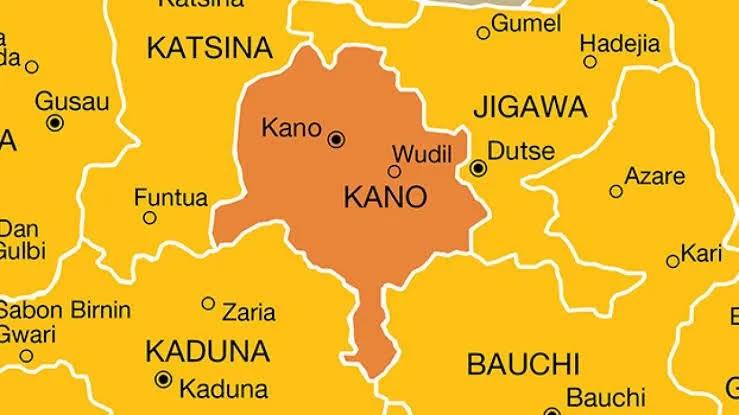
Kano state ministry of health, through the Drugs and Medical Consumables Supply Agency (DMCSA), has disbursed remnant of the CACOVID medical supplies to 175 health facilities across 44 local government areas of the state.

Primary Health Care facilities, general hospitals and specialist hospitals are the beneficiaries of the equipment.

Speaking at the flagging up, the Director General, DMCSA, Hisham Imamuddeen, said the exercise is part of the state government’s effort to improve the quality of healthcare across the 44 Local Government areas of Kano state.

He said: “Facilities need to improve to cater for the increasing population, and this is why we felt the need to distribute these equipment for the betterment of the people.”

“These are equipment from Sani Abacha Isolation Centre; they were brought here due to the decline of Covid-19.”

On his part, Kano state commissioner for health, Aminu Ibrahim Tsanyawa, represented by the Permanent Secretary of the ministry, Amina A. Musa, urged the beneficiaries to make good use of the commodities.

“The CACOVID provided additional support of these items when we were in the midst of the pandemic, which was used to provide an additional isolation centre built at Sani Abacha stadium.

“The centre was then equipped with equipment to include beds, air conditioners, television sets and gym centre among others. We thank God it has all come to pass.”

Some of the beneficiaries who started receiving the equipment commended the effort while promising to make judicious utilisation of the commodities.

Scotland becomes first nation to offer free pads and tampons

By Ahmad Deedat Zakari

Scotland has passed a law pronouncing period products free for all its citizens. The landmark legislation is the first of its kind in the world. 

The Members of Scottish Parliament, MSPs, have unanimously approved the Bill in November 2020 to combat period poverty

According to a report by BBC, local authorities now have a legal duty to provide free items such as tampons and sanitary pads to “anyone who needs them”.

 The bill, now known as the Period Products Act, was introduced by Labour MSP Monica Lennon, who has advocated to end period poverty since 2016. 

Lennon said: “Local authorities and partner organisations have worked hard to make the legal right to access free period products a reality.

“This is another big milestone for period dignity campaigners and grassroots movements which shows the difference that progressive and bold political choices can make.

“As the cost-of-living crisis takes hold, the Period Products Act is a beacon of hope which shows what can be achieved when politicians come together for the good of the people we serve.”

In the fight against malaria, what more should we do? 

By Lawal Dahiru Mamman

Malaria is a mosquito-borne infectious disease that affects humans and other animals. Malaria typically causes fever, tiredness, vomiting, and headaches. 

Malaria can cause jaundice, seizures, coma, or death in severe cases. It is spread exclusively through bites of infected Anopheles mosquitoes. The mosquito bite introduces the parasites from the mosquito’s saliva into a person’s blood. Then, the parasites travel to the liver, where they mature and reproduce.

Malaria is a disease that has bedevilled and is still bedevilling the human race, with a high level of incidence in African countries. The worry is that malaria is preventable and treatable but still affects millions all year round. According to the World Health Organisation, 627,000 people died from the disease, leaving another 241,000,000 infected in 2021.

To curb the menace of this disease, the government is spending a lot, the international community is donating, and non-governmental organisations are helping to see that the world is free from malaria. 

This is mainly done by purchasing insecticide-treated mosquito nets, insecticides of different brands, seasonal malaria chemo-prevention and antimalarial drugs in case of infection.

Families also do their due diligence in ensuring that houses are spread with insecticides to kill mosquitoes and that they all sleep in the comfort and protection of mosquito nets. However, all these will not be enough if the little things are not addressed because after all the efforts indoors, you go out of the house only to find out that those tiny beasts are lurking around to feast on you.

Of the over 3,500 species of mosquitoes, three, anopheles, culex, and Aedes, are primarily of economic importance because they are disease vectors. Anopheles carries a microorganism which causes malaria ‘plasmodium’ and other species to reproduce on standing water and complete a live cycle within 18 days or above, depending on the species.

Looking at this biology, we have so many mosquitoes around that can be deciphered; hence, to eradicate malaria, our drainage systems must be functional and provided in areas that lack them to prevent water from lodging, which invariably provides a breeding ground for the parasites. 

Residents should fill up areas with stagnant water, cut grasses close to their houses and resist dumping refuse in drainages and water bodies to allow free flow.

Communities should be informed about the dangers of dumping refuse in the drainages because, besides exposing themselves to the threat of flooding and its aftermath, blocked drainages are a good ground for mosquitoes to breed since water does not flow through.

A plant that repels mosquitoes should replace some of our ornamental flowers. A study published in Malaria Journal in 2011 titled ‘Plant-based Insect Repellents: A Review of their Efficacy, Development and Testing’ revealed that lemon grass alone could either kill or repel about 95% of certain species of mosquitoes. Likewise, trees like Cinnamon could be used as shelter belts because they can repel insects, mosquitoes inclusive. Further studies could be carried out on other indigenous plant species in order to find if they possess properties that will help eradicate mosquitoes.

Eradication of malaria may seem challenging, impossible and debilitating, but a malaria-free Nigeria is possible with a commitment to the above suggestions.

Mamman, a corps member, writes from Abuja and can be reached via dahirulawal90@gmail.com.

Marrying money and today’s marriage industry (II)

By Alkasim Harisu Alkasim

Women now scout affluent people to marry. When married, they want to be idling their hours in luxury mise en scenes where life seems perfect. Alas! Life is not a *Kublai Khan’s Xanadu* . To them, enjoyment consists with virtue and success in life. They go to the whereabouts of people ladened with money. Some of them narrate to each other about stinking rich people the way a spy reports the whereabouts of criminals to the police. To such women, marriage has to be a paradise, not a hell. Yes, life should be handsome. That is why if what they expect doesn’t occur in the matrimonial houses, they begin a disturbance. They destroy the peace reigning in their homes until everything goes south. When you live down the expectations of such worldy-wise and financially-charged ladies, you risk wounding their feelings and bruising their ego. The only language they understand is money. They suck and squander money the way a guzzling car sips and swallows oil. When you offend them, you will know how spendthrift they are with their tongues. Their tongues are razor-sharp. Because they will call you names. Such girls do not know the current economics nor do they know the economics of building the architecture of a modern family. Getting spoused to them, means you stand the chance of ruining your life beyond correction. They exceed limit when engaging one in a verbal combat.

A little mention of bucks silences them and arrests their attention. They only feel relieved when discussions are made from dollar-and-cents’ perspectives. They don’t mind when you become financially threadbare. In such a situation, they can still rob you of the last dollar you are down to. To them, you don’t rank high and the poverty that bites you buys you a disadvantage with them. Their prostitute principles demonstrate their demonic intentions. When they cut marital ties with you, they keep to themselves and may begin prostituting for a living. Therefore, I advise you against marrying above your station.

After years of bachelordom, a person weds. As a novice, he, in the first place, fails to know the marriage industry inside out. Things unfold slowly and sometimes, he starts to gain the knowledge of things back to front. If not gifted with a virtuous wife, his life turns out to exemplify the idiom; getting out of the frying pan into the fire. That is why you have to learn to endure greater difficulties throughout your married life. These women manipulate you. They tell you what you should do. They manouver everything the way the politicians massage election data to gain a majority.

The above women exemplify women of violent fate, women of no excellent majesty who keep milking you of your funds. It is high time our societies began policing acts of irresponsibility and gross misconduct lest we fall apart as a people. Such women should not go scot-free. Look at how our communities are fast getting peopled by the ill-fated. People who don’t know what they were created for. I know a person who doesn’t people well. He is such a loner, yet, hardly will you hear people abusing him. He opens his heart and palm to all. Such women don’t want to bear you children the moment they understand wedding you is a difficulty. They now make sure the marriage proves childless. Nice! This will relieve you of the burden of feeling entitled to her or submitting to be handcuffed to her responsibilities as a spouse.

I don’t think if we can quickly get back to normality. I have my doubts to voice for saying so. First, things are not what they used to be. Secondly, we do not want to accept faults. There are people that fail to even acknowledge their doubts regarding the correctness or otherwise of many things. They see everything that benefits them as good even if it is morally unsound and vice versa. Frankly, everybody knows that our societies are not in excellent health. This is my opinion and how I see things but I am not selling you the idea of seeing things from my own perspective. Bluntly, you have to learn your worth. Don’t sell yourself short or stoop low to get yourself conquered by anybody, because you are far better than many people around you.

In the same vein, the moment a woman seems to have found her voice, she will become a vixen. She will never allow you to lord it over her. And if you allow her bad manners to recur time and again, she will start to see herself as a more suitable option to be the leader in your own home. She will compel you to do her wants even if it means getting you credit-drowned. And as debt overwhelms you, she will run away leaving you debt-ridden, grief-saddled and regret-laden. She has now succeeded at queening it over you.

Marrying such women forces you to feel as if you were not the one husbanding them. While wiving them, you get psychologically womaned. Your home will be womaned too because you have married a lady who can be described as a woman among women, a woman of the world or even a woman of the streets. You will have to pocket all the womansplaining of this world. If you try to womanhandle her, you will fail. But she instead, can easily manhandle you. Even getting her womannapped cannot compensate for your spendings on her and the undertreatment you suffer from her.

In conclusion, the marriage industry is quickly womaning itself from the perspectives of responsibility. Women are overtaking the mantle of leadership in homes. It also produces women that are captivatingly prowessed at deception and beautifully arresting. This is an industry that compels the male newlywedded to be under the gun. If the male spouse does his best to reform corrupt practices, his efforts always flop. Thus, their marrying you is not a true indication of their hearts but the epitome of their getting starved of money. Some information should not be exposed here. In short, this is what marks a low point in my love life. As it happens to be one of the bitterest experiences I have ever come across, I have begun to have a low opinion of women. Excuse my saying so.

Neglectful parenting in contemporary society

By Hadiza Abdullahi

Many parents do not care to deliver their responsibilities, leading to different social problems in Nigeria and the world. In layman’s terms, parental negligence can be seen as the failure or inability of parents to fulfil their parental responsibilities of providing the proper and adequate care and attention to their children.

The child-parent relationship is supposed to be affectionate, harmonious, supportive, and productive, but this relationship is becoming conflicting, unsupportive, destructive and agonizing due to certain factors. For example, some parents may be emotionally unsupportive to their children yet provide all their basic needs, i.e. food, clothing and shelter, while some are not supportive.

A study conducted on improper parenting and parental negligence by Dr Manzoor Hussain pointed out that good parenting quality depends on several factors. They include; the mature personality of the parents, which is an essential element of good quality parenting, stable and intimate marital relationship, as well as the form of the pregnancy, i.e. planned or not, as planned pregnancy implies better preparation to be a parent.

On the other hand, a broken home is believed to be the primary factor that contributes enormously to the issue of neglectful parenting, as children from such families are usually brought up by either their biological parent or a step-parent. These children often undergo different sorts of challenges, trauma and agonies from the step-parents, particularly stepmothers, who do not like having a stepchild under their custody. 

A typical example is the case of two minor Almajiris, an eight-year-old Habu and his six-year-old younger brother Tanko (not real names), whose parents got separated and had to live with their father and his new wife. Although the father is financially stable and could cater for their basic needs and education, he refused to do so due to the influence of their stepmother, who rejected them. As a result, the innocent boys left the house, roaming the street as Almajiris.

Research has indicated that couples’ desperation toward becoming a parent also promotes this issue. Some couples, especially the rural residents, who consider the number of children as pride, are only interested in giving birth to as many children as possible without having any adequate plan for their wellbeing. Instead, they exploit the children by engaging them in different forms of child labour such as domestic chores, street hawking, street begging or even working as house helps, all in the name of sourcing for income. The World Health Organization (WHO) regards it as child abuse. This exposes children to dangers when they mingle with bad people who may negatively influence and/or harm them.

These children quickly go astray because their parents are not around to watch and caution their wrong behaviours. Hence most of them end up going into drug abuse, prostitution or even being recruited into terrorist groups, among other crimes.

Hajiya Salamatu Yaqub, a housewife and a mother, lamented that the absence of adequate face-to-face interaction (which is an essential principle for a good parent-child relationship, in which both children and their parents understand each other’s needs, views, emotions, and brings about strong and growing intimacy between them) contributes immensely to this problem.

Similarly, Malama Maryam, another mother, expressed her grief over how some so-called civilized and educated Nigerian parents, especially young mothers, adopt an improper way of parenting. They focus more on their jobs, education, and other forms of businesses instead of the primary role of every traditional Nigerian parent, specifically mothers who are supposed to put the welfare of their families ahead of anything else. However, some abandon these responsibilities altogether while some entrust the responsibilities to nannies and other house helps, who may not be morally upright and talk more of instilling moral values in children.

A teenager (who refused to be named) and a victim of neglectful parenting said, “being neglected by your own parent is the worst and most traumatizing experience of every child”. She further disclosed how she and her siblings went through a lot due to this issue. Even though their parents took proper care of all their basic needs, they are always absent to watch over them, support them emotionally and caution them. She added, “we miss our parents badly and do a lot of things we should not do and mingle with people we would not have been mingling with supposing our parents are around”.

Children with intellectual, psychological, emotional and developmental disabilities are especially vulnerable to being forced into child labour and are more likely to face threats of violence and abuse. These children— especially girls—are often victims of trafficking, prostitution, domestic enslavement, forced marriage and other forms of abuse. In addition, some children who have physical and visual disabilities, visible congenital disabilities, or disfigurement are forced by traffickers to beg. In extreme cases, traffickers intentionally disfigure children to exploit them through forced begging. 

Yusuf Muhammad Daura, a student at the Department of Special Education, Bayero University, Kano, described parents who take advantage of their children’s physical disabilities and refuse to work hard, instead using them as a source of income, as irresponsible and self-centred. He added that when interviewed, most of these children seen on the street begging or hawking explained how they were forced into it and if they were to have an opportunity of living a normal life, they would be more than happy to join their mates in going to school.

However, it is understood that some children undergo neglectful parenting not because the parents or guardians are not around to support them emotionally or failed to provide for their basic needs. It’s, instead, due to their inability to home train and discipline the children properly.

The implications of parental negligence are many. They include a lack of mutual understanding and affection between parents and their children; children’s needs also weaken the close bond that is supposed to exist between their parents and their children. In addition, the children may feel the parent are worthless since they cannot cater for them, which might make them disrespect or hate the parents.

Research indicates that children who lack proper parenting behave aggressively and violently and perform poorly in academic activities. When interviewed, Mr Yahuza Abdullahi, a primary school teacher, confirmed that most children going through improper parenting perform poorly in academics and recreational activities as they do not have the extra support they need, such as helping them with their home works and getting the necessary learning materials.

Therefore, it is paramount that couples must be physically, psychologically and financially ready before they venture into the demanding task of parenting. As someone planning to have a child, prepare for your children or unborn children on how you intend to take adequate care of them. Make provisions for their basic needs, i.e. food, clothing, shelter, education and proper medical care. Also, provide a conducive environment to protect and keep them safe while instilling sound morals and values in them and having a plan on how you intend to caution and correct them whenever they are wrong. 

Also, the government has a critical role in tackling this menace because, as citizens of Nigeria, these children have fundamental rights that the government must protect. Thus, the government should have the full authority to punish any parent or guardian caught abusing or neglecting their parental responsibilities. 

Hadiza Abdullahi, Department of Mass Communication, Bayero University, Kano.

Climate Change: Flood washes away farms, destructs lives, properties in Jigawa

By Aisar Fagge

The heavy downpour has wreaked havoc in Jigawa communities, leading to the destruction of many houses, shops and prosperities worth millions of naira in the areas.

The rain that started Monday night, 1st August 2022, lasted for hours and had claimed the lives of yet to be identified a number of people, especially small kids.

The Daily Reality gathered that the communities affected included; Hadejia, Kafin Hausa, Kiri-Kasamma and some parts of Garun-Gabas, Tandanu and Bulangu of Jigawa state, respectively.

Our reporter gathered that the flood has also washed away many farms in the communities, and the development that the residents decried has struck terror in them.

Climate change that leads to flooding is one of the serious challenges rocking many countries, which affects people’s lives and health in various ways.

Victims of flooding

In another similar situation, a morning downpour in Bajoga town of Funakaye Local Government Area of Gombe State had claimed the lives of people and destructed houses and shops in the community.

Climate change: More floods in Nigeria

Experts have foresighted that there would be more floods in Nigeria in the next two months because of climate change.

The Director General/Chief Executive Officer of the Nigerian Meteorological Agency (NiMet), Prof Mansur Bako Matazu, has warned Nigerians to brace up for more rains in the next two months.

Mu’azu disclosed this on Channels Television’s Sunrise Daily programme on Monday, August 2nd, 2022, while speaking on flooding wreaking havoc across Nigeria in recent weeks.

However, Mu’azu also lamented that Nigerians keep cutting down trees and dumping refuses in drainage channels.

He added that the NiMeT CEO organisation had issued several advisories about flooding earlier, to which Nigerians failed to adhere.

In his words, Matazu said: “There will be increased rainfall intensity in the next two months or so. This is the most active period – July, August and September. We are going to see more floods.”

NEMA: 233 LGs in 32 states prone to flooding

No fewer than 233 local government areas in 32 states and the Federal Capital Territory have been predicted to experience flooding in 2022.

Flooded street

The Director-General, National Emergency Management Agency, Mr Mustapha Ahmed, raised the alarm Tuesday in Abuja.

Ahmed, who said the discovery was a result of the 2022 Seasonal Climate Prediction, stated, “Efforts must be made to mitigate and respond effectively to flooding.”

17-year-old girl hangs self in Kano

By Muhammad Aminu

A 17-year-old girl, simply identified as Safiya from Garin Dau village in Warawa Local Government Area of Kano State, has been found lifelessly hanged.

Residents of the village who spoke to BBC Hausa Service said they were shocked by the incident because the late teenage girl was a calm and responsible girl.

According to some villagers, the girl might have killed herself because of the forced marriage her parents planned to do for her.

However, the parents and other sources in the family countered the allegation, adding that she was not through with her secondary education yet not to talk of marrying her off.

Kano State Police Command confirmed that the young lady had been found dead, but an investigation has commenced to ascertain why she hanged herself.

Police Public Relations Officer, SP Abdullahi Kiyawa, added that it is the investigation that they can confirm whether she committed suicide by hanging herself or not.

Late Safiya was a class 2 junior secondary school student before her sudden death.