International

Drones Reportedly Spotted Over U.S. Military Base Housing Top Officials In Washington

By Sabiu Abdullahi

Fresh security concerns have surfaced in Washington after unidentified drones were seen flying over a sensitive United States military installation.

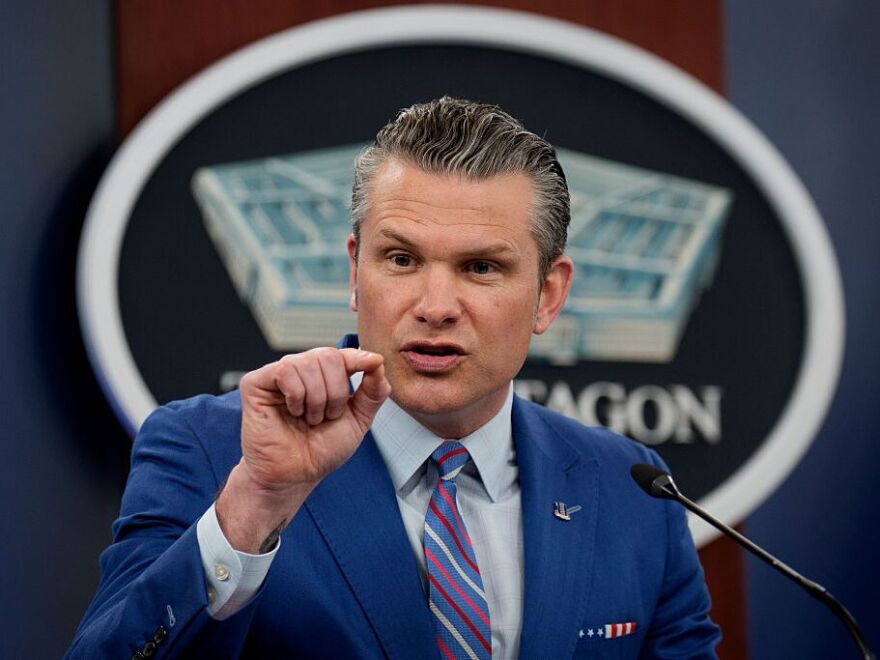
The Washington Post reported that the drones were detected above Fort McNair, a facility where Secretary of State Marco Rubio and Pentagon chief Pete Hegseth are accommodated. The report cited three individuals who were briefed on the development.

Officials have not determined where the drones came ⁠from, the report said, citing two of the people familiar with the matter, leaving questions over their origin unanswered.

The situation has led to internal discussions within government circles about whether Rubio and Hegseth should be relocated from the base due to safety worries. Despite those concerns, both officials are still at the facility. A senior administration official confirmed this, according to the report.

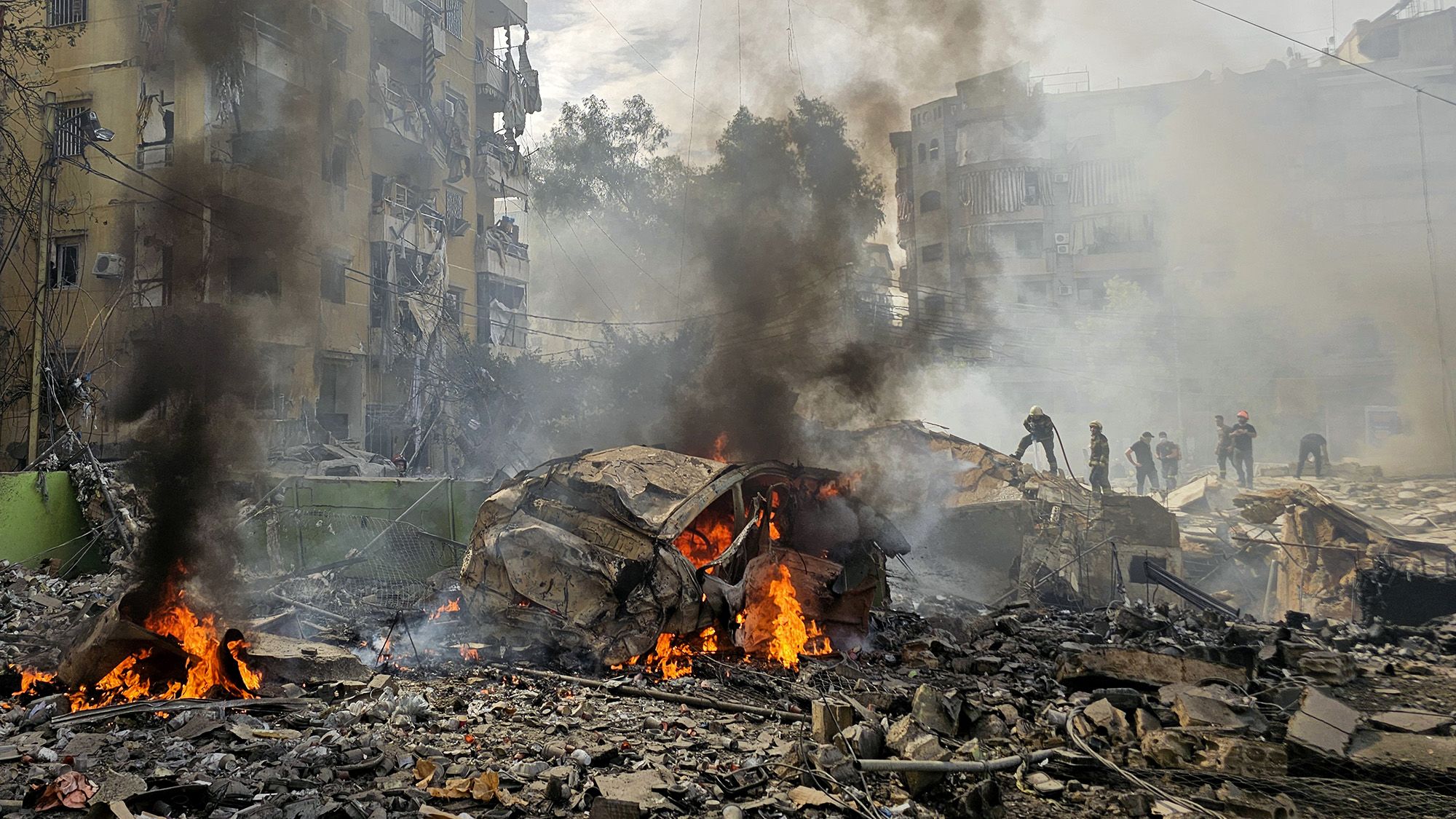
The newspaper also noted that the U.S. military has increased its surveillance of potential threats. This comes amid heightened alert levels linked to the ongoing conflict involving the United States and Israel against Iran.

Reuters reported it could not independently verify the development at the time.

Meanwhile, both the Pentagon and the U.S. State Department have not issued official statements on the matter. When approached by the Washington Post, Chief Pentagon spokesperson Sean Parnell declined to provide details.

“The department cannot comment on the secretary’s (Hegseth’s) movements for security ⁠reasons, and reporting on such movements is grossly irresponsible,” he told the Post.

Trump Faults Israel Over Iran Gas Field Strike, Issues Warning After Retaliation

United States President Donald Trump has criticised Israel’s recent strike on Iran’s South Pars gas field, as tensions escalate across the Middle East with retaliatory attacks hitting key energy facilities in several countries.

In a message shared by the White House on X early Thursday, Mr Trump stated that the United States had no involvement in the Israeli operation. He said, “Israel, out of anger for what has taken place in the Middle East has violently lashed out at a major facility known as South Pars Gas Field in Iran.”

He added that further attacks on the facility would not occur under certain conditions. According to him, “NO MORE ATTACKS WILL BE MADE BY ISRAEL pertaining to this extremely important and valuable South Pars Field…” unless Iran continues its strikes on Qatar.

The US president also condemned Iran’s response, which targeted gas infrastructure in Qatar. He warned that any additional assault on Qatar’s facilities would trigger severe consequences, including the destruction of “the entirety of the South Pars Gas Field.”

The developments follow reports that Iran launched missiles at the Ras Laffan Industrial City in Qatar. QatarEnergy confirmed that the strike caused fires and “extensive damage.” The company later disclosed that multiple liquefied natural gas facilities were hit, leading to “sizeable fires and extensive further damage.”

Authorities had evacuated the site earlier after Iran announced plans to strike several locations in the region. The move was described as retaliation for earlier attacks on the South Pars gas field, which Iran attributes to Israel and the United States. Washington has since denied any role in that incident.

Beyond Qatar, Iran extended its response to other parts of the region. Two refineries in Saudi Arabia were struck, while the Habshan gas facility in Abu Dhabi was also targeted. The United Arab Emirates subsequently shut down the affected facility.

There has been no official response from Iran regarding Mr Trump’s warning as of the time of filing this report.

Analysts say the latest attacks on critical energy infrastructure could deepen the global gas supply crisis. Prices of gas and other petroleum products have already climbed sharply since late February, when the United States and Israel launched strikes on Iran.

The ongoing conflict has claimed more than 1,500 lives, with most of the casualties reported in Iran.

US Intelligence Says Iran Not Rebuilding Nuclear Enrichment After 2025 Attack

By Sabiu Abdullahi

United States intelligence agencies have concluded that Iran has not resumed efforts to rebuild its nuclear enrichment programme following the destruction of key facilities in a joint US-Israeli strike in June 2025. The finding contrasts with President Donald Trump’s justification for his ongoing military campaign.

Director of National Intelligence Tulsi Gabbard disclosed the assessment in a written submission presented during an annual threat review before the Senate intelligence committee. However, she did not repeat the position while addressing lawmakers in person.

“As a result of Operation Midnight Hammer, Iran’s nuclear enrichment program was obliterated. There has been no efforts since then to try to rebuild their enrichment capability,” Gabbard said in the testimony to the Senate intelligence committee.

When questioned by a Democratic senator over the omission during the hearing, Gabbard explained that time constraints prevented her from reading the full statement. She did not dispute the conclusion.

President Trump has consistently defended the February 28 strike on Iran, which was carried out alongside Israel. He cited what he described as an “imminent threat.” After the 2025 bombing, Trump stated that Iran’s nuclear facilities had been completely destroyed. More recently, he has claimed that Tehran was close to producing a nuclear weapon. That position is not widely supported by analysts and comes amid ongoing negotiations over a possible nuclear agreement.

Meanwhile, a senior aide to Gabbard stepped down on Tuesday. The official said there was no “imminent threat” and argued that Trump had been misinformed by both Israel and sections of the media.

In her remarks to senators, Gabbard noted that Iran had suffered significant damage in recent weeks of attacks. The strikes included the killing of longtime supreme leader Ayatollah Ali Khamenei. Despite this, she said the country’s governing system remains in place.

The US intelligence community “assesses the regime in Iran to be intact but largely degraded due to attacks on its leadership and military capabilities,” Gabbard said.

She added that if the current leadership remains, it may attempt to rebuild over time.

“If a hostile regime survives, it will likely seek to begin a years-long effort to rebuild its military, missiles, and UAV forces,” Gabbard said.

Jürgen Habermas | A Tribute

By Prof. Abdalla Uba Adamu 

On Saturday, March 14, 2026, Dr Muhsin Ibrahim shared a newspaper report with me announcing the passing of Jürgen Habermas. The German philosopher died at the age of ninety-six in Starnberg, an affluent town in Upper Bavaria. Muhsin was well aware of how deeply I had drawn on Habermas’s theory of the structural transformation of the public sphere in my research on Muslim Hausa media cultures. 

His passing marks the end of an era in critical social theory. Habermas’s work on communication, rationality, and society made him one of the most influential philosophers of the late twentieth and early twenty-first centuries, as well as a major intellectual figure in postwar Germany.

Many Africanists did not initially read Habermas directly. Rather, they encountered his ideas through mediated theoretical engagements in the writings of scholars such as Brian Larkin. I myself first became aware of the public–private sphere debate as part of the broader Frankfurt School theoretical repertoire in Larkin’s studies of media culture in northern Nigeria. His work contributed significantly to later “post-public sphere” discussions by demonstrating how Habermasian insights could be adapted to different social, cultural, and technological environments.

Of Habermas’s many publications, the one that proved most decisive for me was The Structural Transformation of the Public Sphere: An Inquiry into a Category of Bourgeois Society. Originally published in German in 1962 and translated into English by Thomas Burger (with the assistance of Frederick Lawrence) in 1989, it is an extraordinarily dense text. One often needs the guidance of someone already conversant with its arguments to appreciate its analytical elegance. 

I was fortunate to own a copy—purchased for me in the pre-digital era by Gillian Belben, then Director of the British Council in Kano. I read it several times before fully grasping how powerfully it provided a framework for understanding public reactions to Hausa films and the emergence of censorship debates.

Habermas’s study retraces the historical emergence of the bourgeois public sphere as a communicative domain distinct from the state, in which private individuals could assemble to discuss matters of common concern. By analysing the transformations of this sphere, he recovered a concept of enduring importance for social and political theory. In simplified terms, the argument draws attention to differentiated social spaces—those of the home and those of the wider public—and to the ways in which each structures particular forms of discussion and social interaction.

I relied heavily on this analytical distinction when I presented my first international seminar at the Institut für Afrikanistik, University of Cologne, on November 15, 2004. Titled “Enter the Dragon: Shari’a, Popular Culture and Film Censorship in Northern Nigeria,” the seminar explored how Hausa films often rendered visible aspects of domestic life traditionally regarded as private, thereby provoking moral anxieties and regulatory responses. By destabilising the boundary between the two spheres, Hausa cinema helped produce new forms of mediated public debate. A dramatic illustration of this dynamic emerged in the widely discussed Hiyana scandal of 2007, in which a private act became publicly circulated, with far-reaching cultural consequences.

The communicative arena that Habermas conceptualised as the bourgeois public sphere appears today in a historically transformed guise within the networked environments of social media. In Muslim societies such as those of northern Nigeria, digital platforms have intensified the long-standing negotiation between domestic moral order and public cultural expression. 

Conversations once confined to living rooms, mosque courtyards, or informal viewing gatherings now unfold in algorithmically structured yet widely accessible communicative spaces. These interactions do not reproduce Habermas’s ideal of rational-critical debate in any straightforward manner. Rather, they reveal plural, affective, and technologically mediated publics in which questions of religious legitimacy, gendered visibility, and cultural authority are continually contested. Social media, therefore, represent not the revival of the bourgeois public sphere but a new phase in its structural transformation — what might tentatively be described as a “third space.”

The world of critical social theory will undoubtedly feel the loss of Jürgen Habermas. Yet his conceptualisation of the public–private divide will continue to shape scholarly reflections on media, communication, and cultural change for years to come.

Readers interested in further discussions of the public–private debate in Islamic contexts may consult:

Kadivar, Mohsen. 2003. An Introduction to the Public and Private Debate in Islam. Social Research 70 (3): 659–680.

Iran Confirms Death Of Top Security Official Ali Larijani In Alleged Israeli Strike

Iranian state media has announced the death of Ali Larijani, the Secretary of Iran’s Supreme National Security Council, following reported Israeli air attacks carried out overnight.

The confirmation came after Israel’s Defence Minister, Israel Katz, stated that Larijani and Basij commander Gholamreza Soleimani were killed during the strikes.

In a statement issued by his office, Katz alleged that both men lost their lives in the operation.

“I have just been updated by the Chief of Staff that Larijani, Secretary of the Supreme National Security Council, and the head of the Basij — Iran’s central repression apparatus — (Soleimani), were eliminated last night,” Katz claimed in a statement released by his ministry.

Earlier reports from Israeli media indicated that Larijani was the intended target of the overnight assault.

The development marks a significant escalation in tensions between Iran and Israel, as both sides continue to exchange accusations over ongoing military actions.

Trump Slams Counterterrorism Chief After Resignation, Calls Him ‘Weak On Security’

By Sabiu Abdullahi

President Donald Trump has responded to the resignation of Joseph Kent, Director of the United States National Counterterrorism Center, following controversy linked to U.S. military action against Iran.

Trump spoke on the development during an interview with Fox News, where he shared his views on Kent’s position on national security and the ongoing conflict involving Iran.

He claimed that he had long held concerns about Kent’s approach. “I always thought he was weak on security. Very weak on security. I didn’t know him well. But I thought he seemed like a pretty nice guy. But when I read his statement, I realised that it’s a good thing he’s out because he said Iran was not a threat,” Trump said in a video released by Fox News on Tuesday.

Kent stepped down earlier the same day. His resignation followed criticism of the war in Iran and questions about the reasons behind the military engagement.

In a letter addressed to the president, Kent stated that his decision came after careful consideration. “After much reflection, I have decided to resign from my position as Director of the National Counterterrorism Center, effective today,” he wrote.

He explained that he could not align himself with the administration’s current foreign policy, especially its military actions. “I cannot in good conscience support the ongoing war in Iran. Iran posed no imminent threat to our nation, and it is clear that we started this war due to pressure from Israel and its powerful American lobby,” he stated.

Kent added that his views were based on principles he believed had guided previous policies. “I support the values and the foreign policies that you campaigned on in 2016, 2020, 2024, which you enacted in your first term. Until June of 2025, you understood that the wars in the Middle East were a trap that robbed America of the precious lives of our patriots and depleted the wealth and prosperity of our nation,” he said.

He also criticised what he described as the role of external influence and media narratives. Kent said “high-ranking Israeli officials and influential members of the American media” promoted misinformation that “wholly undermined your America First platform and sowed pro-war sentiments” encouraging military action.

The former counterterrorism chief warned that U.S. leaders may have been misled about the level of threat posed by Iran. “This echo chamber was used to deceive you into believing that Iran posed an imminent threat to the United States, and that should you strike now, there was a clear path to a swift victory. This was a lie,” he said.

Reflecting on his personal experience, Kent pointed to the cost of war. “As a veteran who deployed to combat 11 times and as a Gold Star husband who lost my beloved wife Shannon in a war manufactured by Israel, I cannot support sending the next generation off to fight and die in a war that serves no benefit to the American people nor justifies the cost of American lives,” he said.

He concluded his message with a call for a policy rethink. “I pray that you will reflect upon what we are doing in Iran, and who we are doing it for. The time for bold action is now. You can reverse course and chart a new path for our nation, or you can allow us to slip further toward decline and chaos. You hold the cards,” he wrote.

Kent ended his letter on a note of appreciation for his time in office. “It was an honor to serve in your administration and to serve our great nation.”

U.S. Counterterrorism Chief Resigns Over Iran War, Alleges Israeli Pressure

By Sabiu Abdullahi

The Director of the United States National Counterterrorism Center, Joseph Kent, has stepped down from his role, citing disagreement with Washington’s military involvement in Iran and questioning the factors behind the conflict.

Kent conveyed his decision in a letter to President Donald Trump. He said he reached the conclusion after careful thought and confirmed that his resignation takes immediate effect.

“After much reflection, I have decided to resign from my position as Director of the National Counterterrorism Center, effective today,” he wrote.

He stated that he could no longer support the administration’s current foreign policy, especially its decision to engage Iran militarily.

“I cannot in good conscience support the ongoing war in Iran. Iran posed no imminent threat to our nation, and it is clear that we started this war due to pressure from Israel and its powerful American lobby,” he stated.

Kent noted that his position reflects principles he believes once shaped U.S. foreign policy.

“I support the values and the foreign policies that you campaigned on in 2016, 2020, 2024, which you enacted in your first term,” Kent wrote.

“Until June of 2025, you understood that the wars in the Middle East were a trap that robbed America of the precious lives of our patriots and depleted the wealth and prosperity of our nation.”

He also accused “high-ranking Israeli officials and influential members of the American media” of driving what he described as a misinformation effort. According to him, the campaign “wholly undermined your America First platform and sowed pro-war sentiments” that encouraged action against Iran.

Kent argued that U.S. leadership received misleading information about the situation.

“This echo chamber was used to deceive you into believing that Iran posed an imminent threat to the United States, and that should you strike now, there was a clear path to a swift victory. This was a lie,” he said, while drawing a comparison with events that preceded the Iraq war.

He pointed to his own military background to stress the human cost of war.

“As a veteran who deployed to combat 11 times and as a Gold Star husband who lost my beloved wife Shannon in a war manufactured by Israel, I cannot support sending the next generation off to fight and die in a war that serves no benefit to the American people nor justifies the cost of American lives,” he said.

Kent urged the president to reconsider the current approach and warned about possible long-term consequences.

“I pray that you will reflect upon what we are doing in Iran, and who we are doing it for. The time for bold action is now. You can reverse course and chart a new path for our nation, or you can allow us to slip further toward decline and chaos. You hold the cards,” he said.

He ended his letter by expressing gratitude for the opportunity to serve. “It was an honor to serve in your administration and to serve our great nation.”

Iran threatens to ‘hunt down, kill Netanyahu’

By Sabiu Abdullahi

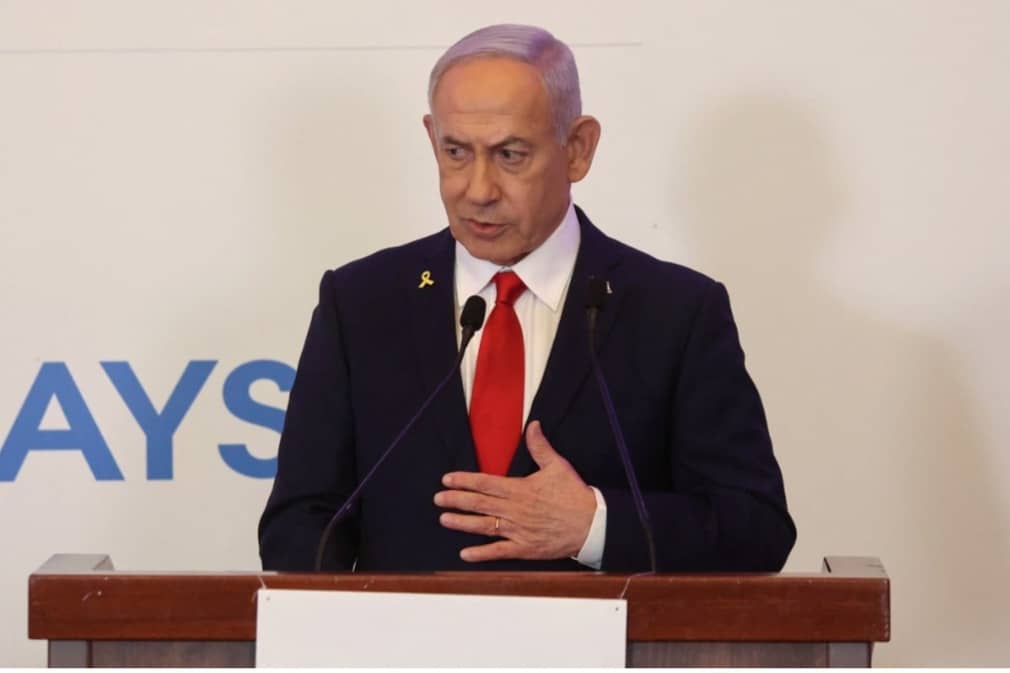
Iran’s Islamic Revolutionary Guard Corps (IRGC) has issued a threat against Israeli Prime Minister Benjamin Netanyahu, saying it will pursue him and kill him.

The threat appeared in a statement released on Sunday through Sepah News, the official website of the IRGC. In the message, the Iranian military body described Netanyahu as a “child-killing criminal” and warned that it would continue efforts to locate him.

“If this criminal, the killer of children, is still alive, we will continue working to hunt him down and kill him with all our strength,” the statement reads.

The development came as speculation circulated on social media about the Israeli leader’s health and whereabouts.

Israel’s prime minister’s office dismissed the claims. It said the reports spreading online were false and confirmed that Netanyahu was in good condition.

“These are fake news; the Prime Minister is fine,” the office told Anadolu Agency in response to claims circulating on social media that Netanyahu had been killed in retaliation for the strikes.

The rumours intensified after a video of Netanyahu circulated online. Some social media users claimed the clip showed him with “six fingers”.

The unusual detail raised suspicion that the footage might have been created with artificial intelligence. This added to the speculation about the Israeli leader’s condition and location.

The IRGC’s threat comes as the confrontation involving Iran, Israel and the United States continues. The conflict has now entered its 16th day.

On the morning of February 28, the United States and Israel carried out air strikes inside Iranian territory.

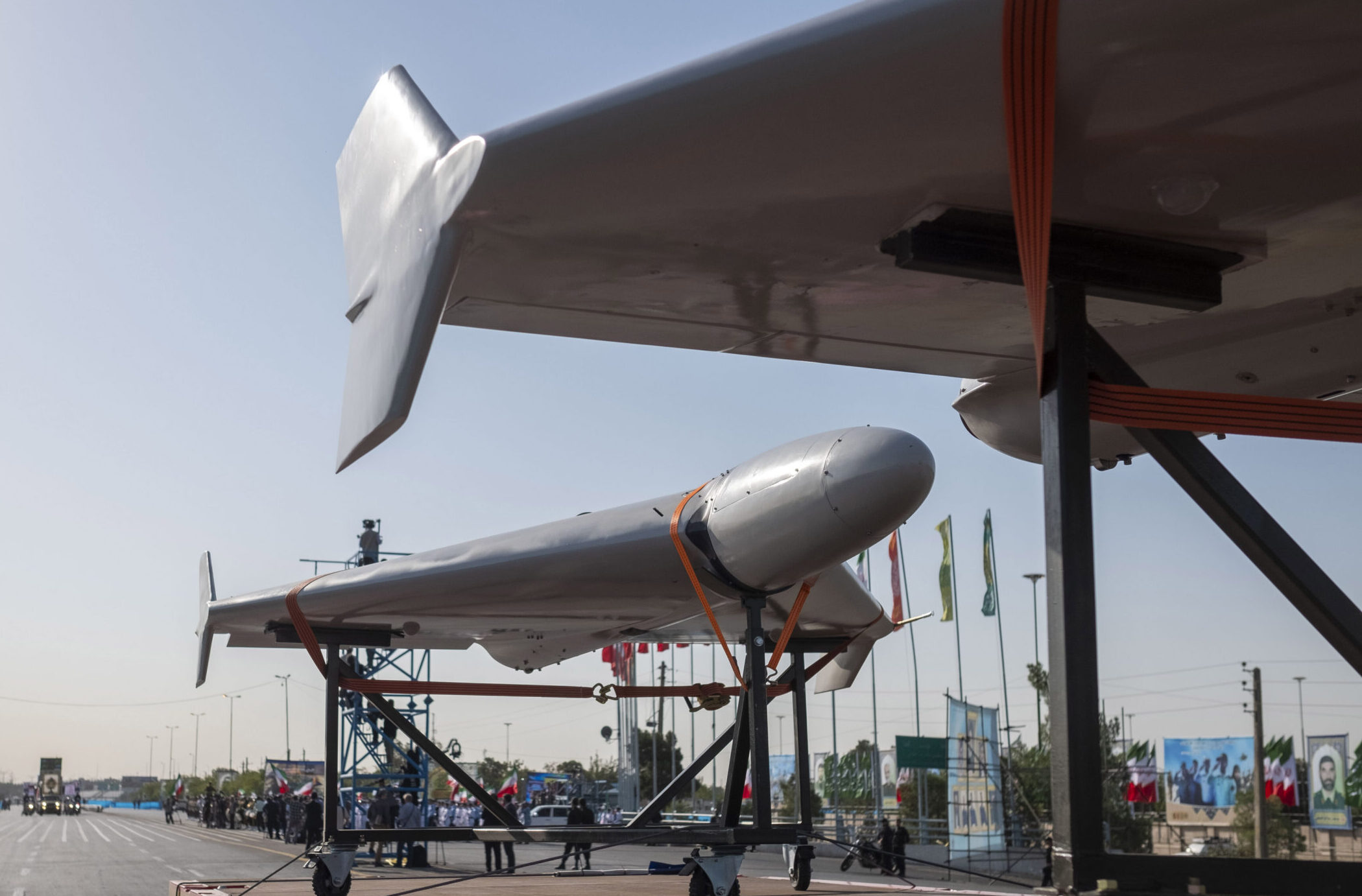
Iran responded with military action. Its forces launched ballistic missiles and drones toward Israel. The country also carried out missile and drone attacks against United States bases and targets in Bahrain, the United Arab Emirates, Kuwait, Qatar and Jordan.

Iran’s strategic mastery: Why Tehran is poised to emerge victorious in the war against Israel and the US

By Dr. Umar Musa Kallah

As the US-Israeli war against Iran enters its second week, the initial narrative of a rapid Western triumph has collapsed. What began with coordinated strikes on Iranian leadership and infrastructure has instead unleashed a sophisticated Iranian counter-campaign rooted in decades of preparation, control of global chokepoints, and asymmetric warfare. Verifiable maritime data, energy market reports, and military analyses confirm that Iran is not merely holding ground, it is systematically eroding the economic foundations of American power and its Gulf allies.

The closure of the Strait of Hormuz stands as Iran’s most potent immediate weapon. Since Iran’s declaration and attacks on transiting vessels in early March 2026, shipping traffic has effectively halted, with oil and LNG flows, representing roughly 20% of global trade is severely disrupted. Global crude prices have spiked, insurance markets have pulled coverage, and Asian importers face acute shortages. This is no bluff: tanker tracking and satellite imagery show near-total cessation of commercial traffic, directly strangling revenues for US-aligned Gulf states.

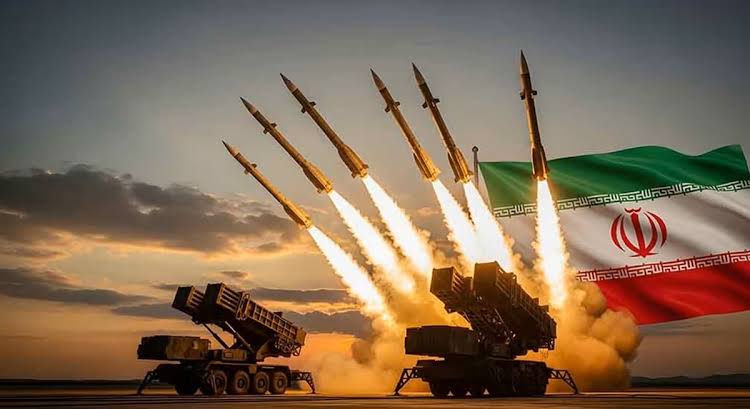
Tehran has complemented this blockade with hundreds of ballistic missiles and drones targeting US military installations and infrastructure across Bahrain, Qatar, Kuwait, the UAE, and Saudi Arabia. Strikes have damaged communication systems, radar sites, and air bases, including the US Fifth Fleet headquarters and Al Udeid Air Base. The cost asymmetry is telling: cheap Iranian drones and missiles exhaust multimillion-dollar Western interceptors at a pace that cannot be sustained indefinitely.

Iran has also struck desalination plants and power infrastructure critical to Gulf freshwater supplies. With over 90% of drinking water in several Gulf nations dependent on energy-intensive desalination, these targeted hits are creating humanitarian pressure and accelerating economic paralysis. By weaponizing both energy exports and water security, Tehran is holding civilian populations and regional economies hostage.

This economic siege directly undermines the Gulf sovereign wealth funds that have bankrolled much of America’s AI boom. Saudi Arabia’s Public Investment Fund and Abu Dhabi’s Mubadala have channeled tens of billions into US tech, data centers, and AI ventures. With oil revenues frozen, airspace closed, and infrastructure under fire, these funds are already curtailing new commitments to American projects. The resulting capital drought threatens Silicon Valley valuations and risks triggering a broader stock-market correction, a strategic blow at the heart of US technological supremacy.

None of this is improvised. Iran has spent decades building precisely this capacity: an estimated pre-war arsenal of thousands of ballistic missiles, mass-produced drones, and resilient proxy networks designed for attrition warfare. Its high-ranking scientists and engineers have indigenously advanced these systems through reverse-engineering and innovation, often drawing on historical technological exchanges. Battle-hardened IRGC commanders , seasoned warlords operating with decentralized command, coordinate the response, while a population of over 90 million, tempered by generations of sanctions and pressure, demonstrates profound civilizational resilience and refusal to surrender easily.

This internal steel is coupled with broader strategic depth from longstanding partnerships. Russia, China, North Korea, and Pakistan have provided diplomatic condemnation of the US-Israeli aggression, alongside decades of technological collaboration in missiles, drones, and defense systems that now equip Iran to endure. While direct military intervention has been limited, these ties  combined with Iran’s own preparations will ensure sustained resistance that outlasts Western political will and munitions stockpiles.

The world now faces Tehran’s calculated endgame: choking global energy arteries, disrupting vital water supplies, and redirecting Gulf capital away from American innovation. Every day of blockade, every intercepted drone salvo, and every sign of Iranian societal cohesion deepens the strain on Washington and its partners. Iran did not stumble into this conflict; it prepared for it across a lifetime of strategic patience. As oil prices climb, water crises intensify, AI investments falter, and resilient Iranian forces continue to dictate the tempo, the balance of power is shifting decisively.

The verifiable data from shipping trackers, strike assessments, and resilience analyses  is clear: Iran is not on the defensive. It is leveraging geography, technology, alliances, and unbreakable national will to hold the world ransom. Tehran is on course to prevail.

Dr Umar Musa Kallah, a writer and community advocate, can be reached via yakubunasirukhalid@gmail.com.

Hamas urges Iran to avoid striking Gulf states, condemns aggression against Tehran

By Anwar Usman

The Palestinian group Hamas has urged its ally Iran to end attacks on Gulf states, while affirming Tehran’s right to defend itself against Israel and the United States in the war they launched.

Hamas on Saturday called upon its “brothers in Iran” not to target neighbouring countries, and urged the region to end the ongoing conflict that has embroiled much of the Middle East.

The group fought back against Israel’s genocidal war on Gaza following its October 7, 2023, attack, while Israel razed the besieged and bombarded enclave to the ground, killing more than 72,000, with Gulf nations, particularly Qatar, stepping in through mediation, diplomacy and aid.

Since the start of the Iran war by the US and Israel on February 28, several Gulf states in the region have reported Iranian missile and drone attacks.

Hamas said in a statement, “While affirming the right of the Islamic Republic of Iran to respond to this aggression by all available means in accordance with international norms and laws, the movement calls on the brothers in Iran to avoid targeting neighbouring countries.”

 The statement added that countries of the region should “cooperate to halt this aggression and preserve the bonds of fraternity among them”.

Iran has supported Hamas financially and militarily for decades, the group being a part of the now much-weakened so-called “axis of resistance” that includes Lebanon’s Hezbollah and Yemen’s Houthis.

Last month, Gulf countries pledged more than $4bn in combined financial support to US President Donald Trump’s Board of Peace, signalling backing for efforts to resolve the Israeli-Palestinian conflict.

The pledges were announced during the first meeting of the Board of Peace, which has gone quiet in the wake of the war, in Washington, where Qatar and Saudi Arabia each committed $1bn. Kuwait also pledged $1bn over the coming years, while the United Arab Emirates announced an additional $1.2bn in support for Gaza through the board.

Qatar, throughout the genocidal war on Gaza, also played a leading role as mediator, alongside the US and Egypt.

A US-backed “ceasefire” agreement has been in place in Gaza since October 2025, which was meant to halt Israel’s two-year onslaught that killed more than 72,000 people and injured more than 171,000 since October 2023.

Despite the “ceasefire”, however, Israeli forces have continued hundreds of violations through shelling and gunfire, killing hundreds of Palestinians.