Opinion

Slavery and Islam: Some notes

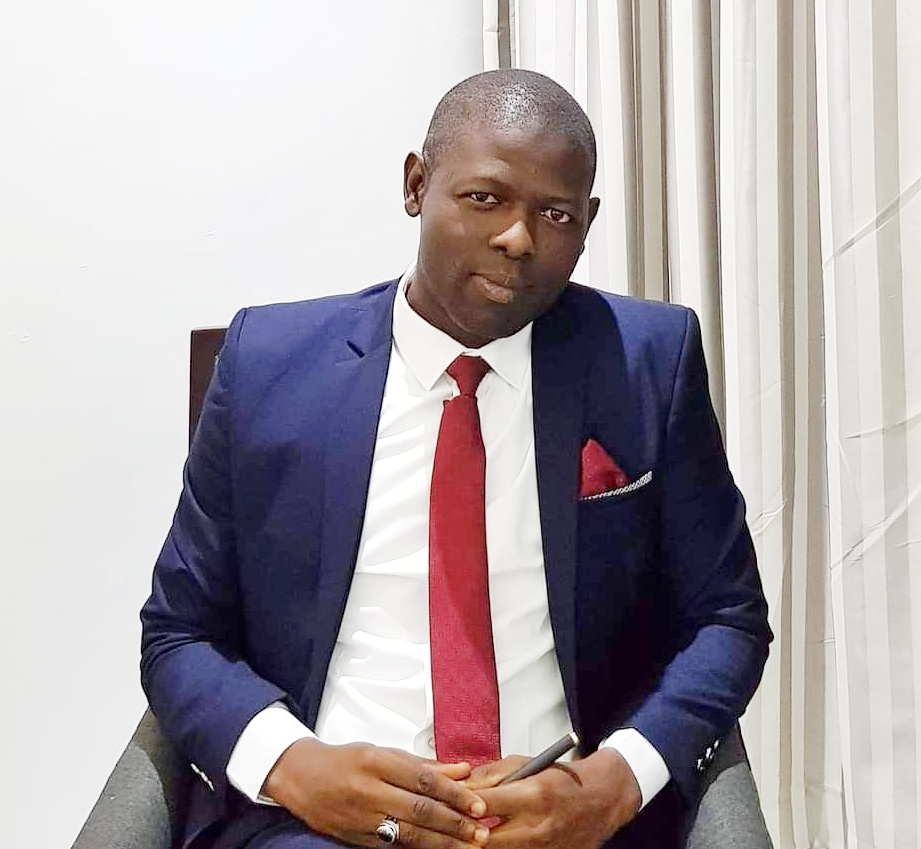
By Prof. Abdussamad Umar Jibia

The trending topic that every Nigerian is talking about is the execution of a young woman who insulted the personality of the Prophet of Islam (May peace be upon him). There is not too much I have to say on it. It is clear that Nigerian Muslims have spoken. We have a redline; no one would insult the Holy Prophet of Islam and get away with it. If democracy is all about what pleases the majority and protects the right of all, then there should be a law criminalizing any attack on the personality of our Holy Prophet with the appropriate punishment; unless some people feel it is part of their right to insult him. If, on the other hand, democracy is about being anti-Islam and crossing its redlines, then our problem has just begun.

The discussion on the Sokoto incident as I followed it on social media has revealed the level of hypocrisy in many of those who claim to be Muslims. Many commentators were not worried about the magnitude of the evil the woman committed but the way she was executed. Others would say, “She should be taken to a court of law”, etc., as if they are not the same people who would condemn any law that applies execution as the punishment for blasphemy.

Specifically, in a Whatsapp group I belong a particular person was so deep into his attack of the “perpetrators of the murder” that he went out of his way to be making other unsavory comments about Islam. The particular point I took him on was his association of slavery to Islam. To him it was the British who liberated slaves relying on a colonial document written by Lugard.

But he is not alone. A Northern writer with large followership among Northern elites once accused the Arabs of killing slaves because we don’t have African Arabs like we have African Americans. That, to the best of his imagination was because Arabs killed their slaves.

The danger is not about these people but the unsuspecting followers they can influence. Unfortunately, most social media followers are fascinated by beautiful grammar even if it is bereft of facts. In particular, I have always wanted to respond to the claim on the killing of African slaves by the Arabs. With my discussion with another Northerner I decided to write a few lines on this.

It is well known that it is not Islam that came with slavery. Islam came and met the practice of enslaving fellow humans well established not only in Arabia but in all other societies. The methods of acquiring slaves and the way they were treated were devoid of sanity in most societies. These methods were practiced before Islam came and continued to be practiced after the coming of Islam in societies where the impact of Islam was yet to be felt. Sadly, even in some Muslim societies where ignorance or selfish desires prevailed some of these methods were practiced.

One way slaves were acquired was through war. In war, the victor could treat the vanquished enemy the way he liked. They could simply kill them, torture them to death, put them under their control as soldiers or otherwise make them slaves.

Another way slaves were made was through guardianship. A father or grandfather had absolute authority over his offspring. He could sell or gift them away as slaves; could lend him or her to someone else, or exchange him or her with another’s son or daughter. A community chief could sell out one or more of his subjects as slaves.

Invasion was another method. In many cases, strong communities invaded weaker ones, enslaved all men, women and children and sold them. This is chiefly how many Africans found their way to other continents as slaves.

Other methods include pawning, tribute, etc. depending on the geographical location and time in history.

Islam restricted the means of enslavement to only one method. Jihad. The Qur’anic meaning of the word is maximum struggle in spreading and defending the message of Islam. As long as falsehood is confronting the truth and evil is opposing good and mischief and its doers are standing in the way of reform, Islam does not allow Muslims to seclude themselves with rituals and look the other way. Just like a Muslim is enjoined to give Zakah that symbolizes kindness, he is enjoined to perform another form of worship that symbolizes opposing evil. That is Jihad. Of course this write-up is not about Jihad.

When Jihad becomes an armed struggle and prisoners are taken, a favour is done to them. Instead of being killed they are taken to Muslim community as slaves to serve as house helps, on the farm and help in other activities not beyond their ability.

Of course, it is not a rule in Islam that war captives must be enslaved. Captives can be released freely by the leader or after payment of ransom (Q47:4). Both of these happened during the lifetime of the Prophet (Salllahu alaihi wa sallam). Peculiarities of situation would always guide the leader. Islam also prohibits torturing the enemy or mutilating their body as practiced in other climes.

The rules of treating slaves are summarized in the following Hadith, quoted in parts, “They are your brothers and servants. Allah Has put them under you. Whosoever has his brother under him, he should feed him from what he eats and clothe him from the type of cloth he uses. Do not assign them to do any work that is too much for them. When you assign them, help them.” (Bukhari and Muslim reported it).

In addition to this golden rule of treating slaves, Islam introduced incentives for freeing slaves. For example, freeing a Muslim slave would emancipate the freer from hell fire on the Day of Judgment, according the Holy Prophet (May peace be upon him) himself. Kaffara (expiation) for incorrect breaking of fast, abrogation of oath, killing by mistake, zihar, etc. can be done by freeing of slaves, sometimes as the first option.

The claim that Arabs killed their slaves stems from ignorance of the above and the fact that intermarriage took place between Arabs and freed slaves. Even in modern day America or Europe, how many whites marry blacks? The former still look at the latter as slaves. The fact is that even among themselves, enslaved people in America were not legally allowed to marry until recently. One woman was allocated to several slaves to share, so she gave birth to another slave whose father did not matter. This beastly practice was unheard of in what our ‘liberals’ condemn as “puritan” Islamic societies.

The Shiite-brainwashed “intellectuals” probably forgot that in Islam a master can have intercourse with his female slave subject to laid down conditions and when she gives birth to any child she qualifies for her freedom and her child has full rights of a child. Some of the famous early generations of Muslim rulers were children of such slaves. A handy example is Abdurrahman bn Muawiya of Spain. The only maid slave the Holy Prophet had, Maria, was an African and she gave birth to his son Ibrahim. This is unheard of in western societies.

I challenge any believer in western civilization to cite an example where a white master married a slave.

Thus, slaves were integrated into the Arab/Muslim society. Not only were they integrated but many of them learned Islam and excelled in Islamic scholarship. The list is long but a few would suffice. Nafiu m. Abdullahi bn Umar, Ata’ bn Abi Rabah, Tawoos bn Kaisan, Yazid bn Abi Habeeb, Makhul, Maimoon, Addhahhak, Ibrahim Annakha’iy are some of the famous scholars of early Muslim generation who were originally slaves.

Coming down to recent history of West Africa, what confused many who get their knowledge of Islam from secondary sources is the conduct of some West African kings. For example, Kano and Zaria were Muslim states and war between them was far from being Jihad. People enslaved as a result of that war were enslaved unjustly and Allah will judge between them and those responsible for their enslavement.

Another wrong pre-colonial enslavement method was raiding of minor tribes by major tribes for the purpose of generating slaves. Such slaves were kept in the palaces of traditional rulers or sold out to foreigners. This is clearly outside what Islam permits, regardless of whether or not such major tribes are predominantly Muslim.

Sheikh Abubakar Gummi had very tough times trying to educate some traditional rulers who still kept such slaves in their palaces that such practice was unIslamic.

Most western-educated people in Muslim societies are misled by Shiite propaganda. It is well known that Shiites have deep animosity towards Arabs and Islam.

Prof Abdussamad Umar Jibia

On blasphemy and mob justice

By Zakariyya Shu’aib Adam

Blasphemy, especially against the Prophet, is the sacreligous utterances about anything related to his personality. Scholars have written books exclusively on the subject. Some of the books include Ar-risalah by Muhammad Ibn Suhnun; As-saarimul Maslool by Shaykhul Islam Ibn Taymiyyah; As-saiful Maslool by Taqiyyuddeen As-subkiy; As-saiful Mash’hoor by Muhammad Ibn Al-qasim; Tanzeehul Anbiyaa by Jalaaluddeen As-suyutiy; Rashqus Sihaam by Ibn Tuloon and Tanbihul Hukkaam by Ibn Abideen.

Other scholars have, although not exclusively, mentioned the ruling of blasphemy in their books. Among them are Ibn Hazm in his famous Al-muhallaa and Al-qadhi Iyaad in his magnum opus As-shifaa. With this, we can conclude that the ruling for blasphemy is not new to the Islamic scholastic circle. In this article, by Allah’s will, I intend to critically dissect the concept of blasphemy and the Islamic ruling on mob justice.

Blasphemy, as Ibn Taymiyyah defined it, is to use words that show a lack of respect and are perceived by all people, regardless of their beliefs, to be profane, exactly like cursing, condemnation, etc. Islamic scholars, as discussed in the aforementioned books, unanimously agreed that blasphemy leads to apostasy, and that anyone that is found guilty of it should be executed. The basis for their consensus is evidences from the Qur’an and Hadith.

Allah says: “Indeed, those who abuse Allah and His Messenger – Allah has cursed them in this world and the Hereafter and prepared for them a humiliating punishment. And those who harm believing men and believing women for [something] other than what they have earned have certainly born upon themselves a slander and manifest sin.” (Qur’an 33:57-58).
In these verses, as stated by the scholars, Allah (SWT) differentiates affronting Allah or His Messenger from maligning believing men and women; the former deserves curse and humiliating torment in the worldly life and in the Hereafter, while the latter is a calumny and manifest sin. The curse in the world means execution. There are other Qur’anic verses that support the execution of a blasphemer. These are Qur’an 5:33, Qur’an 9:61 and Qur’an 33:60-61.

Secondly, there are instances in the lifetime of the Messanger (SAW) that he ordered the execution of blasphemers against him. Bukhari and Muslim narrated in their authentic books from Jabir Ibn Abdillah that Allah’s Messenger (SAW) said, “Who is willing to kill Ka’ab Ibn Al-Ashraf who has hurt Allah and His Apostle?” Thereupon Muhammad Ibn Maslama got up saying, “O Allah’s Messenger (SAW)! Would you like that I kill him?” The Prophet (SAW) said, “Yes,” Muhammad Ibn Maslama said, “Then allow me to say a (false) thing (i.e. to deceive Ka’ab). “The Prophet (SAW) said, “You may say it.” Then Muhammad Ibn Maslama went to Ka’ab and said, “That man (i.e. Muhammad demands Sadaqa (i.e. Zakat) from us, and he has troubled us, and I have come to borrow something from you.” On that, Ka’ab said, “By Allah, you will get tired of him!…”

This hadith clearly shows that the Messenger (SAW) ordered for the execution of Ka’ab for his blasphemy against Allah and His Apostle. Ka’ab used his considerable poetic talent to compose and recite derogatory verses against the Prophet (SAW), his companions and the honour of Muslim women. When he heard about the outcome of the battle of Badr, he wrote poems satirizing the Prophet (SAW), eulogizing the Quraysh and enticing them for a war against the Muslims. That was the reason the Prophet (SAW) ordered for his execution.

Abu Dawud (4361), Nasa’i in Al-mujtaba (4070), Tabarani (11/351) and Hakim (4/394) narrated from Ibn Abbaas that: “A blind man had a female slave who had born him a child who reviled the Prophet (SAW) and disparaged him, and he told her not to do that but she did not stop, and he rebuked her but she paid no heed. One night she started to disparage and revile the Prophet (SAW), so he took a dagger and put it in her stomach and pressed on it and killed her. The next morning, mention of that was made to the Prophet (SAW) and he assembled the people and said: “I adjure by Allah the man who did this to stand up.”

The blind man stood up and came through the people, trembling, and he came and sat before the Prophet (SAW). He said: O Messenger of Allah, I am the one who did it. She used to revile you and disparage you, and I told her not to do it but she did not stop, and I rebuked her but she paid no heed. I have two sons from her who are like two pearls, and she was good to me. Last night she started to revile you and disparage you, and I took a dagger and placed it on her stomach and I pressed on it until I killed her. The Prophet (SAW) said: “Bear witness that no retaliation is due for her blood.”

Furthermore, it is based on the above evidences that the Islamic scholars made an Ijmaa’ (consensus) that a blasphemer is to be killed, regardless of his belief (I.e whether a Muslim, a Dhimmi (non-Muslim living in an Islamic state with legal protection) or any other non-Muslim). The Islamic nation cannot unanimously agree on an error, as is narrated in numerous Hadiths. Tirmidhi (2167) narrated from Ibn Umar that the Prophet (SAW) said, “Allah will not cause my ummah to agree on falsehood; the hand of Allah is with the Jamaa‘ah (the main body of the Muslims)”.

In As-shifaa’, Al-qadhi Iyaad listed the names of some of the scholars that made the above mentioned consensus. They include great companions like Abubakar As-siddiq and other pious predecessors such as Imam Abu Hanifah, Imam Malik, Imam As-shafi’i, Imam Ahmad, Layth Ibn Sa’ad, Ishaq Ibn Rahuyah, Sufyan At-thauriy, Al-auzaa’iy, Imam Abu Yusuf and Muhammad As-shaibaniy among others. At the end, he said, “We do not know of anyone among the scholars and pious predecessors that disagree with the execution as a punishment for blasphemy.”

In As-sarimul Maslool, Ibn Taymiyyah quoted Ahmad Ibn Hanbal saying, “Whoever affronts the Prophet (SAW) or defames him (whether a Muslim or a non-Muslim) should be executed.” Ishaq Ibn Rahuyah maintained, “Muslims agree unanimously that whoever blasphemes against Allah or His Messenger (SAW) is deemed a disbeliever due to this blasphemy, even if he recognizes what has been revealed by Allah.”

Imam Muhammad Ibn Suhnun said, “There is a unanimous agreement among the Muslims on the apostasy of a blasphemer against the Prophet (SAW) and the one that defames him. His punishment is execution and whoever doubts his apostasy is also an apostate.” Imam Al-khattabiy said: “I do not know of anyone among the Muslims that is doubtful of an execution as a punishment for a blasphemer.”
Ibn Qudamah wrote, “Whoever blasphemes against Allah shall be a disbeliever, whether he is kidding or serious.”

Ibn Taymiyah said, “Blasphemy against Allah or His Messenger (SAW) is an act that nullifies faith, both outwardly and inwardly, whether the blasphemer knows that this is haram (forbidden), deems it halal (permissible), or is not aware of the ruling at all.” As-san’aani in Subulus-salaam, while commenting on the Hadith of the blind man, said: “This report indicates that the one who reviles the Prophet (SAW) is to be executed and no blood money is to be paid for him; if he is a Muslim his reviling of him (SAW) is apostasy for which he deserves to be executed.”

The only part in which the scholars differ is whether or not the blasphemer would be asked to repent. Some of them uphold that if a Muslim commits blasphemy, he becomes an  apostate and would therefore be killed without asking him to repent. While others uphold a contrary opinion. They said he would be asked to repent. If he fails to repent, then he would be killed. Regarding a non-Muslim who commits blasphemy, some of the scholars said that he would be punished by death. However, if he converts and becomes a devout Muslim, the punishment is nullified as it happened with Ka’ab Ibn Zuhayr.

However, as eager as we are to see the ruling of Allah being applied on the blasphemer, it is instructive to reemphasize that Islam does not allow its adherents to take law into their hands. To be specific, the execution of a blasphemer is an exclusive responsibility of constituted authorities. This is the ruling established in Islamic law and recorded by scholars in their books.

Al-imam Al-qurtubiy, a highly-acclaimed Malikiyyah jurist, who authored one of the most widely known exegesis of the Noble Qur’an, said in the interpretation of verse 178 of Suratul Baqarah: “There is no dispute among the scholars that qisaas (retaliatory punishments) such as execution cannot be carried out except by those in authority who are obliged to carry out the qisaas and carry out hadd punishments etc, because Allah has addressed the command regarding qisaas to all the Muslims, and it is not possible for all the Muslims to get together to carry out the qisaas, which is why they appoint a leader who may represent them in carrying out the qisaas and hadd punishments.”

Ibnu Rushd, another respected Malikiyyah jurist, said in his book Bidayatul Mujtahid: “With regard to the one who should carry out this punishment – i.e, the hadd punishment for drinking alcohol – they agreed that the ruler should carry it out, and that applies to all the hadd punishments.” This ruling is also affirmed by scholars of Hanbaliyyah school. Ibnu Muflih, a Hanbaliyyah jurist, in his book Al-Furoo, said: “It is haraam for anyone to carry out a hadd punishment except the ruler or his deputy.”

In his widely celebrated magnum opus Al-mugniy, Ibnu Qudamah said: “It is not permissible for anyone to carry out execution except in the presence of a leader.” He also said, “This ruling is supported by jurists that are affiliated to Shafi’i school of thought.” Imamul Haramain Al-juwainiy, who is a Shafi’iyyah jurist, said in his book Al-giyaathiy: “Regarding hadd punishments, how they are established and when to execute them are recorded in the books of Islamic jurisprudence. And all are exclusive responsibilities of the leader. It is not permissible for anyone, including the families of the victims, to carry out such executions without the consent of the leader.”

The aforementioned submissions by scholars of different schools of thought are the ruling on mob justice. It’s not allowed in Islam. Although in Nigeria, most mob justices related to blasphemy are as a result of negligence from the constituted authorities. They never execute blasphemers that have been tried before a court of law and found guilty. That is why some analysts refer to this type of mob justice as frontier justice, where extrajudicial punishment that is motivated by the nonexistence of law and order or dissatisfaction with justice is carried out. To prevent its future occurrence, the authorities concerned must always do the needful and execute court order.

Lastly, in every religion and culture, there are redlines that aren’t supposed to be crossed. In Islam, one of the redlines that cannot and should never be approached, let alone be crossed, is the dignity of our Noble Prophet. That is why whenever an uncultured bigot blasphemed against the Prophet, the entire Muslim Ummah react. Muslims love and regard the Prophet more than anything. They can sacrifice their lives in his defense. You can’t insult our Prophet and expect us to be tolerant. We cannot tolerate an abuse to the personality of our Noble Prophet.

*Conclusively, I pledge to sacrifice my parents, my life and whatever I posses in defense of the Noble Prophet (SAW).*

Leave our Prophet alone!

By Dr Bala Muhammad

His name is Muhammad. And all of us, now One and a Half Billion Souls and counting, love him beyond compare. In fact, we so love him that others just can’t understand or comprehend. They don’t get it, and they can’t get it, for they know not this kind of love. We love him more than we love our parents; indeed we love him more than we love ourselves! The moment we hear his name invoked, we immediately add: “May the peace and blessings of Allah be upon him.” O we so love him, Muhammad!

He left us more than 14 centuries ago, yet it is as if he daily lives amongst us. There is no day that passes without his name being called, and praised, by each one of us. To us, he is inviolable, unjokable. He is leave-alonable. We don’t joke about him. To us, Muhammad the Prophet is a serious matter. In anything concerning him, we are, we swear by Allah, fanatical, fundamental, impatient. We love him; you don’t, and you can’t understand. So we say to them, just leave him alone.

We are so many, and O how we so love him! A billion-plus loves! Yet some people who don’t understand us, or our Prophet, think they can just play with his name, and his person, and his dignity, and hide under ‘freedom of expression’ or similar Western jargon. We say to unto them: just leave him alone! May our fathers and our mothers be a ransom for you, O Muhammad! O Rasulullah!

They have done it again! Filmmakers and cartoonists and writers who think they can make fun of our Prophet and go scot-free should know this fact: you may abuse a Muslim’s father, you may abuse a Muslim’s mother, you may abuse everyone abusable, but never poke fun or abuse our noble Prophet Muhammad. On that, we are fanatical, we are fundamental; end of discussion. May the peace and blessings of Allah be upon you O Rasulullah!

But we should all remember that the forefathers of these insensitive filmmakers and cartoonists and writers were not like them. They acknowledged and praised our Prophet as the greatest person to have ever lived. His name Muhammad, indeed, means praiseworthy. SallalLahuala Muhammad.
Michael H. Hart in his book on ratings of people who contributed towards the benefit and upliftment of Mankind chose Muhammad at the top of his list of the Greatest Hundred. He writes: “My choice of Muhammad to lead the list of the world’s most influential persons may surprise some readers and may be questioned by others, but he was the only man in history who was supremely successful on both the religious and secular levels.” (The 100: A Ranking of the Most Influential Persons in History: New York, 1978).

George Bernard Shaw, the great philosopher, said about the Prophet: “He must be called the Saviour of Humanity. I believe that if a man like him were to assume the dictatorship of the modern world, he would succeed in solving its problems in a way that would bring it much needed peace and happiness.” (The Genuine Islam, Singapore, Vol. 1, No. 8, 1936).

Historian John William Draper in his well-known work, ‘A History of the Intellectual Development of Europe’, observes: “Four years after the death of Emperor Justinian, was born at Makkah, in Arabia, the man who, of all men, has exercised the greatest influence upon the human race.”

Dr Annie Besant in her book, ‘The Life and Teachings of Muhammad’ (Madras, 1932) says: “It is impossible for anyone who studies the life and character of the great Prophet of Arabia, who knows how he taught and how he lived, to feel anything but reverence for that mighty Prophet, one of the great messengers of the Supreme. And although in what I put to you I shall say many things which may be familiar to many, yet I myself feel whenever I re-read them, a new wave of admiration, a new sense of reverence for that mighty Arabian teacher.”

David George Hogarth (1862-1927) English archaeologist, author, and keeper of the Ashmolean Museum in Oxford says of Prophet Muhammad:

“Serious or trivial, his daily behaviour has instituted a canon which millions observe this day with conscious mimicry. No one regarded by any section of the human race as a Perfect Man has been imitated so minutely. The conduct of the Founder of Christianity has not so governed the ordinary life of His followers. Moreover, no Founder of a religion has been left on so solitary an eminence as the Muslim Apostle.” (Arabia, Oxford, 1922).

Edward Gibbon (1737-1794), considered the greatest British historian of his time, says of our Prophet: “The greatest success of Muhammad’s life was affected by sheer moral force without the stroke of a sword.” (History of the Saracen Empire, London, 1870). Gibbon adds elsewhere: “His (i.e. Muhammad’s) memory was capacious and retentive, his wit easy and social, his imagination sublime, his judgment clear, rapid and decisive. He possessed the courage of both thought and action.” (History of the Decline and Fall of the Roman Empire, London, 1838, vol.5, p. 335).

Professor Keith L. Moore, one of the world’s most prominent scientists in the fields of anatomy and embryology, and author of the book ‘The Developing Human,’ which has been translated into eight languages, was in Saudi Arabia in 1981 during the Seventh Medical Conference in Dammam. Professor Moore said: “It has been a great pleasure for me to help clarify statements in the Qur’an about human development. It is clear to me that these statements must have come to Muhammad from God because almost all of this knowledge was not discovered until many centuries later. This proves to me that Muhammad must have been a messenger of God.” SallalLahuala Muhammad.

Thomas Carlyle, in ‘Heroes and Hero Worship and the Heroic in History,’ (1840) says: “The lies (i.e. Western slander) which well-meaning zeal has heaped round this man (Muhammad) are disgraceful to ourselves only.”

Mahatma Gandhi, speaking on the character of Muhammad said: “I wanted to know the best of one who holds today’s undisputed sway over the hearts of millions of mankind…I became more than convinced that it was not the sword that won a place for Islam in those days in the scheme of life. It was the rigid simplicity, the utter self-effacement of the Prophet, the scrupulous regard for his pledges, his intense devotion to his friends and followers, his intrepidity, his fearlessness, his absolute trust in God and in his own mission. These, and not the sword, carried everything before them and surmounted every obstacle. When I closed the 2nd volume of the Prophet’s biography, I was sorry there was not more for me to read of the great life.” (Young India).

Alphonse de Lamartine (1790-1869), the French poet and statesman, says of our Master: “Philosopher, orator, apostle, legislator, warrior, conqueror of ideas, restorer of rational dogmas, of a cult without images; the founder of twenty terrestrial empires and of one spiritual empire; that is Muhammad. As regards all standards by which human greatness may be measured, we may well ask, is there any man greater than he?” (Translated from Histoire de la Turquie, Paris, 1854, vol. II).

They will continue to provoke us by mocking our Rasul. But we should be ahead of them by being circumspect in our protestations. We must remember that Allah says “Wa la taziruwaziratuwizraukhra”. The consequence of this blasphemy is a burden on those filmmakers, cartoonists and writers. And they will bear it, in sha Allah.

Please tell all of them: just leave our Prophet alone!

This article was written by BALA MUHAMMAD and first published by Weekly Trust (Nigeria) on Saturday, 22 September 2012. It’s reproduced here with the author’s permission.

Revenue is not a substitute for healthy environment, let’s tell Baba Ganduje

By Murtala Uba Mohammed

Governor Ganduje’s romance with capital project is too obvious and apparent. Only a bias mind can deny him his love for billion of Naira capital projects such as construction of some urban roads, underpasses and flyovers which qualify the city to lead in terms of transport infrastructure all over the country. Governor Ganduje’s interest in commerce and revenue drive is quite vivid considering his bias towards conversion of every available inch of land in the metropolis into commercial property. This is in addition to the proliferation of shops created in over ten markets in Kano Metropolis. In his zeal to generate revenue, Baban Abba has transformed Kano Road Traffic Management Agency (KAROTA) from law traffic enforcement to tax collection agency!

History of Kano would definitely remember this government of converting some of the most sacred spaces such as prayer grounds, cemeteries and historical places into commercial plots. While, Colonel Idris Garba has found it wiser to relocate Kano City Animal Market from its old location to accommodate the increase demand for bigger Kano Central Eid Ground and to give the ancient city a kind of Eid ground it deserves; Ganduje felt it is necessary to downsize it to nearly one fifth of its original size in order to make way for his dearest commercial land use. In fact, governor Ganduje’s romance with commerce qualified him to have national honour award of commercial order for Niger (CON)!

It is also obvious that governor Ganduje has given Kano more than what it requires as centre of commerce by converting the remaining open spaces, green areas, blue ecosystems and city’s recreational gardens into commercial plots, leading to the emergence of multi-million plazas in all parts of the already gentrified city. The case of destruction of the last phase of the city wall along BUK road, the Freedom pond along Gwarzo Road, the Dan’agundi on BUK Road and many other smaller water bodies are just tips of Ganduje’s land conversion icebergs. A case of city garden along Maiduguri is another justification for his romance with commerce.

Also, many waste collection centres were either allocated to Ganduje’s political lieutenants to develop it for commercial use or sold to a highest bidder. No thanks to irrational desperate attitude of Kano people to land acquisition which Bandirawo capitalized upon and coupled with the creation of plots on many state’s parks located in peri-urban local government under the forestry department of Ministry of Environment. Ganduje would have converted city’s Zoological Garden to commercial plot if not for the outcry and serious pressure from good sons and daughters of the State.

While, expanding the commercial land use and (possibly) enlarging what goes into supposedly state IGR, the government action is negatively affecting the environment. The governors love for the building of commercial areas at the expense of other landuses affects the functioning of the ecosystem there by distorting the near equilibrium state of the environment. A city without parks and green areas is just like child whose nose was covered or severed; suffocation is inevitable and death is the end point. Our governor (whom the law saddled with responsibility of land protection) should be reminded that the green areas are not just for decoration, they are carbon sink meant to absorb harmful air like Carbon dioxide, Sulphur oxides, chlorofloro carbons and other pollutants which are hazardous to human health. They also help in moisture retention, groundwater recharge, check soil erosion and ecosystem stability. The importance extends to social and economic contribution by providing revenue, connecting people with past and providing shades. Kano City is already noisy, building more roads and destroying greens which this administration is supporting and encouraging, make people to own more cars and reduce the functional attenuation city’s noise. In a city where transport is not regulated and left at the mercy of highly informal private individuals, one will just end up with a growth that is going in a reverse way. Today, only God knows the number of tricycles in Kano that pollute the air and colliding with peoples’ vehicles.

Nowhere, water and blue infrastructure is as important as dryland, however, unfortunate the protector turns destroyer. The city therefore is witnessing urban drought due to water table dwindling. The city dwellers now buy water from cart-pusher, whose hygienic condition is terribly bad, at the rate of 50 to 100 naira per 25 litre jerrycan. The state’s own water supply is just a nightmare.

Kano city now witnesses intrusion of newly emerged hills, not of lava, rather of refuse. This is a clear pointer to the problem of rush in privatizing the long-time government’s REMASAB to a very little-known private company. Surprisingly, rather leasing the formal areas (where pilot testing were done through Franchisee System), the government decided to include the informal areas where residents are overwhelmingly poor and unlikely to afford commercial waste service. The government had successfully improved its revenue by not shouldering part of its social responsibilities, but it had traded-off the health and well-being of the public for worthless amount of money. The city-folk now pay the price through living in the mid of waste.

No matter how crucial it is, revenue is not in any way akin to destruction of environment. One can get good revenue without depriving the environment its decency. This can be achieved through verticalization of buildings where shop demands can be met without losing open and green areas. Also, city’s green and open spaces can be privatized in their natural state to generate more revenue. The recent proliferation of Event centres and sport Centres can utilize the city’s ponds and open spaces without necessary building up permanent structure.

While the state makes a lot of noise on domination of public transport by Adaidaita sahu tricycle where revenue was difficult to generate, not much was done to introduce more formal public mass transit such as Bus Rapid Transit and Bus Mini Transit that would fetch more revenue to the government with less damage to the environment. It is still not late for the government to reverse and rethink of best ways to manage the waste generated. Commercial, industrial and formal areas can be made to pay for waste services, but not slum and shanty areas. Let the state engage radically in educating and reorienting the citizens, this will make people to be more formal in their businesses, and which will eventually boost the state’s revenue.

It is important to note that for every city to be liveable, certain ecological services and resources must be retained at all cost. Failure to keep them is tantamount to exhibiting nonchalant attitude to nature despite that Nigeria is a signatory to most environmental treaties. It implies that one is at war with descent living. I am afraid, history will judge this administration for destroying the little it inherits of environmental heritage in the name of foolhardy capitalism. I hope His Excellency was not punishing us for someone’s faults. Other individuals might have done some wrongs to him, but let him remember that he has no place like Kano. Let us give Kano a descent ecosystem, not only for us but for the yet to be born generations.

Murtala teaches Geography at Bayero University, Kano.

Will President Buhari, Emefiele sacrifice CBN for the 2023 Presidency? 

By Ibraheem Abdullateef

Ahead of the 2023 presidential elections in Nigeria, the race for the ticket of the All Progressives Congress (APC) has never been so terribly chaotic and funny. Pegged at an outrageous N100 million naira, no less than 25 aspirants have obtained the nomination and expression of interest forms as of Friday 6, May 2022 to contest in the primaries later in the month. As Nigerians, including the media and the CSOs, were still debating the moral rectitude and leadership capacity of the long list of contenders, the news hit the airwaves on Thursday that the Central Bank Governor of Nigeria (CBN) Godwin Emefiele has also obtained the form by proxy. 

There is no word fit to describe this action, not even anomaly. CBN Governor Godwin Emefiele is taking Nigerians and Nigeria for a ride with his presidential bid. By the extant Central Bank of Nigeria Act 2007, the Bank is an independent, apolitical body and whoever is the Governor is not allowed to be partisan. The series of political-related activities, consultative meetings, and branding in his name would vitiate the law and ethics of professionalism, and it makes a mockery of the public image of the nation’s apex financial and monetary authority in the international community. 

As if to forestall quackery, the section 8 (1) which is on Appointment, Qualification, and Remuneration of Governor and Deputy Governor of the CBN says both of them “shall be persons of recognised financial experience and shall be appointed by the president subject to confirmation by the Senate on such terms and conditions as may be set out in their respective letters of appointment.” 

While corroborating it, the next section in the Act, Section 9, on full devotion to the service of the bank, says “Governor and Deputy Governors shall devote the whole of their time to the service of the Bank and while holding office shall not engage in any full or part-time employment or vocation whether remunerated or not except such personal or charitable causes as may be determined by the Board and which do not conflict with or detract from their full-time duties.” 

Yet, the CBN Governor, Godwin Emefiele, has continued to pursue a presidential bid under the APC. What started a few months back recently reached a crescendo when pictures of about 50 well-branded campaign vehicles hit social media. It also followed the hosting of banners, including rallies across the nation. Despite denying the ambition in April, the eventual purchase of the nomination and expression of interest forms less than two weeks to party primaries show that Emefiele is partisan and has been involved in activities, not in tandem with his office. This impunity is unprecedented. It is not unexpected the outrage of Nigerians, condemning what is perceived as immoral and unethical behaviour. 

As a Nigerian, the 1999 constitution allows Godwin Emefiele the right to pursue any political ambition. But to pursue a presidential bid without resigning, may erode the confidence of investors, international partners, business magnates, and other stakeholders in the financial sectors in the Bank, thereby affecting the economy. Many Nigerians have begun to wonder if the weakening Naira values, including the introduction of policies like E-Naira and banning cryptocurrencies, were not informed by decisions influenced by partisan interests. Regardless of the intentions, the moment Emefiele submits his nomination and expressions of interest form, he must not spend a minute longer as the CBN Governor, unless it becomes a sad precedent to other officeholders, further bastarding the national institutions. 

While spelling out conditions for disqualification and cessation of appointment, section 11 (2) (f) of the CBN act empowers the president to remove the governor. The CBN governor may also be relieved of his appointment if he is “guilty of a serious misconduct about his duty under this Act.” By being openly partisan, it is enough ground for the Board or the National Assembly to summon and question the professionalism and ethics of Godwin Emefiele, in relation to this stewardship. 

The only way Emefiele stays in office is to dissociate himself from this development. If truly he has an ambition and would rather face it squarely, he should vacate the office immediately (provided that he has given at least three months’ notice in writing to the president of his intention to do so). It is not the time to keep mute and be evasive. It is rather a moment to prove a test of character and integrity. President Muhammadu Buhari must address the issue and take positive action to salvage the sanctity of the nation’s foremost financial and economic authority now. 

Ibraheem Abdullateef is a Nigerian youth leader and freelance journalist. He tweets at @_ibraheemlateef.

NLC should join ASUU to end the lingering strike

By Muhammad Mahmud

I believe that Nigeria Labour Congress (NLC) should join the Academic Staff Union of Universities (ASUU) in solidarity. An injury to one is an injury to all.

I recall that an affiliate union embarked on industrial action during the military regime. I can’t remember exactly which, but the NLC joined in a solidarity move.

After some time, without a positive response from the government, the labour union directed all other affiliated unions to join. Thus, the PENGASSAN, NUPENG, NURTW etc., joined. Before you can say UTAS or PANTAMI, the nation was halted.

No flights were flying, no taxis or buses plying any road as fuel was absent, etc. This forced the government to give in to the demands of the workers.

I believe this is the only strategy that the politicians will understand. The NLC should initiate the process and start preparing for the mother of all strikes in solidarity with the ASUU.

Malam Muhammad writes from Kano. He can be reached via meinagge@gmail.com.

Poetic Wednesdays: Putting us on the right side of history

By Junaid Sharfadi 

For many a century, poetry has been used as a veritable tool to pass on religious, historical and social ideas in northern Nigeria. In Kano, for instance, scholars during my grandad’s generation – and beyond – were good at deploying Arabic and Hausa poetic means when forming an opinion.

Women and children too never missed an opportunity to ululate and chant poetic verses, laden with moral messages, when conveying a bride or on other occasions. The famous Charmandudu poem or the works of Sultan Bello, Aƙilu Aliyu, Nasir Kabara, Mudi Spikin, Asma’u Bint Fodio and Modibbo Kilo serve as an example.

Thus, Art and Culture enthusiasts and promoters like the late Abubakar Gimba or Professor Abdallah Uba Adamu would be delighted to see a literary fraternity sprouting from the fertile land of northern Nigeria, spreading its maturing branches across the country. 

Poetic Wednesday (PW) Initiatives started six years ago as an online platform for poets to engage, grow, entertain and convey impactful messages every Wednesday. From agriculture to artificial intelligence, climate change, peace, conflict, education, love etc. the group writes on diverse, important issues.

The founders, led by Salim Yunusa, have succeeded in unleashing the full potentials of the weekly participants by critiquing and publishing their beautiful and virgin poems that drown readers into poemgasms. Budding poets have since joined to unbutton their poetic minds on marginless screens. No boundaries or limitations, just pure chutzpah and truth that reveal the primordial yet sacred content of the heart.

It is imperative to state that Poetic Wednesdays’ remarkable online presence has been effectively utilized in organizing webinars, competitions and workshops to fuel the passion for literature among youth. Prof. Hussein Nasr was right when he emphasized the significance of poetry in shaping Persian, Arab and Chinese societies. Therefore, with literary groups like PW, this society is on the right side of history.

Big bigot in Kperogi’s mirror

By Aliyu Barau, PhD

Farooq Kperogi is among the few Nigerians who elegantly sandwich scholarship, media and English language expertise. On the contrary, I am neither a language expert nor a political analyst. Here, I am just trying to figure out the naughtiness of Kperogi’s thinking machinery. How Kperogi thinks substantially determines his writings and opinions.

No doubt, Kperogi’s articles are a cynosure of the eyes of many Nigerians across political, cultural and social divides. Some of his Nigerian readers pluck his linguistically well-crafted and yet asymmetric views and dye them in the colours of their sentiments or ignorance. It is very normal to manipulate any text on this planet. Interestingly, it is not unusual for bohemians and intellectuals to dress and feast on controversies.

I see Kperogi as a sort of a roller coaster dripping joyful and sorrowful moments on public sentiments and obsessions. Indeed, considering Nigeria’s contested socio-political landscapes, Kperogi personifies Hankaka (a pied crow in Hausa) which they say, “whoever sees its black must see its white too.

I am indifferent to Kperogi’s criticisms of the powers that be. I don’t care about his tirades and vituperations directed at the political class who sold their moral rights at the markets of failures and misgovernance.

So, what’s my headache with Kperogi? Well, I am deeply touched by his overriding superficiality, unidirectional views, bigotry, extremism and spider mannerisms. To be fair to Kperogi, no elites in the social and political divides of this country are immune from his pen. Nevertheless, his seamless and borderless forays are in many instances unconscionable and peddling post-truth constructs. My labelling of Kperogi is based on my readings and analysis of his recent blog stuff:

• Presidents Who’ll Make Me Renounce Nigeria (https://www.farooqkperogi.com/2022/03/presidents-wholl-make-me-renounce.html)

• Osinbajo’s RCCGification Part of Plot for Theocratic State Capture (https://www.farooqkperogi.com/2022/04/osinbajos-rccgification-part-of-plot.html)

• 10 Reasons Osinbajo Will Ignite a Religious Civil War (https://www.farooqkperogi.com/2022/03/10-reasons-osinbajo-will-ignite.html)

As a transdisciplinary environmental researcher, I always prefer wider views, co-produced, and inclusive opinions. I am diametrically opposed to ‘single story’ constructions – as Chimamanda Ngozi Adichie would say. My reading of the above articles has convinced me of Kperogi’s single story-driven narrowed conclusions on crucial and critical national issues. Before I explain my points, I have tried further analysis of Kperogi’s knowledge production mannerisms to see how that fits my labelling. For instance, I conducted a rapid assessment of his authorship of academic works on leading research archives namely Researchgate and Google Scholar. Both repositories reveal in him a professor with a very limited network and co-authorship. By implication, any scholar with limited networking and co-authorship will have little room for alternative views, tolerance and thorough analysis. This evidence convinces me as to why he writes less holistically and cares less to get into deep layers of issues.

Kperogi is a good reflection of the proverbial Dubarudu – a character in one of the Hausa riddles. Dubarudu owns a mirror in a town where no one owns any. He alone uses it and no one can use it including his wife. Nigeria is a mirror that we need to share to see our faces and appreciate our different outlooks.

My reading of the three blog articles produced by Kperogi leads me to carry out further analysis of how this versatile writer thinks. Scholars make use of Low-Order Thinking Skills (LOTS) and Higher-Order Thinking Skills (HOTS) to determine the thinking capacity of scholars and students. I always assume that the Nobel Prize winners and other high ranking scholars utilise HOTS. Without prejudice, blog articles produced by Kperogi appear to belong to low-order thinking skills.

Then, how is he seen as a low thinker at least in the three articles under consideration? The answer is discernible to all his readers who care. He uses interrogatives such as ‘when’, ‘where’, ‘which’, ‘how many’ and ‘who’ in driving his opinions in the three articles. We could see mentions of places, names of persons, the number of persons, places, when and where in his labelling of religious bigotry by VP Osinbajo. Healthy and informed minds would care only about the HOTS interrogatives such as ‘why’, ‘how’; ‘what evidence is there?’, ‘cause and consequences’ etc. Unfortunately, less informed and sentimental Nigerian readers can easily be misled by the lots of LOTS he always amplifies.

At this point, I am bringing out my real problems with this language scholar. I really find it very nauseating and irritating when he declared in his blog, on March 28, 2022, that he would renounce his Nigeria citizenship if any of the four individuals he listed in an article would become Nigeria’s next president.

The four Nigerians he condemned were Osinbajo, Tinubu, Bello and Wike. How on earth! What depth of hatred is this? What if God has decided one of them to be? To me, this is exotic bigotry, branded intolerance and egregious extremism. Where is his knowledge of the language of contestations, resistance and resilience that characterize the works of Edward Said, Frantz Fanon, Michel Foucault, and Karl Marx? Maybe, I should remind him of the struggles of the Irish activists captured in Feargal Mac Ionnrachtaigh’s Language, Resistance and Revival. Such a Kperogian declaration amounts to cowardice, hopelessness and disillusion. How can I give up my citizenship on account of a tenured president that could be at the mercy of the judiciary, parliament, media and civil society? I never expected him to easily forget how spirited men and women stood against the caudillos (strongmen of Latin America) seen in Pinochet of Chile, Stroessner of Paraguay, Somoza in Nicaragua, and Trujillo in the Dominican Republic. I wish good luck to the listed four and to Kperogi, especially when one forsakes Nigeria for America where black lives matter. The people brutalized by the Nigerian junta yesterday are princes of the Aso Rock Villa of today. That is how time works.

No little thanks to Farooq for giving us a neologism -RCCGification through his April 14th 2022 blog opinion. I was distraught reading that as I saw in it that article tight shortness of sight and breath considering it is coming from a scholar. Saying that one church denomination will overrun Nigeria is a devilish statement. Even Satan might call that the last post-truth reality. Nevertheless, I find solace in Mehdi Hassan’s response to Anne-Marie Waters during Oxford Union Debate On Islam held at the Oxford University in the UK sometime in 2015.  Putting your article in the context of that debate and Mehdi’s response means Kperogi is a big fanatic and bigot. Why? Because RCCGification is the same thing as Islamisation.

Every time a Muslim rules Nigeria some Christian bigots use the thread of Islamisation to weave clothes of suspicion and division. So what’s the difference between the advocates of Islamisation and RCCGification? Is it not flipping sides of the same coin? I would be happier to have as a leader, a just Christian than an unjust Muslim. RCCGification of Islam, Catholicism, Protestants, and traditional religions are all mirages. RCCGification of Nigeria is a charade since this church has not even seen the intergenerational transition of itself let alone overrun others.

Let us be frank with ourselves, it has been a standing tradition of Nigerian political, religious and business leaders to bring close to them the people that they know. Hence, I am unruffled by any list of political appointees associated with the RCCGification agenda. I am always amused by fears of Islamisation and I always see weak and ignorant Christians as its drivers and authors.

When you insist on going on pilgrimage to Jerusalem as Muslims do in Mecca, you are just Islamising Nigerian Christianity. When you say let us block the Muslims or deny them their rights what is your name? Islamaphobe, unjust, conspirator or still a Christian? What I like most about religion is the sweet taste of spirituality. Those forwarding the RCCGification agenda are either mischief makers or ignorant of Nigeria’s social, historical and political institutions. 

When I saw the casket of Chief Odumegwu Ojukwu draped in Nigeria’s flag and carried by the Nigerian military officers, that is the day I realised that Nigeria is bigger than all its citizens. Nigeria overwhelms anybody with any hidden agenda. A critic must learn how not to be like a spider. Its knowledge of design is superb and its nest is outstandingly beautiful. However, the skinny guy builds its nest on the common pathways not minding trapping everybody.

Aliyu Barau, PhD, is an Associate Professor from the Department of Urban and Regional Planning, Bayero University, Kano, Nigeria. He can be reached on Twitter via @aliyubarau.

Dattijo: The embodiment of youthful competence

By Dauda Idrees

I woke up to the rather sad news of Muhammad Sani Dattijo’s withdrawal from the race to Kashim Ibrahim House of Kaduna state and couldn’t help but start chanting supplications as though I’ve lost a loved one. Although, as careful political observation, I’ve seen that coming almost two years ago, the impact of this news on me was unlike anything I’ve ever imagined. 

Whatever political calculations that led to this conclusion have not done justice to the youths of Kaduna state, considering the exuberance with which they came all out campaigning for their comrade pro-bono. Many have never met him in person but are up-to-date with all he does through social media platforms. 

Being in the forefront of the Kaduna Urban Renewal Development Project from 2015 to date, it’s undeniably agreed that he’s the right candidate that would effectively carry the project to completion, as evidenced by the development plan he presented from the early days of his campaign. But, sadly, the political radar did not point in our favour. I doubt if any other candidate has presented any plans, he has for the state yet. 

Governor El-Rufai made it clear in his criteria for selecting the new emir of Zazzau that the emir’s relatively youthful age and his international network gave him an upper hand over other candidates. So naturally, we expected this same criteria to be applied in choosing his successor, but we can see that political office is not the same as a traditional title.

So, while we pray that Dattijo’s political future be bright, we’re also worried that the youthful fury with which he does things now might be dampened by age in years to come when the kingmakers deem him old enough to run for the governor’s office.

One may argue that he started falling out of favour when he called Muhammad Sanusi II, the governor’s close friend, “former emir,” which is valid. However, the truth is that there is still that reluctance to release the mantle of leadership to the youth even in Kaduna, the self-proclaimed youth-friendly state.

Although his name “Dattijo” is a perfect match for the  Senate, which Hausawa call “Majalisar Dattawa”, it is sad to hear that Kashim Ibrahim House is losing such treasure to the Red Chambers because he’s not a Dattijo by age. He’s Dattijo by heart. Either way, we thank Allah and pray that he gets to represent not just Kaduna youth but set an example that all young people if given the right opportunity and mentorship, would get things done in a way that the older generation wouldn’t have thought possible. 

Dauda Idrees wrote from Kaduna via idreesdauda.a@gmail.com.

The need to introduce sign language as a core course in Nigerian schools

By Ibrahim Tukur

Communication barrier is one of the major problems holding many deaf people back. Living in an inclusive world—a world that comprises people with differences, one has to know the others better to get along together. We can only achieve that through communication. Unfortunately, however, many people have immensely misunderstood due to the communication barrier. Some see people with hearing impairment as stupid, insane, mad, etcetera.

Communication barrier has brought various challenges that not exclusively affect the personal achievement of the deaf but also their educational, spiritual and economic development.

Due to this barrier, many deaf experience loneliness, depression and isolation at home because they have no one to communicate with as most of the family members don’t know how to communicate with them. In the same vein, their parents often neglect them and find it challenging to communicate with them in their day-to-day interactions and operations. Thus, this makes many deaf children, if not all, grow up morally deficient.

In many tertiary institutions, deaf students face many academic challenges that interfere with their studies. Although all tertiary institutions are inclusive, they are not offering special services like Sign Language interpreters. Consequently, those students often sit in the class watching their lecturers lecturing verbally and their coursemates with no hearing loss drinking from their knowledge flow.

Deaf people face immense challenges when it comes to employment. Many organisations and companies find it difficult to employ deaf people due to this barrier, as good communication is one of the essential requirements in entrepreneurship. This is why many deaf people have automatically been disqualified during job interviews despite meeting all the requirements.

Again, because of this barrier, deaf people are denied from getting jobs as doctors, engineers, journalists, lecturers, lawyers, accountants, etcetera. Many deaf who have studied others fields are forced to become classroom teachers as if teaching is the only profession for the deaf.

Although the current administration has enacted a law that prohibits discrimination against people with disability, thanks to their bid for inclusion, they failed to trench the underlying causes of the discrimination. 

To nip the deaf-based discrimination in the bud, Sign Language should be introduced as a core curriculum in all schools since the communication barrier is its underlying cause.

Sign Language specialists should be employed in all schools and tertiary institutions to teach Sign Language so that everybody will learn to communicate with the deaf and get to know them better.

Teaching Sign Language in schools nationwide will improve this communication gap and end the disparagement, discrimination, and stigmatisation they experience. It will equally create a comfortable environment for the deaf folks to live in this Inclusive world.

Ibrahim Tukur is a 400 level student of Bayero University, Kano. He can be reached via inventorngw@gmail.com.