Opinion

On ‘Makiyan Kano’ slogan

By Umar Sani Adamu (Kawun Baba)

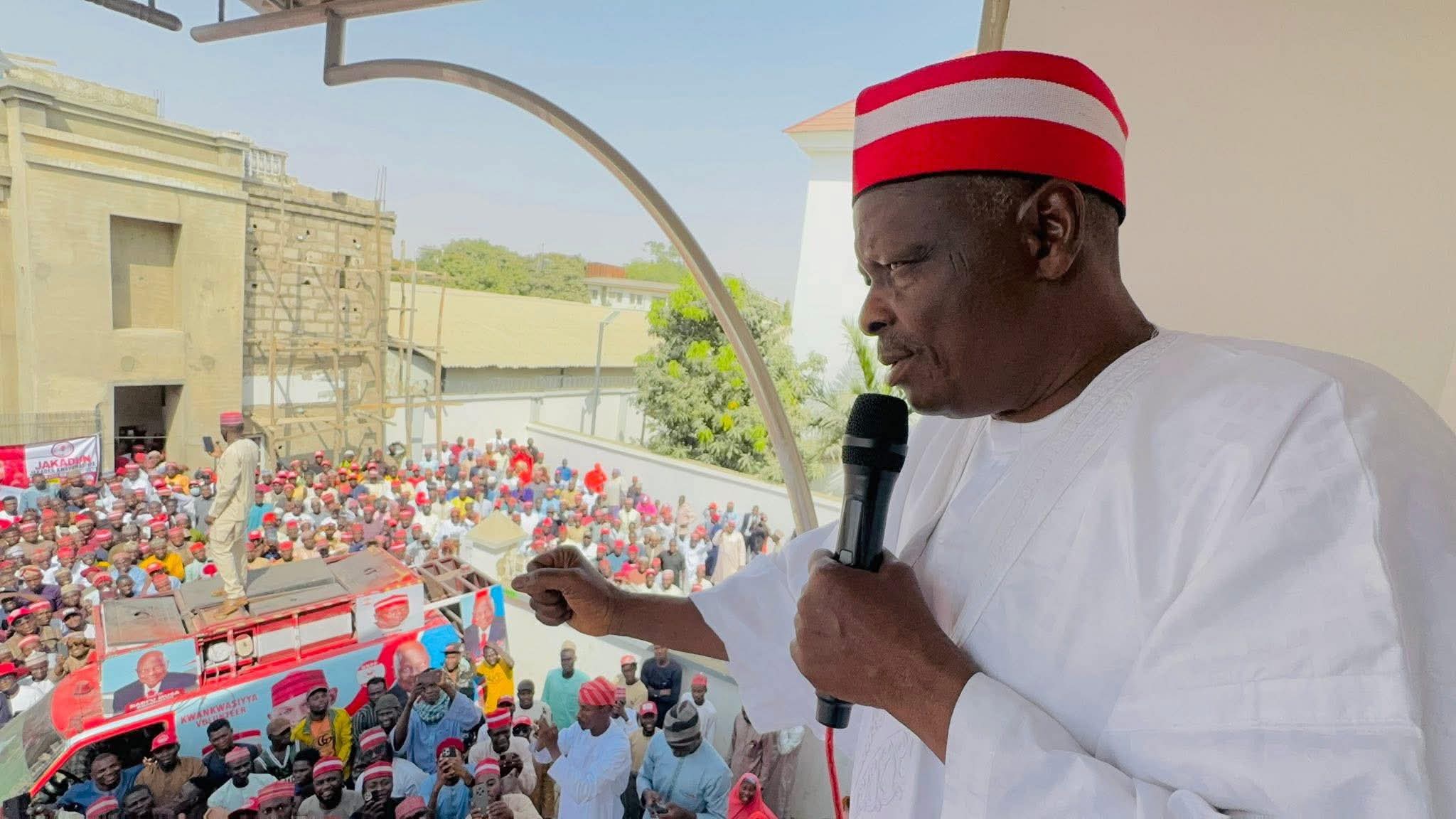
The defection of Kano State Governor Abba Kabir Yusuf from the New Nigeria Peoples Party, NNPP, to the All Progressives Congress, APC, has exposed more than a political shift. It has laid bare the fragility of slogans elevated above reason and the contradictions within Kano’s dominant political movement.

For years, the phrase “Mayiyan Kano” was used by followers of Senator Rabiu Musa Kwankwaso whenever events did not go their way. It served as a blanket response to court rulings, electoral outcomes, and opposing views. What began as a casual expression gradually hardened into a political shield used to dismiss criticism rather than engage it.

Ironically, Governor Yusuf was once celebrated as the ultimate proof of loyalty to the Kwankwasiyya structure. A report by The Daily Reality during the early phase of his administration went to remarkable lengths to present him as a devoted disciple of his mentor and political godfather. His actions, his rhetoric, and even his body language were framed as evidence of unquestionable allegiance. At the time, loyalty was portrayed as a virtue, and Yusuf was held up as its finest example.

That narrative has now collapsed under the weight of political reality. Following his defection, the same voices that once applauded his loyalty have rushed to brand him disloyal. The sudden moral outrage is striking not because politicians change camps but because of the selective memory at play. If loyalty were absolute, then it should have been defined beyond convenience. If it were conditional, then honesty demands admitting that politics is transactional, not sentimental.

The revival of Makiyan Kano, that’s “The enemy of Kano” or “One who works against the interests of Kano”. In this context reveals its emptiness. Rather than interrogate why a sitting governor would abandon the platform that brought him to power, some loyalists have retreated to slogans. It is easier to chant than to reflect. Easier to accuse than to accept that political authority ultimately rests with individuals, not movements.

What this moment exposes is a deeper problem within Kano politics: the attempt to freeze loyalty in time while ignoring changing realities. Governance is not sustained by personal allegiance to a mentor but by navigating power structures, resources, and national relevance. To pretend otherwise is to confuse political romance with political responsibility.

Supporters of the governor argue that his decision was informed by pragmatism and the pursuit of Kano’s broader interests. Whether one agrees or not, it is a position that deserves debate, not dismissal. Slogans do not govern states. Decisions do.

Makiyan Kano has returned to public discourse, but its meaning has shifted. It no longer signals confidence. It now sounds like frustration. In the end, movements that rely on chants instead of ideas often struggle when reality refuses to cooperate. Kano politics appears to be learning that lesson the hard way.

Umar Sani Adamu (Kawun Baba) wrote via umarhashidu1994@gmail.com.

FCT election low voter turnout: The need for a post-mortem analysis

By Zayyad I. Muhammad

Out of the estimated 1.68 million registered voters in the Federal Capital Territory (FCT), only about 239,210 turned out to vote, representing roughly 14–15% voter participation. This figure is not only worrisome but also indicative of a deeper democratic challenge that cannot be ignored.

The 2026 FCT Area Councils elections, therefore, require a thorough post-mortem, an autopsy, so to speak, to uncover the root causes of this low turnout. Was it voter fatigue, dissatisfaction with political actors, lack of awareness, logistical shortcomings, security concerns, or a general loss of confidence in the electoral process? These questions must be carefully examined through data-driven analysis and stakeholder engagement.

Some observers believed the imposed restriction on movement contributed significantly to the low turnout, as it may have discouraged or inconvenienced many eligible voters. Others pointed to what they described as the ruling APC’s overwhelming posture, which some voters perceived as so dominant that their participation would not alter the outcome. In their view, even if they turned out to vote, the APC was certain to win, and their individual votes would not make a meaningful difference.

Addressing this level of voter apathy is critical, especially with the 2027 general elections approaching. The Independent National Electoral Commission (INEC), political parties, civil society organisations, and other relevant authorities, including students of politics, must take proactive steps to rebuild public trust, strengthen voter education, review election-day policies such as movement restrictions, improve logistics, and enhance transparency, as well as conduct an academic analysis of ‘Why’.

A democracy thrives on active citizen participation. If such low turnout persists, it risks weakening the legitimacy of elected officials and undermining public confidence in the democratic system. The lessons from the FCT elections should therefore serve as an urgent call to action to ensure broader voter mobilisation and participation in future electoral cycles.

Zayyad I. Muhammad writes from Abuja via zaymohd@yahoo.com.

[OPINION]: Abba’s defection to APC: A betrayal rooted in shared corruption with Ganduje

In the ever-shifting landscape of Nigerian politics, few moves have sparked as much outrage and disillusionment as Abba’s recent defection from the New Nigeria People’s Party (NNPP) to the All Progressives Congress (APC). This decision, announced amid fanfare at the Sani Abacha Stadium in February 2026, is not merely a political realignment but a stark revelation of ideological convergence—one centered on the plunder of public resources. Abba’s embrace of the APC, under the guise of seeking federal support for Kano’s development, mirrors the very looting ethos that defined Abdullahi Ganduje’s tenure as governor. It is no coincidence; the two share a disturbing similarity in their approach to corruption and the mismanagement of Kano’s treasury, turning the state’s wealth into personal fiefdoms while ordinary citizens suffer.

Ganduje’s legacy in Kano is synonymous with brazen corruption, epitomized by the infamous “Gandollar” scandal. In 2018, video footage surfaced showing Ganduje allegedly stuffing bundles of U.S. dollars—amounting to about $5 million—into his pockets, bribes extracted from contractors for state projects. This was no isolated incident; contractors revealed that Ganduje routinely demanded 15 to 25 percent kickbacks on every contract awarded during his administration from 2015 to 2023. The scandal led to investigations by the Kano Public Complaints and Anti-Corruption Commission (PCACC), which uncovered evidence of theft, abuse of office, and familial involvement in graft. Yet, even as charges piled up, including a $413,000 bribery case, Ganduje evaded full accountability, with court rulings limiting state probes and documents mysteriously vanishing during protests in 2024.

More damning is Ganduje’s role in the multi-billion naira Dala Inland Dry Port scandal. As governor, he awarded a N4 billion infrastructure contract for the port, which was meant to include a 20 percent equity stake for Kano State. Instead, he secretly transferred this stake to private entities, making his own children co-owners and denying the state its rightful share. This act of self-enrichment not only siphoned public funds but also exemplified a pattern of mismanaging state assets for personal gain. A key witness in the case was arrested at the airport in a suspicious twist, further fueling suspicions of cover-ups. Ganduje’s administration left Kano’s treasury depleted, with allegations of embezzlement running into billions, all while infrastructure crumbled and public services faltered.

It was precisely this rampant corruption and mismanagement of the public treasury that led to the overthrow of Ganduje and his allies in the 2023 elections. The people of Kano, long burdened by empty promises and drained coffers, had awakened to the realities of governance. They followed every misstep— from the kickback schemes to the vanishing funds—and channeled their frustration into the ballot boxes. The Kwankwasiya movement, with its red cap revolution, swept in on a wave of accountability, electing leaders who pledged to restore integrity. This seismic shift proved that when citizens are vigilant, no looting ideology can withstand the power of an informed electorate.

Now, turn to Abba, whose defection to the APC in January 2026—alongside 22 state assembly members and nine federal lawmakers—has exposed a parallel track record of corruption. Despite campaigning on a platform of zero tolerance for graft, Abba’s administration has been mired in scandals that echo Ganduje’s playbook. In August 2025, a N6.5 billion fraud scheme came to light, involving Abba’s Director-General of Protocol, Abdullahi Rogo, who allegedly diverted state funds through front companies, bureau de change operators, and personal accounts. The Independent Corrupt Practices and Other Related Offences Commission (ICPC) and Economic and Financial Crimes Commission (EFCC) launched probes, revealing how these funds were siphoned from the treasury under the noses of top officials.

The scandal widened when Abdulkadir Abdulsalam, then Accountant General and now Commissioner for Community and Rural Development, admitted to authorizing a N1.17 billion payment that formed the basis of the larger fraud. Investigators described it as a sophisticated money laundering operation, diverting resources meant for Kano’s development into private pockets. Civil society organizations, numbering about 20, demanded accountability, accusing Abba’s government of hypocrisy after it had vowed to prosecute Ganduje-era crimes. Even former Secretary to the State Government, Abdullahi Baffa Bichi, lambasted the administration for corruption “tenfold” that of Ganduje’s, citing evidence of mismanagement that could collapse the government before 2027.

These parallels are undeniable: Both leaders have been accused of using state contracts and equity deals to enrich allies and family, with billions vanishing through opaque channels. Ganduje’s dollar-stuffed pockets find a modern echo in Abba’s alleged BDC diversions, both representing a looting ideology that prioritizes personal gain over public welfare. Abba’s defection, justified as a bid for “federal backing and development,” is nothing more than a safe harbor in a party that has shielded Ganduje from full prosecution. It’s a union that undermines the anti-corruption promises Abba once made, aligning him with the very forces that bled Kano dry.

But history teaches us that the people of Kano will not stand idle. Just as they rose in 2023 to dismantle Ganduje’s corrupt empire, they are even more awakened today. Citizens are closely monitoring every government action, from budget allocations to contract awards, and they will not hesitate to enforce change through the ballot boxes come 2027. This defection is a desperate grasp at power, but it will only fuel the resolve of those who demand transparency.

Kano deserves better than this cycle of betrayal. The Kwankwasiya movement, with its unwavering commitment to transparency, education, and equitable development, stands as the true alternative. Founded on principles of integrity under Rabiu Musa Kwankwaso, it has consistently exposed and fought such graft, from Ganduje’s era to now. As Abba cozies up to the APC, let this be a wake-up call for Kano’s people to rally behind a movement that puts the treasury in service of the masses, not the elite. The fight against looting ideologies must continue—stronger, unyielding, and rooted in the red cap revolution that truly represents hope for our state.

Dr Umar Musa Kallah is a writer and community advocate and can be reached via kallahsrm@gmail.com.

Late Prof. Umma Abdulwahid Dabi: A tribute

By Bashir Uba Ibrahim, PhD 

“I have learned that people forget what you said, people forget what you did, but people will never forget what you made them feel”, Maya Angelou (1928-2014). 

Prof. Umma Abdulwahid Dabi is the kind of person captured by the above quote. Prof. was not just a scholar of high repute, but also an academic mentor to hundreds of academics. My last meeting with Prof. Umma was about two weeks ago, during our 3rd convocation speech-writing sub-committee meeting. 

“Mommy”, as we fondly used to call her, would admonish us to always utilise our intellectual rigour in our academic engagements. She always used to tell me that Bashir, you still have time to be mentored on academic engagements, as you are very young. She was also always challenging us on community development services, especially in her dear state, Jigawa. 

It is an understatement to say that Prof. Umma is one of the most patriotic indigenes of Jigawa State, and of her local community (Ringim) in particular. When I brought her the idea of reviving the moribund Ringim Indigenous Students Association (RISA) in SLUK and serving as its grand patron, she enthusiastically welcomed it.

Mommy is a humanist par excellence, as she is often called “Uwar Marayu” for her philanthropic gestures. Her home is heaven for the children of the have-nots who couldn’t afford to live during their school life. As a psychologist, she also used to offer counselling and psychological therapy to students, especially females. 

I can remember the story of one of our brilliant female students in the Department of English and Literary Studies, SLUK, who had a first-class CGPA. When she moved on in her academic pursuit, her performance drastically reduced due to the depression she found herself overwhelmed by. So, her coordinator took her to Mommy. Mommy graciously offered her free accommodation in her house, along with free feeding and psychological therapy, until the student stabilised. Thus, Mommy was not only a scholar, but also a promoter of girl-child education, a mentor, a counsellor, and a psychological therapist. 

Prof. Umma met her final days on her way back from Kaduna along the Kano-Kaduna Road in a fatal car accident. The death of Mommy is indeed an irreparable loss not only to Ringim but to SLUK and Jigawa State. We pray for Allah to forgive her shortcomings and grant her Jannatul Firdaus. 

Postscript

The group picture was taken last year when I accompanied the EXCOS of the Ringim Indigenous Students Association (RISA) SLUK Chapter to her office to solicit her to serve as the grand patron of the union, which she gladly accepted.

Kano First with Renewed Hope: Gov. Abba and the politics of people-centered alignment

By Dr. Saifullahi Shehu Imam

Politics is often debated in abstract terms of strategy and alignment. But sometimes, it is written in the language of the streets, the markets and the stadiums.

The formal reception of Governor Abba Kabir Yusuf into the All Progressives Congress (APC) was one such moment, but to define it merely as a “defection” is to miss the profound human story at its core.

From the moment the Vice President of Nigeria, Alhaji Kashim Shettima’s delegation touched down at Malam Aminu Kano International Airport, it was clear this was not a routine political event; it was a historic convergence of federal intent and grassroots will.

The journey to the Sani Abacha Stadium was, in itself, a powerful political narrative. The first stop was not a politician’s lounge, but the fire-ravaged Singer Market. There, amidst the charred remains of shops and livelihoods, the Vice President Shettima delivered more than just a condolence message, where he also announced a concrete federal commitment of ₦5 billion to support the affected traders. This was not a symbolic politics; it was governance meeting grief with action.

For the traders of Kano, this single act transformed a political realignment into a tangible promise of partnership. It signaled that Kano’s alignment with the centre has already started yielding immediate, practical and tangible support for its people in their moment of need.

From the market, the procession to the stadium became a rolling testament to the depth of this new alliance. The mammoth crowd that lined the streets and filled the venue was not a rented gathering. It was a cross-section of Kano’s very soul. This massive turnout was more than a welcome party; it was a clear and potent signal of electoral mathematics. Public energy of that magnitude rarely gathers around symbolism alone; it gathers around expectation. It was a strong indication that the APC, now fortified with Governor Yusuf’s leadership and grassroots structure, is poised for a landslide in 2027.

The message from the crowd was unambiguous. The coast is clear for President Bola Ahmed Tinubu to secure Kano’s votes, for Governor Abba to secure a second term, and for the party to sweep elections from the National Assembly down to the State Assembly.
In his address, Governor Yusuf framed the move not as a personal ambition, but as a strategic decision to bring Kano into the “mainstream of our national politics” and align with President Tinubu’s Renewed Hope Agenda. The logic is undeniable. Kano, as the North’s commercial and demographic powerhouse, has often been held back by being at odds with the federal government. This realignment changes that equation overnight. It means Kano will no longer be a political outlier but a primary beneficiary of federal infrastructure, economic investment, and developmental programmes. It means a direct pipeline from the Renewed Hope Train to the heart of Kano. This is what “Kano First with Renewed Hope” truly means. It means a new compact where federal power is not a distant concept but a present partner in progress. The foundation has been laid, not in sand, but in the solidarity of its people. Now, the work of building a greater Kano begins.

Dr. S.S. Imam is a senior researcher and a political analyst from Bayero University, Kano, Nigeria. He can be reached via: saifaz2005@gmail.com

Between lectures and side hustles: How UDUS students balance academics and survival

By Asma’u Sa’adu Waziri

For many students of Usmanu Danfodiyo University, Sokoto (UDUS), academic life extends beyond lecture halls and classrooms. While lectures form the core of university education, a growing number of students now engage in side hustles to support themselves and cope with the realities of campus life.

Across the university and its surrounding communities, students can be seen involved in small-scale trading, tutoring, and other income-generating activities. These engagements are often carried out after lectures, on weekends, or during free periods. For many students, such activities are not driven by choice but by necessity.

Rising living expenses, transportation costs, and the need for basic learning materials have made it increasingly difficult for some students to rely solely on home allowances. As a result, combining academics with part-time work has become common among many undergraduates.

A student reads on campus, reflecting the academic demands students balance alongside other responsibilities.

Balancing academic responsibilities with side hustles, however, comes with its challenges. Managing time effectively remains a major concern, as students must attend lectures, complete assignments, and still find time to work. During test and examination periods, pressure increases, with students striving to meet academic expectations while maintaining their sources of income.

Despite these challenges, some students view their experiences as part of personal development. Engaging in side hustles has helped many students develop discipline, responsibility, and basic financial management skills. It has also exposed them to real-life experiences beyond academic learning.

University life is often perceived as a period solely dedicated to education, but for many UDUS students, it also involves navigating economic realities. Between lectures and side hustles, students continue to adapt, balancing academic goals with the practical demands of everyday life.

El-Rufai, Ribadu and the politics of mutual destruction

By Abdulhamid Abdullahi Aliyu

Nigeria has seen political fallouts before, but few are as unsettling as the growing public rupture between Nasir El‑Rufai and Nuhu Ribadu. What makes the moment troubling is not merely the personalities involved, but what their dispute threatens to do to national cohesion, public trust and the already fragile boundary between politics and security.

If two men who once symbolised reformist zeal and institutional courage now choose a path of mutual destruction, they should pause and reflect—on their faith, their region, and the national interest. Because stripped of rhetoric and television soundbites, this is no longer about governance, security reform or leadership ethics. It is the bare-knuckle politics of succession, alignment and survival ahead of the next election cycle.

There was a time when this clash would have been unthinkable. Both men emerged from the same political generation shaped by the reformist moment of the early 2000s under Olusegun Obasanjo. El-Rufai, the outspoken technocrat as Minister of the Federal Capital Territory, and Ribadu, the dogged anti-corruption crusader as Chairman of the Economic and Financial Crimes Commission, were once celebrated as “Obasanjo’s boys”—symbols of a new order that promised discipline, accountability and institutional renewal.

They shared proximity to power, similar access to the president, and a reputation for fearlessness. Their friendship appeared not only political but personal—jolly, confident, mutually reinforcing. That such men could become open adversaries a decade later is not just strange; it is genuinely shocking.

What, then, went wrong? Part of the answer lies in the nature of Nigerian elite politics, where alliances are often forged by circumstance rather than conviction. Power rearranges loyalties. Ambition redraws friendships. And as the political terrain shifts, yesterday’s allies can quickly become today’s obstacles.

But there is a deeper, more consequential problem. When elite rivalries migrate into the realm of security narratives and intelligence insinuations, the damage goes far beyond the individuals involved. Allegations and counter-allegations—especially those touching on surveillance, coercion or misuse of state power—can corrode public confidence in institutions that should remain above partisan struggle.

This is why the current El-Rufai–Ribadu episode deserves sober national reflection, not cheering from partisan sidelines. Nigeria is a country where trust in institutions is already thin. Security agencies operate in an environment of suspicion, insurgency and widespread fear. When senior political actors publicly weaponise security claims—whether substantiated or not—they risk weakening the very structures holding the state together.

It is also important to situate this dispute within the broader northern political landscape. Both men command followings. Both are seen, rightly or wrongly, as voices of influence in the region’s political future. Their feud therefore does not remain personal for long; it reverberates across communities, factions and aspirations. In a region already grappling with insecurity, poverty and political fragmentation, elite infighting of this nature sends the wrong signal.

Faith, too, imposes restraint. Public officials who openly profess moral and religious values must recognise that conduct matters, not just intent. Politics may be a rough trade, but there are lines that, once crossed, are difficult to redraw. The public expects elders of the political class to rise above personal grievances when national stability is at stake.

None of this is to deny that grievances can be real, or that power can be abused. Whistleblowing has its place. Accountability is essential. But there is a difference between principled dissent and public escalation that inflames tension, invites speculation and drags sensitive institutions into political theatre. Mature democracies resolve such disputes through discreet inquiry and institutional processes, not media duels.

Perhaps the most sobering lesson here is how quickly reformist legacies can be overshadowed by personal wars. History is rarely kind to public figures who allow ambition to consume perspective. Nigerians may forget policy details, but they remember conduct—especially when it appears reckless or self-serving.

As the country edges closer to another election cycle, the temptation to settle scores early and loudly will grow. That is precisely why restraint is needed now. The question is not who wins this clash, but what Nigeria loses if it continues.

El-Rufai and Ribadu have both served the Nigerian state at critical moments. Their names are etched into recent political history. They owe the country—and perhaps themselves—something better than mutual ruin. Because when elephants fight, it is not the elephants that suffer most, but the grass beneath them.

Nigeria cannot afford to be that grass.

Abdulhamid Abdullahi Aliyu is a journalist and syndicate writer based in Abuja.

RKK holds a symposium in honor of Nigeria’s slain leader, Murtala Ramat Muhammad

Today marked a poignant and memorable milestone in Nigerian history as hundreds of students, dignitaries, scholars, veterans and guests from within and outside Kano converged at Bayero University, Kano for the 50-year Commemoration Symposium organised by Rundunar Kishin Kano (RKK) — also known as the Kano Patriotic Front. The event was held in honour and remembrance of the late General Murtala Ramat Muhammed, the former Head of State whose leadership left an indelible impact on Nigeria’s governance and national identity.
Punch Newspapers

The symposium, convened on the anniversary of General Murtala’s assassination on 13 February 1976, brought together a diverse audience, including university dons, students, political leaders, community figures and patriotic Nigerians who came to reflect on and celebrate the life, leadership philosophy and enduring legacy of one of the country’s most revered leaders.

In his opening remarks, the Convener of the event and National Coordinator of RKK, Major General Ibrahim Sani (rtd) received widespread praise for spearheading a well-executed and inspirational program that resonated deeply with all present. The event was noted for its meticulous planning, vibrant energy and strong turnout — a testament to both General Murtala’s continued relevance and RKK’s organizational capacity.

“General Murtala Ramat Muhammed remains one of the most powerful voices of integrity and reform in our national memory,” General Ibrahim declared. “Today, we do not only remember the man, but we recommit ourselves to the values he championed — patriotism, leadership with integrity and unwavering service to our nation.” The address set a reflective and aspirational tone for the day’s activities.

The symposium featured a range of speeches, video show, purposeful discussions and academic reflections on the late Head of State’s life and leadership. Distinguished speakers shared insights on his role in reshaping Nigeria’s civil service, tackling corruption, restoring national discipline and positioning the country as a principled voice on the global stage — contributions widely acknowledged as foundational to the modern Nigerian state.

Students from various faculties at Bayero University actively participated in the discussions, underscoring the relevance of historical leadership lessons for the country’s youth.

Special prayers were offered for the repose of General Murtala’s soul and for the nation’s continued unity and progress.

Guests attending from outside Kano described the symposium as “inspiring and deeply moving,” highlighting the significance of such platforms in preserving Nigeria’s historical consciousness and encouraging cross-generational dialogue.

As Nigeria commemorates this golden jubilee of General Murtala’s legacy, events like today’s symposium reflect a broader national effort to celebrate and critically engage with the leadership ideals that have shaped the nation’s trajectory.

About General Murtala Ramat Muhammed:
General Murtala Ramat Muhammed was Nigeria’s Head of State from July 1975 until his assassination in February 1976. Though his tenure was brief, his leadership remains celebrated for decisive reforms that revitalised the civil service, strengthened national governance and anchored Nigeria’s international stance on justice, Pan-African solidarity and anti-colonial advocacy.

The successful commemoration by RKK at Bayero University stands as a fitting tribute to a leader whose legacy continues to inspire Nigerians five decades after his passing.

AI disruption: Why Africa is missing from the conversation

By Abdulhameed Ridwanullah

This week, the article titled “Something Big Is Happening” was published on X by AI entrepreneur Matt Shumer. It became viral with around 80million views, 36k retweets, 105k likes and 5.7k comments at the moment of this writing. The virality stems from the central thesis of the post – AI disruption of white-collar jobs within years. Days later, the CEO of Microsoft AI, Mustafa Suleyman, while granting an interview to the Financial Times, claimed that the tasks undertaken by white-collar workers will be automated within 12 to 18 months (watch the details in the video). Previously, Dario Amodei predicted that up to 50% of entry-level white-collar jobs would be automated within one to five years in his January 2026 essay.


All week, the debate has been whether AI will take your job. The discourse is loud. Spoiler alert! The discourse is almost entirely about the West. The Global South is often an afterthought. So, when I read Shumer say, “the experience everyone else is about to have,” or Suleyman say, “most tasks fully automated in 18 months”, I ask: Whose experience? Automated for whom?


The West debates whether AI will take their jobs. Much of Africa is still waiting for the jobs AI is supposedly coming to replace.


Most importantly, studies have shown that automated AI moderation barely works in the Global South (read the CDT study by Mona Elswah and her colleagues here). In my PhD research, I study how AI content moderation systems fail in Nigerian languages. The failures are systematic, not incidental. Moreover, there are over 2000 languages in Africa. AI moderation seldom works in 3 major Nigerian languages. There is a wide gap between what Silicon Valley promises about AI and the deliverables to the world population. That is the story.


Moreso, this doomsday discourse about new technology is not new. The pattern is real. Connor Boyack’s rejoinder (AI isn’t coming for your future. Fear is) beautifully captures by invoking Bastiat’s insight about the “seen and unseen” changes brought by new technology. The debate all week has been focused on the “seen”, but the “unseen” invoked by Boyack are the new industries and possibilities that emerge when technology reduces costs and eliminates drudgery. No doubt, every major technology disruption has eventually created more than it destroyed. If anything, Africa’s unofficial content creation economy is a pointer to such an opportunity. 


However, the challenge is that the benefits are never evenly distributed. They are concentrated where infrastructure exists, languages are resourced, and capital flows. The boom and doom are not the same for a worker in London or Boston and someone in Cape Town, Lagos, Kano or Nairobi. One pays $20 ChatGPT subscription and enlists AI as a co-pilot. But the other is faced with the unseen failure of AI moderation, wreaking havoc in their community. This inequality runs in both directions: who benefits from AI’s capabilities and who is harmed by its failures.


So, the future of AI is not one story. It is two. While professionals in well-resourced economies leverage, adapt, upskill and thrive, billions of people in low-resource economies remain in the blind spot of a technology that was never designed for them.  


The real question is not whether AI will take your job. It is whether AI will equally serve everyone or continue to perpetuate historical inequality.
This is the conversation we should all be having.

Abdulhameed Ridwanullah is a doctoral researcher working on AI and platform studies in Nigeria at Media for Empowerment and Impact Lab, Northeastern University, Boston. He can be reached at olaitanrido@yahoo.com

CAC @ 35: Powering Nigeria’s economy in the digital age

By Abdullahi Danlami Hassan

The Corporate Affairs Commission (CAC) was established in 1990 under the provisions of the Companies and Allied Matters Act (CAMA) as an independent regulatory body responsible for corporate governance and business registration in Nigeria. The Commission formally commenced operations in 1991, marking a significant step toward institutionalising corporate regulation in the country.

In its early years, CAC services were largely centralised in its Abuja headquarters. Customers from across the federation travelled to the capital for business registration, often enduring long queues and extensive paperwork. Registration processes for Business Names, Companies, and Incorporated Trustees (such as Non-Governmental Organisations, religious bodies, and associations) were entirely manual and could take several days to complete. However, by the late 1990s and early 2000s, CAC expanded its operational reach by establishing state offices nationwide, thereby improving service accessibility.

A major regulatory transformation occurred with the re-enactment of the Companies and Allied Matters Act 1990 into CAMA 2020. The revised legislation strengthened the Commission’s mandate by enhancing its roles in business registration, corporate supervision, incorporation processes, and regulatory compliance. The new Act also modernised corporate governance structures and introduced reforms aimed at improving transparency, efficiency, and ease of doing business in Nigeria.

One of the most remarkable developments in CAC’s evolution has been its transition from manual operations to fully digitised services. The Commission has successfully developed a seamless online service delivery system that offers 24/7 accessibility to customers. This transformation expanded CAC’s service offerings from 33 operational services to over 109 digital service functionalities, significantly reducing processing time and improving customer experience.

As global economic systems increasingly integrate Artificial Intelligence (AI) into administrative and commercial processes, CAC reached another milestone with the deployment of the Intelligent Company Registration Portal (ICRP) on July 6, 2026. The AI-powered platform revolutionises company registration by offering automated name searches, smart name suggestions, alternative business name recommendations, and instant approvals for Business Name registrations. The system operates continuously with minimal human intervention while maintaining strict credential verification standards. Notably, it enables instant registration, electronic certificates, and status reports within approximately ten minutes.

The introduction of AI technology has dramatically improved registration efficiency. Business Name registration under the ICRP is reported to be approximately 336 times faster than the previous Company Registration Portal (CRP). Additionally, the system has enhanced CAC’s registration capacity, enabling up to 10,000 daily Business Name registrations. Based on current projections, CAC anticipates that by the end of 2026, Nigeria will record approximately three million registered business names, reflecting significant growth in the country’s formal economic sector.

Further technological advancement is evident in the introduction of the AI-Lawyer system within the CAC digital framework. This innovation provides customers with detailed guidance on registration procedures, legal compliance requirements, stamp duty processes, and other regulatory services. The AI-Lawyer simplifies complex legal procedures and improves customer engagement by offering real-time support.

Nigeria’s broader commitment to digital economic transformation also aligns with CAC’s technological innovations. At the 2025 World Economic Forum in Davos, Switzerland, Nigeria’s Minister of Industry, Trade and Investment, Jumoke Oduwole, emphasised the country’s digital economic future during an interview with CNN Business correspondent Richard Quest. When asked to summarise Nigeria’s economic trajectory for the next four years, she boldly wrote “Digital,” highlighting the government’s strategic direction. CAC’s digital reforms clearly demonstrate alignment with this national vision, reinforcing its role in advancing Nigeria’s economic competitiveness through technology-driven solutions.

As part of activities commemorating its 35th anniversary, the Registrar-General, Ishaq Hussaini Magaji, SAN, announced several corporate social responsibility initiatives. These include free Business Name registration for 3,500 micro and small-scale enterprises, scholarships for six outstanding Corporate Law students across the six campuses of the Nigerian Law School, and enhanced staff welfare packages, including a 25 per cent gross salary bonus, housing loans, and vehicle support schemes.

In conclusion, the Corporate Affairs Commission’s 35-year journey represents a significant milestone in Nigeria’s economic and regulatory development. Through sustained institutional reforms, digital transformation, and technological innovation, CAC continues to play a pivotal role in strengthening corporate governance, promoting entrepreneurship, and facilitating economic growth. Its commitment to modern service delivery positions the Commission as a key driver of Nigeria’s participation in the global digital economy.

This is Abdullahi, writing from the Customer Service/Call Unit at the Headquarters in Abuja.