Opinion

Kannywood movie review: AISHA

  • Director: Hafizu Bello
  • Producer: Abubakar Bashir Mai-Shadda
  • Screenplay: Naziru Alkanawiy
  • Language: Hausa
  • Company: Mai-Shadda Global Resources Limited
  • Release Date: 9/7/2022
  • Cast: Amal Umar, Nura Hussaini, Adam A. Zango, Sani Danja, Shamsu Dan Iya, Sani Mu’azu, Kanayo O. Kanayo, Sadiya Umar, Abdurrazak Sultan, etc.

You can hardly see a ‘thriller’ or a ‘crime mystery film’ in Kannywood’s archive. Recently, however, the trend has begun to change, as the rare genre is being explored by the veteran director Hafizu Bello. After presenting the murder mystery film HIKIMA in 2021, he came again with another one entitled AISHA. It revolves around the eponymous character, a rape victim who eventually dies, and her parents’ struggle for justice.

Aisha (Amal Umar) is a university student from a low-income family. Her father, Malam Balarabe (Nura Hussaini), tries his best to see her success. However, one fateful day, she is found lying, raped and wounded on campus. The police soon arrive and take her to the hospital. Meanwhile, the university management is more concerned about the school’s reputation. They, therefore, conspire with the police officer in charge of the case, SP Audu Makera (Adam A. Zango) and the doctor (Abba El- Mustapha) to hide the embarrassing incident.

Aisha’s parents are upset and anxious to know the cause of their daughter’s critical condition, but the doctor refuses to tell them. Therefore, her father questions the official report issued after she dies and files a petition to get justice. The audience is then taken to the courtroom, where everything is unmasked at the end.

Typical of mystery films, the plot is uncommonly twisted. Many sequences are cut before they end and later continued as flashbacks, particularly when the suspects are interrogated. There are more flashbacks as the defendants and witnesses talk during the court sessions. But all are flawlessly pieced together. The credit should go to the director, Hafizu Bello, who handles the film with the finesse of a devoted artist. Other crew members also did remarkably well. The cinematography is top-notch, and the locations are beautiful. There is also good use of costumes and props.

The film exposes the grim reality in some higher institutions where the students commit serious misconduct. It can also be a wake-up call for parents to be extra cautious about their female children. We see how Aisha duped her father into believing she would spend her night in the hostel but ended up in her boyfriend’s room, where the tragedy later befalls her. The film also highlights how the elite plot against the masses to protect their selfish interests.

Indeed, Aisha is a decent, well-crafted movie with a strong message and realistic narrative. However, the University setting and courtroom dramas make it somewhat formulaic, resembling the director’s previous film Hikima. It would’ve also been more intriguing if it had begun from the scene where Aisha is shown lying on the ground.

The film has an all-star cast, and the actors fit their respective roles. But some of them, like Yakubu Muhammad and Baballe Hayatu, are wasted as minor characters. The eponymous heroine (Amal Umar), the prime suspect (Shamsu Dan Iya) and the security personnel (Sani Danja and Adam A. Zango) all try to pull off good performances. However, it’s Nura Hussaini that steals every scene he features. The courage and anguish he communicates as Aisha’s hapless father seem extremely real. The lawyers (Sani Mu’azu and Sadiya Umar) and the judge (Kanayo O. Kanayo) also play their part with remarkable capacity.

Although Aisha is not a masterpiece, it’s better than the fluffs Kannywood churn out regularly. I, therefore, strongly recommend it—rating 3.5/5.

Reviewed by:

Habibu Maaruf Abdu

Kano, Nigeria

habibumaaruf11@gmail.com

Who else and where else is safe in Nigeria?

By Muhammad Rabiu Jibrin (Mr J)

The primary responsibility of any government at all levels is the protection of the lives and property of its citizens. But, with the prima facie evidence of security deterioration in this country, one would say, with certainty, that the government has failed woefully in that regard, declaring no one unsafe.

If the convoy of the Commander-in-Chief of the Armed Forces of the Federal Republic of Nigeria can be attacked and one of the main correctional centres in its capital raided, causing some of the kingpins of the “Boko Haram” to escape, who and where else do you think is safe? 

The military and paramilitary forces meant to protect the country and its citizens from external and internal threats are paying off with their dear lives due to the lack of proper training, poor personnel and good enough weapons, to mention just a few. Their families, after their departure, live in limbo with little or zero support from the government.

From another angle, the judicial apparatus saddled with the responsibility of punishing the law infringers treads to and fro wearily in an ocean of fear of intimidations from the executive arm of government when discharging its duties. This, for sure, fertilizes the roots of injustice,  shawls the neck of corruption and fans the amber of criminality and lawlessness. Until when Nigeria would be out of this mess?

The 64 escapees of the “Boko Haram” members from Kuje Prison spell doom to the country. God forbids. But the sad truth is, if the escapees return to their camps and reunite with their colleagues, they would be restrengthened. And, there would be a possibility of new forms of attacks here and there, threatening a few months away 2023 general elections. Therefore, government and the general public should be cautioned. 

To abort meeting a bleak future in the store, the government should create an enabling environment by providing means of acquiring a sound education, employment opportunities and financial support to the teeming youths. It should ensure the recruitment of enough security personnel, give them proper training and enough modern weapons and pay their remuneration. Non Governmental Organizations and traditional and religious leaders should chip in, for the insecurity is everyone’s business. May Nigeria prosper.

Muhammad Rabiu Jibrin (Mr J) wrote from Gombe via muhammadrabiujibrin@gmail.com.

My Journey to Kassel (Documenta Fifteen): Lessons for Nigeria’s waste management

By Ibrahim Uba Yusuf

Since I arrived in Germany to complete the last lap of my PhD studies, I intended to start a travelogue on cultural shock. Unfortunately, my quest suffered a setback for two reasons. Firstly, I have a tight working schedule for writing my thesis on the Culture Industry (Hausa home videos) and their contribution to peacebuilding in northern Nigeria. Therefore, dealing with various raw data, literature, doctoral colloquium, and conferences was overwhelming. Secondly and sadly, I lost my stepmother Hajja Aishatu (may Allah have mercy on her soul), who has cared for us, including our aged father, since my mother died in 2002. Her death threw me into a state of confusion and thus compelled me to suspend it.

Now to the issue: the journey to Kassel. It was Eid-el Adha globally. Since it is not the first time I am experiencing Sallah outside Nigeria, I envisaged it would be dry. So, after observing the two voluntary Eid Prayers at about 6:10 am (German time), I proceeded to Hauptbahnhof (the central train station). The journey is about an hour on the ICE train (the fastest train in Germany) and about three hours on regional trains (which are slow but relatively cheaper) from Hildesheim. The journey to Kassel marks the end of a week-long UNESCO Symposium on Artistic Interventions in educational and social contexts organised by the UNESCO Chair, Professor Julius, who doubles as my German Supervisor.  

Documenta is one of the largest art exhibitions in Germany, which started in Kassel in 1955 with the sole aim of displaying a variety of contemporary artworks such as sculpture, film, photography and painting, among others. Held every five years, this is the fifteenth edition of the International engagement for arts. During the walk to various exhibition stands, I became interested in the open cinema in Karlswiese. This is due to my bias in broadcasting and film studies. The open cinema, a work by The Nest Collective, is tagged ‘Return to Sender—Delivery Details 2022’. It was locally constructed from dystopian waste to mimic the Global North. The dystopian waste was carefully packaged to serve as acoustic panels for the cinema walls to control external noise and echo.

In all honesty, this is my first time seeing such an amazing innovation. Scraps of electronic devices imported to the Global South were packaged and displayed for exhibition. The message embedded in this tag, ‘Return to Sender’, of course, suggests the frustration by the Global North and the radical position taken to mitigate not only importation but waste management. This dystopian waste introduces a new alternative to the existing acoustic panels in our television and radio studios, which is economical and easy to construct. In contrast to other acoustic panels, the installations offer a better aesthetic and sound control. I strongly recommend this innovation to our local cinemas (viewing centres), public and private broadcast stations, and Departments of Mass Communication and Performing Arts. I am not unmindful of the digitisation drive. While we continue the digitisation plan, I believe this can serve as an alternative that may be attuned to the sustainability discourse.

Unfortunately, Nigeria is among the countries with poor waste management. The Environment Performance Index (EPI) 2022 ranked Nigeria 168 out of 180 countries. Also, a United Nations Industrial Development Organization report shows that Nigeria produces 32 million tonnes of waste annually. With this record, Nigeria stands a chance of changing the negative discourse on environmental health, hygiene and sustainability.

Nigerians must change their nonchalant attitude toward indiscriminate waste disposal. As I write this article, one of my greatest challenges living in Germany is separating the waste into the appropriate trash cans. In Germany, paper, plastic and organic bio-waste are separated. Waste separation is comprehensive and taken seriously by both Germans and the government.

 While there is no Recycling Plant in the country, all those Baban Bola (scavengers) can be utilised and strengthened to ensure a clean environment. The services rendered by those people deserve special recognition. We must begin this campaign from our homes, schools, worship places, media and markets. Nigeria deserves to be clean.

Ibrahim Uba Yusuf wrote from Germany and can be reached at itsibrahimsite@gmail.com.

Proliferation of media houses in Arewa and the dearth of intellectual journalism

By Kabir Musa Ringim

I took my pen to write on this topic with mixed reactions: on the one hand, it is indeed a welcome development to have the number of media houses increasing at a fast rate in Northern Nigeria, but on the other hand, it is worrying to listen to or watch most of the new breed of journalists on several FM radio and TV stations, majority of which are newly established.

I refer to myself as an accidental journalist because I am a Computer Engineer, and I hold MSc in Information Technology and work as a polytechnic lecturer. But all my life, I have been a lover of media. I was an ardent listener of radio since childhood. I can still remember with nostalgia how I used to ask my mother to wake me up when it was time for BBC Hausa’s morning and late evening program at 8.30 pm, followed by VOA Hausa’s 9 pm program. I just couldn’t afford to miss listening to the likes of the late Hindu Rufa’i Waziri and Elhadji Diori Coulibaly.

My love for radio influenced my passion for journalism and the media profession. I started going to media house after I finished my Diploma in Computer Data Processing and IT in 2005. Furthermore, I wrote my project on the impact of radio with a case study of Freedom Radio, Kano. Thereafter, after graduating from BUK in 2011, I joined Freedom Radio Dutse as a voluntary staff working in the newsroom. I later opened my blog (ringimkabir.wordpress.com) in 2015, where I share news articles after translating them from English to Hausa. Now, I’m a freelance editor with Sawaba FM, Hadejia and SkyDaily online newspaper.

I narrated my brief sojourn in the media profession to pave the way for my moral stand and justification in talking about the dearth of intellectual, intelligent and hardworking personalities in the majority of our media houses in Arewa. A vast number of our media personalities are those that find themselves studying mass communications or languages by accident, lazy and unserious individuals with no passion for media, no love for radio but masquerading themselves as journalists to earn a living through meagre salaries or brown envelope journalism that has become the order of the day.

It is really frustrating to listen to most radio stations, especially in big cities where there are many, like Kano and Kaduna. The grammatical blunder, the mispronunciation of names of VIPs, national figures and important towns, and the incorrect voicing of arithmetic figures, dates and even times are unforgivable. The newsroom culture is dead; no intellectual discussions and arguments concerning news reports, and there is little or no investigative journalism being practised. Just copy and paste, edit, translate and cast on air or publish.

Media plays a vital role in educating, entertaining, enlightening and informing the people. It is the voice of the voiceless, a pathway to freedom for the masses and, above all, the fourth estate of the realm. Media houses, most especially radio stations, have been second to none when it comes to news dissemination in Arewa since the pre-independence period. The power of radio in Northern Nigeria is enormous.

In my view, the problem that caused the scarcity of intellectuals in the media profession originated right from universities and other higher institutions. Our institutions have been churning out thousands of half-baked graduates year in, year out. I really wonder how someone can graduate with a bachelor’s degree in Mass Communications but cannot speak or cast news in English. The majority of journalists in newsrooms cannot translate news from English, the language of instructions, to Hausa, the mother tongue.

Finally, despite the sad situation I elaborate on, I still believe we can get it right. The human brain never stops learning, provided deliberate efforts are being made to learn new things. With hard work, courage and determination, we can be like our predecessors in the media profession.

I have no intention of remaining in the media profession for long, but I will forever love radio. As such, I found it an obligation for me to speak up and energize my fellow journalists to stand up to the challenge and make a bold statement about becoming better every day. I still hold the belief that if someone can do something, I can do it too, and you can do it as well.

Kabir Musa is a lecturer at Binyaminu Usman Polytechnic Hadejia and writes from Ringim, Jigawa State.

Bad practices affecting our homes during rainy seasons

By Aliyu Muhammad Aliyu

Water affects people’s livelihood every year during the rainy season, forcing them to find an immediate solution just to be repeated in the subsequent year as in the previous one.

People should consider the effect of mounding granite, debris of demolished buildings or black and smelly sand removed after gutter clearing in undulating places that collected water on the ground in front of houses, hoping to level the ground surface so that rainwater runoff to the gutters. Instead, the water moved to the new undulated spot created by the mound next to the existing one when only levelling the ground to flatten the surface was all needed. The process was continuously repeated without success, ironically without thinking of an alternative way that might work better. With time, houses became lower than outside ground level, necessitating raising the gutter level that caused water from homes to remain inside.

The common lazy practice of leaving behind the excess soil dug up when excavating building foundations, constructing gutters, soakaways, wells and what have you instead of taking it away to fill unwanted ponds and eroded places causes many more problems. Local government authorities and philanthropists contributed at the largest scale; several truckloads of granite are mounded in town lanes as a quarter of developmental projects. People requested it and appreciated it despite the harm it caused that they couldn’t realize when a grader levelled the topsoil and removed it when in excess was the only requirement. That practice inconvenience lives, especially during the rainy season; one should either manually remove the water from their house using containers and pour it outside or enter their rooms, destroy properties, and erode the house gradually until it finally collapses.

To the middle class and civil servants, their savings and retirement benefit were used to renovate the house instead of using it for other better purposes. To the poor, the house must be sold and moved to less developed areas, which consequences had a direct link to poverty.

Please don’t allow anyone to dump whatever in front of their house; elsewhere, they could be influenced as a short-term solution. They can use local tools such as hoes and shovels to level the surface, making rainwater runoff. The long-term solution is for rich and local and state governments to interlock every lane in the cities so that there is no need for such practice in the future. Major drainages must be constructed in the major roads linking the state to the state from all cardinal points to immediately drain the water after the heavy downpour in the ever-expanding city of Kano.   

Aliyu Muhammad Aliyu wrote via amabaffa@yahoo.com.

Gender-based Violence: Culture, society and psychology

By Hassan Idris

In discussing sexual and gender-based violence, it is of utmost importance to distinguish between sex and gender. Sex is the biological predisposition of being a male or female, while gender refers to a social construction which is socially created. It’s sexual and gender-based violence because it’s violence against the sexual predisposition of somebody, accompanied by social and cultural norms against one’s gender. Sexual and gender-based violence can be violence against men by men, men by women, women by men or women by women. But I’ll be more concerned with violence against women by men. 

Culture and Gender-Based Violence

The role culture plays in sexual and gender-based violence is perilous because most sexual and gender-based violence cases revolve around social and cultural norms that are culturally made by society. Social norms are contextually and socially derived uncontested intentions of ethical behaviours. Sexual and gender-based violence persists as one of the extensively prevalent and ongoing issues confronting women and girls globally.

Disputes and other humanitarian emergencies spot women and girls at heightened risk of numerous forms of sexual and gender-based violence. The Inter-Agency Standing Committee (IASC) 2015 Guidelines for Integrating Sexual and Gender-based Violence Interventions in Humanitarian Action defines sexual and gender-based violence as “any fatal act that is perpetrated against a person’s will, and that is based on socially ascribed (i.e., gender) differences between females and males. 

What Makes up Gender-Based Violence?

Gender-based violence comprises conduct that imposes physical, sexual or mental harm or hardship, perils of such acts, intimidation and other deprivations of freedom. These destructive acts can transpire in public and in private. Toxic social norms that strengthen sexual and gender-based violence include women’s sexual virtue, conserving family respect over women’s safety, and men’s sovereignty to discipline women and children.

It’s paramount for us to know that women are at enormous risk of sexual and gender-based violence. We have seen circumstances where women are endangered by parental violence and violence during adolescence, and survivors always report adverse effects on physical, mental and reproductive health. Yet, often time hostile health and social effects imposed on women are never dealt with because often women do not divulge sexual and gender-based violence to providers or key health care or other services (e.g., safety, legal, traditional authorities) because of social norms that accuse the woman for the onslaught. 

Personal Experience with Gender-Based Violence

I can recall a friend’s elder brother who molested and beat his wife mercilessly because she served his mother food with her left hand. To him, it’s against his culture, and he had to beat his wife till she was hospitalised. Another man beat his wife because she cooked food for him while she was on her menstrual period, which he claimed went against his culture and traditional norms. There are many cases where women are badly hit because of their biological predispositions and cultural norms that give men more power.

Social and Psychological Impacts of Gender-Based Violence.

Sexual and gender-based violence have caused a lot of physiological, psychological and sociological injuries to numerous women. All indicate and enhance inequities between men and women and jeopardise victims’ health, self-respect, protection and freedom. Moreover, it incorporates various human rights infringements, including sexual exploitation of teenagers, rape, home cruelty, sexual battering and harassment, trafficking of women and girls and multiple other dangerous traditional practices.

Any one of these abuses can leave deep mental wounds; ravage the well-being of women and girls in a widespread manner, encompassing their reproductive and sexual health, and in some specimens, results in death. 

It is a Human Rights Violation

Violence against women is the most vastly yet subtlest renowned human rights intimidation in the world. It is an exhibition of historically unequal hegemony approaches between men and women, which have directed to dominance over and unfairness against women by men and to the impediment of the comprehensive advancement of women. Brutality against women is one of the crucial social tools by which women are impelled into a subordinate roles compared with men.

This violence may have contemplative effects, both direct and indirect, on a woman’s reproductive health, including undue pregnancies and insufficient acceptance of family planning information and contraceptives, unsafe abortion or damages unremitting throughout a legitimate abortion after an undesirable pregnancy, drawbacks from recurring rent, high-risk pregnancies and deficiency of follow-up care, sexually transmitted infections, including HIV, continual gynaecological problems as well as mental hardships.

Conclusion

In conclusion, to curtail and reduce sexual and gender-based violence, fundamental deterrence programs that promote change by dealing with the elementary causes and drivers of sexual and gender-based violence at a population level should be enacted. Such programs traditionally included endeavours to economically empower girls and women, enhanced legal penalties, enshrining women’s rights and gender equivalence within national legislation and policy, and other measures to promote gender equality and reduce sexual and gender-based violence.

Hassan Idris wrote from Kogi State, Nigeria, via drishassan035@gmail.com.

Advocacy, ethics and the trial of Abduljabbar Nasiru Kabara (II)

By Ibrahim Ahmad Kala, LL.M

The court is where counsel will spend the rest of his years at the Bar trying to persuade to his view. One cannot carry it along with him if, by lack of manners, one alienates its feelings beyond recall or consistently.

Similarly, the Bar is entitled to be treated with dignity by the Bench. A situation where a member of the Bar is subjected to unnecessary stress and indignity by the Bench contravenes the principle of reciprocity. Here the counsel should not respond with rudeness, but by submitting his grievances to the proper authorities.

The attainment of justice cannot be achieved if judicial officers fail to carry themselves with dignity and decorum in the discharge of their duties. They must at all time develop and maintain judicial mind and be temperate and not temperamental so that the process of administration of justice would not be tempered. However, experience has shown that it is those judges who have refused to acquire the “Judicial mind” that have often been subjected to criticism. Mackenzie said of such judges in the following word:

“Unfortunately, the system has produced many trial judges who lack the temperament necessary to match their power. Many are tyrannical, heavy-handed and abusive toward Lawyers and Litigants who appear in their courts”

In a recent case of MUSA vs. PINNACLE COMMERCIAL BANK & ANOR (2019) LPELR-48016 (CA), M. L. Garba, JCA (as he then was, now JSC) lend his voice on Duty of a Judge to not embarrass or insult a Counsel in the following wordings:

“It must be remembered that Counsel who appear before the Courts to represent parties in cases/matters are, as much as the Judges, officers of the Courts who deserve to be treated with respect in the conduct of proceedings. Even in situation where the conduct of a Counsel calls for criticism or admonition by the Court, appropriate language to be employed by the Court should be courteous, decent, but firm such that the message would be direct and clear, but not scurrilous, abusive and disparaging of the personal integrity and character of Counsel.

Judges, as representatives of the creator on Earth in the Temple of Justice, are expected to be above the ordinary and be extra ordinary in patience, dignity, decency and humanity in words and actions;in the Court rooms where they are “Lords” and outside of the Court. In the words of Ogundare, JSC, in Menakaya v. Menakaya (supra) “We Judges owe it a duty to be restrained and civilized in dealing with those counsel, parties and members of the public who appear in our Courts.” I also find the admonition by Uwaifo, JCA, (as he then was) in Salim v. Ifenkwe (supra), apt when he said:- “It is indecent and discourteous of any Judge to take undue advantage of his immunity to embarrass a Counsel with insults and scurrilous remarks. That is a clear case of abuse of privilege.

The Court is and must be run as a solemn, dignified and civilized forum where the sacred duty of the administration of justice is carried out on a consistent sobriety of the mind. It is not a pandemonium where insults are shouted….” In the premises, I find merit in the submissions of the Appellant that the statement by High Court on his person and professional conduct in the Ruling on the Notice of Summons dated 4th February, 1998 was totally unwarranted unsupportable in law and should not be allowed to stand.”_ Per *GARBA, JCA.* (Pp.17-24, Paras. D-A).

Hence judicial officers of this category in Nigeria or indeed anywhere in the world are a negation of the integrity facet of the tradition of the legal profession.

While it is true that the Nigerian judiciary has many gifted, learned and honest Lawyers/Judges/Justices who have occupied and still occupying judicial offices in Nigeria and some commonwealth countries, it is the judicial officer whose conduct falls below the required standard that usually occupies the headlines in both the press and electronic media when the National Judicial Council (NJC) descend on him or her. 

It is therefore, of paramount importance that every person who has been called upon to discharge the duties of a judicial officer must abide by his judicial oath and maintain the dignity of his exalted office. This is a noble pursuit. It is necessary to say to all engaged in judicial administration to borrow the words of Crompton J. thus:

“Let your zeal be as warm as your heart’s blood, but let it be tampered with discretion and with self-respect. Let your independence be firm and uncompromising, but let it be chastened by personal humility, let your love for liberty amount to a passion, but let it not appear to be a cloak for maliciousness”.

Both Islam and Christianity which are the two prevalent religions in Nigeria and which to the understanding of many, have adherence from among the members of the Bar and Bench, have alluded more spiritual injunctions for those engaged in the administration of justice.

The Holy Bible in the book of Deuteronomy Chapter 16,verse 18-20, and in the Holy Qur’an Surah Nisai, Chapter IV,verse:135 – which all have bearing with the oaths phrase” …to do justice to all manner of people without fear or favour, affection or ill will, so help me God”, demand from judicial officers to refrain from perverting the course of justice; showing partiality; accepting bribe; and subverting the course of righteousness. The Challenge however, lies in the will, innate ability or conviction to avoid those that are formidable, and to do what is right.

In conclusion, although the court in Law is the judge, the court in general parlance, consists of the judge and the Bar. Both are indispensable partners in the administration of justice. None is made more important than the other. The Bench cannot function without the Bar and vice versa. Hence, in order to ensure smooth administration of justice, there should be reciprocal respect. There should be the spirit of give and take in the courtroom.

The Bench even though, decides cases brought before it by the Bar members, it should not feel superior. After all, it is the Bar that supplies the judicial personnel and also feed the Bench with the tools of the case, in terms of facts and the law. Although, that has never given the Bar any “upper hand” in terms of superiority over the Bench! Once there is mutuality of purpose between the Bar and the Bench, litigation and adjudication no longer become tedious, but pleasant and easygoing.

Ibrahim Ahmad Kala Esq is the Head of Litigation Department, Court of Appeal Gombe division and can be reached via ibrokalaesq@gmail.com

Residents cry over project abandonment by Sen. Danjuma Goje

By Nazir Muhammad Saulawa

It has been about three years since the reconstruction project of the “Gadan Dauda” bridge began at the centre of Dadinkowa Town in Yamaltu Deba LGA, Gombe State. The project was started around 2019/2020 by the former Governor and the incumbent Senator representing Gombe Central, Alh. Danjuma Goje. He promised to address the problem of the constant water flood caused by the seasonal river, which, for over 15 years, led to the destruction of neighbouring houses and properties and eventually restricted vehicles, motorcycles and trekkers from passing through the bridge during every rainfall in the annual raining season.

In early 2020 after Sen. Goje’s intervention to rehabilitate the bridge, residents welcomed and celebrated the new development. However, it is unfortunate that the senator abandoned the project without notifying the people of the area of the reason for leaving it uncompleted. Since then, there has been no feedback from his aides or the contractor.

Moreover, after the demolition of the old one (more repairable), which people managed to repair and use for their everyday businesses, they were left with no choice but to unfollow the bridge or use its dilapidated sides to pass.

Gadan Dauda bridge is the shortcut road that people pass through, especially students of the Federal College of Horticulture, to go inside the town or merchants from different remote villages to reach Dadin Kowa Market quickly. Therefore, completing the project will ease the transportation of goods, save houses and properties and help the passers-by to go about their daily businesses without hesitation or infringement.

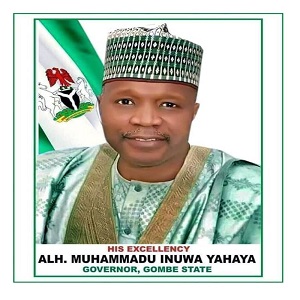
We appeal to Gombe State Governor, Alh. Muhammadu Inuwa Yahaya and Sen. Danjuma Goje to finish the project and, if possible, build a new road for more benefits.

Nazir Muhammad Saulawa could be reached via nazzhubby@gmail.com

OBIDIENTS: A thinly veiled ethnic entrepreneurs

By Mubarak Shu’aib

Ask most people why countries break apart, and many will say that different groups sharing a single country naturally dislike and distrust one another. For example, Yugoslavia fragmented because the Serbs and Croats and then the Bosnian Muslims started to fight each other after the collapse of the Soviet Union. Ethiopia recently descended into civil war because its various ethnic groups – the Tigrayans, Amharans, and those from the Sidama region- each wanted government control. So fundamental ethnic and religious differences must be the cause of all these conflicts.

Nigerians have a lot at stake in answer to this question. Our country has become increasingly divided, with ethnicity now playing a central role in debates over where the presidency should go come 2023. Could the country travail through these adversaries and polarisations?

It turns out that the differences themselves do not lead to violence. This is the finding of political scientists who have studied hundreds of ethnic conflicts worldwide. Almost all countries are multi-ethnic and religious, yet few experience crises.

For a society to fracture along identity lines, you need mouthpieces – influential people willing to make discriminatory appeals and pursue discriminatory policies in the name of a particular group. They provoke and harness feelings of fear as a way to lock in an ethnic constituency that will support their scramble power. These mouthpieces are often politicians seeking to gain or maintain control. Still, they can also include business elites (seeking brand loyalty), religious leaders (seeking to expand their followers), and media figures (seeking to grow their audience). 

Separate and hostile ethnic identities don’t exist in a vacuum; they need to be crafted, and these individuals rise to do just that. They’re often at a high risk of losing power or have recently lost it. Seeing another route to securing their futures, they cynically exploit divisions to try to reassert control. We see such figures on our social media platforms (Twitter, Facebook etc.). And they’re more dangerous than what we’ve been led to believe.  Experts have a term for these instigators of conflict: ethnic entrepreneurs.

The term was first used in the 1990s in Yugoslavia, but ethnic entrepreneurs have emerged many times over in all parts of the world. Though the catalyst for conflict is often ostensibly something else – the economy, freedom of religion – ethnic entrepreneurs make the fight expressly about their position and status in society. Harnessing the power of media, they work to convince citizens that they are under threat from an out-group and must band together under the entrepreneur to counter the threat. They also try to persuade those in their group, often with incendiary language, that they are superior and “deserve” to dominate. They (ethnic entrepreneurs), at rallies, symposia, places of worship and town hall meetings, cast aspersions on some ethnic and religious groups.

So why do average Nigerians let themselves be swept along this rhetoric? Perhaps surprisingly, they are often clear-eyed about ethnic entrepreneurs. They know these individuals have their agenda and are not telling the whole truth. Many Igbos did not trust, let alone love, Peter Obi, who was a running mate to Atiku Abubakar a few years earlier (2019). But they’re now willing to show support after a mounting threat to their lives, livelihoods, families, or futures. Over time, the OBidients’ rhetorics and increasing ethnic biases steadily sowed doubts. After silencing the disloyal journalists and media outlets, they plied their audiences with unrelenting messages of fear and suspicion.

These ethnic entrepreneurs are now thriving. But they emerged out of nowhere. In fact,  from the #EndSARS protesters, some of these ethnic entrepreneurs have metamorphosis into #OBIdients. Unfortunately, Mr Obi is relying on their appeals to win the presidency. Albeit with a coded language.

Religion is next. To secure the support of Evangelical leaders and their increasingly mobilised voters, the ObIdients stake more and more pro-life positions. Moral imperatives and cultural identities are now, more than ever, driving voting patterns. 

From appealing to core policy concerns and stoking anxiety where it’s not required, these ethnic entrepreneurs are using different tools to upset the country’s political atmosphere. 

They rightly do so by exacerbating issues on social media. Deborah’s murder is a case study. Twitter exploded, Facebook went mainstream, and social media became an ever-present part of our lives.

Critically, a network of these gleeful ethnic entrepreneurs realised that they could gain ratings and influence by emphasising online tension. As a result, media titans such as SAHARA Reporters, who rely on ratings and clicks, feed us increasingly polarised content.

Into this political morass stepped in Peter Obi. In his bid for power, he realised that appeals to identity could galvanise his political base.  So now, he embraced identity politics explicitly and with gusto.

Obi intuitively understood that the deep feeling of alienation among many Igbo voters could carry him to power.  Although he’s too clever to factor much into the division like other ethnic entrepreneurs, he resorted to radicalising the previous administrations he’s part of as a two-time governor of Anambra State.

Although he remained an underdog in the race, his movement is a future incentive for other ethnic entrepreneurs who are now studying his playbook and will, without a doubt, use it to try to catapult themselves into the Villa in the nearest future. They will build on the momentum, and they will do so by manufacturing threats, fomenting even more ethnic fear, and convincing Igbos that they genuinely are in the midst of an existential fight. How far will these ethnic entrepreneurs go? How far will we let them?

Mubarak Shu’aib writes from Hardawa, Misau LGA, Bauchi State, via naisabur83@gmail.com.

Of Dino Melaye and the danger of self-delusion

By Ambali Abdulkabeer

I understand Dino Melaye is a serial political clown who doesn’t deserve much attention. Yet there’s a need to say a few words about his recent cringe-worthy video targeted at Peter Obi.

In the viral video, Dino argued that Nigeria’s problem is beyond cutting governance costs. He said that with all confidence. Ignorant.

Nigeria is what it is today due to a lack of financial prudence in the political firmament. For instance, a report emerged that President Muhammadu Buhari travelled 11 times in five months. However, if you carefully research the trips facilitated with the country’s hard-earned money, you may discover that not all the trips would demand the President and his needless entourage.

Ahmed Lawan, the President of the Senate, in a lecture titled ‘The Legislature, Legislative Mandate and People – The Reality and the Public Perception’ and presented during the First Distinguished Parliamentarians Lecture Series organised by the National Institute for Legislative and Democratic Studies last year, clarified the salaries of members of the National Assembly.

“The total salary of a member of the Senate is about N1.5m while that of the House of Representatives is about N1.3m.

“The average office running cost for a senator is about N13m while that of a member of the House of Representatives is N8m”, Lawan said in the robust paper.

When calculated, the N13m office running cost for a senator amounts to N52m per annum, while the N8m for a member of the House of Representatives amounts to N32m in a year.

Plus salary, this means that each Senator goes home with 70 million and House of Reps member with 47.6 million annually.

Don’t let us talk about the salaries and allowances of the President, Vice President, Ministers and others. A waste of time!

Then the big question is, how much does a diligent civil servant get annually, or even in his entire 35 years in service? You can answer that!

And don’t forget this country is abysmally run through heavy loans upon loans. So if any country in the world must cut governance costs to attend to its multifarious crises, it should be Nigeria.

There is nothing wrong with Dino canvassing support for Atiku Abubakar. But to say that the only solution now is the unity of Nigeria is problematic. It’s even self-delusion to tip a former vice president as the best man for the job! If we are united (which I think it’s untenable given our slapdash approach to leadership), the country needs people who are genuinely financially prudent to survive. Not these endlessly grasping ‘agbada men’ carting away its resources.

It must also be said that whether or not Peter Obi is manageable for the country at the moment, Nigerians have the liberty to decide in 2023. It would be fair, however, to remind us that our country needs a better future.

The Danish poet and social critic Soren Kierkegaard was right when he said, “There are two ways to be fooled. One is to believe what isn’t true; the other is to refuse to believe what is true.” So while they should embrace the fact that the country needs a genuine president, Nigerians should not be fooled into believing cutting governance costs isn’t a solution.

Ambali Abdulkabeer writes from Ilorin. He can be reached via abdulkabeerambali@gmail.com.