Opinion

Days of Future Past: Creativity, Technology and Challenges of Film Policy in Kano (II)

By Prof. Abdalla Uba Adamu

Being a keynote at the Kannywood Foundation film training workshop, on 2nd October 2022, Kano

Opportunities of Digital Technology

By 2012 the Hausa film industry has entered into the doldrums I have just described. There was a lot of head-scratching about the next moves. In the meantime, many individuals had formed YouTube channels and were uploading Hausa films with or without the knowledge and consent of the producers. Most of the films were old and were subscribed by internet newbies who had just acquired Smartphones and taking advantage of the cut-throat competition among Nigeria’s main service provers (MTN, 9Mobile, Airtel, Glo) were buying data and watching films on their phones. The DVD and CD players faded away, and although kids were still selling what were clearly outdated CDs at traffic junctions in the city of Kano, the process of watching free films on YouTube made the CD market non-viable. Then Arewa24 came along.

An initiative of the US Government, Arewa24 was part of the anti-terror and anti-radicalization program of the US State Department’s Bureau of Counterterrorism. The task was contracted to Equal Access International (EAI), which eventually established Arewa24, the first Hausa language satellite station rooted in peacebuilding and entertainment, in 2013. One of the ways the station revolutionized Hausa cinema – and thus succeeded beyond its expectations was the introduction of TV shows, hitherto a neglected entertainment segment in Hausa cinema. Broken into seasons and episodes, the first TV show on Arewa24 was Daɗin Kowa, a weekly drama about a melting pot city somewhere in the north of Nigeria containing a diversity of ethnicities, religions, languages and social classes. Of course, there are actual Daɗin Kowa settlements in Gombe and Kaduna State, but that did not deter the Series filmmakers. It was massively successful on multiple fronts.

First, it deconstructed the then-current Hausa cinema based on Hindi cinema with a lot of choreographed singing and dancing as well as romantic storylines, which was tiring to Hausa audiences. Second, it reconstructs Hausa TV shows of the 1970s, so beloved by cultural purists of Hausa storytelling. Third, as VOD (video on demand), Arewa24’s Daɗin Kowa blazed a new digital trail in film marketing for Hausa filmmakers. Being heavily subsidized, the producers can afford to load the entire series on an easily available platform of YouTube.

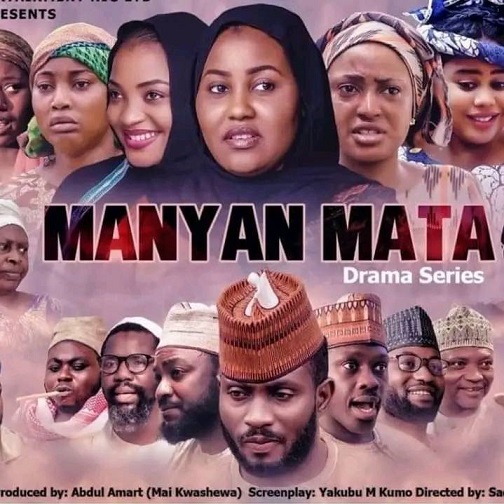
Yet, the second TV show on Arewa24, interestingly, was by an independent studio, Saira Movies, and the series was Labarina, made a year before Arewa24 took off in 2015. The novelty of Labarina as a series had a massive impact on online viewing of Hausa communities. Armed with Smartphones and cheap data from competing ISPs, millions tuned to Arewa24 to watch the series and later download it when it shifted to YouTube. It was the success of Labarina as a TV show that provided a backstory to the audience receptivity of Daɗin Kowa.

YouTube is an American online video sharing and social media platform headquartered in San Bruno, California. It was launched in 2005 and has become the main avenue for African cinema distribution. It is important to emphasize its American roots and origins to draw attention to the fact that the censorship regulations in any country do not apply to it. The Google-owned video service is also a major tool for self-distribution, as illustrated by the proliferation of web series in local languages in countries such as Ethiopia, Kenya, Rwanda, Senegal and Nigeria.

Kano filmmakers were quick to jump on the TV show bandwagon by cloning the success of Daɗin Kowa as a series broken up into episodes. Not only are the story arcs captivating, but they also provide a deeper script philosophy that is often critical analysis of the anthropology of contemporary Hausa societies. Although coming earlier than Labarina, Daɗin Kowa was more successful than Labarina, which was based on basically Bollywood soap operas. Daɗin Kowa was an authentic reflection of the contemporary realities of Hausa communities.

Other YouTube channels quickly followed. Table 1 shows a few of the channels and their overall viewership.

S/NSeriesChannelSubscribersDateChannel Views
 Izzar SoBakori TV969,0002014119,764,682
 Kwana Casa’inArewa24469,000201484,222,468
 LabarinaSaira Movies468,000201348,726,390
 AduniyaZinariya TV413,000201838,632,116

Bakori TV, which hosts Izzar So, has the highest number of channel views followed by Arewa24, then Saira Movies and Zinariya. These metrics, as indicated, reflect the overall channel views rather than the series – but provide an idea of the popularity of the series hosted by the channels.

Izzar So is a very popular TV show, judging by the audience metrics of each episode. Yet it was hard to determine its overall playlist metrics on YouTube. This was because the channel is so poorly organized that it does not even shift its individual episodes into an effective Playlist grouping. The channel has only two Izzar So playlists; Season 1 with 13 videos and Season 2 with 3. This, of course, is inaccurate since in the main listing of videos, the Channel listed episode 100 in the series at the end of September 2022, although it is unclear which season it was. The average views for the latter episodes are slightly over one million. Even their Facebook page does not promote the series in the light of providing information about the series, the stars or the stories.

Similarly, while Aduniya has a playlist, it only listed 33 videos in the list, whereas the list of videos with the episodes has the latest episode being number 73 with over half-million views. Labarina did not fare much better, with three playlists listing less than 30 episodes, when Season 5 EP1 was released in late September 2022.

While most of the TV shows streaming on either Hausa VOD or YouTube are romantic soap operas, Aduniya stood out because of its focus on the gritty urban life of a Kano city – exposing what I call ‘corruption from below’. It competes only with Daɗin Kowa but surpasses it in its presentation of the harsh, tough and ruthless social culture that operates below the radar of public spaces.

It is clear, therefore, that Hausa filmmakers are gradually favouring the TV show format, but their lack of digital skills to effectively present the contents limits their appeal. Further, with millions of views, the TV show filmmakers have not been able to provide adequate information on either the series or the synopsis of the episodes anywhere on a dedicated website (for which there is none, except Arewa24) or even Wikipedia entry.

Besides the challenges of poor digital marketing skills of the TV shows, filmmakers in Kano also faced the problems of censorship from the Kano State Censorship Board. In a bizarre revenue-driven focus, the Kano State Censorship Board demands that TV show series must be submitted to it for censoring before being uploaded to YouTube. Yet the servers are not based in Kano nor under Nigerian government control, so it is difficult to see how the Board will have authority over the contents on a server located in California.

Towards a Cultural Film Policy

The key objectives of film policy are to promote new artists, create new jobs, increase investments in film production, attract foreign producers and enhance the outward-looking character of Hausa cinema. So far, the only film policy available in the country is the policy of regulation from both the National Film and Video Censors Board (NFVCB) for the nation and the Kano State Censorship Board for Kano State.

The regulatory focus of these bodies was to ensure cultural specificity in film production in whatever language it is produced. The usual focus was on avoidance of foul language, nudity, and reproducible behaviour, especially for impressionable viewers and religious sensitivity. It would appear, therefore, that any policy would have to revolve around the cultural and religious frameworks of the audiences.

This issue had been a sore point with Hausa filmmakers right from the halcyon days of the industry from 1998 till its eclipse in 2007. Market-driven Hausa filmmakers are focused on commercial rather than an artistic success. Arthouse films like Kazar Sayan Baki, and Ibtila’i, did not sell because they had no commercial motifs of singing and dancing. And once the studio feels it is not selling enough to remain afloat, it simply closes shop and moves to selling essential commodities.

This is where the Kannywood Foundation comes in. A training program such as this will pave the way to the future after emerging from a cloudy and rocky past. I will not presume to give a policy here because it is a group effort. However, while thinking about the policy directions of Hausa cinema, the following might be points to ponder:

  1. Move away from commercialization to professionalization. Other professions include specific, targeted and focused entry points and exits. You don’t wake up one day and claim to be a doctor. One has to go through a rigorous process of certification. This should be the same with the film industry. It is not to say, ‘I am creative, and I have money’. You have to demonstrate competency since what you do is representation.
  2. Seeking storylines in community arcs. A policy should demote the idea of transnational copying of films that focus on blindly copying Indian or Western films. It should focus on the anthropology of our experiences – of which there are myriad ways of getting story arcs. A policy can, therefore, effectively reward those ethnographically based films, through additional funding, rather than ineffective ‘film awards’, most of which were bought by the filmmakers
  3. Any training program that would be part of a policy should include cultural studies. Scriptwriters, directors, actors and production designers must know what constitutes public culture – beyond what they experience. They need to be aware of it from the structural perspective of a research process. Production designs, therefore, must be not only accurate enough to the period being recorded but also aesthetic enough to convey a sense of elegance and pride in cultural tradition
  4. A greater focus of the policy and training should be on digital marketing. It is not enough to simply open a YouTube channel and upload films. Practitioners need to be aware of how to drive traffic to their channels and organize their content in a structured and easily accessible form.
  5. Reaching out to the larger world. While it is pleasing that many Hausa TV shows are now flooding YouTube, most have no subtitles in an international language that will communicate to international audiences. This is clearly a misuse of the social media platform – where although open to the world, Hausa TV shows are restricted to Hausa audiences. If there is anything to copy from Hindi cinema, it should be its marketing strategy. With their subtitles, their films are seen and accepted as cultural products worldwide – for language is the best representation of culture.
  6. Careful attention must be given to Hausa VOD services, particularly Northflix and Kallo. While still in their early stages, these VOD streaming services effectively show the way to the future.

Cultural commodities – whether tourism-related or popular culture – are marketed with the assumptions of their impact on the daily lives of their consumers. Marketing determines the success of especially media industries, often with a disregard for the content. The commodification of the Hausa popular cultural industries was premised on profitability motives, not art or aesthetics. Financiers are ready to continue investing in the industries as long as they can make effective profits. It is this profit motive that commoditizes art and elegance to common supermarket products with a short shelf life.

Prof. Abdalla Uba Adamu wrote from the Department of Information and Media Studies, Bayero University Kano, Nigeria. He is, among many other things, the former Vice-Chancellor of the National Open University of Nigeria (NOUN). He can be reached via auadamu@yahoo.com.

Nigeria of my dreams

By Abdulhalim Ishaq Ringim

The giant of Africa and emerging global giant in all ramifications; the story of Nigeria’s journey to greatness has become a subject for intellectual and academic delineation, for it eludes the projections of even the most reputable global think tanks.

Nigeria solidified its position as the largest economy in Africa and became the fastest growing economy in the world. The nation achieved such a feat by restructuring its economy. Successive governments have over the years focused on structural economic transformation for long term economic growth with commensurate development. The economy became diversified not only in terms of output, but also in terms of productivity and revenue generation.

Today, Nigeria no longer depends on oil revenues courtesy of our booming value-added manufacturing-led industrialization and knowledge-based economy. This positive economic trend was further crystallized by the diversification and expansion of the tax net through an efficient and leakage-free tax regime. The expansion of our export basket with processed agricultural commodities and mineral resources produced by our manufacturing sector have ensured steady inflow of foreign exchange and that has stabilized our currency’s exchange rate. We are now a global power in trade.

We are witnessing massive capital influx in form of Foreign Direct Investments(FDIs) due to our favorable business environment, abundance of material resources and a skilled labor population. This has guaranteed an upward trend in our employment rate and a resultant free fall in our unemployment and poverty rates. The skills and technology transfer initiatives that accompanied the massive FDI influx has increased the employability of our working age population and our productivity.

Additionally, the huge tax receipts and social responsibility commitments from our large private sector formed a gargantuan financial resource base that funds our human capital development endeavors. Basic and Post-basic education is now free and compulsory. We have increased the penetration of healthcare institutions across the country and have driven down maternal and child mortality and morbidity rates. We have invested hugely on tertiary education, research and development and such have greatly contributed to our transition to a knowledge-based economy. We also have developed a robust social protection system that adequately caters for our vulnerable geriatric and pediatric population.

Gratifyingly, the number of out-of-school children we have is very insignificant today. Thanks to a proper diagnosis of the problem and the deployment of a robust solution. We understood that we had over 10 million out-of-children and we realized that the almajiri population in Northern Nigeria was the major source. So we restructured our education system in such a manner that it will be able to accommodate and admit a significant percentage of the out-of-children. We also deployed variable policy actions based on the individual peculiarities of Nigeria’s states and regions.

In the North, which contributed the highest number of out-of-school children, we revitalized more than 150 Tsangaya Model Schools and operationalized a standard curriculum for these schools which included modern education, Islamic education and technical/vocational education.

We then systematically engaged all stakeholders involved and secured their support to absorb all the Almajiri population into these schools in batches. The Almajiri teachers continued to offer lessons in Islamic studies while other teachers complemented their efforts with modern and entrepreneurial education.

We then banned the Almajiri system and imposed stringent penalties in case of violation. We trained all the absorbed Almajiri students in batches and the moment we were done with that, we converted all Tsangaya Schools to conventional primary schools. At that point, we had no Almajiri roaming on the streets. So these conventional schools became an addition to the pool of primary schools we have. And we now hardly have a child that is out of school.

In our bid to improve the productivity and employability of our working age population, we effected broad changes in the upper levels of the education sector in a manner that created extra routes to employment. We created a skill-based educational system that complemented the university education system. This new system assured the creation of what we call “new-collar jobs” or skill-based jobs. To achieve this, we constituted a broad apprenticeship program that trained and acquainted students with high demand industrial and technology skills. We then created a certification system for these students which was used to confirm their competencies by industries and organizations that require their services.

With this, many youths who were not able to pass through the university and could not get jobs in the previous system we operated were now suitable for the “new-collar” industry we created. This was how we reduced our unemployment rate and improved the productivity and employability of our working age population. A lot of industries of both local and international origins found Nigeria as a suitable investment destination because of our highly skilled, productive, employable and easily trainable working age population. Resultantly, our national productivity and output increased greatly. And millions of families were brought out of poverty because of the resultant increase in employment and income.

We witnessed a massive reorientation of the entire Nigerian population. The Nigerian people even with huge diversities in ethnicity and religion have been peacefully living together. This stems from the national reorientation exercise that prioritized the understanding of our differences and learning to tolerantly adjust and accommodate one another. The political terrain was sanitized in a way that disincentivized ethno-religious manipulation. We had series of constitutional amendments that reshaped the country towards true federalism where every federating unit is autonomous and productive.

The characteristic recurrent political crises that usually ensued from ethno-religious causations was put to an end by a political settlement arrangement backed by constitutional provisions that mandates the rotation of political powers among the 6 geopolitical zones of the country. This arrangement was conditional and was to be abolished after all geopolitical zones have had their share of political power. The underlying principle was that the frequency of political crises would be reduced. This resulted in smooth political transitions and Nigeria was no longer in a state of constant crisis management. Ultimately, this served as an enabler for the new political coalition that have ruled Nigeria over the years to be visionary and to focus on consolidating on successive efforts to achieve long-term structural transformation.

The rotational system has today been abolished having accomplished its ultimate objective and Nigeria’s political terrain is now completely meritocratic and significantly devoid of ethno-religious divisive undertones. Elections have also become very credible and peaceful. The structural and functional capacities of agencies of government responsible for enforcement of electoral laws and punishing election-related crimes were enhanced. The government also improved the country’s financial intelligence network for effective monitoring of financial flows during election seasons by responsible agencies and resultantly ensured enhanced compliance to financial regulations during election periods by political actors(individuals and parties). These among other measures improved Nigeria’s political climate and sanitized the country’s election processes.

Corruption which was once a major challenge we faced is now alien in this country. Few years back when Nigeria was still in a troubled state, we consistently ranked lower than average in most indexes that measure countries’ transparency, accountability and Integrity. However, the fact that most of the ranking organizations were mostly overseas made it easy for Nigerians and the government to fault the validity and accuracy of the data and methodologies employed.

Resultantly, home-grown transparency, accountability and integrity indexes were designed to assess the compliance of governmental institutions and organizations to national and global anti-corruption and good governance standards, regulations, guidelines and statutes. The indexes ranks these governmental organizations based on their respective compliance levels.

The ranking system exposed a lot of cases of lack of compliance to national and global commitments to anti-corruption and best governance practices. Some of the local statutes that were not being complied to included Freedom of Information Act, 2011; Executive Order No. 001, 2017; Fiscal Responsibility Act, 2007; Federal Character Principle; Framework and Guidelines for the Use of Social Media Platforms in Public Institutions, 2019; and Discrimination Against Persons with Disabilities (Prohibition) Act, 2018.

United Nations Convention Against Corruption (UNCAC), 2004; Nigeria’s Open Government Partnership (OGP) Action Plan II; Sustainable Development Goal (SDG) 10 and 16; African Union Convention on Preventing and Combating Corruption, 2006; Convention on the Elimination of All Forms of Discrimination Against Women; and Convention on the Rights of Persons with Disabilities and many others were on the other hand part of the international commitments that a lot of the government institutions contravened even while Nigeria was a signatory to them all.

Based on the discouraging results obtained from the assessment and ranking exercise, Nigeria embarked on a massive public service and institutional reform exercise. Government organizations were restructured and the capacity of public and civil servants was improved through a robust capacity building exercise. Those among them who could not withstand the rigor of the retraining exercise were retrenched in accordance with labour laws and were replaced by young, capable hands.

Accessibility and Functionality of Institutional Websites; Fiscal Transparency and Accountability; Transparency in Procurement; Citizens Engagement, Responsiveness and Effective Feedback Mechanisms; and Effective Human Resources Management were assured by the reformed public and civil service. The combination of these public service reforms and reforms in anti-corruption administration largely alienated the magnitude of corruption in Nigeria. Long-term stability in government, judicial independence and improved citizen consciousness contributed to the establishment and sustenance of this resilient anti-corruption regime.

The insecurity that characterized Nigeria was approached from a holistic perspective. With de-escalated ethno-religious tensions resulting from massive citizen reorientation and improved political settlement, marked improvement in all human development and economic indices and a rejuvenated armed forces; Nigeria applied a hybrid of kinetic and non-kinetic interventions to solve her insecurity problems.

We restructured our security architecture holistically, amended our constitution to legalize state and community policing and rebranded our Federal Ministry Of Interior to Federal Ministry Of Internal Security And Home Affairs. The rebranded Ministry housed new security bodies that were responsible for border and forestland security. We developed and employed efficient technology-based methodologies in the surveillance of our borders and other spaces of concern. We also leveraged spaces that were formerly ungoverned for real estate, recreation, tourism, agriculture, modern livestock management and other industrial endeavors.

Our media sector also restructured itself to conform with the vision of a new Nigeria. While we were still in troubling times, the media adopted a role that was defined by a balance between freedom of press, social responsibility, fact-seeking and healthy media-government relationship. As a guiding philosophy, the media assumed a role that discouraged the glorification of terrorism/Insurgency and encouraged the operationalization of selective censorship or measured reportage of terrorist activities in favor of counterterrorism efforts. This was of course adopted without losing cognizance of the imperative of protecting freedom of expression.

The media continued to consistently condemn acts of terrorism and adopted editorial policies that embodied patriotism while denying the terrorists the notoriety they so much desired. The media and government worked closely towards disincentivizing the lack of balance between patriotic and unpatriotic reportages by discouraging the receipt of funding specifically meant for reporting terrorist incidences from both local and international organizations. This process was driven by pure patriotism. Due to the influence of national reorientation, the love for our country was the only incentive that drove this media restructuring process.

Resultantly, the stability of our economy and security and our status as a global power in trade and commerce guaranteed us improved recognition in the international community. And as we continued to consolidate on our renewed patriotic consciousness, Nigeria defied all odds and rose to take her proper place in the comity of nations. We joined important global power associations including the BRICS(now BRINCS), G-20 and G-8. We also got nominated into the United Nations Security Council as a permanent member.

Deep sigh! How I wish the above exposition was our reality. Sadly, it is just a compilation of many of my dreams which I have overtime documented in a collection I call the “Nigeria of my Dreams”. But the fact that I was able to dream of a prosperous Nigeria(including the details of the road to prosperity) means it could indeed become reality.

Abdulhaleem Ishaq Ringim writes, being an entry submitted for Sana’a da Ilimi Foundation’s Independence Anniversary Essay Competition.

Days of Future Past: Creativity, technology and challenges of film policy in Kano (I)

By Prof. Abdalla Uba Adamu

Being a keynote at the Kannywood Foundation film training workshop, on 2nd October 2022, Kano

A Tale of Two Cinemas

In November 2007, I was privileged to participate at the African Film Conference held at the University of Illinois, Urbana-Champaign, United States. It was a stellar gathering of what I call the ‘Nollywood Mafia’. The outcome of the conference was reflected in the publishing of selected papers in Viewing African cinema in the twenty-first century: FESCAPO art films and the Nollywood video revolution, published by the Ohio University Press in 2007. At the tail-end of the conference, a session called The SIU Nollywood Project Brainstorming was held on Sunday, 11th November 2007. Containing well-known Nollywood scholars such as Jonathan Haynes and Onookome Okome, as well as Nollywood stars such as Joke Silver, Francis Onwochei and Madu Chikwendu, among others (including those who study Nollywood from the fringes such as Brian Larkin and Birgit Meyer), the session sought to determine funding for research on Nollywood from the US National Endowment for the Humanities. A critical point of discussion during the session was the name ‘Nollywood’.

While discussions were on course for the funding mechanism, there was a feeling from the participants that the term Nollywood should be used to reflect all films from Africa, regardless of region, to create a unified view of African cinema. As the only northern Nigerian with a focus (and paper earlier presented) on Hausa cinema, I objected and spent time arguing why the term Nollywood cannot be used as a blanket term for African cinema. Continentally, films from north Africa from Egypt, Tunisia, Morocco, Algeria and Mauritania are radically different from those produced by Nigerian Nollywood. Similarly, filmmakers from Chad, Burkina Faso, Senegal Cote d’Ivoire are more ethnographic to their cultures, which makes them required viewing for film and cultural studies across the world.

Even back in Nigeria, there is a radical difference between Hausa language cinema and the type of films produced and promoted by Nollywood. Labelling all African films as Nollywood is to cancel the identity of the portrayals of the films by different cultural groupings in the continent and project Nollywood as the only ‘African voice’. I am unsure whether the funding was obtained, but I know that the idea of labelling all African films as ‘Nollywood,’ regardless of cultural point of origin, was dropped.

***

By 2012 the Hausa film industry had literally crashed. The major marketers-cum-producers had all pulled out of the industry. Their shops in the major video markets in Kano were subsequently filled with clothing—particularly blouses and football jerseys; for these make more money than selling films. Others took to selling Smartphone accessories, while others returned to the farm and became serious farmers. The few Hausa megastar actors took to commercial advertising of noodles, milk and other household commodities – often moving from house to house with products’ marketers – relying on their faces and voices (making sure they introduce themselves in all the commercial jingles) to sell to increasingly hungry population caught in the vortex of economic depression. The frequency of releasing films drastically dropped because no one was buying. International Satellite channels like the Indian Zee World, especially their English-dubbed TV series, caught Hausa urban attention more than recycled Hindi film clones that were the hallmarks of Hausa video films. Consequently, many reasons combine to lead to the crash of the Hausa film industry towards the end of 2016. 

Market congestion

The popular cultural industries in Kano were marketed into market hubs. The Bata market at the edge of Sabon Gari controlled the predominantly foreign films and music sales and the main distribution centre to other parts of Nigeria and Africa, where a sizeable market existed in Niger, Burkina Faso, Ghana, Togo, Cameroon, Chad and Congos.

When the Hausa video film arrived in 1990, it found a ready template to attach itself. The other was Kasuwar Ƙofar Wambai, located at the edge of the walls of Kano city and near a cluster of old colonial cinemas. The Wambai market focuses mainly on leather, textile and plastics. However, it was also the hub of audio tape sales – with marketers doing brisk business pirating old EMI, Polydor and HMV tapes of traditional Hausa musicians recorded in the 1960s. Road construction work at Bata in about 2003 created unfavourable conditions for many of the stall owners, and some decided to shift to the Wambai market. By 2005 the video film market had moved entirely to Wambai, which now became the new Bata.

The Wambai market, hitherto occupied by cassette dealers who ignored the Hausa film industry, suddenly became a virgin territory for film marketers and producers, with each opening a stall. In less than five years, it had reached its ascendency and crashed due to the massive congestion of producers and marketers – all selling the same thing. When I visited the market in May 2017, I counted less than ten stalls selling either videos or audio; contrasted to some five years ago when it was bursting at the seams with these products. The stalls have now been taken over by stocks of cheap blouses, football jerseys and cloned Smartphone accessories.

Lack of new or captivating scripts

By 2005 the Hausa video film industry had become fully established, with over 1,600 officially censored releases. With an extremely few exceptions of less than 0.5%, they all revolve around a pastiche of Hindi films in one form or other aimed, as the video filmmakers themselves kept insisting, at urban Hausa children, youth and housewives. Yet, most Hindi films could be classified as musicals, especially due to their reliance on a strong dosage of song and dance sequences blended with a melodramatic storyline, which employs formulaic ingredients such as star-crossed lovers and angry parents, love triangles, corrupt politicians, kidnappers, conniving villains, courtesans with hearts of gold, long-lost relatives and siblings separated by fate, dramatic reversals of fortune, and convenient coincidences.

This stylistic technique provides a vehicle for echoing a fundamental Hausa emotional tapestry in three main creative motifs: auren dole (forced marriage, the love triangle, and the obligatory song and dance sequences—with an average of about six songs in a two-part video. With every producer trying to outwit everyone with more love triangles, song and dance routines, the market became saturated, and audiences got bored – and indicated this by refusing to buy the films.

Monopoly by Megastars

Those actors lucky enough to be accepted early enough in the film industry came to dominate the system. This was actually imposed by the marketers who insisted on a particular actor appearing in a film they would sponsor or market because such actors were more bankable and guaranteed quick sales of their films. With this economic force behind them, such few (perhaps less than five) came to dominate almost every ‘big’ budget Hausa film. By 2017 their stars had started fading; audiences became tired of seeing them in nearly the same film with different names, and marketers dropped them. While still making films, they diversified their faces and voices to commercial advertising for major telephone service providers and essential commodities such as chicken noodles and milk and soup seasoning.

The fading of the fortunes of the megastars became evident with the ascendency and popularity of relatively unknown stars of a TV series, Daɗin Kowa, shown on Arewa24 satellite TV that began on 21st January 2015. Daɗin Kowa (pleasant to everyone) is an imaginary town that serves as a melting pot, housing Nigerians of various ethnicities and religions and yet living peacefully. In 2016 it won Africa Magic Awards over Sarki Jatau, an expensive lavish, traditionally cultural Hausa period drama.

The coming of Arewa24, initially conceived and funded by the United States State Department’s Bureau of Counterterrorism to counteract insurgency in 2014, merely placed another nail in the coffin of the Hausa video film market. Transnational in its outlook, the Arewa24 TV series provide a level of script sophistication unheard of in the Hausa film industry. Other Satellite TV stations, such as StarTimes, and Hausa Channels on Africa Magic DStv, including GoTV, became increasingly affordable. Showing a massive amount of Hausa films, they eclipsed the purchase of CDs and DVDs of Hausa films. Audiences prefer to watch for free than to go through the hassle of purchasing DVDs that often do not work and requiring DVD players, mostly Chinese knock-offs of international brands that often turn out dodgy.

New Media, New Poverty

The Internet provided the biggest blow to the decline of Hausa video films. With telecommunication companies competing for customers and undercutting each other in offering data plans, Hausa youth have more access to social media sites such as Instagram and YouTube. The latter, in particular, provided them with opportunities to upload hundreds of Hausa films for all to see. While this has increased the visibility of Hausa films worldwide, such popularity does not translate to return on investment, as most of the films were illegally uploaded to YouTube.

Another dimension of the new media political economy was the proliferation of Download Centers in northern Nigeria, with the largest groups in Kano. Operators of these Centers rip the CD of DVDs of Hausa films and convert them into 3gp formats and make them available to customers at N50 per film—with discounts given for volume purchase. A 1GB microSD card can pack as many as 20 films. The 3gp format makes it possible for people to watch the films on their Smartphones, which readily and rapidly replaced DVD players, which require a TV and electricity – something not always guaranteed in Nigeria. Often the Downloaders ‘lease’ the films from street vendors – children hawking the CDs and DVDs at traffic lights – for N100 per film, rip them off, and return back to the hawker who simply puts them back into its pristine cellophane wrapper and eventually sells it – thus gaining double profit. Both the various Associations of Hausa filmmakers and the Kano State Government’s Censorship Board had tried to stamp out the Downloaders, but without success, as the latter had become so powerful and organized that they formed various Associations. The punitive steps were usually to arrest them, fine them, and order them to delete the illegal ripped-off films from their computers. These measures proved so ineffective that a deal was worked out in 2017 between the filmmakers and the Downloaders to ‘officially’ lease the films to the Downloaders for a fee in the form of a ‘legal license’. However, these measures did not work because the Downloaders prefer to obtain their films cheaply rather than being registered with the Government as licensing the films. On the other hand, the Kano State Censorship Board simply asks them to register their business and charge them fees, regardless of their downloading bootleg business.

Southern Indian Competition

A final factor in the decline of the Hausa film industry by 2012 was the massive popularity of ‘Indiya-Hausa’ films. These were Telugu and other southern Indian films dubbed into the Hausa language by, first, Algaita Studios in Kano. When the marketers at Wambai market noted the popularity of these dubs, they also moved in and commissioned their own dubbed translations.

The original Telugu films were brought to Kano by an Indian national with full license to translate into local African languages. The first film translated by Algaita Studios was the Bhojpuri film, Hukumat Ki Jung (dir. S.S. Rajamouli, 2008). It was translated as ‘Yaƙi da Rashin Adalci’ (Fighting Injustice). Others that followed included Dabangg (dir. Abhinav Kashyap, 2010), Racha (dir. Sampath Nandi, 2012) and Nayak: The Real Hero (dir. S. Shankar, 2001). In an interactive session in June 2016, Buzo Ɗanfillo, the CEO of Algaita Studios and whose voice is used in the translations, told me that the Algaita Studio had translated 93 films by 2016. They were paid ₦80,000 by the Indian licensee of the films.

The first few films that appeared from the Algaita Studio from 2012 were considered novelties, providing relief from watching complete remakes of Hindi films by Hausa filmmakers or even the originals themselves. What made them more attractive, however, was the translation of the titles of the films in a single powerfully expressed word, or a couple of words, that seems to take a life of their own and communicate either adventure, danger or defiance. For instance, Nayak: The Real Hero (dir. S. Shankar, 2001) was translated as ‘Namijin Duniya’ (lit. Brave); Indirajeet (dir. K.V. Raju, 1991) as ‘Fargaba’ (Fear), and Velayudham (dir. Mohan Raja, 2011) as ‘Mai Adda’ (Machete). Referred to as ‘India-Hausa’ (Hausa versions of Indian films), they quickly became the new form of transcultural expression in the Hausa entertainment industry.

The Indiya-Hausa translations were massively successful and attracted audiences not attuned to Indian films in the first place. This can be deduced from the numerous comments on the Facebook pages of the Algaita Dub Studio (https://www.facebook.com/algaitadub/).

Their success created a public debate, mainly online on social networks, about their cultural impact. In the first instance, there does not seem to be any attempt by the translators to mute some of the bawdier dialogues of the originals – translating the dialogue directly into Hausa. Kannywood filmmakers latch on to this as an indication of cultural impropriety of the translated films. Additionally, the often-romantic scenes revealing inter-gender sexuality were not edited out by the translators since their focus is not the visuals but the voices. This, again, was pointed out by Hausa filmmakers as a direct attack on Hausa cultural sensibilities. Kannywood filmmakers accept that they appropriate Hindi films but argue that they culturally adapt the stories to reflect Muslim Hausa sensibilities.

Prof. Abdalla Uba Adamu wrote from the Department of Information and Media Studies, Bayero University Kano, Nigeria. He is, among many other things, the former Vice-Chancellor of the National Open University of Nigeria (NOUN). He can be reached via auadamu@yahoo.com.

As former Wazirin Zazzau goes to court

By Safiyanu Ladan

The death of Emir of Zazzau Alhaji Dr Shehu Idris on 20 September 2020 has thrown hundreds of thousands of people across the length and breadth of this country into mourning. As it also provided an opportunity for princes in the four ruling houses of Zazzau Emirate to jostle for the vacant throne.

Per the law, the Zazzau Emirate Council, under the leadership of Wazirin Zazzau Ibrahim Muhammad Aminu, as the chief custodian of the tradition of the Zazzau Emirate in the absence of the emir, wrote to the Kaduna State Government notifying the governor of the demise of the emir and the vacant position created by his death.

On the third day of Fiddau prayers, the governor, while eulogizing the late monarch, said ever since the emir died, he could not sleep in the night until he took drugs, saying that the late emir used his wisdom, knowledge and experience in helping his administration.

In the selection of the emir, he openly demonstrated his neutrality as he prayed for the kingmakers to get a worthy heir to the throne that would emulate the good leadership qualities of the late emir.

Having been empowered by the law to select a new emir upon the death or deposition of an emir, the kingmakers have every right to choose any person they deem fit and worthy of the throne without prejudice against any person or group.

The law said that, and I quote, “Upon the death, resignation, or deposition of any chief or any head of chiefs other than a chief of a kind referred to in section 4, the Governor may appoint as the successor of such chief or head of chiefs any person selected on that behalf by those entitled by customary law and practice to select in accordance with customary law and practice.”

Any ulterior motive from any individual or group in this will set unprecedented hostility in a peaceful and all-accommodating emirate.

The ill decision of the government to undermine the most peaceful selection process by appointing Ahmed Nuhu Bamalli and other than the three nominees forwarded by the kingmakers has further divided the once united ruling houses, which they have enjoyed for decades as a result of intermarriage between them that produced hundreds of children.

In 2020, Wazirin Zazzau Ibrahim Muhammad Aminu, chairman of the Zazzau Kingmakers committee, was suspended by the Kaduna state government for dishonouring an informal invitation and was subsequently taken to court for allegedly violating the government’s rule.

While still in court, he was removed and replaced by Khadi Muhammad Inuwa Aminu in 2021.

In what appeared like an unending tussle last week, the removed Waziri notified both the Kaduna State Government and Zazzau Emirate of the decision to take legal action against his wrongful removal and wrongful appointment of Ahmed Nuhu Bamalli as the Emir of Zazzau.

As we await to see how the court events would unfold in what seems like there are numerous vested interests in the tussle but hiding in the shadow of Waziri, time would expose and unmask their faces.

Safiyanu Ladan wrote from Kaduna. He can be reached via uncledoctor24@gmail.com.

Remembering Comrade Abdullahi Ali Yakasai: a tribute to a friend and hardworking unionist

By Murtala Muhammad, PhD

In July 2015, Reuben Abati, the Special Adviser on Media and Publicity to President Goodluck Jonathan, bemoaned that his phones that rang endlessly remained deafeningly silent when his boss was voted out of power. Sadly, the phones of thousands of colleagues, family and friends of Abdullahi Ali Yakasai stopped receiving goodwill messages from him from the fateful morning of Tuesday, 20th September, 2022. The phone calls and messages ceased coming. The calls, messages and personal visits did a vanishing act. The daily admonitions and glad tidings dried up because Comrade Abdullahi Ali Yakasai was no more. Our phones remained deadly silent from his messages. His death is indeed devastating and heart breaking for the people of: Yakasai Quarters, National Association of Academic Technologists (NAAT) community at both Branch and National levels, Association of Science Laboratory Technologists of Nigeria (ASLTON), the teaching and non-teaching staff at Kano University of Science and Technology, Wudil and the Nigerian Labour Congress (NLC), Kano State Chapter, mourned one of its most formidable and reliable comrades.

Without a shadow of doubts, Abdullahi Ali Yakasai was a man of many facets – a family man, public servant, labour leader, community developer and humanist. Yakasai’s patience allowed him to win the hearts of many. In Yakasai, Abdullahi was an expert who could see beyond short term gains with admirable consciousness in the promotion of togetherness and socio-economic development. He, alongside other leaders of Yakasai Zumunta mobilised resources for the execution of basic infrastructure and amenities that raised the living standard of the community. To keep the restive youths from the allure of anti-social gambits, they floated community funds mobilisation to pay SSCE fees for the less privileged students. He also participated actively in the provision of the material needs of the poor widows and vulnerable members in the community. The forum also floated scholarship awards to ensure that indigent and intelligent secondary and tertiary school students acquire the 21st Century skills for self-sustenance.

In community planning, Abdullahi was visionary. He planned projects with cognitive maps allowing him to organize his plans and tease out flaws. He chaired and served as member to committees celebrating outstanding sons and daughters of Yakasai. He was a man who was responsible and accountable to his commitments. Comrade Auwalu Mudi Yakasai claimed that “being a community leader is not an easy task.” One of the major dilemmas faced is the conflict between responding to the needs of the family and the collective needs; both are legitimate concerns. To one’s astonishment, Abdullahi balanced the two. He also became magnets of other tasks in the community. Having proven that he could be depended upon, he was eventually appointed into all other tasks. He sets aside his personal ambitions in order to facilitate the development of others. He absolutely excelled at everything he puts his attention to. With a personal mantra of, “do the right thing, the right way, and right now” he lived and died in activism and community development.

The Chairman, Nigerian Labour Congress (NLC), Kano State, Comrade Kabiru Ado Minjibir, said: “NLC honours and cherishes Comrade Abdullahi for what he has done for labour and recognizes his life well spent for better labour in Kano State and Nigeria.” Abdullahi served in the capacity as Treasurer, NAAT-KUST, Wudil; Treasurer, ASLTON at the National level; Member, State Executive Council, NLC, Kano State; Chairman, Gamji Memorial Association, Kano State Chapter; Member Executive Committee, KUST Multipurpose Cooperative Society; Member, Old Boys Association among many other positions. Abdullahi Ali lived up to billings of his name “Comrade”. He was extraordinarily generous in sharing his time and wisdom with younger comrades; most notably in his role as a mentor. Across his decades-long career as a union activist, organiser and leader, he was completely dedicated to empowering workers to take action to win improvements in their lives at work and in broader society. He campaigned for dignity, respect, peace and for a better world for all.

Abdullahi was friendly and accommodating. His messages were delivered through SMS, Facebook Messenger, Instagram DM and WhatsApp on daily and weekly basis. Many confessed that his message alerts announced to them, it is Friday. Speaking to me, Umar Abdurrahman, a staff of KUST, described Abdullahi as a colleague of inestimable value, who cared and loved everyone to a fault. He noted that his memories would remain indelible. “I received SMS from Abdullahi every Friday. More fascinating, I never met him in person. He treated me like a friend. He was someone who spread happiness and peace. His care will be missed forever. His legacy lives and breathes kindness. His efforts to give pieces of valuable advice and hard work among other virtues, will be remembered.” The response of many after the announcement of his death was “we have lost a friend.”

May Allah in His infinite mercy forgive Abdullahi Ali Yakasai, a lovely person, kind and generous not just with material things but with his time, intelligence wealth of experience. May Allah give his family the fortitude to bear the loss of a tireless advocate of any just cause.

Dr. Murtala Muhammad is an Associate Professor of International and Strategic Studies,
Kano University of Science and Technology, Wudil.

Pi mining – the way I see it

By Bilyamin Abdulmumin

314,159 dollars a Pi

One of the grand sagas that have been taking public attention is the issue of the Pi network. This project is said to be launched early in 2019. All potential subscribers need to come on board is a smartphone and data.

It depends on when one starts and how often they mine. But some pioneers (those who register for the crypto) have mined as much as 10000 Pis. However, the contentious saga that has been drawing attention was the Pi (cryptocurrency) relative value.

The value floating across as said to be the Global Consensus Value agreed by the world pioneers was a staggering 314,159 dollars. And already, many pioneers have as many as 10000 Pis. So, at this consensus, an average pioneer with 1000 Pis, the equivalent of 314,159,000 dollars, will need the services of similar camels that transported Alhaji Alhassan Dantata’s coins as the first person in 1929 to open an account with the First Bank. While a regular pioneer with as much as 10000 Pis, the equivalent of 3,141,590,000 dollars, will need the services of the Mansa Musa’s entourage like that accompanied him in 1324 for his first mecca pilgrimage.

The pioneers are determined and looking forward to this gargantuan windfall. Whether jokingly or not, some have already begun to imagine how to spend such jackpots. Many have embarked on the dream of climbing up the top social ladder by building exotic houses, expensive cars, or circumnavigating the globe for those who fancy the adventure.

Like many jackpot winners, these potential overnight billionaires continue to promise family and friends some bounties, including marrying them off, buying them houses in Asokoro, the latest iPhone, or sponsoring their pilgrimages.

While these pioneers continue to sail in their realm, their critics consider their aspirations at best as a mirage and, at worst, question their mental well being

When the President of the Association of Psychiatrists in Nigeria (APN), Taiwo Obindo, says that more than 60 million Nigerians are suffering from mental illnesses, the Pi critics say no wonder.

But one posing point the Pi critics raised is that instead of the pioneers assuming mining, it is actually them who are being mined. In other words, they are the cash cows, referring to the advert pool fee that the Pi initiators are generating from about 40 million users. Very plausible because in this era of social media, subscribers are gold.

On the other hand, the pioneers’ reason, too, is not a pushover. Instead, they point to the traction the Pi is getting, the global state of transition from the fiat currency, and the success of some previous cryptocurrencies such as Bitcoin. According to them, history is repeating itself. When Bitcoin started in 2008, everything was against its subscribers. They were seen as shadow chasers and laughed at. But when success stories began to come in, the doubting Thomas was nowhere to be found.

For those who don’t know how the current Pi value of 314159 came about, Pi is a useful mathematical constant with infinite values ranging from 3.14, 3.14, 3.141, 3.1415, 3.14159… to infinity. But, disregarding the point behind the decimal and in the ascending order, the pioneers arrived at 314159. In addition, to commemorate this mathematical constant, the official Pi lunch was on March 14, which is 3.14, the Pi first value mentioned.

In my opinion (everything considered), the expectations of the pioneers on the Pi network have reached a fever pitch, but the cryptocurrency hitting the market is on the horizon.

Bilyamin Abdulmumin is a PhD candidate in Chemical Engineering at ABU Zaria. He is also an activist for a better, informed society. He can be reached via bilal4riid13@gmail.com.

Kannywood Movie Review: Mutuwar Aure

By Franziskus Kazimierz (Casmil)

The Al-Mubarak International Film Production LTD movie Mutuwar Aure (Hausa: Death of the Marriage), produced in 2018, tells a story set in a modern-day Hausa community by and large dealing with the common, or perhaps a rather notorious topic of divorce in the Hausa cultural context. Thus, set exclusively within a family context, the film’s plot tells a narrative between a family drama – or what it may be for “Hausa eyes” – and a love-triangle story. It also heavily proselytizes Islam and defends its values and proscriptions – especially prayer – and against sorcery – a generally well-pronounced motive within Northern Nigeria’s Kannywood. It is, arguably, also against the oppression of women being pronounced by critics outside and within the community. 

But beyond the mentioned main themes in the film, Mutuwar Aure develops a pretty interesting plot structure on its own, awaiting the spectators with unexpected turnarounds and slightly mixing genres, thereby making the plot’s twist even more curious.

To give an overview of the film’s plot – which primarily involves but a few characters only, making the film more understandable but maybe giving it too much “soberness”. It will certainly not be a spoiler to cheat about its beginning, when Abbas hands over a divorce letter to his wife, Rahma, containing the emotionally charged words “Náà-sàkee-ki” – I divorce you. By that, Abbas, a young man maybe in his early thirties, cuts one of the three possible ropes (igiyoyi) – with three cut ropes making reunification of the couple almost impossible. The twist of gloom on Abbas’ face makes the story’s plot seem predetermined, making him the “bloody antagonist” within the film – and Rahma, his victim, to be defended.

It is in this pattern the plot seems to be starting, but it is also precisely from this moment on that the story takes the unconventional twists mentioned above. In defence of Rahma, her family – in whose house Abbas is living – with a strong accent on its women seems to be ready to do everything for her – pronouncing it in a very hostile manner. By avoiding showing the strength of reconciliation, Mutuwar Aure heavily resembles Fuska Biyu (dir. Yaseen Auwal, 2018), a well-known Hausa movie containing similar features of adult women’s aggressiveness in order to fight for the interest of their own family. Throwing Abbas’ possessions out of the house, he also has to leave – having tried himself to send Rahma and their children away before. What is unknown to the spectators at this time is that the house where Abbas and Rahma had lived was granted to him by Rahma’s dad out of generosity. Therefore, by working heavily with fading-in back plots and visualized daydreams, the viewers may get the impression of Abbas being more than an antagonist while also being shameless and ungrateful.

Still, the movie contains more secrets to reveal. The more Abbas comes to Rahma, her dad and her family, the more it also becomes clear that there is something more to the divorce. Rahma was rude to him when she suspected that Abbas was having an affair with his secretary, Zainab – in this regard, we can observe a reversed love triangle.  

Thus, shortly before Abbas can marry his secretary, Zainab, they can reunite by the strength of Rahma’s prayers – while Zainab is being rejected for using sorcerers to conquer Abbas’ heart – finally, the superiority of prayer over magic is demonstratively portrayed.

It can, therefore – also looking at the whole film – not be underlined enough in what grade the film proselytizes the traditional Islamic way of life. Rahma and her family, whom some might surely cheer in their fight for women’s rights initially, drop to be full of naivety and false morals, constantly humiliating a righteous man asking for their forgiveness. Rahma’s father finally admits that he had called him names for nothing.

Abbas, on the other side, a poor teacher at primary school who seems to be doing nothing but exploiting Rahma and her family until they don’t seem to be profitable anymore and moralistically reciting the Qur’an, changes to a mistakenly humiliated, righteous character. Rahma, herself, finally asks for his forgiveness.

While dealing with a fascinating plot, the way of making it a film probably could be better. The setting resembles Risala (dir. Abubakar S. Shehu, 2015) – as it is set in a different time – than other films being set in the modern day  – by being quite sterile. There are hardly any scenes beside the Abbas’ house, making it appear like filmed theatre – the exact production environment for many, especially early, Kannywood movies. Though constantly in the background, music doesn’t play any role like in vocal numbers. By the combination of these circumstances, the film looks pretty puristic. It might be, therefore – although there are significant differences, why not (?) – a counterpart of Risala set in modern times portraying Abbas to be an innocent man being persecuted. Interestingly, though – of course – the place where Mutuwar Aure is set in – does contain modern equipment, the modernity is not really to feel, probably by missing liveliness.   Also, in the end – and somehow similarly to Risala – the happiness is again relativized by new – though unreasonable – suspicions of Rahma.

Still, the plot is full of exciting and probably unconventional twists opening a broad horizon for this kind of movie. Though it could have been livelier and more trenchant in its actions, it still has a powerful message and is, by that, fitting to be talked about, if not purely for entertainment.

Casmil wrote from Cologne, Germany, via kafrakize@aol.com.

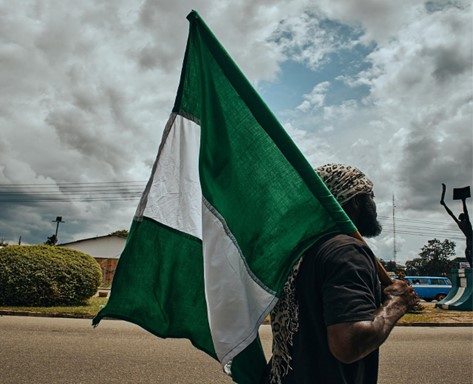
Nigeria at 62: Which way forward?

By Habibu Maaruf Abdu

Nigeria gained independence from Britain in 1960. That’s 62 years ago. Unfortunately, however, the country has made no significant advances since then. In my opinion, it takes the collective efforts of all Nigerians to change the story. Nigeria’s ethnically diverse people must agree to unite and develop a sense of working together to move the country forward. In other words, Nigeria must first be united to reach its destined greatness.

To achieve a united Nigeria, the government of the federation must endeavour to command a ‘national loyalty.’ That is, to get support from the people of every part of the country. The government could get this if it gives members of all the parts an equal opportunity in the government and its agencies. This will send a sense of belonging and satisfaction to them. The government should also treat all Nigerians equally, regardless of their regions, religions, tribes, and political affiliations.

Another thing that can bring Nigeria together is leadership rotation across the six geo-political zones. This should be regarded considering the reality in the southeast today. There are grumblings, and even mass agitations, from the southeasterners, mainly because they have never produced a president since the second republic. This fact makes them feel as though they are treated as outcasts in the country and therefore agitate. When leadership rotation is implemented correctly, such agitations will unlikely arise again. Also, the federal government should ensure that no region is envious of the other by making fair zoning of capital projects and equal distribution of resources across every part of the country.

For the peaceful coexistence of ethnically and religiously diverse Nigerians, all ethnic and religious groups must reject their prejudices against one another. They must also understand their differences genuinely. This is necessary for them to have a common ground for respecting and tolerating their differences (cultural, ethnic and religious). It will also help them to live in harmony and build a society with strong human potential and economic progress.

‘Discipline’ and ‘patriotism’ are also areas of emphasis. No nation can be great without these values instilled in the psyche of its citizens. This is why many countries, like china, have a whole ministry for national orientation. Nigeria should copy these countries and launch a massive and consistent campaign for the ethos of civic behaviours and responsibilities in Nigeria. This will help to build discipline, respect and love of the country, as well as national pride, in the society. When these values are present in society, the people will uphold discipline and patriotism. They will reject corruption and all other harmful habits that could cripple their dreams and inhibit their country’s development.

On another side, economic diversification should be considered to put Nigeria on the right track. The country’s economy is, at present, heavily reliant on the revenue derived from the export of crude oil. This leads to low economic growth, which, in turn, favours poverty as there is no room for massive job creation. But the diversification of the economy will certainly change the story. Therefore, Nigeria should diversify into areas like agriculture and industrialization. The agricultural sector, which was the mainstay of the country’s economy before the discovery of oil, has a long value chain. And a firm industrialization policy can create thousands of manufacturing jobs for people.

Nigeria should also make policies that will attract more foreign investors, especially those who produce different kinds of products and machines. This, together with reasonable provisions for private enterprises, will go a long way in reducing unemployment and alleviating poverty in the country.

Notwithstanding the above, Nigeria should do better for the education sector. The saying, “No country can really develop unless its citizens are educated,” cannot be more correct. Unfortunately, Nigeria spends very little on education (less than 8% of its total GDP). The number of out-of-school children is high, and universities remain closed for over seven months due to an indefinite strike by the Academic Staff Union of Universities (ASUU). To save education from this mess, Nigeria should increase its expenditure on the education sector; map out a plan for revamping it, and see the plan through with maximum commitment.

At this juncture, I want my fellow Nigerians to remember that; all the developed countries we currently admire have, at some point, been where Nigeria is today. It’s therefore valid to believe that Nigeria can equally develop. Fortunately, the country is blessed with both material and human resources to facilitate the process. However, it is rightly said that Rome wasn’t built in a day. Progress is made with sustained effort over time. Therefore, we need to unite, do our patriotic duties, uphold discipline and get professional and morally upright leaders to drive the country.

I will conclude by quoting Chinua Achebe in his book The Trouble with Nigeria, published in 1983, where he opined that “Nigeria can change today if she discovers leaders who have the will, the ability and the vision. Such people are rare in any time or place. But it’s the duty of enlightened citizens to lead the way to their discovery and to create an atmosphere conducive to their emergence. If this conscious effort is not made, good leaders, like good money, will be driven out by bad.”

It takes our collective efforts to move Nigeria forward.

Habibu Maaruf Abdu wrote from Kano, Nigeria, via habibumaaruf11@gmail.com.

On writing business

By Sulaiman Maijama’a

A barrage of questions troop into my inbox daily from people outside the writing circle, declaring their interest to come in. Some questions are worthy enough, while some are funny and crazy. For example, a young lady asked me to teach her “Article Writing” via WhatsApp. Another once asked, “can I become a writer in one week?”  Somebody told me “kai kam rubutu bayi maka wahala“. What a wrongful assumption!

Let me, in order not to give a wrong impression of myself, humbly submit that I’m just a fledgling writer aspiring to be a pen wizard one day. My decision to write on “writing” this time was prompted by the fact that those who excelled are too busy to avail themselves and become beast of burden for aspiring writers. Be that as it may, a dot in the circle (like me?) may have something to offer. And as the saying goes, “there is love in sharing”. Thus, I will share the following tips for aspiring writers:

1. BE PASSIONATE AND AMBITIOUS. This, in my view, is the first step to becoming a writer. Writing is daunting, time-consuming, attention-demanding and a continuous learning process.  Whoever tells you the contrary is leading you astray. But your passion and ambition are the driving force that will keep propelling you to defy all odds and cross the blocks on your way to the promised land. I believe that one (1) inspiration can overcome ninety-nine (99) perspiration.

Haven’t you ever asked yourself why some people who read English or Mass Communication write poorly or don’t write? But others who are trained scientists are writing professionally standard _Medical Doctors, Zoologists, Agriculturalists among others write well. This is to tell you that writing is a product of passion and ambition. Regardless of what you read, you can be a writer per excellence.

2. MASTER YOUR LANGUAGE. Reasonable proficiency in a language is a prerequisite for any writer who wants to be taken seriously by his readers. Not necessarily English Language, but any language you write in. Master the language to the level that the native speaker will appreciate you. Nobody can afford to devote his time to reading trash in the name of writing. Nobody will take you seriously when your essay contains grammatical errors, sentence fragments, dangling modifiers, and incoherent and incohesive sentences and paragraphs.

3. READ. I do not know a better way a writer can improve than by taking an avid interest in reading. Reading good writings is what makes good writers. And the volume of the text you read must supersede the magnitude of your writing. For instance, you need to read and analyse at least ten articles when writing a single piece. Before you write a single book, read and review one hundred books. Do you know that when a writer stops reading, it reflects in their writings?

4. HAVE MODEL(S) AND MENTOR(S). In any profession one wants to excel in, they must have people they look up to. Different writers have different styles of writing. As a young aspiring writer, identify your hero(s), look up to them and read them more. While having a model(s) will help you raise the bar of your success by dreaming bigger, having a mentor(s) will, on the other hand, help you be on the rightful terrain to the promised land. Mentors are a blessing; they show you the way, and when you feel like giving up, they reinvigorate your confidence.

5. WRITE FREQUENTLY. It is impossible to learn writing by theory; it is learnt by the practical application of theoretical ideas. But, like a muscle getting stronger by exertion, writing improves through frequent practice. If you write frequently, you will discover that today’s writing is better than yesterday’s. Your writings this week are better than those of previous weeks. That’s one magic about it. So, never get tired of writing if you want to become a good writer.

6. HAVE AN AREA OF INTEREST.  A writer should specialise in a given area, preferably the area they are more interested in. For instance, some people are sport-loving, some follow every trend in politics, some on entertainment, some on terrorism etc. The wisdom behind identifying an area of interest is that whatever you are interested in, you will not find it too daunting but rather fun that will push you to break the glass ceiling. But this does not mean limiting yourself to a single area; a good writer should be able to write on every topic under the sun.

7. DON’T BE DECEIVED BY ENCOMIUMS: Writers carried away by flattering are likely to feel complacent. Most of the encomiums coming from people are not genuine. Regrettably, this has led to the downfall of many writers. Some people will overrate you; some will send you positive responses even without reading you. However, positive responses are motivating, but be relaxed, know your level and keep improving.

8. ACCEPT CORRECTIONS AND KEEP LEARNING. Nobody has a monopoly in this business. There is no level of professionalism a writer can attain where they are above mistakes. Even globally recognised writers make mistakes. Always keep your doors open for corrections, learn from them, and keep learning every day.

Maijama’a is a student at the Faculty of Communication, Bayero University, Kano and wrote via sulaimanmaija@gmail.com.

At 62: Nigeria’s independence and the future we desire

By Babatunde Qodri

It can be argued that ever since Nigeria got her independence in 1960, the country hasn’t gotten worse like it’s today. Every year is filled with insurmountable challenges beyond the control of both leaders and citizens. It appears, sincerely, as if the country has been cursed. Every opportunity to believe in Nigeria’s prosperity is dashed by a litany of crises ranging from insecurity, poor education and health systems and economic downturn. The country seems to have been brought to her knees.

The occasion of independence does not move people from different corners of the country. On the contrary, the convention of this remarkable celebration is a history remembered with joy and happiness. Many other African countries celebrate their independence with scores of impressive feats, despite avoidable crises. Unfortunately, the case isn’t the same here in Nigeria, where leaders expected to make people proud resort to disappointing charades to the country’s detriment.

The ongoing industrial action by university lecturers says a lot about how blighted Nigeria has been. Students have been away from classrooms for months. One would expect that a 62-year-old country should have grown past deleterious distractions capable of creating barricades in the way of her education system. It hurts that a sector as eminently necessary as education can be allowed to suffer while the Government continues to fund frivolities. The question is, which country develops or has developed without serious attention to education? 

In other words, education in Nigeria is now in a comatose state. It’s hard to believe that this is Nigeria where Sir Ahmadu Bello, Obafemi Awolowo, and others once lived and governed. Nigeria’s present predicament, evident in her leaders’ shameless willingness and obsession with greed, has ruined those past years of free education packaged to liberate Nigerians for genuine patriotism. What used to be, in terms of quality, transformative education now constitutes a culture of abandonment, taking a heavy toll on the survival and growth of the country.

Insecurity is another problem. Severalerians have been in captivity for years. We are now the headquarters of banditry and kidnapping for ransom. Non-state actors have taken advantage of the country’s vulnerability to unleash horrors daily. And the complete loss of strength by people constitutionally paid and expected to protect lives and property heightens fears. Because of this unwholesome reality, the country has become a no-go area for foreign investors who should have helped her economically. The fact that people are becoming strangers in their homeland explains the mass migration of Nigerians out of the country in search of averagely better and more peaceful climes. Internal unrest, sadly, continues to drag the country backwards.

This reality is worsened by intractable corruption. Despite being an oil-producing country, it’s still disgusting to hear that Nigeria cannot refine her oil, which makes the country hugely indebted. While other OPEC countries leverage the international market amid restrictions posed by the ongoing Russia-Ukraine crisis, Nigeria is wallowing in a financial crisis resulting from endless oil theft. Isn’t it funny that the country has to borrow to service her debt? This is indicative of the depth of mess in which Nigeria is in.

Unarguably, Nigeria needs urgent solutions through the diversification of its economy. We must take advantage of modern agriculture to produce what we consume and vice versa. The country should stop wasting funds meant for critical goods on exotic cars for politicians. Our Government must invest in the education sector, health care system, and others.

Plus, effective legislation is paramount. Nigeria is in dire need of a fresh set of leaders with brand new ideas, leaders who are committed to viable plans and collective change. The issue of climate change must also be given urgent attention. Climate change and poverty have the exact root cause, and their impact contributes to the national underdevelopment the country is witnessing.

As we move into 2023, Nigerians should understand that our country deserves a befitting future. So we must be interested in candidates who will focus on doing the right thing at the right time. We must go for candidates with clear readiness and vision to transform our education system and uphold justice and transparency. We must do away with activities capable of fueling the embers of disunity in the country. 2023 should be about these.

Babatunde Qodri can be reached at babatundelaitan@gmail.com.