Opinion

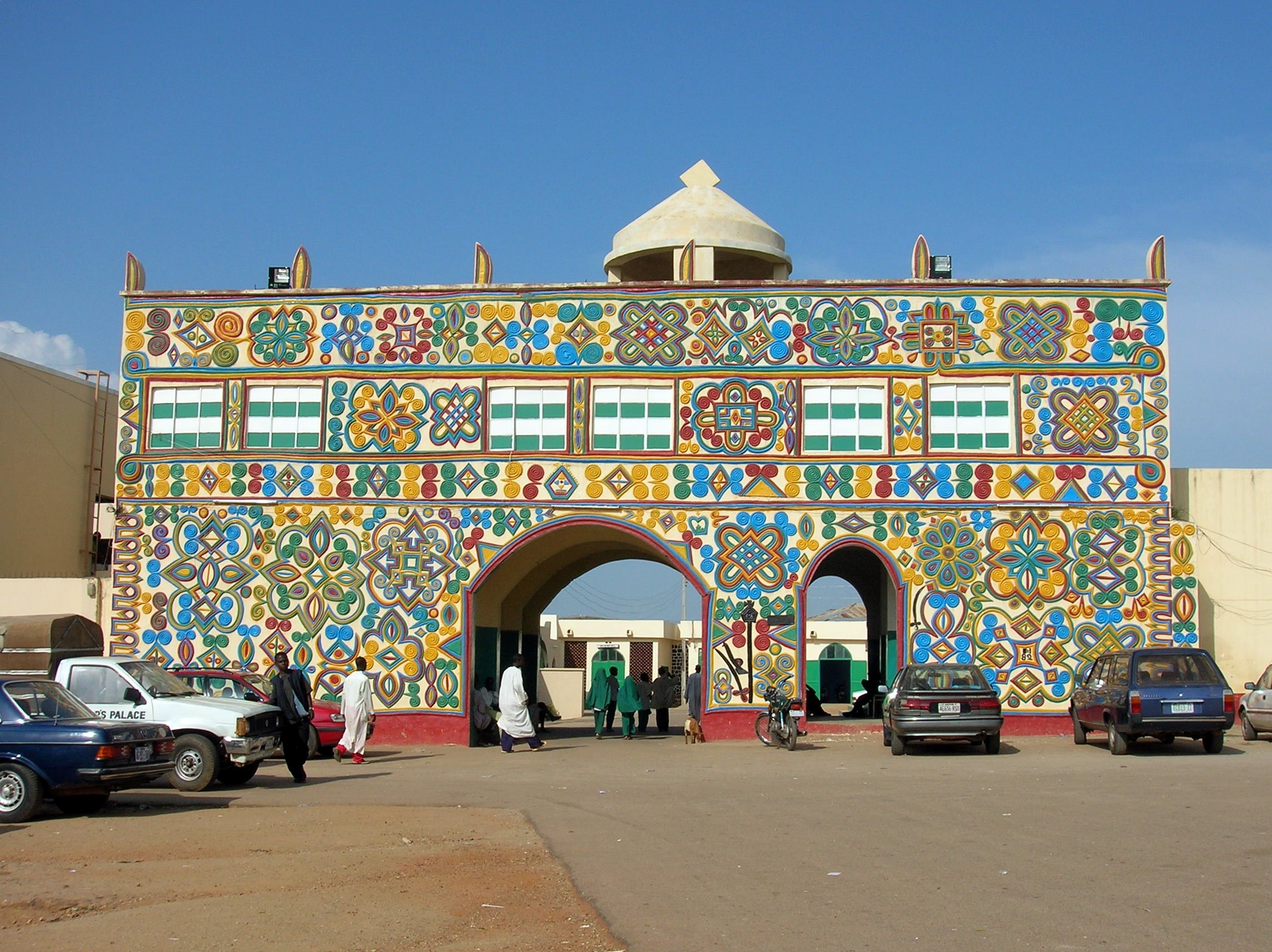
The Kano of my dream

By MA Iliasu

The dilemma with Kano has always been about standards. So, naturally, Kano’s advantages and disadvantages in socioeconomic assets have outgrown everyone’s. The history of Hausa land and much of the Sahel will confirm that assertion.

Kano’s population was approximated in 2022 as the second largest in Nigeria after Lagos and sixth in the Gross Domestic Product (GDP), ranking behind Lagos, Rivers, Delta, Oyo, and Imo. Kano is blessed with more than ten major markets across its rural and urban settlements, with Kantin Kwari and Dawanau serving as the largest textiles and food markets in West Africa, respectively. The state is enriched with the twentieth highest landmass in Nigeria, the biggest part of which is a prosperous arable land, with a favourable temperament that enables consistent rainfall and harmattan during rainy and harmattan seasons, on top of the twenty dams distributed across the rural economies of the state. Kano is one of the largest industrial hubs in West Africa, and the aggregation of these natural and human resources earns the state the title of “Centre of Commerce” in Nigeria.

By the same standard, however, the same factors make Kano an unfavourable environment. The massive population is more neglected than cared for, thus becoming a liability rather than an asset. There is a large number of out-of-school children roaming streets as beggars and hawkers, with many engaging in child labour. Many youths have been reduced to thuggery, thievery, and drug abuse. The economy is overwatched, yet doesn’t reflect in the state’s treasury by how the state rank lower in revenue generation, signifying, among others, the corruption and mismanagement holding its potential backward. The landmass is underutilised, with poor urban planning in the metropolitan areas and primitive agriculture in rural areas.

Consequently, signals of environmental hazards like crime, congestion, and flooding have become significant threats to the Kano metropolis. The dams have been neglected in the rural settlements. The widening gap between the rich and the poor makes the Human Development of the state ranks 28th, according to Human Development Index (HDI) 2019, among the very worst in Nigeria. The income per capita of Kano is among the lowest, with its healthcare being one of the worst in Africa. As of 2021, the state could only hire one medical doctor to tend to the emergency unit of Murtala Muhammad General Hospital during the weekends.

The common factor in both the contrasting pictures is that Kano never does anything in small doses – it’s so-called standard. The Kano of my dream, therefore, is the one in which this standard is retained but only positively to enable the growth and development of the state to measure up to it.

In the Kano of my dream, agriculture and industry are the central focus. A coherent plan which utilises the twenty dams for irrigation farming in forty local governments has been implemented. And courtesy of that, the agricultural output from Kano has outranked every state in Nigeria and equals the capacity of many African countries combined. The landmark is achieved thanks to overwhelming human labour and fertile land, and after the state government widens its thinking beyond small partnerships with regional development banks by reaching out to international agricultural cartels.

A deal has been stroke with India, China, Nepal, and Thailand that sees to it all Kano dams have been utilised in exchange for an uninterrupted supply of agricultural output to the Asian markets. And the reliance on agriculture has paved the way for the flourishing of other farming and manufacturing industries, the rural economy, and infrastructure, which consequently ends rural-urban migration and reduces the pressure on metropolitan areas. Resurgence occurs in food and technology markets, with advanced research in agricultural institutes and massive employment generation for the teeming population. Agriculture is Kano’s largest labour employer for the first time this century. And the problems of unemployment, revenue generation, urban migration and planning, rural negligence, and food security have become negligible.

The multiplier effect of achieving such economic landmarks will, among others, boost the GDP, HDI, Per Capita Income (PI), and general economic buoyancy across all social classes, which in the Kano of my dream, enable investment in education and healthcare. The fantasies of free education and healthcare are now history. The government has seen the truth and intensified its efforts towards achieving a hundred per cent literacy rate and eighty years average life expectancy through massive investment in education and health infrastructure, with more than sixty per cent of its talent pool channelled to study science and technology.

The revolution in the education sector takes place in two dimensions. The first is by reconstructing the state institutions and equipping them with modern learning tools, recruiting more teachers and retraining them, and taking their remunerations to a world-class standard. The second dimension is by reshuffling the curriculum by removing the outdated, less relevant subjects and introducing modern, relevant ones, and rearranging the method of achieving Senior Secondary School Certificates (SSCE) by turning terminal examinations into grade point averages, the cumulative of which will determine whether a student qualifies to take the SSCE or not. Students who excel by having high cumulative grade points from their terminal examinations across six years of Secondary School education will be able to sit for SSCE and secure government scholarships. While those who have yet to excel will have to engage in compulsory remedial studies before they become eligible to write SSCE. That way, the higher institutions will admit students not by chance but by competence, making them more productive intellectual environments. Breakthroughs have since been recorded in research and innovation.

Investment in healthcare starts by providing each local government with a general hospital and enough health workers. Infant and women mortality shall be met with formidable maternal health departments. And health education shall be prevalent, especially among women.

The political culture in Kano of my dream is perceptive and intentional. The fusion of power between state and local governments is abolished, enabling a reformed, energetic, merit-based, transparent, and accountable leadership style of leadership that is appropriately informed by and with the major activities of the clerical, academic and social establishment in the state.

Sports and recreation are engaged with remarkable intensity by establishing sports academies to meet the demands of modern football, basketball, tennis, and boxing. Kids are trained at a young age, adults are funded to do their coaching badges, and sports entrepreneurs are granted smooth platforms to facilitate the transfer of Kano talents to major European and American leagues, revolutionising domestic football to a world-class standard. For the first time in football history, Kano Pillars, an African team from the Nigerian league, has won the Club World Cup, thanks to the formidability of local talents.

In the end, the Kano of my dream isn’t only distinguished with glowing physical features such as roads, schools, hospitals, and recreational facilities but also with a glowing soul, mind, and heart. The spiritual infrastructure is also revolutionised through changing mindsets, attitudes, and beliefs. As a religious society, we have admitted to the supremacy of destiny, one who greatly appreciates the purity of our hard work and ethics. And through the pursuit of this, we turn into reality the endless upward possibilities of our beloved ancient society.

MA Iliasu won the 1st position in the 2022 “The Kano of my dream” writing competition jointly organised by Muhsin Ibrahim, PhD, and The Daily Reality online newspaper. He can be reached via muhada102@gmail.com.

Top 5 Kannywood films of 2022

By Habibu Ma’aruf

The year 2022 has not been great for the Kannywood film industry. There was a substantial decline in feature film production as the popularity of series films soared, piquing the interest of more producers. Cinematic releases were at a premium throughout the year, with just nine films, making it a ratio of less than one release a month. The situation was so severe that no major production was shown at cinemas, even during the Eid ul-Fitr festivities.

However, while some of the few releases fell flat on their faces, others have managed to make it in the trying year. Find below the top 5 Kannywood films of 2022. Please note that only feature films were considered for this list.

  1. Aisha

Directed by Hafizu Bello, the movie, Aisha, is critically and commercially successful. It beats Kayi Nayi (Dir, Gumzak 2021) to become Kannywood’s biggest grosser by earning over ₦5.5 million during its elongated run in two cinemas. This is not surprising as it’s a production of ‘the box-office king’ Abubakar Bashir Mai-Shadda. The story revolves around the eponymous character, Aisha (played by Amal Umar), who dies after being raped, and her parents’ struggle for justice. The plot is uncommonly twisted but perfectly pieced together. The film has a strong message and a realistic narrative. It exposes the grim reality in some higher institutions where students commit serious misconduct. It stars Amal Umar, Nura Hussaini, Adam A. Zango, Sani Danja, and Shamsu Dan Iya, among others.

  1. Lamba

Before the premiere of this Ali Gumzak-directed comedy, there had already been an overwhelming craze for its title song. This has helped the film to rake in ₦1.32 million on the first day, beating the previous record first-day collection of ₦1.25 million by Fanan (Dir. Alolo 2021). Produced by Abubakar Bashir Maishadda, Lamba is a social satire set against the backdrop of ‘Audio money’ (a slang term for the fake display of wealth). It tells how some three young men (Adam A. Zango, Umar M. Sharif and Ado Gwanja) flaunt false riches to impress the classy girls they meet on social media. The unveiling of their true identity is later shown in brilliantly executed, hilarious scenes that get the audience laughing throughout.  The film lacks an innovative script, but it’s an excellent comedy that succeeded in tickling the funny bone. Other casts include Aminu Sharif (Momo), Maryam Booth, Maryam Yahaya, Bilkisu Abdullahi, Aisha Najamu, etc.

  1. Nadeeya

Although the eponymous movie Nadeeya wasn’t initially meant for cinematic release, it still managed to get a large audience while showing on the big screen. The film is an issue-based drama about ‘upbringing’. It depicts how some parents spoil their kids, specifically daughters, and the practical difficulties such children face in life. The story focuses on a pampered daughter, Nadeeya (acted by Rahama Sadau), who faces similar challenges after marriage. The film is hard-hitting and very meaningful. It shows that children’s first learning begins at home, and their personalities and morals depend largely on their upbringing. The actor’s performance is also impressive.  It was produced by the leading actress Rahama Sadau and directed by Yaseen Auwal. Other casts include Umar M. Shareef, Rabi’u Rikadawa, Asma’u Sani, etc.

  1. Hikima

This movie is a murder mystery specially made with a considerable budget to meet the requirements for showing on Netflix. It’s, however, yet to show on the online viewing platform. The film, which premiered in cinemas in late 2021, was released to the wider public in 2022. It tells the story of a philogynist lecturer, Sadiq (Nasir Naba). It begins from a court session with Sadiq being accused of murdering his female student. The film is richly suspenseful, but many audiences criticise it for having a convoluted plot. Moreover, the cinematography and actor’s performance, among others, place it ahead of its peers this year. Hafizu Bello directed it, while Mustapha Ahmad (Alhaji Sheshe) was the producer. It stars Nasir Naba, Ishaq Sidi Ishaq, Sarah Aloysius, Sani Mu’azu, Maryam Yahaya, etc.

  1. A Bikin Suna

A Bikin Suna tells the story of Mustapha (Ali Nuhu) and his wife Ummulkhairi (Mommy Gombe). They have been married for five years without giving birth to a single child. This fact makes Mustapha’s relatives accuse Ummulkhairi of infertility. She becomes pregnant afterwards, and everyone begins to like her. However, a new conflict erupts when the young baby gets missing during the naming ceremony. The film is generally enjoyable. It’s directed by Yasin Auwal and produced by Danjuma Salisu. Other casts include Saratu Daso, Musa Mai-Sana’a, Maryam Yahaya, Shamsu Dan Iya, Rahama MK, etc.

Habibu Ma’aruf Abdu wrote from Kano. He can be reached via habibumaaruf11@gmail.com.

Zaria residents, let’s be more security conscious

By Safiyanu Ladan

The nefarious activities of bandits in Zaria and its environs are walloping. It was in 2019 that, for the first time, I heard about the kidnapping incident in Zaria, which saw the abduction of Malama Rabi Shamaki, a lecturer at the Nuhu Bamalli Polytechnic, Zaria. Since then, several such incidents have been reported in various places in the ancient city. However, on several occasions, the security operatives had been said to have thwarted their evil plans of unleashing mayhem on the people. 

The operatives of Kaduna State Police Command, while on surveillance patrol on 23rd December 2022, intercepted motorcycle riders with suspicious concealed bags in Basawa, Zaria LGA of Kaduna state.

In a bizarre circumstance, upon being stopped for search, one of the riders jumped down and escaped, heightening the operatives’ suspicious minds.

The timely intervention of the police has led to the successful recovery of Four(4) AK-47s, three hundred and forty-four (344) live ammunition, and ten (10) telephone handsets and charms from the other suspect.

The courageous efforts of police and other security agencies in taming the security challenges in Zaria and its environs have undoubtedly yielded the desired result. However, much still needs to be done to arrest the deteriorated and fragile condition.

Collaborating with security agencies to weed out the criminals in the communities is paramount. Hence, the need for people to be security conscious and proactive in reporting criminal elements to the appropriate authority.

In the meantime, I would like to appeal to the residents of Zaria to report any suspicious characters to the police or other security personnel. Helping security personnel in intelligence gathering will go a long way to nip in the bud the intended evil activities of bandits and other outlaws roaming in the nooks and crannies of the community.

Safiyanu Ladan wrote from Zaria via uncledoctor24@gmail.com.

Three ways that help Nigeria in alleviating her poverty

By Dansaleh Aliyu Yahya

Nigeria, as a country of more than two hundred million people, must get some or many ways to eradicate poverty from both angles. There is no poverty, so almost everybody in the country is employed. As a result, we will be free from hunger, with good health and well-being. For that, I’m going to point out some points that might end poverty in our blessed country of Nigeria.

They are as follows:

1. Voting for good leaders: This is the essential part of all the ways I thought of because we all have in our minds that leaders can make every impossible possible in their respective regions. Without their help, no one could do anything. The work of advisors and analysts is to tell them “this” and “that” should be done in such ways and places. Leaders are responsible for making it happen attractively. If they don’t want to do it, it will never happen. You know!

Good leaders might be the only leaders that will help give their citizens a happy atmosphere that will be good for them to live in by creating awareness, employment, and bringing out important activities close to their people. Else, the people will be maltreated. For that reason and more, we need them to take in eradicating poverty from our country.

2. Creating awareness on the importance of skills and small businesses: It is a good response for the government, educators, and entrepreneurs to help their country in bringing an end to poverty by fixing a time and date to lecture the citizens, especially the youths.

This awareness method will give people enough knowledge to understand that they need to learn some skills and start something new, to earn and live in a good conditions. From there, they will improve their lives, fight hunger, and have good health. In addition, the government should invest in giving the attendees working tools or capital so that they start immediately after they leave. To prevent losing the ideas they learned in the place, due to a long time.

3. Providing centres that will teach technical skills to people: this method will help fight poverty in our country. People will learn hand skills that will help them in building their businesses. If they have this, they will not stand redundantly without anything. I am sure that they will use the skills learned from the centres and even be able to employ others in the community.

In addition, the government can build good relationships with companies so that the companies will help them by employing some part of the community in such a way that they will put hand in hand in fighting poverty together.

These ways and many more could alleviate poverty, resulting in the sustainable development of zero hunger, good health, and well-being.

May we have peace and tranquillity in our minds, stomachs, and pockets,  amin.

Dansaleh Aliyu Yahya wrote via dansalealiyu@gmail.com.

Waqf Foundation upgrades lives of Nigerians

By Abdulhamid Muhammad

Sunday, 25th December 2022, was a day of revelations and feedback from the Waqf Ambassadors of the Zakah and Waqf Foundation, Gombe, Nigeria. It happened during the Uncovering Potentials Workshop (UPW) organized by the Foundation for the 1st and 2nd sets of its Waqf Ambassadors, which was facilitated by Dr Najeeb A.A. Gambo, a researcher with the Microsoft Company and Nigeria’s 2nd Google Certified Trainer.

It was conducted a day after a 2-day intensive induction training for the 2022/23 Waqf Ambassadors at the Foundation’s Training Room. As usual, of all the year-long life-changing training that the Foundation organizes monthly for its 80 enrolled Waqf Ambassadors annually, the UPW was highly impactful, thought-provoking and action-triggering.

In the closing session of the workshop, scores of youth voluntarily gave their testimonies on how the sessions of the workshops they have gone through in the last 12 months have completely revolutionized the way they look at the world financially and intellectually.

One of the ambassadors narrated how excited she was after starting a business and discovering that she could now do a lot of things with her earned income without asking or waiting for someone to give her. It was a great discovery because she grew up in a society that programmed her to think that she could not make money for herself.

Another person said that it was a workshop in ZAWFOG on reading culture that ignited in him the habit of reading books, and that has completely transformed his life, making him more creative and more confident, and hopeful about life.

Another Ambassador, whose parents hitherto paid all his bills, revealed how as a result of the motivation he got from these series of lectures is now able to earn more than the national minimum wage every month despite being still a student. And many of the participants went on and on.

These are a few of the testimonies, and I wished the Chairman of the Foundation, Ameer Abdullahi Abubakar, was there at the closing session to hear how the Foundation is making an impact and transforming lives. It is clear that his model is working; the Waqf Ambassadors are fast moving from poverty (p) to prosperity (p) and soon to philanthropy (p) in sha Allah. As envisioned by the founders of the Foundation, we will soon have a generation of youth who are rich enough and committed seriously to building our society through Waqf.

May Allah accept this from all the people who have contributed in one way or the other in moulding the next generation to be a productive one, amin. May He continue to bless the Foundation and take it to greater heights.

Abdulhamid Muhammad is a 2021 Waqf Ambassador and wrote from Gombe State, Nigeria.

Movie Review: Dan Jarida

By Habibu Maaruf Abdu  and Muhsin Ibrahim

It’s well known that series movies have recently dominated the Kannywood film business. As a result, some major producers in the industry have already abandoned features for the production of TV series. As the trend develops, the famous producer Abubakar Bashir Maishadda gets on board with the big TV drama Dan Jarida [The Journalist].

The hyped Maishadda debut series, directed by Hafizu Bello, is a thought-provoking thriller mainly about journalism. It is notable for featuring an ensemble of reigning stars in a never-before-seen avatar. A Duniya famed Daddy Hikima, who consistently portrays a villain, is playing a positive leading role in the latest series for the first time.

Launched on Sunday, 25 December 2022, the show will continue to be aired weekly on Arewa24 TV and Maishadda Global Resources YouTube channels. The first episode exposes a tiny part of the story arc. It begins with some crooks chasing a reporter Fauziyya (acted by Amal Umar), who videotapes them while killing and burning someone. They eventually catch and mutilate her to death. Everything keeps revolving around this conflict until the episode’s end…

The first episode is an auspicious start to what promises to be an exciting crime-thriller. It gathers momentum right in the few reels, taking viewers to the background of its major characters. They are; a criminal mastermind Madugu (Sha’aibu Kumurci), who disguised as a philanthropic politician, and Sadiq (Daddy Hikima), Fauziyya’s boss and a media company manager with dogged determination and integrity.

The drama is a delight to watch, at least by how it goes so far. It also promises to be more so when the rest cast of Lawan Ahmad, Tijjani Asase, and Isah Ferozkhan (Presido), among others, enter the next episodes. The camera work particularly captures the intense nature of the film, and the background score gives it full support in generating the desired tone.

Besides depicting the exhaustion, uneasiness and risks associated with journalism, Dan Jarida drama reminds journalists about the importance of doing their job right. It is also a great attempt to provide real insight into the causes of various crimes that are ubiquitous in our society today.

Beyond the positive aspects mentioned above, smoke, as used in the series to create cinematic depth, could be enhanced. For instance, there is little or no need for a smoke when Magudu and his henchmen capture Fauziyya. One may assume it is the exhaust of their cars, which cannot be. In other instances, the smoke is too thick, and its colour looks unnatural.

Finally, while recommending the new series to all and sundry, particularly the Kannywood audience interested in journalism and politics, we appeal to the makers to refrain from exploiting the promising story for commercial purposes. Moreover, they should refrain from extending it beyond reasonable length as producers of some contemporary YouTube series do.

Currency redesign and its attendant expectations

By Muhammed Umar-Hong

Changing the appearance of a country’s currency is widely practised worldwide by various methods and for different reasons. It could portray a nation’s rich cultural heritage, a change in regime to symbolise a ruler or celebrate national heroes with portraits of them attached to these currencies. However, the most cited reason has been to combat threats of counterfeiting. Threats which may lead to inaccurate figures of the total amount of money in circulation, for example. 

The Naira is certainly not a stranger to the redesign concept, which has seen various denominations change over the last few decades. Chief among the changes had been the transition to more durable currency notes which began with the N5, N10, N20 and N50 denominations all upgraded to polymer substrates in 2007. While 2014 saw the birth of the N100 commemorative note marking the nation’s centenary celebration. 

It should thus not be a contentious issue if the CBN decides, as it has, to make further modifications to the country’s currency. After all, it is within the apex bank’s constitutional powers as stated in the CBN Act, 2017 (Section 19, subsection 1b). This time, its primary aim will be to address our security challenges by reducing the hoarding of certain denominations whilst ensuring proper monitoring of monies in circulation. 

But before the release of the new bank notes, however, interactions on social media had clearly shown that not many Nigerians understood the difference between currency redesign and currency redenomination (which involves removing/adding more zeros to the currency), and some were highly expectant of the policy to have some technical outcome. Opinions and suggestions are illogical or don’t seem to rest on sound economic principles. But I took the trouble to note a few, and to explain my views on them below. Feel free to make your contributions.

Q: Why wouldn’t the government set our highest currency denomination to N20 to end money laundering? 

V: The reason for raising our highest denomination to N1000 is because our Naira has a fallen value. The change in exchange rates between two countries is usually determined by the constant demand for one currency by the other. If a country produces goods and services in commercially exportable quantities, the demand for those goods by foreign customers would automatically lead to foreign currencies being converted to local currency to enable these purchases, which ultimately drives the value of the local currency up. Foreign currencies would have to chase more Naira, thereby bolstering its value. 

On the other hand, for products such as petroleum, where the purchases are made in US dollars, the additional dollars can be used by the apex bank to purchase the Naira, thus creating a sort of artificial demand for the Naira that usually raises its value. 

I don’t think any money launderer (assuming I know how this is being done) would be deterred just because he now has to carry/stash away more currency in N20 denominations.

Q: Why wouldn’t the government choose an interval of four years to redesign its currency? 

V: The international standard for countries to redevelop their currencies is between a 6 – 8 year interval. This is not, however, a strict rule, as some countries do it more frequently than others. In the US, for example, the practice is to focus more on widely used denominations (prone to more wear-and-tear) or are frequently targeted for currency fraud (counterfeiting) for a redesign. For instance, a currency like the two-dollar bill has a much longer lifespan due to its near-absence in daily transactions compared to a dollar bill. 

Additionally, not every need for currency changes can be accurately foreseeable. And it may only sometimes be financially viable to make wholesale changes if it coincides with financial or economic shocks. Both of which our mono-economy is particularly susceptible to.

Q: Will the unaffected currency notes (i.e. N5, N10, N20, N50 and N100) remain in circulation after this redesign? Would their value fall?

V: The other currency notes that haven’t been affected by the current redesign will still maintain their legal tender status, fortunately, until the CBN says otherwise. They will also retain value as market forces dictate and are expected to remain in wide circulation. Elsewhere though, lower denomination currencies have been the most exchanged and most subjected to redesign, mainly due to their frequent use.

Q: Why not grant amnesty to hoarders of cash instead of embarking on the expensive redesign?

V: Well, I believe you can’t exert leverage over hoarders of cash if you were never going to carry out your threat (the redesign). 

But Abdullahi Imam has another angle to it: The question of amnesty is straightforward. Amnesties are mostly for criminal activities. It’s not a crime to have cash or to store it. So the topic of amnesty is a non-starter. Except if an amnesty is for those that need to exchange their old notes before the agreed deadline. 

Q: The government should introduce the use of coins if it hopes to increase its purchasing power.

V: Purchasing power is simply the value of a unit of currency in terms of the goods/services it can buy, which is effectively how strong/weak your currency is. The higher the purchasing (buying) power of a unit of your currency,  the greater the number of goods/services it can purchase, and vice versa.

Does the N5 note come to mind? It’s okay to say the note has become worthless these days. I can’t remember when I walked into a shop for an item priced in the multiple of 5. Most of our goods have now been (deliberately, I think) rounded up to the power of 10.

Although they play little or no role in our daily transactions, coins are currently the oldest form of money available to us. They used to have intrinsic value based on the valuable metals (gold, silver) they were made with until it became less expensive to produce using materials like Copper. In more notable climes, they have been used for commemorative purposes. 

Just recently, Britain had to redesign its fifty pence (50p) coin to feature the portrait of its new king, Charles III, following the death of Elizabeth II. And in many other countries, coin usage has practically been resigned to handling smaller transactions, often serving as ‘change’ from paper currency payments. This is more evident in countries assigning lower denominations to coins, effectively making the highest value of the coin in circulation worth less than the lowest-value note. 

Even in our case, Prof. Soludo, then CBN governor, in his 2007 paper titled ‘Strategic Agenda for the Naira’ had proposed the reintroduction of coins in the following denominations: 1 kobo, 2 kobos, 5 kobos, 10 and 20 kobos in his bid to make the Naira a currency of reference in Africa. 

Paper currency has become the preferred medium of exchange for higher denominations worldwide due to their convenient nature and the fiat status conferred on them by governments. To the best of my knowledge, no relationship EXISTS between using coins and increasing the purchasing power of a nation’s currency. But that’s not to say coins are wholly valueless and lack significance in the overall dealings of a country because, who knows, “the most important decisions you will ever make in your life may be decided with the toss of a coin.”

Muhammed Umar-Hong wrote via muhammedu.hong@gmail.com.

The need for first aid training for all

By Abubakar A Gummi.

Accidents happen in daily activities – in house halls, schools, offices, markets, or on the roads. A woman cuts her hand while cutting an onion. A boy falls from the wall or on a bicycle and faints or breaks his leg. Motorcycles and cars crash every day. Many people die in a fire outbreak. Lives may be lost not because of these accidents but lack of knowledge of what to do at the moment of occurrence or before taking the victim to the hospital.

Many situations may require emergency treatment to save lives. A hospital may be located far. Fire service may not be available. Road safety may be far from the place of the event. As a result, victims suffer a lot. If it is an accident, he may lose much blood, resulting in death before taking him to the hospital. Hence, individuals need to be trained to rescue minor or serious ills or injuries.

An attempt has been made to reduce the number of mortality, hence introducing a new topic in basic science and essential technology in our primary and secondary schools; first aid. First aid is emergency assistance given to an ill or injured person before taking him to the hospital.

This was a good move because educating a child is like educating the whole society. As it was said, “teaching a child is like writing on a rock; it will never wash away”. Unfortunately, the topic mainly focused on what first aid is, the type of first aid, and why the need to know about first aid, not how to perform the first aid.

In recent years, new inventions have been made, more types of machinery increased, vehicles and more factories have been constructed, and people have turned to using gas stoves, Electric stoves and heaters. More and more electrical appliances are used .hence the chance of increased accidences and incidences.

Therefore, there is a need to explain more on the topic and expand it to subjects in particular in our various schools. There is a need to teach them the following:

-What is first aid.

-Importance of first aid 

-Types of first aid

-First-aid Kit

-Travelling requirements

-What to keep at home for the need of first aid

-What to keep in our offices

-What to keep in our schools

-Precaution to stay away from Hazard 

-How to prevent hazard

-First aid for CPR

-First aid for a person choking

-First aid for a medication or drug overdose.

-Reducing the risk of infected wounds during first aid 

-Using a bandage during first aid

-Making an arm slip

-First aid during flooding

-How to return home safely after flooding

-Abdominal pain in adult 

-Abdominal pain in children

– How to respond to Hazard

-How to treat yourself when hot water burns you. 

-how to call for rescue.

And many more.

All these mentioned above can only be treated as a topic in detail with practicality. There is a need to focus more on it because more lives are lost every day, not because of the hazard but not knowing what to do.

Before government turn to this, there is a need for people in our society to learn more about first aid and enlighten others.

In today’s digital era, there are many ways to learn. There are free online courses, and there is 

Google and there are YouTube channels.

You can teach thousands of people through social media by sharing your ideas. It is not necessary that you must have an organisation. You can decide on your own to go to any school in your community and request permission to use one period to enlighten students. You can share in mosque one or two tips every day.

Our youths need to understand that no matter how little it is, their contribution is significant to society.

NGOs are doing their best to enlighten and give a day workshop to students or organise a few days of training to equip people on first aid. But people are also needed to contribute more.

Abubakar A Gummi wrote from Zamfara state via abubakargummi06@gmail.com.

Morocco’s outstanding World Cup campaign and the lessons for Africa

By Abdulrazak Iliyasu Sansani

As the 22nd edition of the FIFA world cup ended, Africa had its best and most memorable performance at the Mundial.  This World Cup, the first in the Arab World and only the second to be held in Asia, was so contentious that many football fanatics thought it wouldn’t be possible even when Sepp Blatter-led FIFA awarded it to Qatar.  On the 2nd of December 2010, it was announced that Qatar, a tiny but rich gulf nation, would host the 2022 FIFA World Cup. Everything is history as it commenced on November 20, 2022, and ended on December 18, 2022.

The 22nd FIFA World Cup edition came with numerous upsets, though World Cup matches are hardly predictable. This World Cup delivered the most in this regard.  The FIFA World Cup is football’s flagship tournament, which the first edition was held in Uruguay and started on July 13, 1930.  The FIFA world cup has a unique place among sporting events, arguably unrivalled in all sports.

From the first qualification phase, in which 211 member associations were eligible for this edition and 206 participated in the qualification process up to the moment, 32 national teams qualified for football’s showpiece tournament: the most significant single sporting event in the world offers unmatched entertainment, fulfilment, and a lifetime experience.

Over the years, the FIFA world cup created moments eternally engraved in the minds of the approximately 3.5 billion football followers worldwide. From Lucien Laurent scoring the first goal at the world cup, Uruguay winning the inaugural edition of the world cup in 1930, Italy winning it on home soil in 1934, Uruguay silencing the overly expectant crowd at the Maracanã in 1950, Pele making his debut in 1958, Brazil team of 1970 considered by most football experts and supporters as the most outstanding football team ever winning the  tournament, cruff losing a World cup final despite his brilliant performance, Maradona taking the game by scruff of the neck in 1986 against England by scoring an infamous first goal and the second arguably the greatest goal ever in the history of the most popular sport in the world, Bahamast’s brave call in 1998 in Norway versus Brazil match; Canavero’s defensive master class in 2006, Messi, a player widely considered as the greatest player of all time winning the World Cup in Qatar to cement his place among the greats, name it, you want sport at its best: you get it at the FIFA world cup throughout its renowned history.

For Africa as a continent: we have a long, difficult, and complicated history at the grandest football competition in the world. Africa began sending representatives to the world cup in 1934. The Pharaohs of Egypt became Africa’s first team at the world cup in its second edition. Since then, Africa has been sending representatives to the FIFA chief tournament.  Herein are the nations and the year they debuted at the world cup: 1970 the Atlas Lions of Morocco, 1974 Leopards of DR Congo, 1978 the Carthage Eagles of  Tunisia, 1982  the Indomitable Lions of Cameroon and the Desert Foxes of Algeria, 1994  the Super Eagles of Nigeria, 1998 Bafana Bafana of South Africa, 2002 the Lions of Taranga, 2006; Black Stars of Ghana, the Elephants of  Ivory coast, Giant sable antelopes of Angola, and The Sparrowhawks of Togo. These member associations of the Confederation of African Football (CAF) have participated in the world cup seeking the all-important diadem in 88 years.

The just concluded edition of the world cup produced Africa’s first semi-finalist at the world cup: the Atlas Lions of Morocco. Before this, the best outing in Africa had been going to the quarter-finals on three occasions: Cameroon in 1990, Senegal in 2002, and Ghana in 2010. The  Atlas Lions of Morocco, led by Walid Regragui, have shown clearly that Africa can and will one day win the world cup, just as predicted by the legendary Pele some decades ago. Their scintillating world cup campaign in Qatar exemplified what Africa can do when we engage in the right practice and comprehensively develop the sport most Africans are passionate about. Morocco’s historic run was not by chance. No, it wasn’t. It resulted from a considerable investment, a clear blueprint, and masterful implementation.


“The development of football in Morocco is founded on a triangular approach that should form the basis of the development of any system: facilities, talent and qualified personnel,” the Moroccan Football Federation (FRMF) president, Fouzi Lekjaa, said.

In 2007 King Mohammed VI  decided to change the fortunes of Moroccan football by doing the needful and not just wishful thinking. He didn’t wait for the magic. He did what every African nation that seeks sporting excellence should do. It has taken 15 years since that great investment started, and the Moroccan Football Federation has since proceeded with a series of programmes aimed at improving the overall performances of the North African country in the sport they are crazy about. The results didn’t show overnight, as with most great projects.

However, the football world today celebrates Morocco. Moroccan national teams and clubs have achieved terrific results at almost all levels of football. From the Atlas Lions finishing fourth at the World cup, the lionesses of Atlas playing at their first Women’s African cup of nations final only to be defeated by South Africa, Morocco winning the African Nations Championship (CHAN) against Mali, Wydad Athletic Club winning the CAF Champions League, RS Berkane winning confederation cup, AS FAR clinching the Female CAF Champions League. This is the model for African football to follow. This is the reward for the investment in the beautiful game, technical growth, hard work, patience, and belief in merit.

In a nutshell, we must develop football from the grassroots, create a serene atmosphere for football to thrive, build facilities, employ top-notch tacticians, enhance our leagues, patronise our domestic leagues, upgrade the officiating of matches, and tackle corruption holistically to take Africa to the summit of world football.

Abdulrazak Iliyasu Sansani is a TV producer and presenter of Haske TV Sports, located in Jalingo, Taraba State.

The 2022 Qatar FIFA World Cup: Triumph of cultural tolerance and setback to clash of civilisations

By Babayo Sule, PhD

The 2022 Qatar FIFA World Cup is no doubt a beginning of a fresh era in intercultural relationships globally because of the indelible marks of perception, dynamism, fresh vigours, advancement of a new model and, most importantly, the introduction of a new style of reception, fanfare and farewell from the host to the world. Hosting a gargantuan event like FIFA World Cup is certainly a herculean task that financial muscles and political influence alone cannot earn. It takes beyond the lobby, indefatigable consultations, display of economic prowess, commitment, smart strategies that will outsmart competitors and, above that, a clandestine promise of delivery and reliability. Of course, Qatar surmounted all these obstacles and won the hosting. Beyond that, the World Cup was successfully organised, hosted, done and dusted most sublimely and fashionably way to some groups, perhaps.

Not long ago, some Western scholars, including Fukuyama (1996), Huntington (1996) and Lewis (1992), struggled hard to convince the world that the Western ideology, civilisation and system are forever the best and can never be competed with or matched in any circumstances. But for the critical counterattacks of the likes of Sa’id (2005), Harun Yahaya, Nefeily (2002) and some others, the Fukuyama-led cultural clash nearly succeeded in defeating the world to surrender to the almighty West and despair from any form of competition. Fortunately, the Sa’id-led counterattacks made us believe that cultural clash or advancing it is an act of ignorance that can be suppressed with dialogue and better understanding built on tolerance and respect. The approach of Qatar to the 2022 FIFA World Cup practically convinced us to discard the former school and hold firm on the latter.

When I learnt that the small country of Qatar, with just a population of 3 million, spent a breath-taking $200 billion, I cautioned myself to wait patiently and see what the country is after because my inner ego told me that the country is definitely up to something otherwise it will be crazy enough to believe this embezzlement amidst the myriads of squalor, deprivation, abject penury, natural disasters and other sufferings emanating from armed conflicts in the Muslim-dominated states. Qatar should have diverted this huge amount of money for humanitarian intervention in the most affected states, but my curiosity continues to deter me from concluding without seeing the actual intention. At last, it is revealed glowingly most passionately and soothingly to the global Ummah that Qatar invested in a modern and strategic Jihad.

Football is arguably the most unifying festival or even phenomenon globally, more than anything. Even religion today is not hypnotising like football, especially among youth. Take Nigeria, for example. Divisions are sharp and threatening to national unity in virtually all matters, even that of critical national importance like security, except for football. In an employment to strategic parastatals or apportion of a political position, no section of the country will tolerate the composition and the outlook of the national team, the darling Super Eagles. But in football, Ahmed Musa can score against Argentina in the World Cup, celebrate by prostrating before Allah (SWT), one of the major pillars of five congregational daily prayers and a major point of bringing one closer to his Creator, the Hausa/Fulani, Igbos, Yorubas, all the more than 400 ethnic groups, the Muslims, Christians, ritualists, animists and the North and South will unanimously celebrate the goal without minding exactly the mode and pattern of the celebration of the player. The same thing is applicable if a Christian player scores and celebrates using his religious signals and symbols. But for football, what can be tolerated that way in our mother country? Should a Minister prostrate in front of a national broadcast to celebrate the country and the achievement of his Ministry, trending impending insults among divided Nigerians will take weeks actively?

For Qatar, the small country lured the globe to its culture and way of using football as a tool. The country satisfactorily met all the requirements and fulfilled all the datelines, resources, infrastructures, provisions and all that is needed to host a successful World Cup. On several visits, the FIFA team always expressed its satisfaction with the level of preparations and provisions made by Qatar. However, some days before the commencement, Qatar boldly rose its head before the world and declared that it is a country of faith, culture, values and a system that must be respected without any compromise. Alcoholism in the stadiums, gay and other amoral attitudes are banned throughout the event, and any violation will surely attract a sanction according to the laws of Qatar governed by the Shari’ah system. Instantly, the belief that the West has in cultural clashes and the arrogant display of the ethnocentric chauvinism of superiority surfaced.

The Western media pounced on Qatar, and some even threatened to either boycott the event or Qatar must be forced to rescind its decision and guidelines for attending the event. Qatar stood firm and pledged never to compromise its stand on the ground that Qatar respects all cultures, and anywhere the citizens of the country visit, they respect and adhere to the guidelines, principles and laws of the land; then, why should her own be different? In what ways is any culture superior or advanced or super enough to bulldoze and overshadow the host culture? Fortunately, the FIFA President, being honest, frank and fair, supported Qatar fully and chided the West for, according to him, ‘its hypocrisy, intolerance, arrogance and immorality. Instead of the West apologising to the world for its more than 300 years of plunder and arrogance, it is parading tits trademark again’. The Western media, unrelenting, resorted to blackmail that the FIFA officials were bribed to grant Qatar the hosting, and the FIFA is bribed to approve the preparations and accept the conditions of Qatar without any protest.

The West, which mesmerised and dazzled the world with its modern scientific and technological advancement, effervescent skyscrapers, efficient system, and continuous innovation, failed the simple test of tolerance, respect and morality. The moral bankruptcy appears disappointing. Sayyid Qutb earlier berated the West for its handicap in a moral view. He expressed his wonders in seeing the miraculous feat achieved by the West in technology and development but rebuked them for moral emptiness, cultural intolerance, intellectual fallacies of distorting Islamic culture and values to him and bestiality exhibited by humankind in their societies. The FIFA President himself chastised the West for its sheepish behaviour and the display of immorality to the level of bestial nuptiality. The West arrogantly believed that it had the monopoly of setting the agenda for even cultural perception. The long-term monopoly in the political and economic control of the world intoxicated the West to believe that it must always determine the standard for anything, and it must have its way. But Qatar, a small but mighty country, challenged this view and put a sudden stop to it in style.

Qatar designed a Jihad model and unveiled it where all the attentions are. They say, ‘hit them where it hurts’, and Qatar hit where it hurts, but it soothes many. The opening ceremony sent waves of meticulous fantasy and a display of a fabulous enigma of people that aspired to differ in all ramifications from the acclaimed normal norm. Instead of the noisy fanfare, thunderous jamboree and a competition to display nudity and craziness of masquerades, the environment of the opening ceremony was ensconced in a serene clime with the melodious recitations of the Glorious Quran and a lullaby of the romantic Arab scents and marvellous dressing. The spectators silently listened and were hypnotised by the beauty and eloquence of the Qur’anic recitation.  

Instantly, the campaign of calumny, blackmail and propaganda swung into action in the West. The BBC declined to air the opening ceremony. The major Western media embarked on futile and baseless negative reporting. For instance, the Independent of November 21st 2022, wrote a piece mocking Qatar, the host, titled ‘Qatar World Cup defeat proves there are some things in sport you can’t pay for’. Another article in the Independent in the date titled ‘Qatar’s opening World Cup impression slips into disaster on and off the pitch’.

In another propaganda, CNN reports in an article on 20th November 2022, ‘Qatar makes World Cup in a debut controversial tournament of firsts’. The 24th November 2022 article by the Independent titled ‘What on earth is Morgan Freeman doing in Qatar? Queried why Morgan Freeman should be in Qatar. In the assumption of the Western media, Qatar spent lavishly to win. When and where World Cup opening match is won by the host? Morgan Freeman is seen either as too civilised to be in Qatar to attend a Qur’anic opening ceremony or irrelevant. The motive of Qatar is entirely a different ball game. Qatar has won the World Cup in the eyes of the fair-minded, culturally-tolerant but specifically, the Muslim world. The Jihad exhibited a moderate contemporary approach, and the resistance against the imposition of alien cultures to then host succeeded in opening the eyes of the imperialised and the international relations and international system will, of course, never be the same again.

Other resistance to neo-colonialism and new imperialism are unfolding courtesy of what Qatar did. Peacefully but assertively, Qatar altered the shape of the global political economy for keen observers. Even Huntington must revisit his clash of civilisations and rethink the remaking of world order beyond his only perceived clash.

The damages that the West self-inflicted in the effort to spoil the World Cup show in Qatar can take many decades or centuries to restore. For example, they are enlightening the world to resist any culture that it is not comfortable with, starting with their forceful imposition. They may continue to lure and influence the world using economic leverage and threats, but countries that are self-conscious, like Qatar, which internally recycled its economic buoyancy, will resist and counter. African states may take a lesson or continue to be humiliated by the world at will. The West, in its intolerance, informed the world that the crusade for human rights, democratisation and other dangerous exports (Blum, 2013) might be resisted, and it is a setback to its agenda of ruling the world using institutions and agreements.

Another lesson the world learnt from the weird attitude exhibited by the West in Qatar is to draw back and resist any attempt to denigrate or demean any culture, value, faith or nation. It is a scientific gateway for many global policymakers and key players to justify when pushing an agenda or tackling it. The worse of the scenarios is the moral emptiness and sheepish attitude of some countries and their football teams. The sport, as if it were a living organism, showed them an early exit to save the world from their embarrassment and allowed the serious-minded ones to battle it out.

One fascinating scenario in Qatar that will outlive the tournament and qualify the event to be extraordinary is that the vulgarity of Qatar is not leaving any stone unturned in its newly discovered Jihadism. The likes of Dr Zakir Naik were offered the opportunity to display their prowess in Da’awah, and the accommodation was designed to introduce the Islamic process of cleansing from impurity, a discovery that leaves many visitors dazzled and interested in Islamic teaching. The calls to prayer, display of Qur’anic verses from all angles of the city and Prophetic golden words all revealed exactly what Qatar spent its money for and not what the Independent article misperceived or tried to push deliberately. The final or closing ceremony after Argentina won the Cup was exotic. African musicians, including the Nigerian Davido, were invited but were confined to the World Cup tune prepared by a Qatari singer. The best player, Lionel Messi, was decorated in the regalia of the most valuable Arabian dress instead of the obscured juju and the usual spray of liquor and other madness that have no place in most civilisations but are being pushed down the throats of the communities by the imperial powers.

The World Cup has come and gone, but its memory will forever relish our minds and in what Qatar did, ‘Verily, in this is a Sign: but most of them do not believe’ (Q26:8). Qatar has opened a gateway for other world countries to liberate themselves from the encumbrances of new imperialism and neo-colonialism that is used to push the imperialism (Nkrumah, 1965). The small country has presented a fashionable and peaceful model of Da’awah that will strategically counter propaganda and a model of Jihad devoid of terrorism. It is a kind of Jihad that is difficult to provide a vacuum for conspiracy or damaging insults. Qatar may face stereotyping and a campaign of blackmail, and other Arabs and Islamic states may not smell the opportunity of hosting the World Cup for the next century or more, provided the West continues to control the world, but world countries can now develop the effrontery to counter abuse and disrespect of their faiths and cultures and may advance to ward off imperialism. African continent may restore its umbilical cord with Latin America and the Caribbean to re-establish a strong, surviving and successful Pan-Africanism. Qatar, in our eyes, is a blessed land of the righteous that present a model of liberation. God bless the country and the tournament!

Babayo Sule (PhD) wrote from the Department of Political Science, Faculty of Humanities Management and Social Sciences, Federal University Kashere Gombe, Nigeria. He can be reached via babayosule@gmail.com.