Opinion

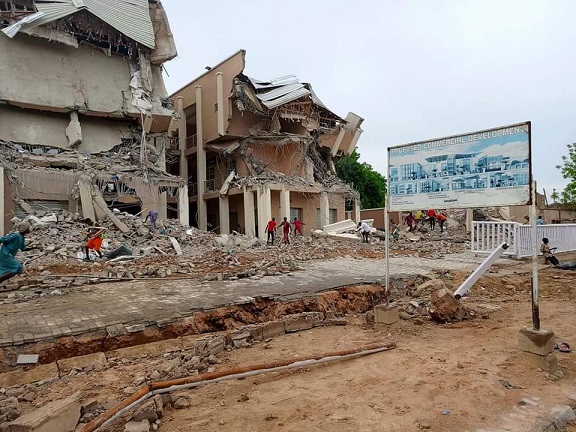
Monday Market Inferno: Measures to prevent a recurrence

By Abubakar Shettima

Maiduguri Monday Market is the main market situated in the heart of Maiduguri, Borno State. It was established in 1979 by the then administration of Mohammed Goni of blessed memory.

Since then, it has accommodated thousands of traders and several patronisers from Niger, Chad and Cameroon, among other countries. 

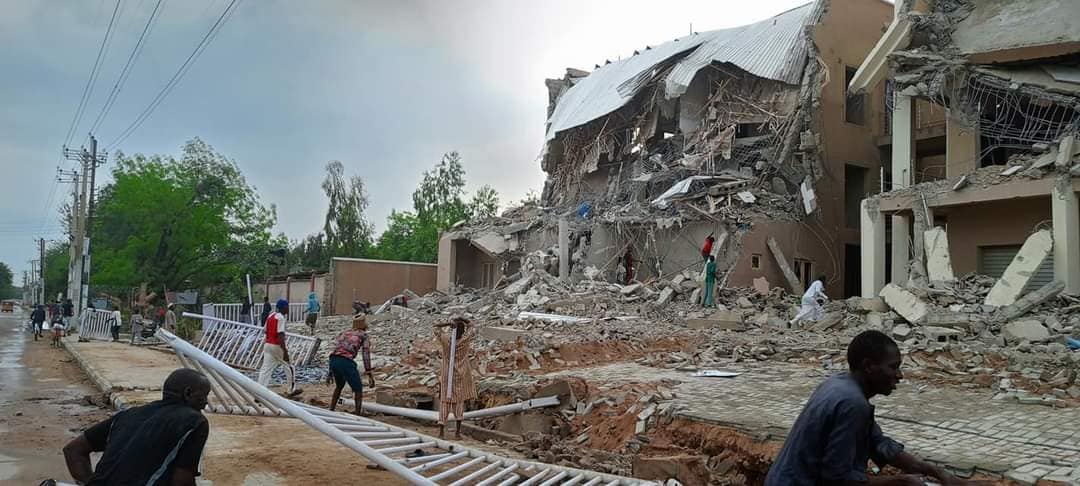
Within its existence, the market had recorded a series of major and minor fire outbreaks, resulting in the loss of millions of naira.

Notably, the state is steadily recuperating from its economic hardship orchestrated by insurgents–for a decade-plus-long. Then comes the recent fire outbreak that engulfed the entire market. 

While sympathising with all the affected businessmen, the Borno State government and the management of the market, it’s pertinent to devise some stringent measures, if carefully considered, will prevent future occurrences.

THEY ARE AS FOLLOWS:

1. It is exhilarating to learn that the market has an existing plan. That alone simplifies the equation we ought to deploy in tackling future disasters. As a matter of urgency, the management should adhere strictly to the original market plan. Ensure no one trades outside the purview of the plan.

2. Construction of a Firefighters Station within the market. This helps significantly and ensures timely response in order to control and curtail the widespread destruction whenever an inferno occurs. Although we are not praying for that to happen.

3. Redesign and modernise the market. Many of the traders are habitually attached to the market in question. On this basis, the government should construct—if need be— a two-storey building. Allocate the ground and first floors for business, while the second floor serves as a store. This will accommodate a large number of tradesmen.

4. Provision of Fire Hydrate in strategic locations within the market. This has been the practice in marketplaces, residential areas, and corporate organisations.

5. All petty traders occupying pathways and tarred roads within the market—hitherto designed to ease vehicular movement—should be allocated shops in the newly built market along Bama road, or they should be convinced to relocate to Bolori market, Abba Ganaram market, Muna or Kano park. Thus, It depopulates the market and brings about easy access. 

6. To achieve all these, a competent supervisory team must be set up to supervise and punish accordingly if one is found trading at a restricted point. The team will also determine the effectiveness and efficiency of policy and laws governing the operation within the market and its environs.

Abubakar Shettima can be contacted via abubakarshettima57@gmail.com.

Open letter to President-elect Bola Tinubu

By Babatunde Qodir

Dear President-elect, 

I want to first and foremost congratulate you on your victory as the 16th President-elect of our beloved country. Indeed Nigerians voted for you because your message to renew the hope of the country speaks volumes, even beyond your political calculation or influence. It is crystal clear that every Nigerian wants hope. The hope for better life and prosperity. 

Again, just a few days ago, I saw you on live TV when the Independent National Electoral Commission (INEC) issued you the certificate of return as the President-elect. I saw that you are delighted to begin the renewal journey in the next few weeks, as promised during your campaign period. As you had assured Nigerians of a better country, we would be happier if your wishes came true. And I pray to Almighty Allah to grant you the capacity to deliver. I congratulate you once again.

However, I want you to remember that Nigeria is a heterogeneous country battling crises of insecurity, kidnapping, and extreme poverty, among others. 

Mr President-elect, I want to plead that you do anything within your capacity to end the insecurity that is ravaging our country. The hydra-headed menace has undermined the propensity of our beloved country for progress. No country, in other words, develops in chaos. That is why you should, as the first step to renewing the hope of a country long trapped in hopelessness, pay attention to its security situation.

Mr President-elect, it is visible that the 2023 presidential election will go down in Nigeria’s history as the most heated contest. The election, unarguably, reflected the yearnings of people for good governance despite the fact that people were very tired of the situation of the country and President Muhammadu Buhari hasn’t lived up to the expectations of many Nigerians as their massive support for your party, All Progressives Congress (APC), showed in 2015. But it is strongly hoped that you will be better than him.

Furthermore, I am very sure you are aware of the loopholes of this incumbent government which I believe should be your target. Addressing loopholes is not tantamount to fighting the past; rather, it means you should learn from the past administration, which, of course, you’re part of, to address the crises now for a better Nigeria. It is not too much to say that you have a lot to do to convince a huge percentage of the youth who have shown dissatisfaction with the performance of your party in the past eight years.

As I type this letter, some candidates from the opposition parties are challenging your victory, making several allegations against INEC, whose performance in the election has generated mixed reactions from Nigerians. Opposition parties have alleged that you and INEC connived to rig the exercise in your favour. I think this allegation should be taken as a challenge to redeem Nigeria if your victory is further authenticated at the tribunal.

I don’t want to dwell on countless promises contained in your manifesto. It is unfortunate that Nigerians are tired of being deceived by politicians’ beautiful promises on paper. But, candidly, this is not the time to play politics as usual. I will strongly advise you to serve Nigerians in ways they can feel the presence of good governance. Most importantly, you should be particular about how to rejig the country’s education system on which the future of the country depends. This goes down to how prudently you manage the country’s resources at your disposal in the interest of development.

On a final note, dear Bola Ahmed Tinubu, this victory has hopefully come to stay with you for another 4 years. The onus is on you to serve, not rule, Nigerians. You should show compassion for the vulnerable. You should be different from those rulers who see the plight of the masses as nothing. Under your watch, we want Nigeria to be a country governed by the rule of law. Much as I am aware that a better Nigeria can only be possible through collective efforts, I charge you to be the servant of the people. May your tenure be a blessing for Nigeria.

Atiku Abubakar and the myths against his personality

By Yusuf Murtala

Many people have been brainwashed to believe some myths or lies againts their fellow humans without throughly investigating by themselves about what they have been told about someone for them to either believe or discard it.

Majority of people have been victims of such unfounded stories and accusations — one of which is a prominent politician in Nigeria’s political space, Atiku Abubakar. This man has suffered a lot from many allegations against his personality.

Two days ago, I was in Keke Napep (popularly known as Adaidaita Sahu) when this kind of discussion broke between two passengers and the driver. The three of them were bitterly complaining and narrating how Atiku Abubakar is funding terror acts in some places which according to them is what has backfired to cost him his presidential election.

Most of the things they were discussing and alleging were products of hatred, dogmatism, sectionalism and tribalism.

I’m neither an Atiku supporter nor his loyalist but, I never for once believe that Atiku has a hand in disrupting the peace and security of my country: Nigeria. I regard him as an established politician who is ready to take the mantle of leadership in Nigeria in order to change the narratives and lead us to the promise land.

Lastly, I urge my fellow Nigerians to personally investigate and think critically before believing or debunking stories on people, especially prominent personalities: politicians, business people, technocrats and renowned clerics so as not to fall into the trap of rumour mongers, disinformation and misinformation. Furthermore, we should also develop the habit of investing our time and energy in reporting and sharing positive stories about our fellow Nigerians, not hatred, propaganda and false stories.

Yusuf Murtala can be reached via his Facebook handle at Youngstar II.

FCT Abuja: Please, appoint a native as minister

By Abdullahi Adamu

As the Nigerians await a ministerial list from the executive, we urge president-elect Asiwaju Ahmad Tinubu to balance Nigeria’s political diversity by appointing a minister among natives of the Federal Capital Territory, Abuja.

“We  are appealing to Mr President to appoint somebody from FCT as a Minister in the federal cabinet because we believe that doing so will give Abuja natives a sense of belonging within the Nigerian federation.”

FCT natives have contributed immensely to the nation’s socioeconomic and political development. Accordingly, their exclusion is a gross injustice and a negation of constitutional provisions, including the federal character principle.

The contributions of FCT indigenes in maintaining the country’s unity, none of its kinsmen was occupying leadership positions within the nation’s political, judiciary or military circles.

The exclusion of Abuja natives in the last administrations and appointing any credible person within the FCT indigenous population as Minister would right the perceived wrongs and injustices.

“We are appealing to President-elect Asiwaju Ahmad Tinubu to use his exclusive powers to appoint an FCT man as a Minister in the Federal Executive Council.

In making appointments in any portfolio, please consider FCT natives. As stated in the Constitution of the Federal Republic of Nigeria, every citizen shall be treated equally. Likewise, where the nation’s capital is located, the FCT natives should be included in the executive council of the presidential cabinet. To balance Nigeria’s political diversity, everyone should be carried along.

Since the inception of Democratic governance in 1999, it has been crystal clear that FCT natives shall be appointed as the territory minister.

Your excellency, sir, it might interest you to know that with the huge amount of populated FCT natives in Nigeria, they only have one senator and two members of the House of Representatives only at the national assembly. It is an injustice.

We need a state status to increase our franchise beyond local government elections to enable us to have an executive governance structure and independent governing body and to expand our representation at the National Assembly.

Abdullahi Adamu wrote via nasabooyoyo@gmail.com.

An open letter to Barrister Abba Hikima

By Yakubu Nasiru Khalid

Should a real social fighter be partisan? Does this mean the side he has taken has no weakness at all, or does it mean Abba Hikima is no longer a freedom fighter as people regard him but a politician? 

Bar. Abba Hikima is a well-known social fighter, and he is one of the four most influential persons in Kano State who day and night fight to liberate have-nots peoples from the slavery of crooked individuals. 

He is a loving person within Kano State metropolitan area. His lovers are from various political parties such as NNPP, APC, PDP, etc. Many of his supporters use his picture as a slogan for their businesses, like tricyclic drivers (Keke-Napep), just because he fights to liberate them from evil hands. Many love you because they do not know you are partisan.

It is good for a social fighter to build relationships with politicians and policymakers to create positive change. You should try to connect with politicians who share similar values and goals. Building trust and respect with politicians is essential to maintain their dignity while dealing with politics.

But should Abba Hikima be partisan as politics is concerned? Your benefit is more meaningful and beneficial as a freedom fighter than to be a politician. You can only maintain your dignity in politics by staying true, which is costly in Nigerian democracy. “If you want to understand a person, give him power.”

Being partisan means you are willing to swallow all sweetness and bitterness of the side without scrutinising. Still, social fighters always struggle to ensure that the public meets their needs effectively and efficiently. 

Yakubu Nasiru Khalid can be contacted via yakubunasirukhalid@gmail.com.

Nigeria’s failure is a combination of the individual and collective disgrace of the system

By Nura Jibo

Nigerians living within and staying in the diaspora should start a self-cleansing effort to seek Allah’s forgiveness. Already, the people of the country have wronged God. Unfortunately, the current leadership does not want to agree with this position. However, let me start with the individual failures before I descend to the collective disgrace and abuse of the system.

1. The recent presidential election overtly exposed the INEC chairman’s unpreparedness. He was highly unprofessional and produced a very abysmal and disappointing outcome. In the history of Nigeria’s electoral commission, there has never been a time that a lump sum of money amounting to N335 billion was spent on a presidential election under the pretext of the Bimodal Voter Accreditation System (BVAS) or IReV (portal) or whatever parlance Prof. Mamud Yakubu wants to call it. This guy ended up giving Nigerians the most controversial and expensive presidential election in the entire history of the world. As a professor of history, he went to Chatham House and bragged to Prof. Alex Vines and co. that in his office, “There is one of his engineers that even promised him to design a voting machine that could sense voters’ body odour.” He was telling this open and brazen “invention” to global audiences at Chatham House even when he ended up giving Nigerians the most terrible BVAS and IReV technologies that, up until now, he is struggling to fix by postponing the Guber elections by a week!

2. The N335 billion that Henry Omoru of Vanguard reported that Prof. Mamud asked from the Federal Government to conduct this kind of election was an upshot of the initial INEC budget of N305 billion plus an additional N10 billion. This stupendous amount is enough to build eight state universities in each of the 36 states of the federation, including Abuja, with a take-up grant of N1 billion each!

3. According to Dennis Amata’s analysis of the INEC 2023 election budget that appeared in Dataphyte, “The Federal Government spent N444.5 billion to conduct the country’s last three general elections, and a total of N255 billion was wasted due to the low voter turnout recorded in each of the elections.”

4. And if it is true that Mamud is a first-class historian from Usman Danfodio University, Sokoto, Nigeria, and he used his historical antecedents to brag at Chatham House and, in the end, give Nigerians this BVAS melodrama, then his first-class degree is now subjected to the vagaries of his incompetence and lack of ICT knowledge. And this is why! His poor BVAS and IReV performances had already reduced him to a local champion or, better put, a local history professor overrated in Nigeria.

5. A cursory look at the INEC’s nine (9) key items that it budgeted for the conduct of the 2023 election shows that there was a very depressing procurement of hi-tech/advanced ICT facilities such as BVAS and a hi-tech result storage database that could safeguard the security of online and offline result submittals and transmittals, as Mamud wants us to believe. Indeed, Mamud is not aware of or lacks knowledge about the disadvantages of using BVAS as a voter accreditation system. On the contrary, he was probably carried away by it because INEC was told that it could eliminate electoral malpractices and prevent multiple registrations.

6. But Mamud, as a “first-class” academic and Professor of Political History, ought to have known that using such a biometric voter identification and transmitting apparatus for instant results collation is always problematic for developing countries such as Nigeria because there is no adequate network in African countries that could effectively allow the use of BVAS and IREV portals (transmission). In fact, the incessant network failures in Nigeria and, by extension, Africa are enough to get Mamud informed of the disadvantages of using this failure-prone network facility. Moreover, as a learned history professor, this ought to have informed him how this kind of network failure gave President Yoweri Museveni an advantage to impose an internet blackout that cut off access to news, social media, and messaging services ahead of the Ugandan presidential election.

Seriously, Mamud, as a professor, needs to know better than anybody the calamity in the erratic supply of electricity that could ravage his entire BVAS and IREV efforts. In 2019, I had an international conversation with Volkswagen’s Head of Sustainability in Madrid. I tried to persuade him to patronize African countries by supplying electric cars to Nigeria and other African countries. The Volkswagen giant quickly checked my ideas by saying thus: “There is no constant supply of electricity in Africa that could charge the batteries that will drive the cars”. Therefore, Prof. Mahmud and co. ought to have known this simple arithmetic. They could have visualized that no ample network or electricity in Africa could make BVAS and IReV function well!

Fellow Nigerians, friends, and colleagues of Nigeria, that was Mamud Yakubu’s disgrace to Nigerians!

And one wonders what the likes of Mohammed Haruna are doing at INEC as Resident Commissioners by allowing Mahmud to use Nigeria’s ample resources and, in the end, put the entire country into global shame! Whenever I see Mohammed Haruna sitting beside Prof. Mahmud with his hand akimbo, I know that Nigeria does not have a future. Because if a combination of Mohammed Haruna, who spent a significant part of his life writing long essays about Nigeria’s underdevelopment and democratic misgovernance, and Yakubu could disgrace Nigeria this far in the name of INEC staff, then we need to call it off for Nigeria. Indeed, there are so many Mamud Yakubus and Mohammed Harunas in the land that time and space will not allow us to exemplify most of them in this analysis. Therefore, we can only mention a couple of Mahmud’s similar disgraceful elements that constitute the Nigerian system’s individual failure before narrowing down to the specific scenarios that have thrown the country into a global failure and a pariah state.

7. Therefore, the next individual’s disgrace worth mentioning here is that of Adamu Adamu, the current Nigerian Minister of Education. Adamu took ample time to write his folklore about ASUU and how to make it better. But in the end, he goofs up Nigeria’s education by forcing the entire system to suffer universities’ strike action for over seven months! Courtesy of Adamu’s Taqiyya Amana, which he displayed amidst growing educational tensions that distract Nigeria by throwing it backwards by two-semester backlogs.

We can go on and on! But to cut the story short, the colossal loss to Nigeria on this INEC’s BVAS and IReV drama has successfully reduced its chairman to a local champion who made his country not reap the benefit(s) of the huge monies that he spent on this so-called BVAS without giving Nigerians value for their money. It is a shame that for all the money he asked for, he could not provide Nigerians with an enabling environment to come out en masse and cast their votes. Mamud and co. sincerely deceive themselves by hiding under the pretext that Nigeria’s democracy is the biggest in Africa. He also brags about this point anytime he is given a chance to speak. He doesn’t know that several African countries are fairing better than Nigeria. Unfortunately, Prof. Mamud doesn’t know that his country is lagging behind certain African countries regarding voter turnout and conducting fair elections without BVAS! Here I will conclude by quoting extensively Ray Ekpu’s take on the need for INEC to wake up from its slumber and engage in a serious campaign on voter turnout.

According to Ray Ekpu, “Many African countries have done far better than Nigeria in combating voter apathy. Their voting figures are close to 100%. Look at these: Rwanda’s 2017 presidential election produced a 98.2% voting record; Equatorial Guinea (2016): 92.7%; Angola (2017): 90.4%; Seychelles (2016): 90.1%; Guinea-Bissau (2019): 89.3%; Zimbabwe (2018): 84.2%. For Nigeria to deepen its democracy, the voting figures have to go up drastically. That means that all concerned must work on improving voter education.

Voter education can also help in checking election rigging. Election rigging can only happen when there is collusion among the triumvirate, namely, politicians, INEC officials, and security personnel. Where there is no collusion, no rigging of fundamental significance can take place. There is no perfect election anywhere in the world, but rigging can be substantially reduced once people are interested in ensuring that their votes count. But in Nigeria, poverty is an issue. Many of the people who sell their permanent voters’ cards are poor. For them, those cards mean little or nothing, but a few thousand naira can mean a lot to them. It can mean the difference between a full stomach and an empty one”.

Nura Jibo is a Lifetime Member of the West African Research Association (WARA), African Studies Centre, Boston University, United States. He can be reached via jibonura@yahoo.com.

Tinubu: Savouring the triumph of an ageless political colossus 

By Lawan Bukar Maigana

It is now an open secret that the former Governor of Lagos State, Bola Ahmed Tinubu, is now Nigeria’s president-elect. For many who may not know, the erstwhile Lagos Chief Executive is not the typical run-of-the-mill Nigerian politician. 

A master political strategist of no mean repute, Tinubu has never lost an election since he started appearing on the ballot. The lessons in his political journey are enormous and worth studying by contemporary politicians, especially young people who aspire to be leaders of tomorrow. 

Tinubu’s political trajectory depicts the importance of building people regardless of any differences. He built builders, and the builders built him. 

Most people, including some members of his party, had thought that he was not going to win the February 25th presidential election because of some varying factors.

But Tinubu, for a minute, never lost hope. He consistently told people that he was going to win. He candidly said, “it is my turn, and I will win.” These were the songs he sang until he won. 

It is a fact known that most politicians fear the “enemies within”, but the reverse is the case with Tinubu as the Aso Rock cabals in President Muhammadu Buhari’s government fear him. He tackled them and moved on. 

The contribution of the people he built in politics to his emergence as president-elect cannot be overemphasized. 

Hours after he was announced as the winner of the keenly-contested election, he first extended his heartfelt appreciation to the Vice President-elect, Senator Kashim Shettima, and the entire northern governors who gave their best to his ascension to the presidency. 

One of the qualities of a resounding leader is his ability to unite people and carry everybody along. That is what Tinubu started with. He called on all presidential contestants to join him in building a new Nigeria for the betterment of all and sundry. Who has ever done that in the history of our nascent democracy? 

Tinubu’s track record as governor of Lagos is a testimony of his effort for the unity and development of Nigeria. He brought capacity hands outside Lagos for the betterment of his people. He has national spread, unlike his Labor Party rival, Peter Obi, who was largely voted by people of the east and a few from the west. 

Obi, being the governor of Anambra, does not take his state as his permanent residence. He lives in Lagos—a state developed by Asiwaju Bola Ahmed Tinubu. I expect him to calm down his supporters, conceit defeat and join hands with the president-elect to steer the Nigerian project. 

One of the best ways to advocate peaceful coexistence and give people a sense of belonging is by giving protection to the people you govern, regardless of any differences. Tinubu’s house is a good example. He’s a Muslim. His wife and children are Christians. 

Teeming Nigerians have joined Tinubu to savour his electoral victory in the penultimate Saturday’s presidential election. But the President-Elect knows, more than anyone else, that the journey ahead will be rough, bumpy tortuous. 

He, however, should do all that it takes to actualize the visions of his ‘Renewed Hope’ campaign slogan. It is not for anything that many, including his armchair critics, regard him as a political colossus who has greatly paid his dues in helping to entrench democratic governance in Africa’s Giant.

Lawan Bukar Maigana writes from Abuja and can be reached via email: lawanbukarmaigana@gmail.com.

NUM’s distinctive strategies on university education

By Muhammad Danjuma Abubakar

The term ‘University’ has its roots from the Latin word ‘universitas’, which translates to ‘the whole’ or ‘the totality’. This is said to have originated from medieval Europe where groups of scholars came together to form communities dedicated to education and research.
In essence, universities of good standing, regardless of ownership (public or private) are specialized spaces for universal education that have established traditions of research and innovations aimed at tackling societal issues. Also, these are the fundamental reasons why they are referred to as such.

Newgate University, Minna (NUM) can be counted as one of the best academic institutions that aim to promote qualitative education. This can be justified precisely through the NUM’s rigorous curriculum, exceptional faculty members who are experts in their respective fields with committed culture of inquiry that pushes the boundaries of knowledge.

NUM – the Newgate University, Minna, was licensed by the National Universities’ Commission (NUC) in April, 2022 as the first private university in Minna, the Niger State capital, with a reputation of an orientation that is focused around student-centered learning to meet the needs and interests of students within reasonable grounds.
At the heart of the university’s tradition is a unique combination of research exploration and academic excellence, expressed through its motto ‘explore to excel’. Also, Newgate University, Minna entices students to embark on a splendid journey of self-discovery by presenting them with a diverse range of academic programs that are tailored to their individual passions and interests.

However, the university’s philosophy of exploration extends beyond academics to encompass a comprehensive range of extracurricular activities, such as community service, practical experience, among others that aid students in expanding their horizons and discovering their true potential.

Newgate has distinctive strategies and academic culture exemplified by its provision of four (4) distinct teaching and learning packages to its students: cognitive, digital, interpersonal and intrapersonal study packages. The cognitive package being offered by Newgate University instills in its students, the ability to devise innovative solutions to emerging challenges in their respective fields of study. Meanwhile, the digital component of the university’s curriculum ensures that students become responsive digital citizens, capable of keeping pace with the ever-evolving digital landscape. To enhance comprehension and facilitate recall, the university employs cloud-based teaching and learning techniques such as virtual reality, streamed lectures and relevant practical videos.
At NUM, both the intra and interpersonal components of the study packages are given key attention, with emphasis on orientation and training that will equip students to assume leadership and negotiation roles, while instilling in them qualities of service, passion, adaptability and empathy. These components are intentionally designed to meet the growing global need for hard and soft skills which are crucial for employability.

The impact of Newgate University’s distinctive and impressive strategies to university education extends beyond the classrooms, to equipping students to become leaders in their communities and in societies at large. By providing a holistic university experience that emphasizes on critical thinking, creativity, innovation and problem-solving, NUM proves that, it can be a model for other institutions to emulate.

Muhammad Danjuma Abubakar lives and writes from Minna, the Niger State capital and can be reached on muhammadcares4u@gmail.com

On Southern Nigeria’s selective outrage

By Suleiman Ahmed

In Nigeria, an election period is like watching a classic Series for the umpteenth time. You know how it’s going to play out, but it doesn’t make it any less fascinating. The most entertaining episode, of this Series, after the presidential election, of course, is the debate leading up to the Lagos gubernatorial election.

Firstly, the Yorubas must perform a ritual of agonisingly re-iterating the exact same thing: that Lagos is not a “no man’s land.” This is quickly followed by an outcry from the non-Yoruba, Lagos-based (mostly southern) Nigerians. They argue that, as Nigerians, every inch of land in the country, belongs to all Nigerians. That any attempt to deprive them of this right is ethnic bigotry. But how true is this? And do they practise what they preach? Let’s go down memory lane.

A few years ago, when the federal government suggested to some (southern) state governors to provide grazing lands to cattle farmers (who’re predominantly Fulanis) to grow their herds; to control herder-farmer clashes in parts of the country, many of the governors rejected this proposal. (Mostly) Southern Nigerians also took to social media to applaud the governors for refusing fellow Nigerians access to Nigerian lands.

Dangerous words like “invaders” and “take over” were recklessly deployed to stoke ethnic tension. No one cared to remember that these people, too, were Nigerians and therefore were entitled to own land and do business anywhere in Nigeria.

Now, in 2023, it’s election time again, and this same divisive rhetoric is being deployed, albeit in different circumstances. The same people who once championed an anti-Fulani campaign that ensured their fellow countrymen from the north couldn’t get lands in their own country are now complaining of being othered by Yorubas in Lagos. So, I’m asking: why is it ok for them to own lands and freely do businesses, have some influence on who becomes governor in “another man’s land,” but at the same time, see no contradiction in telling northern Muslim cattle farmers to return to the north, to look for land, because “the south does not belong to them?” Why are you concerned that the Fulanis “will take over your land” but are now getting triggered because the Yoruba people feel the same way towards you?

They wanted the land for free

When I first shared my thoughts on this topic on my Facebook Page, some interlocutors argued that the reason for the southern governor’s pushback was that the federal government wanted the land free of charge.

“Free,” in this context, is debatable. When an industry such as cattle farming wants the land for its activities, it’s not usually a mere hectare or two. A reasonable size would be hundreds to thousands of hectares. The size and complexity of such a project is not something private individuals can execute without support from the government.

Therefore, it was not out of order for the federal government to step in to help with things like making the land available and then building the infrastructure needed for the place to function properly. After which interested parties can be invited to come in and rent/buy spaces to set up shop. These farmers were clearly going to pay taxes to local authorities and generally operate the same way market stall owners do in places like Kano, Lagos or Aba.

Having said that, let’s say, for the sake of argument, I agree that the federal government wanted the state government to give “free” land to the cattle farmers; why was the response not: “bring more money!” Or “let’s have a better financial agreement?” We didn’t hear of any such request — of a better (financial) offer, from the southern governors. Instead, what we got from them, and many southern Nigerians, were: “the Fulanis should go back to the north and ask for land there,” “this is a plan by the Fulani government to take over our land and hand it over to their people,” and many other unpleasant, divisive comments. The protest from the south was a clear message to those cattle farmers from the north. It was made known, loud and clear, that their land was in the north and not in the south. What happened to being a Nigerian citizen with full rights anywhere in Nigeria?

We can’t be comfortable with othering and divisive languages when it involves the Fulanis and then suddenly become appalled when they’re deployed against a different group of people. It doesn’t work that way. We cannot, on the one hand, say things like Idoma land, Ijaw land, Tiv land, Igbo land, or Niger Delta land (or Niger Delta oil) and then throw tantrums when Yoruba people say Lagos is Yoruba land. You’re clearly not appalled at any injustice. You’re only now concerned because you are at the receiving end of it. What you’re practising is Selective Outrage (apologies to Chris Rock), and it is hypocritical.

Suleiman Ahmed is a writer and the author of the socio-political novel, Trouble in Valhalla. He tweets from @sule365.

Kawu Sumaila: The ghost of Malam Aminu Kano

By Umar Ahmad Rufai

As we all know, politicians in Kano have been claiming they are followers of the late Malam Aminu Kano to achieve their political interests. We all know and remember him as a leader of the masses, a reformist, educationist and revolutionist. Mallam had built the most substantial legacies. When he was minister, he joined protests against the federal government in Nigeria.

Honourable Kawu Sumaila is Malam’s ghost. As a strong opposition leader after resigning from his position as senior special assistant to the president on national assembly matters,  Kawu defeated the incumbent senator that spent sixteen years in the seat last week.

He is ready to represent the good people of southern Kano. He contrasted and won the election three times. He represented Takai/Sumaila for 12 years in the Green Chamber.

Kawu’s action is louder than his voice. He knows the problems of his senatorial district. That’s why he aspired for the seat in 2019 and lost in a questionable primary election. He is ready to speak about his senatorial district, Kano state and northern Nigeria.

Kawu supports the less privileged within and outside his constituency. He founded Al-Istiqama University, the first private university in southern Kano.

Umar Ahmad Rufai wrote from Kano via umarahmadrufaijr@gmail.com. He is a student at Aminu Kano College of Education in Kano.