Education

FG is ready to meet with ASUU on all issues they’ve raised – Education Minister

By Uzair Adam Imam

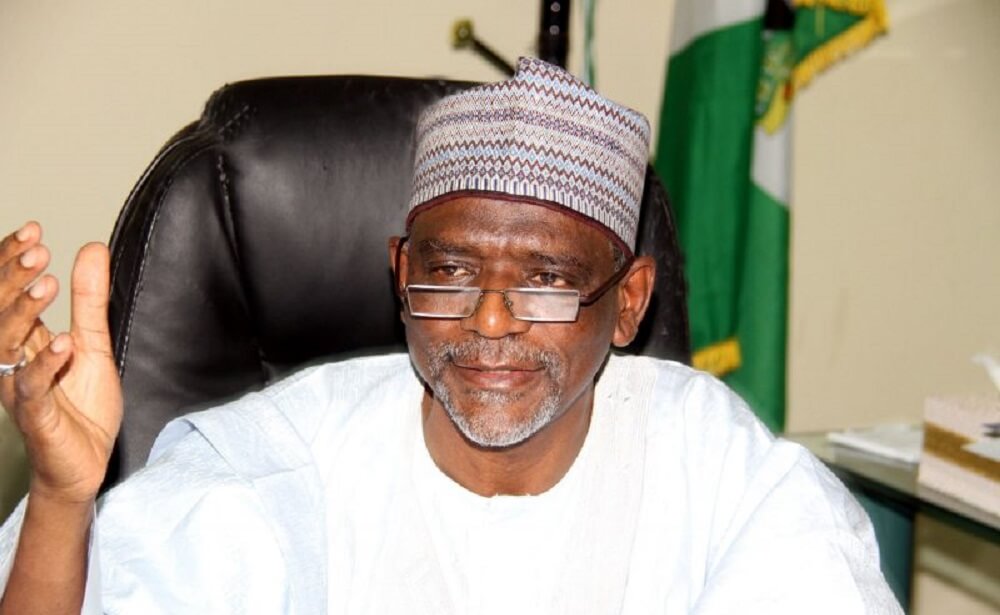
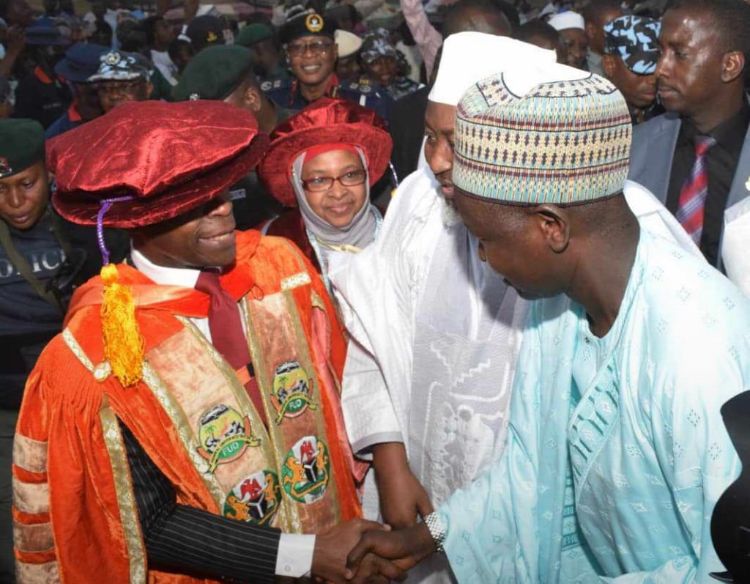
 The Minister of Education, Malam Adamu Adamu, has said that the federal government is ready to meet with the Academic Staff Union of Universities (ASUU) on all issues they have raised.

Adamu said that he was surprised by the decision of the union to embark on a four-week strike. 

He added that the decision of the university lecturers came abruptly amidst ongoing meetings that aimed at resolving the menace.

The minister stated this on Wednesday while fielding questions from State House reporters after the Federal Executive Council (FEC) meeting in Abuja. 

However, despite several negotiations, the minister also cleared the government of any fault over failure to reach an agreement with ASUU. 

According to him, “ASUU, unfortunately, they have gone on strike, and I am looking for them because all the issues are being addressed. The last thing that happened was that our committee looked at their demands, but there are renegotiations going on. They submitted a draft agreement which the ministry is looking at.”

Speaking on ASUU’s draft agreement, Adamu said, “A committee is looking at it. Immediately it finishes, the government is meant to announce what it had accepted. Then suddenly, I heard them going on strike.”

Clearing his name over allegations from ASUU about his absence from meetings, the minister said, “ASUU will never say that. I always call the meeting myself. The meetings I didn’t attend were those that happened when I was in hospital in Germany.

“We want a peaceful resolution. The federal government is ready to meet them on all issues they have raised, and if there are so many meetings and the gap is not closing, then I think it’s not the fault of the government.

Asked about the possibilities of reconciliation between the FG and ASUU  before the end of the 30-day strike, he said, “I can’t give you time. I am ready to reach an agreement with ASUU now, but since I’m not the only one, I can’t give you time, but certainly, we are going to reach an agreement very soon.”

How to make the month-long ASUU strike a win-win situation – Don

By Uzair Adam Imam

A senior lecturer with the Department of Mass Communication, Bayero University, Kano (BUK), Dr Ibrahim Siraj, has described the four-week strike of the Academic Staff Union of Universities (ASUU) as a necessary evil Nigerians must learn to live with.

Siraj said that as we could not stop the strike, we could do whatever we could to minimize the ‘losses’ that come with it while anticipating the benefit.

The academic who disclosed this on his social media platform stated that if only we could use some formulas, we are all winners – driving many benefits from the strike.

The writing he titled, “How to Make the Month-Long ASUU Strike a Win-Win Situation”, provided some formulas which he married them up with the benefits worth driving if put into practice.

Dr Siraj wrote, “Federal Government is given an ample opportunity to study ASUU demands, engage in serious and sincere negotiation and finally seal a deal. This will save the system from further disruption and damage.

“And with the countdown to 2023 general elections just starting and political activities expected to reach their peak later in the year, no better time than now to do it. They can resolve this one and concentrate on their politicking. Win.”

He added that “for lecturers, this is a time to sort out all issues relating to continuous assessment (CA), have some rest, finish writing that paper, gain some renewed energy and hope for the best from the struggle. In-sha-Allah it will usher into a better university system: better teaching and learning conditions, better remuneration, and more productive scholarship. Win.”

Moreover, Siraj stated that this is also an opportunity for the students to prepare for the coming exams “eat up the notes, ‘cram’ the handouts and do additional reading and consultation on the topics. This could translate into better performance and ultimately higher grades. Win”.

“Final year students could use the window to invest more time in writing their projects. So, in addition to aiding timely completion, it could also enhance the quality of the output. Win,” he stated.

The lecturer stated that the adjustment in the calendar means that BUK students will spend a better part of the blessed month of Ramadan at home. Thus, he said, “this means students and teachers will have more time to devote to seeking Allah’s pleasure in the holy month. Win.”

I make a lot of discoveries in teaching profession

By Ibrahim Musa (BK)

While on teaching service, there are a lot of discoveries I make in the noble profession. In fact, I have seen some reasons why many students cannot do well academically in many schools despite all the efforts and sacrifices teachers make to ensure students’ academic accomplishments that will help them (students) and prepare them for future life.

Teachers are there to make necessary sacrifices in helping students attain quality education that will help them meet their potentials in life and establish a foundation to build their future upon.

However, many teachers have different reasons for being in the classrooms. Some take the teaching job to satisfy their needs with their salary. Some are there just because they cannot get a well-paid job and due to the blow of unemployment. They reluctantly take teaching jobs without the intention of helping students, while some (reasonably few) are there to make sacrifices in assisting students in attaining a good education. Every reason of each teacher will determine whether or not students will get a good education.

I discovered that many teachers are doing one thing very well, which is teaching students in the classrooms but abandoning one other vital thing: research. Thus, All teachers in primary and secondary schools need to teach and engage in research that will help them formulate effective teaching methodologies because students have different needs that require different teaching methodologies that will enable students to meet their educational needs in the classrooms.

Suppose all teachers engage in both teaching and research together. In that case, they will encounter individual differences exhibited by students. With this discovery, they will be able to formulate effective teaching methodologies to help the students to understand the contents of the lessons very well and meet their educational needs.

It is vitally important to note that research is the adequate foundation upon which teaching methodologies are formulated. Therefore, every teacher should not overlook or neglect research because it is beneficial to both students, teachers themselves, and society.

Life is dynamic, and research will help teachers understand the nature, scope, and prospect of every dynamism to determine and design effective teaching methods that match students’ learning paces.

RESEARCH EXPANDS OUR TEACHING PROFESSIONALISM. Therefore, keep on teaching and researching.

Ibrahim Musa BK is an English Language teacher at Government School For the Deaf Malumfashi, Katsina State. He sent this article via musaibrahimbk@gmail.com.

Leading with power and influence: The role of a teacher in a changing world

By Aminu Rabiu Kano

If there is one vexing question that has continuously engaged the attention of stakeholders worldwide, it is certainly about the future of a classroom teacher in the ever-changing global world. No doubt, the role of a teacher is critical in building and sustaining a healthy and responsible society. Indeed, the future of any thriving community rests in the teacher’s pivotal role to progressively impart valuable lessons and skills to children. But then the world is fast evolving, from one era to another, thereby altering the modus operandi of several human activities, teaching and learning inclusive.

In the 21st century, the world has witnessed so much transformation in virtually every aspect of human life, with technology leading the way into a more digital world. The change brought upon by the technological revolution has had a tremendous impact on every facet of human interaction. Recently, the Covid-19 pandemic has shocked the entire world as physical human interactions were curtailed, thereby bringing a paradigm shift in man’s understanding of his environment.

Specifically, the education sector is affected by the changes constantly happening in and around the world. Naturally, this raises serious questions about the role of a teacher. As globally recognized, a teacher everywhere possesses some latitude of power and influence, which earns him respect in society. But since the world is witnessing tremendous changes that have never been seen before, some urgent questions arise that are pertinent to a teacher’s continued relevance.

On the one hand, a teacher is expected to help students learn by imparting knowledge and setting up a situation in which students can and will learn effectively. While on the other hand, he (teacher) is faced with the daunting task of introducing a novel, pragmatic approach to learning to be at par with changes in the world. While the task is enormous, it is still humanly possible for a teacher to deliver his primary functions while at the same time leading with power and influence.

Research by Kappa Delta Pi (2015) discovered that little value occurs in any classroom without excellent teacher preparation to lead students. This implies that the leadership skills possessed by a particular teacher have a tremendous impact on learning outcomes. A teacher, in this context, is equated with a senior policymaker whose ability to lead the way for progressive policies and handle complex issues has a direct impact on the happiness of a vast number of people.

A teacher is thus not seen as a leader with limited influence and power but a leader of all students, of people large and small. Therefore, teacher leadership is an inescapable reality. In essence, I am saying that in a bid to maintain and even augment their relevance in a changing world, teachers must possess some leadership skills to meet students’ demands.

Secondly, for teachers to remain relevant and influential in a fast-changing world, they must be an agent of change. But in order not to misunderstand change with fashion, a teacher must do some research to be able to glean the source, nature, character, prospects, and challenges of any change mantra. This means understanding the politics of change and collaborating with like minds in pushing for a progressive change in all aspects of human life. By so doing, the teacher extends the reach of his leadership empire beyond the four walls of a classroom.

Thirdly, for a teacher to continue wielding enormous power and influence, he must do all he can to produce students who not only keenly observe but clearly understand what is happening around them. Therefore, the onus is on the teacher to train his students and imbue them with the mindset of identifying problems in their immediate society and investing their efforts towards solving them. In this light, skills such as critical thinking and problem-solving are pivotal.

Finally,  a teacher can only lead with power and influence in a changing world if he is adaptable. Adaptability in this context implies the readiness and ability of the teacher to receive, internalize, support, and promote positive changes. Therefore, as the world moves to a digital era, the teacher must embrace technology to deliver lessons. For instance, the Covid-19 pandemic has resulted in the closure of schools and other institutions of learning, thereby disrupting academic activities. This notwithstanding, in some climes, teachers resorted to using technology for lessons delivery. By way of advice, a teacher must leverage technological gadgets to produce students with a digital mindset.

Aminu Rabiu Kano is a political and public affairs commentator. He can be reached via arabiukano@gmail.com.

English Tenses (concluded)

PAST PERFECT CONTINUOUS TENSE

 Subject+ had been + verb in progressive

Past perfect continuous tense represents an ongoing action that started and continued for some time in the past.

Example:

1. Yar’adua had been seeing his doctor for two years before he died in 2009.

2. The students had been waiting for two hours when their lecturer arrived.

3. Muhammad had been teaching for four years when he resigned and joined politics

SIMPLE FUTURE TENSE

subject+ will/shall + verb (base form)

Functions of the simple future tense

The simple future refers to a time later than now and expresses facts or certainty. In this case, there is no ‘attitude’.

The simple future is used:

  • To predict a future event:
    It will rain tomorrow.
  • With I or We, to express a spontaneous decision:
    I will pay for the tickets by credit card.
  • To express willingness:
    I will do the washing-up.
    He will carry your bag for you.
  • In the negative form, to express unwillingness:
    The baby won’t eat his soup.
    won’t leave until I’ve seen the manager!
  • With I in the interrogative form using “shall” to make an offer:
    Shall I open the window?
  • With We in the interrogative form using “shall”, to make a suggestion:
    Shall we go to the cinema tonight?
  • With I in the interrogative form using “shall” to ask for advice or instructions:
    What shall I tell the boss about this money?
  •  
  • FUTURE CONTINUOUS TENSE

subject+ will be + verb in -ing

The Future Continuous tense is a verb tense that indicates that something will occur in the future and continue for an expected length of time.

Example

1. I will be travelling to Kano tomorrow this time 

2. We will be watching the football match 

3. The students will be sitting for their final exams in June.

FUTURE PERFECT

subject+ will have + verb in past participle

Example

1. I will have returned from Kano tomorrow by this time

2. I will have finished my project by next week.

3. I will have written the letter by breakfast time.

FUTURE PERFECT CONTINUOUS

subject+ will have been + verb in – ing 

– To show that something will continue up until a particular event or time in the future

Example:

1. I will have been teaching for six years by September 2022

2. The students will have been waiting for two hours by 10.00 am

3. We will have been playing for one hour by 10:30

In summary

1. simple present: I drive.

2. present cont: I’m driving.

3. present perfect: I have driven.

4. Present perfect continuous I have been driving.

5. simple past: I drove.

6. past cont: I was driving.

7. past perfect: I had driven.

8. past perfect cont: I had been driving.

9. simple future: I will drive.

10. future cont: I will be driving.

11. future perfect: I will have driven.

12. future perfect continuous: I will have been driving.

Concluded

Nuru Aliyu Bauchi wrote from Bauchi via nurubh2015@gmail.com.

Parents, students plead to FG as ASUU mulls over fresh strike

By Uzair Adam Imam

Students and their parents are worried as the Academic Staff Union of Universities (ASUU) threatens to embark on a fresh indefinite strike.

Recall that ASUU suspended its nine-month-long strike in 2020 after reaching an agreement with the Federal Government. Still, after a year, the government is yet to fulfil its promises to the union.

The ASUU’s strike has been described as one of the most lingering issues that has been paralysing Nigerian universities, leading to the delay in students’ graduation and the deterioration of the education system in the country.

Not only that, many people argue that the strike has destroyed the future of many promising youths.

In a statement on Thursday, the Chairperson of ASUU Kano State Branch, Comrade Haruna Musa, and the Union’s Secretary, Comrade Yusuf U. Madugu, declared Monday, February 7, 2022, as a lecture-free day.

Its essence is for ASUU to use the day to sensitise university students, parents and other stakeholders on the brewing crisis arising from the Federal Government’s failure to implement the existing agreements with the union judiciously.

Educational sector at the receiving end

A lecturer at the Department of Nigerian Languages, Bayero University, Kano, Dr Muhammad Sulaiman Abdullahi, said that the strike was killing the country’s educational sector and the economy.

Dr Abdullahi cried: “It is a sad development. It looks childish and an endless menace, especially to the Nigerian educational system. Strike has become a thorn in the flesh of Nigeria’s general development. No nation can prosper morally in such a nasty situation. It is, indeed, unfortunate.”

He added that the situation “generally makes people, teachers, students and their parents to become very dull and uncertain of their future. You can take it to the banks that crime rate will somersault, and new bad things will manifest within the wider community”.

Students at risk

The president of the Mass Communication Students Association (MACOSA), Bayero University, Kano chapter, Comrade Sadisu Sada, decried that industrial action in Nigerian universities had been there for quite a long time.

He said, “It is worrying. The issue affects students directly. And for me, the government is to blame.

“ASUU is doing her best to give the educational system all that it requires. If not, education would have died.”

Umar Isah Dandago, an undergraduate of the Department of Mass Communication in the university, also voiced his grievance, saying this would delay his graduation.

Dandago said: “We would have graduated if not for the 2020 strike. This is a serious problem. A lot of people want to do something, like setting up a new business after university, but because of the strike, it’s becoming almost impossible.”

He, therefore, urged the Federal Government to give ASUU what it demanded, saying, “I believe it’s not even half of what’s being squandered in some things that are not important to us. So let’s get the education we deserve as Nigerians so that we’ll be proud of our leaders and our country.”

Also speaking, Comrade Ibrahim Mukhtar Sulaiman, a level 300 student, said: “Sadly, students taking a four-year course will graduate in five, six or seven years. And this affects not only their academic careers but also their personal life.”

Parents raise alarm

As the strike looks imminent, some parents lamented that the brewing crisis between the government and ASUU jeopardises their children’s future.

A parent, Malam Adamu Kolo, who looked disturbed by the imminent strike, said that his son would have graduated if not for ASUU incessant strike.

Malam Adamu Kolo said, “My son would have graduated this year if not because of ASUU incessant strike. You can see that I am poor. I am hopeless. Our hope is on this boy.”

Trust TV seeks collaboration with BUK Communication Faculty

By Ibrahim Siraj

The Faculty of Communication, Bayero University, Kano, is happy to collaborate with the newly launched Trust TV for the mutual benefit of the Faculty and the new television channel. Dean of the Faculty, Professor Mustapha Nasir Malam, said this while receiving a delegation from Media Trust Limited in his office on Thursday, January 27, 2022.

Trust TV is the latest addition to the list of products by the Media Trust Limited, owners of Trust newspapers. Launched six months ago and watched on StarTimes, free-to-air Nigcomsat and online, Trust TV is expected to be on DSTV soon.

While congratulating Media Trust on adding television to the Trust family, Prof Malam described the organization as an impressive success story looking at how it started a few decades ago and what it has become today in terms of readership, spread, facilities, staffing and corporate headquarters.

He said the launch of the TV channel has brought the need for a closer partnership between the Faculty and Media Trust and urged the delegation to identify specific areas of collaboration and their timeline to serve as the basis for developing and signing an MoU.

On his part, the general manager of Trust TV, Ibrahim Shehu Adamu, said the TV channel was set to fill an existing gap in the television ecosystem in the country, especially when it comes to reporting northern Nigeria.

“The North is not represented at the national level. Most of the television stations are southern-based. And sometimes, when it comes to telling the stories about the North, the perspectives are being skewed, and the stories are not told in the proper context.

Though Trust is a national medium, we feel we understand our constituency, our religion and our people, and we should be able to tell our stories better”. He said.

He added that the visit was meant to offer Trust TV the opportunity to tap into students’ potential, especially graduates who want to pursue a career in television broadcasting and those wishing to go on internships to enhance their skills. He said those services were needed to be able to drive the products.

Speaking earlier, the Editor-in-Chief, Naziru Mika’ilu Abubakar, applauded the long-existing collaboration between Media Trust and especially the Mass Communication department. He described the automatic job offer for best graduating Mass Communication students as a great success, adding that more areas of collaboration would be explored.

Trust TV is an all-English news and current affairs channel that concentrates more on documentary and investigative storytelling.

English Tenses II (Continued)

PRESENT PERFECT TENSE

Subject + has/have + verb (past participle)

The present perfect tense refers to an action or state that either occurred at an indefinite time in the past (e.g., we have talked before) or began in the past and continued to the present time (e.g., he has grown impatient over the last hour). This tense is formed by have/has + the past participle.

Examples

1. Nuruddeen has eaten the food.

2. The students have gone home.

3. The timekeeper has rung the bell.

We can turn the above sentences into either interrogative or negative. 

Examples

1. Has Nuruddeen eaten the food?   Nuruddeen has not eaten the food.

2. Have the students gone home?   The students have not gone home.

3. Has the timekeeper rung the bell?  The timekeeper has not rung the bell.

NOTE: Present perfect tense is not used with a specific time

Examples

1. I have finished my PhD today. (wrong)

2. Nuru has seen a snake this morning. (wrong)

3. I have put away all the laundry at 10:00 this morning. (wrong)

4. They have delivered the letter yesterday. (wrong)

PRESENT PERFECT CONTINUOUS

Subject  + has/have been. + verb (ing)

The present perfect continuous tense (also known as the present perfect progressive tense) shows that something started in the past and continues at present. The present perfect continuous is formed using the construction has/have been + the present participle (root + -ing).   

Examples

1. The dog has been barking since morning.

2. The students have been playing for 30 minutes.

3. I have been teaching for ten years.

SIMPLE PAST  TENSE

Subject + verb  in past form (-ed in regular verbs)

The simple past tense describes a completed activity that happened in the past. In other words, it started in the past and ended in the past. For example:

1. I watched the movie last night.

2. We saw a snake in the morning.

3. The man painted the house green.

PAST CONTINUOUS TENSE

The Past Continuous tense is essential in English. We use it to say what we were in the middle of doing at a particular moment in the past. 

       1. I was working at 10 pm last night.

       2. They were not playing football at 9 am this morning.

       3.  What were you doing at 10 pm last night?

       4. What were you doing when he arrived?

       5. She was cooking when I telephoned her.

       6. We were having dinner when it started to rain.

      7.  Rabiu went home early because it was snowing.

PAST PERFECT

Subject. + had  + verb in past participle (eaten,taken, drunk, seen,flown,grown etc)

The past perfect tense describes a completed activity in the past. It is used to emphasize that an action was completed before another action took place. For example:

1. Musa had baked a cake before you arrived.

2. They had painted the fence before I had a chance to speak to them.

3. The boy had died before the doctor arrived.

4. I had worked with the company for five years before I resigned in 2019.

5. The students had played football before the rain started. 

To be concluded

Nuru Aliyu

ATAP CONSULTS BAUCHI

nurubh2015@gmail.com

Lagos State University begs popular artist to return to school

By Ahmad Deedat Zakari

Lagos State University (LASU) has urged Bella Shmurda to return to school and earn his degree. This was disclosed on the University official Twitter handle known as @LASUOfficial.

The University said this while wishing the famous singer a happy birthday on Twitter on Friday, January 28, 2022.

On his birthday, the singer, whose real name is Akinbiyi Abiola, said he did not regret his decision to leave the school and face his passion.

The University tweeted:

“@fineboybella. Glad you have come this far pursuing your dream. Also glad @LASUOfficial played a part in your beautiful story because Univ. don’t make people rich, only incubate them to find and achieve purpose. BTW, please come back to class and earn your degree♥️.”

The singer also replied in a tweet, “I now worth half a billion streams(550millions streams to be precise ) I for still Dey lasu wine and dine with carry overs and stranded with nothing, forever glad I did my thing…🌹”

Orientation for fresh students

ByBilyamin Abdulmumin

At the beginning of a new session, usually from this period that many schools release admissions, fresh students often in the euphoria of the admission have their optimistic bar in full scale. Everyone has a plan for a result they want to graduate with, perhaps for what lies ahead: the labour market, scholarships, or any other opportunities.

But at the end of the study, looking back from the beginning, the dreams of a majority cannot be said to have been achieved. Although much potential would have been blown along the journey, few fittest would survive the perilous journey unscathed.

But there’s good news; having orientation at the right time, tutorials, mentorships, attendance, references, and past questions can help the freshers’ yearnings come true.

Fresh students come to meet arrays of tutorials from which one has many to choose. The school associations at the departmental, faculties, or states deem it their responsibility to provide headway for the newcomers. The religious bodies are also offering among the best tutorials on the campus. As a new to the environment, there could be so many areas of distraction, but tutorial venues should always be among the focal points. 

Like tutorials, studying past questions gives the 1-million-dollar idea about courses and the length and breadth the lecturer can go with questions. Past questions accord a student with knowledge for how the same question can be asked. These save a lot of time during the actual exams, even if exact questions are not asked. Past questions help students develop ideas on how to go about answering some questions. With past questions sufficiently studied, the student can deliver a marking scheme.

One should belong to the right group of friends. If you want to go fast, go alone, but if you want to go farther, go with others. Interacting with some coursemates more prepared offers a chance to leverage from them. Many students who attend extra moral studies such as Zaria refresher or similar are friends material. Students who participate in such programs are usually ahead of what lies ahead.

References are another goldmine when it comes to smart study. Reference implies the materials, especially the book (s) a lecturer uses. In class, you hardly get the average gist of a lecture, and you might already jot down a chunk of a mix-up. Reference is the undiluted notes that would allow a comprehensive digest of the lecture. In other words, references are like having the original copy of a story. It helps you go through the story without interfering with anyone else’s opinion.

With regards to exams, references can be the holy grail. One of my undergraduate memories came in 300 Level. One Chemistry course from the Chemistry Department made students decry to high heaven. To make matters worse, the course coincided with a hectic day for us; it was offered after six hours of laboratory work. But this is not to justify the massive failure that followed. One of the notorious test questions that led to the catastrophe happened to be examples from a particular textbook – Castellar, I think – the reference I couldn’t lay my hands on at the right time. I passed the course with credit, but I always remember the scenario with my index finger bitten, hoping in retrospect that I had read the book (reference) just at the right time. Having a lecturer’s references is reassuring because, with it, you have your lecturer on the palm.

The most important tip that a student can take to the bank is attendance. Imagine getting information from chains of narrators. Usually, the integrity of the information fades as it cascades down from one narrator to another. It is safe to compare this scenario with missing a class. Even if one attends a class, it is not plug-and-play. So, the hope of understanding the lecture becomes blurry when a student copies from another who basically writes his side of the story. If you decide to rely on friends’ notes, the chance is that you tell a different story from that of a lecturer. Hence, you shall get ready for angry-looking results. 

Bilyamin Abdulmumin is a PhD candidate in Chemical Engineering at ABU Zaria. He is also an activist for a better, informed society.