Education

Special Report: Outrage as Kano Ministry of Education ‘extorts’ teachers

By Uzair Adam Imam

Public school teachers in Kano State have decried the way the state Ministry of Education allegedly extorts money from them amidst biting economic hardship in Nigeria.

A fresh secondary school teacher with NCE earns an estimated monthly salary of N32,000, an amount that cannot buy a bag of rice which is sold at N48,000, while degree holders take home N42,000 monthly.

The teachers, who clamoured for government intervention, alleged that the ministry forced them to pay a certain amount of money anytime their wallets ran low.

They described the unjustified way of imposition of tax on them as a new form of slavery.

The Daily Really gathered that the ministry recently asked the teachers to pay N2,500 each for mandatory computer training. They said even teachers who studied and taught computer science in schools could not escape the recent extortion.

However, one of the teachers, who preferred anonymity, confided in our reporter that that was not the first time the ministry allegedly extorted them.

He said, “This is not the first time we were asked to pay such kind of money. Just in July, a few days before Eid, all teachers in Kano were asked to pay N500 each.

“None of us dared to ask what the money was for. But we later realized that the money was just shared among a few selfish individuals,” the teacher said.

Another teacher, Sulaiman Muhammad, revealed that that was the third time he was forced to pay such an amount of money.

Muhammad said, “We paid N1,000 sometime around January to February. In July also, we paid N500 each and, now, N2,500.”

Ishaq Abdulfatah (not his real name) called on the government to look into the menace with a view to bringing it to an end, adding that “we are all frustrated with the development.”

He said, “Everyone knows about the economic hardship in Nigeria and what the masses are going through. We are struggling to survive on our low-level income.

“But sadly enough, these people extort money unjustifiably from us. Government should do something about it.”

Another teacher said, “On Monday, a delegation from the zonal office came to our school and told us about the computer training. They said every one of us must pay that money.

“He even said if we like, we shouldn’t go for the training. But what is more important is to pay the money. This surprised me very much.”

However, when contacted, Kano State Ministry of Education spokesperson Aliyu Yusuf told our reporter that the ministry was not aware of the alleged extortion.

He said, “I came to know about this development just now. But since you talked about secondary school teachers, I think you should go to Kano State Secondary Schools Management Board (KSSSMB) for further inquiries.”

But, in what appeared surprising to many, the KSSSBM Public Relations Officer, Ibrahim Baba, also claimed to be unaware of the development.

He said, “The only thing I know is the N1,000 that was initially collected was for ID cards. Apart from that, we didn’t collect any money from any teacher.”

ASUU Strike: Lecturer puts library for sale in Maiduguri

By Uzair Adam Imam

An aggrieved lecturer at the University of Maiduguri has put his personal library for sale as the dispute between the Federal Government and the Academic Staff Union of Universities (ASUU) lingers.

The lecturer, Othman Abubakar, disclosed this in a short note, which The Daily Reality verified, titled, “Goodbye To Education In Nigeria, No Hope”.

The Daily Reality recalls that ASUU has been on strike since February 14, 2022, resulting in the shutdown of public universities nationwide for over seven months.

The union is protesting against alleged infrastructure decay at various institutions and neglect of its members’ welfare.

Abubakar said, “With the destruction of university education in Nigeria today, and the starving of university lecturers by the insensitive APC government, I no longer need these books. 

“Those that still believe that education in Nigeria is important, please come to my office at the address below and buy these books at your own price l am available in the office from 9 am to 5 pm daily, including weekends.

“Access Address: Department of English and literary studies, University of Maiduguri. Sign. Dr Abubakar Othman,” he stated.

Currently, the case between ASUU and FG is in court as the FG dragged the union before the court to put an end to its lingering strike that led to the shutdown of all public universities nationwide.

IT: A first shot at the competitive labor market

Industrial Training (IT), Industrial Attachment or Internship, whatever name it is called, is no doubt, students’ first shot at the competitive, congested and already overcrowded labor market.

Indeed, many people who get employed with several public or private agencies in Nigeria today without a godfather made their inroads into such agencies through their IT. Too many examples abound to mention, a fact that underscores the relevance of the scheme in the course of training students in skills-based disciplines.

It is, however, unfortunate that nowadays, students make nonsense of this lofty scheme, and rubbish their chances of gainful employment after graduation. Sadly, such students think they are cheating on either their places of IT, or the educational system that includes IT as one of the key requirements for certain courses.

And funny enough, they would always fall back on their parents, lecturers and uncles to ‘hook’ them up with employers of labor when they messed up their golden opportunity of securing gainful employment at their places of IT.

As a lecturer, sometimes I go on IT supervision and see students who are tracing their ways to their IT posts for the first time! Today, many students are total strangers to their IT stations, and this denies quite a number of them valuable employment opportunities.

On one of my supervision tours, a company supervisor told an IT student (who he had never seen before and thought was his visitor) to wait, that a lecturer on supervision tour to his students was going to use his office, and he would attend to him- presuming that he was his visitor- after I was done with my students! I had to inform him that the person he thought was his visitor was actually one of the students I was going to supervise, to his greatest shock. Yes, that is how bad it could be sometimes.

During my IT, I had it at the back of my mind that I was embarking on one of the most important exercises that would shape my post-graduation life in the industry, and that guided my exploits in the industry from the choice of the agency to attach with, and my actual performance while on IT. I must confess that I had a very fruitful IT experience, and the contacts I established during IT are still beneficial to me to this day.

I must also be quick to emphasize that the establishment where one chooses to do his IT is as important as what they’re likely to learn or gain from the place. For instance, during my IT, I submitted a letter of placement in a certain media station and had several issues getting accepted. The station was skeptical of accepting pioneer students of a new university.

All the same, I was determined to press on until they accept me. However, my frustration with the administrative officer was unbearable at some point, and I had to explore other alternatives. I approached another media establishment and got immediate acceptance. In fact, in one visit, I submitted my application letter and got the acceptance letter. However, the circumstance of the acceptance was so funny that I had to dump the media house immediately after acceptance and go back to the initial station: why?

The administrative officer of the new media house promptly accepted my application for placement. Quite strange, however, his secretary had to use a manual typewriter to type my acceptance letter. And the funniest part of it is that he had to ask me for money before printing the acceptance letter which he typed for me in the manual typewriter! N100 or so I think at that time.

He apologized for the inconveniences though, but explained that he had to collect the money so as to fast-track the process of printing the acceptance letter. I guess there was no paper on which to print the letter.

I totally understood and gave him what he required to print the letter for me, but concluded I was not going to do my IT there again. Of course I had to walk away: one more look at the miserable office apartments, worn-out furniture, out-dated equipment, dilapidated structures and bureaucratic practices etc. all convinced me beyond what words would say, that the station was not a place to build career, so I took the letter and bade them a final goodbye.

Back to the initial media house: I had to press harder and disturb the administrative officer- emboldened by my serious disappointment at the other station- until he reluctantly accepted me. I was handed a neatly typed, well parceled and carefully sealed acceptance letter; and warned sternly that should I mess up during my IT; the station will NEVER accept interns from my “baby” university. Ourch!

That hurts! All the same, the packaging, the environment, the “swags”, the prestige, the caliber of persons I saw etc. all convinced me that the station was the right place to be for my IT. I reported on the appointed date and vowed never to let down my “baby” university.

My IT experience was rich, oh yes, very rich! I started going out with reporters and writing reports by the second week of my IT, and since then, was consistently in the daily bulletin throughout the period of my IT. Needless to state that I made money- like good cool cash, good friends, enjoyed good working relationship with my bosses and fellow interns from other institutions, and learned as much as I could.

But that was not all: after graduation, I went back to the same media house as a volunteer/casual staff and was promptly accepted! It was already a familiar terrain and I worked with the station for about five months before I eventually left for my NYSC, never to return again.

While I was at the NYSC orientation camp, the Manager News, together with the Deputy Manager and other key staff of the news room called to ask if they should facilitate my coming back to the station for my NYSC. The deal was that I would be placed on the priority list of competent hands awaiting a formal recruitment exercise, in which I would be a special candidate when it was time.

God bless my bosses, Alh. Suleiman Ibrahim – the Manager News and Alh. Umar Bakari, the Deputy Manager, and indeed, their accommodating lieutenants- producers, reporters and other staff with whom I had a great working relationship. However, I told them my Alma Mata indicated serious interest in me.

Already, my Head of Department was working tirelessly to have me posted back to the department where I graduated for my NYSC, after which I would be recommended for retention as a Graduate Assistant with the university. They appreciated the gesture and wished me well, even as I remained grateful to them for the offer too.

Dear students, IT is a golden opportunity. You can choose to be serious or unserious with it at your own expense. Like an African man would say: you’re doing yourself. No one cares. If you want to learn, depending on where you go, you will learn. If you choose to waste away the whole period, that is still fine; it’s entirely up to you.

But note that as you waste away that valuable time, you equally waste a wonderful opportunity that would have given you your first real shot at the competitive and already overcrowded labor market. The choice is entirely yours.

I hope this note of caution helps a determined soul.

Tordue Simon Targema writes from the Department of Journalism and Media Studies, Taraba State University, Jalingo. Email: torduesimon@gmail.com

Stop intimidating our members: SLUK-ASUU tells Jigawa State government

By Ibrahim Mukhtar

There is a continued misunderstanding between the Academic Staff Union of Universities, state chapters and some state governments who feel that the strike action embarked by the national body of the association should not be bound on the state chapters. This is why some state governors, instead of mediating and putting efforts into reconciliation between the ASUU and FG, are now trying to divide and break the hierarchy of the association. This made some of the governors start confronting and intimidating ASUU members in their states. This is contained in a press release sent to The Daily Reality by the Zonal Coordinator (Kano Zone) of ASUU, Professor Abdulkadir Muhammad.

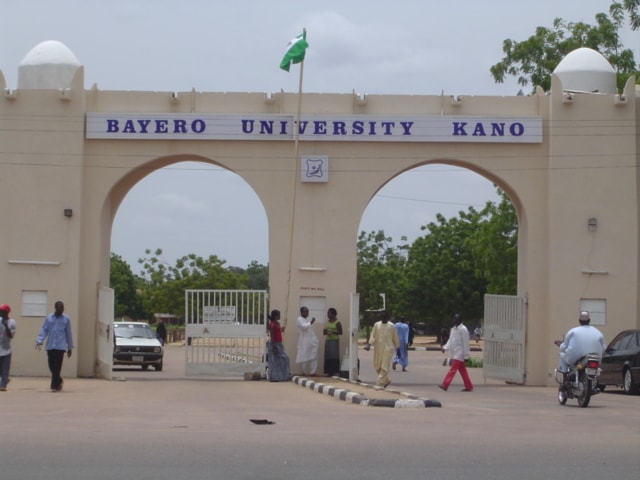
According to the released statement, the “Academic Staff Union of Universities, Kano Zone comprising of Ahmadu Bello University, Zaria (ABU), Bayero University Kano (BUK), Kaduna State University (KASU), Kano University of Science and Technology, Wudil (KUST), Yusuf Maitama Sule University, Kano (YUMSUK), Federal University Dutse (FUD), and Sule Lamido University, Kafin Hausa (SLUK) met on 12th September, 2022 at SLUK. The Zone deliberated on the ongoing strike action which has entered its seventh month due to the failure of government to honour the Agreements it willingly reached with our Union. The issues discussed include among others, the intimidation of members at Sule Lamido University, Kafin Hausa (SLUK) by the government of Jigawa State through the University Administartion.

This intimidation takes the form of withholding of salaries and sack threat among others. It was hinged on the premise that ASUU SLUK members are on ‘Solidarity Strike’. For the avoidance of any doubt, ASUU-Kano Zone wishes to state that ASUU-SLUK is a Chartered branch of our Union and is bound by all the decisions taken by the Union. Recently, the University Management resorts to emotional blackmail against our members using close relatives to persuade them into signing return-to-work register in desperate attempt to undermine the Union struggle to salvage the Nigerian University System.

It is pertinent to note that SLUK has benefitted immensely from the proceeds of ASUU Strike in terms of Tetfund projects, revitalization funds and staff development. To say the least, Jigawa State Government has so far invested very little to the infrastructural development of the University as majority of infrastructure in the University was funded by Tetfund, which is a brain child of ASUU struggles. Recall that the Union had previously intervened to ensure the restoration of the 2% Local Government contribution to funding of SLUK. This intervention by the Union was to ensure that students of SLUK continued to enjoy subsidized education.

Furthermore, the University heavily relies on academic manpower from other Universities in the zone, making it difficult for SLUK to operate even if the government succeeds in its agenda of forceful reopening of the University. It is on record that similar antics have failed in Kaduna State University where shamble examinations were conducted, to the extent that students were made to invigilate examinations. These were also the case in Gombe State University, Yobe State University, Ekiti State University, Ambrose Ali University Ekpoma, to mention but a few.

At this juncture, the Union urges the good people of Jigawa State to prevail on the State Government to desist from its desperate attempt at undermining the Union’s patriotic efforts towards improving the condition of teaching and learning in Nigerian public universities as it is a futile effort that would only compound the current challenges in SLUK.

Parents and students should note that proper academic activities cannot run in the University under the forceful reopening, especially due to the heavy reliance of teaching manpower from other universities. Hence, the zone call on students not to waste their limited resources to return to the University when no meaningful academic activities can take place until the strike action is properly called off by the Union.

Our union strongly believes that government must fulfill its constitutional responsibility of providing quality and affordable education to ALL Nigerians as enshrined in Section 18(1) of the 1999 Constitution. We call on well-meaning Nigerians to join hands with the Union in its efforts at salvaging the Nigerian Education System.
In conclusion, ASUU wishes to commiserate with the people of Jigawa State over the resent flooding that has resulted in the loss of lives and property and calls on the authority concern to render all the necessary support to victims of this disaster.”

JAMB pleads with lawmakers on autonomy, removal from national budget

By Uzair Adam Imam

The Join Admission and Matriculation Board (JAMB) has urged the House of Representatives to grant the examination body total financial autonomy.

The Registrar, Prof Ishaq Oloyede, who made the plea on behalf of the examination body, asked the lawmakers to remove them from the annual national budget.

He made the call on Wednesday when he appeared before the House of Representatives Committee on Finance on the Medium Term Expenditure Framework (MTEF).

He added that in 2017, after remitting N7.5 billion, the examination body reviewed its registration fees downward from N5,000 to N3,500. However, Oloyede said the Federal Government should allow JAMB to revert, considering the current economic development in the country.

He stated, “There is nowhere that government funds this type of examination. They actually provide some support for the institution because students pay some token as registration fees, and from it, they bear the responsibility of salaries and provide some succours.

“We are comfortable to be taken off the budget, but there are conditions. One of the conditions, for example, when students registered in 2016, we collected N5,000, and that had been on for five years before I joined.

“When we came in, we remitted N7.5 billion. We felt it was too much and approached the federal government to reduce the fees. We have not added a Kobo since.

“I believe we should revert to the N5000 we were charging. Given the inflation, if we charge N10,000– I am just giving it as an example, nobody will ask the federal government for one kobo.

“I am not aware of anywhere in the world, except maybe Finland— that charges as low as JAMB is charging. In Finland, we know that everything is free,” he said.

NNWS elects new executives

By Khalid Imam

The Northern Nigerian Writers’ Summit (NNWS) elects new Executive officers to pilot its affairs for a two year term.

The election held at Katsina State Secretariat Conference Hall on 11st September, 2022 was conducted by a Four Man Electoral Committee under the able leadership of Professor Idris Amali, the DVC Admin., Federal University, Lafia. Professor Albishak, MON and Professor Yusuf Adamu served as Members with Zahradeen Ibrahim Kalla, former Treasurer of NNWS serving as the Secretary. At the end of the Congress, members of NNWS in attendance voted in new officials.

Those elected and their portfolios included Dr. Bashir Abu Sabe as the new Chairman, Isyaku Bala Ibrahim as Vice Chairman, Khalid Imam as the General Secretary, while Isma’ila Bala is to serve as the Ass. Gen. Sec..

Other included the Financial Secretary, Dr. Shamsudeen Bello, Treasurer, Abubakar Zukogi, PRO North Central
Tim Cuttings, PRO North West, Dr. Murtala Uba Mohammed, PRO North East, Legal Adviser
Ogbe Benson Aduojo Esq., Auditor Fatima Bello and an Ex-Officio, Auwal Gata

Soon after taking oath of office, swiftly administered by the reelected Legal Adviser, the reelected Chairman, Dr. Bashir Abu Sabe delivered a brief acceptance speech in which he thanked call members for their votes of confidence and giving him new mandate. He also appealed to all new Executives to put all hands on deck for them to reinvigorate the association. He concluded by calling on all members and other stakeholders to support him to provide the desired leadership the association needs to attain greater hight.

The election coming on the second day of the Two Day Conference and the first Arewa Literary Awards the NNWS organized. Thereafter what followed immediately was the illuminating papers presentation by carefully selected literary scholars and some writers from different regions of the North with papers presented in Fulfulde, Hausa, Nupe and Tiv indigenous languages.Prior to that, the Keynote Address was presented by Professor Saleh Abdu, former DVC, Federal University, Kashere after the conference was declared officially openned by His Excellency, Right Honourable Aminu Bello Masari who was ably represented by Honorable Abdulkarim Sirika, the Commissioner of Information, Culture and Home Affairs.

The unveiling of “Tulu: A Multilingual Anthology of Northern Nigerian New Writings” was the hallmark of events held on the opening day of the Two Day Conference on Northern Nigerian Indigenous Literatures and Languages themed: ‘ Indigenous Literatures and Languages as Vehicle for Taming Insecurity in Northern Nigeria”.

A powerful delegation of NNWS led by Professor Idris Amali were warming received by His Excellency, the Right Honourable Aminu Bello Masari, the Governor of Katsina State at his residence.

On Day Two, participants toured some fascinating historic sites in Katsina and the Daura Emir’s Palace.

FG meets striking ASUU in Industrial Court today

By Uzair Adam Imam

The Federal Government meets the striking Academic Union of Universities (ASUU) at the Industrial Court of Nigeria (NICN) for adjudication over incessant strike on Monday.

The Daily Really recalls that ASUU has been on strike since February 14, 2022, resulting to a total closure of all Nigerian public universities for over seven months now.

The union is protesting against alleged infrastructure decay at various institutions, as well as neglect of its members’ welfare.

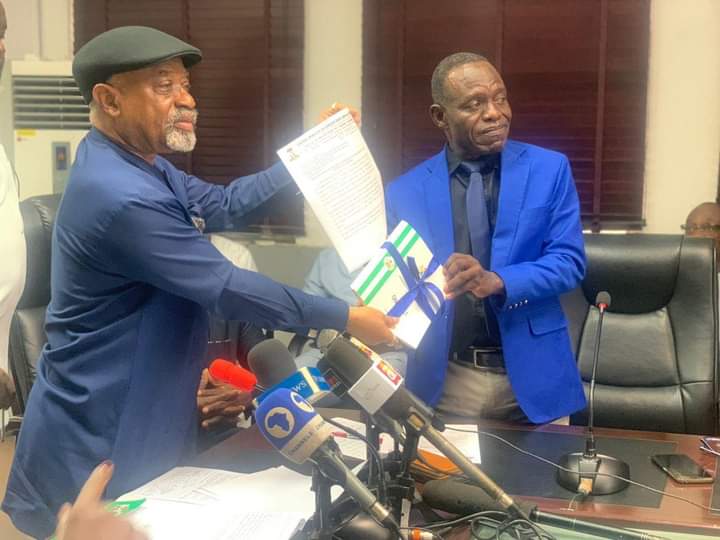
The Minister of Labour and Employment, Chris Ngige, made this disclosure Sunday in Abuja in a letter addressed to the Registrar of NICN, dated Sept 8, 2022.

Ngige stated that the referral instrument had become necessary following the failure of dialogue between the union and the Federal Ministry of Education.

”The Federal Government has asked the NICN to inquire into the legality or otherwise of the ongoing prolonged strike by ASUU leadership and members that had continued even after apprehension.

“It asked the court to interpret in its entirety the provisions of Section 18 LFN 2004, especially as it applies to the cessation of strike once a trade dispute is apprehended by the Minister of Labour and Employment and conciliation is ongoing,” he said.

The ongoing dispute between the FG and ASUU, which started taking a new dimension, has made some people believe that things have all being politicised.

The dilemma and challenges of a Nigerian teacher of English

By Salisu Yusuf

Like other teachers in the so-called Third World countries, Nigerian teachers of English have their dilemma and challenges ranging from sociocultural issues to pedagogical, personality, and condition of service. A teacher has a lot to contend with.

Teaching (at the higher level) in the 21st century has evolved from the traditional teacher-centred to a more pragmatic students-centred approach. Teachers are no longer the dominating forces in the classroom. Instead, they serve as coordinators while students run the show. Ultimately, communicative situations are created in the classroom. Consequently, teachers of English need to be acquainted with the role and place of theatre and drama in education, a method that makes teaching a communicative endeavour.

Unfortunately, students in 21st century Nigeria are no longer interested in communicative situations as education at primary and secondary schools has gone below the standard bar. A teacher, therefore, ought to devise a way to motivate a class of passive learners.

Besides students’ lack of communicative approach, teachers of English in Nigeria are confronted with a dual phonetic issue; a teacher is expected to teach the British phonetic patterning of speech in a strictly diverse Nigerian environment with students under the influence of Nigerian phonetics. The confusion in most Nigerian phonetic realisations emanates from a mix-up of British and American dialects in our daily usage.

Most English words are pronounced in American phonetic realisations. Moreover, Yoruba language phonemics has hugely influenced how we pronounce English words. Therefore, an English teacher must fully explain the phonetic versions to his students. For example, the word “minor” has double pronunciations; the British /ˈmʌɪnə/ and Nigerian /ˈmʌɪnɔː/. Students should know this difference and why the former is the aptest while the latter is strictly Nigerian.

Our students’ lack of reading culture has immensely affected English and literary studies. For instance, some students in literature class don’t want to frequent libraries and read selected texts. Instead, they prefer to visit internet sites, download summaries and read haphazardly. Teachers ought to be mentors in this regard.

A contemporary English teacher must keep abreast with modern English usage. For instance, some years back, a professor of English told our class that the plural of compound nouns such as female teacher and male servant are ‘females teachers’ and ‘males servants’, respectively. While some compound nouns are turned to plural from their first or last elements, the above two and many more are pluralised from their first and last elements. His assertion is, however, today obsolete; contemporary grammar has massively changed such patterns; female teachers and male servants have replaced the former.

 A teacher of English must not lose his head to the identity crisis. Some learners in philosophy and literature subsume into ideological attributes of these fields, thereby becoming victims of pull and inferiority complex. They can only feel superior when they identify with the other culture.

A teacher of English should see himself as a second language user who teaches a foreign language. He should not see himself as an English teacher but as a teacher of English. I have seen a colleague with cultural schizophrenia due mainly to an obsession with English culture. A second language user who sees himself as a  first language user usually suffers from identity crisis, culminating in cultural schizophrenia and, ultimately, psychological turmoil. Many I know have lost their faith and turned to atheism.

A teacher should see himself as someone who mediates between cultures in order to reach cultural equivalence. He should not pretend to be an English man, nor should he speak sleek English through a pointed nose. Rather, he should speak as an African who teaches a foreign language.

This doesn’t free him from strictly adhering to rules governing language use. He should be a traditional grammarian in his pedagogical engagements; he employs some aspects of contemporary grammar in both his classroom and outside classroom engagements.

Girl child abuse, pornography and sexual objectification have immensely affected the teaching profession in the 21st century. Victorianism, that 19th-century literary movement with all its attendant moral lashings, could not stop these deviations in academia. Some teachers see their female students as objects of beautification to be exploited. Female students stereotype and generalise their male teachers as admirers of their sleek bodies. Male students use their female counterparts as shields before their teachers, especially when looking for favours. These and many more are some of the causes of sexual scandals.

A teacher should see his female students as his congenial sisters whom he feeds with knowledge, no more, no less than this.

Many see teachers of English as grammar police, therefore, prescriptivists. I was numerously called a representative of her majesty, the late Queen. A teacher should do away with such social constructs and stereotypes and tackle his work head down. He’s a second language user called by fate to teach a foreign language, foreign culture. Therefore, he cannot escape such naming.

Last but not least, Nigeria’s teachers suffer from poor service conditions. Politicians have turned almost all other professions into… besides their own. Today, a month’s take-home pay of a politician can only be earned by a public servant for his entire working career. An instructor at a college in the neighbouring Niger Republic earns twice my wage.

 A teacher should consider his profession service to humanity, not a means to an end.

Salisu Yusuf wrote from Katsina via salisuyusuf111@gmail.com.

Jubilation in Katsina as 13-year-old girl memorizes, writes Qur’an in 4 years

By Uzair Adam Imam

Zuwaira Ahmed, a 13-year-old girl, from Katsina state has memorised and written the complete sixty sections of the Holy Qur’an by heart.

The girl, adored and admired by many, hailed from Kagara village of Kafur Local Government Area of the state.

The Daily Really gathered that Zuwaira memorised the Holy Qur’an in four years, the development which her parents said was a blessing to them, let alone the girl.

At the Walimah occasion on Sunday, organised to honour the girl, the district head of Mahuta, Alh. Bello Abdulkadir, has commended the girl and urged parents to continue supporting their children towards such a noble cause.

Abdulkadir also commended her parents, teachers and community leaders in what he described as proper upbringing.

Also speaking, the Chairman of Kafur LGA, Alh. Garba Abdullahi-Kanya, assured support for her education at secondary and tertiary levels.

Qur’an is the Muslim Holy book revealed to the last prophet and messenger of Allah, Muhammad, peace be upon him. Muslim find it interesting, appealing and a source of blessing to memorize its whole content by heart.

Enough of educational apartheid in Nigeria

By Sule Muhammad Zubairu, (PhD)

“I appeal to the federal government under the leadership of President Muhammadu Buhari to declare a state of emergency in the Education sector for the country to be able to change the fortunes of the system. Indeed, even among Sub-Saharan African countries, we are trailing far behind smaller and less endowed nations in terms of our investment in education. There is a need for a major investment in education in the national interest” – Adamu Adamu, 2017.

Let me express my sincere sympathy to the patriotic Nigerians in the education profession for their sheer sacrifices and selfless services for the betterment of public education. It is a heartfelt piece of article that aimed at mourning the last relic of the educational sector in a country where its policy makers think that university education is a mere burden that needs to be dropped aside. I am always in disbelief whenever I woke up to see how pitiful is the condition of the public universities in this country. Most often, I ask myself what went wrong with our leaders? Is this borne out of capitalists’ instincts, ignorance, self aggrandisements, corruption or a combination of all?

Nigerians and Elitist’s Sheer Hypocrisy:
In fact, if one wishes to see the real ‘educational apartheid’ then, one should have a look into the Nigeria’s educational system. Paradoxically, the primary stakeholders, managing the affairs of Nigeria’s public education are largely not enrolling their children in the public universities. For how long the masses will be deceived? How on earth this could even be possible? We have seen lots of graduation photos and selfies from foreign universities with their children, year in year out. Indeed, recently, we have seen them sending their pictures from Harvard University, while the public universities back home are still shutdown for months.

The poor attention given to our university education in this is simply about creating and maintaining different classes between so-called elite and others, the masses. But, they don’t want you to see it that way. Those in power may argue that they have been doing a great service to our educational sector, particularly the universities. Logically, if that is true why are they not patronizing them?


The sheer hypocrisy of the ruling elites in this country is a real source of concern and disturbing. But, I don’t think these guys understand it very well. I’m still wondering why up to this time there is no comprehensive statistics of children of high ranking office holders that school abroad. Imagine they use tax payers money to educate their children and leave those of poor in darkness. What a shame!

I pity my fellow poor Nigerians for generations to come, if they are destined to be ruled by these types of leaders. The writing is clear on the wall: the university education, as we know it, would be only for the rich!

ASUU members and their families’ woes:
I also pity ASUU members across the country for their steadfastness dodgedness to defend the remnants of our universities’ past glories. However, when dealing with shameless people one needs to be extra careful and have a rethink. In other words, how can you deal with a situation when some of the officials are thinking that education is not a critical issue, falsifying the outcomes of their own committees, and the Head of state seems not to be fully aware or even grasp the core issues at stake? In serious societies, education always tops the table and takes a reasonable share of their annual budget.

Shockingly, they are punishing the only set of people who stand against the total collapse of our public university system, by inflicting hunger, starvation and threats on them and their innocent family members. What a country! I sometimes use to thinking that the hate from our current ruling elites towards ASUU members and their families in this country is by far bigger than that of Boko Haram members, Niger Delta militants and treasury looters. Because these guys have been enjoying series of amnesties and even presidential pardon. I argue that even the Palestinians, black Americans (during the civil right movement) and black South Africans (during the Apartheid) have experienced fair or even better treatments from their oppressors than what ASUU members and their families are experiencing currently in their sovereign country.

My fellow ASUU members, whenever any second thought pops in your mind, you should remember what Adamu Adamu once said: “This nation owes a debt of gratitude to ASUU and the strike should not be called off until the government accepts to do and does what is required. So, instead of hectoring ASUU to call off its strike, the nation should be praying for more of its kind in other sectors of the economy” – Adamu Adamu, 2013.

To this end, as a concerned citizen, I pray to God, to guide us and our leaders to the right path and save public education from total collapse, amen.

Zubairu teaches Geography at Ahmadu Bello University, Zaria. He can be reached via; sulemuhd@gmail.com