Education

Not funding universities is unconstitutional, ASUU president tells FG

By Muhammadu Sabiu 

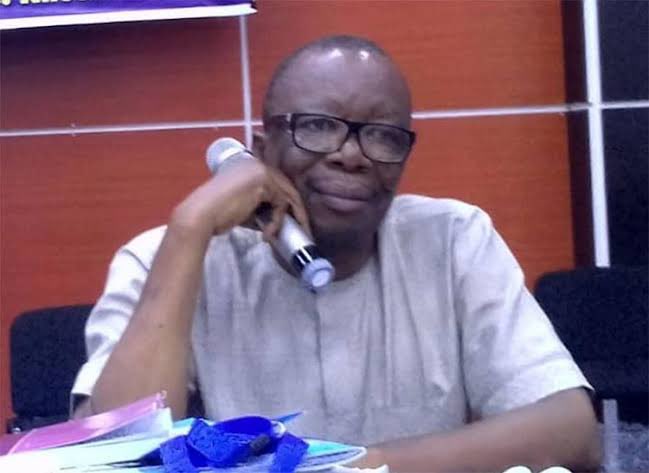
The President of the Academic Staff Union of Universities (ASUU), Prof. Emmanuel Osodeke, has emphasised that the Federal Government of Nigeria is constitutionally mandated to fund universities in the country. 

This statement comes in response to recent remarks made by the Minister of Education, Prof. Tahir Mamman, regarding the autonomy of universities in seeking alternative funding sources. 

Prof. Osodeke highlighted that the provision for federal funding of universities is enshrined in the country’s Constitution. 

He specifically referenced Section 18 of the Constitution, which explicitly states that universities, along with primary and secondary education, are to be provided for free by the government. 

“There is no way the Federal Government of Nigeria would say they would not fund public universities because it is there in the law. It is there in the Constitution; look at Section 18 of the Constitution; it says ‘university, primary, and secondary are free,” asserted Prof.

Osodeke. However, he acknowledged that while the constitutional mandate exists, the issue lies in its enforceability.

The ASUU President noted that despite the legal obligation, the provision is not judicious, making it difficult to enforce. 

In response to recent discussions about the government’s granting universities more autonomy to explore alternative funding mechanisms, Prof. Osodeke expressed skepticism about the government’s intent.

He stated, “I don’t think this government, from what we have seen, is going to say we are going to hands-off from university.” 

He further emphasised the disparity between Nigeria’s education budget and its gross domestic product (GDP), describing it as one of the lowest in the world.

This financial imbalance highlights the crucial role of government funding in sustaining the quality and accessibility of higher education in the country. 

As the debate over university funding and autonomy continues, Prof. Osodeke’s remarks serve as a reminder of the constitutional duty of the Federal Government to provide financial support to universities and the importance of addressing the challenges facing the education sector in Nigeria.

Farming: Alternative for Nigerian university students

By Abdulmumini Lawal

The fate of university students in Nigeria undergoes various hiccups and calamities. Among these are the frequent industrial actions by different Academic Unions and Non-Academic Unions, the probability of hike increment in school fees, uncertainty in life itself whether one will even graduate or not,  constant mutable thinking on what tomorrow might bring, and overall, the competitive race awaiting there in the labour market – life after graduation. Economic hardship is another phase of constraint students undergo towards pursuing their academic careers.

However, those above and other threats in academic space have been the main predicaments for Nigerian students and have to serve as a deterrent to one and evolve his perspective approach of who thinks the only way he can excel in life is by obtaining a degree and/or eventually securing a job (white collar one as many say). The limitation of thinking faculty in university students is expected to differ from layman’s, so he has to admit as such.

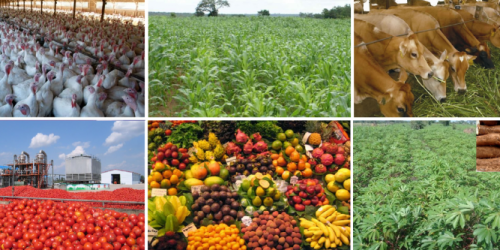
To my brothers and sisters, preferably those from low-income family backgrounds, I call upon your attention to erase the sense of thinking about when and why you will meet your desired expectations by the government in academia. You have many alternatives to make your life different; the agricultural sector is one of thousands. 

Initially, citing examples from my humble self and being a farmer for ten consecutive years, I decided to embark on farming activities last year. This was a result of the incessant ASUU strike. I vowed to utilise the time I had then positively. During the year, I realised I knew little or nothing among the bounties of opportunities therein. Meanwhile, my ten years of experience in the field is limited. It doesn’t widen the scope of the lucrative opportunities in the farming investment. I strived a lot, putting in the effort I could, most notably money and time, to achieve it.

Alas! So many blessings will never meet you openly but will surely reach you in disguise. To me, the ASUU strike was a blessing in disguise for every university student since this was coming purposely to divert from being affected by the trauma of the ASUU strike.

Subsequently, the outcome was favourable. To sum it up, despite the fertiliser price hike, when I calculated the profit, it multiplied the capital I invested by 4 – 5 times. That’s to say, the profit reached 400 – 500%. I accomplished my dream. I have learnt a lot. There are numerous opportunities there. Many have become what they are today not by the certs they obtained, but by those skills many university students understand. 

Moreover, today’s life is becoming more challenging every day. Today can’t be yesterday, just like tomorrow can’t be today. We see new changes every day, everywhere. It is supposed to be the turn of our parents and guardians to reap from what they have been investing in. Where does our thinking go? Okay, we think they will reap after we graduate and get employed. The uncertainty of securing a job after graduation is a constant gesture. The number of unemployed graduates keeps increasing. Universities keep producing. The white collar jobs are no longer to be found. 

Meanwhile, the incessant government’s negligence in line with education concerns many other threats that have nothing to do with your failure and could never be the reason behind your excellence. Whatever Allah decides for you is a blessing in disguise. It’s either you misuse it or unknowingly leave it untouched.

Let’s wake up! Thousands of opportunities are there waiting for us. Let the cert be the second priority. Strive fervently day and night. For the little chance you have, make use of it appropriately. 

I wish you a better tomorrow in all your endeavours!

Abdulmumini Lawal is a student of Mass Communication at Ahmadu Bello University, Zaria.

BUK extends students’ registration deadline again

By Muhammadu Sabiu

Bayero University Kano announced on Monday a final extension of the student registration exercise for the 2022–2023 academic session. 

This extension, contained in a statement signed by the university’s deputy registrar, Lamara Garba, comes after careful consideration of appeals from various stakeholders, including the governments of Kano and Jigawa states as well as student union bodies. 

The university’s management expressed its heartfelt appreciation to these stakeholders for their unwavering support, especially in covering the registration fees for indigent students. 

The extension of the registration period was approved during a meeting held on Monday, September 11, 2023. 

Students now have until the stroke of midnight on Saturday, September 30, 2023, to complete their registration. 

The university added that it is important to note that there will be no further extensions beyond this date and that any student who fails to register by the deadline will not be permitted to sit for the first semester examination of the 2022–2023 academic session.

Kano government to allocate N3.5 billion for foreign scholarships

By Muhammadu Sabiu 

The Kano State Government has announced its ambitious plan to invest approximately N3.5 billion in providing foreign scholarships to 550 qualified students for postgraduate programmes abroad. 

Dr. Yusuf Kofar-Mata, the Commissioner for Higher Education in the state, revealed this significant initiative during a press briefing held on Friday in Kano, following the weekly state executive council meeting. 

According to Mr. Kofar-Mata, these 550 deserving students will have the opportunity to pursue their postgraduate studies at seven prestigious universities in India and Uganda.

This initiative aims to empower and equip these individuals with advanced knowledge and skills that will contribute to the development of the state. Out of a pool of 1,250 applicants, the government meticulously selected the beneficiaries.

Mr. Kofar-Mata emphasised that the selection process was conducted without any bias based on political affiliations, focusing solely on the candidates’ qualifications and their status as indigenous residents of Kano. 

In his statement, Mr. Kofar-Mata confirmed that the government is in the final stages of processing the necessary visas for the students.

He also shared that the students are expected to commence their journeys to their respective overseas universities by the end of this month. 

“We collected 1,250 applications for our postgraduate programs, and we have screened and come up with a list of 550 qualified indigenes of Kano who will be sponsored for postgraduate studies at various universities overseas,” Mr. Kofar-Mata stated.  

“We are in the process of authenticating all the documents of these students for visa preparation. We are hoping that by the end of this month, these students will start moving to their various destinations overseas for them to start their programmes in various fields.”

Bridging linguistic worlds

By Abdussamad Yahya Sufi

My Literature teacher cautioned me in secondary school to avoid using Pidgin English during communication. Mr. Ibrahim Bello would always tell me that using pidgin in the infancy of learning English would affect my budding standard English. Since then, I have never used it and always try to avoid it in writing and speaking.

Now that I’m at university, I have met different people from southern Nigeria who always use pidgin. At first, I feared what would happen to my infant English. However, later, I realised that I could still maintain the standard since they all understood standard English; they just chose not to use it.

During my first days at university, the pidgin speakers in my hostel irritated me the most. Everyone used the language, and I didn’t understand 80% of it. When someone talked to me, especially my roommates, I would ask them to translate what they said.

After a few days, many of the guys in the hostel noticed me and began teasing me, thinking I simply chose not to speak the language until they understood that I didn’t understand it. They started calling me ‘English Man,’ which didn’t bother me as I had heard such names before.

Some invited me to their rooms to tell me stories, and I never rejected that opportunity. I knew it would help me improve my English skills. When I told them stories, they paid attention and asked questions in good English, not bad pidgin. 

Honestly, that helped me build my public speaking skills, and I appreciate the guys for understanding me then, unlike before. Even when I meet any of them on campus now, they introduce me as the ‘English Man.’ to their friends, and they all speak good English while exchanging greetings.

I don’t mind being silly while learning; I don’t hide myself when interacting with my schoolmates and friends. They are my laboratory, where I practise what I have learned. Even if they laugh at me or call me names, I use those experiences to practise my learning skills.

Abdussamad Yahya Sufi wrote via abdussamadsufi744@gmail.com.

Khalifa Isyaku Rabi’u University, Kano, set to begin 2023/2024 session

By Muhammadu Sabiu

The Khalifa Isyaku Rabi’u University, Kano, is gearing up for an exciting chapter in its academic journey as it announces the commencement of activities for the 2023/2024 academic session.

The announcement was made by Rabiu Ishaku Rabiu, the son of the university’s founder, shortly after the inauguration ceremony of the governing council.

Mr. Rabi’u conveyed that the university has meticulously prepared for a seamless inauguration in January 2023, ensuring that students can embark on their academic journeys without hindrance.

He raised concerns about the limited admission opportunities within Nigeria’s tertiary institutions, with only a fraction of admission seekers successfully securing spots each year.

Highlighting the urgency of the university’s establishment, Mr. Rabi’u referred to data from the World Bank indicating that a staggering 84.7% to 94.8% of candidates seeking admission in Nigeria were unable to secure places in existing institutions.

In 2018, the admission rate was reported as just 12.1%, underlining the pressing need for additional educational avenues.

“After obtaining the necessary licenses, inaugurating the board of trustees, and now the governing council, the management is in place, and the enrollment process is underway. We are fully funded and ready to hit the ground running,” Mr. Rabi’u affirmed.

“Our academic activities will commence by December/January, with all processes completed by the next month.”

The Vice-Chancellor of the university, Prof. Abdulrashid Garba, provided further insights into the institution’s readiness. He disclosed that discussions with the National Universities Commission (NUC) and the Joint Admissions and Matriculation Board (JAMB) had been finalized.

While NUC initially approved 18 programs, two programs, LLB Shariah and Common Law, were temporarily put on hold due to specific requirements.

Prof. Garba commended the timely inauguration of the governing council, emphasizing its crucial role in supporting the management’s efforts to ensure a smooth takeoff.

Namadi emulates Abba Gida-gida, covers tuition fees for undergraduates hailing from Jigawa

By Muhammadu Sabiu 

Governor Umar Namadi of Jigawa State has given the green light to cover the registration fees for undergraduate students hailing from the state. 

These include students who are pursuing various courses at prestigious institutions such as Federal University, Dutse (FUD), Bayero University, Kano (BUK), Kano State University of Technology (KUST), and the University of Maiduguri. 

With a substantial amount of One Hundred and Sixty-Seven Million Twenty-Four Thousand Nine Hundred and Fifty Naira (N167,024,950.00) allocated for this purpose, the decision reflects the current administration’s commitment to alleviating the financial strain on families with limited income. 

As university registration fees continue to rise, this initiative aims to ensure that education remains accessible and inclusive. 

The Jigawa State Council has gone a step further by approving a revision of the bursary scholarship for local Jigawa State students. 

Effective immediately, the bursary payment will now be disbursed at the onset of each academic session. 

Recall that Kano State governor, Abba Kabir Yusuf, recently made a similar gesture in the face of the current economic quagmire by allocating over N700 million to cover the tuition costs of students hailing from Kano and studying at Bayero University Kano.

Kano governor announces 50% tuition fee reduction in state-owned tertiary institutions

By Muhammadu Sabiu 

In the wake of ongoing economic challenges and the recent policy shift to remove petrol subsidies, Kano State Governor Abba Kabir Yusuf has taken a significant step to ease the financial burden on students and their families. 

Announcing the reduction in a Facebook post yesterday, Governor Yusuf wrote: “Earlier today, I had an important meeting with the heads of all state-owned tertiary institutions in Kano State, where I directed that tuition fee at the institutions be slashed by 50% with immediate effect. – AKY”.

Governor Abba Kabir Yusuf emphasised the importance of affordable education and the need to support the populace during these testing times. 

In a meeting held earlier today, he met with the heads of various state-owned tertiary institutions within Kano State. 

During the meeting, the governor directed that tuition fees be slashed by half, offering much-needed relief to students pursuing higher education. 

The decision comes as the economic challenges faced by citizens have been exacerbated by the removal of petrol subsidies, a move aimed at addressing fiscal concerns. 

Governor Abba Kabir Yusuf’s decision to cut tuition fees reflects a commitment to alleviating financial pressures on families and promoting education accessibility. 

The tuition fee reduction is expected to positively impact thousands of students across Kano State, fostering an environment where higher education remains attainable despite economic constraints.

Extortion and exploitation: the double banes of quality education

By Salim Yunusa

Salim Yunusa As the summer break draws to an end and schools are set to resume in the coming weeks, parents are already grumbling over the increased school fees across many private primary and secondary schools across the nation, despite their salaries not increasing even by an inch. Due to the not-so-great condition of the public schools, parents have no other options than to send their wards to these private schools.

Although private schooling is a money spinning venture for many school owners, the least these schools should provide is excellent service delivery in teaching and imparting discipline on students. Unfortunately, this is not the case in many instances.

The learning facilities are substandard, to say the least and the teachers are below par in quality. Their sights are set on the profit the schools will return, not the excellence they’ll deliver and the students they will be proud of at the end of the day. Most of the buildings rented by these low budget schools are originally residential houses or uncompleted buildings that are converted to classrooms with little or or no ventilation; with tiny classrooms containing high number of students in each space.

Many of these schools are not fit for learning, with some of these classes demarcated with cardboards or plywood to create more space. There is absolutely no regard for safety standards and building regulations of any sort. I know of a “school” facility that serves as a school during the day and a football viewing centre at night.

Another school that upsets me anytime I pass it by is a school for young kindergartens and primary students that is directly beside a huge fueling station and inches away from a major highway.

I wonder what the development control authority was thinking; approving such a chaotic land use violation. Yet, it is these schools that charge parents outrageous amount of money every time. It is high time the government wades into these fraudulent waters; making sure that every private school that operates is duly registered, has a license and has ticked off every box of standards and regulations. It also has a responsibility of regulating the uncontrolled and unreasonable school fees and levies set by these schools themselves.

One would think that as these schools are extorting parents in broad daylight, their staff would be well paid. That is far from the reality. Teachers employed in private schools suffer the worst form of dehumanisation and extortion by their employers, unfortunately. They’re overworked and underpaid, with some teachers in some schools taking home less than N10,000 in a month…in 2023!

Their employers take advantage of the saturated labour market that is filled to the brim with young, unemployed teachers – qualified or not – and are desperate for employment. Some of these teachers are unqualified and burdened with many subjects in order to cut the cost of hiring more teachers. They learn on the job for long hours and meagre pay, with threats and deductions for the smallest of mistakes. They’re constantly in fear of speaking up or speaking out against their employers because they can be sacked without any reason whatsoever.

It is the height of wickedness to make parents pay through their nose for their children’s’ education without actually getting the value for their money in a tight, cramped up environment that is not conducive for learning while at the same time underpaying and overworking their staff.

Schools should not only be an avenue to generate more money for their rich owners. They should uphold a standard of excellence and quality delivery of education that’ll produce educationally sound students who can compete nationally and globally.

The government, as a matter of urgency, should continue to upgrade its schools so that they become more attractive to parents than private schools. That way, it will be a healthy competition; judged based on excellence and quality education but before then, they have the responsibility of registering, regulating and standardising private schools for the development of education in the nation.

Salim Yunusa writes from Zaria and can be reached at syunusa@gmail.com

Kano State governor allocates N700m for tuition fees of Kano natives at BUK

By Muhammadu Sabiu  

In a bid to alleviate the financial burden on students and families in the face of ongoing economic challenges, Governor Abba Kabir Yusuf of Kano State announced a significant financial commitment on his verified Facebook page yesterday. 

The governor’s post highlighted the decision made by the Kano State Executive Council, under his leadership, to allocate approximately 700 million naira for the payment of school fees for about 7,000 students hailing from Kano State and enrolled at Bayero University Kano (BUK). 

The move is expected to provide crucial financial relief to families struggling to meet educational expenses during these trying times. 

Details regarding the distribution and disbursement of the funds will be communicated to the students and the public in the near future. 

This initiative is part of the state government’s continued efforts to support education and ensure that the youth have access to quality learning opportunities despite the current economic constraints. 

Education has been a cornerstone of Governor Abba Kabir Yusuf’s administration, and this latest move underscores his commitment to prioritising the welfare of students and their families. 

As the payment process unfolds, many are anticipating the positive impact this allocation will have on the lives of the students and their educational journeys. 

Recall that tuition fees at Bayero University have recently increased to an unprecedented high, which forced many students to drop out due to their inability to meet the payment.