Education

From school bench to professorship: The inspirational journey of Dr MI Aminu

By Tijjani Ahmad, FCA

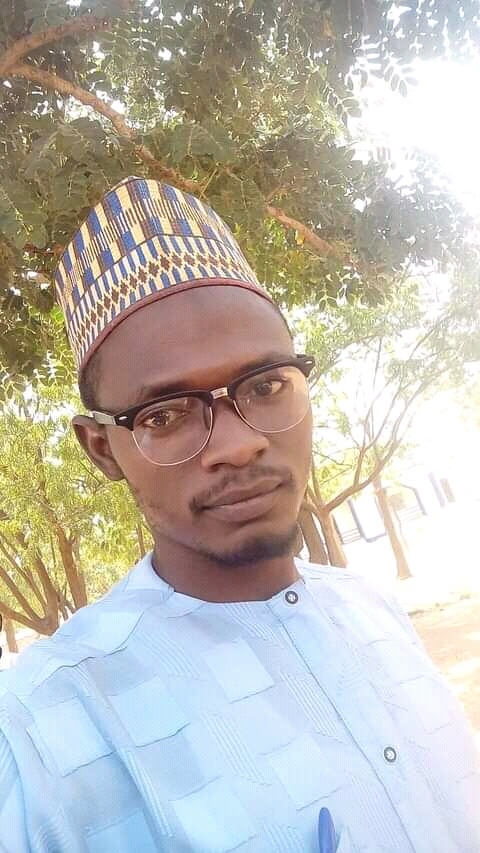
Our lives are often shaped by the people we meet along the way, and for me, one of those people has been a dear friend whose journey I’ve witnessed since our junior secondary school days. Dr MI Aminu’s life is a testament to the power of determination, hard work, and the pursuit of excellence, leading to his remarkable success as an academic and career professional.

Our paths first crossed in junior secondary school, where we shared the challenges and triumphs of those formative years. From there, we ventured into senior secondary school, navigating the complexities of education and personal growth side by side. But our educational journey was far from over. After completing our senior secondary education, we took a significant step in our academic paths by attending the College of Arts, Science and Remedial Studies (CAS), Kano, for IJMB A-level. During these pivotal years, we solidified our friendship and embarked on a shared journey of intellectual growth.

It was after our time at CAS that our paths diverged. Dr Aminu pursued his dreams at Usman Danfodio University, Sokoto (UDUS), where he chose to study Business Administration, driven by his passion for business and entrepreneurship. Meanwhile, I ventured to Ahmadu Bello University (ABU), Zaria, to pursue a degree in accounting, charting my unique course.

While our locations and fields of study differed, our friendship remained steadfast. We supported each other from afar, exchanging stories of our academic pursuits and experiences. It was evident that a shared desire for knowledge and personal growth drove both of us. After completing his studies, Dr. Aminu entered the corporate world, working tirelessly in the banking sector for four years. During this time, his dedication to knowledge and personal growth never wavered.

The academic world beckoned at this stage, and he answered its call. He left his banking career to pursue an academic path, starting with Kano State Polytechnic. This transition reflected his commitment to knowledge and desire to inspire the next generation of leaders and entrepreneurs. His academic journey reached a pinnacle when he set his sights on a PhD in Entrepreneurship. This pursuit took him to Malaysia, where he immersed himself in research and scholarship, guided by the erudite Prof. Rosli Mahmood, one of the foremost professors in the field of management and entrepreneurship in Asia. Under Prof. Mahmood’s mentorship, Dr Aminu honed his expertise in the area he was so passionate about.

Upon earning his PhD, Dr Aminu returned and found his way to one of the prestigious universities in Nigeria, ABU, Zaria, where he was welcomed as a faculty member. His dedication to research and scholarship is evident in his publication of over twenty articles in reputable journals, leaving an indelible mark on entrepreneurship, as reflected in the impressive 160 citations garnered by his works.

Beyond his scholarly achievements, Dr Aminu’s commitment to education shines brightly through his mentorship of over 20 MSc and PhD students. With a generous spirit and fervour for guiding the next generation, he imparts the values of perseverance and academic excellence. Dr Aminu’s unwavering commitment to research and his nurturing of future academics epitomises his lifelong dedication to knowledge and personal growth, serving as an inspiring testament to the transformative influence of education and mentorship.

But the story doesn’t end there. Dr. Aminu recently achieved another milestone in his academic career – he was promoted to the coveted position of Associate Professor of Entrepreneurship at ABU, Zaria. This promotion is a testament to his years of dedication to academia, rigorous research, and his commitment to entrepreneurship. It is not just a title but a recognition of his contributions to the academic community and his impact on countless students over the years.

Dr MI Aminu’s remarkable journey reminds us that the pursuit of excellence and the fulfilment of one’s dreams are endeavours that require unwavering dedication and the courage to navigate diverse paths. His story underscores the profound impact of mentors and the importance of nurturing the next generation of leaders. It teaches us that regardless of the challenges we face or the twists and turns in our journey, with resilience and a steadfast commitment to our aspirations, we, too, can achieve greatness. His life is an enduring testament to the boundless possibilities that await those who embrace lifelong learning, pursue their passions, and inspire others.

Today, Dr. Aminu stands as a beacon of inspiration to all who have known him. His journey from our school days to his current position as an Associate Professor at Ahmadu Bello University, Zaria, is a testament to his unwavering commitment to education, entrepreneurship, and personal growth. May his story continue to inspire us all as we pursue our paths to success.

Tijjani Ahmad wrote from Kano via ahmatee123@gmail.com.

Sex Education: MURIC commends Kano State Gov’t for banning teaching materials

By Abdurrahman Muhammad

The move by the Kano State Government to remove some lewd and pernicious teaching materials from the curriculum of both public and private basic schools in the state has been commended by the Muslim rights advocacy group, the Muslim Rights Concern (MURIC).

The Kano State Government, through the office of the Special Advisor on Private and Voluntary Institutions, issued the prohibition in an announcement made on Thursday, 5th October 2023. 

In the announcement, the Kano State Government listed some six (6) textbooks prohibited for instructional use “due to observed inclusions(sic) of inappropriate and sexually explicit contents that are harmful to the morals of our young students.”

The decision of the Kano State Government, under the leadership of Governor Abba Kabir Yusuf, to prohibit the use of obscene teaching materials in the state has come at the right time. Therefore, all parents, educationists, learners and advocates must embrace and support the initiative so as to tame the alarming rise of immorality amongst the youths in the state. 

The human rights group lent its support by calling on the authorities to ensure strict compliance by both public and private schools in the state. 

The commendation was contained in a statement released by the Chairman of the Kano State Chapter of the group, Malam Hassan Sani Indabawa, on Friday, October 6, 2023. 

Mr Indabawa further said:

“As one of the front-line advocates for the removal of all obscene teaching aids from the nation’s educational system, we at MURIC rejoice and commend the Kano State Government for doing the needful by prohibiting the use of some selected teaching materials found to contain sexually explicit contents which are perverse to the moral upbringing of pupils in the state.

“The surreptitious inclusion of explicit sexual contents in some of the basic education teaching materials was part of the Comprehensive Sexuality Education (CSE) developed by the United Nations Population Fund (UNPF) for worldwide use to promote promiscuity, fornication and homosexuality. This is one of the evils of globalisation. Certainly, this strange knowledge contradicts our faith, culture and values.

“Aside from the CSE, many textbooks used in Nigerian schools have been corrupted with lewd contents. 

“Nigerians may be well aware that in the last twenty years or so, classical English literature books and novels such as Macbeth, Julius Caesar, Merchant of Venice, Weep Not Child, Things Fall Apart, The Man Died, African Child, Akin the Drummer Boy, Mine Boy, The Delinquent and so forth have been removed from our school curricula and replaced with sex-related local English literature and other science books containing lewd and pernicious matters to give the unsuspecting young school pupils the wrong impression that self-control is unnecessary and that casual sex makes them feel good; that they should engage in casual sex before marriage; that ‘safe sex’ is what to aim for in life provided that they don’t get pregnant and if they do get pregnant, they should go for abortion. 

“As we may equally be aware, one of the negative consequences of this is the sexualisation of primary and secondary school pupils.

“Therefore, the prohibition of the use of offensive textbooks by the Kano State Government must be backed by appropriate legislation to provide a legal framework for sanctioning any erring school authority for effective implementation of the government’s directive.

“The Office of the Special Advisor on Private and Voluntary Institutions and Kano Educational Resource Department (KERD) must be well-equipped to ensure strict compliance as it is our belief that some self-seeking, unscrupulous and unconscientious groups and individuals may attempt to frustrate the effort with the support of the global conspiracy designed to destroy the fabric of our family value system, decency and modesty.

“We also call on other state governments to emulate Kano State Government by reviewing and removing all lewd and pernicious teaching materials from their various basic education curriculum.

“Finally, we reiterate our earlier call, made on the 25th May 2023, to the Nigerian Educational Research and Development Council (NERDC), a federal government agency charged with the responsibility of implementing educational policies in Nigeria, to immediately review and expunge any sex-related content from the curriculum being used in Nigerian basic schools.”

Lost Heritage Series: The (w)rite stuff of Hausa Islamic learning

By Prof. Abdalla Uba Adamu

The painting evoked memories. And a sense of scholastic pride. Pride in being part of a process that has generated centuries of excellence. And today is Teacher’s Day, a case for celebration of scholarship from below. Even Google’s Doodle for the day acknowledges this.

Years ago, a painting was brought to me to purchase by an artist, Nura Yusuf – the artist being aware I am an art nut. It was a medium-sized canvas and truly beautiful in a photorealistic way. My Ajamization of Knowledge initiative inspired him. But there was no way I could afford the price he was asking, even if I accepted that it was a fair price. I asked his permission, though, to photograph it with my Sony DSC.

I eventually saw the canvas hanging in the outer waiting room of the Emir of Kano’s main reception chamber. Regretfully, you will only notice it if you swing your head up. I think, eventually, it was relocated.

Looking at the painting, as I said, evoked memories of Makarantar Malam Hussaini, Mandawari. Now renamed Makarantar Malam Buhari and reinvented as an Islamiyya school, along Sabon Titi, in the inner city of Kano. In the school, when Malam Hussaini was the Head, you left early if you reported early; otherwise, you stayed behind after the school closed to continue your studies.

Memories of going from house to house, requesting the good folks to allow us to brush their cooking pots with our bare hands, seeking the fine soot that covers the pots, the result of open-fire cooking with logs of wood. Once you gather enough powdered soot, you then dunk your hand in a bowl of water and wash the soot off. Next, you sprinkle a few crystals of gum Arabic in the water and boil the lot – effectively creating a syrupy ink, the classical ‘tawada’. While burnt wood from home cooking fires can do the job, the elite of Tsangaya inks is ‘zuge’, a burnt desert-date tree. The ink itself is often mixed in various colours, depending on its use in copying the Qur’an. These colours come in handy, especially on the graduating certificate – allo – when it is decorated with zayyana calligraphic designs. A whole industry has existed around this trade for years, especially in the heart of the city of Kano, northern Nigeria.

To make a pen, you need a thick dry stalk – gamba – from the grass used for fencing (zana) homes in rural areas. Using a Tiger razor blade (not Nacet, as it easily breaks), you sharpen the edge of the stalk and fashion a neat nib, creating an alƙalami — pen. There were many styles for the nib, depending on the writing to be done. For some, the alƙalami can be a true calligraphic tool.

Properly armed with a pen and ink, you begin the process of carefully copying the verses of the Qur’an, according to your grade, onto the wooden slate until you copy the right passages. You lean it against the wall for it to dry and await your turn to read what you copied by the teacher. Once properly groomed on the reading, off you go to practice reciting on your own.

Once you feel you are proficient enough, you go back to the teacher, read your passages and once satisfied with your diction, and cadence, you are permitted to go to the next passages – wash off the present one – wanke allo – and copy the next sequence. Due to the dark colour of the ink, the wooden slate often absorbs the ink and darkens the slate. The best way to get rid of it is to use sandpaper to scrape it completely – or, failing that due to cost, rice bran – ɓuntu – which works just as well – to remove traces of the previous ink. If the smudges or shadows of the ink still remain, you can use powdered limestone – farar ƙasa – to overlay the darker stain of the ink, giving a clean white surface on which to write.

Ink is kept in a pot, kurtun tawada, while the pens are kept in a pen holder, ƙorami/alkurdu. For adolescents starting up, it was the wooden slate. For the more advanced students, the writing is done on conqueror bond paper (usually imported from North Africa), but the pen is now a quill from the tail or wing feathers of a bird (chicken, duck, guinea fowl).

And in case one gets thirsty doing all that hard work, you can always quench your thirst from the water stored in your water bottle – jallo, made from a gourd. This type of water bottle enters into the Hausa lexicon with the expression: “ina neman sa kamar ruwa a jallo/desperately looking for him.”

This scholastic tradition is well-preserved in this painting by Nura Yusuf, who incidentally happened to be a brother to the writer and poet Khalid Imam. Being Teachers Day today, I dedicate this painting to all Alarammomi, Gardawa, and Ƙolawa, who are my fellow classmates in every Tsangaya in this country. We pray for the souls of our Malaman Tsangaya, who set us on the right path. Allah Ya jiƙansu da Rahama.

Happy Teachers’ Day!

By Abdurrazak Muktar Makarfi

On this particular day, we celebrate the incredible dedication and hard work of teachers who shape the future of our society. Teachers play a vital role in nurturing young minds and inspiring a love for learning.

However, it’s important to acknowledge the challenges many teachers face, especially regarding their financial well-being. In Nigeria, the issue of primary school teachers’ salaries is a pressing concern. It’s disheartening to hear that fresh graduate primary school teachers are earning less than ₦50,000, which is not enough to sustain them for a month, given the rising cost of living.

Moreover, the situation in Kaduna State is even more distressing, where primary education teachers have to endure 45-55 days without receiving their salaries. This not only affects their livelihood but also their motivation to continue their invaluable work in educating the next generation.

On this Teachers’ Day, let’s hope for change and improvement in the conditions of our primary school teachers. May the Nigerian government take prompt action to address the issue of teacher salaries and ensure that our educators receive the fair compensation they deserve for their tireless efforts in building a brighter future for our children.

Thank you for being a part of this noble profession, and let’s continue to advocate for better conditions for our teachers. Happy Teachers’ Day once again!

Kano’s Abdulmalik emerges winner of 2023 Historian Competition

By Uzair Adam Imam

An indegine of Kano, Abdulmalik Abubakar has emerged winner of the 2023 Historian Competition.

Abdulmalik Abubakar parted with a sum of N500,000 prize and a week-long trip to Kenya for tourism.

The competition was sponsored by the Restored Heart Foundation based in Abuja to inspire young undergradute students in Nigeria and Africa about the value of African history.

Isa is law student from Bayero University, Kano (BUK) and his victory surprised many people including the participants who were mostly history students.

Upon his success, Isa engraved his name in the history of Nigeria and Africa and was crowned 2023 “Keeper of the African History.”

I struggle with taugh history questions

Isa recounted how he had struggled with toughest history questions before he could defeat other history students and emerged victorious.

He added that most of the questions he answered at the inter-regional stage were not about Nigeria.

He stated that he was initially afriaid, adding that, “My fears were that I am not a student of History and all the questions were questions that digged deep into history.

“Like at the inter-regional stage moving to the top 6, I was never asked a single question about Nigeria, my first question was “What was the first country to get independence from East Africa ?” Likewise all the other questions were outside Nigeria totally.

How I knock down a history student at the final stage

“My emergence is an amazing one, because my opponent is a final year student of History at UNILORIN, but despite being a Law student I dedicated my time to read wide and trained well to see I emerge winner, which God makes it happened.

“When we reached quoter-final to be the top six moving to Calabar, I was the only Muslim hausa-fulani from North, and they required each to wear his native attire, I felt like I would be redicule there because some of our leaders were not friendly with the southerners.

“And, also I was given a topic completely different from my field of study which was “Nigeria’s oil boom and resources curse”.

“However, God granted me the wisdom and strength to deliver a marvelous presentation which received huge rounds of applause from all over the auditorium.

I grab this opportunity when surfing on social media

Isa stated that he was surfing online media platforms as usual, then he came across the link of the competition.

He added that the competition was both online and physical and he was among the 3,000 applicants who were invited for a screening.

He said, “It started with about 3k applicants where we were screened down to 800 then to further stages that included the top 100, then we got to be the top 30 (5 participants representing the 6 zones of the federation).

“We then got to compete at the intra-regional stage, where only 2 participants qualified from each of the 6 geo-political zone to be among the top 12.

“After I emerged among the top 12. We then had our inter-regional stage, I competed aginst one lady from South-east, I knocked her out to be among the top 6.

“As top 6, we moved to quoter-final stage at the University of Calabar for Presentation stage, were I passed the stage and became among the top 4.

“As top 4, we then moved to semi-final in enugu, but IPOB’s sit at home order made them to reschedule it to Bayero University for the semi-final stage, which was a debate stage, where l defeated my opponent from Southwest at the debate stage in BUK and qualified to be the finalist, who were the top 2 for the final stage.

“We yesterday had the Grand-finale at the Nile University Abuja where I defeated my opponent from North-Central (UNILORIN) to be the Winner as well as the “Crowned Keeper of African History 2023”

Reward for excellence

Hardworking pays as Isa emerged winner with the following prizes:

  1. Cash prize of 500,000.
  2. I week trip to Kenya for tourism
  3. Crown Keeper of the African History 2023.
  4. One year free data subscription package.
  5. Ambassadorship.
  6. Special guest to be invited to the grand final next year.

Words of wisdom, encouragement

“I want to encourage my fellow students to read wide and also outside their field of study, every knowledge is valuable. I never thought history could be my eye opener and way to be outside Nigeria.

“But my passion to read History and commitment to other areas of knowledge has given me all these advantages.

I made it despite tight schedules

“I want to tell my fellow students that as at now, I’m the President of Law Students’ Association of Nigeria (LAWSAN) BUK Chapter and a final year Law student with project and all that, and also the President Kaura Goje Students’ Association (KAGSA) and so many other several students’ engagements, but that does not forestall me from excelling in other fields of endeavors.

“So just be determined and confident, God will assist you to achieve your dreams,” he stated.

Kano government empowers 45,000 female students with N20k stipend 

By Sabiu Abdullahi

The Kano State Government has launched an innovative initiative to empower 45,000 girls through a groundbreaking N20,000 stipend programme. 

Governor Abba Kabir Yusuf unveiled this initiative during a speech at Nigeria’s 63rd Independence Anniversary celebration held at the prestigious Sani Abacha Stadium in Kano. 

Governor Yusuf stated, “To support the girl-child education and encourage parents to send their daughters to school, we are issuing a stipend of 20,000 Naira to over 45,000 girl-child as a pilot scheme to support them to continue schooling. 

“We are also re-introducing the girl child school buses to transport them to and from schools.” 

This initiative represents a significant leap towards achieving gender equality in education within the state.

By providing financial assistance directly to families, the government aims to remove economic hurdles that often prevent girls from attending school.

The stipend not only promotes education but also empowers young girls to dream big and aspire for a better future. 

Furthermore, Governor Yusuf reiterated his administration’s commitment to nurturing academic excellence.

As a testament to this commitment, the government will sponsor 1001 first-class graduates for master’s degrees at renowned international universities.

This initiative not only supports high-level manpower development within the state but also strengthens Kano’s global presence in the academic arena.

Why Kano State deaf graduates deserve foreign scholarship even without First-Class

By Zulkifil Aminu Adam

It has come to our attention that three Kano residents with disabilities have been chosen to be among the recipients of the state’s current scholarship scheme. However, due to failure to match the conditions, i.e. First Class, they will be granted a domestic scholarship rather than a foreign one. This is highly commendable, and we express our heartfelt gratitude on behalf of the disability community. However, I beg permission to bring something critical to the notice of the administration in the hope that it will urge the government to reconsider this arrangement.

First and foremost, people with disabilities (PDWs) require special consideration in every socioeconomic, academic, and political sphere. This is a widely accepted general remark that arose due to the innate proclivities of individuals with disabilities. It is consistent with the above general statement that the University of Ilorin in Kwara state admits PWDs without requiring them to take the post-UTME, not to mention the various benefits PWDs receive at the university.

Several Nigerian universities have declared 160 as the cut-off mark for PWDs; the Joint Admission and Matriculation Board (JAMB) is currently holding a conference with deaf student representatives from various Nigerian tertiary institutions to discuss and ensure compliance with the above statement in dealing with PWDs regarding admission issues.

Second, in the case of Kano and the Nigerian educational system in general. It is critical to consider the educational framework in which persons with disabilities grew up before proceeding with their placement or requiring particular academic standards from them. As deaf students in secondary school, we were taught by teachers who walked away after filling up blackboards because they couldn’t communicate in sign language. We had to study on our own. And the government did nothing to address the situation.

When we finished secondary school and fought for admission to the university, we were compelled to study in Special Education (a department that has never produced a first-class graduate) or change university. We don’t have a choice except to accept.

Then, we enter lecture halls and face a new challenge: exclusion. We sit among hearing students (who enjoy the lecture), feeling lost and neglected. We were not provided with sign language interpreters. Isn’t this depressing? Nonetheless, we persevered through all these difficulties until graduation.

Despite all the challenges we faced from secondary school to university, we were required to finish with first-class honours to be considered for a foreign scholarship. With due respect, the demand is excessive. The government, schools, or whatever institution should not give us less while expecting so much from us.

Of course, we do not justify lower academic performance by disability, but by our unmet needs and the numerous obstacles we face as people with disabilities on the path to academic improvement – thanks to the carefree attitude of the government and the universities. Please allow me to say that a deaf graduate from Bayero University Kano (BUK) with a Second Class is equivalent to a First-Class hearing graduate in the same university.

Dear KNSG, Kano deaf students, whether First Class or not, deserve a foreign scholarship. The difficulties they overcome to graduate are sufficient justifications. Let the scholarship be a restitution for the government’s neglect throughout history.

Zulkifil Aminu Adam is the Assistant Secretary, National Association of Nigerian Deaf Students (NANDS). He can be reached via zulqeepil19@gmail.com.

Yusufu Bala Usman – The quintessential historian

By Prof. Abdalla Uba Adamu

I was never lucky enough to come under Yusuf Bala Usman’s tutelage while I was a student at Ahmadu Bello University Zaria, Nigeria, from 1976 to 1979. Being a student in the Faculty of Education, I missed out on having to take lectures in the famous FASS – Faculty of Arts and Social Sciences, undoubtedly, the hotbed of critical theories in the 1970s.

Yusufu Bala Usman, Ibrahim Tahir, Patrick Wilmot, and Mahmoud Tukur enlivened the university with their rhetoric about culture, history, polity and anthropology. My roommate was a History student, so I gleaned a lot from him about the critical theories flying about on the campus. Those years were indeed the intellectual years of ABU. Every subsequent northern radical traces his roots to that era and its critical reflection on Nigerian society.

As M.M. Gwadabe noted in his obituary to Yusufu Bala Usman, published in Africa: Journal of the International African Institute, 2010, 80(1): 165-168.

The contributions of Bala Usman lie not only in the number of papers he has written or the publications he has left for posterity. He spearheaded the establishment of a school of thinking quite distinct from the perception of history that used to be prevalent in Nigeria before the 1970s. Before him, history was generally understood and taught within the paradigm of colonial historiography. The efforts of Bala Usman and some of his colleagues in the department liberated history teaching as they masterminded the establishment and nurturing of the School of African historiography at Ahmadu Bello University, Zaria (ABU).

And in spite of his towering intellectualism, he remained humbled by the very scholarship he served. As Gwadabe further informs us:

“In 1985, the authorities of Ahmadu Bello University, considering Dr Usman’s contribution to knowledge, promoted him to the rank of a Professor. Humble as he was, Dr Usman turned down the promotion on the ground that ‘he was not convinced that he had done enough to be a Professor’. While he was without [a] doubt qualified for the promotion, his action was an attempt to show his displeasure with the way promotions to the rank of professorship were politicized and abused. So, Dr Usman died with the rank of a Reader.”

Now compare this towering inferno of intellectualism with our intellectuals today – who, based on some newspaper and junk journal publications, proudly present themselves as professors – when no one has ever read their works or become impacted by their expected contribution to knowledge.

Yusufu Bala Usman passed away at 60 years old in 2005, relatively still in his prime. His thoughts and ideas, however, live on through the Yusufu Bala Usman Institute in Zaria. To refresh our memories about his fiery and critical writing, the Institute, on 23rd September 2023, released a compendium of his lectures that captured the years of engagement as a leading Nigerian historian, political activist and public intellectual, mainly from 1972 to his death, in 2005. The book, The Historian and Society: Selected Historical Writings of Yusufu Bala Usman, was edited by George Ama Kwanashie and Normal Perchonock. It provides a handy introduction to the thoughts of Yusufu Bala Usman for those who only heard about him. Going through the 12 chapters of the book would convince you that with his death, northern Nigeria has lost a formidable voice in contemporary critical theory.

The book is now available as a physical copy. There is a website for the Institute where you can order the book at 3,500 NGN.

FUBK screens UTME, DE candidates for admissions in 2023/2024 academic session

By Muhammadu Sabiu 

The Federal University Birnin Kebbi (FUBK) has officially commenced its Post-University Tertiary Matriculation Examination (UTME) and Direct Entry (DE) Admissions Screening Exercise for the upcoming 2023–2024 Academic Session. 

The announcement was made by the university’s Public Relations Officer, Jamilu M. Magaji, during a press briefing held at the institution’s Main Campus in Birnin Kebbi on Monday. 

This highly anticipated screening exercise is set to span five days, running from Monday, September 25th, to Friday, September 29th, 2023.

Candidates from various academic faculties will undergo this rigorous evaluation process to secure their positions at FUBK. 

To streamline the screening process, the university has divided the candidates into groups based on their respective faculties. 

On Monday and Tuesday, candidates from the Faculty of Science and the College of Health Sciences will be screened.

Wednesday is reserved for candidates from the Faculties of Art and Social and Management Sciences, while Thursday and Friday will see candidates from the Faculties of Environmental Sciences and Education undergo their assessments. 

Muhammad Atiku, a candidate pursuing a B.Sc. in Geology, praised the screening exercise, emphasising its focus on academic and moral standards. 

Atiku’s sentiments echoed the positive feedback from other candidates, such as Hauwa Salihu Adamu, a Department of Microbiology applicant, who described the process as “perfect” and an excellent opportunity for interaction with fellow applicants from across the nation. 

The Federal University Birnin Kebbi, established in 2013, is a federal government-owned institution with a strong commitment to academic excellence. 

Currently, the university boasts three campuses and offers a wide array of academic programmes, including thirty-seven undergraduate and twenty postgraduate programmes, making it a preferred choice for aspiring scholars in Nigeria. 

As the screening exercise unfolds over the next five days, candidates are eager to showcase their qualifications and secure their places at FUBK, contributing to the university’s legacy of academic excellence and growth. 

First Class Graduates: A letter to Gov. Mohammed Umar Bago

Your Excellency Sir,  

We, the Niger State First Class Graduates (NSFCG), extend our warm regards and seek your invaluable support for employment opportunities and scholarships to further our education. This appeal is made with great respect and the utmost desire to contribute meaningfully to the growth and development of Niger State under your leadership.

It is with great pride and inspiration that I assume the role of the pioneer chairman of NSFCG, especially during a time when you have ascended to the esteemed position as one of the youngest governors in Nigeria. This convergence is both emotional and motivational, serving as a beacon of hope for young intellectuals of Niger State like us, who aspire to follow in your footsteps with the necessary guidance, mentorship, and empowerment from our esteemed leaders. Congratulations on your well-deserved election and inauguration as the Executive Governor of Niger State. We extend our best wishes and prayers for your success in the formidable tasks of leadership and governance guided by divine wisdom. 

The NSFCG comprises First Class Graduates who hail from various universities and are proud indigenes of Niger State. Our membership spans nearly all of the 25 Local Government Areas, united by a common goal – to fulfil the high expectations society places on those who achieve the pinnacle of academic excellence through hard work, exemplary character, sacrifice, determination, and brilliance. As role models, we understand the responsibility that accompanies our achievements, and we aspire to make positive contributions to our society, guided by the values we hold dear. 

We express our concern that the absence of support for some of us, despite our exceptional merits and academic achievements, may inadvertently diminish the inspiration, value, and faith in education, determination, and hard work that our society needs. It is our belief that individuals like us should not be left without the necessary support but rather should be empowered to serve as beacons of excellence, motivating others to follow in our footsteps. 

Recognizing the need to address this disparity and utilize our potential for the betterment of Niger State, the NSFCG has taken the initiative to raise awareness about our current predicament. We are keenly aware of the profound impact we could make in contributing to the growth and development of our state, inspiring the public to remain steadfast in their pursuit of education, lofty aspirations, and unwavering determination. 

In this context, we note the remarkable strides made by other states, such as Kano under the leadership of Former Governor Rabiu Kwankwaso, who championed human capital development through substantial investments in foreign scholarships for first-class graduates, alongside Governor Nasir Elrufa’i of Kaduna State who witnessed infrastructural advancements through championing Urban Renewal policy and Kashim Ibrahim Fellowship (KIF) for most brilliant and outstanding graduates in the state. Permit me, Your Excellency Sir, to say that it is this visionary approach that distinguishes leaders and leaves an indelible mark on society. 

We also commend the Talba Program, an initiative that provided gainful employment for numerous unemployed youths in Niger State, leaving a lasting legacy of empowerment and transformation for beneficiaries and their families alike. 

Your Excellency Sir, as esteemed leaders with a genuine passion for the betterment of our state, we appeal for the following: 

1. Consideration for employment opportunities within the Niger State Government for the approximately 90+ first-class graduates hailing from almost all of the 25 LGAs who are currently unemployed. Our collective skill set can contribute to filling existing job vacancies and enhancing the effectiveness of newly established ministries. 

2. Financial support or scholarships to facilitate our further education within Nigeria or abroad, thereby enabling us to acquire knowledge and expertise that can be channelled back to benefit our state. 

3. Mentorship and guidance from accomplished professionals, enabling us to evolve into exemplary citizens of whom Niger State can be justifiably proud. We aspire to possess the high level of skills and competency necessary to add significant value to our state and extend our positive impact beyond its borders. 

Your Excellency Sir, we hold steadfast belief in your dedication to uplift the youth, enhance human and infrastructural development, and curtail the challenges of crime and insecurity. By considering our appeal, you will not only empower a group of exceptional individuals but also sow the seeds for a more prosperous and vibrant future for Niger State and its citizens. 

With profound respect and anticipation, we remain committed to working diligently for the betterment of our beloved state.

Yours sincerely, 

Mukhtar Nasir, CPM        

Chairman, Niger State First-Class Graduates (NSFCG). He can be reached via nigerstatefcg@gmail.com.