Education

The other degree I have earned

By Sulaiman Maijama’a

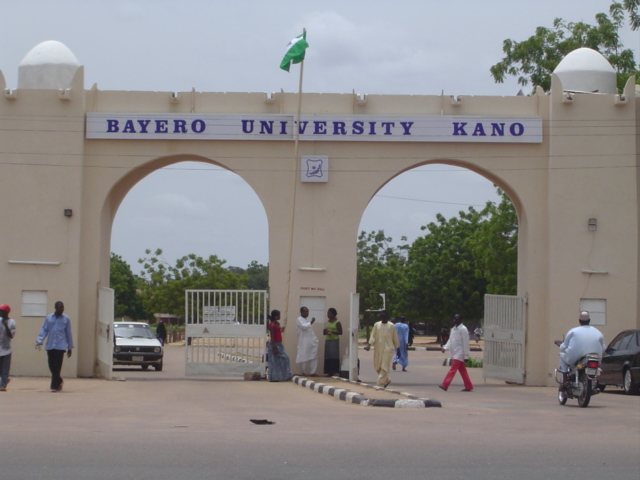
Seeing some photographs yesterday that we took in 2019 when we were leaving Sa’adu Zungur Hall of the Bayero University, Kano, as we finished level 200, I remembered several events, particularly during my stay in the hostel. I was filled with mixed feelings of nostalgia, reminiscing about my BUK days, the good and bad experiences, and the culture shock I had to contend with as a fresh university student.

In 2018, when we secured admission, my friend Shamsuddeen insisted that we stay off campus. I did not like the idea, so I reported him to our teacher and mentor, Mallam Abdul Ahmad Burra, to be a judge, knowing that Mallam would be on my side. Mallam Abdul directed that we live in the hostel, saying, “The experience you have when you live in the hostel is another degree in itself. Never miss that.”

The experience began soon after we settled on the 18th of March, 2019, in our number D-56 room on the first floor of Sa’adu Zungur Hall. Six of us were the occupants. Kamal Abdulsalam, Shamsudden A Musa and I were in Mass Comm, Bashir Dalhat read Geography Education, Sirajo Basiru read Economics Education, and Abdul studied Political Science. All of us in the room were voracious readers, what people call “mayun Boko”.

Our room was almost always locked because we left for class or library day and night, and so, we were addressed and addressed each other as Prof. The trouble was, when someone said prof alone, we got confused as to whom he was referring to because we were all bearing the title. One day at the Vice Chancellor’s mosque, I loudly said “Prof. Kamal”, referring to my roommate Kamal Abdulsalam, when I caught the attention of Professor Aliyu Kamal of the English Department. To his surprise, he saw me approaching a student whom I  addressed as Prof.

Unlike other rooms, our bond had blossomed into becoming a family, sharing food and water and even requesting little money when needed. We soon realised that one of us was living a miserable life. In the morning, he would take Gari, water in the gallon, wear squeezed clothes and go to lectures. We all were concerned about his condition and began to talk about how we could help him. God had saved us when News later got to us that he was a millionaire in their village. We were all shocked and began to keep him under surveillance.

I once escorted him to the Eco Bank ATM to withdraw cash. He wanted  2k but mistakenly added a zero to the digits. When the ATM dispensed 20k, we looked each other in the eyes; I was surprised that he had such money in the account, and he was concerned that I saw his money. We had to enter the bank hall and redeposit the cash instantly, and he begged me not to tell anyone I saw that money.

We began to see real shege when we moved to our number D-40 room on the first floor of Idris Garba Hall on  20th January 2020. On the very first day, one of the room members said we were contributing money to buy padlocks, something that in our previous hostel, one of us would just buy and share the keys without asking a penny. D-room is usually allocated to 4 students, but each one could come with one squatter as is the tradition. In this instance, one person came with three settlers and himself (enough number to be allocated a complete room) and insisted they stay in the room. We called an urgent meeting in a small corner and chased away two.

There was one roommate who set an alarm ringing around 3:00 a.m. daily. The whole room would be disturbed and wake up, but the person who placed the alarm never woke up before 7 a.m. It was in level 300 when my young-looking face misled this person into thinking I was a small boy. In the morning, he would toss a Lipton at me and say, “Sulaiman, put tea for me”. He would ask, “Sulaiman, what is the time?, “Bring me sugar, “Bring me a mat, “Do this, do that”.

At the onset, I thought it was normal assistance between roommates, but later, when I realised that he had made me his Personal Assistant, I called it quits. This person would buy all the delicious things in this world; think about eggs, fish, meat, milk, etc., but would request the basic ones like sugar and Maggi from one of us.

In the same room, someone spent the whole night pressing his phone but would fall asleep just before dawn prayers, wake up around 10 a.m. and pray. He never attended 8 am lectures.  We also had two overnight debaters. These people returned to the room in the middle of the night and began to debate loudly until all the room members woke up. When they were scolded, they would humbly say they were sorry. We couldn’t fight further!

In our final session, when we stayed in number D-16 room on the ground floor of the same Idris Garba hall, beginning on November 1st, 2021, we were more mature and tolerant. But there was one character who would wake up in the middle of the night and turn on the light while everyone in the room was asleep. When we complained that he infringed on our rights, he said he turned on the light because he was pressing his phone and did not want the screen’s reflection, so turning on the light reduces the reflection. When he was out, we removed the bulb. Until we graduated, we did not have a bulb in our room.

Maijama’a wrote via sulaimanmaija@gmail.com.

Zamfara institute of technology bill passes second reading at House of Reps

By Sabiu Abdullahi

The House of Representatives has advanced the Federal Institute of Technology and Entrepreneurship Bill to the next stage of the legislative process.

The bill, sponsored by Hon. Abdulmalik Zubairu Bungudu, representing Bungudu/Maru Federal Constituency of Zamfara State, successfully passed its second reading, garnering widespread support from lawmakers. 

The proposed legislation seeks to amend the Federal Polytechnic Act, 2004, enabling the establishment of the Federal Institute of Technology and Entrepreneurship in Bungudu, Zamfara State.

The institute’s primary focus would be on offering specialised courses and programmes tailored to address the technology and entrepreneurship challenges faced by Nigeria.

By equipping students with relevant skills and knowledge, the institution aims to empower them to create jobs and contribute significantly to the nation’s economic growth. 

During the deliberations, Hon. Abdulmalik Zubairu Bungudu passionately argued for the bill, emphasising the urgent need to reposition the education system.

He highlighted the prevailing economic realities, where traditional job opportunities are limited, especially in regions like Zamfara State, where farming, a primary source of income, is severely impacted by banditry and insecurity. 

Members of the House expressed unanimous agreement on the bill’s potential to transform the educational landscape. They underscored the importance of aligning education with the demands of the contemporary job market and commended Hon. Abdulmalik Zubairu Bungudu for his vision in sponsoring the bill. Speaker Hon.

Tajudeen Abbas, in his closing remarks, reiterated the House’s commitment to promoting initiatives that enhance economic opportunities for Nigerians.

He assured that bills like the Federal Institute of Technology and Entrepreneurship Bill, aimed at fostering self-employment and economic growth, would receive expedited attention. 

The bill has now been referred to the House Committee on Tertiary Institutions, where it will undergo further scrutiny before returning to the Committee of the Whole for final deliberations.

This development marks a significant stride towards empowering the youth, encouraging entrepreneurship, and ultimately bolstering Nigeria’s economic resilience.

From doubt to determination: My journey to HND in Mass Communication

By Usman Muhammad Salihu

In the world of education, some paths are straightforward, while others are winding, challenging, and filled with unexpected detours. My journey towards obtaining an HND in Mass Communication at Abubakar Tatari Ali Polytechnic (ATAP) in Bauchi State, Nigeria, certainly falls into the latter category. It’s a tale of determination, sacrifice, and the unwavering support of family, mentors, and friends.

The story began in early 2020 when a conversation with my model, Abu-Ubaidah Ibrahim Kuna, led to my contemplating furthering my education. During my diploma days, I had already embarked on a professional course, Mass Communication, but some circumstances are forcing me to delve into sociology. Abu-Ubaidah’s advice struck a chord in my heart, prompting me to reconsider my choices.

Yet, life had its complexities. I was now a family man, responsible for providing for my loved ones. Pursuing my passion for Mass Communication while residing in Gombe seemed daunting. The course was unavailable nearby, and sponsorship was scarce. This predicament led me to opt for sociology. As they say, “In the absence of desirability, you make the availability your desirability.”

As fate would have it, the Direct Entry application period had elapsed, and waiting for another year was not a viable option for me. I thought of returning to Abubakar Tatari Ali Polytechnic in Bauchi, but the distance from Gombe presented its challenges. Who would sponsor my education and care for my family during this journey?

With courage and determination, I applied for HND in Mass Communication at ATAP and, to my delight, secured admission. In November 2021, I embarked on a motorcycle journey from Gombe to Bauchi State, joining my fellow students as lectures had already commenced.

As if the journey had become more challenging, I found myself in Stream B, paying registration fees every semester without a sponsor. However, divine intervention came through my elder brother, Jubril Salihu (Baban Hajiya), who provided much-needed support.

Balancing lectures and providing for my family back in Gombe was no easy feat. I travelled back almost every week, seizing every opportunity for sustenance that came my way. Skipping breakfast and even lunch became the norm, but our determination to succeed remained unshaken.

The challenges were numerous, from putting food on the table to completing assignments with limited resources. Still, we pressed on, making our presence known inside and outside the classroom as we joined the school unionism.

Our lecturers, especially Mal. Abdul Ahmad Burra singlehandedly led us to the membership of the pen profession, Mal. Nazir Abba Pali and Mal Abdul Rasheed Bala Tulu were pivotal in our journey. They nurtured us into aspiring journalists, and our articles began appearing in renowned Nigerian dailies and online media outlets. Friends like Muzaffar, Adams, Raheenert, Bello class rep, Jalam, Alpha, Aliyu, Yahya, Ibrahim, Wale, Usaina, Saeedah, Celestina, A’isha, Rinret, Anas, Baba Fema, Baba Damina and many others became our pillars of strength.

I would be remiss not to express my gratitude to my family, especially my parents, brothers and sisters, the heads of department at ATAP, my mentors, and Dr. Saidu Wanzami, who supported us during our educational journey.

In the face of adversity, we persisted. With the unwavering support of our loved ones and mentors, we overcame the obstacles on our path. Our journey to an HND in Mass Communication is a testament to the power of perseverance, determination, and the support of a strong community. As we graduate, we look back with gratitude and forward with hope, ready to embrace the challenges that lie ahead, knowing that with faith and resilience, nothing is impossible.

Usman Muhammad Salihu writes from Jos, Plateau State, Nigeria, and can be reached via muhammadu5363@gmail.com.

Sokoto governor sends 15 students to China for engineering studies

The Sokoto State Government has sponsored 15 indigenous students to study engineering courses in China. 

The chairman of the Sokoto State Scholarship Board, Abdulkadir Dan’iya, confirmed the news, stating that the students, chosen for their academic excellence, will depart in early November. 

The government has allocated funds for their tuition and living expenses, emphasising the importance of investing in the youth’s education.

This initiative reflects the state’s commitment to providing quality education and global opportunities for its students.

New, unverified users on X to pay annual subscription fee

By Ahmad Deedat Zakari 

New users on X, formerly known as Twitter, are now required to pay $1 annually as a subscription fee for signing up. 

This new policy was announced on Wednesday in a statement shared on the support account of X. 

According to X, the programme is now being tested in New Zealand and the Philippines.

The test will allow new accounts to post and interact with other users. 

The statement reads, “Starting today, we’re testing a new program (Not A Bot) in New Zealand and the Philippines. 

“New, unverified accounts will be required to sign up for a $1 annual subscription to be able to post & interact with other posts. Within this test, existing users are not affected. 

“This new test was developed to bolster our already successful efforts to reduce spam, manipulation of our platform and bot activity while balancing platform accessibility with the small fee amount. It is not a profit driver. 

“And so far, subscription options have proven to be the main solution that works at scale.” 

In a tweet, Elon Musk, X’s owner, disclosed the reason for the annual subscription fee. 

According to Musk, the charge will reduce spam and automated bot accounts.  

“Correct, read for free, but $1/year to write. It’s the only way to fight bots without blocking real users. 

“This won’t stop bots completely, but it will be 1000X harder to manipulate the platform.”

Does it matter the course you studied?

By Bello Hussein Adoto

I am a microbiologist. A colleague asked recently in my set’s WhatsApp group if we are practising as a microbiologist, and another colleague replied: “Virtually everyone!” His reply was laced with sarcasm.

A common belief amongst Nigerians is that if you are told you can work anywhere with your course, you are probably studying one of the so-called useless courses. Microbiology falls into this category.

My colleague’s reply suggests that it doesn’t matter whether you are a banker, a tech bro, or a journalist. You’re a microbiologist regardless of what you do. After all, “you can work anywhere.”

Sarcasm aside, the idea of being able to work anywhere with the course you study should not be a source of mockery. Instead, it should be a testament to the transferable skills that university education should equip you with.

All courses are not created equal. Human Kinetics Education is not as lucrative as Medicine; neither is History and International Studies as prestigious as Law. At least, many don’t believe they are. Nevertheless, each course is a product of university education, which should count for more than a patronising line that “you can work anywhere.”

I don’t use my university degree certificate today, but the training I got for it has served me in multiple fora. The communication skills I acquired from my practicals, presentations, and assignments helped my work as a freelancer, student, and team lead.

My team-playing experience from lab work, time management from projects, independence, ruggedness, and the capacity to improvise, adapt, and evolve came mainly from my time studying at the University.

Of course, these are not part of the curricula. The training I received on writing came via GNS 111 and MCB 311, and they were not even thorough. I only did them in “partial fulfilment of the requirements for the award of ” XYZ—the others I picked up ‘ear and dear’ as a student, without necessarily having to write exams. Still, I am not sure I could have picked all that without having the formal structure of a university to inspire and support me.

I’m not holding brief for courses that have probably outlived their usefulness and should be scrapped or those better as a six-month online course than a four-year classroom programme. Those courses should be reviewed and made more relevant now that education is more expensive and the labour market is more competitive.

Beyond universities and educators, students must reflect on who they want to be. The era of special courses that fetch cool jobs and fat salaries is fast coming to an end. It’s no longer just a matter of what you studied but who you are and what you can do. Some may add who you know, but that’s open to debate.

Besides, the usefulness of a course is also becoming a matter of perspective. Is studying medicine useless if you can earn more as a tech bro.? Is going to school even necessary when you can make a lawyer’s annual salary from creating videos on YouTube and TikTok? Students must find their answers early. Proper career guidance could help here.

We need people in various departments to practice in diverse fields. Not everyone will be a medical doctor or earn thousands of dollars from writing codes or doing affiliate marketing. We will still need farmers, teachers, and communications specialists in the future.

While studying a not-so-prestigious course and earning good money are not mutually exclusive, it’s better now, to begin with the end in mind so that you don’t get to the “top of the ladder and only then realise it was standing against the wrong wall,” as Stephen Covey wrote.

Meanwhile, if you are studying any of the so-called useless courses that allow you to work anywhere, immerse yourself in it. Make your time worth your while. Come out enriched with skills and experiences that can serve you anywhere and at any age.

Don’t fall for the condescension or pity yourself for wasting your time at the University. You are already studying the course, so it’s in your best interest to help yourself and make the most of the course. Who knows, you might graduate and realise the course is not useless after all.

Bell Hussein writes via bellohussein210@gmail.com.

Kano gov’t provides additional infrastructure at Gwarzo School of Environmental

By Uzair Adam Imam

The Kano State Government has revealed plan to provide additional infrastructure to improve the learning atmosphere at the School of Environmental Studies, Gwarzo.

A statement issued and signed by Aminu Bello Sani, the Information Officer, Ministry of Information, disclosed this on Wednesday.

According to the statement, Professor Auwalu Halliru Arzai, the Special Adviser to the Governor on Higher Education, unveiled the plan during a familiarization visit to the college on Monday.

Arzai stated that Governor Abba Kabir Yusuf’s administration prioritizes education at all levels as categorically stated by his government campaign blueprint.

The statement read in part, “Professor Auwalu Arzai emphasized that the state government, under the leadership of Alhaji Abba Kabir Yusuf, places high importance on entrepreneurship courses to combat youth unemployment in the state.

“He stressed that the Governor is dedicated to improving and revitalizing education at all levels.

“He added that the college offers a variety of courses that can empower young people to be self-reliant, reducing their dependence on the government or the private sector.

“Bldr. Tijjani Yahaya Abubakar, the Director of the School of Environmental Studies, expressed his delight at the visit. He also requested the government to expedite the construction of hostels approved by the Central Bank of Nigeria (CBN) at the college.

“In addition, he highlighted challenges faced by the school, such as a lack of operational vehicles and a need for a larger hall to accommodate a larger number of students.

“He said despite the rising unemployment rate, graduates of the college are not only self-employed but also employers themselves, offering hope in the face of joblessness.

“The Director urged parents to consider sending their children to the school, which he described as the best institution for entrepreneurial education in the state,” the statement added.

Muhammadu Buhari University of Transportation ‘ready’ to start academic session

By Sabiu Abdullahi The Muhammadu Buhari University of Transportation in Daura, Katsina State, is on the brink of inaugurating academic activities pending approval from the National Universities Commission (NUC). 

During a recent visit, the NUC delegation confirmed the availability of necessary facilities and equipment for the commencement of the 2023/2024 academic session. 

Prof. Umar Adam-Katsayal, the university’s pioneer vice chancellor, expressed enthusiasm, stating, “We are ready to kick off the academic session as soon as the NUC gives its approval.” 

Established by the past administration of Muhammadu Buhari to boost the transportation sector in the country, the university has proposed a range of academic programs for its initial intake.

The institution awaits the NUC’s green light to officially usher in a new era of higher education in the region.

NCRRD aims to improve reading culture in Nigeria

By Muhammad Aliyu Gombe

The Centre for Reading, Research and Development (NCRRD) Bayero University Kano, Nigeria, has organized its Fourth National Conference on the promotion of reading culture among students and researchers. The event which took place at Ɗangote Business School, New Site, (BUK) was a 5 day even which included a Pre-Conference Workshop which aims at sensitizing the participants on the new methods of improving teaching especially from the basic level. The theme of the conference reads ‘Children’s Books and The Teaching of Early Grade Reading in Nigeria.’

The Director of the Centre Professor Talatu Musa Garba, during her speech, says that, as part of the mandate, of the Centre, it “had instituted the annual conference in 2019 to provide a platform for teachers, researchers and other educationists to share ideas on the best practices for the promotion of teaching of reading in Nigeria.” The Director, together with the Vice Chancellor of the University, Professor Sagir Adamu Abbas, commissioned the Centre’s resource room which is named Rebecca Rhodes Resource Room. The room has a modest collection of books and e-resources. It is open to researchers, teachers and students as a reference library.

It has been noted by various participants during the occasion that reading culture is past dying not only in Nigeria but across the globe. There is a huge need to revive it through practical methodologies which will guarantee and assist young readers to be taken right from the tender age.

Some of the participants, especially students and other invited guests, showed their appreciation and happiness with these gigantic efforts which the center is putting to revive reading culture in Nigeria.

Reminiscence: My 21-day experience at the NYSC orientation camp

By Muhammad Muzzammil Bashir

She is a tall, plump, fair lady from the South. For the sake of privacy, let us call her Joy. She looked at me from head to toe and hissed, saying, “You should by now be in level 100 or 200.” I smiled uncomfortably. She added, “In fact, you’re supposed to be writing JAMB by now.” I asked her why. She replied, “You are too small to be in camp.” I managed to smile again and asked her how old she was. With a sheer, larger-than-life composure fully materialising on her face, she answered, “I’m so-and-so-year-old.” I humbly replied with my age number, and it became clear to us that I was two years older than her. She was full of apologies instantly. And guess what transpired after? We became friends.

It never occurred to me to write about my life on the camp until a day before our passing out when I was lying on my bed reflecting on the experiences I had had on camp. I wanted to write this piece immediately after we were out of camp, but many things took my attention elsewhere. I pray this piece may inspire those yet to enter the camp to open up their minds and embrace the life they are about to find inside the camp, as well as the general public to keep an open mind whenever they find themselves in a strange environment.

The National Youth Service Corps (NYSC) is a one-year mandatory service that Nigerian graduates under 30 must undergo to teach unity and discipline. I had the opportunity to camp in Kano State in Batch B, Stream I. The camp opened on the 12th of July and closed on the 1st of August. It’s located in the Kusala Dam area of Karaye local government. The camp is bounded by the dam to the west and an army barracks to the north. The east border is where the local communities are settled, and the camp’s main entrance is at the south border. I read and heard a variety of suggestions from people who had camp experience on when I should set my travel to report to the camp on either the first day or on the second or third day, with some even suggesting one week after opening the camp while backing the benefits of their claims.

I weighed the options based on what I wanted to experience and achieve during camp. I chose to schedule my travel to reach camp on the first day. I got to the camp on Wednesday, July 12th, around 11 a.m. The first thing I noticed from the gate where our luggage was being checked before we moved on to the registration process was how the NYSC officials and the security personnel treated the corps members (CM). We were treated cheerfully with dignity and respect. After completing my registration, I moved to my hostel while others were going through the same process I went through. At around 3:45 p.m., the soldiers—instructors—asked us to go and wear our white shorts and T-shirts, the dress we were to spend our 21-day stay on camp wearing except on ceremonial occasions.

Among the first things you will hear from the NYSC officials at camp is that you do not own your time. The camp officials acknowledged it. They are the ones who tell you what to do at what time. You have to abide by it if you want to finish your orientation course in peace; otherwise, you will be decamped or punished depending on the severity of your misconduct. At around 4:05 p.m., they started blowing the bugle, a valveless sound instrument that serves as an alarm system in the military or paramilitary barracks. All the CMs that were able to finish their registration were marched to the parade ground, where we started receiving training on the basics of the match pass from the instructors after the usual welcome pleasantries. We were not released until 6:30 p.m., leaving most of us tired and stressed. After the Maghrib prayer at around 8 p.m., we went to the kitchen to collect our dinner. We were told there were no other activities for that day since it was our first day at camp. We, the Muslims, went to pray the Isha prayer and joined the rest at the mammy market to buy some items and other consumables for some of us who could not cope with the camp food. By 9:00 p.m., most of us had retired to the comfort of our beds to relax our bodies from the weariness of travel and parade activities so that we would have enough sleep and make tomorrow upbeat.

We sometimes hear many things about camp life before we enter camp. One such is that soldiers wake you up from sleep as early as 3:00 a.m. On our first night at the hostel, around 3:00 a.m., most guys were awake, fully kitted out in their whites, awaiting the bugle sound. The guy in my corner tried to wake me up at that time. I refused and told him we still had enough time to sleep because I had already checked it on the orientation guidebook given to us. I managed to cope with the noise and continued my sleep until 4:10 a.m., when I set my alarm before sleeping.

Alas, the sound of the mighty bugle came at around 4:45 a.m. By then, I was fully set to go out. The Muslims went to the mosque to do our Subh prayer, and the Christians went to the parade ground to observe their morning prayers. We joined them on the floor for morning meditation. The camp officials and instructors were there. Man O’War was there too. The camp PRO is in charge of moderating most of the events on base. She is a lady of average height, chubby, and black in complexion. She came to the front, took the mic, and greeted us, and we greeted her back. She then introduced the staffers, gave some instructions that would guide our peaceful stay on camp, and told us the schedule of activities for that day. She taught us the NYSC anthem and the national prayer (second stanza).

The first two to three days on camp are the most stressful for most coppers. We were subjected to only physical exercises and rehearsals for the swearing-in ceremony for those three days. The ceremony was scheduled to take place on Friday. So we started rehearsing on Wednesday afternoon of our first day of arrival. We were stressed out doing drills on the parade ground for most of the second day; even on the ceremony day, we did a final rehearsal in the morning before we were allowed to go and dressed up in our khaki trousers, crested vest, and jungle boots. The ceremony started at around 1100 hours after the arrival of the deputy governor of Kano State. After all the pleasantries and salutary parade went off, we were sworn in by the representative of the chief judge of Kano State.

From then on, the deputy governor gave his speech in English and Hausa and declared the orientation exercise open. We were then allowed to move around, socialise, and take pictures for memorabilia after the deputy governor was escorted back to his motorcade by the quarter guards and the NYSC officials. While on the parade ground during the ceremony, the sky started to go cloudy, giving all signs to start raining; we were forewarned that we were not allowed to move anywhere if it began to rain whenever we were on the parade ground, and more in particular during the ceremony in the presence of the special guest. Fortunately, in the first place, the rain started dropping lightly and stopped abruptly within a few minutes.

One of the core missions of the NYSC is to foster unity among Nigerian youths. This is achieved at camp through social activities and competitions between the different platoons; this brings harmony, gives a sense of belonging to the CM, and keeps their stay at camp from being boring. On this note, the NYSC orientation exercise, as some of us thought, is not entirely about drills during the three weeks. There are a lot of activities that are organised for the CM. Among them are sensitisation lecture series from various government and non-governmental organisations, skills acquisition and entrepreneurship development (SAED) training, sports activities, cultural carnivals, social nights (where competition from drama to cultural and afro dances is observed), and cooking competitions, among others. After our swearing, the real camp life started, and we began to enjoy our stay there, with every day becoming increasingly impressive. Most camp friendships and love relationships form during this period and some even end in marriage. I made many friends, notably from the south and most from the north. From my short stay at camp, I cannot quantify the experience I gained, mainly from the coppers and some from the camp officials and non-camp officials (many market people). I had difficulty with the instructors’ (soldiers) language of instruction during the drills. They mostly give instructions in Pidgin English, and most of us from the North don’t understand it. I supposed they would use English, not vernacular, as a language of instruction since we are all graduates and should be treated as such.

One thing in common that most of my mentors have been advising me on is to seek leadership positions wherever I find myself. This will give me ample opportunities to gain leadership experience, build networking opportunities, and know how things are going in their grand scheme. This conviction led me to seek leadership positions and volunteer activities during my stay at camp. Everything in camp, from the level of the officials to the nonofficials and copper strata, is designed to have leadership roles. CM are each assigned to 10 different platoons by a computer algorithm. I found myself in Platoon 4. Each platoon is expected to have leaders who will coordinate its activities.

Leaders are mostly chosen through election or consensus by platoon members under the supervision of a platoon officer—an NYSC official. Hence, I had the opportunity to contest for the role of platoon leader. Two of us challenged: me and my colleague, Whinny. He was elected. Since we were both males who contested, an offer was thrown to the ladies for the position of deputy. Hence, I volunteered to take on the position of platoon secretary. Again, almost all the social activities have representatives from each platoon, mainly two people from each platoon. From social reps to sports reps, lecture reps, OBS (orientation broadcasting service) reps, parade commanders and their sub-guard commanders, and man o’ war, among others. These representative positions are primarily based on volunteerism and some on proficiency.

Upon all the rep’s volunteers during the process of selection, it never occurred to me to volunteer for anyone but lecture reps. I did that based on gut feelings; I instantly felt the urge to volunteer when it was announced. We were 20 lecture reps in number, two from each platoon. NYSC officials head the committee. Our main role is to come early in the morning, arrange the hall while morning meditation is going on at the parade ground, and help coordinate lecture activities. Also, six of us volunteered to take on the role of repertoires—the role of taking down key points of the lectures while they’re going on, typing them, and sharing them in our respective platoon WhatsApp groups for the sake of CM that were not around or not able to listen to the lectures attentively. This proved to be one of the two most demanding roles I had. It requires me to give my absolute attention to the lectures going on and, at the same time, take down important points. It deprives me of the informal opportunity to take a 2-3 minute nap that CM usually enjoy by cunningly dropping their facecap a little down to cover their eyes and escape being noticed by the officials during the lecture time. But the experience I had was worth the sacrifices. I met one of the most amazing people on camp on the committee. There is one of my Facebook friends, Abdoull Toro, whom I had never met face-to-face until in that committee. Surprisingly, we did not recognise each other until several days after we met in the committee during a normal chat we used to have while carrying out our assignment.

The other role that was so demanding was when I took on the position of Governor of Financial Inclusion Ambassadors with Chinecherem as my deputy, a very calm, intelligent young lady. This was during a 6-day training of financial inclusion ambassadors under the Federal Ministry of Youth and Sports Development in collaboration with NYSC and other sister federal agencies. The training aim is to train us with adequate knowledge to raise awareness of the knowledge and skills needed to manage individual, household, and business finances effectively, to build confidence in using financial products and services, and to strengthen participation in the formal financial sector in the community we are serving. This will serve as our CDS (community development service) during our service year, one of the four cardinal programs of NYSC; others include camp orientation, serving at the place of primary assignment, and winding up or passing out.

This training was one of the most insightful moments of my stay at camp. I found myself amid ambassadors who are majority holders of degrees in accounting, banking and finance, economics, and business administration, with me, a holder of a human anatomy degree, as their leader. The training session was mainly interactive and lively, to the point that time used to escape our notice. I met great people there who taught me many things about financial literacy and inclusion, especially our training instructor from the ministry, Mrs. Ruth Hussein, who was very accommodating and compassionate to us.

Even though holding a leadership position necessitates responsibilities, it usually comes with sacrifices. Among the camp activities I dearly missed were my drills. Members of our lecture committee do not usually attend morning meditations and parades. This left me only free to participate in afternoon parades when sports and rehearsals for parade competitions started. I was in first place among the competing parade CM. Then, out of the blue, financial inclusion training came, making me weigh my options. I chose financial inclusion based on personal convictions and other reasons. This caused me to be dropped from the parade group of my platoon because of my absenteeism. The six days of the training were the most stressful of my stay at camp. I will be in the hall from 5 a.m. until 7:30 a.m. in the morning for hall arrangements and morning lectures.

Then, I will return to the hall after breakfast from 9 a.m. until 2 p.m. for another lecture series while doing the repertoire work. By 2:30 pm, after taking my launch, I will move to the training class to be there before anyone else as a leader to arrange the class and provide everything that we may require for its smooth running. We will not leave there until 5:30 p.m. when I will have a chance to go and watch football and volleyball marches. Between the periods of Magrib and Isha prayers, that is where I mostly used to have time for chats with my roommates and other friends. Immediately after Isha’s prayer, I will move to the hall and locate a place, mainly in the front row, for social nights. I slept most days from around 11 p.m. to 4:30 a.m.; this enabled me to compensate for the siesta I was supposed to have in the afternoon and relieve my stress during the day.

While navigating the hilly valley camp life, trying to carry out all the responsibilities on my shoulders, as a human being with a desire for knowledge and life ambition, I have to make sure I create time for extracurricular activities that keep me spiritually active and intellectually creative. Under normal circumstances, even when I was in school, when it was time for semester exams, what I normally did first thing in the morning after Fajr prayer was my recitation of the glorious Qur’an before embarking on any other activity.

Camp life comes with different scenarios, and I don’t have the liberty to own my time for the time being. Despite that, I found time to recite 1-2 hizb daily throughout my camp stay. This enlightened my heart and gave me a sense of connection with my Creator. Even though all these were going on, as an avid reader of books, spending 1 or 2 days without reading makes me feel like a part of my body is missing, which I must find and place back to feel complete. I managed to read one book in camp—the book that we were reading at The Literati Book Club that month. This at least gave me a sense that I’m still moving on the right path towards my life purpose.

Apart from the experience I gained from the leadership positions I held and the volunteerism in which I engaged myself, I was given favours from the officials I interacted with and some from friends and colleagues during my stay at camp. Since before my graduation from the university, I have had the ambition to serve in Kano due to its ample opportunities, particularly in the commerce sector. My ambition later changed to Lagos, which I dropped for some reasons. Our call-up letter was not uploaded to the portal until a day before the commencement of camp in the afternoon.

I was so happy when I saw I was posted to Kano State, the state I desired. I had nothing better to do than thank the almighty God. Under normal circumstances, CM seeks to relocate to their desired state for health issues, marriage, or personal reasons. Some CMs follow the lawful means to get approval for their relocation if they meet the criteria. While some follow unlawful means, resulting in many of them falling prey to scammers. My engagement with officials gave me the privilege to relocate wherever I wanted. But what I wish to do is Kano. I was privileged to choose where I should be posted for my primary assignment. I did not have anywhere in mind. My response was always anywhere that is pretty good.

My 21-day stay at the NYSC orientation camp is momentous, with bundles of experience, knowledge, and networks I will continue to cherish.

Muhammad Muzzammil Bashir wrote via mbashir199@yahoo.com.