Business

You can add some category description here.

Naira-Dollar crisis: Some takeaways

By Baffa Kabiru Gwadabe

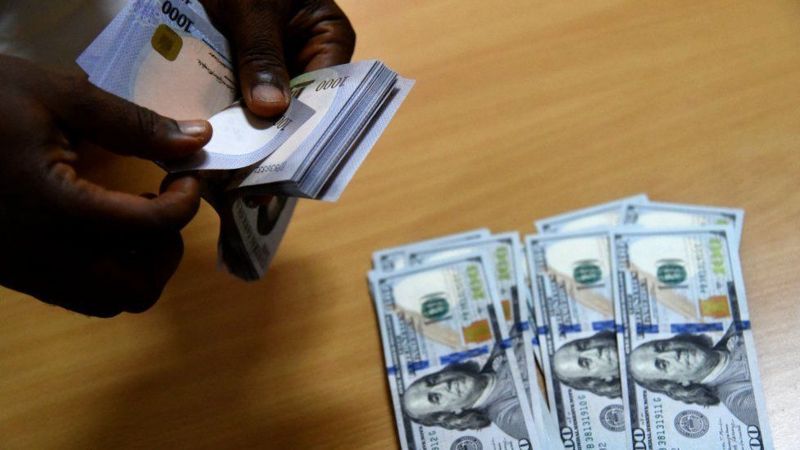
Over the past few months, Nigeria has been suffering from continuous depreciation of its currency, the naira. The naira has depreciated from barely ₦600/$ in the last three months to ₦1,300/$ today, the 27th of October 2023. This is enormous, considering the loss of value by more than 120%. Many are worried, including my little self, about this development. But the recent propositions of solutions by many provoke such a write-up.

It is good to start with some questions concerning the crisis. What is happening? What went wrong? Who is to blame? What are the ways out? What will be the lasting solutions?

The above questions may not be provided with answers, as many out there know the answers already. The focus should remain on some best practices or exchange rate regimes to hinge on. Let me start with some highlights on the developments in Nigeria’s foreign exchange market.

In 1971, when the Gold Standard was abolished under the Bretton Woods System, several foreign exchange rate management regimes were pursued in Nigeria and other parts of the world. These include the independently adjustable peg, crawling peg, independent peg, collective exchange arrangement, dual exchange and floating regimes. IMF member countries practice six (6) other exchange rate regimes, which were later compressed into three (3) regimes to include pegs, limited flexibility, and great flexibility. These were later decomposed into fifteen (15) regimes, mainly from 1975 to 1998 (see Mishkin, 2007).

All those regimes were adopted unevenly by the IMF countries. This means they practice one or more of the regimes based on their choices and persuasions. By 1999, the IMF proposed eight (8) different exchange rate regimes. They include separate legal tender, currency boards, conventional fixed (pegged against a single currency or basket of currencies or other commodities like gold), pegged within horizontal bands, crawling pegs, crawling bands, managed floating and independent floating (see Mishkin, 2007).

Still, these interchanging regimes continued in Nigeria depending on the available foreign reserves, capital inflows and current account balances. Nigeria’s forex crisis worsened in the 1980s when the US economy pursued Nigeria to devalue its currency by 10% and other scenarios. However, some attention will be given to the last ten years or so, particularly the administration of President Muhammadu Buhari or the reign of Godwin Emefiele as the CBN Governor (2014 – 2023). Some reflections would also be made on earlier antecedents before the Buhari’s and current administrations.

Nigeria has pursued two dominant exchange rate regimes: the Retail Dutch Auction System (RDAS) and the Wholesale Dutch Auction System (WDAS). The RDAS is an exchange rate regime introduced in Nigeria in 1987. It focuses on buyers (end-users or customers) of Forex (USD) to bid for the prices, and the marginal bidder is supplied with the quantities by the CBN through authorized dealers. Under the RDAS, the inept dealers are supplied less, while the highest bidders are penalized for rent-seeking and invitation for depreciation. 

The WDAS, on the other hand, is an exchange rate regime targeted at maintaining the gains of the RDAS and the continued liberalization of the forex market. The WDAS came into operation in Nigeria in February 2006 and allows authorized dealers to buy forex on their accounts rather than on behalf of end-users. Also, the authorized dealers are carefully watched by the CBN, and the dealers are also allowed to trade in the interbank forex market. During that time, the CBN pursued other special interventions of forex sales to Deposit Money Banks (DMBs) and direct sales to licensed Bureau de Change (BDCs). The CBN further mandated that DMBs increase Business Travel Allowance (BTA) and Personal Travel Allowance (PTA) from $2,500 and $2,000 to $5,000 and $4,000 per quarter, respectively. All these policies were sustained in positive directions as the naira continued to appreciate by 2.6%, 8.7% and 5.8% for 2006, 2007 and 2008, respectively.

However, at the beginning of 2009, there was an observed forex policy reversal and the reintroduction of RDAS to reduce capital outflows and depletion of foreign reserves. The interbank trading segment was suspended. This was followed by sales restriction of forex to oil companies and government agencies and sales of forex to BDCs. But towards the end of 2009, the CBN called for recapitalization of BDCs in what they call ‘Class A’, while those that did not recapitalize are called ‘Class B’ BDCs. Both ‘Class A’ and ‘Class B’ BDCs can bid a maximum of $1 million and $250,000 respectively.

Similarly, by 2016, Nigeria’s forex market was further liberalized. During the period, the average naira-dollar exchange rate was N197/$ at the interbank window, representing a depreciation of 18.7% (as the exchange rate was N160/$ before 2016). However, one worrying thing remains: the premium between the interbank and BDC sections was about 41.5%. After this, some other forex regimes were still embraced under the administration of President Buhari and Godwin Emefiele. For instance, forex primary dealers (FXPDS) and non-FXPDS were introduced into the forex market in 2017.

In addition, longer-term derivatives like forwards trading from 1 to 3 months tenor and up to 2 years were introduced. The exchange rate was relatively stabilized at averages of N231.76/$ and N351.82/$ at interbank and BDCs, respectively. This has created many arbitrage opportunities for those with access to the interbank rates to continue to worsen the forex market. Such a trend continued for 2020, 2021, 2022 and until 2023. For instance, as of March 2023, the official rate was N462/$, while in the black market, it was an average of N750/$. 

The sacking of Emefiele as the CBN Governor and the appointment of the acting CBN Governor, Mr Shunobi, in June 2023, where the latter tried to close the gap and arbitrage opportunities, moved the official rate from N474/$ to N664/$. With the appointment of substantive CBN Governor in September 2023, Mr Cardoso, the apex Bank, moved on with complete deregulation of the forex market, and this has led to incessant depreciation of the naira to a historic level of N1,300/$. However, it now appreciates an average rate of N1,000/$ and other rates depending on information and locations.

The next thing to talk about is the proposed solutions to the lingering naira-dollar crisis. However, it is important to note that the CBN’s recent and previous exchange rate policies are floating in nature or simply deregulating the forex market, and this is counterproductive as it has not provided the desired results, especially recently. This is because floating regimes are usually for export-dominant countries such as China, the United States, Japan, Germany, India, Russia and Saudi Arabia, among others, as argued by the Mundell-Fleming model. Nigeria is a predominantly import-dependent economy. As such, depreciations affect inflationary levels in the first round (exchange rate pass-through to inflation) and at the ‘second-round’, popularly known in the current literature as the ‘second-round effect’.

To end this submission, the CBN needs to do one or two things to exit from the naira-dollar crisis, and these include:

(1) Invite a small but huge ‘Conference of the Parties’ (COP) to deliberate and take appropriate decisions for implementation immediately;

(2) Under the COP, dollarization with its components; official dollarization, unofficial dollarization, partial dollarization, etc should be reviewed;

(3) Hard-peg exchange rate regime should be deliberated;

(4) Managed-floating regime should be discussed;   

(5) Most importantly, sources of the forex demand pressures must be exposed.

Baffa Kabiru Gwadabe wrote from Bayero University, Kano, via bkabirugwadabe@gmail.com.
Lost Heritage Series: Furakenstein Monster and the Rufaidahization of Tradition

By Prof. Abdalla Uba Adamu

Birnin Kudu. The 1960s. An incredibly wonderful town. Still a wonderful town! Even more, wonderful, friendly people. So far away from Kano that a whole limerick was composed to warn of its distance ‘Birnin Kudu da nisa take / ɗa ya ɓata bare jika /.

For me, the town evokes memories of wonderful summer months spent there in my auntie’s house in ‘Gangare’ quarters, literally, a sloppy part of the town located in a depression. Years later, they filled the depression on the main road, making it easier for motorists to travel through the town easily. The mountain range has a wonderful greenback during the rainy season. The range stretches as far as the eyes can see, providing a wonderful wallpaper for the students in the secondary school (BKSS) at the foot of the mountain.

Memories of her earthen water storage pot (randa) with jema-scented grass floating in to give the water a cool, pleasant scented taste. The mere presence of the jema grass also scented the room. Then there is the river, about two kilometres away from her house. More like a brook than a river, the clear water flowing over the underlying rock bed was a wonderful sight for a city boy. I used to spend hours just watching the water bubbling gently under the bridge towards an unknown destination and trying to read my African Film (Lance Spearman) pictorial novels

And the rocks that littered the town – dark, broody, holding centuries of secrets. Massive rocks – you can see them from the atrium of her house. It became a pleasure to sleep in the open atrium, the night sky framed with those slabs. The rock paintings enhanced the appeal of the town discovered a decade earlier, in the 1950s. Conferring on the town an ancient status – and they had evidence of a 2,000-year human artistic activity.

However, the best memory was the kindirmo (yoghourt) market, right by the roadside near the entrance to the market. Sold by the stereotypical Fulani milkmaids. Kindirmo is so thick that it breaks up like ice floes on a frozen river when you hit the skin film on top of the large calabash holding it. Kindirmo is so sweet that it harks back at an ancestral memory of existence. Pure. Natural.

My old aunt was an artist and adept at churning up the thick kindirmo with equally massive balls of fura. Using a ludayi (ladle) carved from a gourd plant, she was adept at blending the fura right into the kindirmo floes in a calabash. The end product was a supremely nourishing, rich, tasty meal of classic fura – containing all the ingredients needed to nourish the body. Absolutely no sugar is needed or even desired. As you slurp it, you are often lucky to come across an unblended fura – gaya. Taken in a calabash container with ludayi. The ecstasy can only be imagined.

Sold with the kindirmo was fresh butter. Aunt used to fry the butter into a ghee. Pour a spoonful into any meal – ecstasy reloaded! Evoked Hassan Wayam’s verse:

Ga fura ta mai nono /

Tuwo na mai nama /

Years passed by, and my childhood memories of Birnin Kudu were kept in storage in my mind. Whenever I passed by the town – my aunt had left the place in mid-1980s when her husband passed on – and crossed the bridge, the memories came flashing by. Of the only friend I made, a Yusha’u, whom I cannot trace.

The daily grind made it difficult to re-create the culinary pleasures of my aunt’s fura. Further, I was too occupied with other things. One day, the urge came back after my return from studies. The question was, where would one get a fura meal? I was told it has now become a franchised business, and right opposite the block of flats I was staying in, Zoo Road, was what I called ‘Fura Café’ run in a kiosk. I dashed up there for a treat.

I was shocked. First, the fura balls were tiny. Like a baby’s fist. And white – not enough millet, obviously. Then, horror of horrors, he dropped three of them into a BLENDER! Would you believe it? A BLENDER! That’s the machine I saw my wife using to grind those ingredients used in making a soup! The worst was yet to come.

Next, he poured WATER into the blender. I could not stand it any longer, and I stopped him, asking for the kindirmo. ‘That was it. I just poured it into the blender,’ he saucily replied. Nothing like kindirmo – more like ‘tsala’ – watered down milk. He pressed buttons. Everything churned and chugged in the blender cup. He stopped, removed the cup, and then poured the lot into a PLASTIC cup – more like moɗa! I was speechless throughout this charade. I decided to see it through.

I asked for the ludayi. He gave me a look that clearly indicated he had never heard the word and passed on a PLASTIC spoon – y’know, the kind that comes with a cheap rice takeaway. I paid, took the cup, and had a sip. It was horrible. Sour. No pleasant flavour (garɗi) of a true kindirmo. Seeing the expression on my face, he offered cubes of sugar. I passed. I handed the entire sludge to him and left. That was the end of my first attempt at rekindling a memory.

Years later, after a five-year absence from Kano, I came back to see modernised Fura Cafes all over – Habib, Yusrah and the new kid on the block – Rufaidah. I was told some, e.g., Habib, had been around for a long time. Knowing I might regret it, decided to relive Birnin Kudu again. So, I popped into Rufaidah for a treat. Better than the horrid kiosk I had been to before. I was attracted by the post-modernist décor. Like the airport in Dubai.

Ahaf! The same Furakenstein monster was there. A blender, watery milk, lots of sugar, tiny chunks of unblended greyish fura, and a ‘dambu’ – moistly powdered fura as a spare. All are neatly packaged in a pretty container. It’s not as bad as what I had before, but it’s still a Furakenstein monster. Seems the Rufaidah Fura Café is the ultimate in the fura business. I am happy for them and impressed by their franchise. But for old codgers like me, even at our Fresh Young Dattijo (FYD) phase? Thanks, but no thanks. I can’t stand the monster – Furakenstein – that is the modern blender-churned fura, no matter how ‘ultra-modern’ their café is. Young people who throng the place, happily taking selfies, have no idea what they have missed in the generational journey.

Fura, as a meal, should be churned in massive chunks of kindirmo floes, the likes of which I am pretty sure can only be found in Birnin Kudu, Bulkachuwa and Danbatta. With huge dark grey fura balls providing high millet content. Spicy fura. Thick floes of yoghurt. No sugar. Not because you are on a health kick, but because it is almost a sacrilege to put sugar in such yoghourt.

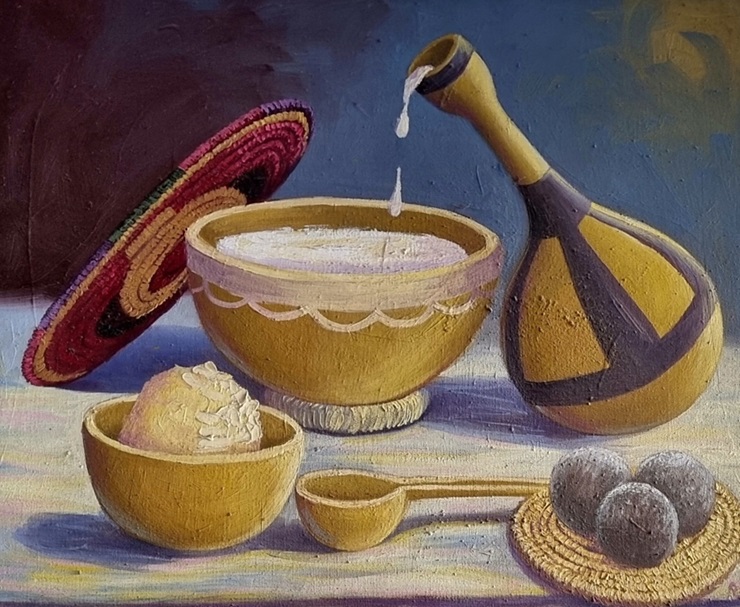
So, to celebrate this culinary purity, I am sharing the third painting in my office of classic Fura da Nono and fresh butter lost heritage scene painted on a medium canvas by the brilliant Bashir Abbas of Kano Polytechnic. It reminds me of the idyllic, peaceful and wonderful Birnin Kudu, with its rolling hills, tema grass (still available?), and the now drying river.

Dangote Cement surges with 15.2% Pan-African sales growth, record profits, unstoppable expansion

By Uzair Adam Imam

In the nine months leading up to September 30, 2023, Dangote Cement has reported a remarkable 15.2 percent increase in its pan-African sales volumes, reaching 8.5 million metric tons (Mt) compared to the 7.4 million Mt in the same period in 2022.

Pan-African volumes represent the sales volume from Dangote Cement plants located outside Nigeria.

These figures were revealed in the company’s unaudited results on the Nigerian Exchange (NGX) portal. The surge in volumes was primarily driven by exceptional sales performances in key locations.

The Dangote Cement Plant in Senegal saw a substantial 66.9 percent increase in sales, while the Dangote Cement Plant in Congo reported a 60.5 percent surge in volumes.

Dangote Cement Zambia experienced an 18 percent increase, with Ghana and South Africa following closely at 15.5 percent and 18.5 percent growth, respectively. Ethiopia and Tanzania also contributed to the positive trend with 6.5 percent sales volume increases.

Furthermore, Dangote Cement noted a 20.5 percent increase in profit before tax, rising from N335.9 billion to N404.89 billion, while the profit after tax increased by 30.2 percent, from N213.10 billion to N277.55 billion.

Arvind Pathak, the Chief Executive Officer of Dangote Cement, commented on the results, stating, “This positive nine-month result reflects our strong value proposition, enhanced operational efficiency, and our commitment to cost containment in the face of rising inflation. Group revenue reached ₦1,514.6 billion, with EBITDA reaching an all-time high of ₦662.8 billion, marking a
28.5 percent increase.”

He also highlighted the impressive growth of the company’s pan-African operations, which contributed 41.9 percent to Group volumes, with a record revenue growth of 103.9 percent and EBITDA growth of 255.4 percent.

Pathak emphasized that the growth was a result of sustained demand across the regions in which Dangote Cement operates.

Looking ahead, Pathak expressed optimism about the company’s future, particularly with
the final stages of a new grinding plant in Cote d’Ivoire nearing completion.

He reaffirmed the company’s commitment to delivering quality cement products to
its customers and expressed confidence in a strong finish to the year.

Dangote Cement is Africa’s leading cement producer with a capacity of 52.0 million metric tons across the continent. Through strategic investments, the company has not only eliminated Nigeria’s dependence on imported cement but has also transformed the nation into an exporter, serving neighboring countries as well.

Dangote Cement’s extensive operations include plants in Cameroon, Congo, Ghana, Ethiopia, Senegal, Sierra Leone, South Africa, Tanzania, and Zambia, in addition to its prominent presence in Nigeria.

Zulum reopens Monday Market

By Rukayya Abubakar Othman

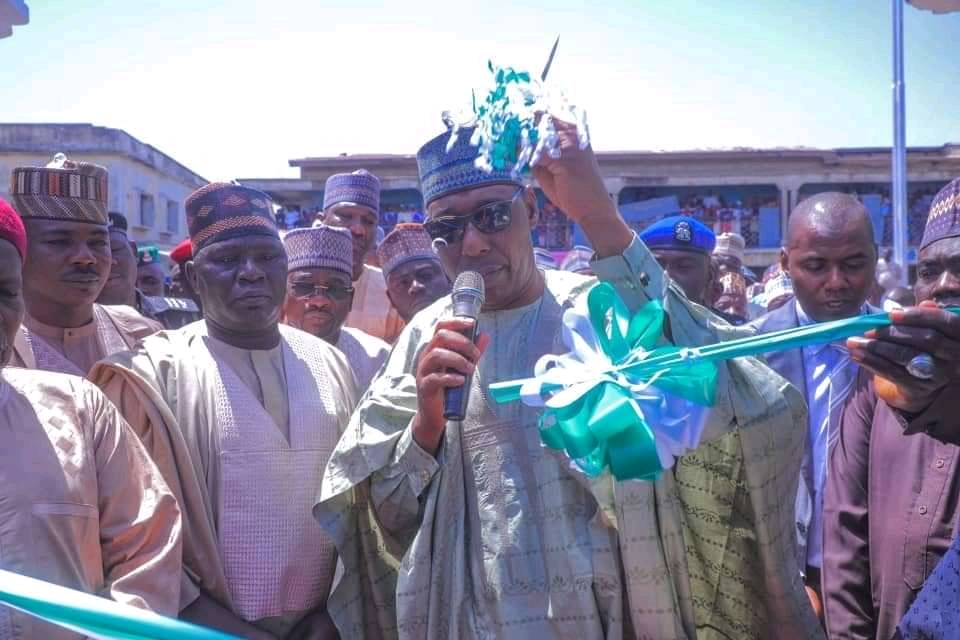
Governor Babagana Umara Zulum yesterday commissioned the famous Maiduguri Monday market and relieved two years’ rent for about 8,000 traders:

Borno state governor commissioned Maiduguri Monday Market on Monday, which was rebuilt after a fire inferno that gutted the market in February this year. 

Governor Babagana Umara Zulum announced that over 8000 traders who hitherto rented shops and paid rent would no longer pay for the next two years because of the losses incurred by them as a result of the mishap.

This, of course, is the untiring commitment of the state governor to the cause of serving humanity.

Upon the February incident, the governor hurriedly set up a committee to reconstruct the market, which has been completely rehabilitated and remodelled, with over 8,000 traders to benefit from the reconstruction. 

The market is well structured, which involves a comprehensive design and more vacancies for other traders to thrive in their business activities.

 The governor in February donated about N2b to the committee constituted to immediately swing into action and release N1b to the disaster victims. 

During the commission, Governor Babagana Umara Zulum announced about 2,825 traders who could not allocate their previous shop after the fire disaster. 

“As a result of remodelling, over 2,000 traders who either operated at a temporary site or built shops illegally on waterways could not own shops in the market. Moreover, the government will support over 185 of them with N1m “. Zulum said. 

He also promised that the people doing business there would get shops at a newly constructed Monday Market in Maiduguri. 

Who will rescue the Naira?

By Aliyu Nuhu

No easy way for a country with bizarre economic behaviour. The economic laws are there for easy implementation in a normal society. But Nigeria is not normal. Everyone, from the leases to the ordinary citizens, is looking for ways to damage the country for personal gain. NIGERIA operates its economy with laws made from hell.

We all know our huge appetite for the dollar is driven by our need for foreign goods which we are unable to produce. If we don’t need foreign goods, there will be no demand for dollars since we only need the currency for imports. But who is not guilty among us here?

Naira supply affects inflation since too much money is chasing a few goods but is not the direct cause of the fall of the Naira in the forex market. Laws of demand and supply drive the forex market. More Dollars available will lower its value and vice versa with Naira. But these laws don’t work in Nigeria because of distortion in all economic policies created by the government, mostly by greedy Nigerians and the officials themselves.

The forex window allows funding of critical sectors with dollars by the Central Bank of Nigeria (CBN). But the distortion here is that those given dollars to import goods will take the money to the money market for round-tripping. The CBN officials will also take the dollar and exchange it for quick gain. Each governor that gets FACC allocation in Naira will take it to market chasing the dollar.

With such behaviour, the Naira can never get a breather. It is this distortion that makes it difficult to explain the reasons why Naira is not only weak but unstable. Currency instability is the worst thing that can happen to a country. At any point in time, investors can never know their profits and losses. It is the reason why companies like Emirates, ShopRite and Game are closing shop.

After looking at some of our promising macro trends, Nigeria is still unable to keep Naira strong because of the depletion of the country’s foreign exchange reserves. The major function of foreign reserves is to keep the Naira strong. But regime after regime keeps spending the reserve account to a point that no one can precisely say the balance of NIGERIA’s foreign reserve.

World Bank said irrespective of all other macroeconomic shortcomings, the Naira can still be exchanged for a dollar one-on-one if we can have $900bn in our foreign reserve. But what do we have today? Less than $30bn!

Kuwait is a consumer country like Nigeria, but because it has a foreign reserve of $137bn and a gold reserve of 78.97 tonnes, it has the strongest currency in the world. But Nigeria has 21.37 tonnes of gold in its reserve and a $34bn reserve for an economy with a GDP of $489bn. Kuwait is able to save with a GDP of $106bn! There is evidence that shows that GDP growth and employment growth increase in response to positive shocks to foreign currency reserves (forex reserves) accumulation, whereas unemployment declines.

Read the reports on the new government report on CBN, and you will understand that the Naira is only competitive by sheer luck, if not a miracle. Everyone, including people in charge of Naira’s health, is out to destroy the Naira.

Defending the Naira: A political perspective

By Ibrahim Isa Wada

When the current administration was advised by some economic experts to withdraw the subsidy on fuel and allow the Nigerian Naira to find its own value in the international arena, I got so much worried for fears of what would be the outcome. Being a nonexpert on economics, banking or finance, but only a bloody retired broadcast regulator with a fair understanding of day to day current issues, I decided to drop this piece and I hope it will be carefully considered by the experts. All I know is that, life is so hard for all of us since the Naira decided to take a flung and the fuel prices shoot up.

Sadly, some of the experts disappeared while others started to blame the past administration and/or their village people for making our lives so miserable.

Defending the value of the Naira amounts to defending the Tinubu/Kashim administration, and surely the interest of the Nigerian people.

How can any government, businesses or persons successfully plan and execute meaningful projects; how can Nigeria join economic groups, like the BRICS, with such a rickety currency?

I understand that the value of the Nigerian Naira is a function of her balance of trade. That is for the Naira to be strong and stable, the total value of goods and services Nigeria imports must be the same or less than the value of goods and services Nigeria exports over the period of time.

In the present circumstances, we tend to import almost everything including PMS, and even charcoal for smoking Shisha! While we export gold and dollars in cash etc, to safe havens. To be frank, any Nigerian leadership that wants to succeed must have a strong and stable Naira to begin with, which can be achieved by taking the following measures, among others:

1) Bring back the policy of Export Promotion and Import Substitution of the late 70’s.

This should be done with vigour. Any product that could be manufactured in Nigeria shall not be easily imported into the country, while all products that can be exported should receive a boost from the government.

There are means and ways to manuver around international trade politics, like the WTO, to achieve that.

2) Formalise all international transactions, including our transborder trade with ECOWAS and other African countries. Currently the Nigerian Central Bank serves as the unofficial African Central Bank, providing the foreign exchange requirements for many African countries that route their trade through Nigeria.

The trade formalization entails the systemic deployment of adequate personnel and infrastructure that would make international trade between Nigeria and other countries smooth, yet documented.

3) The CBN, Commercial Banks and Bureau De Change operations should have a joint universal forex transactions software that will ease, unify and speed up forex trading.

4) From 3 above, all foreign currency transfers including PTA above $250 must be in digital form.

5) Also from 3 above, the commercial banks and BDC Forex Operator window should capture a basket of about seven major foreign currencies that Nigeria transacts in, i.e Dollar, Yuan, Euro, Pound, CFA, Saudi Riyal and Dirham.

Therefore the BDC operators should have multiple currency accounts with their banks to receive and transfer funds in digital form.

6) The Nigerian government should be bold enough to block all foreign exchange leakages, in form of waivers and favours to individuals and institutions.

7) Develop key institutions targeted towards the elimination of Forex Guzzlers thus:

a) Establish more private universities to reduce students high foreign exchange remittances.

b) Establish more world class hospitals to save foreign exchange from medical tourism.

c) Establish companies for the local fabrication of low technology agricultural and industrial machinery to reduce foreign exchange outflow.

d) Fuel imports should stop at the shortest possible time, by developing more modular refineries, privatising existing ones and ensuring the early take up of the Dangote refinery.

8) In line with the Export Promotion and Import Substitution Strategy, invest heavily in agriculture to reduce food and dairy products import, as well as encourage the exports of cocoa, cashew nuts, sesame seeds, beef, etc.

This is my political perspective of the basic economic issue, because if the politicians fail to defend the value of the Naira and the poor, they will fail utterly in politics.

Ibrahim Isa Wada, writes from Kano, Nigeria. He can be reached via; ibrahimisawada@gmail.com

BUA slashes price of cement to ₦3,500 per bag 

By Sabiu Abdullahi 

BUA Cement Plc has taken a bold step to reduce cement prices, effective October 2, 2023, ahead of their initial schedule. 

The company, in its commitment to boost the building materials and infrastructure sectors, has lowered the ex-factory price to 3,500 Naira per bag. 

This move is expected to allow Nigerians to enjoy the benefits of reduced prices earlier than anticipated. 

The company said in a statement Sunday that all pending and paid orders will be adjusted to the new rate. 

BUA Cement emphasises its dedication to ensuring end-users benefit from this reduction, with vigilant monitoring of field sales for compliance. 

This proactive initiative by BUA Cement Plc demonstrates their commitment to supporting development initiatives in Nigeria and making essential building materials more accessible to the public.

Dangote Group boosts national treasury as N474b was paid as taxes in 3 years

By Sabiu Abdullahi 

Three subsidiaries of the Dangote Group, namely Dangote Sugar, Dangote Cement, and Dangote Salt, have contributed immensely to the nation’s revenue.

Hashem Ahmed, an official representative of the Dangote Group, made this revelation at the 18th Abuja International Trade Fair’s opening ceremony, held on Thursday. 

Speaking on the fair’s theme, ‘Sustainable financing and taxation as drivers of the new economy,’ Ahmed highlighted the Dangote Group’s significant role as a major contributor to the country’s economy.

He disclosed that over the course of three years, the aforementioned subsidiaries of the Dangote Group had paid a staggering total of N474 billion as taxes to the Federal Government. 

“As you may be aware, apart from being the highest employer of labor in the private sector, the Dangote Group is also the biggest taxpayer,” Ahmed stated.

“In just three years, Dangote subsidiaries paid a staggering N474 billion to the Federal Government. These are Dangote Sugar, Dangote Cement, and Dangote Salt, combined.” 

Ahmed further emphasised that this substantial financial contribution was part of the Dangote Group’s ongoing support for the nation.

He highlighted the group’s various initiatives, including empowerment and skill acquisition programmes, corporate social responsibility initiatives, sponsorships, and philanthropic schemes, all of which amounted to several billions of naira. 

The Dangote Group expressed satisfaction with the Federal Government’s efforts in implementing a tax reform policy. This policy is expected to broaden the tax net and provide essential financing for the development of the country’s infrastructure.

The group sees this as a positive step towards sustainable economic growth and development for Nigeria. The significant tax payment by Dangote Group’s subsidiaries not only showcases their financial robustness but also underscores their commitment to supporting the country’s development agenda.

This contribution is anticipated to play a crucial role in the realisation of various national projects and initiatives aimed at enhancing the quality of life for all Nigerians.

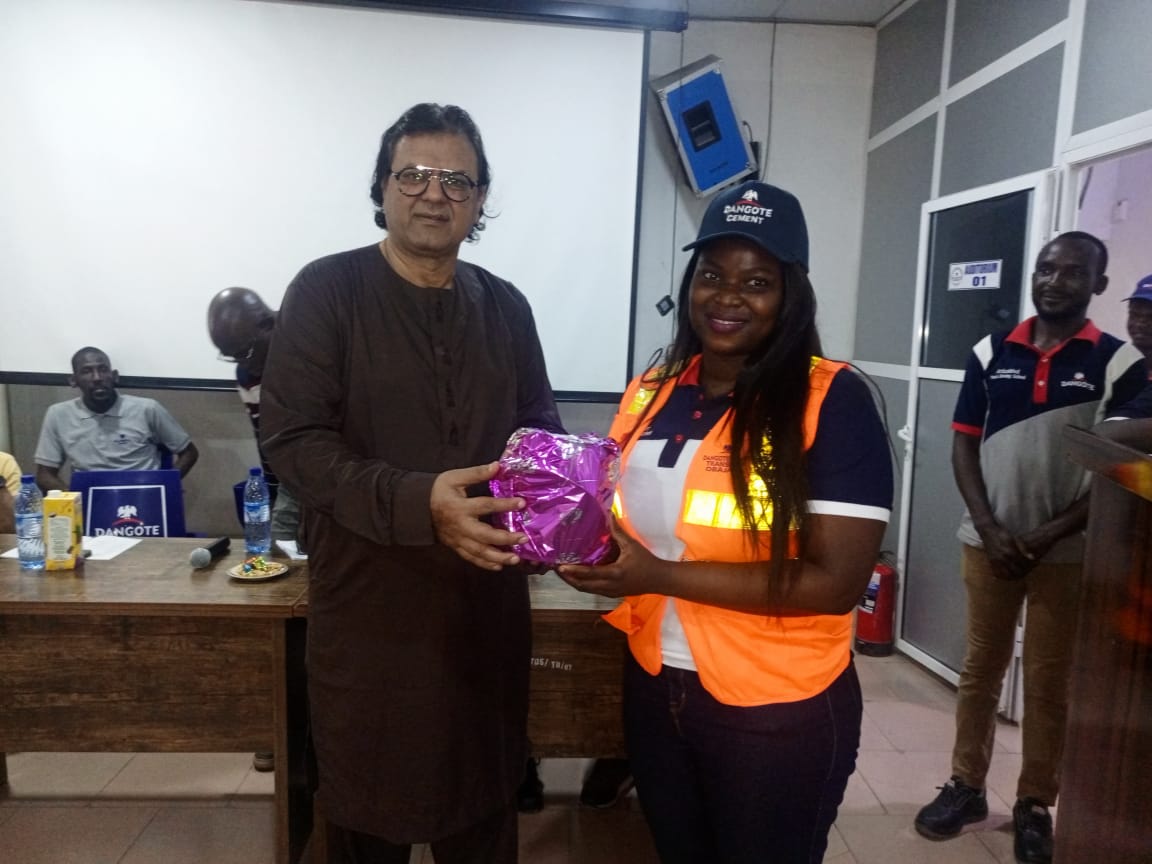
Dangote Cement graduates 50 ‘Special’ Truck Drivers

By Aisar Fagge

The Dangote Articulated Truck Driving School has graduated 50 Special Truck Drivers on weekend.

It was gathered that ten of the drivers were women and trained on Defensive Driving for three months.

A statement signed by the spokesman of the Dangote Group, Mr. Anthony Chiejina, and made available to journalists on Monday, disclosed.

The statement qouted Mr. Ajay Singh, the Divisional Director of the Dangote Cement Plc, Transport section, Obajana Plant, Kogi State, to have said that the Articulated Driving School was aimed at taming the tide of auto crash in Nigeria.

Singh who spoke during the graduation ceremony added that “The company has a zero tolerance for auto crash, which informed the setting up of different programmes, in collaboration with the Federal Road Safety Corps (FRSC).

“Head of Human Resources, Mr. Azeez Adeniyi said the Dangote Articulated Truck Driving School, is unique, being the first of its kind in the history of Nigeria,” he stated.

The statement further added that “He (Singh) urged the graduates to maximize the advantages from the training, adding that it was a rare and golden opportunity to have passed through the school.

“The school manager, Mr. Daniel Marcus Akuso, said some of the courses offered for the Batch A include: Civic Education, English, Mathematics, Defensive Driving, Truck Handling, Maintenance Technology, DCT Administration Procedures, Root Cause Analysis, Health and Science, Road Signs and Codes.

“Mr. Akuso said the graduates will now undertake a six-month attachment to enable them to acquire practical experience.

“Speaking, Deputy Road Commandant, (OC Instructor) of the FRSC attached to Dangote Driving School, Engr Mukhtar Umar said his agency plays a significant role in the training and certification of old drivers and newly recruited trainees.

“We teach them defensive driving, road signs, responsibilities of the driver, driving culture, and then certify them. These are Special Drivers,” Engr Umar said.

“Representative of Fantique Driving Centre, South Africa, Mr. Jacques Van Heerden, said the graduates were trained on defensive driving, assuring that if they abide by the lessons learned from the courses, it will help Nigeria in reducing the menace of auto crash.

“On his part, Col Ravig Kumar, Chief General Manager, Maintenance Department, expressed optimism that the female drivers, especially, will make Nigeria proud, while urging them not to disappoint the company, wherever they may find themselves.

“Speaking on behalf of the graduates, Mr. Ajayi Kehinde Daniel, said: “We are not just drivers, but defensive drivers. Throughout this period of training, we have been exposed to the causes of road accidents, and how to avoid them. Some of these causes, if not all, are actually avoidable.”

“Also present at the Graduation Ceremony were: Head of Department, Post Trip Inspection(PTI), Mr. Charles Theophilus, Head of Control, Mr. Suresh Ramamoorthy, Col Hemant Rana, as well as other members of the Fantique Training Centre of South Africa: Pieter Momberg and Anton Schenk,” the statement added.

Understanding high cost of living in Nigeria, factors and way forward

By Hauwa’u Abubakar

Overtime, Nigerians have experienced hike in basically all goods and services required to live and run their day to day activities. This goes without saying has been aggravated by proclamation of subsidy removal on premium motor spirit (PMS) popularly known as petrol, some three months ago.

It becomes imperative to understand the factors responsible for high cost of living as it leads to higher expenditure for individuals and households. Some of the factors leading to this unwanted development include inflation or an increase in the general level of prices.

Nigeria has experienced persistent inflation over the years, with prices of goods and services continuously rising. This reduces the purchasing power of individuals, making it more challenging to afford basic necessities. Also, depreciation of the country’s currency.

The naira, has faced fluctuations and depreciation in value against major foreign currencies like the US dollar. This has led to higher import costs, making imported goods more expensive for consumer. Furthermore, dependence on imports for various products, including food, fuel, clothings, building materials and other consumer goods, has the tendency to result in higher prices due to transportation cost, tariffs, and exchange rate fluctuations.

Again, infrastructural challenges is another force to reckon with. Inadequate infrastructure, such as power shortages and poor transportation networks can increase the cost of goods and services. Businesses often have to bear the burden of additional expenses since they are not provided by the authority and they eventually pass these expenses to consumers so as to make profit and keep their trade afloat.

Income quality as a factor. Nigeria has a significant income disparity, with a large portion of the population living in what is termed multidimensional poverty due to the disparity. This poverty limits access to basic resources like education, healthcare, and housing, further exacerbating the cost of living for many individuals. Government policies such as removal or reduction of subsidies, can lead to price hikes for essential commodities also.

To address this worrisome situation, it is firstly important for citizens to understand that the high cost of living in Nigeria is a complex issue influenced by various factors such as those aforementioned. Efforts to address this challenge should involve measure to tackle inflation, improve infrastructure, diversifying the economy, and promoting policies that support income equality and affordability for citizens.

Strategies to employ in improving infrastructure are; investing in infrastructural development, such as transportation power, road network, water supply among other can help reduce cost associated with transportation and other expenses passed down to consumers.

Enhancing agricultural productivity. Promoting and supporting the agricultural sector can reduce food prices and enhance food security. Improving farming techniques, access to quality irrigation systems are all strategies through which dependency can be reduced on imported goods.

Encouraging competition could be a tactics. Promoting competition in key sector such as telecommunications, banking, and energy to prevent monopolies and encourage market efficiency can help lower price for consumers.Control of inflation, implementation of effective monetary policies and fiscal measures to control inflation, increased wages and ensuring that wages and salaries keep pace with inflation can help improve people’s purchasing power and reduce the burden of high costs.

Developing effective social welfare programmes can provide a safety net for vulnerable populations, reducing the impact of high cost of living on those with limited financial resources.

In conclusion these are just comprehensive approach that addresses multiple aspect of the economy and society and if adopted by the government and relevant agencies, Nigerians can be saved from the bondage of high cost of living, the time this now!.

Hauwa’u is a 200-Level Student of Ahmadu Bello University, Zaria, Kaduna State and can be reached via: hauwaat@yahoo.com