Business

You can add some category description here.

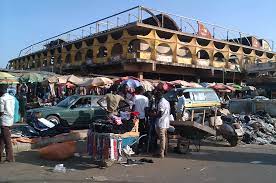
Jos Terminus market and politics of ethno-religious chauvinism

By Hamisu Hassan

Terminus Modern Market Jos was closed down in 2002 after a mysterious inferno that engulfed the market in the middle of the night and destroyed more than 270 shops and warehouses with goods estimated in billions of Nairas. The market was a source of livelihoods to business operators, traders and companies within and outside the State. It was also a source of huge revenues to the Plateau State Government.

Recently, there’s memorandum of understanding between Ja’iz Bank and Plateau State Government to rebuild the market for the state at no cost to the State Government. It is very clear after exactly 20 years of closing the market, Plateau State Government either have no intention to rebuild it or have no resources to rebuild the market again. It’s unfortunate, saboteurs and haters have started appearing from obvious quarters to halt the government actions against rebuilding the market. To them, the market should not be repaired by Jaiz. This is ridiculous and amazing at the same time. But some questions which always come to my mind are, is the government really ready to strike the deal? Also, is the governor afraid of some powerful forces, to the extent that they have to agree before the work sees the light of the day?

Plateau State is one of the parasitic states in Nigeria that depends heavily on monthly federal interventions. It has no sources of revenue and no magic to earn more apart from the federal allocation. The pungent, acrid taste of any Plateau State Governor is either to pay wages at the end of the month and forgo infrastructures or engaged in infrastructures and forgo salaries. That’s why the state of development in the state in terms of infrastructures is stagnant and static for good 20 years.

I recently have one on one chat with one of the governorship flag bearer’s of a certain party of the state. I asked him his plans about building infrastructures in the state. He bared his mind and told me that unless Plateau State devices ways of generating more revenues, no magic can be done to have infrastructures in the state. 

The Governorship contender said that the State is already heavily indebted to the tune of ₦100 billion Naira. The  loans obtained for building Secretariat Junction flyover isn’t settled yet. When the American Junction flyover would be completed, Plateau State would be indebted to the tune of ₦170 billion Naira. Which obviously means the windows for giving loans to Plateau State would be closed. My investigation discovered that the domestic profile of Plateau State 2018 was ₦122 billion Naira.

The reality in the face of Plateau State is very glaring. Plateau has to accept the reality and bow out of the ethnic and religious sentiments that held her neck for decades or lag behind the wheels of misfortunes. It is sad to see this giant state with abundant idle resources and opportunities, such as those of tourism, mineral resources, underground water, business environments, most serene and favorable weather conditions, sufficient rainfall for agricultural and more, but these have become clogs behind its wheels.

Note: It’s my fear that Plateau State Government is fun of playing political fantasy of setting interest in the state during every election to gain more votes but it has no real intention of rebuilding the market in oder not to go out of favors for some myopic interests. But the truth is, the market is a milking cow for the revenue bloc of the state. Being pragmatic in decision making will not augur well for anyone at the helm of affairs. As they said, a stitch in time, saves nine.

Hamisu Hassan is socio political and economic analyst from Jos South, Plateau State. He can be reached via hamisuhassan@yahoo.com

FrieslandCampina calls for applications from graduates 

By Muhammad Sabiu

FrieslandCampina WAMCO, otherwise known as Peak Milk in Nigeria, has opened its job application portal for recent graduates.

The company, on its website, stated that an ideal candidate for the job offer should have a bachelor’s degree or a Higher National Diploma, also abbreviated as HND, and must have graduated with an upper second class honours degree or an upper credit.

An ideal candidate must have also completed the NYSC and should not have more than two years’ work experience.

Leading worldwide dairy cooperative FrieslandCampina strives to cultivate high-potential new people so they may contribute to something greater and take on leadership roles in the future, enabling us all to succeed in the market both today and in the future.

Interested candidates are advised to click this link and apply: https://careers.frieslandcampina.com/global/en/page/graduate-professional-scheme-gps

How much is your salary?

By Hamza Sulayman, PhD

One of the most difficult questions to answer among Nigerians is “How much is your salary?”. It does not matter who asked the question; the answer is always tricky. It might be a father asking his son or daughter after spending a fortune paying for their education, or a wife asking her beloved husband. The reason behind this varies from one person to another.

I came across a US-based content creator (IG: americanincome) who moves around the cities of the US asking strangers about their annual salary. To my surprise, they always answer right away and specifically to the last dollar. He asked some follow-up questions, like what did you study? And from which university, how many years of experience do you have? And what advice will you give someone who wants to follow in your footsteps?

To me, that type of content creation is amazing because it provides the young generation with factual data on how they can achieve their goals, which is much better than what the guidance and counselling departments of schools and universities can offer. That is, if the department exists.

My recent interaction with some youth led me to believe that they are after the money or, as they say, “secure the bag”. So, for example, if you are willing to get $150,000 per year, you should work as a Data Analyst, Model, or Software Engineer. If you are humble, you can be a high school teacher and earn about $42,000 a year. If you have a higher taste, you can be a doctor or dentist and rake about $200,000 to $300,000. There are other non-formal sectors with high income, like a professional barber earning $300,000 (I was surprised too) and a sneaker dealer earning $150,000. Top on the list was a luxury watch seller that makes $1,200,000 yearly.

Enough with the numbers, can you answer the question? How much is your salary? Many people cannot answer the question because they don’t even know. After all, what they received is not what is on their offer/pay slip, or the amount is laughable. Some people don’t answer the question because of what people might expect from them. I remember one of my colleagues. He told me that when the salary scale of academic staff was circulating on social media, it became a blessing for him because his family and extended family saw his salary as a Professor and decided to reduce the responsibilities placed on him.

Although in Nigeria, what you study is not entirely relevant to where you work, having a guidance and counselling advisor or a mentor is still advisable. Find someone you want to be like in the future and ask him to mentor you. Learn from their strengths and weaknesses and be a better version of yourself. Lastly, choose a career path that will make you happy, whether it is about the monetary aspect or otherwise.

Hamza Sulayman is a postdoctoral research fellow at Zhejiang University, China. He can be reached via hamza.sulayman@gmail.com.

Jigawa to release 1.7m bags of fertiliser, sell at N15,000 to farmers

By Muhammad Aminu

Jigawa State Government has said it would release over 1, 700, 000 bags of fertiliser for sale to farmers in the state to support this year’s rainy season farming.

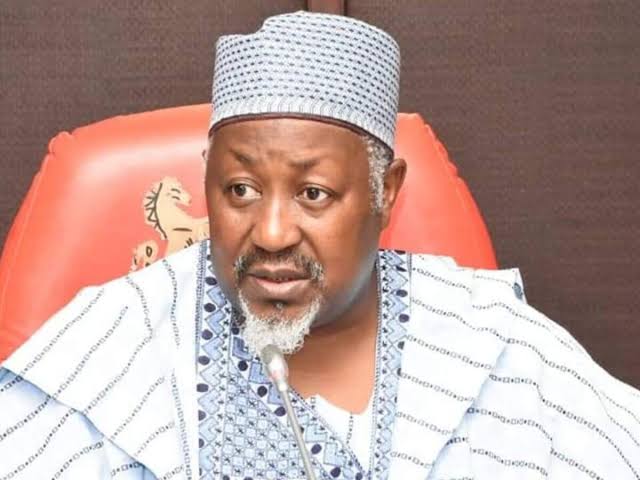
This was stated by the Deputy Governor of the state, Alh Umar Namadi who assured that Jigawa State Agricultural Supply Company (JASCO) has already been ordered to commence the sale to the farmers across the state.

Alh Namadi who made the announcement when he received the emir of Dutse, Dr Nuhu Muhammadu Sanusi at the Government House said that the state government is committed to ensuring that farmers got the fertiliser on time and at affordable price this rainy season.

According to him, the agricultural sector has been active as a result of various programmes and policies introduced by the government which has resulted to poverty reduction, jobs creation and food security in the state.

The JASCO’s Managing Director, Alhaji Rabiu Khalid Maigatari, said a bag of NPK 20.10.10 would be sold at N15,000. He revealed that the company has already received the delivery of over 160 trucks which is equivalent to 4,500 metric tonnes of the commodities and distributed to over 45 stores across 27 LGAs in the State.

Farmers in the State had earlier complained of unavailability of fertiliser due to exorbitant prices in the market but find succour in the Government subsidised fertiliser for their farming activities.

Kano court convicts MTN, Glo, banks, others

By Muhammad Aminu

A Kano mobile court has on Wednesday convicted MTN and Globacom, two leading telecom companies, alongside banks for defaulting payment of Trade Registration Fees in the state.

The companies failed to settle their outstanding registration fees for operation in Kano State.

A statement from the Kano State Ministry of Commerce, Industry, Cooperatives and Solid Minerals, signed by Sa’adatu Sulaiman, added that other convicted companies include Titan Trust Bank, Aso Savings Bank, Veritas Pension and Maersk Shipping Company.

“For failure to pay Kano State Government (through the Ministry of Commerce, Industry, Cooperatives and Solid Minerals) Trade Registration Fees, contrary to section 8,9 punishable under section 14 of the Kano State Trade Registration Law 2014, the statement read.

According to Sa’adatu Sulaiman, the court, presided over by Ibrahim Gwadabe, ordered the companies to ensure settlement of the outstanding fees within two weeks or face closure.

Fertiliser, herbicide’s prices soar in Kano as rainy season starts

By Muhammad Aminu

Subsistent farmers in Kano have decried the soaring prices of agro-inputs particularly fertiliser and herbicides as the farmers commence this year’s rainy season farming activities.

In an interview with The Daily Reality, some farmers said that prices of fertiliser and herbicides have skyrocketed to over 100% increase in some cases which would consequently affect their financial strength to afford the products necessary for better agricultural production.

The farmers lament that the inflationary nature of the prices would have adverse effects on their farming capacity amid tough economic situation in Nigeria.

A survey of Bata Market where fertiliser and other agro-allied products are sold in Kano by The Daily Reality revealed that Urea and NPK brands of fertiliser have recorded above 100% increase compared to their prices the previous season.

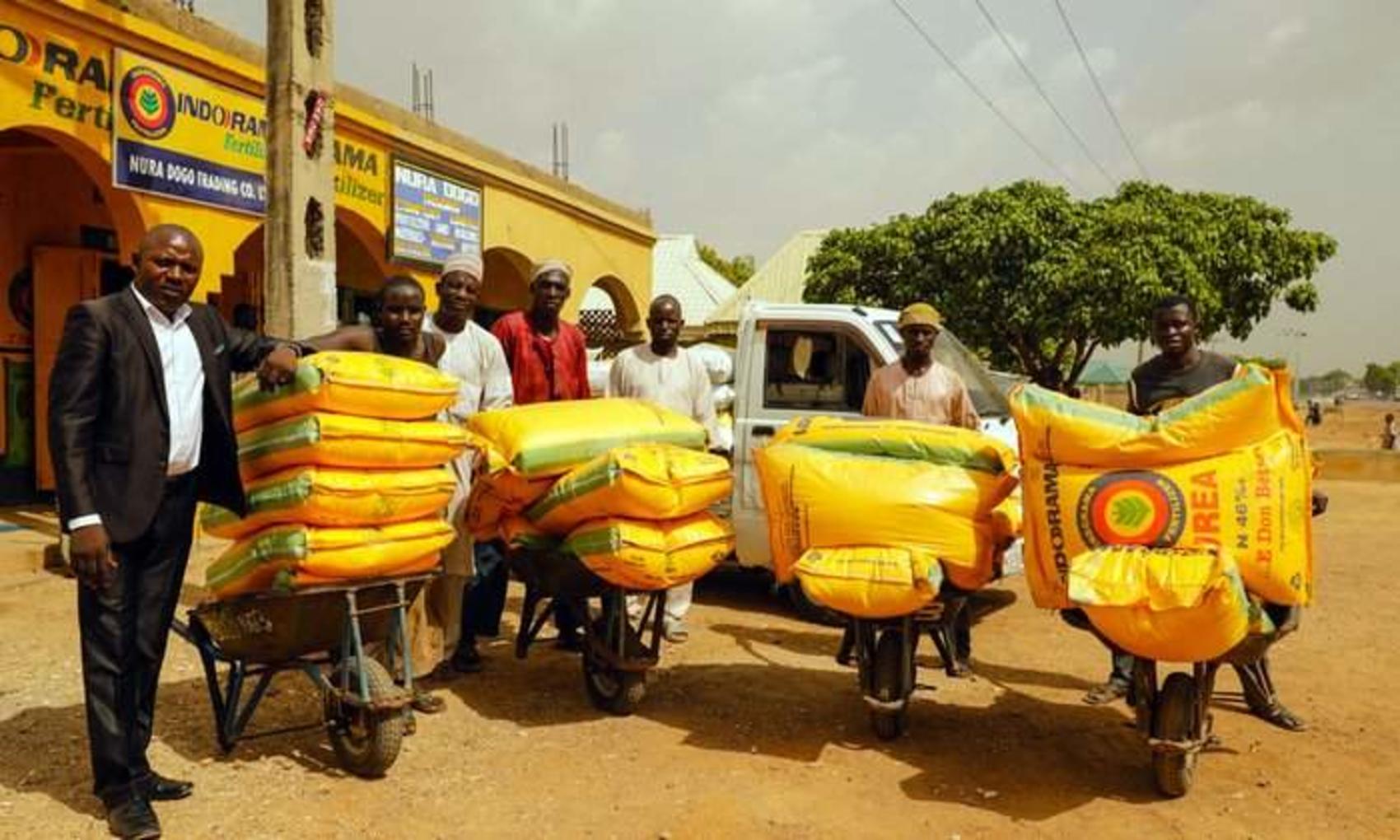
A 50kg of Urea and NPK fertiliser that sold at between N9, 000. 00 – N13, 000.00 in the previous rainy season now cost between N19, 000.00 – N 25, 000.00. To be precise, a 50kg of Indorama Urea fertiliser costs N22, 000. 00 against N11, 000. 00 last year; Dangote Urea sells at N19, 000.00 more than twofold of previous year’s value of N9, 000.00; Waraka Urea was sold N16, 000.00 in 2021 and now stands at N25,000.00 per 50kg bag.

For the NPK fertiliser, 15:15:15 Nagari and Golden Penny brands currently cost N25, 000. 00 each unlike last season’s N12, 000.00 and N13, 000.00 respectively while Kasco 20: 10: 10 brand now sells N15, 000.00 against N10, 000.00 last year.

The story remains the same for herbicides especially popular brands such as Vinash, Glycil, Paraforce, Dragon, and Bushfire among others. In 2021, their prices did not exceed N1, 800.00 at the extreme against current range of N2, 500.00 –N3, 000.00 per litre.

A marketer, Alh. Mustapha Zakari, said the price rise becomes inevitable because they also supply the products at exorbitant prices. “It is not our fault. We get the product at very expensive price and we have to get some profits for our effort. We are only middlemen. When we get it cheap, we sell cheap but when we get it expensive, we sell at high price too.”

Like most Nigerian states, Kano has significant number of rural folks whose primary means of production and earning a living is agricultural. Thus, both the rural and urban people are directly or indirectly connected to agriculture.

With the sharp changes in prices of agricultural inputs in 2022, many farming communities are finding it extremely difficult to afford fertiliser and herbicide which are very crucial in their agricultural activities that are being threatened by desert encroachment, deforestation and climate change.

Consequently, many farmers are now seeking for alternates to fertiliser in organic manure through use of refuse, human excrement, cow pats, chicken droppings, goat and sheep dungs in their farms.

According to Malam Musa Adamu, a subsistent farmer in Gano, Dawakin Kudu Local Government Area, “even the organic manure is now difficult to obtain.” He told The Star that “last year by this time, I purchased 15 bags of both NPK and urea fertiliser. But this year, when I went to the market with similar amount of money, I returned home with only six bags.” He wanted to have respite in organic manure but it also seems hard to collect in large quantity and convey it to the farm.

For Bala Sani, farming is becoming disenchanted to him despite his enthusiasm for agriculture. “I bought a litre of herbicide between N1, 500.00 to 1,800.00 last year. It now costs between N2, 500.00 to N3, 000.00. In fact, I reduce the size of my farm this year because everything costs more. It is better I farm small area that I can take care of it very well,” he said.

Nasir Ali whose farm in Kura village did not get adequate fertiliser last year, he said Allah’s rain would be sufficient both as water and fertiliser to grow his farm plants. He rhetorically asked “I am battling with how to survive with my family where can I get money for fertiliser?”

Although he did not dismiss the efficacy of fertiliser in farming, his position seems that of a hopeless and hapless farmer that only leans on his faith to the Supreme Being for bumper harvest “Our land isn’t as fertile as it used to be but there is nothing I can do. I would just accept whatever God gives me during the harvest. Even our refuse and animal waste aren’t available; and you have to buy and pay for transporting it to your farm,” he complained.

There are many stories of subsistent farmers whose lives and their entire communities depend on age-old agricultural methods to produce food for the state’s fast exploding population. With virtually absence of support from all the tiers of governments to bona fide farmers who are mostly rural based, food sufficiency or food security would continue to be a tall dream.

According to the Federal Ministry of Agriculture and the Food and Agriculture Organisation (FAO), Nigeria requires around 7 million metric tons of fertiliser to adequately cater for the needs of its farmers. Currently, Nigeria does not produce the required quantity and the Russian-Ukraine war has affected importation of both finished fertiliser and some raw materials for domestic plants which ultimately affect the price.

Pundits contend that Russia-Ukraine war portends adverse consequences on Nigeria’s and Africa’s agriculture because they heavily rely on Russia for nitrogen, phosphorus and potassium in their fertiliser plants which Euro-American sanctions make it inaccessible.

Although Africa’s richest billionaire Aliko Dangote’s 2.5$ billion fertiliser plant is estimated to produce 3million metric tons when completed which, alongside other producers, can serve the entire West African region, price of the product will still be a daunting challenge for rural dwelling farmers living below poverty line to afford the important product necessary for modern agriculture.

Hence, due to population explosion and diminished soil fertility, there is a need for a modernised, mechanised and improved agriculture to expand frontiers of food production to feed the fast expanding Kano population which subsistent farmers are already partners.

Relevant authorities, especially the state government needs to genuinely invest in agriculture; to modernise it and empower its poverty-stricken far bymers for a food-sufficient, job-creating and agro-exporting Kano.

Is this inflation a global problem?

By Salisu Yusuf

I was discussing with a friend who’s an auto broker and an arbitrage specialising in buying and selling goods from Benin Republic, Niger Republic and Nigeria. Our topic of discourse was the so-called global inflation put forward recently by the pro-government campaigners to defend our economic limbo.

From around 2000 to date, he argued cogently, the prices of goods and services were stable and fixed in Niger, Benin and Saudi Arabia – the economic reference points and benchmarks of our so-called economic analysts. They depend blindly on the economic malfeasance that befalls our country. The only change, he argued, is the exchange rate of our Naira to any foreign monetary denominator as our Naira plunges daily in value due mainly to our poor economic managers.

For example, around 2000, the tokunbo golf car was sold at 800,000 CFA Francs. Each 1000 CFA francs was exchanged then at ₦600. So, around that time, you could buy the car brand at around ₦768,000. Today, the same car is sold at the same 800,000 CFA francs. What only changes is the rate of exchange due to the Naira depreciation. Each 1000 CFA francs is exchanged at ₦960 instead of ₦600. So, the same car sold at ₦768,000 is now sold at ₦1.7m in the Benin Republic. 

Moreover, a bag of rice that could be purchased at 18,000 CFA francs, equivalent to ₦10, 800, for the CFA francs, was sold at a lower rate. Today, the same bag of rice is sold at the same price of 18 CFA francs as two years ago, but at a high price of around ₦22,080 because of the Naira devaluation.

Some people measure this so-called global inflation theory with the price of a meal in  Saudi Arabia. A friend once told me that a meal in a Saudi Arabian restaurant could cost you ₦5000, whereas ₦1000 could buy you a meal in Nigeria. I laughed at his low-level economic analysis. The ₦5000 Saudi meal is only realised if you exchange it for our depreciated Naira. If you calculate the number of Saudi Riyals exchanged for the ₦5000 is a low amount for a  person living in Saudi Arabia. In other words, the Saudi Riyal is only valuable if, and only if it’s changed to Naira! This is the same economic scenario I explained earlier in the CFA francs/naira ratio. 

The rate of exchange between Naira and Riyal, CFA Francs/ Naira, explains the economic limbo being faced by our country. This further illustrates the Federal Government’s resolve to increase the Hajj value-added tax from 5 per cent to 15 per cent. Moreover, it also hints at the government’s Hajj subsidy removal – hence, the exponential rise in 2022 Hajj fares to nearly ₦2.5m for the participating Nigerian pilgrims.

In the Niger Republic, prices of commodities are stable and fixed, as they do not fluctuate like in Nigeria. This is because President Bazoum manages the economy well; the government implements a protectionist economic policy, where Nigeriene goods are protected against their Nigerian counterparts through restrictions against export or putting high tariffs and handicaps placed through import quotas. Though many Nigerienes export petroleum in massive quantity from Nigeria, President Bazoum has restricted exporting of gas to Nigeria and restricts its consumption internally. Defaulters are taxed. Sometimes the products and their means of transportation are confiscated by gendarmes. 

Meanwhile, the high inflation rate has affected the price of our internal commodities. For instance, the gas imported from Niger is much cheaper than ours in Nigeria. Daily, hundreds of motorcycle riders import the Nigeriene gas on a large scale without paying any import tariff. Antithetically, Nigerian petroleum products are being exported into Niger without paying for excision to the Federal Government because of the border closure. 

Therefore, smugglers from, especially Niger, play their trump cards as they usually export our products freely, sell them in CFA francs at an exponential price in Niger, come back to our border and exchange the CFA into Naira, rebuy our commodities and go back to sell at a bargain price.

While we expect Mr President to cap up his swansong with a socio-economic legacy, we are daily disappointed that the man will finally end his tenure as a colossal failure, a disappointment to a poor talaka that stood blood, toil, tears and sweat to vote for this man.

Salisu Yusuf wrote from Katsina via salisuyusuf111@gmail.com.

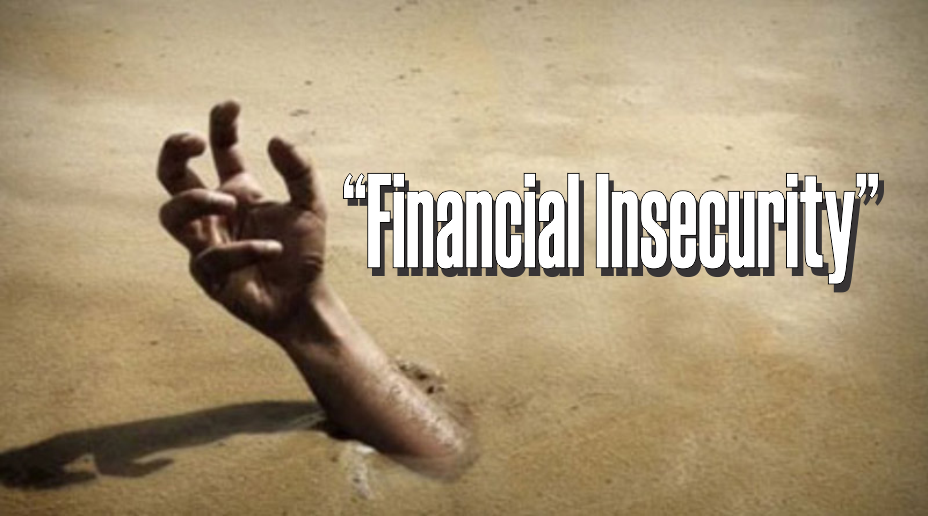
Battling financial insecurity in Nigeria

By Nusaiba Ibrahim Na’abba

It is indeed sickening and quite unfortunate to have been part of the Nigerians alive to witness the gruesome killing of Harira and her children and two others in Anambra State. We haven’t even been relieved of tensions that arose from the derogatory remarks on our beloved Rasul SAW. And amid these tensions, another heartless fellow has murdered his niece in Kano – a similar event as Hanifa’s.

Undoubtedly, these seven years since the administration of President Muhammadu Buhari kicked off have been the most unprecedented for many Nigerians. Stressful periods have made killings assume a state of normalcy, especially in the Northern part of the country, and many horrendous activities now don’t even get into the spotlight.

While we continue to deal with post traumas after witnessing more than enough horrifying stories of senseless murders and killings of innocent lives, we continue to fiercely battle financial uncertainties from different angles, coming in distinct shapes and sizes. There has never been a time when we have found ourselves at risk of losing our earnings. From a series of unfounded mobile messages to mysterious calls and emails from strangers, we have been bombarded with multiple ‘Yahoo! or 419’ daily. We think one step to securing our earnings while these ‘intellectuals’ are already a hundred miles ahead. Such is the cruel world we live in a while our leaders wander in a desultory fashion.

To begin with, are the ‘Yahoo intellectuals’. In this context, they have proven beyond any iota of doubt that they are efficient to prosper and have almost always never missed their targets by successfully outsmarting technologies our private financial institutions, alias banks, breaching secured accounts of innocent people in order thieve their hard-earned money – only God knows the kind of cumbersome efforts put in to get them. They are perfectly immune to any countermeasure provided by these banks. Only a few of them are being traced.

The height of this situation will not puzzle you until you hear a bank staff declaring that it is not the bank’s fault but ‘yours’ – the customers’ fault – who exposed your bank details to a ‘Yahoo Pro’ unknowingly. Ideally, banks are supposed to be substitutes for traditional means of saving assets, but the current situation shows that they’re becoming dangerous institutions. Filing a complaint is intensely laborious as your insignificant earnings do not matter so much to the banks. You’d spend hours in a queue to face your worst fear – they can do nothing to help you.

In a recent report published by FJI Nigeria, a student’s $2000 was stuck and only released after their report. Similarly, just on May 8, 2022, the same FJI Nigeria published how a nurse based in Ogun State lost her N95,000 after her ATM card got stuck in the ATM and after her communication with one of the GT bank’s staff. Millions of peoples’ earnings have continued to slip away through untraceable means as banks claim or through multiple deductions from the banks. In some southern states, you could be robbed with a gun when withdrawing cash from an ATM and others adopt POS machines for these fraudulent activities.

There is also another set of dubious humans that use religious covers to decorate their Yahoo strategies. For example, you’d receive calls from unknown fellows claiming to be in good spirits, giving references from the Holy Qur’an and directing you to a strange place where they want you to keep the money for them, and they help you in return. Sounds hilarious, though, but it still happens. Another way they opt for is by sending random text messages about a critical condition of their family member, and they’d threaten you to send a stipulated amount to them or fear the unthinkable happening to you.

Let me highlight that the current wave of rancorous political exchanges in the primary elections is also enshrouded by financial insecurity. We have all vividly seen the disparity in the offers presented to ‘delegates’; it all boils down to ‘money’. Of course, it unveils how deep-seated corruption is in our country, but it also paves the way for us to see that not only the ruled are financially unstable. As the delegates go for the highest bidder, so do the aspirants try to bid the highest amount or withdraw from the race and embrace the likely winner for basically financial and political advantages. For the aspirants, some are very calculative to either invest where they’ll win or save what they’ve pocketed.

I wouldn’t do justice to this discourse without reiterating the kidnap for ransom mishap that continues to flourish without any sign of slowing down. The ‘business’ has now reached a stage of maturity such that Nigerians are challenged to save for unwary expectations indirectly. You may not be directly involved, but your support would be needed when an outrageous amount of money is demanded from a person you know.

The dangerous convergence of economic hardship, lack of political will, and financial insecurity has placed Nigerians grievously. The damage done to widows, orphans, families, workers and students is unimaginable. Assets aren’t safe at home and are neither safe at the banks. And with the continuous devaluation of the Nigerian currency, the means of our sustenance has become an uneasy endeavour.

For now, the government is overwhelmed with so much politicking – divergences, convergences and calculations are taking a toll on virtually everything. So, since the major financial institutions that deal with the exchange of money are private, and the government has proven its incompetency to bring solace to our impediments being at the receiving end, we can offer solid suggestions on how best we can be treated with dignity by these banks.

Securing our dignity and finance at this point means banks must make a move to create codes that we can use to halt the operation of our accounts when necessary. It’s distressing how they have created codes for transfers and recharge card purchases without prioritising securing our accounts. This can be a gigantic step to counter our susceptibility to fraudsters as they are fully aware that their malicious intentions can only be crushed when the damage is done.

Then, it would be worthwhile for the government to equip its legal system to challenge these private financial institutions to ensure sanity in their operations. I firmly believe they aren’t above the law, and nobody is.

Nusaiba Ibrahim Na’abba is a master’s student from the Department of Mass Communication, BUK. She is a freelance writer and researcher. She can be reached via nusaibaibrahim66@gmail.com.

Kano based lawyers sue Pantami, MTN, others . . . demand 600 million damages

By Aisar Fagge

One of the leading telecommunication companies, MTN Nigeria Communication PLC, has been sued at Federal High Court for poor quality service delivery, invasion of privacy and nonchalant attitude towards genuine complaint of the plaintiffs’ request and therefore demands over 600 million naira as damages.

Nigeria Communication Commission (NCC) and Minister of Communication and Digital Economy, Prof. Isa Ali Pantami were also part of the suit for breach of statutory duty to protect the interest of the plaintiffs and ensure compliance with the Nigeria Communications Act, 2005.

The case was filed by the plaintiffs’ counsel, Barrister Abdulkarim Kabiru Maude and the defendants were served with about 150 pages of process on May 12, 2022, and were given 30 days to respond or face the wrath of the court.

According to the plaintiffs, Barrister Ishaq Abubakar Baba and Barrister Shamsi Ubale Jibril who is the staff of Kano State Polytechnic, on November 24, 2021, between the hours of 8:00 pm and 12 midnight, and also on December 13, 2021, around 7:40 pm and 8:45 pm, the MTN Nigeria PLC deprived them a business opportunity with their clients all because of their poor network service delivery which has caused them serious economic loss and mental injury.

In addition, the plaintiffs also complained of receiving disgusting unsolicited SMS from third parties which were allowed by the MTN. This constitutes a violation of their privacy of telephone conversation and telegraphic communication guaranteed to them by the Constitution of the Federal Republic of Nigeria, 1999 (as amended).

The counsel of the plaintiffs seeks “An order of this honourable court awarding the sum of N 50,000,000 (fifty million naira only) against the 1st defendant (MTN) in favour of the plaintiffs for invasion of their right to privacy . . . .”

“An order of this honourable court awarding the sum of N 500,000,000 (five hundred million naira only) to the plaintiffs as exemplary damages against the 1st defendant (MTN) for aggravating their damage through its act of continued . . . “, part of the process reads.

Court orders Polaris Bank to pay customer N500,000

By Engr. Ibrahim Nasidi Saal

An Akwa Ibom State High Court has ordered Polaris Bank to pay a customer N500,000 as damages for the bank’s failure to reverse a failed Point of Sales (POS) transaction within 72 hours as provided by law.

The plaintiff, Idongesit Nwoko, is a civil servant in Akwa Ibom and a Polaris Bank customer. She made a withdrawal of N61,000 via POS on December 24, 2020, but was debited without payment.

Mrs Nwoko said she made several efforts, including several visits to the bank, but the debit was not reversed until after 28 days. Dissatisfied with the way she was treated by the bank, the woman, through her lawyer, Utibe Nwoko, sued Polaris Bank.

Mrs Nwoko asked the court to compel the bank to refund her N61,000. She also asked the court to compel the bank to pay her N100 million as damages and N1 million as cost of her legal action.

Justice Bennett Ilaumo, in her ruling, ordered the bank to pay N500,000 as damages to Mrs Nwoko for failing to reverse the transaction within the 72 hours as provided by the law.

The Defence lawyer Anthony Ebuk, told The daily reality source on Wednesday, that his client would appeal the ruling.

Mr Ebuk, who said the court cannot amend the pleadings of a party in a suit, argued that the plaintiff, in her prayers, asked the court to order the return of her money, pay her damages for her money that ‘was lost’ and pay her the cost of legal action.

He said the plaintiff did not ask for payment of damages for the delayed reversal which the court awarded to her.

He further said that his client returned the said money to the customer’s account within the 16 days allowed by the law for such transactions.

Mr Ebuk said the plaintiff later withdrew the money before approaching the court.

According to Mr Ebuk, the judgment was not based on the pleadings of the party, but on “a total misdirection of fact.”

“The judgment was not the true position of the law. It wasn’t the terms of agreement. There was no hearing in that matter. Everything was totally against the rule of practice and the law.

“The plaintiff tried to withdraw money with a Polaris Bank Automated Teller Machine (ATM) card, but she did not go to Polaris Bank. She went to another bank’s POS. Going to another bank’s POS, that bank debited her account from Polaris Bank but did not pay her.

“The law is if you come to Polaris Bank with its bank card it should be reversed immediately or within 24 hours, but when it has to do with a third party bank, you have to file an application before the money is reversed to the owner.

“The law allows for 16 days for the money to be reversed from the day the application was filed.

“The woman was debited on December 24, 2021 but she did not notify the bank until after the Christmas holidays about January 4, 2022. From the day she notified the bank we covered the period and returned her money within the 16 days in line with the law,” Mr Ebuk said.

The spokesperson for Polaris Bank, Rasheed Bolarinwa, described the N500,000 damage as disproportionate compared to the N60,000 that was ‘trapped.’

He said the bank was reviewing the judgment and would take ‘the necessary legal steps’ thereafter.