Admin

Disablism and how we are all potential victims

By Khairat Suleiman Jaruma

Halima is in her teens, tall and pretty. She had a charming smile. All through the chat, she participated actively, and I liked her for that. Halima has hearing loss, and she is mute. We had a conversation on menstrual hygiene at her school.

At the end of the chat, Halima volunteered to give a vote of thanks on behalf of the school. She said in sign language, “thank you for coming to talk to us about menstrual hygiene. We really appreciate it. When we make some of the mistakes you mentioned, we get mocked because we are mute, and most people don’t care about how we feel because they don’t think we have a place in the society”.

I felt my heart break. I fought back the tears that welled up at the back of my eyes. Then I remembered another encounter with a mute gentleman in Abuja recently. He also mentioned that most people in our society mock people who are mute and have hearing loss and other disabilities.

None of what both of them said was false. Instead, what these people experience is called disablism. It is the discriminatory, oppressive, abusive behaviour arising from the belief that disabled people are inferior to others.

In our society, persons with disabilities face stigma and discrimination in the form of negative attitudes among family and community members, name-calling, and wrong beliefs about the causes of disabilities, which results in low self-esteem, depression, and isolation.

According to the World Bank assessment, 29 million Nigerians have a disability, representing 15 per cent of the estimated national population of 195 million in 2018. Unfortunately, a vast number of this population live in abject poverty and are unemployed and uneducated due to stigmatization and lack of inclusion.

Most of the schools for children with special needs are in horrible shape. Parents with children with disability think educating a disabled child is not a profitable venture and can only help the child by keeping the child at home away from stigmatization. According to the National President, Joint National Association of Persons with Disabilities, Ms Ekaite Umoh, only two per cent of the people with disabilities had formal education.

In our hospitals, we don’t have provisions for people with disabilities. Patients with intellectual disabilities, e.g. deaf and hard of hearing persons, are disrespected when they complain of any health challenge. Their condition makes it hard for them to discuss their problems with doctors holistically, and several hospitals lack the facilities to ensure equal treatment of all patients.

Perry (2018) asserts that doctors find it hard to believe patients diagnosed with an intellectual disability. Accordingly, medical workers are fond of carelessly assuming that persons with intellectual disabilities fake symptoms and illnesses. This can infuriate patients who have a hard time discussing their conditions and cause the medical staff to demand psychiatric evaluations of the patient. Unfortunately, patients with disability are readily judged as mentally imbalanced when visiting hospitals for treatment or diagnosis (Ayub and Rasaki 283).

Regrettably, at some point in our lives, we all experience one or more forms of disability, at our young age or due to old age, accident or illness. That is why I feel we must take people with disability into consideration and create a society that provides the unique support they need to meet their particular needs, as we would also be beneficiaries of this support in the long run.

Remember that disability is a condition that could happen to anyone, and conditions are not curable. Such conditions can only be managed. So let’s create a system and environment that manages disabilities and optimizes the potential of people with disability. 

Khairat Suleiman Jaruma wrote from Kaduna via khairatsuleh@gmail.com.

Arrest Owo church killers now – MURIC

  • News Desk

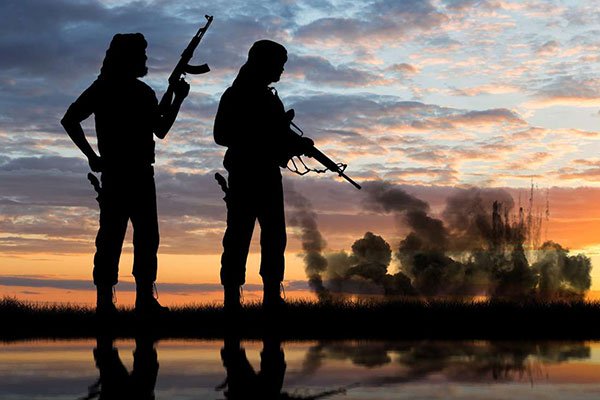
The Muslim Rights Concern has strongly condemned the terrorist attack on worshippers inside the St. Francis Catholic Church, Owo, Ondo State. The attackers killed dozens of worshippers during service today, Sunday, 5th June 2022. MURIC has called for the immediate arrest and prosecution of the attackers.

MURIC spoke via its director, Professor Ishaq Akintola. The statement reads :

“Dozens of worshippers were killed inside the St. Francis Catholic Church, Owo, Ondo State today, Sunday, 5th June 2022. We strongly condemn this act of unprovoked aggression. It is inhuman, heinous, horrific and horrendous.

“We call for immediate arrest and prosecution of the attackers. We charge the Inspector General of Police as well as the Ondo Police Command to find the killers without delay. They must be pursued to the most remote corners of Nigeria. These murderers must have no hiding place.

“In particular, we implore President Muhammadu Buhari to order the Nigerian Army to get involved in the search for the killers. This latest attack is indubitable evidence of the existence of Boko Haram in the South West after their penetration into Niger and Kogi States.

“Going by Boko Haram modus operandi, we warn that mosques and more churches may be the next targets because this was how they started in the North. We, therefore, ask for protection for all churches and mosques in the region.

“MURIC sympathises with victims of this barbaric attack. Our hearts go to the families of the dead. Our prayers also go to the wounded and their dependants. We stand in solidarity with the state governor, Arakunrin Oluwarotimi Akeredolu in this hour of deep sadness”.

My Channels TV interview taken out of context – Kashim Shettima

By Ahmad Deedat Zakari

Former Governor of Borno State and Director General of Bola Ahmad Tinubu’s Campaign Organization, Senator Kashim Shettima, has tendered his heartfelt apology to Nigeria’s Vice President, Professor Yemi Osinbajo, and the President of the Senate, Ahmad Lawan. 

Shettima posted the apology on Facebook on Sunday, June 5, 2022, where he stated that his comments on the VP and Senate President were taken out of context and overblown. 

In an interview on Channels Television on Thursday, Shettima compared the VP’s nice demeanour to an ice-cream seller and Ahmad Lawan’s name to a tomato seller.

“My assessments of the Vice President, Professor Yemi Osinbajo, and the President of the Senate, Senator Ahmad Lawan, were well-intentioned. I never set out to subject them to ridicule but, rather, to stir up interest in the contrasting virtues of the cast of aspirants putting up a fight against my preferred aspirant, one most favoured and advantaged to guarantee APC’s victory in the forthcoming presidential election. 

“The interpretations of my remarks on Professor Osinbajo and Senator Lawan are, thus, being done literally and overblown. My words weren’t woven to portray them as unworthy aspirants but merely to qualify them as non-threatening contenders.

“I, however, take full responsibility for my utterances and wish to appeal to our teeming supporters to neither take my words out of their metaphoric contexts nor interpret them as a measure and declaration of hostility towards my dear friends and allies.

“I hereby tender my unreserved apologies to the Vice President and the President of the Senate for the unintended pains my jibes might have caused them and their families and supporters.” The statement reads in part. 

Shettima then urges different All Progressives Congress camps to be united, as the journey to the general election is about to start.

2023 elections and religio-regional struggle

By Ali Tijjani Hassan

One would be amazed while looking at the similarities between the words “Religion and Region.” One will be even more amazed by how these twin factors play an unimaginable role in Nigerian politics.

Nigeria is divided into six geopolitical zones; North-central, Northwest, Northeast, Southeast, Southwest and South-South. In a nutshell, South and North. In terms of Religious diversity, we have only two major religions: Christianity and Islam. Subsequently, Christianity and Islam dominate South and North, respectively.

As the main opposition party, the People’s Democratic Party, PDP, elected Alhaji Atiku Abubakar as its flag-bearer in the forthcoming polls of 2023. On the other hand, the ruling party, the All Progressive Congress, has yet to choose their flag-bearer capable of winning the election against Atiku.

The APC has zoned their presidential quota to the South-West and Vice President to the Northeast. Their front-line aspirants (Tinubu, Osinbajo) are already from the Southwest. Alhaji Ahmad Bola Tinubu was a former governor of Lagos state. Prof. Yemi Osinbajo is currently on the echelon of his second-cum-two terms as Vice President of Nigeria.

Religion is another factor we have seen since the birth of Democracy in Nigeria in 1999. How religion plays a role in who would be President or Vice President, the candle of Muslim-Christian or Christian-Muslim tickets is still flaming. We witnessed Obasanjo/Atiku, Yar Adu’a/Jonathan, Jonathan/Namadi, and Buhari/Osinbajo.

The nightmare to the APC is how to relate their zoned system with the emergence of their candidates. Both Tinubu and Osinbajo are competent, but Tinubu, like his counterpart of PDP, is a gigantic gorilla that wouldn’t allow any candidate to win over them.

If Tinubu emerges as a flag-bearer, he has no option but to pick the former speaker of the house of representatives, Rt. Hon. Yakubu Dogara, since he is the only influential Christian of the party from the Northeast. Sequel of this, both North and South wouldn’t produce a candidate that is not condign to their religious interest.

Professor Yemi Osinbajo

Prof. Yemi Osinbajo is an influential Christian Southerner that was once seen as ready to serve in the eyes of Nigerians. Still, the disregard of the present Buhari-led administration tarnishes his striking image with red.

If Osinbajo gets the ticket, he must pick his running-mate from Northeast. Then Osinbajo’s running-mate must be an influential Muslim and northerner with integrity, accountability and competency. The qualities mentioned above would win the hearts of Northerners to revive the fallen hope that they put into the APC earlier.

It has been in the tradition of Northern politics since 2003, when president Muhammad Buhari stepped his foot into the presidential race arena. There is a constant twelve million votes that were captives in his favour. Therefore, whosoever would be Osinbajo’s running-mate must have the passkeys to open or conquer the twelve million vote bank.

Who will be Osinbajo’s running-mate?

Here in the Northeast, we have only two politically influential actors capable of running with Osinbajo and likely to conquer: The first is Prof. Babagana Umara Zulum, the governor of Borno State.

Prof. Zulum was a legend of fortune. Although he became the governor of Borno when the state was in the sorrow of insurgency, his braveness, doggedness, and justice with fairness made him the messiah of the Borno people then. That fortunate promotion paved Zulum’s way to be loved by many Nigerians.

The second influential Muslim northeasterner that could win the hearts of northerners and retain or succeed the Buhari’s twelve million votes is the minister of communication and digital economy, Prof. Isa Ali Ibrahim Pantami. Due to his Islamic religious sacerdotalism, the Sunnis sect fanatic would vote for him. Mainly, northern Muslims are Sunni. Therefore, a Pastor/Sheikh ticket is also possible.

Ipso-facto, we should say that the upcoming 2023 will be a “religion and region” war.

Ali Tijjani Hassan writes from Potiskum, Yobe state.

Northern APC governors support power shift to Southern Nigeria

By Ahmad Deedat Zakari

Northern governors of the All Progressives Congress, APC, have backed the transfer of power to Southern Nigeria.

The governors made this known in Abuja on Saturday, June 4, 2022, after a meeting.

The eleven governors who voted in favour of the decision include: Aminu Bello Masari of Katsina, Abubakar Sani Bello of Niger, Abdullahi A. Sule of Nasarawa, Prof B.G Umara Zulum of Borno, Mal. Nasir Elrufai of Kaduna, Muhammad Inuwa Yahya of Gombe, Bello B. Matawalle of Zamfara State, Simon Bako Lalong of Plateau, Dr A.U Ganduje of Kano, Senator Abubakar Atiku Baguda of Kebi State and the former Sokoto State Governor, Senator Aliyu Wammako.

The governors believed the decision was taken in the best interest of the country.

“APC governors and political leaders from the northern states of Nigeria today met to review the political situation and to further support our party in providing progressive leadership amidst our national challenges.

“During our discussions, we welcomed President Muhammadu Buhari’s invitation to governors and other stakeholders to contribute to the emergence of a strong presidential candidate for the APC.

“After careful deliberation, we wish to state our firm conviction that after eight years in office of President Muhammadu Buhari, the presidential candidate of the APC for the 2023 elections should be one of our teeming members from the southern states of Nigeria.

“It is a question of honour for the APC, an obligation that is not in anyway affected by the decisions taken by another political party. We affirm that upholding this principle is in the best interest of building a stronger, more united and more progressive country,” the communique reads in part.

They also urged presidential aspirants from North to withdraw from the race on the ruling party’s platform. Consequent of their decision, Jigawa State Governor, Abubakar Badaru has withdrawn from the race.

MULAN condemns NBA for regional, religious bias

By Uzair Adam Imam

The Muslim Lawyers’ Association of Nigeria (MULAN) has lambasted the leadership of the Nigerian Bar Association (NBA) for treating the Muslim members of the association with ignominy and reckless abandon.

MULAN also blamed NBA for treating members with regional and religious bias, adding that the association is working against the interest of her Muslim members and Islam in Nigeria as a whole.

A statement jointly signed Thursday by Prof. Abdulqadir Ibrahim Abikan, the MULAN President and Adam Olori-Aje Esq, the Secretary-General, disclosed.

The statement decried that over the years, Muslim lawyers have had to bear the pains of participating in NBA programmes without due regard for their collective sensibility.

MULAN also condemned, in an intensely vitriolic tenor, the blasphemy of Prophet Muhammad (SAW) by Deborah Yakubu, as her act offends not only her Creator but also the sensibility of the Muslims world over.

The statement reads in part: “In December 2021, the Olumide Akpata-led Administration of the NBA announced the establishment of NBA Stabilisation Fund and Access to finance for Lawyers. The laudable and much celebrated multibillion-naira project was financed from our collective patrimony.

“However, it was structured on interest orientation that puts-off Muslim members that would not want to have anything to do with interest financing. The fact that the NBA did not think about the exclusion of those members, who are in thousands, alone, shows her high level of insensitivity.

“Without minding the insensitivity, the leadership of MULAN called the attention of the NBA to the implications of the exclusion vide a letter received at the NBA House on 23rd December 2021, addressed to the President and offered to assist her in the architecture of an inclusive alternative. Despite the fact that the letter was received, the President arrogantly ignored it till date.

“The purpose of the exclusion cannot be excused from premeditated impoverishment of a target group. NBA is a multi-billion-naira association in terms of her annual income from Practicing Fees, donations and local and multi-national partners’ funding. The quantum of Muslim Lawyers’ contributions to the fund is not mean.

“The funds are expended vide execution of projects and organization of programmes and events through her various statutory and ad-hoc committees. Along with the services rendered by members of the committees, they, in turn, become more exposed and developed in personal skills and human capacity. It is however curious that appointment into these committees has always been awkwardly lopsided that at no time would Muslim members of the NBA form more than ten to twenty per cent (10-20%) of any of her committees.

“For instance, a survey conducted by MULAN in November 2021 revealed the following percentage of Muslims in various committees set up by the current NBA administration: Judiciary Committee – 13%, Welfare Committee – 13%, Remuneration Committee – 7%, Legal Education Committee – 13%, Human Right Committee – 20%, Disciplinary Committee – 7%, Technical Committee on Conference Planning (2022) – 6% etc. the total number and percentage in the whole committees published by the NBA are graphically represented hereunder,” the statement added.

The leadership of MULAN also decried that NBA reverts to her default Sealed Lips Mode on the killing of Harira and her Children in Anambra State.

“It is not surprising that after insulting the sensibility of the Muslims on Deborah killing, NBA reverted to her default sealed lips mode when the news broke out of the barbaric killing of the pregnant Harira and her four children in Anambra State. Was it because it was Muslim lives that were involved or because it happened in Anambra, not Sokoto State or because the dastardly act was allegedly carried out by IPOB, not the Muslim mob that NBA kept sealed lip? While we await what event of the NBA would be cancelled

“in memory of Harira and her Children or staged in celebration of their killing, as the case may be, we at MULAN condemn in strongest terms, extra-judicial killing of any soul be it Muslim’s or non-Muslim.”

How APC’s only female guber candidate emerged in Adamawa

By Zayyad I. Muhammad

The May 27th 2022 Adamawa State All Progressive Congress (APC) gubernatorial primary election was hotly contested, very transparent, free, and fair.

Six contestants participated in the election — Former Governor Muhammadu Umaru Jibrilla Bindow, Senator Aishatu Dahiru Ahmed Binani, Former Chairman of the Economic and Financial Crime Commission (EFCC) Nuhu Ribadu, Member House of Representatives representing Ganye, Jada, Toungo and Mayo Belwa Federal Constituency, Abdul Razak Namdas, Former Chairman of the   Rice Farmers Association of Nigeria (RIFAN) Wafari Theman and  Umar Mustapha Otumba, a business tycoon.

Senator Aishatu Dahiru Ahmed Binani won the primaries with 430 votes, while Nuhu Ribadu came second with 288 votes, former governor Bindow got 103 votes, and Abdul Razak Namdas scored 94 votes while Wafari and Mustapha got 21 and 39 votes respectively.

Wafari came to the contest unprepared — firstly, his tactics failed to work for him. Wafari solely relied on the strategy that, being the only Christian in the contest, he will get all the Christians’ votes. In fact, Wafari painstakingly took the statistic of all the Christian delegates throughout the state. However, he failed to understand that, in such a contest, this kind of approach doesn’t work.  Secondly, and most importantly, Wafari suffered cash flow problems. He wasn’t able to tour most parts of the state nor meet the delegates. Wafari couldn’t even win his local government area – Hong.

Abdulrazak Namdas is the only aspirant that toured the entire state and spent heavily early in the campaigning period. In fact, this writer criticized Namdas’s behaviour as a candidate instead of as an aspirant.  However, Namdas’s behaviour of acting like a candidate is borne out of the contentment that he is the only aspirant from Adamawa southern zone- the zone has 9 local government councils. Furthermore, Namdas so much believe, that he already has the over 200 votes from Toungo, Jada, Ganye and Mayo Belwa LGAs. Namdas heavily relied on votes from the Adamawa Minority Forum, but he was shocked. Namdas’s errors were that he spent too much, and too early in the wrong ways. He also relied on votes that he had really not secured and lacked a robust campaign team.

Former Governor Muhammdu Umaru Jirilla Bindow is one of the most likeable aspirants in the contest. Since he lost to Fintiri in the 2019 governorship election, Bindow has remained the leader of the APC in the state. Most of the stakeholders’ meetings were held at his residence in Abuja until the time he asked Boss Mustapha to takeover. Though, Boss never called such a meeting at his residence. The reason is that Boss always tries to avoid controversy and he appears comfortable with his SGF position. Bindow came to the race with a strong war chest but poor strategy.  Bindow was convinced that the APC structure would work for him. After all, he erected it. However, he failed to secure the votes of Mubi North, Mubi South, and Maiha LGAs combined. Bindow and his team found it hard to believe he came third, because, on paper, Nuhu and Binani shouldn’t have beaten him.  

Umar Mustapha Otumba came to the race with a very poor understanding of real local politics. No doubt that Otumba understands the politics of the first world, he is in the know of how to analyze development, but those are not the languages the delegates understand. Otumba was aggressive and overconfident. He was the first to buy the APC governorship form. What ‘killed’ Otumba’s ambition was, that the delegate and in fact, the ‘politics; saw his approach as too artificial. What he did,  was just like, he spoke in Chinese while addressing the French- Nigerian local politics don’t understand his kind of approach.   

Nuhu Ribadu operated his game as the true policeman that he is. His entire approach was covert. Nuhu didn’t open an official campaign office nor set up the traditional campaign team with a DG, he only formed a small committee two weeks before the primaries. What Nuhu did was; that he spent a good time working on his weak point- grassroots link. He avoided controversies, he never underrated anybody, built friendships, and tried to localize himself. Nuhu has been silently assisting the APC financially and otherwise. His 288 votes were not a coincidence- he earned it – through constant engagement, mobilization, and support from all the APC executives at the LGA level. He supported the creation of an environment to discuss Adamawa APC’s problems at local government levels and proffer solutions. These were the major factors that facilitated the 288 votes secured by Mallam Nuhu Ribadu. Nuhu’s biggest error was poor logistics and war chest utilization and over-centralization. He could have segmented the state into its 8 federal constituencies with coordinators to handle each.

Aishatu Dahiru Ahmed Binani came to the race with assured votes in her ‘handbag’- women constitute nearly 40% of the delegates.   When Binani entered the voting arena, the entire women among the delegates welcomed her with a melody ( Guda). That was a big signal to her opponents that she was ready for the game. Local empowerment,  smart political calculations, and enormous & clever application of war chest including grassroots base were Binnani’s weapons, and they worked for her. Most of her votes came outside her zone. She found that Abdul Razak Namdas was ‘sleeping’, she chunked away the majority of the Ganye chiefdom votes.

In fact, that zone’s votes were the turning point. She also realized that Former Governor Bindow has underrated them and was carried away by his ‘past glory’- she grabbed good votes that were supposed to go to Bindow. Furthermore, her team realized that Wafari doesn’t know the game and had weak resources- she ‘won over’ a good number of his would-be delegates. Binani didn’t in any way made any attempt at Nuhu Ribadu’s, thus she smartly allowed the Nuhu team to be comfortable in their comfort zone while she carried her operations somewhere else.

Binani has a sweet victory but is coated with a bitter problem. There are allegations of over-voting and financial inducement. The EFCC has already arrested some of the accused while 2 people have been arraigned in a court. If the allegations of overvoting is established-  from the anomaly of accredited voters 1009, while total vote cast was  1011. The APC has no option but to cancel the primaries and organized a new one. The APC guidelines say: “no member shall vote for more than one aspirant, and where the number of votes cast exceeds the number of accredited voters the election shall be declared void”.

If the APC has to conduct a new gubernatorial primary election in the state   – the party has three options; conduct direct primaries, conduct indirect primaries or produce a consensus candidate.   Some pundits are of the view that due to the expensive nature of indirect primaries; some of the contestants may avoid another contest with Binani, secondly if indirect primaries are to be conducted – Binani may attract sympathy votes from many members of the APC and a revolt votes from the women folk. If a consensus candidate is to be carried, and Binani was not chosen, the ticket will come weightless.

 The Adamawa APC gubernatorial primary election was an interesting and unique one- apart from producing a woman as the party’s flag bearer for the 2023 governorship election, the ticket is laden with an intricate legal problem. Furthermore, the result of the contest has sent an important message to the Adamawa people- religious and ethnic politics is just an elites’ thing; the individuals that came first and second are Fulani, while the lone Christian aspirant didn’t secure even a fraction of the votes from delegates who share the same faith with him.

Zayyad I. Muhammad writes from Abuja via zaymohd@yahoo.com.

Why Kwankwaso deserves more accolades

By Najib Ahmad, PhD

We often hear people saying that ‘he [Sen. Rabiu Musa Kwankwaso] did it with the government funds.’ And so? Oh, you expect him to do it with his money; then, you will ponder whether he’s worthy of their gratitude. But, this is not how things have been done right from the inception.

If you read over the history of the previous great Muslim rulers like Umar Ibn Abdulaziz (61-101 AH), may Allah have mercy on him, you will realize the incredible impressions he left on people despite being a caliphate for a short period. But, it is known that all he had achieved and built weren’t from his funds. Still, he’s remembered and admired.

People often appreciate the history of how other nations developed, which primarily transpired through human development. But, for example, how do you think today’s China and Singapore got it right? Do you think they only wake up to all this in the morning? No, it was because some leaders decided to do it right and went on to create policies that enabled them to reach where they are today.

For instance, if you take China, they unconditionally relish Deng Xiaoping – the architect of modern China. While Singapore’s Lee Kuan Yew is also highly recognized as the founder of modern Singapore, they constantly appropriate him for its development. During their time as leaders of developing nations, all they have accomplished weren’t with their funds but with the government funds.

Those leaders’ priorities then were primarily policies on education and the industrial revolution transformation. Sending students, including the peasant farmers’ children, to universities worldwide via scholarships was part of Mr Xiaoping’s most significant policies that China benefited from. His initiatives have matured into a whole system, i.e., the China Scholarship Council (CSC) and China Postdoctoral Science Fund. This remarkable initiative alone helps them strengthen their universities and vocational colleges with a quality workforce and, in turn, enables them to become the world’s industrial powerhouse.

Today, check all your household belongings to verify the above. Those two leaders are still relevant in China’s and Singapore’s present days. You can’t underestimate their significance no matter how you try due to the enormous opportunities and equal advantages they created for their people.

I understand your frustrations, which is why one person out of more than 12 million people of Kano is receiving too many accolades. First of all, it is their choice to appreciate him, mind you. This is because he means so much to them. The good thing is, you can’t deny them this satisfaction even if you try. So, why the resentment? Allow those that prefer to do what suits them to continue thanking and re-thanking him till the end of time, if that is their wish. What’s your problem with their choice, fisabilillahi?

Above all, the main thing to look at is that appreciating Kwankwaso’s effort doesn’t physically hurt you or anyone else or destroy any of our fundamental values. In fact, it is teaching people to learn to recognize good deeds and be thankful to whoever is responsible or part of their progress in life. Isn’t this a harmless mannerism to learn, emulate, and propagate?

Dr Najib Ahmad is a Postdoctoral Researcher at Shandong University, China. He can be contacted via namuhammad03@gmail.com.

Bola Tinubu’s last dance

By Ahmed Musa Husaini

Two things are now becoming clearer: Bola Tinubu will not clinch the APC presidential ticket if it is to be decided through consensus. The second thing is, he’s determined to be on the presidential ballot in 2023 (even if it means contesting on the platform of a different party).

Asiwaju Tinubu’s political career is one that is steeped in irony and drama. When he was a regional (southwest) leader, he was able to control his boys and consolidate his influence. He became the kingmaker feted by all who want to be president in post-Obasanjo’s Nigeria. Jonathan struck a deal with him in 2011 and Buhari sealed one 2015.

Tinubu’s mistake is his inability to adjust to the new political dynamics post-2015. His usefulness as kingmaker was only because he holds influence over the Southwest. As soon as that influence begins to diminish (as was seen in the 2019 elections), and as soon as he made open his intention to succeed Buhari, he’s no longer a kingmaker but simply a king-wannabe at the mercy of other kingmakers.

The truth is, no Nigerian politician comes into contact with power at the center and remain the same again. If Tinubu had remained a regional leader, he would still be in control of the Southwest, and presidential candidates would be trooping to Bourdillon seeking his alliance. Asiwaju is merely a victim of his own successes.

By choosing to go national, Tinubu not only risked diluting his own influence, but also exposing his boys to the federal side of political power and patronage never experienced before. His former commissioners and proteges are now vice presidents, ministers and presidential advisers. They have now experienced the enormous patronage of federal power in a way that enable them to outgrow his influence.

One after the other, his boys whom he had nurtured out of political obscurity started having problem with (and even plotting against) him. The only ones that stayed loyal are the ones who still need him. Osinbajo, Fayemi, Fashola, Ojudu, Aregbesola, the list is endless. His political capital begins to depreciate and people begin to perceive the Tinubu brand less favorably, gradually becoming a liability with the masses but still a force to reckon with due to his formidable political structure.

Success has its own price. The list of his adversaries keeps growing: his estranged political boys, his natural enemies in the PDP and Afenifere, and even those Buhari haters who must bring Tinubu into their hatred of the president. It didn’t help that the president was underwhelming, and it didn’t also help that after over 20 years of ruling Lagos via proxies and unprecedented growth in internal revenue, the city still remains a pastiche of everything that’s wrong with Nigeria.

Tinubu’s candidacy in the APC is insurmountable because he has problems with 3 groups of stakeholders: his own southwest group who see him as a dying political brand that is running out of steam. To them, Tinubu must choose between dignified political retirement or humiliation. One thing that cannot be disputed is that Tinubu made them or contributed greatly to their making. And their decision to abandon him exposes him to political attacks elsewhere. Little wonder that he’s now more promoted by northern politicians than his kinsmen from the southwest.

In the Buhari camp, there are two school of thoughts: one camp believes by virtue of his contribution to the Buhari project, the president should support Tinubu in reciprocity. The other camp argues that having given Tinubu the privileges of appointing the vice president, senate president, speaker of the HoR, ministers and other senior officials, Tinubu is more than compensated for his support and the president should not be beholden to any promise real or imagined.

Then there’s a third group of APC governors who are the real powerbrokers in APC. This group has mixed feelings about Tinubu from favorable to unfavorable. Governors want a president that will listen to and even consult them. Tinubu’s treatment of Ambode (despite interventions from his governor-colleagues) and his recent public lashing of Governor Dapo Abiodun are good indicators of the group’s opinion about Asiwaju. If they cannot count on his respect and consideration now as a candidate, what if he becomes president?

In all this mix, you have Bola Tinubu the politician on one hand, lamenting in the language of political betrayal, tired of being a kingmaker and ready to rock the boat if his boys and allies will not reciprocate his past support. And on the other hand, you have President Buhari who – true to character – has failed to groom a successor and does not even have a succession plan in place because he basically has no legacy to protect and no ‘personal’ scandals to cover up.

It is easy to understand Asiwaju’s pain if all that he built was predicated on personal ambition alone. Purpose determines reward. We cannot blame people for their ambitions, we can only discuss them based on our understanding of history and interpretation of current events. As Tinubu gets ready to gyrate full circle in his last political dance, one single misstep will condemn him to the wrong side of the stage, and of history.

Ahmed Musa Husaini is an APC enthusiast, he writes from Abuja

Water scarcity in Kano: ₦12bn spent in two years, people rely on water vendors

By Muhammad Aminu

Kano Metropolitan local governments remain in perpetual acute shortage of water supply despite budgeting 12 billion Naira for water supply in the last two years by the State Government.

In 2021 and 2022 budgetary allocations, Kano State Government earmarked six bn each fiscal year for the Kano State Ministry of Water Resources for its activities, including tackling water shortage in the state.

However, residents of different communities in Dala, Fagge, Gwale, Kano Municipal, Nasarawa, Tarauni and Ungogo Local Government Areas continue to face acute water scarcity as Kano State Water board could not meet up with the city’s water demand amid excruciating heat waves that require plentiful water to survive.

Many residential areas visited by The Daily Reality reporter remain at the mercy of water vendors, who are the leading suppliers of water for household consumption and daily need in the ancient city.

A resident of Fagge, Kabiru Sani, said that water had become a scarce resource that they use consciously to save themselves from the difficulty of sourcing it. “We are really suffering from lack of water. So we now use boreholes, and some good Samaritans that have boreholes in their houses often connect it to walls outside their houses so that their neighbours can access.”

Unlike Kabiru’s area, Abubakar Adam said their primary source of water supply is water vendors who supply them with water and some time. “We buy a 25-litre jerry-can at the rate of N50 on normal occasions, but when things are terrible, we buy the same jerry-can for ₦100.”

Ja’afar Musa said in their area, around Tal’udu, sometimes they get water at the mercy of good samaritans who supply them water in water tankers to ease off their suffering.

In the Dorayi Karama area, Haruna Bala told The Daily Reality that water vendors are their “Steady and reliable water suppliers.” Tap water comes to us sometimes once a month. The only well close to my house, which we abandoned, come to our rescue, but it cannot provide sufficient water to the neighbourhood.”

Other areas in the inner part of the commercial nerve centre of northern Nigeria, such as Tal’udu, Mandawari, Fagge, and Sabon Titi, often get respite from water tankers that supply water to the areas by good spirited individuals and, on some rare occasions, by the government.

In Dan Agundi, people resorted to fetching water to their houses from nearby mosques that make water provisions for worshippers to perform ablution.

“I once bought a 20-jerry-can cart of water from the vendors at ₦2000 because there was no electricity and not many water vendors then,” said Kabiru Idris of Kofar Nasarawa in Kano city.

Generally, the water supply problem cuts across all nooks and crannies of Kano with a varying effects from one location to another.

Some water vendors who spoke to The Daily Reality said they are also affected by the erratic power supply that makes it challenging to have a constant price for their supplies.

Rabiu Hussaini said he supplied a cart of 20-jerry-can for ₦1000, “I sell one jerry-can ₦50, but when there is no light sometimes, I sell more than that up to 100 per one because where we buy the water from also increase the price.”

He added that “We used to pay N70-100 per cart with 18 or 20 jerry-cans, but now we pay 120 – 200 to get water from the managers.”

Mohammed Sani, who survives on his water vending business, said they are finding things hard despite their crucial work of serving the water supply needs of the residents. He lamented that “We use our energy to do the work. We buy water from boreholes or tank owners before supplying it to the people. Then, we hire the cart, and we pay a tax of ₦50 daily.”

For Sunusi Idris, whose sole essence of leaving home to live in Kano City is working and gathering some money for his family’s needs. “I make a maximum of ₦5000 on a good day, but sometimes I make just ₦2000 a day.”

The vendors, however, complain that apart from the tax they pay, police and KAROTA officials charge them fines for any slightest misdemeanour.

This is coming despite Kano State Government’s yearly pronouncements and allocations to provide the state with adequate, portable drinking water.

Earlier during budget defence and presentation, the then Kano State Commissioner for Water Resources, Sadik Wali, said six bn was budgeted for the Ministry in 2022 in addition to loans secured from France and support from donors.

Sadik Wali told the press that Tamburawa and Challawa Water Treatment Plants were to be rehabilitated. “Our major focus is the provision of portable water supply, especially in the face of health challenges recorded in the state and also rehabilitation of our existing infrastructure….”

The Commissioner further said that “Tamburawa Water Treatment Plant has a capacity of 120 million litres per day while Challawa Water Treatment Plant has a capacity of 90-120 litres per day.”

He acknowledged that they are only running the plants at 40 – 70 per cent capacity subject to availability or otherwise of energy through electricity or generating set.

Kano State Water Board Managing Director, Dr Garba Kofar Wambai, earlier apologised to the residents over the inability of the board to supply water to the people.

The Daily Reality could not find any response from the Kano State Ministry of Water Resources for the lingering water problem in the state as the Commissioner for water resources, Sadiq Wali, resigned his position in March to pursue his gubernatorial ambition.