Admin

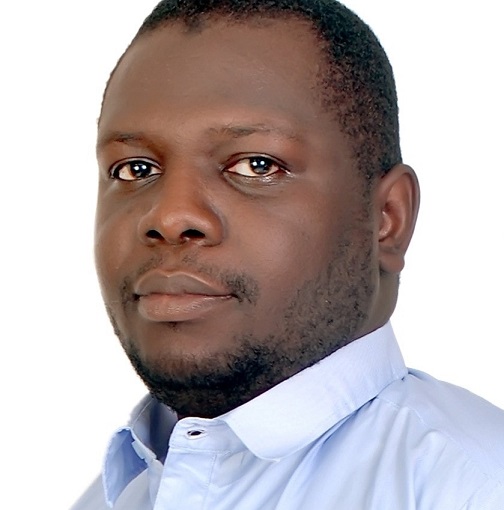
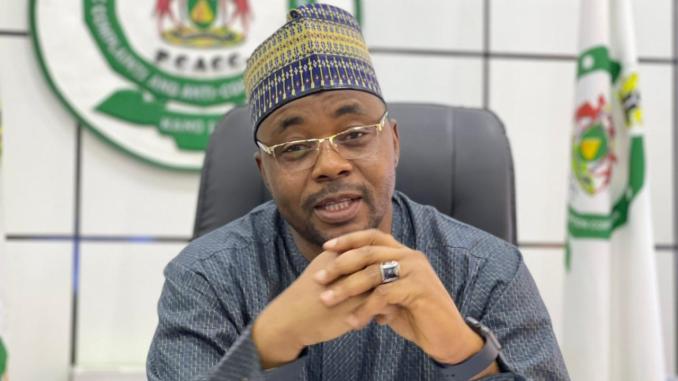
Barrister Sunusi Musa, 61 more elevated to the rank of SAN

By Ahmad Deedat Zakari

A renowned Kano lawyer, activist, commentator and philanthropist, Barrister Sunusi Musa was among the 62 lawyers elevated to the rank of Senior Advocate of Nigeria (SAN) by the Legal Practitioners’ Privileges Committee (LPPC) chaired by the Chief Justice of Nigeria, Honourable Justice Olukayode Ariwoola.

The LPPC, in a statement signed by its secretary and the Chief Registrar of the Supreme Court of Nigeria, Hajo Bello, disclosed this on Thursday, September 29 2022. Hajo also disclosed that the new SANs would be officially conferred with the rank on November 21, 2022.

The title of SAN is the equivalent of the Queen’s Counsel in the United Kingdom. It is conferred on persons qualified to practice as barristers and solicitors of the Supreme Court of Nigeria and who have distinguished themselves in the practice of law.

Over the years, the rules governing the conferment have been amended to accommodate law teachers and scholars who have contributed immensely to the teaching and learning of the law. Federal and state prosecutors who have excelled in the practice of law within the dictates of their engagement are also now considered for the SAN title.

The LPPC, which is chaired by the Chief Justice of Nigeria, also have members like the Attorney General of the Federation and distinguished heads of courts and reputable senior advocates as its members.

The basic requirements for a lawyer to be elevated to the inner bar include:

1: Good Character and calm temperament;

2: Must be qualified to practice as a legal practitioner in Nigeria for not less than ten years;

3: Must have appearances at the Supreme Court, the Court of Appeal and other courts of record;

4: A good law office and law library are considered in the case of lawyers in private practice, amongst other things.

Few privileges are also enjoyed by SANs to the exclusion of other lawyers. These include:

1: Sitting at the inner bar or front roll and being given the opportunity of mentioning their cases before junior counsel;

2: Must appear with a junior counsel in a civil case;

3: Appear in a distinct robe on certain legal occasions;

4: The title also attracts more legal fees and professional patronage from clients and members of the public.

Kano: Muslims observe distant funeral prayer (Salatul Gha’ib) for Late Sheikh Yusuf Al-Qardawi

By Isa Muhammad Inuwa


Thousands of Muslims in Kano, Nigeria, had Thursday converged at the Umar Bin Al-Khattab mosque, where they offered funeral prayer in absentia for the repose of the soul of the deceased Sheikh Youssef Al-Qardawi, who passed on in Doha, Qatar, recently.

Leading the congregation, Imam Sheikh Yahaya Tanko delivered the prayer interluded with four Takbirs (Allahu Akbar! chants) and supplications.

Addressing the crowd shortly after, Sheikh Tanko recalled that the distant funeral prayer was first conducted by the Prophet Muhammad (SAW), in Medina, for the soul of Al-Najjashi, the then late Emperor of Abyssinia (present Ethiopia). Al-Najjashi was deemed to have converted from Christianity to Islam before his death.

Also speaking to the gathering, Professor Muhammad Babangida of Bayero University, Kano, announced that the late Sheikh Al-Qardawi was “a famous Islamic scholar of international standing, who spent the largest part of his life contributing to Islamic knowledge, through his teachings, writings and extracting solutions to religious matters (Fatwa)”.

He added that the late Al-Qardawi authored no less than 170 books, some of which consisted of several volumes. He said he was head of numerous Islamic bodies and that he migrated from his home country Egypt to Qatar because of threats to his life by anti-Islamic forces.

He described the deceased as a moderate jurist who maintained a middle course in proposing solutions on matters of Islamic jurisprudence. “He neither swerved to the extreme nor tilted to the most lenient side”, adding that he was very apt in addressing current issues arising in modern life in his publications and jurisdictions.

The scholar also described Al-Qardawi’s death as a significant loss to the entire Muslim World, whose replacement is difficult to find. He then asked God to forgive the deceased and rest his soul in the highest abode of Paradise. 

Academics, politicians, traditional rulers converge in Kano to discuss Nigeria’s economy

By Uzair Adam Imam

A 2022 and the 63rd annual national conference of the Nigerian Economic Society (NES) ended successfully Thursday, September 29, 2022.

The conference, which started Tuesday, was aimed at providing possible ways to enhance fiscal sustainability in Nigeria as the country ranks fifth on the list of ten countries with the highest debt exposure.

The event hosted academics, politicians and traditional rulers from all parts of the country to grace the event held in Maryam Abacha American University of Nigeria, Kano.

Speaking at the closing ceremony, Prof. Umma Ahmad Jalingo, the second woman president of NES and the first one from the north in 63 years, commended the successful completion of the event.

She said the past three days had been very impactful, adding, “Today, September 29, has marked the culmination of this program with yet an important component.”

His royal highness, the Emir of Kano, Alhaji Aminu Ado Bayero, commended the organisers for holding the conference in Kano.

The emir said the conference was relevant, looking at Nigeria’s current economic situation. He also commended all the papers presented.

Some of the papers presented included “Impact of Fiscal Policy on Financial Inclusion and Development in Nigeria” by Taiwo A. Segun, “Fiscal Policy Options and Poverty Reduction in Nigeria” by Muhammad B. Ado and “Public Debt and Poverty in Nigeria: The Role of Governance Quality” by Omowuwi O. Idowu, among others.

NES was founded in 1957, three years before Nigeria’s independence, and aims to provide intellectual leadership in understanding and to manage economic, social and political changes in Nigeria.

My lawyer collects N2m to bribe judge – Abduljabbar Kabara

By Muhammad Sabiu

Sheikh Abduljabbar Nasiru Kabara, who is on trial for alleged blasphemy against the Prophet Muhammad (SAW), claims that his attorney, Dalhatu Shehu Usman, received N2 million as bribe to influence the Upper Shari’a court judge presiding over the case.

During the resumption of the meeting, the defense counsel, Dalhatu Shehu Usman, who was represented by Mr. Muhammad Lawan, pleaded with the court to permit the defendant to adopt his final written remarks on his own behalf.

In adopting his last written arguments, dated and submitted on September 20, the defendant asked the court to dismiss the lawsuit brought by the Kano State Government against him and direct the state to issue an apology to him.

“I urge the court to adopt the written addresses as my argument in this case and evidence, my audio preachings.”

Kabara continued to claim that the attorney chosen by the court to represent him had amassed N2 million to bribe the judge, stating the attorney had come to the prison and informed him that the judge had instructed him to do so in order to release and exonerate the defendant.

“My lawyer told me he gave the judge N1.3 million, another person N200,000 and he himself took N500,000.”

In his final written arguments, Mamman Lawan-Yusufari SAN, the prosecution’s attorney, pleaded with the court to find the defendant guilty in accordance with the law and accept their arguments as evidence against him in a document dated and filed on September 22.

The defense presented one witness and offered 24 books and a memory card as proof, while the prosecution rested its case on the testimony of four witnesses.

Malam Ibrahim Sarki-Yola, the preeminent judge, refuted the claim that he accepted a bribe.

He stated that both parties would later be informed of the judgment date.

After the court session, Shehu Usman spoke to reporters and refuted the claim that he had accepted the sum of N2 million as a bribe.

Shehu added, “I am not surprised, my client had also made some allegations against his other three sets of lawyers before.”

High debt will burden future generations – Dr Hassan Mahmud

By Uzair Adam Imam

The Director, Monetary Policy Development, Central Bank of Nigeria, Dr Hassan Mahmud, said the high debt would be a burden on future generations in the country.

Dr Hassan Mahmud disclosed this on Wednesday at the 63rd National Conference of the Nigerian Economic Society (NES). 

The 3-day conference, which started on Tuesday at the Maryam Abacha American University of Nigeria, Kano, was themed “Fiscal Sustainability and Policy Response for Economic Recovery in Nigeria”.

It was gathered that the country’s public debt in the first quarter of 2022 had risen to N41.6 trillion from N39.56 trillion recorded in December 2021.

However, the debt by the Federal Government has continued to throw a big threat to future generations as it may impinge on the country’s economic growth.

He said, “When debt is high, it becomes a burden on future generations as it leaves no room for borrowing when there is a shock.

“High debt can increase the cost of private sector borrowing, crowding out viable private sector investment and high servicing requirements.” 

Mahmud said despite the challenges, the public debt is an important instrument for the economy, adding that the country’s borrowing plan is guided by debt sustainability.

He added, “Nigerian borrowing plan is guided by the debt sustainability threshold to ensure debt carrying capacity does not impinge on growth.”

The event hosted many academicians and politicians from all over the country, many of whom also commended the conference and its organisers.

Alhaji Muhammed Kabiru Maikarfi

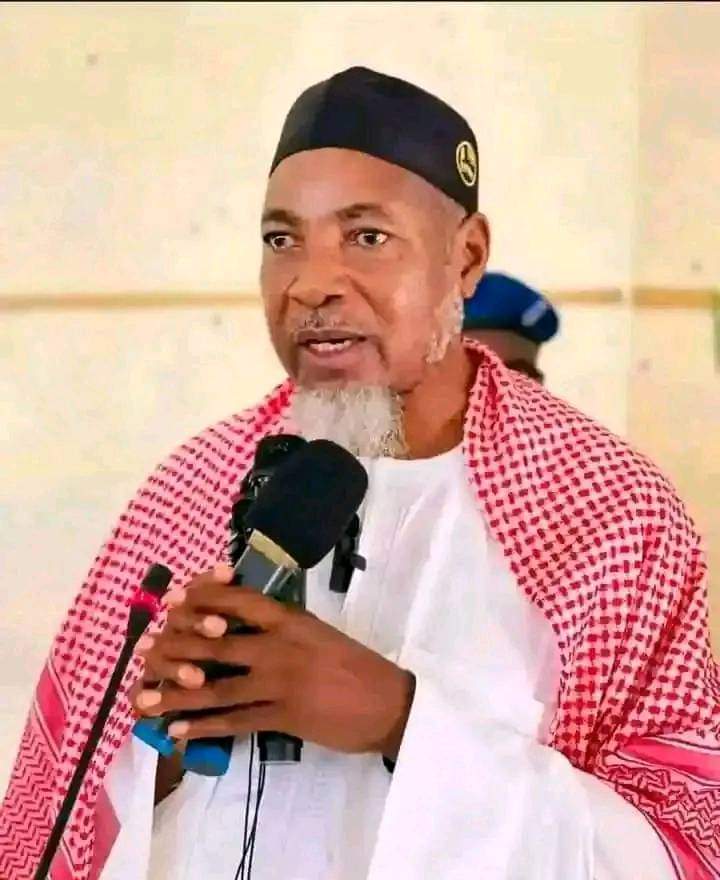
Maigari of Lokoja dies at 80

By Ahmad Deedat Zakari

The Maigari of Lokoja, His Royal Highness, Alhaji Muhammed Kabiru Maikarfi, has passed away at the age of 80.

The news of the monarch’s demise was announced by the Secretary of Lokoja Traditional Council, Muhammed Nadalo on Wednesday. 

According to Nadalo, the monarch died in a private hospital in Abuja after a brief illness. The statement also disclosed that the late royal father would be buried on Thursday in Lokoja at 4 pm. 

The monarch was crowned in 1992 and celebrated his 30 years on the Lokoja traditional stool a few months ago.

Again, Nigeria ineligible to submit film for 2023 Oscars

By Muhammadu Sabiu

The Academy of Motion Pictures, Arts and Sciences’ Nigerian Official Selection Committee (NOSC) stated that no film would be forwarded for the 2023 Oscars.

Nigeria will not be submitting a film to the International Feature Film category of the Oscars for the second consecutive year.

The committee’s chair, Mrs Chineze Anyaene-Abonyi, apologized to the Academy of Motion Picture Arts and Sciences (AMPAS) for not being able to locate a film that satisfied the requirements for the International Feature Film category.

“Although the committee received three epic films following its call for submissions in August, it turned out that none of them will advance to the next stage owing to the voting patterns of members,” she said.

The voting, which took place on the 3rd of September 2022, amongst the 15 members of the committee, had a voting chart of 8, 5, 1, 1, with “No Film is Eligible” taking the lead.

The 15 members of the committee voted on September 3rd, 2022, and the voting chart was 8, 5, 1, 1, with “No Film is Eligible” receiving the most votes.

“Nigerian films had, no doubt, improved significantly as the awareness of the requirements has since grown among filmmakers, and potentially soon, we just might be bringing this award home in succession,” Anyaene-Abonyi also said.

To gain the necessary international exposure and position our films in its acknowledged level of creative debate, she advised filmmakers to become more familiar with Oscar-nominated movies in the International Feature Film (IFF) category.

The movie “The Milkmaid” was submitted in 2020. However, after passing the eligibility test for the first time, the Desmond Ovbiagele-produced film was disqualified because it did not make the category’s initial selection.

The Oscars disqualified Genevieve Nnaji’s “Lionheart” in 2019 for failing to meet the non-English conversation requirement.

TETFund charges institutions to comply with BPP processes

By Muhammad Aminu

The Tertiary Education Trust Fund (TETFund) has charged higher education institutions that benefit from its interventions to ensure strict compliance with the public procurement process to prevent corruption.

TETFund Executive Secretary, Architect Sonny Echono, disclosed this while opening a three-day capacity-building workshop on the public procurement process for TETFund beneficiary institutions organized by TETFund in collaboration with the public procurement Bureau (BPP) in Kano.

He said the training was for the institutions from the Northwest and Northeast subregions of the country to get equipped with the procurement processes to curtail corrupt practices in the agency’s projects.

He noted that the training would serve as a refresher training for desk officers of TETFund in the 246 enlisted beneficiary tertiary institutions across Nigeria.

Echono further called on the participants to utilise the opportunity and enhance their knowledge in public procurement law to achieve the desired objectives.

In his presentation, the Director General of the BPP, Mamman Ahmadu, said the workshop that intends to ensure attaining the provision of the public procurement Act came at the right moment.

”We are here today to build the capacity of accounting officers, principal officers, public officers and other key players in the procurement value chain.”

He said BPP would ensure that all provisions of the procurement act are strictly adhered in procurement in the Nigeria’s tertiary institutions.

Nigeria: Understanding flood and the outbreak of infectious diseases

By Adam Mustapha, PhD

Floods are natural disasters that occur globally, destroying lives and property, especially in developing countries like ours. As a natural disaster, it is caused by climate changes and human activities which distort the balance of environment, hosts and pathogens. Factors such as high sea level rise, urbanization, destruction of river banks, and deforestation increase the risk of flood disasters.

Flood results in the disturbance of the epidemiological triangle; environment, host and infectious agent, and as such, it could result in the emergence of new agents or re-emergence of infectious agents that previously existed. Therefore, the potential outbreak of infectious diseases is a matter of great concern, and urgent intervention is needed to break the chains of transmission.

Flood is known to increase the global burden of various infectious diseases, mortality, social and economic disruptions and displacement of people, which can result in both physical and psychological trauma. Of great concern is how flood causes the outbreaks of infectious diseases, as germs can easily be transported and contaminate drinking water sources, which will provide a conducive environment for the completion of the vector life cycle.

Like other developing countries, flooding has become an annual event in Nigeria, and many towns and cities are vulnerable and susceptible to it. This year, the Nigerian meteorological agency (NiMet) warned some states that they were at high risk of flooding in its yearly prediction of rainfall. Therefore, it was unsurprising that flooding hit many such states, states like Jigawa and Yobe have significantly been hit. In contrast, others such as Borno, Adamawa, Gombe, Kebbi, Kano, Kaduna, Lagos, Kogi, Niger, Delta, Rivers, Zamfara, Taraba, Ogun, Osun, Ondo, some parts of Ekiti, Edo and FCT are affected from moderately to low levels.

Flooding can cause waterborne diseases such as cholera, non-specific diarrhoea, typhoid and viral diarrhoea caused by Rotavirus. These diseases are known to peak after flooding as the pathogens such as bacteria, viruses, and parasites can be transported. In addition, the crowded nature of displacement camps can potentially result in and aggravate the outbreak of respiratory diseases.

The crowded nature of displacement camps can potentially result in the outbreak of respiratory diseases of different etiological agents. Wastewater is a breeding ground and carrier of infectious diseases. For instance, wastewater has the potential of spreading viruses, as they are known to be good-chance takers of a flood, which take days after flooding to meet their incubation cycle. Viral diarrheal diseases, such as hepatitis A and E, vector-borne viral diseases such as Yellow fever, and many others are also some diseases that could potentially spread after the flood.

The genome of some viruses, such as SARS-CoV-2, are known to be detected in community wastewater and this call for concern as it can be disseminated during a flood. Another agent to worry about due to flood is Naegleria fowleri, a brain-eating amoeba causing primary amoebic meningoencephalitis (PAM). As water level and temperature rise, such a situation could fuel the growth of the agent. Environmental contribution to the development of infectious diseases is a significant public health concern that should not be ignored. Antibiotic-resistant bacteria and antibiotic-resistant genes are quickly disseminated in environmental wastewater, which could be further transported into the water system, which calls for concern.

Furthermore, the vector-borne disease can occur as a result of a flood because the development cycles of vectors are provided. For instance, mosquito-borne diseases such as malaria and West-Nile fever tend to increase after floods. Rodent-borne diseases also expand during flooding because the flood increases contact between rodents and humans, resulting in outbreaks of such diseases. Common rodent-borne infectious agents due to flooding include Leptospirosis, Hantavirus pulmonary syndrome, Hemorrhagic fever with renal syndrome etc.

Health interventions

 First, public health measures are essential in preventing infectious diseases due to floods. Therefore, preventive measures should be taken before, during and after the flooding.

Second, the provision of crucial intervention. The critical intervention is an active early warning system that can alert governments to prepare for possible outbreaks and send signals for evacuation of people at risk.

Third, the activation of rapid emergency response is also a necessity. This includes the provision of basic materials and health care services.

Fourth, after the flood, the activation of an effective surveillance method is mandatory for the early detection of an outbreak.

The key intervention is active early warning systems which can alert governments to prepare for possible outbreaks and send signals for evacuation of people at risk. At this stage, all stakeholders and the public must act on time. However, compliance is low due to a lack of an alert system or people refusing to abide by the warning system. Furthermore, risk assessment is needed to ensure that no basic amenities are disrupted due to floods.

Moreover, there is a need for vector control after the flood to break the chains of transmission. There is a need for collaboration among all public health stakeholders. Public enlightenment and outreaches are equally essential intervention measures.

Finally, provisions of clean water, sanitation and hygiene after the flooding to prevent infectious disease outbreaks are also very significant.

Adam Mustapha, PhD, is a clinical and medical microbiologist. He wrote from the Department of Microbiology, University of Maiduguri, via adadmustapha@unimaid.edu.ng.

Nigeria’s economy in chain since the start of Ukraine war – Minister

By Uzair Adam Imam

The Federal Government has said that the adverse effects of the war in Ukraine and the ongoing security challenge in Nigeria have contributed to the aggravation of the fragile economic situation in the country.

At the start of the war, the Organisation for Economic Cooperation and Development (OECD) warned that the world economy would pay a “hefty price” for the war in Ukraine, encompassing weaker growth, stronger inflation and potentially long-lasting damage to supply chains.

In Nigeria, inflation is already hitting living standards and reducing consumer spending as business owners become less optimistic about production.

The Minister of State, Budget and National Planning, Prince Clem Ikande Agba, disclosed this Tuesday at the 63rd National Conference of Nigerian Economic Society. 

The 3-day conference, which started Tuesday at the Maryam Abacha American University of Nigeria, Kano, was themed “Fiscal Sustainability and Policy Response for Economic Recovery in Nigeria”.

The Minister, represented by the Director Macro Economic, Mr Felix Okonkwo, said fiscal discipline is what Nigeria needs to build a stable and inclusive economy.

Agba stated that the Federal Government is focused on addressing the revenue issues, which it considers essential to the economic and financial health of the country.

He added that insufficient revenue was why Nigeria could not contain its fiscal deficit after the recession, meaning that the country’s capacity to continue to support and raise capital expenditure has not been improved.

He said, “The adverse effect of the War in Ukraine, insecurity, global food crisis, oil theft in the Niger Delta, rising energy prices, massive depreciation of the naira exchange rate, high fuel subsidy and increasing inflation as well as insufficient fiscal buffer aggravated the fragile economic situation in the country.”

The chairman of the occasion, Shamsuddeen Usman, said the conference aimed at providing possible ways to restore the country’s economic stability through enhancing fiscal policies.

The President of the Nigerian Economic Society, Prof. Umma Jalingo, who organized the event, said the association was founded three years before Nigeria’s independence and was aimed at enhancing the country’s economy.