Admin

Nigerian agricultural prowess and the current insecurity

By Lawal Dahiru Mamman 

Nigeria is so blessed with agricultural land that all that needs to be done is to tickle the soil with a hoe, and it smiles with a harvest. Therefore, the name Nigeria ought to be synonymous with agriculture by practice, not just by name, because our identity depicts agriculture; the green colour of the National flag shows land for agriculture, and the shield on the national coat of arms represents the fertile soil for same. Unfortunately, a good number of citizens suffer from malnutrition as a result of acute hunger. 

In the assumption that there is insufficient rainfall, the name Nigeria was suggested in the late 19th century by a British journalist, Flora Shaw, who married the British colonial administrator Lord Frederick Lugard. The nomenclature was derived from the River Niger, which enters the country from the northwest and flows down to the Niger Delta, emptying into the Atlantic Ocean through its many tributaries. With this feature (if harnessed properly) alone, we could produce crops and rear animals all year round.

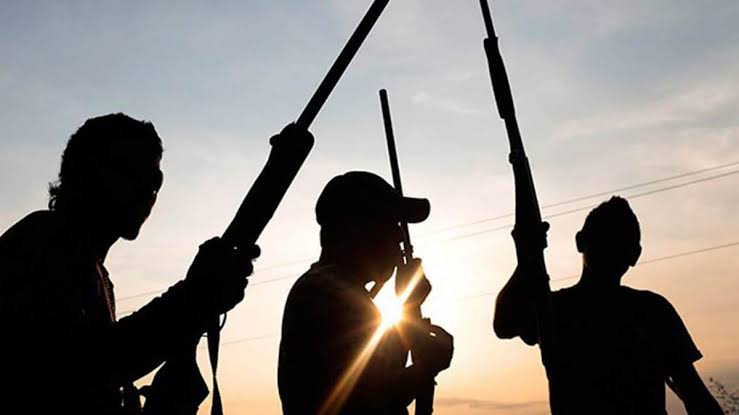
Before the discovery of crude oil in 1956, agriculture used to be the country’s mainstay. When the nation realised it had to reclaim its past glory, feeding the teaming population and directing funds otherwise used for importing various food items to other infrastructural and human capital development, boom! Insecurity strikes from different angles, with each geopolitical zone with its peculiarities. Going back may not be possible if insecurity is not squarely addressed because farmers are afraid of being killed or kidnapped away from the civilisation where they have their farms.

The vociferation to achieve self-sufficiency in Agriculture and food security in the country may not be feasible anytime soon because of insecurity. Poverty is the inability to access basic human needs like food, shelter, clothing, portable drinking water and medical care. Those in this category become angry at all other persons in the society because they believe the society has failed them by depriving them of their fundamental human rights. With food on the top of the chart for these basic necessities, the agriculturist believes that most of the world’s problems will be solved if food is made available and affordable. 

These groups of people can easily be brainwashed by miscreants hell-bent on bringing the nation down to its knees, committing horrendous crimes against other humans and threatening the state’s sovereignty when offered as little as a meal.

In January 2020, the country became the largest rice-producing country in Africa, with 8 million tonnes per annum as against the total of 14.6 million tonnes produced in the continent, with progress being recorded in the production of other food crops simultaneously. At this point, citizens and even government officials started having a glimpse of hope in the independence we crave in agriculture. The hope faded into thin air when the agricultural practice became inversely proportional to insecurity. By implication, increased insecurity leads to a decrease in farming activities 

This is because for a farmer to practice, they would have to look over their shoulder, making those still willing to produce have divided attention – which is not good for any practice willing to succeed while others abandon the profession in totality because ‘Life is Precious’. 

For agricultural practice to continue and develop beyond the old-fashioned, the unwanted elements causing the unrest must be eliminated from the equation with efforts from the administrators, our gallant security forces and even citizens – by extending hands of fellowship to the less privileged.

Mamman, a corp member, writes from Abuja and can be reached via dahirulawal90@gmail.com.

Customs open fire on crowd for attempting to stop patrol

By Uzair Adam Imam

Operatives of Nigeria Custom Service (NCS) have reportedly shot two people who attempted to obstruct their operations in Ringim LGA of Jigawa State.

The incident took place Saturday evening when enraged youths attempted to prevent the joint border patrol team from conducting an operation in the area.

The Jigawa State Police Spokesperson, DSP Lawan Shiisu Adam, confirmed the development to journalists in the state, adding that during the operation, many bags of foreign rice were recovered.

He added that the “village youths had gathered and attempted to stop the officers from carrying out the operation.

“As a result, the officers fired some bullets at the protesters, and two people were shot and injured,” he stated.

Consequently, the victims were taken to Gabasawa Hospital in Kano State for medical attention.

This incident comes few days after a number of shops and houses were destroyed and some residents injured in Babura Local Government as a result of a border drill carried out by custom officers which was reported to have caused gas explosion along the Niger/Nigeria border.

Kano Ministry of Education conducts entry exam into Bilingual College Niamey

By Uzair Adam Imam

The Kano State Ministry of Education on Saturday conducted a screening test for the state’s candidates that would be sponsored to study in Bilingual College, Niamey, the capital city of the Niger Republic.

A statement Saturday by the Director Public Enlightenment, Ministry of Education Kano state, Aliyu Yusuf, said the test was in preparation for the 2021/2022 admission exercise.

Bilingual College is a joint initiative between the Kano State Government and the Government of Niger Republic to groom students in French and English languages.

The statement read in part, “The Screening test which was conducted across the 3 senatorial zones of the state was aimed at selecting 1 best candidate each from the 44 local government council areas of the state to study at the college.

“Similarly, another selection exercise will be conducted among the remaining candidates that have attended the screening test for the Bilingual College, with a view to admitting them into various Unity  Schools across 18 northern states that runs  Students exchange programme.

“In the same vein, the ministry has also facilitated the movement of another set of Kano state students that conducted an entry examination into Gifted Academy, Bamaina in Jigawa.

“The Successful students at the end of the examination will be sponsored to study at the Gifted Academy Bamaina by the Jigawa state Government,” the statement added.

Bandits storm Abuja community again, block road

By Uzair Adam Imam

Unknown shooters have stormed Abuja Community, Tekpeshe-Gurdi, and abducted five persons on their way back from neighbouring community.

The Daily Reality recalls how bandits roamed the community two weeks ago where they killed one person and kidnapped others.

It was gathered that more than five million naira was paid before the victims were released last Friday.

The bandits were said to have flooded the community wielding sophisticated weapons. They also snatched six motorcycles in the process.

Wozhe Ishaya, the incumbent councillor representing Gurdi ward, confirmed the traumatic development to journalists.

He said, bandits blocked the road at Tekpeshe-Gurdi, where the residents were abducted.

“Actually, the victims went to Tekpeshe community to sympathise with some abducted victims that were set free by bandits, while on their way going back Gurdi, they ran into the bandits,

“In fact, even as I am talking to you right now, some villagers of Dadin Kowa have started leaving their village because of that incident,” he added.

Man runs after killing parents for not giving him money

By Uzair Adam Imam

A 21-year-old man, Chukwudi, has reportedly killed his two parents for refusing to give him some money in Nnewi Local Government Area of Anambra State.

Chukwudi, who is an undergraduate student of one university in Anambra State, is the only son to his parents.

The victims were identified as Mr. and Mrs Micheal Ulor. However, there corpses had started decomposing when they were discovered on Thursday.

Chukwudi killed his parents at their residence at Mr. Moses Nnodu’s compound, Abubor Nnewichi-Nnewi, close to Orie Agbo Market.

It was gathered that Chukwudi fled to unknown destination since he killed his two parents.

The spokesperson for the State Police Command, DSP Ikenga Tochukwu, confirm the incident to journalists.

Tochukwu said all efforts to trace the suspect’s whereabouts were on top gear.

The Daily Reality editor loses father

Uzair Adam Imam

Alhaji Ibrahim Lawal, the father of the Editor of The Daily Reality newspaper, Dr Muhsin Ibrahim, is dead.

An Islamic scholar, Alhaji Lawal, aged 78, died Friday evening in Kano after a brief illness. He was a former non-academic staff of Bayero University, Kano.

The deceased left behind many children and grandchildren. Among his children is Dr Muhammad Muslim Ibrahim, a former Deputy Vice-Chancellor, Al-Qalam University.

According to family sources, the funeral rite is scheduled to take place tomorrow, Saturday, 24th September 2022 at his residence in Gwale LGA, Lokon Makera.

May Allah forgive him and grant his family the fortitude to bear the loss, amin.

Kaduna Govt apologizes for gridlock on Kaduna-Abuja Expressway

By Sumayyah Auwal Ishaq

The Kaduna State Government on Friday, 23rd September, 2022 apologized for the hardship being faced by motorists and passengers due to construction works of the Kaduna-Abuja Expressway by Julius Berger.

The Commissioner of Internal Security and Home Affairs, Mr. Samuel Aruwan, conveyed this in a statement made available to The Daily Reality (TDR) in Kaduna.

According to him, “Citizens plying the route over the last few days have experienced severe hardship and discomfort due to the gridlock, which is deeply regretted.”

“The Kaduna State Government is in discussions with Julius Berger PLC, and other relevant agencies, over ensuring that obstructions are promptly cleared and the gridlock is eased for normal movement of traffic as soon as possible,” he said.

Commuters on the ever-busy Kaduna-Abuja Expressway fumed on Friday as they wasted hours in the gridlock occasioned by the repair works on the road. They called on government to review the pace at which Julius Berger Nigeria Plc is executing the construction works on the expressway. The commuters, who are mostly public and private sector workers, and businessmen, berated the company as they spent over forty eight hours trying to manoeuvre the gridlock.

Tinubu, other politicians eyeing me – Wike

By Uzair Adam Imam

Governor Nyesom Wike of Rivers State said that the All Progressive Congress’s (APC) Presidential Candidate, Asiwaju Bola Tinubu, has offered him a senatorial slot.

Wike also stated that other politicians from other party, including the Labour Party, are requesting for his support ahead the 2023 general elections.

Tinubu and Wike reportedly met in London last month amidst the political crisis storming the opposition party these days.

However, Wike did not accept the invitation by Tinubu to dump PDP and join the ruling party, APC.

Wike was qouted to have said, “When Tinubu offered me senate slot, I didn’t go for it. If I want power or want to be in power, I would have gone ahead to take the senatorial ticket. But I said no. That is a man who believes in equity, fairness, and justice.”

He added that, “Aside from Tinubu, who is from the APC, other political parties are talking to me as well including Labour Party because they all know my worth and how I can ensure that they win the 2023 poll.

“But I have not accepted any of the offers presented by those parties,” Wike stated.

Can Atiku crack the Wike’s puzzle? (II)

By Tordue Simon Targema

Secondly, there is the notion of power shift to the South which is shared even among Southern politicians that are not positively disposed to Wike. Indeed, all political stakeholders in the party are unanimous in their conviction that power should shift to the South, as President Muhammadu Buhari is completing a second term, an uninterrupted eight-years Northern presidency come 2023.

This conviction has earned what many in the South would have ordinarily termed ‘Wike’s unnecessary self-centred nagging and ranting’ some form of legitimacy, giving him strong strength to bargain on the negotiation table. Worthy of note is the fact that even though Atiku dreads this negotiation table like a house infested with leprosy, he has no option than to face it, and fillers from the discussions so far indicate that the standard bearer is not finding it funny yielding to the demands of his ego-centric demigod of a rival.

What are the Issues on the Negotiation Table By-the-Way? Fillers from the negotiation table indicate that Wike clearly wants to show Atiku that he is not a force to relegate in the opposition party that he strive hard to sustain from 2015 to date when most party big-wigs including Atiku deserted it for the APC and other political formations. From what is in the public domain so far, few things stand out from Wike’s litany demands.

First and foremost, Atiku must do just one term and return the presidency to the South by the next election season, i.e. 2027. Secondly, Ayu must resign as the National Chairman of the PDP and a new chairperson for the party should emerge from the South West to balance the power structure in the party. Thirdly, Wike will install key ministers in Atiku’s cabinet, etc.

Of course, these are not by any means, too difficult conditions to meet if the standard bearer is determined to unite his house and put forth a formidable campaign team to challenge the ruling APC and other emerging opposition parties. After all, politics is all about concessions.

Already, His Excellency Atiku Abubakar has made his intention to run for just a single term known to the general public, even as such promises hardly hold water in politics if previous experiences in the country’s political landscape are worthy to go by. This is the more reason why Wike requires a concrete commitment to that effect, not just a promissory note that would likely bounce in the bank of equity when the time to cash it is due.

The third condition too is not too difficult to meet, considering that Wike is considered a big name in the party in his zone and likely to pull substantial votes for Atiku in the South. Lest we forget that the ‘Obi-dient’ movement and Tinubu’s effect are critical factors that would collapse whatever structure Atiku has in the South but for the support of strong party pillars in the region like Wike.

Indeed, Atiku needs a formidable team in the South, and no amount of concessions in terms of political appointments will be too big to woo the right people on board, his campaign train. Perhaps, the biggest hurdle right at the moment is for Ayu to accept to resign. As at the last minute, the third-republican political juggernaut is still holding unto his mandate, solidly. In fact, with an air of confidence like one who is firmly in charge, he describes those calling for his resignation from the party’s top seat as ‘small children’ who should not be taken seriously.

Indeed, this boast followed a vote of confidence passed on him by members of the party’s National Working Committee in Abuja, recently which Wike simply dismissed as the same path that Ayu’s predecessor, Prince Uche Secondus followed in his inglorious exit from the party’s top seat. Indeed, all indications point to Ayu’s eventual resignation in no distant time. It is in line with this expectation which seems the only sure path for a likely truce that the Board of Trustees Chairman of the party, Senator Walid Jibrin resigned his position in Abuja recently as a move towards uniting the party.

At the moment, calls for Ayu’s exit have reached advanced stage as all is set for formal commencement of campaigns later in the month. In a South-West stakeholders meeting of the party at Ibadan, Governor Seyi Makinde, one of the key members of the Wike’s camp reiterated their position that Ayu must go.

Makinde described the need to reshuffle leadership positions in the party as the party’s demonstration of commitment towards restructuring which has been its mantra since 2019; although Atiku dismissed this premise and maintained that even if Ayu resigns, a northerner is constitutionally most likely to take over as the party’s henchman given the provision of the party’s constitution.

A power shift in the party, Atiku explained, is only possible in the event of a constitutional review of the party’s constitution which is not likely in the current circumstances. In the meantime, Ayu jets off to Europe on vacation.

Meanwhile, several questions bug the curious mind as follows: is this trip a tactical move to pave the way for peaceful transition in absentia? Is Ayu working on his transition notes to hand over to a new party chairman upon return from vacation in line with the demands of Wike’s camp?

Is His Excellency Atiku Abubakar willing to sacrifice Ayu and broker a truce with Wike, or he is ready to call off Wike’s bluff and dare the consequences? By-the-way, does he has adequate time right at the moment to fully contemplate his options before formal commencement of campaigns later in the month?

The composition of the campaign team with Wike’s camp relegated to the background is a pointer to this line of thought. But if previous experience is anything to go by, then His Excellency Atiku Abubakar is threading on a treacherous ground.

Recall the revolution in the PDP that led to the emergence of the new-PDP which eventually joined forces with the APC in 2014, thereby forming a formidable opposition party that sent the PDP to the debris in 2015 general elections. Apparently, this history is about to repeat itself with the Wike’s puzzle. Coincidently, Just like2015, the current travail of the party starts from Rivers State.

One is, thus, curious to pose: is history repeating itself in the PDP camp? Can the Wike factor cost Atiku the price that former President Goodluck Jonathan paid in 2015 for ignoring Governor Chibuike Rotimi Amaechi? Wike’s puzzle is certainly a hard one for Atiku to crack, and until he is able to crack it successfully, it remains a clog in the wheel of what seems his final shot at Nigeria’s top job.

How best he cracks this puzzle and steers the party to victory remains to be seen, as other political movements are restlessly cashing into the crack in the party to consolidate their holds on the South-South zone which, hitherto, was PDP’s stronghold.

Tordue Simon Targema writes from the Department of Journalism and Media Studies, Taraba State University, Jalingo. Email: torduesimon@gmail.com

A perspective on the resurgence of interest in Hausa identity on social media

By Aliyu A. Ammani

Those following happenings in social media could not have missed the debates and controversies generated by the rise in tribal identity consciousness among the Hausa in Nigeria. Identity among the Hausa has been suppressed by the mischievous use of the tag “Bamaguje”, masked by “Hausa-Fulani” and “Arewa” labels, and tacitly put into question over the years. Many people see in this increasing consciousness a threat to the coexistence between the Hausa and the Fulani, two tribes living together for centuries in Hausaland.

A series of conspiracy theories are churned to explain the genesis of this resurgence on social media, most of which sound somewhat ridiculous. The conspiracy theorists appeared not to see the wood for the trees. There are two primary reasons behind the resurgence of interest in Hausa identity in Nigeria today.

First, the Bororo Fulani banditry in mainstream Hausaland on populations that are essentially Hausa, and its attendant destruction of lives and properties, maiming, looting, raping of women, kidnapping for ransom etc. Thousands of towns and villages across Hausaland have been sacked. Communities of free law-abiding citizens are forced back to the dark age of slavery; abled-bodied men are attacked and abducted, sometimes right inside mosques on Fridays. The perpetrators of these heinous crimes are always willing to tell the world they are Fulani, fighting for Fulani against the Hausa. The reader can hear from the Horse’s Mouth in the following audio-visual documentaries available on YouTube: (i) BBC Africa Eye Documentary “The Bandit Warlords of Zamfara”, (ii) Trust TV’s “Nigeria’s Banditry ‘The Inside Story” and. (iii) video coverage of Dr Ahmad Gumi’s meeting with Zamfara Bandits at Shinkafi.

Second, and most importantly, the attitude of city-dwelling Fulani, including some notable traditional and religious leaders in Hausaland, in the face of Bororo banditry. Instead of publicly dissociating themselves from the atrocities or publicly declaring that terrorists like Bello Turji, Dogo Gide and Ado Aleru do not represent the Fulani, they seem more comfortable fabricating excuses for the bandits in tongue-in-cheek statements.

The leaders say, “their cattle were rustled”, “traditional cattle routes were blocked by new farmlands and settlements”, “the Fulani are not in it alone, there are other tribes including the Hausa aiding and supporting them”, and “the governments neglect the Fulani, …” etc. Not a single traditional ruler in mainstream Hausaland came out to publicly take an impartial stand, as did the emir of Muri. Even Miyetti Allah, the Fulani association that is always quick to cry blue murder whenever the interest of the Bororo appeared threatened, appeared to lose its voice. Thus, projecting an impression that while Bororo Fulani are busy terrorising and destroying Hausa populations and settlements, city Fulani are busy manufacturing and propagating excuses and justifications for the atrocities.

Can one sincerely justify banditry or rebellion by Fulani in Hausaland, a land that is practically a Fulani territory? The most important traditional rulers in Hausaland are Fulani. The key political figures and public officials in Hausaland are Fulani. The most notable Islamic clerics and religious leaders are Fulani. Even in Hausa settlements outside Hausaland, the heads of the communities, known as “Sarakunan Hausawa” (singl. Sarkin Hausawa) majority are Fulani. Therefore, the Fulani should be the last to rebel in Hausaland!

The Hausa, hitherto feeling that he has ‘his back covered’ by the Fulani, feels betrayed. With the scales falling off his eyes, he began to see the writing on the wall: “You are on your own”. This ignites the process that sparked the chain of reactions that we now see on social media as the resurgence of interest in Hausa identity, what others see as the dissociation of Hausawa from the Fulani.

There is indeed the tendency that a reawakening of identity consciousness among the Hausa is capable of igniting an equal spark in Fulani identity among the almost “hausanised” Fulani in Hausaland. This could lead to an upsurge in identity politics among both groups, leading to extremism where elements from both tribes could begin to see and interpret processes and events on a “we versus them’ basis. Traces of such extremism are already visible. However, the possibility of such a tendency should not be reason enough to deny the Hausa of their rights to tribal identity, association and aspirations for the simple reason that other Nigerian tribes have been enjoying such rights without posing any threat to their coexistence with other tribes in Nigeria.

The upsurge in Hausa identity revival has started and cannot be stifled or halted. The genie is already out of the bottle. The question that begs an answer is, “which way forward”? The way forward is not in the identification and clamping down on the persons or group managing pro-Hausa identity revival social media handles as is being suggested by some Islamic clerics across Northern Nigeria. This is more likely to compound rather than solve the problem.

The solution is for the ‘organised Fulani front’ to confront and respectfully address the fears of the Hausa people (of a conspiracy to annihilate them). They should also give them their assurance and publicly dissociate the Fulani from the activities of terrorists like Bello Turji & Co, and commence the process of rebuilding mutual trust and respect between the Hausa and Fulani.

Aliyu A. Ammani wrote via aaammani@yahoo.co.uk fromU/Shanu, Kaduna, Nigeria.