Admin

Iran’s Supreme Leader Pushes Vision Of ‘Post-American Order’

By Sabiu Abdullahi

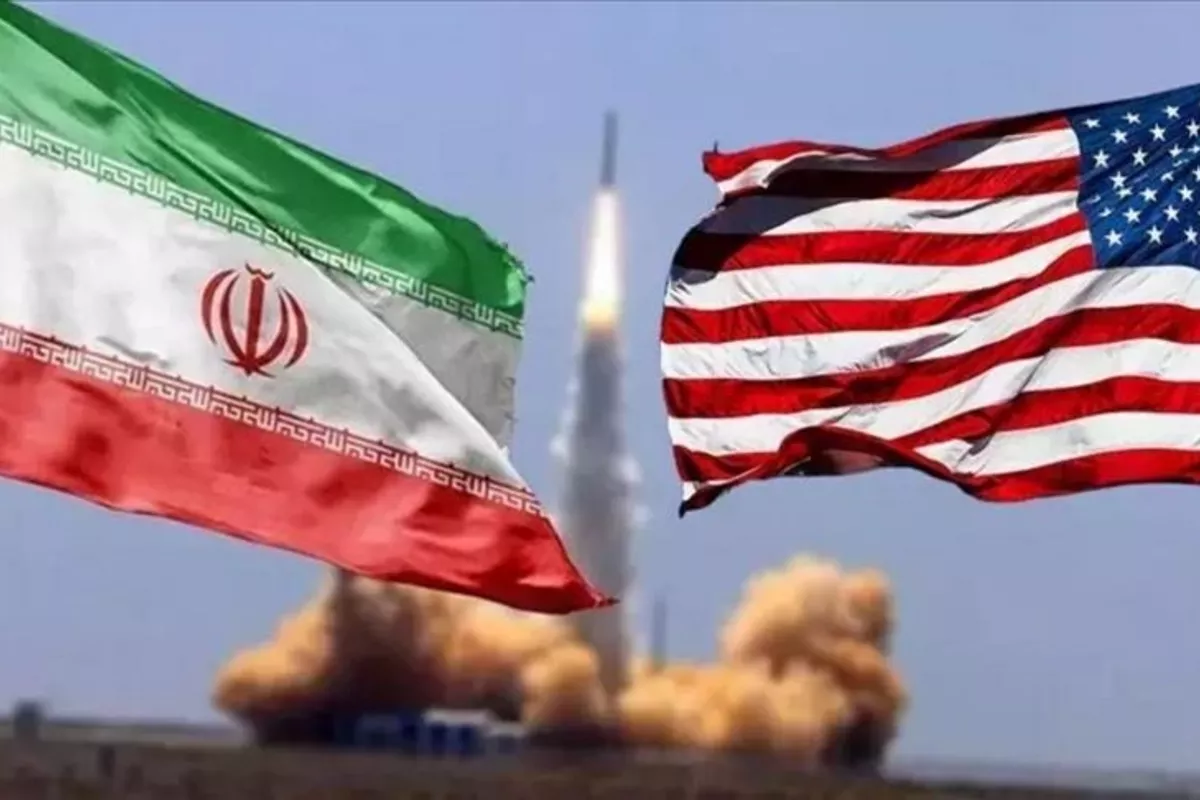
Iran’s Supreme Leader, Mojtaba Khamenei, has issued a fresh message that centred on reducing American influence in the Middle East and promoting a new regional order.

The statement came through Iran’s state television. Khamenei has not appeared publicly on video since he became the country’s supreme leader.

In his latest remarks, Khamenei said countries in the Middle East would no longer serve as “a shield” for American military installations. He also declared that the United States would no longer enjoy a “safe haven” in the region.

The comments reflect one of Tehran’s long-standing positions during the conflict in the region. Iranian authorities have repeatedly argued that the American military presence in the Middle East should come to an end. Iran has also maintained that it would respond to any threat it identifies against its interests.

Khamenei also praised what he described as the success of the “axis of resistance”, which includes groups allied with Iran in countries such as Lebanon. According to him, Iranian-backed forces have delivered lessons to both the United States and the “Zionist entity”.

He further urged Muslim nations and other countries to build partnerships that would influence the future political and economic direction of the region and the wider world.

“With sincerity and purity, I invite all Islamic countries and governments to friendship and cooperation for the common good,” Khamenei stated.

The message strongly emphasised Iran’s desire for a new balance of power in the Middle East that would reduce Washington’s role in regional affairs.

Kano Police Arrest Suspects in Coordinated Drug Raids, Recover Tramadol and Cannabis

By Ibrahim Abubakar Diso 

The Kano State Police Command has arrested several suspects in a series of intelligence-led operations targeting illicit drug distribution across the state.

In one of the operations carried out at Nasarawa GRA, operatives of the Special Intervention Squad intercepted two men allegedly in possession of a sack containing 23 rolls of Tramadol, each made up of multiple sachets. 

The suspects, identified as Abdulsalam Muhammad, 30, and Murtala Sani, 34, reportedly admitted involvement in the illegal trade, while police say efforts are ongoing to track down additional suspects linked to the supply chain.

In a separate operation in Gezawa Local Government Area, officers raided a known black spot in Dangari Village, where they arrested a 40-year-old suspect allegedly selling Cannabis Sativa. 

Police recovered 130 wraps and a half-block of suspected cannabis from him. In another arrest in Gezawa Misanda, a 25-year-old suspect was found with 10 wraps of suspected cannabis and bottles of rubber solution, believed to be used as inhalants.

The Commissioner of Police, Ibrahim Adamu Bakori, commended the operatives for their professionalism and praised residents for providing timely intelligence that aided the operations. He reiterated the Command’s commitment to intensifying the crackdown on drug-related crime in the state.

The police said all suspects will be charged to court upon completion of investigations.

Eid-el-Kabir: Kano Gov’t Announces N20,000 Sallah Bonus for Civil Servants

By Hadiza Abdulkadir

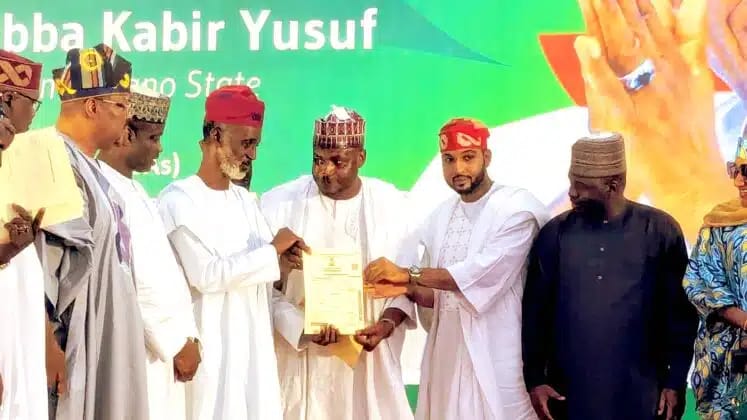
The Governor of Abba Kabir Yusuf has approved a special Eid-el-Kabir goodwill package of N20,000 for civil servants in the state and across the 44 local government areas.

The gesture, announced in a statement issued on Sunday by the Press Secretary to the Office of the SSG, Musa Tanko Muhammad, is intended to support workers ahead of the Sallah celebration. Beneficiaries include civil servants on Grade Levels 01 to 14 in state ministries and local government councils.

According to the statement, the intervention comes shortly after the payment of May 2026 salaries and reflects the administration’s commitment to workers’ welfare amid current economic challenges. The governor said the package is intended to ease financial pressure during the festive period and enable workers to celebrate with their families in comfort.

Governor Yusuf also reaffirmed his administration’s dedication to improving workers’ welfare and maintaining a productive public service, while extending Eid-el-Kabir greetings to the people of Kano State.

Nigeria Customs Pushes Stronger Collaboration Against Terrorism Financing, Cross-Border Crimes

By Sabiu Abdullahi

The Nigeria Customs Service (NCS) has renewed calls for stronger cooperation among security and regulatory agencies to tackle terrorism financing, money laundering, wildlife trafficking, and other transnational crimes.

Comptroller-General of Customs, Adewale Adeniyi, spoke on Wednesday during a study visit by participants of the Operational Level Countering the Financing of Terrorism and Regional Security Course Two from the National Defence College. The event took place at the Customs Headquarters in Maitama, Abuja.

Adeniyi said crimes linked to international trade and border activities now pose major security and economic threats. He noted that the responsibilities of the Customs Service have expanded beyond revenue collection and border monitoring.

He identified offences such as undervaluation, overvaluation, wildlife trafficking, and the illegal export of African resources as key financial crimes that require coordinated action from relevant agencies.

The Customs boss also praised ongoing efforts to improve the capacity of officers within the Service. He acknowledged the participation of personnel from different formations across the country in programmes aimed at strengthening enforcement and intelligence operations.

Speaking on Nigeria’s removal from the Financial Action Task Force (FATF) grey list, Adeniyi described the development as a major achievement for the country’s financial system and international reputation.

He explained that Nigeria’s inclusion on the grey list previously created difficulties for citizens and businesses abroad, especially in relation to the use of Nigerian bank cards for international transactions.

Adeniyi also revealed that the NCS is working closely with the Federal Airports Authority of Nigeria (FAAN), the Nigeria Financial Intelligence Unit (NFIU), and airline operators to introduce automated currency declaration systems.

“For us to get ahead of these criminals, we must continue to work together and subject our individual mandates to broader national security objectives,” he said.

Earlier, the Team Lead and Course Director Coordinator of the Counter Terrorism and Counter Insurgency/Countering the Financing of Terrorism Unit at the National Defence College, Dr Adam Abdullahi, described terrorism financing as a major driver of insecurity across the world.

He said agencies such as the Department of State Services (DSS), the Office of the National Security Adviser (ONSA), the Armed Forces, Customs, and other institutions must strengthen cooperation to improve results in the fight against terrorism.

“The lifeline of terrorism is financing, and tackling it cannot be done by one institution alone,” he said.

Also speaking during the programme, the officer heading the Anti-Money Laundering and Counter-Terrorism Financing Unit of the NCS, Assistant Comptroller of Customs Mas’ud Salihu, said criminal groups continue to exploit global supply chains and international connections to move illicit goods and funds across borders.

Salihu stressed the importance of enforcing currency declaration policies and preventing the movement of prohibited items such as arms and drugs. He also called for stronger collaboration at both local and international levels to combat organised crime.

US Launches Strikes in Southern Iran as Peace Talks Continue in Qatar

By Sabiu Abdullahi

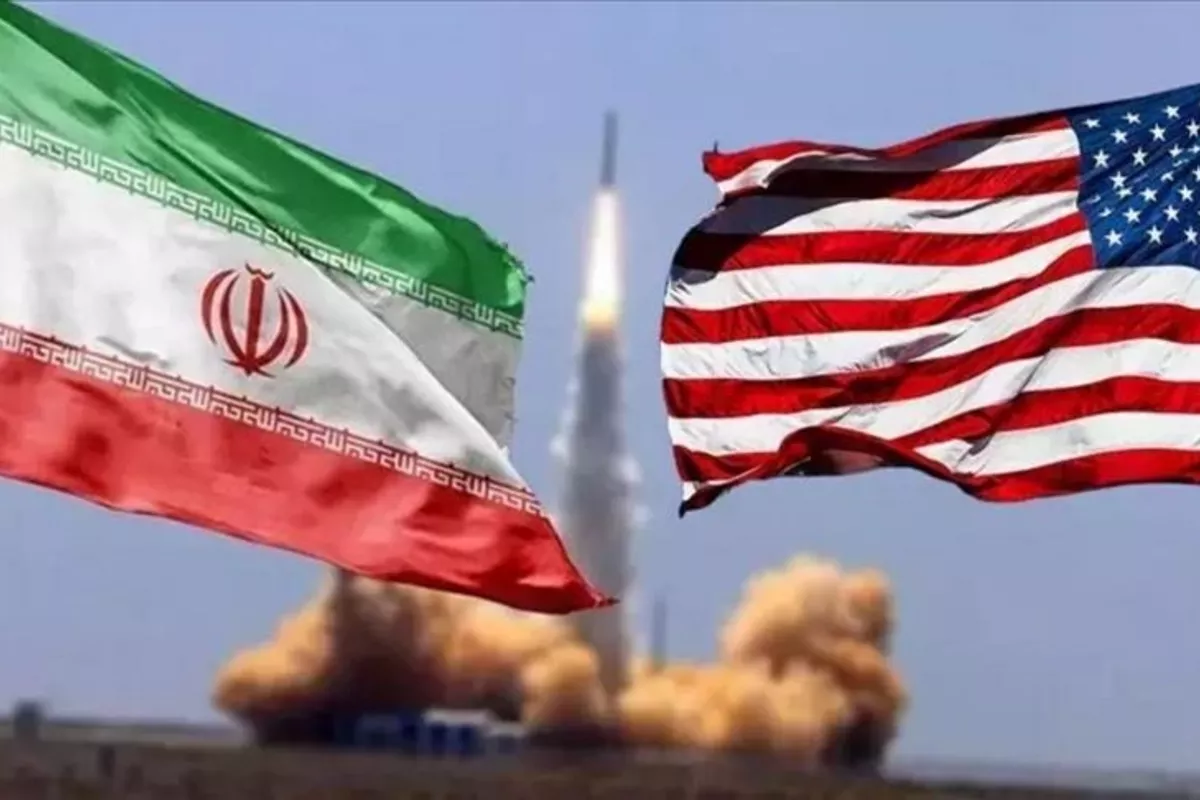
The United States military has confirmed fresh strikes on targets in southern Iran despite ongoing diplomatic talks between Washington and Tehran in Qatar.

According to the US Central Command (CENTCOM), the operation targeted what it described as threats against American troops in the region. The strikes happened while senior Iranian officials were in Doha for negotiations aimed at securing a broader peace agreement.

CENTCOM described the operation as “self-defence strikes”.

“Targets included missile launch sites and Iranian boats attempting to emplace mines,” Navy Captain Tim Hawkins, a CENTCOM spokesperson, said in a statement to Al Jazeera late on Monday.

“US Central Command continues to defend our forces while using restraint during the ongoing ceasefire.”

The US military did not release additional details about the operation.

Iranian sources told Al Jazeera that members of the Islamic Revolutionary Guard Corps (IRGC) had earlier targeted a vessel at sea before the US response. The sources also claimed that several IRGC personnel died in the attacks.

The latest military action comes even though a ceasefire between the United States and Iran has officially remained in effect since April 8.

Al Jazeera correspondent Alan Fisher, reporting from Washington, DC, said the incident could affect ongoing diplomatic efforts to end the US-Israel conflict involving Iran. He noted that President Donald Trump appeared eager to secure an agreement.

“There have been a number of skirmishes like this, particularly just after the start of the ceasefire. At the time, Trump said he didn’t consider these to be a breach of the ceasefire,” Fisher said.

“There is very limited information coming from the US side; we don’t know the extent of the operation,” he said.

“It’s hard to say whether this skirmish is unusual.”

Earlier on Monday, a senior Iranian delegation arrived in Doha to address obstacles delaying a permanent peace agreement. The delegation included Iranian Foreign Minister Abbas Araghchi and Parliament Speaker Mohammad Bagher Ghalibaf.

Trump later said negotiations were “proceeding nicely”, although he stressed that Washington would only accept a major agreement.

“It will only be a Great Deal for all or, no Deal at all — Back to the Battlefront and shooting, but bigger and stronger than ever before — And nobody wants that!” Trump wrote on Truth Social.

The US president also linked the talks to efforts aimed at persuading more Muslim-majority countries to establish formal relations with Israel through the Abraham Accords.

“It may be possible that one or two have a reason for not doing so, and that will be accepted, but most should be ready, willing, and able to make this Settlement with Iran a far more Historic Event than it would, otherwise, be,” Trump wrote.

The Abraham Accords, signed in 2020 during Trump’s first term, led to diplomatic ties between Israel and the United Arab Emirates, Bahrain and Morocco. Sudan also agreed to normalise relations with Israel, although the agreement has not yet received formal approval.

In another social media post, Trump said he expected Iran’s enriched uranium stockpile to either be handed over to the United States or “destroyed in place or, at another acceptable location, with the Atomic Energy Commission, or its equivalent, being witness to this process and event”.

Iran’s Foreign Ministry acknowledged that progress had been made in discussions with Washington, but officials insisted that a final agreement was still some distance away.

“To say that we have reached a conclusion on a large portion of the issues under discussion would be correct. However, to say that this means an agreement is on the verge of being signed is not something anyone can claim,” Foreign Ministry spokesman Esmaeil Baghaei said.

Baghaei also told reporters in Tehran that the current discussions were focused on ending the conflict rather than Iran’s nuclear activities, which he said were not under discussion “at this stage”.

A Generation Trapped Between Certificates, Closed Doors and Broken Promises

By Haroon Aremu 

I remembered an article I once wrote, titled “After NYSC, A call for National job Creation and Youth Empowerment”. It was a piece born not from research papers or policy documents, but from lived experience. I wrote it at a time close to the completion of my service to the nation, armed with certificates, skills, energy, and hope, yet utterly directionless. 

No roadmap. No safety net. No assurance that the years spent in classrooms, lecture halls, and service camps would translate into something as basic as dignity through work. That article was a lament, yes, but more importantly, it was a warning. Today, that warning has become reality for millions.

In Nigeria, the idea of job security, especially for young people, has become almost mythical. It is spoken of like folklore: something people claim once existed, but which no one can quite prove anymore. Every year, universities, polytechnics, and colleges release fresh graduates into the labour market, and every year the market responds with silence. 

The government is often the first to be blamed, and rightly so. A state that cannot productively absorb its youth is sowing the seeds of long-term instability. But even when we turn to the private sector, supposedly the saviour, the door is only slightly ajar, and guarded by impossible conditions like “Five years’ experience,” “Six years’ experience”, and even “Prior industry exposure required.”

The question that screams but is never answered is simple: where does a young graduate get five years of experience without first being given an opportunity? How does one prove competence without access? How does potential survive when every door demands proof that can only come from another locked door?

Government jobs, which should ideally serve as a stabilising force, offer no refuge either. Age limits of 25, 30, and sometimes 35 are rigidly enforced, as though unemployment itself does not age people. What happens to the graduate who has been searching for work for six, seven, or eight years? By the time opportunity finally knocks, they are too old. They are now “too old” to be hired, yet too young to retire. Suspended in limbo.

The harsh truth is this: Nigeria’s population has outgrown its job opportunities. The numbers no longer lie. And in that imbalance, hope is often the first casualty.

Ironically, this is happening in a country that once celebrated progress with the signing of the Not Too Young to Run Bill by the late former President Muhammadu Buhari. That legislation symbolised inclusion, youth participation, and generational renewal. 

And to some extent, it has worked; young people are more visible in politics today than ever before. But visibility is not the same as empowerment. Representation without economic opportunity is cosmetic. 

Youth may now sit at tables of power, but they are largely absent from the tables of employment. Jobs are still distributed through networks, connections, patronage, or, as many whisper, through outright payments. Merit, in too many cases, has been demoted.

Today, employment in Nigeria often feels like a lottery where knowing someone matters more than knowing something. Or worse, like a spiritual pursuit, where success is attributed to “divine intervention” rather than transparent systems. 

Exams are written. Portals are filled. Interviews are attended. Then silence. No feedback. No closure. Just another unanswered email and another year added to one’s age.

Yes, vocational skills are important. Yes, entrepreneurship is valuable. But we must ask difficult questions: what structures has the government put in place to make vocational pathways truly viable? 

Our polytechnics, once designed to be hubs of technical and practical excellence, are themselves struggling for relevance, funding, and modernisation. The Ministry of Education must answer why vocational education has been reduced to rhetoric rather than strategy.

Even within the civil service, recent extensions of retirement age, while beneficial to those currently employed, have inadvertently shut the door further on younger Nigerians. If those inside cannot exit, those outside cannot enter. The system becomes a closed loop, recycling the same faces while millions wait endlessly at the gate.

Add to this the persistent rumours sometimes whispered about federal agencies where jobs allegedly come with price tags, and one must ask: what hope is there for the common Nigerian without money, without godfathers, without connections?

Unemployment does not exist in isolation. It feeds insecurity. It fuels crime. This is not abstract advocacy. This is not borrowed outrage. This is me speaking for myself and for countless others like me who are willing, able, and eager to work. 

Not all Nigerian youths are lazy. Many want to serve. Many want to build. Many want nothing more than a fair chance to contribute to the nation they call home.

So, Mr President, Bola Ahmed Tinubu, this conversation must reach you. Yes, we acknowledge the complexities of governance. Yes, we recognise the economic challenges you inherited. But youth unemployment cannot remain a footnote in national policy. It is an emergency.

What is the future of NYSC if service only becomes a transition into joblessness? Are we merely increasing the pool of unemployed graduates every year? What systems exist to absorb them? What hope do we offer those who cannot immediately pivot to vocational work, even as we encourage skills acquisition?

The youth are not just important to your government—they are its foundation. Without deliberate, transparent, and inclusive employment policies, frustration will continue to grow. And a nation where its youth feel abandoned is a nation sitting on a ticking clock.

We are not asking for favours. We are asking for an opportunity. We are asking for fairness. We are asking to be seen, heard, and included.

After NYSC, what’s next? Until Nigeria answers that question convincingly, the silence will remain louder than any promise.

Haroon Aremu Abiodun is a Nigerian Writer and can be reached via exponentumera@gmail.com.

FG Declares Two-Day Public Holiday for Eid ul Adha Celebration

By Abdullahi Mukhtar Algasgaini

The Federal Government has announced Wednesday, 27th and Thursday, 28th May, 2026 as public holidays to commemorate this year’s Eid ul Adha.

The Minister of Interior, Dr. Olubunmi Tunji-Ojo, made the declaration in a statement issued on Monday in Abuja.

The minister conveyed the Federal Government’s warm felicitations to Muslim faithful in Nigeria and across the Diaspora, noting that Eid ul Adha is a festival of deep spiritual significance rooted in the values of sacrifice, obedience to God, and compassion for fellow human beings.

According to the statement signed by the Permanent Secretary of the Ministry, Dr. Magdalene Ajani, the declaration affirms the Federal Government’s profound respect for the faith and spiritual heritage of millions of Nigerian Muslims who join the global Islamic community in observing this sacred occasion.

The Federal Government urged all Nigerians to use the period for prayer and sober reflection, seeking divine guidance for the country as it continues its pursuit of peace, security, and prosperity for every citizen.

“In the spirit of brotherhood, shared humanity, and national unity, the Federal Government wishes all Muslims a peaceful, blessed, and joyous celebration,” the statement read.

The holidays are expected to allow Muslims across the country to join their counterparts worldwide in performing the symbolic sacrifices and prayers associated with the festival.

Dr. Omanibe Ameh-Sanusi and the Rise of Women-Led Humanitarian Movements in Africa

 By Leah Nickaf 

Across Africa, women are increasingly taking centre stage in driving social change, community development, and humanitarian action. From education and healthcare to poverty alleviation and youth empowerment, female leaders are reshaping the continent’s development landscape through compassion-driven initiatives that address some of society’s most pressing challenges. Among these emerging voices is Amb. Dr Omanibe Ameh-Sanusi, founder of Oma Life Rescue Foundation, whose recent recognition as African Iconic Person of the Year highlights the growing influence of women-led humanitarian movements across Africa.

The special honour is more than a personal achievement; it is a recognition of the impact that dedicated women leaders are making within their communities. Through Oma Life Rescue Foundation, Dr Ameh-Sanusi has championed initiatives focused on education, empowerment, and humanitarian support for vulnerable populations. Her commitment to improving lives, particularly through projects such as the A Million Dream Educational Scholarship, reflects a leadership style centred on service, inclusion, and sustainable development. The award serves as a testament to the lives transformed through her vision and the foundation’s outreach efforts.

Women-led organisations are increasingly demonstrating that effective humanitarian work goes beyond providing immediate relief.

They are creating long-term solutions that empower individuals and strengthen communities. Under Dr Ameh-Sanusi’s leadership, Oma Life Rescue Foundation has embraced this approach by investing in education, supporting underserved communities, and creating opportunities for young people to build better futures. These efforts align with a broader movement across Africa, in which women are leading innovative responses to social challenges and advancing community-driven development.

The recognition of Dr Ameh-Sanusi also highlights the importance of supporting female leadership in the humanitarian sector. Across the continent, women continue to break barriers and redefine leadership by combining empathy with action. Their ability to understand community needs and mobilise resources for positive change has become a powerful force in addressing inequality, expanding access to opportunities, and fostering social progress.

As Oma Life Rescue Foundation continues to expand its reach, the award represents both a celebration of past achievements and a call to greater impact. It reinforces the foundation’s mission to transform lives while inspiring other women to pursue leadership roles in humanitarian work. In an era when Africa’s development increasingly depends on collaborative and inclusive leadership, Dr Omanibe Ameh-Sanusi stands as an example of how one woman’s vision can grow into a movement that uplifts communities and creates lasting change.

The rise of women-led humanitarian movements across Africa is not merely a trend; it is a transformative force. Through leaders like Dr Omanibe Ameh-Sanusi, the continent is witnessing the power of compassion, resilience, and purposeful leadership to build a more equitable and hopeful future for generations to come.

Eid al-Adha: Beyond the Celebration, Lessons from Prophet Abraham (A.S)

By Nasir Yusuf Jibril, Ibrahim Aliyu Gurin and Bilyaminu Gambo Abubakar

Eid al-Adha, also known as the Eid of Sacrifice, is the second festival celebrated each year by Muslims worldwide after Eid al-Fitr. The festival is being celebrated on the 10th of Zhul Hajj, the last month of the Islamic calendar. Muslims on this day are expected to sacrifice a sheep, a goat, a cow or a camel. The meat of the sacrificial animal is expected to be divided into three portions. The first portion is for the family, the second for friends and relatives, and the last for the needy.

The festival is celebrated to commemorate the spirit of obedience and the sincerity of Prophet Abraham (A.S). It was reported that Prophet Abraham (A.S) had repeatedly dreamt that Allah (SWT) ordered him to slaughter his only beloved son, named Ishmael, as a sacrifice. He informed his wife and, later, his son as well of the development, and they all agreed to obey the order from their Creator.

“And when he reached with him [the age of] exertion, he said, ‘O my son, indeed I have seen in a dream that I must sacrifice you, so see what you think.’ He said, ‘O my father, do as you are commanded. You will find me, if Allah wills, of the steadfast.’” (Qur’an 37:102).

While trying to slaughter his son, Iblis (The Devil) appeared and asked him, how dare he slaughter his son? Abraham (A.S) pelted the devil seven times and then moved to another place to slaughter the son. Here, too, Iblis followed him; he again pelted him with seven stones and moved to the third place. As he was about to put a knife to the neck of his beloved son, Allah (SWT) sent a sheep to replace Ishmael.

“And We ransomed him with a great sacrifice.” (Qur’an 37:107).

What transpired above was one of the numerous tests and challenges Prophet Abraham (A.S) underwent during his lifetime. Recall that Prophet Abraham (A.S) was the son of Aazar, the idol worshipper and seller. At about seven years old, little Abraham started questioning idol worship. He was once reported to have asked his father, “How could you worship what could not help or harm you?”

“O my father, why do you worship that which neither hears nor sees and will not benefit you at all?” (Qur’an 19:42).

He then advised Aazar, in a respectful way, to stop worshipping Iblis and to follow him, and that he would show him guidance.

“O my father, indeed there has come to me of knowledge that which has not come to you, so follow me; I will guide you to an even path.” (Qur’an 19:43).

The father, Aazar, got angry at one point and threatened to stone his little son, Abraham, if he continued asking silly questions.

“He said, ‘If you do not desist, I will surely stone you, so leave me for a long time.’” (Qur’an 19:46)

Furthermore, his community too decided to burn him to ashes as a punishment for destroying their deaf and dumb gods – idols. After setting one of the hottest fires on Earth, the idol-worshippers catapulted Prophet Abraham (A.S) from a far distance into the fire. His prayer was ” HasbunAllahu Wa Ni’imal Wakeel meaning “Allah is enough for me.”

“And whoever relies upon Allah – then He is sufficient for him.” (Qur’an 65:3)

Allah then asked the fire to become cold and peaceful to Abraham (A.S).

“We said, ‘O fire, be coolness and safety upon Abraham.’” (Qur’an 21:69)

The fire had answered the order from its Creator and untied him from the ropes and made him feel comfortable in it. Abraham (A.S) later walked out of the fire majestically without being hurt. The idol-worshippers were shocked and realised that the real Lord was with him, but unfortunately, none of them agreed to follow Abraham (A.S.), only his little nephew, Lot (A.S.). They (Abraham and Lot) decided to migrate (the first migration in the world for freedom of worship) from Iraq, where they were born, to another part of the Middle East.

“Indeed, I will go to my Lord; He will guide me.” (Qur’an 37:99).

When Prophet Abraham (A.S) married his beautiful wife, Sarah and left for Egypt, the King of Egypt, Nimrod, attempted to sleep with Prophet Abraham’s wife, but with supplication and absolute trust in Allah, Sarah was protected, and the arrogant King was paralysed. Allah then gave Prophet Abraham (A.S) Hagar, and then revealed the whole set of laws when Prophet Abraham (A.S) was 80. In the laws, he was ordered by Allah to circumcise himself, which he did without questioning. Prophet Abraham (A.S) prayed to his Lord to grant him a child, and his prayer was answered; he had his first son, Ishmael, through Hagar.

“My Lord, grant me [a child] from among the righteous. So We gave him good tidings of a forbearing boy.” (Qur’an 37:100–101)

They were happy and joyous, but his wife, Sarah, was jealous and wanted Hagar and her child to leave. Allah then ordered Prophet Abraham (A.S) to go and abandon the duo in a desert, the present-day Mecca, when Ishmael was barely a year old.

“Our Lord, indeed I have settled some of my descendants in an uncultivated valley near Your Sacred House, our Lord, that they may establish prayer.” (Qur’an 14:37)

Hagar asked Abraham (A.S) if he was commanded by Allah (SWT) to keep them there? Then Prophet Abraham answered Yes and had his way. Hagar and her son exhausted the bottle of water that Abraham (A.S) gave them. She, therefore, moved back and forth seven times between the mountains of Safa and Marwa to search for help. She later returned to her son, who was starving and dehydrated, to give him shelter. Allah SWT sent angel Gabriel to dig a well known as Zam-Zam at the exact place where little Ishmael was kicking his legs.

The aforementioned were some of the tests and challenges Prophet Abraham (A.S) went through, and he successfully passed them. What are the lessons to be learnt from this Man of Honour? Prophet Abraham (A.S) was a symbol of bravery, as he challenged his father, his community, and the most powerful King of his time – King Nimrod- to abandon their idols and worship Allah, the Creator. Prophet Abraham (A.S) also symbolised sacrifice, patience, perseverance, patriotism, respect, determination, commitment, dedication, trust, truth, justice, sincerity and obedience to Allah at the expense of his happiness.

“Indeed, Abraham was a nation [in himself], devoutly obedient to Allah, inclining toward truth, and he was not of those who associated others with Allah.” (Qur’an 16:120)

The question is: what, then, did he get in return for demonstrating these unique qualities? Allah has declared in the Holy Qur’an, the book in which Prophet Abraham’s name was mentioned 73 times in 25 different chapters, one of which was named after him, that “I shall make you the leader amongst men.”

“Indeed, I will make you a leader for the people.” (Qur’an 2:124)

Thereafter, all the prophets who came after him were from his two sons, Isaac and Ishmael. All the children of Israel, the Jews, Christians and Muslims look up to their father, Prophet Abraham (A.S). He was the only Prophet that Allah (SWT) asked Prophet Muhammad (SAW) to emulate his exemplary lifestyle.

“Then We revealed to you, [O Muhammad], to follow the religion of Abraham, inclining toward truth.” (Qur’an 16:123).

Moreover, the desert Abraham (A.S) abandoned his beloved wife, and his son became the city in which the last and final messenger, Muhammad (SAW), was born. The Masjid built by Abraham (A.S.) and his son, Ishmael, continues to be the direction that millions of Muslims face when performing their prayers. The well of Zam-Zam, dug for his abandoned family, still pumps water which is being drunk by millions of people. The seven-times movement between the mountains of Safa and Marwa, performed by Hagar, is part of the Hajj rites. 

Additionally, the three different places he relocated while trying to slaughter his only son, then, Ismael became a place of Ibada known as Jamrats, where every Pilgrim goes and stones the devil seven times as Prophet Abraham (A.S) did thousands of years ago.

Indeed, Prophet Abraham (A.S) was a true leader who, despite the tests, challenges, and calamities that befell him, never turned away from his Lord but rather became more committed and dedicated to his religion, leading by example for us to follow. 

The writers can be reached via Ibrahim Aliyu Gurin (ibrahimaliyu5023@gmail.com), Nasir Yusuf Jibril (nasirjibril2018@gmail.com), and Bilyaminu Gambo Abubakar bilyaminugambokonkol01@gmail.com).

BUK Lecturer, Musa Labaran, Dies After Brief Illness


By Uzair Adam


A lecturer with the Faculty of Communication at Bayero University Kano (BUK), Dr. Musa Adamu Labaran, has died following a brief illness.

The Head of the Department of Information and Media Studies, Professor Nura Ibrahim, confirmed the development on Monday.

Professor Ibrahim said the academic died in the early hours of Monday and would be buried in his hometown of Makarfi, Kaduna State, at about 11:00 a.m. in accordance with Islamic rites.

He described the late lecturer as a committed academic who contributed significantly to the growth of the department and the intellectual development of students.

Dr. Labaran, who hailed from Makarfi Local Government Area of Kaduna State, is survived by two wives and children.

One of his wives, Dr. Ummee Muhammad Hassan, is also a lecturer in the Department of Mass Communication at Bayero University Kano.

Meanwhile, colleagues, students, and associates have continued to mourn his death, describing him as supportive, hardworking, and dedicated throughout his academic career.