By Sabiu Abdullahi
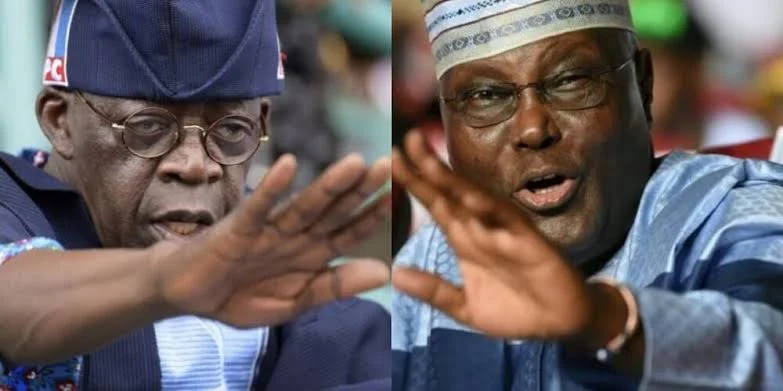
The Federal Government has rejected former Vice-President Atiku Abubakar’s proposal to restore petrol subsidy if elected president in 2027, describing the plan as a threat to the reforms introduced in Nigeria’s petroleum sector.
The government argued that returning to subsidy could create fresh legal and fiscal challenges while discouraging investment in domestic refining, including the Dangote Refinery and other modular refineries.
The position was conveyed by Bayo Onanuga, Special Adviser to President Bola Tinubu on Information and Strategy, in response to Atiku’s proposal.
Onanuga described the former vice-president’s position as retrogressive and fiscally unsustainable, accusing him of making the proposal out of “desperation to win the presidency”.
He maintained that Nigeria’s petroleum sector had undergone fundamental changes since Tinubu announced the removal of petrol subsidy shortly after assuming office.
Minister of Finance and Coordinating Minister of the Economy, Taiwo Oyedele, also defended the policy, saying subsidy removal generated N15.8 trillion for the federation between June 2023 and December 2025.
According to Oyedele, the Federal Government received N5.4 trillion from the resources, while N10.4 trillion was distributed to state and local governments.
Tinubu has also criticised Atiku’s proposal, arguing that it reflects a lack of understanding of governance and economic management.
The President made the remarks when he received Osun State Governor Ademola Adeleke at the State House.
Atiku, who is now the presidential candidate of the African Democratic Congress, ADC, has made the restoration of petrol subsidy a major part of his 2027 campaign.
The former vice-president had supported subsidy removal during the 2023 election campaign but now argues that Nigerians have not seen sufficient benefits from the policy.
He has said the revenue generated after the subsidy removal has not translated into improved living conditions or affordable food for ordinary Nigerians.
Atiku has proposed a different intervention for the oil and gas sector, with emphasis on domestic refining. He said any government support should be capped, included in the budget and tied to verifiable production and measurable benefits for consumers.
He also proposed that crude allocated under the programme should be tracked to ensure that Nigerians benefit from the intervention.
Atiku said his proposal would not amount to a return to the opaque subsidy arrangement of the past. Instead, he described it as a controlled mechanism designed to support Nigerian refineries and ensure that cheaper crude feedstock benefits consumers.
However, economists have expressed differing views on whether restoring subsidy would provide a sustainable solution to Nigeria’s economic difficulties.
Prof. Uche Uwaleke, President of the Capital Market Academics of Nigeria, CMAN, said the debate should focus beyond the immediate appeal of cheaper petrol.
He argued that the central question should be how scarce public resources could be used sustainably to improve citizens’ welfare.
Uwaleke noted that the former subsidy system placed a heavy burden on public finances and created opportunities for arbitrage, smuggling and rent-seeking.
“The success of subsidy removal should not be measured simply by whether government stopped paying the subsidy.
“It should be measured by whether it succeeded in converting that difficult sacrifice into a more productive economy, stronger public services, increased domestic production and a better quality of life for the ordinary Nigerian,” he said.
Prof. Ken Ife, a global financial analyst and development economist, also opposed the idea of returning to a blanket subsidy regime merely to reduce petrol prices.
Ife argued that Nigeria should focus on addressing the structural problems affecting fuel supply and the wider economy instead of artificially reducing pump prices.
He warned that a return to the previous consumption-based subsidy system could recreate the inefficiencies, distortions and financial leakages associated with the former arrangement.
“In broad macroeconomic terms, and even in development economies, you do not subsidise consumption. What you subsidise is production.
“You cannot borrow money to pay for subsidy. That is unlawful when you consider Fiscal Responsibility Act. It does not recognise that as a legitimate expenditure or as a legitimate borrowing,” he said.
Despite the government’s defence of subsidy removal, some Nigerians say the policy has brought severe economic pressure.
A civil servant, Ibrahim Abbas, said workers had expected the savings from subsidy removal to enable the government to accelerate infrastructure development and strengthen the economy.
“The only thing we civil servants have experienced since subsidy was removed is economic hardship and a huge depletion of the purchasing power of the Naira.
“The implementation of the new minimum wage is still shrouded in confusion, and all these make Atiku’s proposal attractive to ordinary Nigerians ” he said.
A retired civil servant, Sule Aliu, similarly said the economic situation had been particularly difficult for retirees since the subsidy was removed in 2023.
The disagreement over petrol subsidy is expected to remain a major issue in the build-up to the 2027 presidential election, with the Tinubu administration defending its decision to end the policy while Atiku presents its restoration as part of his campaign promise.
Tinubu Govt Says ‘No Going Back’ as Atiku Vows to Restore Petrol Subsidy

ByAdmin
13 September 2026