Atiku

Atiku Sues Tinubu, Seeks Disqualification from 2027 Race Over NYSC Certificate


By Abdullahi Mukhtar Algasgaini

Former Vice President Atiku Abubakar and his party, the African Democratic Congress (ADC), have filed a suit before the Federal High Court in Abuja challenging President Bola Ahmed Tinubu’s eligibility to contest the 2027 presidential election.

In the legal action, Atiku and the ADC are questioning the authenticity of the NYSC certificate submitted by President Tinubu to the Independent National Electoral Commission (INEC). They allege that the document bears the name “Tinubu Bola Adekunle” rather than the President’s widely recognized name, “Bola Ahmed Tinubu,” and are urging the court to scrutinize its validity.

The plaintiffs are specifically praying the court to mandate INEC to produce President Tinubu’s Form CF001, the affidavit of personal particulars submitted for the presidential election. Furthermore, they are seeking an order to disqualify both Tinubu and the ruling All Progressives Congress (APC) from partaking in the 2027 general elections if the court upholds their claims regarding the alleged discrepancy.

Atiku Warns Against Militarising Osun Election, Says Poll Is Test For 2027

By Sabiu Abdullahi

Former Vice-President and African Democratic Congress (ADC) presidential candidate Atiku Abubakar has cautioned against the use of excessive security force or government institutions to gain political advantage in the Osun State governorship election.

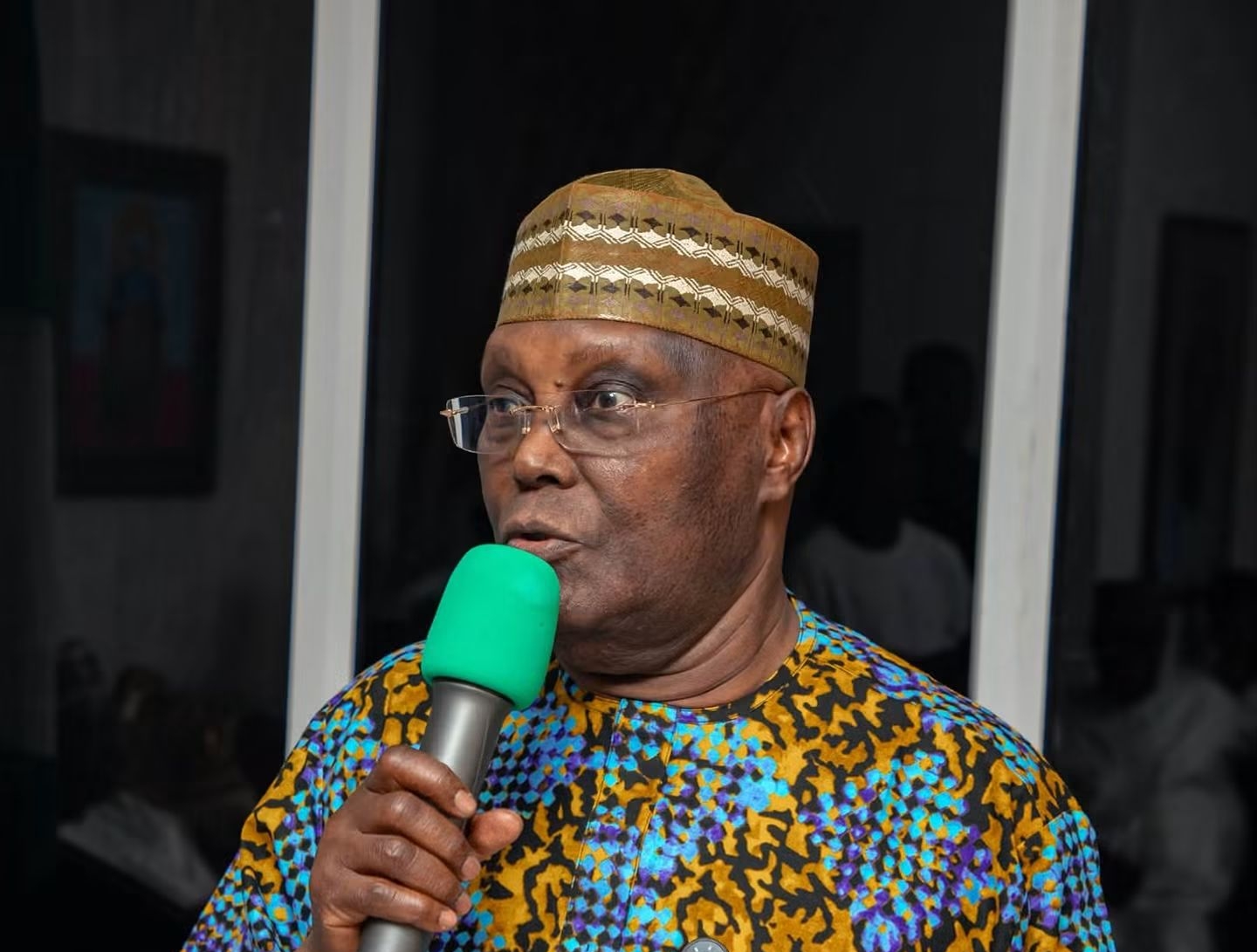
Atiku spoke at the ADC National Youth Leadership Summit in Abuja, where he described the August 15 election as an important test of Nigeria’s commitment to credible elections ahead of the 2027 general election.

He questioned the scale of security deployment around the poll, saying the posture appeared closer to a military operation than a democratic exercise.

“Elections are civil engagements, not military operations. Ballot papers are not bullets. Voters are not enemy combatants. Opposition members are not insurgents,” Atiku said.

‘POLICE, MILITARY BELONG TO NIGERIA’

The former vice-president also questioned why similar security resources were not directed towards terrorists, kidnappers and bandits who attack communities and kill Nigerians.

He warned security personnel against intimidating opposition supporters or allowing government institutions to influence the outcome of the election.

“The police belong to Nigeria. The military belongs to Nigeria. INEC belongs to the Nigerian people. None of them belongs to the APC,” he said.

Atiku called on the Independent National Electoral Commission (INEC) to ensure that election materials reach polling locations on time and that eligible voters can cast their ballots without obstruction.

He also urged the commission to prevent what he described as “mysterious glitches, unexplained delays or manipulation” during accreditation, vote counting and the transmission of results.

“The world is watching Osun. Nigerians are watching. History is taking notes. Let the people vote. Let every vote count. And let the will of the people prevail,” he said.

The ADC presidential candidate also spoke about his plans to increase the participation of young people in politics.

He said his political programme would provide that at least 30 per cent of legislative candidates be below 40 years old, with a substantial number below 30.

Atiku urged Nigerian youths to turn their frustration into active political participation instead of limiting their engagement to social media.

“Anger is not an organisation. A hashtag is not an organisation. Your time is not tomorrow. Your time is now,” he added.

Buba Galadima Claims 34 And Half Governors Back Tinubu For 2027

By Sabiu Abdullahi

Buba Galadima, a chieftain of the Nigeria Democratic Congress (NDC), has claimed that “34 and a half” state governors are supporting President Bola Tinubu’s bid for another term in office.

Galadima made the claim at the inauguration of the NDC’s national reconciliation committee, where he discussed the political alignments ahead of the 2027 general election.

According to him, Oyo State Governor Seyi Makinde has kept his distance from both Tinubu’s political camp and the opposition coalition.

He, however, described Bauchi State Governor Bala Mohammed as being undecided over which side to support.

Galadima said Mohammed had attended a meeting with NDC stakeholders but later reconsidered his position after receiving advice against joining a political party that has a strong presidential candidate.

“There are thirty-four and a half governors. The one who is not with him, visibly shown, is Seyi Makinde. The half is Bala Mohammed,” Galadima said.

He explained why he classified the Bauchi governor as “half” among the governors he said were not firmly aligned with Tinubu.

“Mohammed is half, because Bala Mohammed met with us after the wee hours of the night, 3:00 a.m. We parted; we were both at the NDC together. Just for him in the morning to call that he has rescinded his decision, that he was advised not to go into any party with a strong presidential candidate,” Galadima said.

The NDC chieftain said Mohammed’s current political position remained uncertain, as he could still choose to work with either the opposition coalition or the ruling party.

“So, it means Bala Mohammed is on the fence. He may work with us; he may work with them. That’s why he’s half, as far as I’m concerned.

Galadima also contrasted the resources available to political parties in power with those available to opposition groups when negotiating with politicians.

“So if you are in power, you have the authority to say, look, we are only fielding this man; all of you step down. Or they can compensate you. We have nothing to compensate anybody, except we reason, except patriotism, that we need to salvage this country.”

The comments come as political parties and opposition groups intensify consultations ahead of the 2027 elections, with the question of possible alliances among governors expected to remain a major issue.

Atiku Challenges Tinubu To Order El-Rufai’s Release From ICPC Custody

By Sabiu Abdullahi

Former Vice-President Atiku Abubakar has challenged President Bola Tinubu to direct the Independent Corrupt Practices and Other Related Offences Commission (ICPC) to release former Kaduna State Governor Nasir el-Rufai if the President has operational authority over anti-corruption agencies.

Atiku, who is the presidential candidate of the African Democratic Congress (ADC), made the demand after Tinubu directed the Economic and Financial Crimes Commission (EFCC) to return to court and withdraw an order freezing the bank accounts of the Osun State Government.

El-Rufai has remained in ICPC custody since February 19 over allegations of financial impropriety linked to his eight-year tenure as Kaduna governor between 2015 and 2023.

The former governor was arraigned before the Kaduna High Court on April 13 on an amended nine-count charge that included allegations of fraud and abuse of office.

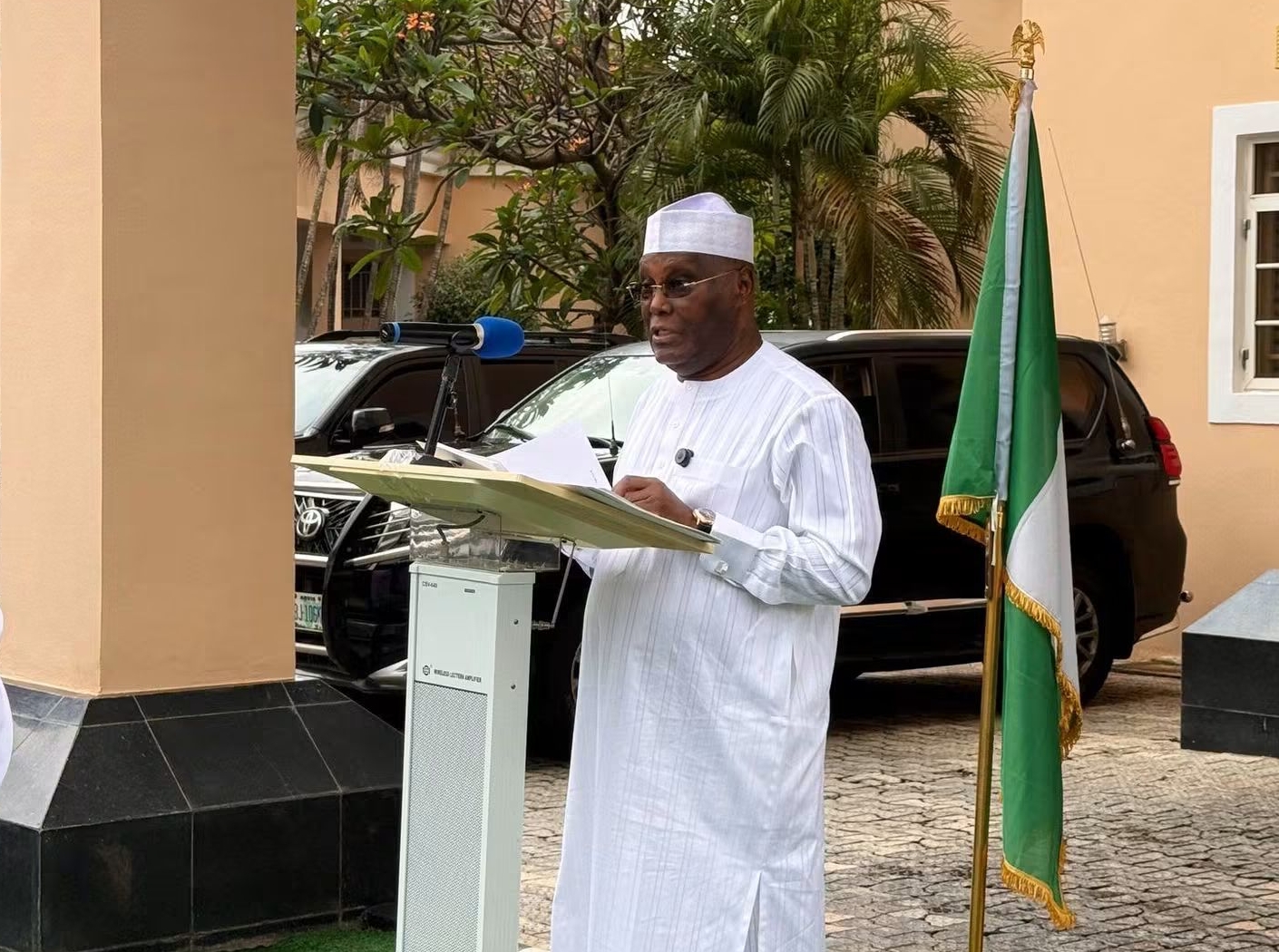
Atiku, in a statement issued by his Senior Special Assistant on Public Communication, Phrank Shaibu, questioned the claim that the EFCC acted independently in the Osun case.

Tinubu had on Thursday ordered the anti-graft agency to seek the withdrawal of the freezing order. The President said the EFCC had acted within its legal powers but considered the timing of the action inappropriate because it came shortly before the August 15 governorship election.

Atiku argued that the presidential intervention had raised doubts about repeated claims that the EFCC operates independently.

He also questioned the President’s reference to a court order, saying the EFCC did not mention such an order in its explanation for freezing the accounts.

“President Tinubu’s statement has raised more questions than it has answered,” Atiku said.

“While the EFCC’s official statement painstakingly explained why it froze the Osun State Government’s account, it made no mention whatsoever of obtaining a court order.

“Yet the President’s intervention is predicated entirely on the existence of such a court order, which he claims to have directed the EFCC to vacate.

“If indeed there was a court order, why did the EFCC omit such a fundamental fact from its official account? If there was none, then the President has introduced into the public discourse a legal process that exists nowhere in the EFCC’s own narrative.”

‘TINUBU CAN’T HAVE IT BOTH WAYS’

Atiku said the President could not maintain that he does not interfere in the EFCC’s activities while also issuing a directive that affects an ongoing action by the commission.

“He cannot claim that he neither knew of nor interferes in the operations of the EFCC and, in the very next breath, announce that he has directed the commission to discontinue its action and return to court,” he said.

“If the EFCC promptly complies with that directive, then Nigerians have before them undeniable proof that the commission is not as operationally independent as the President wants the country to believe.”

Atiku Demands Same Intervention For El-Rufai

The ADC presidential candidate said Tinubu’s intervention in the Osun matter should apply equally to the case involving El-Rufai.

“Having now demonstrated that he can issue direct operational directives to anti-corruption agencies whenever he considers it expedient, President Tinubu owes Nigerians an explanation as to why he cannot exercise the same authority in the case of Mallam Nasir El-Rufai,” he said.

“If he can direct the EFCC to discontinue its action today, then he cannot pretend to be powerless over the actions of the ICPC tomorrow.

“Executive power cannot be invoked selectively for political convenience while institutional independence is cited only when it suits the Presidency.”

Atiku said the controversy had implications for public confidence in Nigeria’s anti-corruption bodies and the rule of law.

He acknowledged that reversing the freezing of the Osun government’s accounts could ease political tension ahead of the governorship election but said the decision did not resolve questions surrounding the original action.

“The unanswered questions remain: who authorised the freezing of the account of an opposition-controlled state just days before a governorship election, and why was such an extraordinary action taken at such a politically sensitive moment?” he said.

Tinubu Should Return to Primary, Secondary School, Sowore Says

By Sabiu Abdulahi

African Action Congress (AAC) presidential candidate, Omoyele Sowore, has urged President Bola Tinubu to enrol in adult education. He said the president should return to primary and secondary school despite his age.

Sowore spoke on Monday after proceedings in his defamation case involving President Tinubu at the Federal High Court in Abuja.

The activist criticised Tinubu over the educational information submitted to the Independent National Electoral Commission (INEC). He argued that the president did not include details of his primary and secondary education in the documents filed for the 2027 presidential election.

Records submitted to INEC for the election reportedly contained Tinubu’s Chicago State University certificate. However, they did not list his primary and secondary school qualifications in the section for educational history.

Speaking after the court session, Sowore said, “President Tinubu didn’t go to primary and secondary school. He only presented a paper from Chicago State University, which was different from the paper he presented in 1999.

“I’m advising him that it’s not too late to take advantage of adult education. Let him go back to primary school online,” Sowore said.

Opposition Leader’s Criticisms Are Based On Outdated Data, Misrepresentations—Presidency


By Abdullahi Mukhtar Algasgaini

The Presidency has fired back at former Vice President Atiku Abubakar, dismissing his recent criticism of President Bola Ahmed Tinubu’s economic policies as “pedestrianism” and arguing that the opposition leader’s concerns are rooted in outdated data from 2024 rather than Nigeria’s current economic reality.

In a detailed statement issued Saturday by presidential spokesperson Bayo Onanuga, the administration provided a point-by-point rebuttal to Atiku’s allegations of “fiscal recklessness,” defending its record on borrowing, subsidy removal, tax reforms, and overall economic management.

The statement took particular issue with Atiku’s reliance on 2024 data, arguing that Nigeria’s economy has evolved considerably since the painful adjustments of that year.

“Judging a reform programme solely by its earliest and most painful phase is like judging chemotherapy by the nausea it induces while ignoring the remission it seeks to achieve,” Onanuga wrote.

According to the Presidency, Nigeria’s dollar-denominated GDP has recovered from approximately $253 billion following the 2024 exchange-rate reset to about $377 billion – a 49 per cent increase. Naira GDP has expanded from about ₦314 trillion in 2024 to around ₦530 trillion, a 69 per cent increase.

On the question of Nigeria’s borrowing, the administration argued that the country’s debt-to-GDP ratio remains modest at barely 40 per cent compared to peer economies, including South Africa (85 per cent), Egypt (80 per cent), and Kenya (75 per cent).

The statement highlighted what it called a “remarkable achievement” in reducing the debt service-to-revenue ratio from nearly 100 per cent in December 2022 to less than 60 per cent today.

“Nigerians suffered over the years as a vast proportion of our resources were deployed to pay fuel-subsidy merchants,” the statement said, noting that the Obasanjo-Atiku administration “never did the needful” on the subsidy issue.

The Presidency defended the removal of fuel subsidies, pointing to improved revenues accruing to states and local governments through the Federation Account.

“President Tinubu has tactically placed more responsibility for socioeconomic development on states and local governments, while providing requisite funding. This is true federalism,” Onanuga stated.

The administration rejected Atiku’s suggestion that the government has chosen to tax Nigerians more, describing the claim as “blatantly false.”

The statement explained that the tax reforms aim to reduce burdens on low-income earners earning N1 million and below annually, and small businesses with turnover of N100 million and below, while strengthening compliance among higher-income individuals and profitable enterprises.

The statement outlined several achievements in health, education, and infrastructure over the past three years:

· Over 100 facilities providing free caesarean operations for indigent mothers
· Three world-class cancer centres operational in Kubwa, Enugu, and Katsina
· Over 3,000 Primary Healthcare Centres revitalised
· More than 11,000 projects through the Universal Basic Education Commission
· Over 1.64 million students benefiting from NELFUND loans totalling N303 billion
· End to university lecturers’ strikes

The Presidency dismissed Atiku’s claim of an N7.98 trillion oil windfall, arguing that such calculations ignore production costs, crude sharing arrangements, and forward contracts.

“Incremental revenue from higher oil prices is reflected in monthly FAAC figures,” the statement noted, adding that average daily production of 1.6 million barrels per day has fallen short of the 1.84 million bpd forecast.

The statement concluded on an optimistic note, projecting that inflation, which fell to 14.4 per cent in November 2025 before rising to 15.91 per cent due to Middle East conflicts, will trend towards 12 per cent by year-end.

“Nigeria’s economy is not yet where it aspires to be. But neither is it where it stood at the height of its structural distortions or in the bygone years of fiscal waste and slackness,” Onanuga wrote. “The worst is over.”

The administration also highlighted new ward-centric programmes worth more than $3 billion aimed at strengthening primary healthcare, basic education, and supporting vulnerable communities, in addition to cash transfers to 15 million vulnerable households.

Atiku Tells Tinubu to Offer Solutions Instead of Blaming Past Governments

By Sabiu Abdullahi

Former Vice-President Atiku Abubakar has urged President Bola Tinubu to stop attributing Nigeria’s current challenges to previous administrations. He said Nigerians now expect practical solutions after more than 3 years of the Tinubu administration.

Atiku made the remarks in a statement issued on Friday by his Senior Special Assistant on Public Communication, Phrank Shaibu. The former vice-president, who is also the African Democratic Congress (ADC) presidential candidate, criticised Tinubu’s recent comments that prosperity is approaching and that the quality of life is improving across the country.

According to Atiku, those claims do not reflect the realities many Nigerians face.

“Mr. President says prosperity is on the horizon. Nigerians are asking: whose horizon? Certainly not that of the market woman whose capital has been wiped out by inflation.

“Not that of the civil servant whose salary now expires before the month begins. Not that of the manufacturer struggling under crushing energy costs. Not that of the unemployed graduate who sees no future.

“Certainly not that of farming communities forced off their ancestral lands by terrorists and bandits, families mourning loved ones slaughtered in senseless attacks, or countless Nigerians who now live in daily fear of kidnappers who have turned human lives into commodities.

“And certainly not that of millions of households that have quietly reduced the number of meals they eat each day simply to survive.”

Atiku argued that although every government inherits challenges, leaders are elected to solve them rather than explain how they originated.

“The constitution did not swear President Tinubu into office to explain history. It swore him into office to change it. Every administration inherits problems. Great leaders are remembered for solving them, not for endlessly rehearsing them,” he stated.

He also said the current administration should no longer shift responsibility to its predecessors.

“The Nigerian people are not interested in who created the problem. They want to know who will solve it. A government that still blames its predecessors after years in office is, by its own conduct, admitting that it has run out of ideas,” he said.

The former vice-president further criticised the administration’s economic record.

“President Tinubu may find comfort in blaming those before him, but history will remember his administration as the one under which Nigerians endured unprecedented hardship, institutionalised fiscal recklessness, and one of the greatest appropriation scandals in the annals of our nation.

“The suffering of Nigerians today is driven not by the past, but by an administration that has elevated opacity over transparency, rewarded a privileged circle of cronies, and condemned millions to deepening economic pain, insecurity, and despair.”

Atiku also rejected Tinubu’s suggestion that Nigeria’s population contributes to the country’s difficulties. He pointed to China as an example of how a large population can become an economic advantage.

“It is even more astonishing that a President who constantly invokes China now blames Nigeria’s population for the country’s difficulties,” he said.

“China did not become an economic superpower by complaining about the size of its population. It became prosperous because visionary leadership transformed that population into its greatest economic asset through sustained investment in manufacturing, infrastructure, education, technology, and export-led industrialisation.

“Great leaders convert challenges into opportunities. They do not convert opportunities into excuses.”

He said an administration under his leadership would focus on investments in manufacturing, infrastructure, education, agriculture, and export-driven industries to unlock the potential of Nigeria’s youthful population.

Atiku also described it as insensitive for the president to suggest that Nigerians should accept present hardship because hunger existed before his birth.

“Nobody ‘elected’ Tinubu to eliminate the hunger of 1940. Nigerians ‘elected’ him to confront the hunger of today. The fact that previous generations endured hardship is not a licence to deepen the suffering of the present generation,” he said.

He maintained that hope must be supported by visible improvements in the welfare of citizens.

“Hope cannot be preached to a hungry stomach. It cannot be legislated into existence.

“It cannot substitute for affordable food, stable electricity, productive jobs, quality education, accessible healthcare, or security for families to sleep with both eyes closed. Government inspires hope through performance, not rhetoric.”

Atiku concluded by urging Tinubu to reconnect with the daily realities confronting ordinary Nigerians.

“If the President truly believes that the quality of life is improving, then one must respectfully remind him that the Nigeria he is talking about exists only in his head,” he said.

“It is certainly not the Nigeria where families are choosing between food and medicine, where communities are fleeing armed violence, where kidnappers dictate the rhythm of daily life, and where hope is becoming more expensive than bread.”

Obasanjo Says Choosing Atiku as Running Mate Was His Biggest Political Regret

By Sabiu Abdullahi

Former President Olusegun Obasanjo has described his decision to choose former Vice-President Atiku Abubakar as his running mate as the greatest regret of his political career.

Obasanjo made the remark on Friday during a fireside chat with activist Charles Oputa, popularly known as Charly Boy, at the launch of Charly Boy’s foundation and the presentation of his memoir, 999: A Memoir in Tribute to Late Justice Chukwudifu Oputa, in Lagos.

Obasanjo and Atiku served together as Nigeria’s president and vice-president between 1999 and 2007. Their relationship, however, deteriorated during Obasanjo’s second term in office.

Reflecting on that period, the former president said he was grateful that Atiku’s actions did not affect his administration or the country.

“The man I picked as my running mate, my number two, if I had known as I came to know him later, I would not have picked him,” he said.

“I mean my vice-president. What I know about him later makes me… thank God because God did not allow his actions and reactions to overwhelm me or to divert my focus from Nigeria or to harm Nigeria.”

Despite his criticism, Obasanjo said he no longer harbours resentment toward his former deputy.

“And then, there is no bitterness because he did things that he believed he should do and God did things He had to do, which made me achieve what I was able to achieve,” he said.

The relationship between the two leaders has remained strained since they left office. Over the years, they have repeatedly exchanged accusations over corruption, abuse of office and political betrayal.

In his 2014 memoir, My Watch, Obasanjo accused Atiku of corruption, disloyalty and placing personal ambition above national interest. Atiku rejected the allegations. He accused the former president of attempting to rewrite history and portray himself as the victim of political persecution during the final years of their administration.

The dispute resurfaced recently after Obasanjo alleged that Atiku gave the late former Speaker of the House of Representatives, Ghali Umar Na’Abba, N5 million to initiate impeachment proceedings against him during his first term in office. Obasanjo made the allegation while responding to comments by former Ogun State Governor Olusegun Osoba on events that preceded the 2003 general election.

In response, Atiku accused Obasanjo of fabricating the allegation to benefit his kinsman ahead of the 2027 general election.

Although Atiku did not identify the individual, President Bola Tinubu shares the same Yoruba ethnic background as Obasanjo. However, Obasanjo has publicly declared his support for Peter Obi, the presidential candidate of the Nigeria Democratic Congress (NDC).

Atiku Slams Presidency, Says China Comparison is ‘Monumental Own Goal’


By Uzair Adam

The presidential candidate of the African Democratic Congress (ADC), Atiku Abubakar, has criticised the Presidency for invoking China in its response to him, describing the move as a “monumental own goal” that has only intensified scrutiny of President Bola Tinubu.

In a statement issued on Saturday by his Senior Special Assistant on Public Communication, Phrank Shaibu, Atiku said the Presidency’s attempt to compare his record with China’s legal standards had backfired.

According to him, it was contradictory for the Presidency to celebrate what he described as a routine diplomatic response from the United States government while introducing China into the debate without considering the implications.

Shaibu argued that the Presidency’s spokesman had unintentionally subjected President Tinubu to the same standards he sought to apply to Atiku.

“It takes a peculiar kind of unintelligence for a spokesman to set out to drag an opponent before a hypothetical Chinese court, only to end up dragging his own principal into the dock,” the statement read.

The statement noted that China imposes severe penalties for serious drug trafficking offences, including capital punishment, adding that Atiku had never been indicted or convicted of corruption, drug-related offences or any criminal offence in Nigeria or abroad.

It maintained that if China was to become the benchmark for public accountability, Nigerians were equally entitled to question the implications of the 1993 civil forfeiture of $460,000 to the United States government in a case involving allegations of narcotics trafficking and money laundering linked to Tinubu.

The former vice president further argued that China’s justice system is also known for its strict handling of corruption and abuse of public office.

According to the statement, practices such as approving a national budget allegedly tainted by padding and questionable appropriations, ignoring allegations involving senior government officials, or presiding over worsening economic hardship would not be tolerated under China’s governance standards.

Atiku said the Presidency’s argument had collapsed under the weight of its own contradictions, insisting that invoking China had only encouraged Nigerians to apply the same standards to President Tinubu.

He also faulted the Presidency for portraying the United States government’s response to diplomatic correspondence as evidence of innocence, stressing that such communication does not amount to a judicial acquittal or erase historical records.

The statement urged the Tinubu administration to focus on addressing Nigeria’s economic challenges, insecurity, rising hunger and what it described as institutional decline instead of engaging in political distractions.

Atiku also called on the Presidency to improve the quality of its public communication, arguing that while propaganda may dominate public discourse temporarily, facts would ultimately prevail.

Atiku Slams FG Over ₦50,000 WAEC, NECO Fees, Warns of Education Crisis

By Abdullahi Mukhtar Algasgaini

Former Vice President and presidential candidate of the African Democratic Congress, Atiku Abubakar, has condemned the Federal Government’s reported approval of a uniform ₦50,000 examination fee for WAEC and NECO candidates from 2027, describing the policy as a barrier that would deny millions of Nigerian children access to education.

In a statement issued Sunday by his Senior Special Assistant on Public Communication, Phrank Shaibu, Atiku also criticised the recent fee increases in Federal Unity Colleges, arguing that both measures are economically insensitive and inconsistent with the government’s constitutional obligation to make education accessible to every Nigerian child.

The former Vice President said the policies impose additional financial burdens on families already struggling with record inflation, rising food prices, high transportation costs, electricity tariff increases and widespread unemployment.

“It is unconscionable that at a time when Nigerian families are battling record inflation, soaring food prices, rising transportation costs, crippling electricity tariffs, stagnant incomes and widespread unemployment, the Tinubu administration has chosen to make education even more expensive,” Atiku said.

He argued that education remains the most effective instrument for breaking the cycle of poverty, warning that increasing the cost of schooling would further widen inequality.

“A government that genuinely believes in the future of its people does not erect financial barriers between children and education. It removes them. Education is not a privilege reserved for the wealthy; it is the birthright of every Nigerian child and the foundation upon which prosperous nations are built,” he stated.

The ADC chieftain noted that the proposed examination fee and higher Unity School charges come at a time when Nigeria is grappling with one of the world’s largest out-of-school children populations, estimated at between 10.5 million and 15 million.

“Nigeria already bears the painful distinction of having one of the largest populations of out-of-school children in the world. Any government confronted with such a national emergency should be investing aggressively to bring these children back into school. Instead, this administration is choosing policies that will inevitably swell those numbers,” he said.

Atiku warned that higher examination fees would disproportionately affect children from poor and middle-income households, many of whose parents are already forced to choose between meeting basic needs and paying school-related expenses.

“The consequences of these policies extend far beyond school gates. Every child priced out of education today becomes tomorrow’s victim of unemployment, poverty, child labour, criminal exploitation, drug abuse or insecurity. Nations do not become prosperous by making education more expensive; they prosper by making education more accessible,” he added.

The former Vice President also questioned the government’s emphasis on the Nigerian Education Loan Fund (NELFUND), arguing that student loans cannot compensate for policies that make it difficult for children to complete secondary education or sit qualifying examinations.

“A university loan offers little comfort to a child who has already been priced out of secondary education or cannot afford the qualifying examination required to secure admission. A government cannot credibly claim to be expanding access to higher education while simultaneously erecting financial barriers that prevent millions of young Nigerians from ever reaching the university gates,” he noted.

Atiku called on President Bola Tinubu to reverse the increase in Unity School fees and shelve the proposed ₦50,000 WAEC and NECO examination fee, while convening a stakeholders’ dialogue on sustainable financing of public education.

He also urged the Federal Government to invest more in public schools, recruit additional teachers, expand the capacity of tertiary institutions and ensure that no Nigerian child is denied education because of financial hardship.

“No nation has ever taxed its way into educational excellence. Countries that aspire to economic greatness invest more—not less—in education during difficult times because they understand that human capital is the engine of sustainable development,” he stressed.

The statement comes amid growing public debate over the affordability of education following recent increases in school-related charges and concerns about the rising cost of living.

While the Federal Government has introduced NELFUND to improve access to tertiary education, critics argue that affordability challenges begin much earlier in the education value chain, particularly at the secondary school level where students must complete qualifying examinations before seeking university admission.

The plan to introduce a uniform ₦50,000 examination fee for WAEC and NECO candidates from 2027 has sparked widespread public reactions, with stakeholders calling for clarity from the relevant authorities on the policy.