Atiku

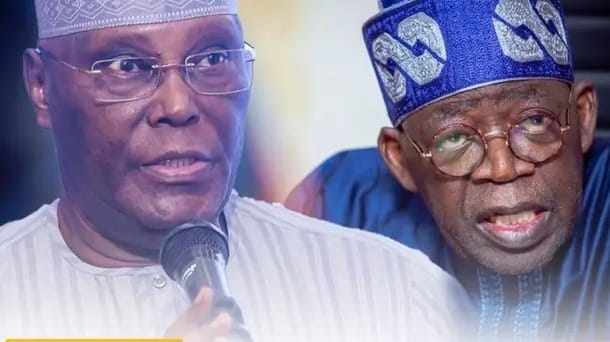
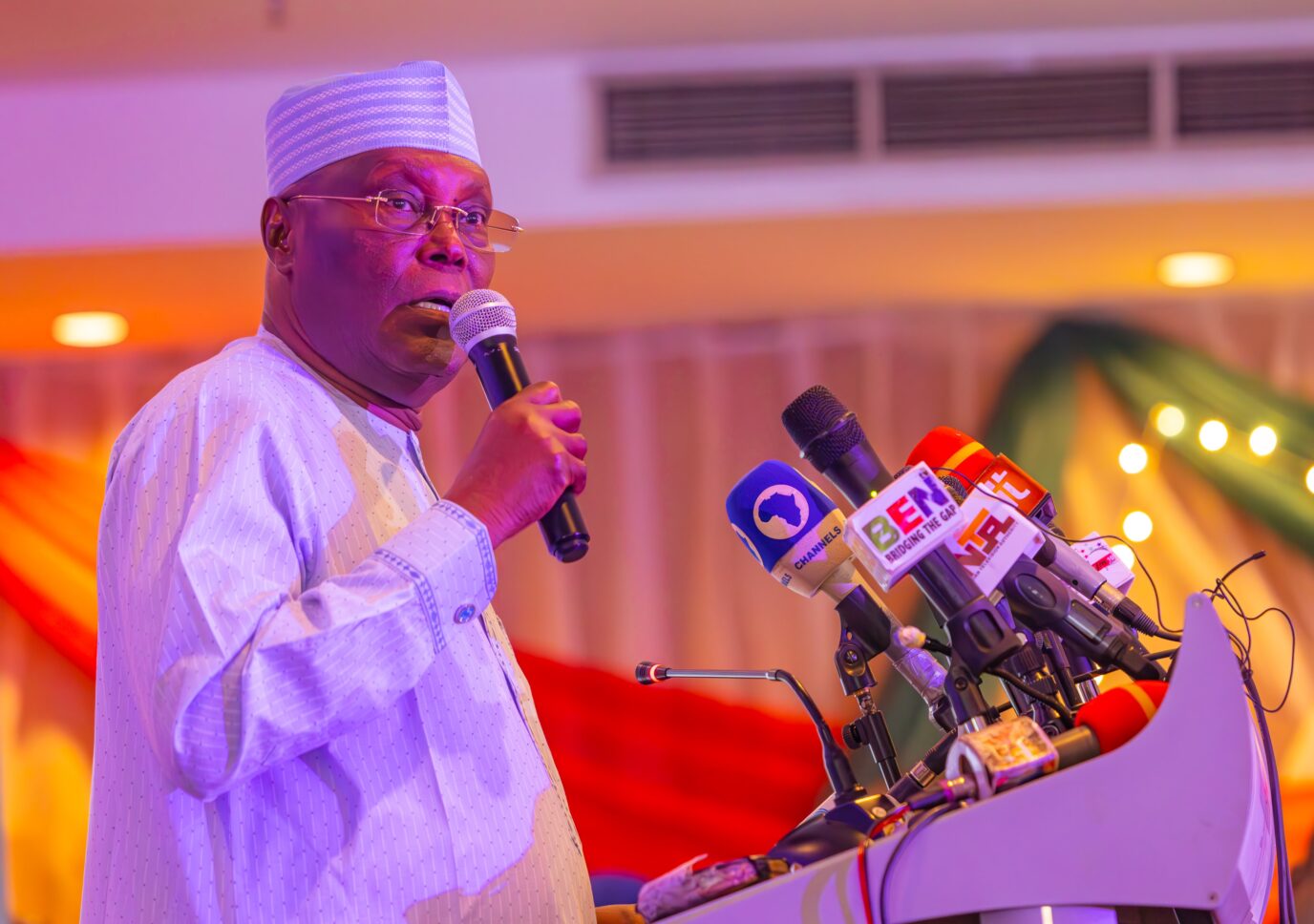
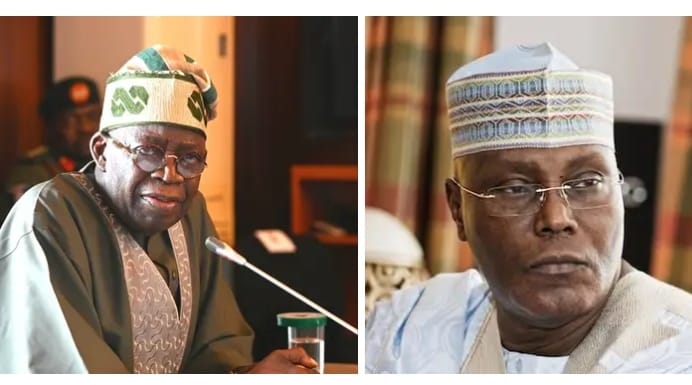
Atiku’s $1.2M Washington Lobbying Effort Exposed as Political Gamble, Presidency Claims

By Abdullahi Mukhtar Algasgaini

The Presidency has strongly refuted claims circulating in some media circles that suggest President Bola Tinubu is connected to ongoing U.S. legal proceedings, describing the reports as a desperate political maneuver funded by opposition figures seeking foreign validation ahead of the 2027 elections.

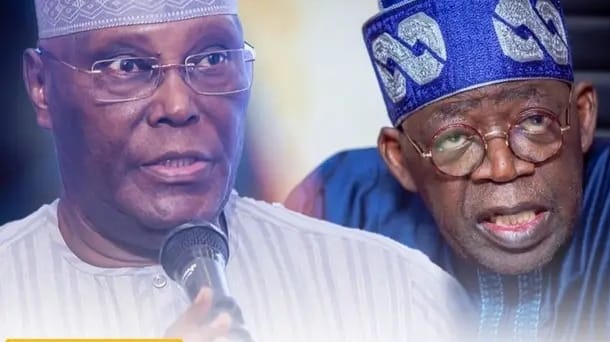
In a detailed statement issued Sunday, Dr. Sunday Dare, Special Adviser to the President on Media and Public Communications, characterized the coordinated media campaign as a “clinical demonstration of desperation” orchestrated by former Vice President Atiku Abubakar’s camp.

According to publicly verifiable filings with the U.S. Department of Justice under the Foreign Agents Registration Act (FARA), Atiku Abubakar contracted the Washington-based firm Von Batten-Montague-York, L.C. on a $1.2 million, 12-month retainer. The agreement’s explicit scope, Dare noted, is to execute a “targeted, partisan campaign” designed to “counterbalance” Nigerian government narratives and weaponize historical judicial archives for domestic political leverage.

The statement identified Dr. Karl-Marx Edward Okeke-Von Batten—a U.S.-based consultant of Nigerian origin who added the “Von Batten” surname following his marriage—as the commercial lobbyist behind what the Presidency termed “manufactured controversies.”

“Okeke-Von Batten must have conned a desperate Alhaji Abubakar Atiku into believing that he has access to everyone in the Trump administration, including President Trump himself, by falsely representing that he had reached out to President Trump to release the so-called FBI files,” Dare stated.

The Presidency emphasized that the case in question has been active since 2023, with the FBI’s primary concern being “the protection of the techniques by which it gathers information and the safety of its sources.”

“The report presents no intelligence document, no named Western official, and no evidence of any exchange involving Nigeria’s secrets or resources. It is nothing more than political speculation packaged as classified information,” Dare asserted.

Addressing what it termed “the recycled fixation on decades-old, settled U.S. legal filings,” the statement referenced recent public discourse where Wole Afolabi, SAN, appeared on Channels Television to clarify that actions taken by the legal team to withhold certain sections of FOIA requests align strictly with U.S. legal provisions designed to protect confidential investigative processes.

“If the president had been criminally liable under U.S. law during past investigations, American authorities would have indicted and prosecuted him at the time,” the statement quoted Afolabi as clarifying.

The Presidency also dismissed suggestions linking President Tinubu’s current European trip to U.S. legal proceedings, describing it as a “previously scheduled annual leave” with “absolutely no connection” to ongoing FOIA matters.

Dare concluded by challenging the opposition to present tangible evidence for their allegations, arguing that “true democratic validation is earned through the ballot box and tangible service delivery to the citizens at home, not through manufactured headlines bought and paid for in foreign currency.”

The statement emphasized that Nigerians are “no longer naive spectators easily swayed by rented international mouthpieces or imported falsehoods.”

Despite Acute Hardship in Nigeria, FG, APC Reject Atiku’s Call For Petrol Subsidy Return

By Sabiu Abdullahi

The Federal Government and the All Progressives Congress (APC) have rejected former Vice President Atiku Abubakar’s proposal to restore petrol subsidy, warning that such a move could reverse the economic reforms introduced by President Bola Tinubu’s administration.

The renewed disagreement followed Atiku’s declaration that he would introduce a targeted and transparent petrol subsidy if elected president in 2027.

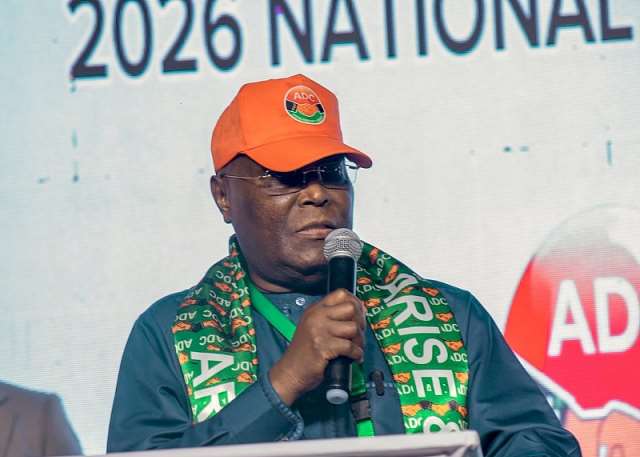
Atiku, who is the presidential candidate of the African Democratic Congress, argued that Nigerians had yet to benefit sufficiently from the funds said to have been saved after the removal of petrol subsidy.

He also demanded greater transparency over the use of the savings, saying the resources should have supported poverty reduction, education, security and opportunities for young Nigerians.

His Economic Recovery Plan 2027 proposes a production-based subsidy system that would differ from the pre-2023 arrangement. Under the proposal, qualifying Nigerian refineries would receive crude oil at preferential prices under strict conditions, with the aim of lowering petrol prices and encouraging domestic refining.

The Federal Government, however, said returning to subsidy would recreate the fiscal challenges that prompted its removal.

Tinubu announced the end of the petrol subsidy regime during his inaugural address on May 29, 2023. He said the policy had become unsustainable and that the resources previously spent on it would be redirected to infrastructure, education, healthcare and job creation.

Responding to Atiku’s proposal on Sunday, APC National Chairman, Prof Nentawe Yilwatda, described it as a “deeply troubling policy U-turn.”

Yilwatda questioned how the opposition would finance the proposed subsidy and warned against introducing a major economic policy as an election promise without explaining its long-term financial implications.

“Economic policy cannot be reduced to election-season promises. Nigerians deserve to know precisely where the money will come from, what sectors will bear the cost and whether such a policy can be sustained without reopening the fiscal pressures that necessitated reform in the first place,” Yilwatda said.

The APC chairman spoke during a visit to the headquarters of the City Boy Movement in Abuja.

He maintained that subsidy removal, despite the hardship associated with it, was necessary. He said the government should strengthen social interventions and productive sectors instead of returning to the former subsidy system.

Yilwatda also urged Nigerians to assess the economic records and policy proposals of the various presidential contenders before the 2027 election.

He said the APC would continue to defend the Tinubu administration’s economic reforms while remaining open to credible alternatives.

FG Says Subsidy Removal Released N15.8tn

The Minister of Information and National Orientation, Mohammed Idris, also defended the subsidy removal, saying the reform had created additional fiscal resources for the three tiers of government.

Idris said figures contained in the Federal Government’s Reform Scorecard showed that subsidy savings generated N15.8tn for the federation between June 2023 and December 2025.

According to him, the Federal Government received about N5.43tn, while states and local governments received approximately N6.52tn and N3.88tn respectively.

The minister clarified that the N15.8tn was not money kept in a separate government account. He said the figure represented resources released into the wider fiscal system and made available to the three levels of government.

He added that the additional funds had strengthened the capacity of state and local governments to pay salaries and pensions as well as finance infrastructure and essential services.

At the federal level, Idris said the additional fiscal space had supported infrastructure, human capital development and social programmes.

He put additional expenditure on strategic infrastructure at about N6.47tn. The projects, he said, covered areas such as transport, housing, agriculture and security.

The minister also disclosed that more than 10 million households had benefited from social transfers. He said more than N400bn had been committed to programmes such as the Nigerian Education Loan Fund, the MOFI Real Estate Investment Fund and the Nigerian Consumer Credit Corporation.

Idris warned that reversing the subsidy reform could also undermine developments in the petroleum sector at a time when domestic refining capacity was expanding.


Atiku Accuses FG Of Double Standards

Atiku, in a statement issued by his Senior Special Assistant on Public Communication, Phrank Shaibu, criticised the Federal Government’s defence of subsidy removal.

He described the administration’s celebration of the policy as “one of the biggest economic frauds being sold to Nigerians.”

The former vice president argued that the government could not oppose intervention aimed at reducing hardship for ordinary citizens while granting tax credits and other fiscal incentives to major investors in the petroleum sector.

Atiku summarised his position by declaring, “You cannot subsidise capital and criminalise relief for citizens. You cannot offer cushions upstairs and call suffering downstairs.”

He also questioned the incentives available under the government’s Deep Offshore Oil and Gas Projects framework.

“Under Tinubu’s own Deep Offshore Oil and Gas Projects Incentives framework, qualifying petroleum developments can receive production tax credits beginning at $3 and $4.50 per barrel, with supplementary credits capable, in qualifying circumstances, of taking the combined benefit to as much as $11.50 per barrel,” he said.

Atiku asked why government intervention could be considered appropriate when it reduced investment risks for major petroleum operators but was rejected when aimed at reducing the burden on households.

“So, what exactly is Tinubu’s objection: government intervention itself, or government intervention for Nigerians?” he asked.

He also raised questions about petroleum-related expenditures recorded after subsidy removal.

Atiku cited financial statements of the Nigerian National Petroleum Company Limited, claiming that the company recorded about N4.84tn in energy-security expenses and related shortfalls in 2023 and approximately N7.13tn in 2024.

He said NNPCL had linked part of the expenditure to the difference between the exchange rate used to determine regulated PMS ex-coastal prices and the prevailing exchange rate at the time import obligations were settled.

“Where exactly did the subsidy go? If Nigerians were paying market prices because ‘subsidy is gone,’ why was the federation still carrying trillions of naira in under-recovery and energy-security costs?” he said.

Atiku argued that changing the terminology for such expenditures did not alter their economic effect.

“Nigerians do not eat semantics. Whether government calls it subsidy, under-recovery, shortfall or energy security, public resources were being used to bridge a gap between economic cost and the price at which petrol was sold,” he added.

The ADC candidate said the removal of subsidy had increased transportation, food, production and household costs.

He accused the administration of applying “brutally savage capitalism” to poor Nigerians while pursuing “compassionate capitalism for big oil money operators.”

He continued, “The government can protect a multibillion-dollar oil investment from risk, yet it says protecting the Nigerian worker from crushing hardship is bad economics,” Atiku said.

He added that the government could not “roll out the red carpet for rich oil operators while leaving its citizens to walk barefoot through hardship.”

Lawmaker Rejects Subsidy Restoration

The member representing Agege Federal Constituency of Lagos State in the House of Representatives, Dr Wale Ahmed, also rejected Atiku’s proposal.

Ahmed described the proposed policy as economically unsustainable and politically expedient. He warned that reversing the subsidy removal could disrupt the country’s economic recovery.

“Nigeria cannot afford to return to the subsidy era. What we need is to consolidate reforms and ensure their benefits reach ordinary Nigerians,” Ahmed said.

The lawmaker said the subsidy removal had increased government revenue by freeing funds previously used to keep petrol prices artificially low.

“The question should be how these additional resources are deployed to improve infrastructure, healthcare, education, transportation and security, not how we recreate an unsustainable subsidy regime,” he said.

Ahmed also asked Atiku to explain how the proposed subsidy arrangement would be financed without putting additional pressure on government finances.

“Where will the money come from? Will government borrow again to finance subsidy? Will allocations to states and local governments be reduced? Nigerians deserve clear answers,” he said.

He said the savings were not kept in a government vault but increased the revenue available to the federation.

“The savings were not money kept in a vault by the Federal Government. They increased revenues available to the federation and were shared among the three tiers of government,” he said.

Ahmed acknowledged the hardship caused by the reforms but argued that returning to the previous system would not resolve the underlying problems.

“Nobody is denying the hardship. It is real. But returning to the policies that contributed to our fiscal problems cannot be the solution,” he said.

He urged the Federal Government to accelerate measures aimed at reducing production and transportation costs through improved electricity supply and investment in agriculture.

ADC Leaders Back Atiku

Meanwhile, ADC chieftains have supported Atiku’s proposal, with former Edo State governorship aspirant Kenneth Imasuagbon describing criticism from the Presidency and APC as “misplaced and politically motivated.”

Imasuagbon said subsidy removal had worsened the economic situation of Nigerians through increased inflation and higher costs of living.

“The removal of fuel subsidy has not translated into a better life for Nigerians. Instead, it has pauperised millions of citizens, destroyed the purchasing power of workers, increased the cost of transportation, food, healthcare and education, while businesses continue to shut down under the weight of unbearable operating costs.”

He argued that Atiku’s willingness to reconsider the policy showed his readiness to review measures that had failed to deliver the expected benefits.

“Atiku should not be attacked simply because he is prepared to reconsider a position he held in 2023. That is the mark of a compassionate and people-oriented leader,” he said.

Imasuagbon also questioned the Federal Government’s account of the savings from subsidy removal.

“Where are the trillions reportedly saved? Nigerians deserve transparent answers.

“We still have collapsing infrastructure, worsening insecurity, failing hospitals, underfunded schools, mass unemployment and deepening poverty.

“If these enormous resources were truly invested in the people’s welfare, the ordinary Nigerian should have felt the impact by now,” he stated.

He said the debate should focus on whether the policy had improved the living conditions of ordinary Nigerians.

The former governorship aspirant expressed confidence in Atiku’s ability to tackle what he described as Nigeria’s “economic quagmire.”

Also backing Atiku was the ADC governorship candidate in Sokoto State, Manir Dan’Iya.

Dan’Iya said a targeted and accountable subsidy system could reduce the pressure caused by rising transportation, food and other essential costs.

In a statement issued on Sunday by his Media Aide, Aminu Abdullahi, he said the economic situation required measures that would cushion the impact of rising living costs.

“At a time when Nigerian families are struggling to afford transportation, food and necessities, any credible policy capable of reducing the cost of living deserves serious consideration,” Dan’Iya said.

He stressed, however, that any future subsidy arrangement should be targeted, transparent and accountable to prevent corruption and waste.

Dan’Iya said Atiku’s proposal should also support domestic refining and reduce the country’s dependence on imported petroleum products.

“The 2027 election is an opportunity for Nigerians to choose a government that understands their hardship and is prepared to act.

“We must support policies that reduce the burden on our people, restore hope, strengthen institutions and put Nigeria back on the path of sustainable development,” he said.

The subsidy debate is expected to remain a major issue ahead of the 2027 presidential election, with the Tinubu administration defending its removal as necessary for fiscal stability while opposition politicians continue to argue that the policy has imposed severe hardship on households and businesses.
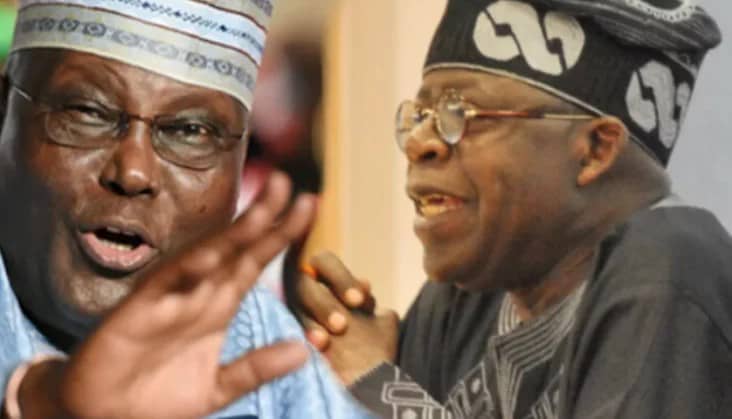
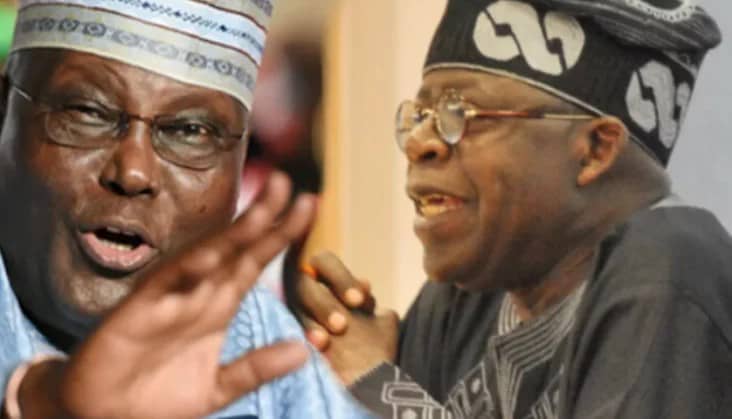
Yilwatda Faults Atiku’s Plan To Restore Petrol Subsidy

By Sabiu Abdullahi

The National Chairman of the All Progressives Congress (APC), Nentawe Yilwatda, has condemned former Vice-President Atiku Abubakar’s proposal to restore the petrol subsidy if elected president in 2027.

Yilwatda described the proposal as an act of “desperation for power”, arguing that a return to the subsidy regime could expose Nigeria to renewed economic and fiscal challenges.

He made his position known in a statement issued on Sunday by his media aide, Abimbola Tooki.

Atiku, who is the presidential candidate of the African Democratic Congress (ADC), had said on Wednesday that he would restore the petrol subsidy if elected president.

The former vice-president made the declaration in Hausa during an interview with an ADC media group. He also questioned the Federal Government’s management of funds saved after the removal of the subsidy.

“I did not oppose the removal of the oil subsidy, but where is the money? Where did it go? It was intended to reduce poverty and help children attend school. Where is the money now? It seems they are just stealing it,” Atiku said.

“If elected, I will bring back the oil subsidy, and whoever stole the money must refund it.”

The proposal attracted criticism, with opponents arguing that it was inconsistent with Atiku’s position before the 2023 presidential election, when he was reported to have supported the removal of the petrol subsidy.

President Bola Tinubu also rejected the proposal, describing it as evidence of “serious ignorance of governance and economy”.

Reacting to Atiku’s position, Yilwatda said economic policies should not be shaped by electoral considerations.

Economic Policy Cannot Be Reduced To Election-Season Promises

Yilwatda spoke on Saturday during a visit to the headquarters of the City Boy Movement in Abuja.

He said Nigerians require detailed and sustainable economic plans rather than promises made during election campaigns.

The APC chairman said any proposal to reinstate the subsidy should face thorough scrutiny because the previous arrangement imposed a heavy financial burden on the government and caused distortions within the economy.

He added that opposition politicians had been challenged over the past three years to present clear alternatives to the policies of the APC administration, but, according to him, no convincing alternative had emerged.

Yilwatda questioned the timing of Atiku’s proposal, given that the 2027 election is approaching.

“Economic policy cannot be reduced to election-season promises,” Yilwatda said.

“Nigerians deserve to know precisely where the money will come from, what sectors will bear the cost and whether such a policy can be sustained without reopening the fiscal pressures that necessitated reform in the first place.”

He defended the removal of the petrol subsidy as a difficult but necessary decision. According to him, the policy should be supported with measures that reduce its impact on citizens, expand social interventions and strengthen productive sectors.

Yilwatda said effective leadership requires more than promises of immediate relief for electoral benefit. He argued that leaders must be prepared to make difficult decisions, explain them to Nigerians and pursue policies that can support lasting economic growth.

He urged Nigerians to assess the economic programmes of the various political parties before the 2027 elections.

The APC chairman advised voters to distinguish between policies that address the country’s structural challenges and proposals that may offer short-term political benefits while creating greater financial problems in the future.

Nigerians Must Scrutinise Policy Directions Of Those Seeking Power

Yilwatda also questioned the consistency of opposition politicians, particularly those who have moved between different political platforms.

He argued that politicians who frequently change parties may find it difficult to convince Nigerians that they can provide the stability and policy direction required to govern the country.

The APC chairman said President Tinubu had maintained a progressive political identity throughout his career, except during periods of political mergers. He also described Vice-President Kashim Shettima as having maintained a consistent political path.

According to Yilwatda, the Tinubu administration has taken difficult economic measures as part of efforts to attract investment, boost local production and reduce reliance on government interventions that he described as unsustainable.

He warned that reversing the reforms without presenting a credible alternative could weaken investor confidence and increase pressure on government finances.

Yilwatda urged Nigerians to examine the records and policy positions of presidential aspirants rather than accept promises designed mainly to win votes.

He also called for scrutiny of past disputes involving Atiku and former President Olusegun Obasanjo, including allegations linked to the privatisation programme conducted under the Obasanjo administration.

The APC chairman said issues of accountability and economic management should remain central to discussions ahead of the 2027 election.

He maintained that the election should focus on ideas, competence and credible policy alternatives rather than political promises that ignore the country’s economic realities.

Atiku Demands Transparency Over $5bn Abu Dhabi Loan

By Sabiu Abdullahi

Former Vice-President Atiku Abubakar has called on President Bola Tinubu’s administration to disclose details of the utilisation of the $5 billion financing facility secured from First Abu Dhabi Bank (FAB).

Atiku said Nigerians, including future generations, would ultimately bear the responsibility of repaying the loan and therefore deserve to know how the funds are being deployed.

The former vice-president made the demand in a statement issued on Sunday through his media office, days after Finance Minister Taiwo Oyedele said the Federal Government would not release details of how funds obtained from the facility would be spent.

Oyedele had made the statement during a media briefing in Abuja on Wednesday while responding to questions about the government’s borrowing plans and the FAB financing arrangement.

The minister said the facility had passed the necessary approval procedures, including consideration by the National Assembly. He also argued that there was no reason to treat the financing differently from other sources of government funding.

The $5 billion facility forms part of a broader $6 billion external borrowing package approved by the National Assembly in March. The Federal Government has so far drawn about $1.5 billion from the FAB facility as its first tranche.

Atiku, however, criticised the government’s position, accusing the administration of poor financial management and a lack of transparency in its recent borrowing arrangements.

“Since assuming office on May 29, 2023, President Bola Tinubu’s administration has contracted significant new debt,” the statement reads.

“According to the Debt Management Office, the Tinubu administration has added N72 Trillion of fresh debt stock, bringing the total indebtedness to N159.35 trillion as at early 2026.”

Atiku said the increased borrowing had not translated into better living conditions or improved security for Nigerians.

He claimed that poverty had increased from 56 percent in 2023 to between 61 percent and 63 percent under the current administration, with more than 140 million Nigerians facing multidimensional poverty.

He also faulted Oyedele for rejecting demands for greater disclosure about the Abu Dhabi facility.

“The government is obliged to explain every loan taken on behalf of Nigerians,” Atiku said.

“Every Kobo borrowed matters because citizens — both living and unborn — will bear the burden of repayment. Yet these loans have failed to improve their material wellbeing.”

The former vice-president further raised concerns about the collateral requirements attached to the facility, saying the Federal Government was expected to pledge securities worth about 133 percent of the loan value.

He argued that such an arrangement made transparency over the loan more important.

Atiku also cited concerns previously raised by the International Monetary Fund and Fitch Ratings about the structure of the financing, particularly issues related to transparency and the sustainability of Nigeria’s sovereign debt.

He urged Nigerians to demand accountability from the government, warning that borrowing without clear evidence of economic benefits could weaken public confidence and create additional challenges for the country’s financial future.

Atiku to FBI: Release Tinubu’s Records, Nigerians Dying Under His Policies


By Abdullahi Mukhtar Algasgaini

Former Vice President Atiku Abubakar has urged the United States Federal Bureau of Investigation to release any disclosable records concerning President Bola Tinubu, arguing that the agency’s invocation of “danger to lives” as justification for withholding information rings hollow amid widespread suffering in Nigeria.

Atiku, who ran for president under the African Democratic Congress (ADC), said in a statement issued by his Senior Special Assistant on Public Communication, Phrank Shaibu, that millions of Nigerians are already facing severe economic hardship and insecurity.

“The FBI says disclosure could endanger lives. Which lives? Nigerians are already dying,” Atiku stated.

The former vice president pointed to the three and a half years since Tinubu assumed office, citing economic policies that have intensified hardship across the country.

“In the past three and a half years since Tinubu became Nigeria’s President, he has pursued economic policies that have made his government a threat to the daily survival of ordinary Nigerians,” he said.

Atiku highlighted the impact of the fuel subsidy removal, describing it as “senseless” and carried out without a credible plan to protect ordinary citizens.

“Families that once managed three meals now struggle for one. Parents cannot afford medicines for sick children. Breadwinners are buckling under debt and unbearable economic pressure. This is the human cost of Tinubu’s senseless removal of fuel subsidy,” he added.

The former vice president questioned the administration’s celebration of the policy, asking: “When Tinubu boasts that subsidy is gone, Nigerians should ask him what exactly he is celebrating: the empty cooking pots, abandoned medical prescriptions, unaffordable transport fares or businesses struggling to survive?”

While clarifying that he did not seek disclosure of sensitive information that could compromise legitimate American law-enforcement operations, Atiku maintained that the FBI should not use safety concerns as a “bulletproof vest for Tinubu.”

“Protect your agents. Protect your sources. Protect legitimate investigative methods. Redact whatever American law genuinely requires you to redact,” he said. “But do not stretch those protections until they become a bulletproof vest for Tinubu.”

Atiku framed his demand as a humanitarian and democratic appeal rather than an attempt to interfere in Nigeria’s political affairs.

“Nigerians have a democratic right to know the history and character of the man who occupies their country’s highest office. Where information relevant to that legitimate public interest rests with American law enforcement and can lawfully be disclosed, the principles of openness and democratic accountability demand that it should not be unnecessarily hidden,” he stated.

The former vice president concluded: “Nigerians are not asking America to conduct our democracy for us. We are saying that American secrecy laws must not inadvertently become a sanctuary from accountability in Nigeria.”

Atiku reiterated his commitment to transparency, insisting that “if information can lawfully be released without endangering investigators, confidential sources or legitimate law-enforcement operations, release it.”

The FBI has not yet responded to Atiku’s latest comments.

Atiku Sues Tinubu, Seeks Disqualification from 2027 Race Over NYSC Certificate


By Abdullahi Mukhtar Algasgaini

Former Vice President Atiku Abubakar and his party, the African Democratic Congress (ADC), have filed a suit before the Federal High Court in Abuja challenging President Bola Ahmed Tinubu’s eligibility to contest the 2027 presidential election.

In the legal action, Atiku and the ADC are questioning the authenticity of the NYSC certificate submitted by President Tinubu to the Independent National Electoral Commission (INEC). They allege that the document bears the name “Tinubu Bola Adekunle” rather than the President’s widely recognized name, “Bola Ahmed Tinubu,” and are urging the court to scrutinize its validity.

The plaintiffs are specifically praying the court to mandate INEC to produce President Tinubu’s Form CF001, the affidavit of personal particulars submitted for the presidential election. Furthermore, they are seeking an order to disqualify both Tinubu and the ruling All Progressives Congress (APC) from partaking in the 2027 general elections if the court upholds their claims regarding the alleged discrepancy.

Atiku Warns Against Militarising Osun Election, Says Poll Is Test For 2027

By Sabiu Abdullahi

Former Vice-President and African Democratic Congress (ADC) presidential candidate Atiku Abubakar has cautioned against the use of excessive security force or government institutions to gain political advantage in the Osun State governorship election.

Atiku spoke at the ADC National Youth Leadership Summit in Abuja, where he described the August 15 election as an important test of Nigeria’s commitment to credible elections ahead of the 2027 general election.

He questioned the scale of security deployment around the poll, saying the posture appeared closer to a military operation than a democratic exercise.

“Elections are civil engagements, not military operations. Ballot papers are not bullets. Voters are not enemy combatants. Opposition members are not insurgents,” Atiku said.

‘POLICE, MILITARY BELONG TO NIGERIA’

The former vice-president also questioned why similar security resources were not directed towards terrorists, kidnappers and bandits who attack communities and kill Nigerians.

He warned security personnel against intimidating opposition supporters or allowing government institutions to influence the outcome of the election.

“The police belong to Nigeria. The military belongs to Nigeria. INEC belongs to the Nigerian people. None of them belongs to the APC,” he said.

Atiku called on the Independent National Electoral Commission (INEC) to ensure that election materials reach polling locations on time and that eligible voters can cast their ballots without obstruction.

He also urged the commission to prevent what he described as “mysterious glitches, unexplained delays or manipulation” during accreditation, vote counting and the transmission of results.

“The world is watching Osun. Nigerians are watching. History is taking notes. Let the people vote. Let every vote count. And let the will of the people prevail,” he said.

The ADC presidential candidate also spoke about his plans to increase the participation of young people in politics.

He said his political programme would provide that at least 30 per cent of legislative candidates be below 40 years old, with a substantial number below 30.

Atiku urged Nigerian youths to turn their frustration into active political participation instead of limiting their engagement to social media.

“Anger is not an organisation. A hashtag is not an organisation. Your time is not tomorrow. Your time is now,” he added.

Buba Galadima Claims 34 And Half Governors Back Tinubu For 2027

By Sabiu Abdullahi

Buba Galadima, a chieftain of the Nigeria Democratic Congress (NDC), has claimed that “34 and a half” state governors are supporting President Bola Tinubu’s bid for another term in office.

Galadima made the claim at the inauguration of the NDC’s national reconciliation committee, where he discussed the political alignments ahead of the 2027 general election.

According to him, Oyo State Governor Seyi Makinde has kept his distance from both Tinubu’s political camp and the opposition coalition.

He, however, described Bauchi State Governor Bala Mohammed as being undecided over which side to support.

Galadima said Mohammed had attended a meeting with NDC stakeholders but later reconsidered his position after receiving advice against joining a political party that has a strong presidential candidate.

“There are thirty-four and a half governors. The one who is not with him, visibly shown, is Seyi Makinde. The half is Bala Mohammed,” Galadima said.

He explained why he classified the Bauchi governor as “half” among the governors he said were not firmly aligned with Tinubu.

“Mohammed is half, because Bala Mohammed met with us after the wee hours of the night, 3:00 a.m. We parted; we were both at the NDC together. Just for him in the morning to call that he has rescinded his decision, that he was advised not to go into any party with a strong presidential candidate,” Galadima said.

The NDC chieftain said Mohammed’s current political position remained uncertain, as he could still choose to work with either the opposition coalition or the ruling party.

“So, it means Bala Mohammed is on the fence. He may work with us; he may work with them. That’s why he’s half, as far as I’m concerned.

Galadima also contrasted the resources available to political parties in power with those available to opposition groups when negotiating with politicians.

“So if you are in power, you have the authority to say, look, we are only fielding this man; all of you step down. Or they can compensate you. We have nothing to compensate anybody, except we reason, except patriotism, that we need to salvage this country.”

The comments come as political parties and opposition groups intensify consultations ahead of the 2027 elections, with the question of possible alliances among governors expected to remain a major issue.

Atiku Challenges Tinubu To Order El-Rufai’s Release From ICPC Custody

By Sabiu Abdullahi

Former Vice-President Atiku Abubakar has challenged President Bola Tinubu to direct the Independent Corrupt Practices and Other Related Offences Commission (ICPC) to release former Kaduna State Governor Nasir el-Rufai if the President has operational authority over anti-corruption agencies.

Atiku, who is the presidential candidate of the African Democratic Congress (ADC), made the demand after Tinubu directed the Economic and Financial Crimes Commission (EFCC) to return to court and withdraw an order freezing the bank accounts of the Osun State Government.

El-Rufai has remained in ICPC custody since February 19 over allegations of financial impropriety linked to his eight-year tenure as Kaduna governor between 2015 and 2023.

The former governor was arraigned before the Kaduna High Court on April 13 on an amended nine-count charge that included allegations of fraud and abuse of office.

Atiku, in a statement issued by his Senior Special Assistant on Public Communication, Phrank Shaibu, questioned the claim that the EFCC acted independently in the Osun case.

Tinubu had on Thursday ordered the anti-graft agency to seek the withdrawal of the freezing order. The President said the EFCC had acted within its legal powers but considered the timing of the action inappropriate because it came shortly before the August 15 governorship election.

Atiku argued that the presidential intervention had raised doubts about repeated claims that the EFCC operates independently.

He also questioned the President’s reference to a court order, saying the EFCC did not mention such an order in its explanation for freezing the accounts.

“President Tinubu’s statement has raised more questions than it has answered,” Atiku said.

“While the EFCC’s official statement painstakingly explained why it froze the Osun State Government’s account, it made no mention whatsoever of obtaining a court order.

“Yet the President’s intervention is predicated entirely on the existence of such a court order, which he claims to have directed the EFCC to vacate.

“If indeed there was a court order, why did the EFCC omit such a fundamental fact from its official account? If there was none, then the President has introduced into the public discourse a legal process that exists nowhere in the EFCC’s own narrative.”

‘TINUBU CAN’T HAVE IT BOTH WAYS’

Atiku said the President could not maintain that he does not interfere in the EFCC’s activities while also issuing a directive that affects an ongoing action by the commission.

“He cannot claim that he neither knew of nor interferes in the operations of the EFCC and, in the very next breath, announce that he has directed the commission to discontinue its action and return to court,” he said.

“If the EFCC promptly complies with that directive, then Nigerians have before them undeniable proof that the commission is not as operationally independent as the President wants the country to believe.”

Atiku Demands Same Intervention For El-Rufai

The ADC presidential candidate said Tinubu’s intervention in the Osun matter should apply equally to the case involving El-Rufai.

“Having now demonstrated that he can issue direct operational directives to anti-corruption agencies whenever he considers it expedient, President Tinubu owes Nigerians an explanation as to why he cannot exercise the same authority in the case of Mallam Nasir El-Rufai,” he said.

“If he can direct the EFCC to discontinue its action today, then he cannot pretend to be powerless over the actions of the ICPC tomorrow.

“Executive power cannot be invoked selectively for political convenience while institutional independence is cited only when it suits the Presidency.”

Atiku said the controversy had implications for public confidence in Nigeria’s anti-corruption bodies and the rule of law.

He acknowledged that reversing the freezing of the Osun government’s accounts could ease political tension ahead of the governorship election but said the decision did not resolve questions surrounding the original action.

“The unanswered questions remain: who authorised the freezing of the account of an opposition-controlled state just days before a governorship election, and why was such an extraordinary action taken at such a politically sensitive moment?” he said.

Tinubu Should Return to Primary, Secondary School, Sowore Says

By Sabiu Abdulahi

African Action Congress (AAC) presidential candidate, Omoyele Sowore, has urged President Bola Tinubu to enrol in adult education. He said the president should return to primary and secondary school despite his age.

Sowore spoke on Monday after proceedings in his defamation case involving President Tinubu at the Federal High Court in Abuja.

The activist criticised Tinubu over the educational information submitted to the Independent National Electoral Commission (INEC). He argued that the president did not include details of his primary and secondary education in the documents filed for the 2027 presidential election.

Records submitted to INEC for the election reportedly contained Tinubu’s Chicago State University certificate. However, they did not list his primary and secondary school qualifications in the section for educational history.

Speaking after the court session, Sowore said, “President Tinubu didn’t go to primary and secondary school. He only presented a paper from Chicago State University, which was different from the paper he presented in 1999.

“I’m advising him that it’s not too late to take advantage of adult education. Let him go back to primary school online,” Sowore said.