Admin

BUK operations continue smoothly amid non-teaching staff unions’ strike

By Uzair Adam

The strike initiated by the Joint Action Committee (JAC) of university non-teaching staff unions has shown little effect on Bayero University, Kano (BUK), where daily activities continue as usual, and essential facilities remain accessible.

The Daily Reality observed that locations expected to be affected by the strike, such as the university’s main library and hospital, were fully operational.

Students were actively studying in the library, while the hospital staff continued to provide medical care.

The university main library with students preparing to get access

University staff activities were also observed at the Student Affairs Office, suggesting minimal disruption from the strike.

The JAC, which includes the Senior Staff Association of Nigerian Universities (SSANU) and the Non-Academic Staff Union of Educational and Associated Institutions (NASU), had issued a circular on Sunday instructing members to begin an indefinite strike.

The circular, signed by NASU’s General Secretary Mr. Peters Adeyemi and SSANU’s President Mr. Muhammad Ibrahim, cited four months of unpaid salaries as the reason for the action.

The announcement raised concerns that the strike could significantly affect university operations, with some anticipating solidarity actions from the Academic Staff Union of Universities (ASUU).

Students at the Attahiru Jega Twin Theatre writing their exams.

However, campus activities continue, and some students have even been able to sit for exams as scheduled.

Malam Nura Garba, SSANU’s Secretary, explained that the strike impacts only NASU and SSANU members, affecting administrative, hospital, and library operations. Nevertheless, these services remain accessible.

NASU Chairman Abdullahi Nasiru clarified that the delay in shutting down facilities stemmed from a late directive issued on Sunday.

“We are holding a meeting today, and the facilities currently open will soon be shut down,” he said.

The University’s Health Service Department

Nasiru emphasized that while the strike is intended to be “total, comprehensive, and indefinite,” the union needed official clearance from the national headquarters before proceeding.

Students who spoke with our reporter confirmed they encountered no issues accessing the hospital and library facilities, despite the ongoing strike.

It is time to question creativity amidst AI chatbots     

By Timothy Agberagba 

Artificial intelligence (AI) chatbots have gained prominence in Nigeria, bringing benefits and potential side effects to Nigerian students and the general public in particular. 

AI chatbots are computer programs or interfaces that can carry on human-like conversations using natural language understanding (NLU), natural language processing (NLP), and machine learning (ML). 

Those programs are designed to help with academics, business, data analysis, and entertainment. To use them, you instruct the chatbot to provide a solution to a particular problem, and it will automatically generate the result. 

Many Nigerian students have embraced AI as a resource for academic exercises. Some use it for research, presentation, and literary compositions. Lecturers also use it to generate lecture materials without the stress of surfing the internet. Information can be easily accessed through AI Chatbots.

However, this trend has become a matter of concern as many Nigerian students and graduates heavily depend on these AI chatbots rather than engage in critical reasoning and rationality. AI Chatbots have made many people so lazy and dependent that they cannot conduct joint research on issues around them. 

Many fail to understand that AI chatbots collect information randomly from published materials and present it as facts. This is why people, mainly Nigerian students, should always engage in personal research rather than depend on AI.

With the emergence of AI Chatbots, it is also disturbing that many Nigerian youths cannot compose a simple essay without using AI chatbots anymore—a 2024 research by Prof. Oluebube Miracle on the effect of AI chatbots in Nigeria revealed that “many students boycott knowledge construction process, leading to a dearth of experience, irrationality, passive learning, groupthink, academic dishonesty, and a diminished propensity for critical thinking”. This negates the future of academics and knowledge transfer because future generations will depend on it, and creativity and brain work will die naturally. 

Additionally, in a developing country like Nigeria, people need to engage in creative thinking and innovation rather than allow AI to think for them. The secret behind developed countries is the constant brainstorming of creative ideas that translate into innovative undertakings. This is exactly what Nigeria needs. 

It is said that youths are leaders of tomorrow, but if they heavily depend on AI chatbots for ideas, what will happen to the country? AI can only give you what you ask for and nothing more. It doesn’t feel or think and is not sensitive to the environment. By implication, dependence on AI is a sign of gross failure as far as creativity is concerned.

Finally, to mitigate the tendency to over-depend on AI Chatbots and promote creativity among Nigerian youths, educators, policymakers, and stakeholders need to work collaboratively to ensure that the integration of AI in education promotes independence and critical thinking. Nigerian youths should not abandon traditional study methods to enrich themselves with the knowledge necessary for self-development and national progress. 

Timothy Agberagba writes from the Mass Communication Department at Bayero University, Kano.

Blackout: President Tinubu directs speedy restoration of electricity in North

By Abdullahi Mukhtar Algasgaini

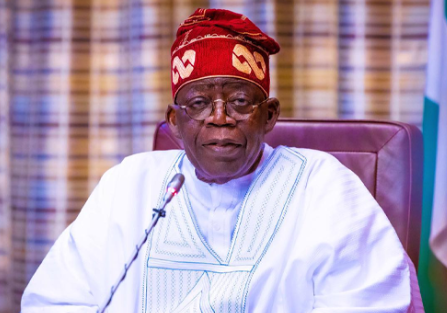
President Bola Ahmed Tinubu has expressed concern over the blackout in the northern region of Nigeria in the last week.

He is now leading efforts to end the disruption that has paralysed social and economic activities, summoning the Minister of Power, Adebayo Adelabu, and the National Security Adviser, Nuhu Ribadu.

The President has directed the Minister of Power and relevant agencies to speed up the pace of work to restore electricity to all the affected states in the North.

President Tinubu is saddened by the reports of vandalism and wilful destruction of power infrastructure and other public assets that caused the unfortunate blackout.

In a meeting with the Minister of Power, Mr Adebayo Adelabu, who briefed on efforts made by the Transmission Company of Nigeria to repair the damaged Shiroro-Kaduna transmission lines, the President directed a long-term solution to the problem.

President Tinubu charged TCN engineers not to relent in bringing immediate relief to the people who need electricity to sustain their social and economic activities.

To ensure that restoration work continues unhindered, President Tinubu also directed the National Security Adviser, Mallam Nuhu Ribadu, to work with the Army and Air Force to deploy adequate security personnel, including aerial cover, to protect the engineers who are fixing the damaged transmission line.

President Tinubu implores traditional rulers, community leaders, and other leaders of thought to work with security agencies to protect public assets and infrastructure.

He said the government will no longer condone deliberate sabotage and destruction of public utilities.

FCT targets beggars, scavengers in new operation, 34 arrested

By Uzair Adam

A collaborative effort by security agencies on Monday led to the arrest of 34 individuals—comprising 15 beggars and 19 scavengers—in the Federal Capital Territory (FCT) as part of a recent crackdown following a directive for them to vacate the area.

The FCT Administration stated that those detained would either undergo vocational training at a government rehabilitation center or be returned to their states if they refuse to participate.

The operation saw contributions from the Police, Military, Department of State Services (DSS), Nigeria Security and Civil Defence Corps (NSCDC), and other paramilitary bodies.

FCT Commissioner of Police Olatunji Disu labeled the mission as “a national assignment,” emphasizing professionalism and determination in enforcing the ministerial orders.

“This operation is set for two weeks initially,” Disu noted. “We will review our progress and, if needed, extend the efforts.”

The Director of Security in the FCT, Adamu Gwary, further detailed the scope of the operation, which is designed to span both day and night across multiple city zones, including the airport road and areas like Asokoro, Nyanya, and Kubwa.

The Head of Enforcement at the Abuja Environmental Protection Board (AEPB), Kaka Bello, clarified that the clampdown is part of a broader strategy to clear the city of unauthorized vendors and nuisances.

Dr. Sani Rabe, Director of Social Welfare for the FCTA, added that those who are “trainable” will have the chance to learn skills at a center in Kuchikon, Bwari Area Council, while others may be returned to their respective states if they do not wish to participate in training.

Almajiri system of education needs reform

By Dahiru Kasimu Adamu

The word “almajiri” emanated from the Arabic word used earlier to refer to the companion of the prophet Muhammad (peace be upon him), who migrated on his instruction for the sake of Islam from Mecca to Madina.

Later, “almuhajirun” refers to knowledge seekers who move from one place to another in search of religious knowledge, predominantly the holy Qur’an.

Therefore, the word “Almajiranci” refers to the traditional method of acquiring and memorising the glorious Qur’an, where boys at a tender age are sent by their parents or guardians to other villages, towns, or cities to acquire Qur’anic education under a knowledgeable Islam scholar called “Malam.”

The Almajiri system of education involves somebody who migrated for learning or for the sake of advocating Islamic knowledge.

This migration is tied to a system in which people in a particular community gather male children of school age and hand them to a teacher yearly. The purpose is for Malam to teach those young children the basics of Islam through Qur’anic schools, popularly known as “Tsanagaya or Makarantun allo”.

The pupils are taught how to read the Qur’an and write the Arabic alphabet. They also learn strict discipline and aspects of living.

Due to environmental distractions, the malam may relocate his pupil to a distant area, such as a town or city and camp them there. Almajirai (plural of Almajiri) learn self-reliance and discipline in the camp.

History shows that the population provides free accommodation and leftover food for the pupil and their teacher; even though the food may not be enough, Malam sends his students into the neighbourhood to solicit food. One reason compelling Almajiri to beg is to let them experience and appreciate the hardship and necessity they will face in life.

According to the record, after the efforts of various communities and later Native authorities around the twentieth century, a modernised version of Makarantun allo-cum-Islamiyya schools emerged. This gave birth to at least four types of Islamic schools: Quranic Schools (Makarantun allo, Tsanagaya), Islamiyya Schools, Public and private model Quranic schools, and government Arabic and Islamic institutions.

The information indicates that begging was not involved during pre-colonial times, and Almajirai were doing menial jobs. They have not been abused before they could get a job. Their noticeable hygiene and good manners can simply identify them.

Islamically, it is responsible or necessary for a parent to provide moral education to their children. But the kind of Almajiri system being practised today is an entirely bastardised system compared to the one practised in the past, as mentioned above.

Now, children are seen wandering, begging for food; Almajirai are seen and identified by their unwanted hygiene, unkempt, tattered clothes, and disease-afflicted and ulcerated skins.

Many Almajirai spend most of their time on the street, which can lead some of them to intermingle with different people, including criminals. Several reports indicate how some of them engage in theft, drug abuse and other crimes. Also, lack of food has made them vulnerable to some diseases.

In summary, as the Qur’an mentions, Islam has identified several rights granted to children. These include the right to a stable family, proper development, showing love towards children, being mindful of education and spiritual growth, and having the right to the good life (chapter 19:98).

But nowadays, due to some factors, including economic hardship and extreme poverty,  most parents are running away from their economic responsibilities enshrined in Islam, sending their children at a very tender age to mallams in towns and cities. This led to behavioural changes among all age groups.

The research found that other factors include some parents who obtained only the knowledge of the glorious Qur’an without understanding its inner meaning, always supporting the Almajiri system, and some seeing Malams benefit from the size of the Almajiri studying under him because school size increased the Malam’s life.

Due to the street begging among Almajirai and other activities, hunger and lack of moral upbringing, many Almajirai are not observing proper Islamic values in their daily life. Some take it just as traditional because if it’s education, everyone can study in his locality.

To address these issues, all hands must be on deck. Leaders must be committed to fighting against extreme poverty, illiteracy and unemployment.

Come out with a new master plan towards a new method of the Almajiri system. This includes verification of all teachers to participate in teaching Almajirai because some are not even qualified to teach, allocating the number of children every mallam should teach, and he should not allowed to exceed the number assigned to him.

Parents and mallams should at least create a new way of accommodating and feeding the pupils. There should be the right place where pupils or Almajirai could get food instead of begging on the street. This includes the total elimination of street begging.

The authorities, Malams, and stakeholders should be sensitised about the importance of this educational sector, and they should provide shelters, health care services, clothes, and other essential things that will end street begging.

This can also be achieved by empowering pupils with vocational skills to sustain themselves and improve socioeconomic standards. There should be a good record of the numbers of Almajiri in each locality, state and country at large. In addition, the fundamental human rights of Almajirai and Malam should be promoted.

Good teaching and learning materials and a conducive atmosphere for learning should be provided for both Malams and Almajirai. Seminars, workshops, lectures, campaigns, and other mobilisation activities should be carried out to counsel Almajirai, other stakeholders, and the general public on career development. Almajirai should be included in acquiring Western education and skills.

By working on all the items mentioned above and more activities, the Almajiri system would be reformed and improved. All Almajiri,malam, and society’s socioeconomic standards will improve out of illegal nature and other sundry.

Dahiru Kasimu Adamu, Argungu, Kebbi State, is a young journalist and Mass Communication student at UDUS. He can be reached at dahirukasimuadamuargungu@gmail.com.

Northern Govs Forum, monarchs meet in Kaduna over security challenges

By Anwar Usman

A meeting between the Northern Governors Forum and Northern Traditional Rulers Council is currently ongoing in Kaduna hoping to tackle the region’s pressing security and developmental challenges.

In attendance at the meeting which took place at the state government House, were Nigeria’s Chief of Defence Staff, General Christopher Musa.

While welcoming his colleagues, the Chairman of the Northern States Governors’ Forum, Muhammadu Yahaya, called for collective action to tackle challenges bedevilling the region.

The region is currently battling with insecurity, economic hardship, environmental degradation, and youth restiveness.

Yahaya emphasized the need for collective action, stating, “Our collective resolve is being tested by the ongoing challenges that we face. However, our unity and commitment to the prosperity of the people remain our greatest source of strength that will enable us to overcome those challenges.”

The governor also acknowledged these challenges, saying, “Terrorism, banditry, kidnap-for-ransom, farmer-herder clashes, drug abuse, the menace of Almajiri and out-of-school children, poverty, and unemployment. We must continue to work with the Federal Government and relevant agencies to provide the necessary support and relief to those affected.”

To tackle these challenges, the governors proposed various ways including “sustaining gains against criminals, studying and implementing the Coalition of Northern Group’s Security Committee report, and engaging with security agencies and civil society groups.

“Investing in education, skills development, and job creation; supporting small and medium enterprises; and attracting investment to northern states; as well providing support to farmers, ensuring rural security, and promoting agro-allied industries.

“Partnering with the Federal Government and stakeholders to build irrigation infrastructure and promote sustainable practices.”

In his remarks earlier, Kaduna Governor and chief host, Senator Uba Sani, while welcoming his colleagues and traditional rulers in the region as well as the Chief of Defence, General Christopher Musa, emphasised unity and collective action against regional challenges.

Sani, also acknowledged the northern Governors’ commitment to peaceful coexistence and shared prosperity, urging that “We must work together to realize our vision of a secure, peaceful, and prosperous North.”

The Governor commended President Bola Tinubu’s efforts to combat insecurity, citing the establishment of a Joint Military Command and Operation Fansan Yamma as clear demonstrations of the Federal Government’s commitment.

64 years after Nigeria’s independence

By Rabi Ummi Umar

A few weeks ago, Nigeria marked its 64th independence anniversary, commemorating more than six decades since gaining freedom from British colonial rule on October 1, 1960. However, this year’s celebrations were unusually subdued, devoid of the usual fanfare, pomp, thrills and frills. 

The once-familiar scenes of face painting, jubilant crowds, and flags waving in patriotic pride were replaced by an eerie silence that echoed across the nation. Despite this significant milestone, many Nigerians found little reason to celebrate. The mood was sombre, reflecting a collective sentiment that these are not times for revelry.

Instead, citizens believe it is a time for reflection and a renewed commitment to steering the country back toward prosperity, as envisioned by the men and women who fought for the independence we now enjoy. In the eyes of most Nigerians, the celebration only serves as a distraction from the harsh realities of daily life.

The more one reflects on the state of the nation, the more troubling it becomes. What exactly are we celebrating? Is there anything genuinely worth commemorating at this point? After the fireworks, what awaits us—more suffering? The unspoken truth is that the situation has grown so dire that it is almost impossible to ignore the country’s challenges, no matter how much we might want to.

One of the major concerns plaguing citizens is the aftermath of the subsidy removal, which continues to wreak havoc on lives and livelihoods. While the minimum wage has been signed into law, its implementation remains uncertain, casting doubt on the government’s ability to deliver on promises and its tendency to prioritise talk over tangible action. 

These discrepancies raise questions about the effectiveness of policies aimed at alleviating the struggles of Nigerians. Our leaders have made numerous promises, but despite their assurances, little has been done to address the suffering of the people. Take the much-touted Compressed Natural Gas (CNG) buses, for example. Despite promises, these buses have failed to materialise in significant numbers. Even the few introduced fall short of addressing Nigeria’s transportation challenges. 

How much progress can we realistically expect from such initiatives? Unemployment remains a persistent issue, exacerbating the nation’s woes. Although the National Bureau of Statistics (NBS) reported an unemployment rate of 5.3%, many believe the actual figure is much higher, especially given Nigeria’s struggle with accurate population data.

Insecurity is another critical concern. Terrorism, banditry, and kidnapping for ransom plague every region, with countless lives lost, even after ransoms have been paid. Nigerians are grappling with hunger as the crisis reaches alarming proportions. Starvation, suffering, and even death from hunger have become stark realities.

According to the Food and Agriculture Organization (FAO), 80 to 82 million Nigerians are at risk of severe hunger if the current trajectory continues. Given our vast agricultural potential, how did we reach this point? Politics in Nigeria remains largely a curse, with politicians exploiting religion, region, and ethnicity to garner support. 

Instead of uniting to solve the nation’s problems, they engage in ridicule, even on pressing national issues, as seen in the aftermath of the President’s October 1 address. Poverty also remains a major concern. The NBS reports that 63% of the population—approximately 133 million people, or six out of every ten Nigerians—are trapped in multidimensional poverty. 

It is little wonder that Nigerians are not in a celebratory mood. So much has gone wrong recently that even wishing someone a “Happy Independence” feels offensive. What, after all, have we indeed achieved in these 64 years? Nigeria has the potential for greatness, and the government can and should do better. President Tinubu, please, we are begging—Nigeria deserves better.

Rabi Ummi Umar is an intern at PRNigeria and a student at Al-Hikmah University, Ilorin. She can be reached via rabiumar058@gmail.com.

Abubakar Kabir Bichi offers scholarship to 21 constituents to study in Malaysia

 By Sabiu Abdullahi

Hon. Abubakar Kabir Bichi, a member representing Bichi Federal Constituency from Kano State and chairman of the House Committee on Appropriation, has sponsored 21 indigenes of Bichi Local Government on foreign scholarships to study in Malaysia. 

The beneficiaries will pursue an 18-month program in Engineering, Computing Science, Technology, and other courses at Universiti Teknologi Malaysia (UTM), one of Malaysia’s highest-ranking universities. 

The scholarship recipients were presented with their admission letters and other necessary documents in Bichi on Wednesday.

Additionally, Hon. Bichi sponsored 59 science and technical students from SS1 to SS3 and provided them with educational kits.

He also recruited 150 temporary classroom teachers and 50 Islamiyya teachers to teach at various schools across the local government. 

Hon. Bichi stated the importance of empowering people based on their abilities, stating, “This is what leaders should do. People should be empowered based on their abilities. We don’t want to politicize education. We always require fair play.”

He reiterated the positive impact of education on reducing crime in Bichi Local Government, noting that the area has seen a significant decrease in crime due to increased access to education. 

The lawmaker also mentioned his commitment to supporting education in the region, stating, “We have been offering 100% scholarships to indigenes of Bichi to study at various Nigerian universities, including BUK, ABU, ABTU, among other universities. We paid the school fees of hundreds of students at various educational levels. We built over 500 classrooms across Bichi Local Government.”

As Nigerians struggle, lawmakers push for new aircraft for VP Shettima

By Uzair Adam

While Nigerians grapple with economic hardship, Borno State House of Assembly Speaker, Rt. Hon. Abdulkarim Lawan, is urging the Federal Government to replace Vice President Kashim Shettima’s official aircraft, citing safety concerns.

Lawan’s call follows recent technical issues with the Vice President’s plane, including a damaged windscreen during a stopover in New York en route to the Commonwealth Summit.

Despite widespread financial strain affecting millions of Nigerians, Lawan highlighted the risks of Shettima’s continued reliance on the malfunction-prone aircraft, insisting that securing a replacement should be a priority.

His appeal, however, arrives at a time when citizens are facing inflation, fuel costs, and job cuts, sparking questions on the government’s spending priorities amidst nationwide hardship.

Ministry intervenes in N3bn misappropriation allegations against PASAN leadership

By Uzair Adam

The Federal Ministry of Labour and Employment has summoned leaders of the National Assembly chapter of the Parliamentary Staff Association of Nigeria (PASAN) along with aggrieved members following allegations of a N3 billion fund misappropriation.

In a letter signed by Amos Falonipe, Director/Registrar, Department of Trade Union Services and Industrial Relations, the ministry invited PASAN’s leadership and concerned members to address the grievances in a meeting scheduled for tomorrow.

The allegations surfaced earlier this month when PASAN member Yusuf Abiola accused the union’s leadership of misappropriating union funds and demanded audited financial statements from 2019 to date.

Abiola threatened to petition relevant authorities for accountability.

However, PASAN’s National Assembly chapter chairman, Sunday Sabiyyi, and Secretary, David Ann Ebizimoh, dismissed the allegations as defamatory, urging the public to disregard what they described as baseless accusations meant to divert the union from its objectives.

The labour ministry’s letter of invitation, dated October 25, 2024, was directed to the General Secretary of PASAN, signaling its commitment to address the dispute.