Admin

NSCDC uncovers alleged baby factory in Owerri, rescues pregnant women, newborns

By Sabiu Abdullahi

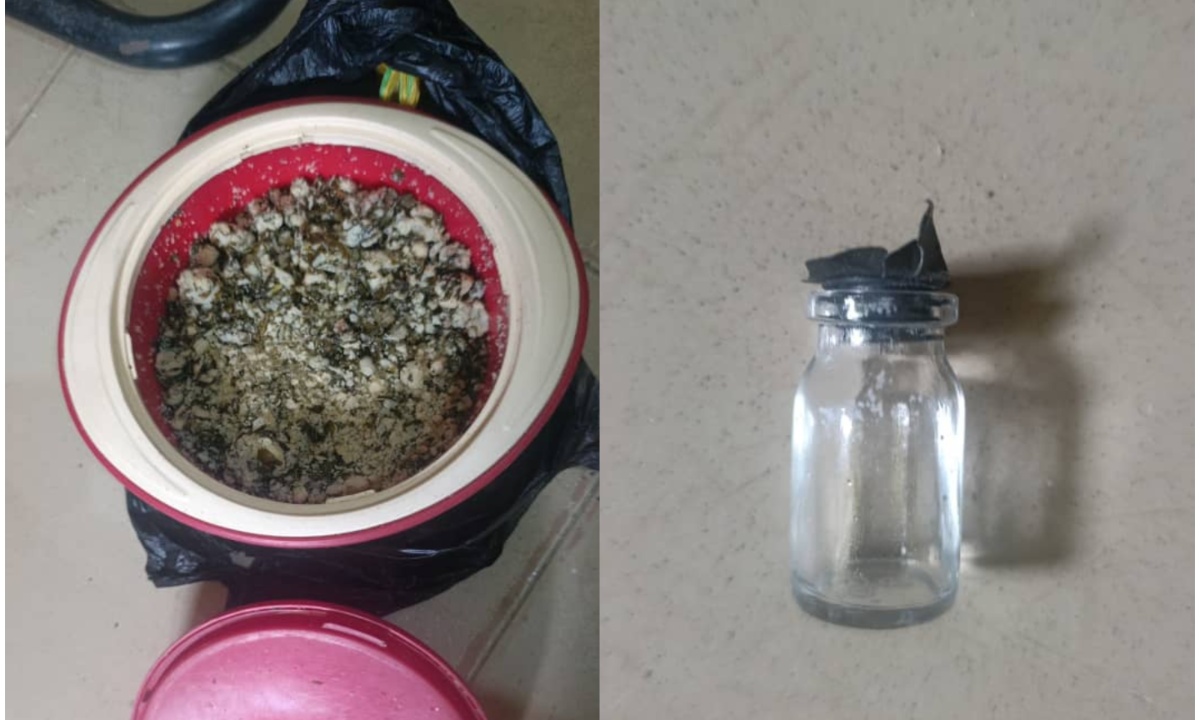
The Nigeria Security and Civil Defence Corps (NSCDC) in Imo State says it has uncovered a suspected child-trafficking operation in Owerri, where five pregnant women and five newborn babies were rescued during a security raid.

Officials also arrested two suspects believed to be connected to the facility where the illegal activity allegedly took place.

The Imo State Commandant of the NSCDC, Basil Igwebueze, made this known on Saturday while speaking with journalists in Owerri about recent operations carried out by the command.

According to him, the suspects were identified as Tochukwu Ogaranya, 52, and Godwin Nnamdi, 47. Both men were apprehended at an orphanage located in the World Bank area of the state capital.

The News Agency of Nigeria reported that the commandant explained how the operation started. He said an officer of the corps noticed a pregnant teenager attempting to escape from the compound. The incident raised suspicion among security personnel.

“This prompted my officers to move into action at the orphanage, arrest the owner of the orphanage and rescue the pregnant women and newborn babies,” he said.

Igwebueze described child trafficking as a “heinous crime.” He warned that the corps would not allow such illegal activities to continue in the state.

He also praised residents who supplied information that helped security officials uncover the suspected operation. He urged members of the public to stay alert and report suspicious activities within their communities.

“If the residents of the state had not assisted us with the necessary information, the command would not have uncovered such a criminal act,” Igwebueze said.

However, the owner of the orphanage, Ogaranya, denied involvement in child trafficking. She maintained that the facility operates legally and has the required certification.

She explained that a 33-year-old woman identified as Chiamaka arrived at the orphanage while pregnant after she fled from a man who impregnated her in Abia State.

Ogaranya said she contacted the police about the situation. She added that officers indicated they would accompany the woman to Abia in order to apprehend the man responsible for the pregnancy.

According to her, workers later informed her that the woman had escaped from the orphanage premises.

She said the woman “scaled the fence of the compound and was later caught by the local vigilantes.”

Chiamaka, who is from Ikeduru Local Government Area of Imo State, also gave her account of the incident. She said someone introduced her to the orphanage but she could hardly identify the person.

She explained that the individual told her she could give birth at the facility and later sell the baby.

Chiamaka said she eventually felt uneasy about the arrangement. She decided to flee from the premises after she could no longer endure the situation.

She said she “scaled the fence and ran away for her dear life.”

Igwebueze stated that investigations are ongoing. He added that the suspects will be charged in court.

The commandant also reaffirmed the corps’ determination to combat child trafficking and other crimes. He urged residents to continue supporting security agencies with useful information.

Russia sends humanitarian aid to Iran amid war with US, Israel

Russia has delivered humanitarian assistance to Iran as tensions continue in the Middle East during the ongoing conflict involving the United States and Israel.

The development emerged from a statement shared by the Russian Embassy in Kenya through its official X account. The embassy indicated that Russia had become “the first country to send humanitarian aid to Iran” since the crisis intensified.

According to the statement, an aircraft transported medical materials meant to reach Iranian authorities through a neighbouring country. The embassy explained that the supplies were first delivered to Azerbaijan for onward transfer.

“An Il-76 aircraft delivered more than 13 tons of medical supplies to Azerbaijan which will assist in transferring it to the Iranian authorities,” the post said.

The embassy described the shipment as “first aid & medical supplies” intended to support civilians in Iran during the current conflict.

The humanitarian move follows earlier diplomatic engagement between Moscow and Tehran. Russian President Vladimir Putin recently sent a message to Iran’s new supreme leader, Mojtaba Khamenei, after his emergence as the country’s leader.

In a message released by the Kremlin and cited by Al Jazeera, Putin congratulated Khamenei and expressed confidence in his leadership at a time of mounting international pressure on Iran.

The Kremlin stated that the Russian president commended Khamenei’s potential to lead the country and referred to the legacy of his father. Putin said he believed the new leader would maintain the direction previously set for Iran.

Putin also said he was confident Khamenei would continue his father’s work “with honour” and unite the Iranian ⁠people “in the face of ⁠severe trials”.

He used the message to reiterate Russia’s close ties with Iran. Putin said Moscow would maintain its partnership with Tehran and added that he wished to “confirm unwavering support for Tehran ‌and solidarity with our Iranian friends.”

The Kremlin statement came at a time when hostilities between Iran and the United States-Israel alliance continue to raise global concern.

Russia and Iran have strengthened cooperation in recent years. Their partnership covers areas such as energy, security coordination and diplomatic engagement on international matters.

The aid delivery also follows a decision by the United States to ease restrictions on Iran’s oil exports. Washington said the measure aimed to reduce pressure on global crude oil prices amid disruptions linked to the Middle East conflict.

Turning Ramadan palliatives into empowerment packages

By Isyaka Laminu Badamasi

As Muslims, we are encouraged to support the vulnerable among us during the holy month of Ramadan, as acts of charity during this sacred period are multiplied in reward. Ramadan is a time devoted to ibadah (worship), compassion, and the pursuit of spiritual salvation. Both the Qur’an and the Hadith emphasise the importance of helping those in need, particularly during this blessed month.

Zakat, by its very concept, is an Islamic strategy for poverty alleviation and empowerment. It is designed to enhance economic well-being, improve livelihoods, significantly reduce the number of people living in poverty, and strategically increase the number of economically independent individuals. If this divine system is fully adopted and properly incorporated into our socio-economic structures, it can pave the way for a more prosperous, stable, and secure society. This principle is well supported by Islamic teachings, and more information can be obtained from the Zakat and Endowment Units within Shariah Commissions across Muslim-majority states.

As an observer—and someone who has had the opportunity to relate and work with people who serve as members of committees distributing Ramadan palliatives, Sadaqat, Zakat and other palliative programs —a thought often comes to mind during these exercises. The distribution packages usually target vulnerable individuals such as orphans, widows, persons with disabilities, the elderly, internally displaced persons, and those struggling to survive amid the multidimensional poverty affecting many communities in this part of the world.

While this gesture is noble and commendable, I strongly believe that some of these beneficiaries, with the right support, could become economically self-reliant and eventually leave the long queues for palliative collections—queues that, in some unfortunate cases, have even led to injuries or deaths. We can all remember the stampedes during palliative distributions across the country. 

Considering the hundreds of millions, or even billions, of Naira spent annually on Ramadan palliatives by wealthy individuals, corporate organisations, politicians, and governments — which is commendable and should be sustained — it may be worthwhile to redirect part of these resources, or allocate a specific portion toward empowerment initiatives.

For example, a modest sum of N10,000 or N20,000 can be enough to help some women start small income-generating activities. Interestingly, many of the food packages distributed during Ramadan or other palliative programs are often worth more than that amount. (I am not referring to those sharing cooked food or smaller packages) If such resources or separate allocation were converted into empowerment opportunities, they could promote sustainable development rather than temporary relief through the routine distribution of food items. Many professional entrepreneurs and social workers can attest to the long-term benefits of such an approach.

At Initiatives for Sustainable Development (I4SD), we are preparing to pilot this strategy by supporting a small group of vulnerable women through green-skills economic empowerment programs. Our aim is to create a practical model that Governments, philanthropists, corporate organisations, NGOs, and well-meaning individuals can replicate. We welcome professional support, partnerships, and collaboration to help actualise this vision for a more sustainable future—one filled with dignity, happiness, and social tranquillity.

ALLAH YA karbi ibadun mu, amin.

Isyaka Laminu Badamasi wrote via makwalla82@gmail.com.

Kano gov’t approves early payment of March salaries ahead of Sallah

By Muhammad Abubakar

The Kano State Government has approved the early payment of March 2026 salaries to civil servants to enable them to prepare for the forthcoming Eid al-Fitr celebrations.

According to a statement issued by the Office of the Head of Service, Governor Abba Kabir Yusuf directed the immediate release and payment of the salaries to all workers in the state civil service.

The Acting Head of Service, Bilkisu Shehu Maimota, said the directive was intended to help workers make adequate preparations for the Sallah festivities in a convenient and dignified manner.

She explained that the early payment reflects the administration’s commitment to the welfare of civil servants and its appreciation of their dedication and contributions to the development of the state.

Maimota also urged civil servants to utilise the gesture responsibly while continuing to demonstrate commitment, discipline and efficiency in the discharge of their duties for improved service delivery.

The state government further reaffirmed its resolve to sustain policies that promote workers’ welfare and enhance productivity within the civil service.

Iran’s strategic mastery: Why Tehran is poised to emerge victorious in the war against Israel and the US

By Dr. Umar Musa Kallah

As the US-Israeli war against Iran enters its second week, the initial narrative of a rapid Western triumph has collapsed. What began with coordinated strikes on Iranian leadership and infrastructure has instead unleashed a sophisticated Iranian counter-campaign rooted in decades of preparation, control of global chokepoints, and asymmetric warfare. Verifiable maritime data, energy market reports, and military analyses confirm that Iran is not merely holding ground, it is systematically eroding the economic foundations of American power and its Gulf allies.

The closure of the Strait of Hormuz stands as Iran’s most potent immediate weapon. Since Iran’s declaration and attacks on transiting vessels in early March 2026, shipping traffic has effectively halted, with oil and LNG flows, representing roughly 20% of global trade is severely disrupted. Global crude prices have spiked, insurance markets have pulled coverage, and Asian importers face acute shortages. This is no bluff: tanker tracking and satellite imagery show near-total cessation of commercial traffic, directly strangling revenues for US-aligned Gulf states.

Tehran has complemented this blockade with hundreds of ballistic missiles and drones targeting US military installations and infrastructure across Bahrain, Qatar, Kuwait, the UAE, and Saudi Arabia. Strikes have damaged communication systems, radar sites, and air bases, including the US Fifth Fleet headquarters and Al Udeid Air Base. The cost asymmetry is telling: cheap Iranian drones and missiles exhaust multimillion-dollar Western interceptors at a pace that cannot be sustained indefinitely.

Iran has also struck desalination plants and power infrastructure critical to Gulf freshwater supplies. With over 90% of drinking water in several Gulf nations dependent on energy-intensive desalination, these targeted hits are creating humanitarian pressure and accelerating economic paralysis. By weaponizing both energy exports and water security, Tehran is holding civilian populations and regional economies hostage.

This economic siege directly undermines the Gulf sovereign wealth funds that have bankrolled much of America’s AI boom. Saudi Arabia’s Public Investment Fund and Abu Dhabi’s Mubadala have channeled tens of billions into US tech, data centers, and AI ventures. With oil revenues frozen, airspace closed, and infrastructure under fire, these funds are already curtailing new commitments to American projects. The resulting capital drought threatens Silicon Valley valuations and risks triggering a broader stock-market correction, a strategic blow at the heart of US technological supremacy.

None of this is improvised. Iran has spent decades building precisely this capacity: an estimated pre-war arsenal of thousands of ballistic missiles, mass-produced drones, and resilient proxy networks designed for attrition warfare. Its high-ranking scientists and engineers have indigenously advanced these systems through reverse-engineering and innovation, often drawing on historical technological exchanges. Battle-hardened IRGC commanders , seasoned warlords operating with decentralized command, coordinate the response, while a population of over 90 million, tempered by generations of sanctions and pressure, demonstrates profound civilizational resilience and refusal to surrender easily.

This internal steel is coupled with broader strategic depth from longstanding partnerships. Russia, China, North Korea, and Pakistan have provided diplomatic condemnation of the US-Israeli aggression, alongside decades of technological collaboration in missiles, drones, and defense systems that now equip Iran to endure. While direct military intervention has been limited, these ties  combined with Iran’s own preparations will ensure sustained resistance that outlasts Western political will and munitions stockpiles.

The world now faces Tehran’s calculated endgame: choking global energy arteries, disrupting vital water supplies, and redirecting Gulf capital away from American innovation. Every day of blockade, every intercepted drone salvo, and every sign of Iranian societal cohesion deepens the strain on Washington and its partners. Iran did not stumble into this conflict; it prepared for it across a lifetime of strategic patience. As oil prices climb, water crises intensify, AI investments falter, and resilient Iranian forces continue to dictate the tempo, the balance of power is shifting decisively.

The verifiable data from shipping trackers, strike assessments, and resilience analyses  is clear: Iran is not on the defensive. It is leveraging geography, technology, alliances, and unbreakable national will to hold the world ransom. Tehran is on course to prevail.

Dr Umar Musa Kallah, a writer and community advocate, can be reached via yakubunasirukhalid@gmail.com.

From a wood-cutter to a university graduate

By Muhammad Isah Zng

For many students, gaining admission into a university marks the beginning of a hopeful journey toward a better future. For me, however, gaining admission to study Mass Communication at Bayero University, Kano (BUK) came with a difficult reality: I had no sponsor to support my education.

There was no one to take full responsibility for my expenses, including feeding and other basic needs. Yet despite this challenge, I refused to let my circumstances stop me from pursuing my dream. I held firmly to three principles that guided my journey throughout the university years: faith, hope, and hard work.

When I left home for BUK to begin my studies, I quickly realised that survival would require determination beyond the classroom. I had to find a way to support myself financially while keeping up with my academic responsibilities. Deep down, I knew that no one would suddenly come to rescue me from my situation. If I wanted to succeed, I had to depend on my own efforts.

With that understanding, I made a decision that would define my entire university experience. Every weekend, I would leave the university campus to work as a woodcutter. The job was physically demanding and exhausting, but it became my primary means of survival.

From my first year in university, I maintained this routine of attending lectures and focusing on my studies during the week, then travelling off campus on weekends to cut and process firewood for sale. The work was not easy, but it provided the little income I needed to sustain myself.

Over time, I found additional opportunities to work. During my second year at the university, I started working in two different locations outside BUK. I worked under individuals such as Dan Azumi and Alhaji Aminu Dorayi Babba. Through these jobs, I earned money that helped me meet my basic needs.

The income from the work was modest but meaningful. On average, I earn between ₦3,000 and ₦4,000. On better days, I could earn between ₦10,000 and ₦13,000. That money helped me buy food and other necessities. Sometimes, it even allowed me to support two of my friends who were also struggling to survive in school.

One remarkable thing about the work was its reliability. Whenever I went out to work, I was almost certain that I would return with something to eat. It taught me the dignity of labour and reminded me that no honest work should ever be looked down upon.

Although balancing academic studies with physical labour was challenging, I remained committed to completing my education. Each day of hard work reminded me that the sacrifices I was making were steps toward a brighter future.

Today, Alhamdulillah, I have successfully completed my four-year programme at Bayero University, Kano. My graduation marks the end of one important chapter of my life and the beginning of another phase filled with new responsibilities and aspirations.

Through my story, I want to encourage young people, especially students facing financial hardship, not to lose hope. Many young people today feel discouraged when they encounter difficulties in pursuing their education. However, challenges should not define our limits; instead, they can inspire us to find creative ways to achieve our goals.

There is dignity in every form of honest work. Whether it is cutting wood, farming, trading, or doing any other job, what truly matters is the determination to move forward despite obstacles.

Life is not always easy for people who come from humble backgrounds. But it can still be meaningful and inspiring when we use our difficult situations as opportunities for growth. Hard work, patience, and faith can transform even the toughest circumstances into stepping stones toward success.

My journey from wood-cutting to earning a university degree is a testament to the power of perseverance. It is a reminder that with determination and self-belief, even the most challenging path can lead to success.

Muhammad Isa wrote via isahmuhammad571@gmail.com.

Hamas urges Iran to avoid striking Gulf states, condemns aggression against Tehran

By Anwar Usman

The Palestinian group Hamas has urged its ally Iran to end attacks on Gulf states, while affirming Tehran’s right to defend itself against Israel and the United States in the war they launched.

Hamas on Saturday called upon its “brothers in Iran” not to target neighbouring countries, and urged the region to end the ongoing conflict that has embroiled much of the Middle East.

The group fought back against Israel’s genocidal war on Gaza following its October 7, 2023, attack, while Israel razed the besieged and bombarded enclave to the ground, killing more than 72,000, with Gulf nations, particularly Qatar, stepping in through mediation, diplomacy and aid.

Since the start of the Iran war by the US and Israel on February 28, several Gulf states in the region have reported Iranian missile and drone attacks.

Hamas said in a statement, “While affirming the right of the Islamic Republic of Iran to respond to this aggression by all available means in accordance with international norms and laws, the movement calls on the brothers in Iran to avoid targeting neighbouring countries.”

 The statement added that countries of the region should “cooperate to halt this aggression and preserve the bonds of fraternity among them”.

Iran has supported Hamas financially and militarily for decades, the group being a part of the now much-weakened so-called “axis of resistance” that includes Lebanon’s Hezbollah and Yemen’s Houthis.

Last month, Gulf countries pledged more than $4bn in combined financial support to US President Donald Trump’s Board of Peace, signalling backing for efforts to resolve the Israeli-Palestinian conflict.

The pledges were announced during the first meeting of the Board of Peace, which has gone quiet in the wake of the war, in Washington, where Qatar and Saudi Arabia each committed $1bn. Kuwait also pledged $1bn over the coming years, while the United Arab Emirates announced an additional $1.2bn in support for Gaza through the board.

Qatar, throughout the genocidal war on Gaza, also played a leading role as mediator, alongside the US and Egypt.

A US-backed “ceasefire” agreement has been in place in Gaza since October 2025, which was meant to halt Israel’s two-year onslaught that killed more than 72,000 people and injured more than 171,000 since October 2023.

Despite the “ceasefire”, however, Israeli forces have continued hundreds of violations through shelling and gunfire, killing hundreds of Palestinians.

Japan confirms suspected North Korean missile launch amid ongoing US-Iran-Israel tensions

By Sabiu Abdullahi

Japanese authorities reported on Saturday that North Korea may have launched a ballistic missile targeting Japan.

The Prime Minister’s Office of Japan shared the information on its verified X account, noting that officials are closely monitoring the situation. In the post, the office stated: “North Korea has launched a suspected ballistic missile. More updates to follow.”

No additional details were provided regarding the missile’s type, trajectory, or possible impact location. Japan has previously tracked multiple missile tests from North Korea in recent years, prompting heightened vigilance by both national and regional authorities.

Authorities have promised to release further updates as new information becomes available.

The missile alert comes amid an ongoing military confrontation between the United States and Iran in the Middle East, which intensified in late February 2026 following coordinated airstrikes by U.S. and Israeli forces on Iranian military and strategic sites.

Iran responded with missile and drone attacks targeting Israeli territory, U.S. military bases, and allied states in the Gulf region. Iranian-backed organizations, including Hezbollah, have also participated in the conflict.

The hostilities have disrupted the Strait of Hormuz, a crucial route for global oil transport, raising concerns about energy supplies. Casualties and injuries have been reported among U.S. personnel as well as civilians in the region.

No formal ceasefire has been declared, and both sides continue military operations while monitoring each other’s movements.

Nigerian military neutralise five criminals, discover illegal weapons factory in Cross River

By Sabiu Abdullahi

Troops of the Nigerian Army’s 13 Brigade have neutralised five armed criminals and uncovered an illegal weapons production site in Odonget Community, Obubra Local Government Area of Cross River State.

This is contained in a statement issued by Yemi Sokoya, Major and Assistant Director Army Public Relations, Headquarters 13 Brigade Nigerian Army, on March 13, 2026.

The operation was carried out under the command of Headquarters 82 Division of the Nigerian Army. It followed a recent ambush on troops who had responded to a distress call linked to a communal dispute in the community.

Military sources said the troops continued their follow-up operation between March 12 and March 13, 2026. During this period, soldiers conducted cordon-and-search operations and fighting patrols across several identified locations. The action formed part of efforts to locate those responsible for the earlier attack on security personnel.

On March 13, the troops encountered the armed group again within the area. A gun battle broke out during the encounter. Five of the attackers were neutralised, while others escaped from the scene.

Further search of the surrounding area led to the discovery of an illegal gun manufacturing facility. Authorities believe the site served as a production centre where criminal elements fabricated weapons used in violent activities within the locality.

During a detailed search of the facility, troops recovered three AK-47 rifle magazines, 10 locally made firearms and a toolbox that contained equipment used for manufacturing weapons.

The military later destroyed the illegal arms production site to prevent further use by criminal elements.

The Commander of 13 Brigade, Brigadier General Patrick Alimikhena, who led and supervised the operation, praised the troops for their courage and professionalism during the encounter.

He assured residents that the Brigade remains committed to ensuring peace and stability in the area. He also said troops will continue sustained operations, surveillance and patrols to track down fleeing suspects and prevent further threats to law-abiding citizens.

Security authorities also urged members of the public to support ongoing operations by providing timely and credible information that could assist efforts to eliminate criminal activities in the area.

Nigerian soldiers repel terrorist attacks at Azir Bridge, Banki

By Sabiu Abdullahi

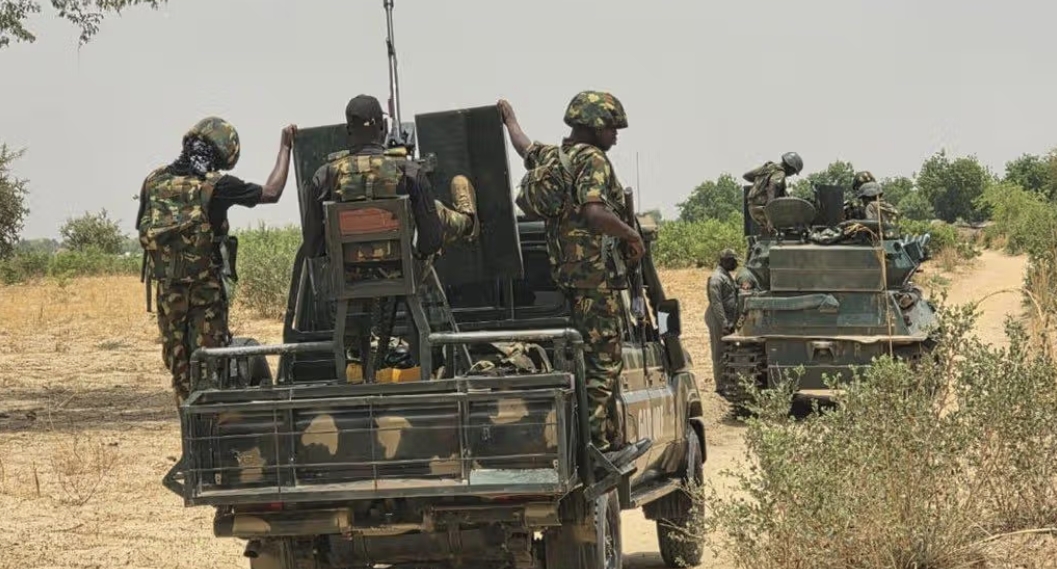
Troops of the Joint Task Force (North East) under Operation HADIN KAI have repelled attempted terrorist assaults on military positions at Azir Bridge in Sector 2 and Banki in Sector 1.

According to a press release issued by the headquarters of the operation, the incidents occurred in the early hours of March 13, 2026. The attackers reportedly advanced in large numbers in what the military described as a desperate effort to overrun the two locations.

The statement noted that troops on duty responded immediately. Soldiers mounted strong resistance and executed coordinated counter-attacks that disrupted the movement of the insurgents and forced them to retreat from the areas.

Air support also played a key role in the operation. The Air Component of Operation HADIN KAI provided close air support during the engagements, which the military said helped secure victory over the attackers.

The military command also dismissed reports circulating on some online platforms that suggested otherwise. It said the failed assaults contradict claims that troops had lost control of the locations.

The statement maintained that soldiers remain in charge of both Azir Bridge and Banki and continue to maintain operational dominance with strong morale and sustained action against terrorist groups.

The task force reassured residents of the North-East that it remains determined to eliminate terrorist threats and restore lasting peace in the region.

In the statement, the military said: “Troops remain firmly in control of the locations and continue to dominate the operational environment with high morale, decisive firepower and sustained offensive action against terrorist elements.”