Month: November 2026

Italy Slaps Meta With €805m Fine Over Users’ Private Photos

By Sabiu Abdullahi

Italy’s Data Protection Authority has fined Meta €805m over allegations that the technology company accessed the photos and videos of millions of Facebook users without obtaining their specific consent.

The regulator said the company failed to adequately inform about 20 million Android smartphone users that a Facebook feature could access their phone galleries to generate suggestions for posts.

It has ordered Meta to disable the feature by default and obtain users’ separate consent within 60 days.

The fine, equivalent to about £670m or $887m, is among the largest penalties imposed on a technology company by an Italian authority.

The investigation centred on a Facebook feature that recommends photos and videos stored on users’ devices as potential content for posts.

According to the regulator, Facebook obtained access to users’ photo galleries through a general permission covering the entire application. However, the notification preceding the request did not clearly explain that the permission would also allow the platform to generate content suggestions from their personal galleries.

The authority said it considered the large number of people affected, the continued operation of the feature for users who had not updated their applications, and the fact that some users had already consented to the system. It also cited what it described as Meta’s lack of cooperation.

A Meta spokesperson told the BBC that the company strongly disagreed with the regulator’s findings and intended to appeal the decision.

“We strongly disagree with the [regulator’s] assessment of the facts, its application of the law, and the disproportionate level of the fine.

“This is a straightforward feature which helps people post photos and videos to Facebook. People must give permission on their device before it can operate, and they can change this permission at any time via their settings.”

Meta, which also owns Instagram and WhatsApp, was hit with another major financial penalty last month after a court in New Mexico, United States, ordered it to pay $25bn over its handling of Facebook users’ data.

The latest Italian penalty adds to growing regulatory scrutiny of the company’s data protection and privacy practices.

Trump, Putin And Xi To Hold Trilateral Talks In China, White House Confirms

By Sabiu Abdullahi

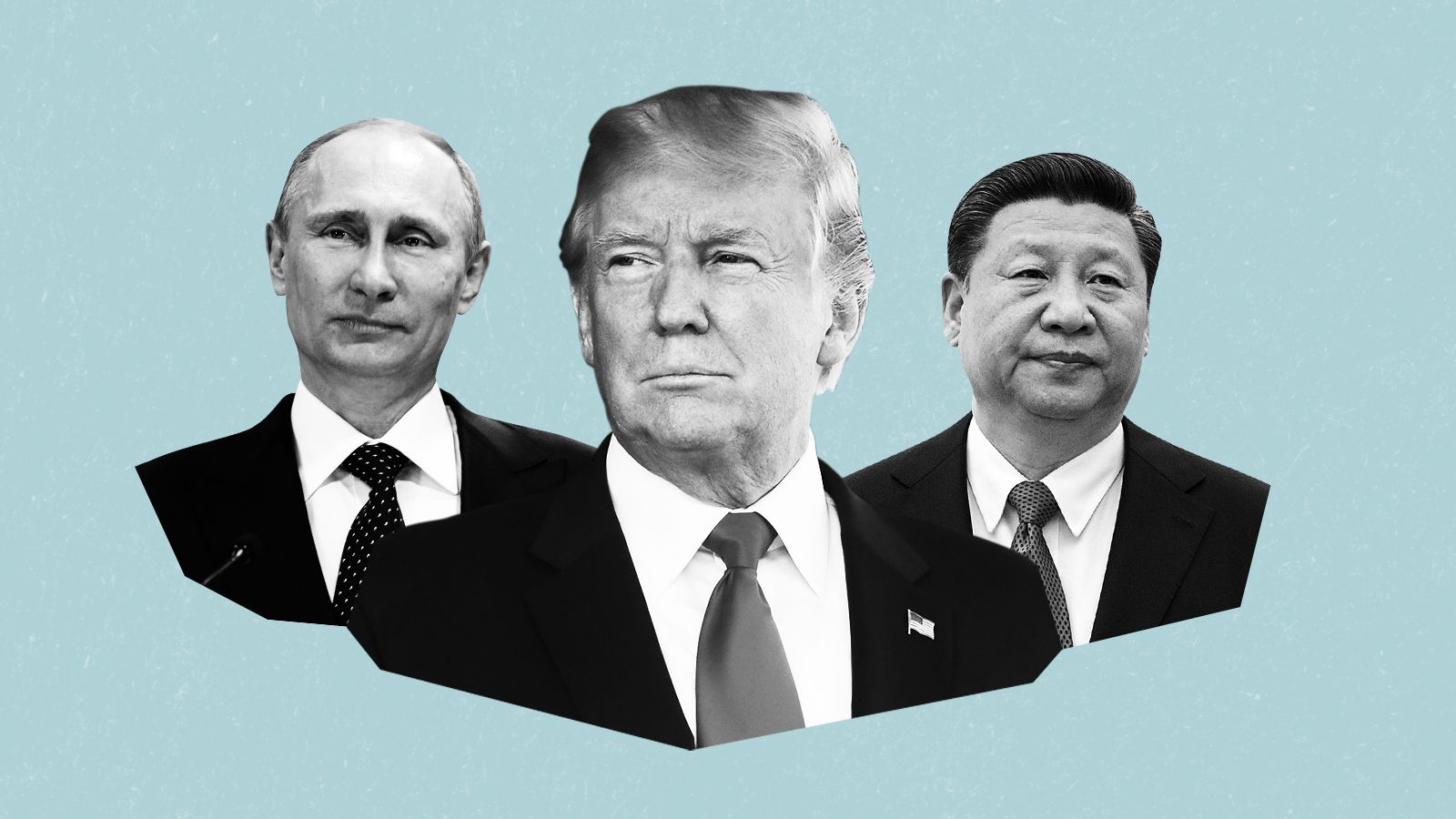
United States President Donald Trump, Russian President Vladimir Putin and Chinese President Xi Jinping are expected to hold a joint meeting in China next week, the White House has announced.

The meeting will take place on the sidelines of the Asia-Pacific Economic Co-operation (APEC) summit in Shenzhen, southern China, where Trump is expected to attend a two-day gathering of leaders from the 21 member economies.

White House spokeswoman Olivia Wales confirmed the planned meeting, saying Trump would use the opportunity to discuss nuclear weapons reduction among other issues.

“The president has made it clear that, among other topics, he will discuss the reduction of nuclear weapons in the world, whose proliferation President Trump believes is very dangerous,” she said.

Wales added that Trump would conclude his China visit with a meeting involving the leaders of the three countries.

“President Trump will conclude his visit to China with a trilateral meeting between the president of the United States, the president of the People’s Republic of China, and the president of the Russian Federation,” she said.

The talks could also address Iran, although Ukraine is not expected to feature on the agenda, according to the report. A senior US official said no agreement was expected to emerge from the meeting.

Trump is scheduled to arrive in Shenzhen late on Wednesday and hold separate bilateral talks with Xi on Thursday. The meeting would be their fourth since Trump returned to office in 2025.

The US president is also expected to attend an Association of Southeast Asian Nations (ASEAN) summit in the Philippines on Tuesday. Wales said the trip would “secure historic wins to the American people and advance America’s interests in the Indo Pacific”.

The planned meeting comes amid concerns over the future of nuclear arms control following the expiration of a major US-Russia treaty in February. The agreement had placed limits on the world’s largest nuclear arsenals.

The United Nations has urged Washington and Moscow to negotiate a replacement framework. Trump, however, has suggested that a new agreement should also include China, which has been expanding its nuclear arsenal.

Former US officials and analysts previously told the BBC that securing cooperation from both Beijing and Moscow could prove difficult and take years.

China and Russia have strengthened their economic ties since Moscow launched its full-scale invasion of Ukraine in 2022. Beijing has remained an important trading partner for Russia despite Western sanctions.

Meanwhile, relations between Washington and Beijing have included efforts by Trump and Xi to project warmer ties through meetings in Beijing and Washington. However, major disagreements over trade, artificial intelligence and Taiwan remain unresolved.

The war in Iran is another issue affecting relations, as China remains Tehran’s largest buyer of oil and its biggest trading partner.

Russia has confirmed the planned trilateral meeting. China has yet to publicly comment on the announcement, although Chinese state media reported that Xi would hold bilateral talks on the sidelines of the APEC summit.

Earlier this month, Kremlin spokesman Dmitry Peskov told Russian state media that there were “signals confirming readiness” for such talks.

Gombe APC Targets One Million Votes For Tinubu In 2027 Elections

By Sabiu Abdullahi

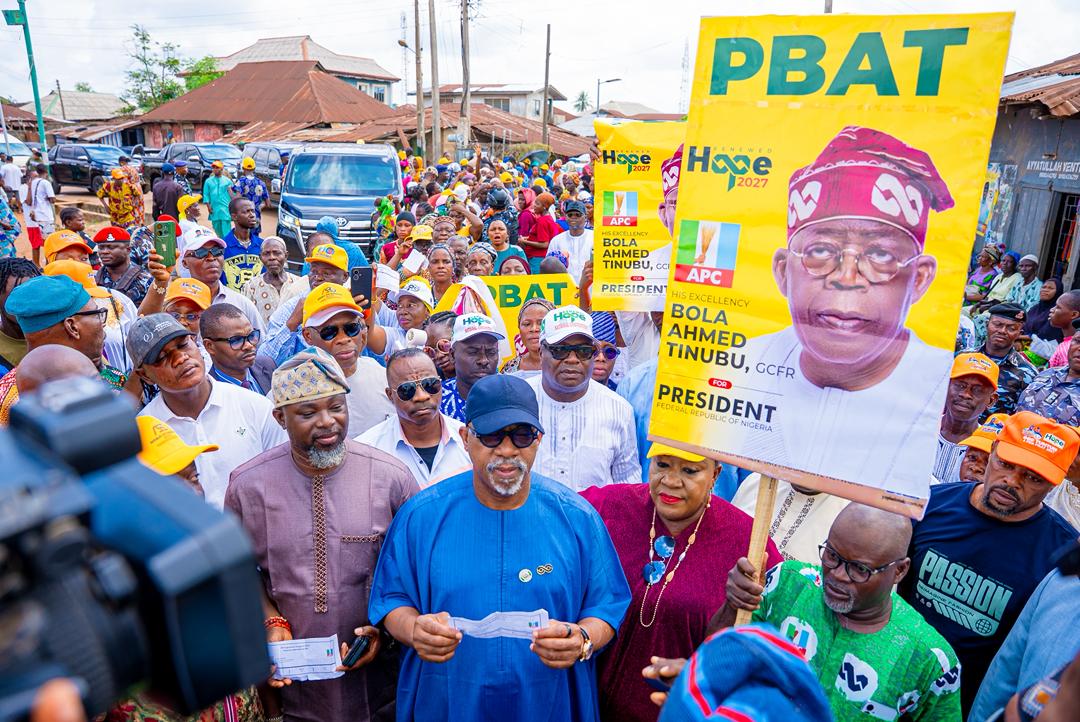
The All Progressives Congress (APC) in Gombe State has set a target of at least one million votes for President Bola Tinubu in the 2027 general elections.

Governor Muhammadu Yahaya announced the target on Saturday during the party’s campaign flag-off in Bajoga, Funakaye Local Government Area, where he led thousands of supporters and party leaders.

Yahaya expressed confidence that the APC would win all elective positions in the state, including the governorship and legislative seats. He described Gombe as “sealed and delivered” for Tinubu and other party candidates.

The event was attended by the Special Adviser to the President on Political and Other Matters, Ibrahim Masari; APC Deputy National Chairman (North), Ali Dalori; former governors, National Assembly members and other party leaders.

Addressing supporters, the governor urged residents to support Tinubu’s bid for a second term, arguing that APC-led administrations had brought significant development to the state and the country.

“We have every reason to support Mr President to consolidate on the reforms he has started,” the governor said.

He defended the Tinubu administration’s economic and power sector reforms, saying they had created opportunities for state governments to participate in electricity generation, transmission and distribution.

Yahaya cited the one-megawatt power plant commissioned in Talasse and ongoing four-megawatt projects in Kaltungo, Kumo, Bajoga and Dukku as examples of the benefits of the reforms.

He also listed the Federal Orthopaedic Hospital in Billiri, Federal Medical Centre in Kumo, Kaltungo Snakebite Research Centre and projects at the Federal Teaching Hospital, Gombe, as evidence of increased federal investment in the state.

The governor further highlighted road and railway projects, including the Akwanga-Jos-Bauchi-Gombe-Biu corridor and the proposed railway development from Jos towards the North-East.

He said his administration had constructed more than 1,100 kilometres of roads across Gombe State and invested in livestock, agriculture and commerce.

Among the projects he mentioned were the Ultramodern International Livestock Market, International Grains Market, Timberland Abattoir and Inland Dry Port.

“We are not promising; we are asking you to rate us based on our deliverance, and development has been taken to every nook and cranny of the state,” Yahaya said.

He disclosed that the North-East Development Commission would reconstruct the Gombe-Dukku, Gombe-Bajoga-Potiskum and Gombe-Yola roads. He added that a six-span bridge linking Galda in Yobe State with Jigawa in Gombe State would also be constructed.

Yahaya attributed the payment of the state’s accumulated gratuity backlog partly to the improved financial position of the state following the Tinubu administration’s policies.

On the forthcoming elections, he urged APC members to mobilise voters across the state’s 11 local government areas, expressing confidence that the party would retain power at all levels.

“Insha Allah, President Bola Ahmed Tinubu is coming back, and we are going to win from head to toe.

“As far as Gombe is concerned, Mr Adviser, tell Mr President that he should go to bed with two eyes closed. The case is closed. Gombe is delivered. It is sealed and delivered,” he declared.

Masari, in his remarks, described Yahaya as a trusted, people-oriented and fearless leader whose administration had strengthened the APC’s political standing in Gombe and the North-East. He also predicted a landslide victory for the party in 2027.

Dalori urged Gombe to lead the APC’s electoral success in the North-East, praising Yahaya’s development projects.

“Let Gombe lead APC in the North-East. The opposition should stop wasting time, as the people have already decided to vote for respect instead of disrespect, development instead of backwardness, unity instead of disunity and peace over chaos,” Dalori said.

The party’s governorship candidate, Dr Jamil Ishyaku Gwamna, pledged to build on the achievements of Yahaya’s administration if elected in 2027.

“Where we can build, we will; where we will improve, we will, because Governor Muhammadu Inuwa Yahaya has already trailblazed. We will make sure everybody is carried along — the youth, women and rural communities,” he said.

Gwamna added that he would soon unveil his manifesto, which would outline his plans for the state.

Former Deputy Speaker of the House of Representatives, Senator Usman Bayero, also praised Tinubu’s contributions to Gombe, describing Yahaya’s achievements as a strong foundation for the next APC administration.

Former Borno State Governor, Senator Ali-Modu Sheriff, said developments along major roads leading into Gombe reflected the state’s transformation. Former Adamawa State Governor, Senator Bindow Jibrilla, also urged residents to support Tinubu and other APC candidates.

The Deputy Governor of Yobe State, Idi Barde Gubana, who represented Governor Mai Mala Buni, called for national unity and political stability, saying Tinubu should be allowed to complete two terms in office.

Earlier, Gombe APC Chairman Mohammed Ndus described the campaign flag-off as the beginning of the party’s drive towards victory. He urged members to mobilise voters at the grassroots.

“Elections are won at the grassroots. I urge everybody to go back to his polling unit and vote for the APC from head to toe,” Ndus said.

The campaign council, led by its Director-General, Sa’adu Hassan, is expected to intensify mobilisation across the state ahead of the 2027 general elections.

Divorce Dispute: Three Security Officers Attached To Kano Governor’s Wife Reportedly Arrested

By Sabiu Abdullahi

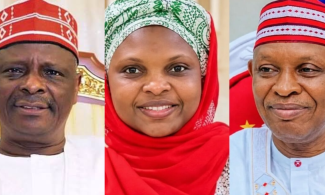
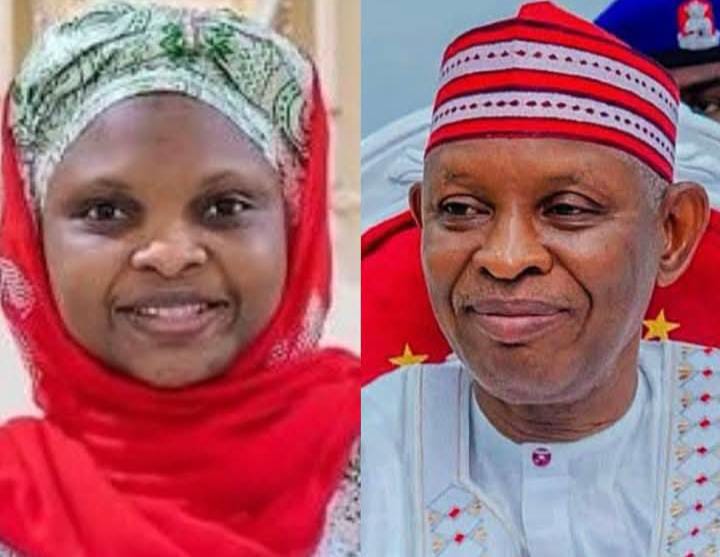
Three security personnel attached to Kano State Governor Abba Yusuf’s wife, Zainab, have reportedly been arrested amid the couple’s ongoing marital crisis.

The arrests reportedly followed Zainab’s departure from the governor’s residence after the breakdown of their marriage, which has led to a divorce suit before an Upper Area Court in Gudu, Abuja.

According to reports, Zainab, daughter of former Kano State Governor and Yusuf’s estranged political ally, Rabiu Kwankwaso, filed the suit, registered as CV/97/26, nearly 20 years after their marriage.

A member of the Kwankwasiyya Movement, Kwankwaso’s political group, disclosing that the governor had been summoned to appear before the court on Tuesday, November 17.

“Yes, it is true. The woman has moved out of her husband’s house and the governor has been asked to appear before the court on November 17. The reason for her divorce is known to her; I don’t want to insinuate.

“She was based in Abuja; she occasionally visited Kano. But I was told she had moved out of her husband’s house about three weeks ago,” he said.

The source also confirmed awareness of the reported arrest of the security personnel when asked about the development.

However, the newspaper said it could not independently verify the arrests or the circumstances surrounding them.

The Kano State Police Command spokesperson, Abdullahi Kiyawa, declined to comment, saying the matter was already before a court.

“We cannot comment on the issue because it is already before a court of law,” Kiyawa said.

He added, “As a responsible institution, the command does not discuss issues that are pending before the courts.”

Efforts to obtain the state government’s position were unsuccessful, as the Commissioner for Information, Ibrahim Waiya, did not respond to calls seeking his reaction.

The marital dispute comes amid a political fallout between Yusuf and Kwankwaso following the governor’s defection to the All Progressives Congress.

Report: Terrorists Killed At Least 835 People In Nigeria In October

By Sabiu Abdullahi

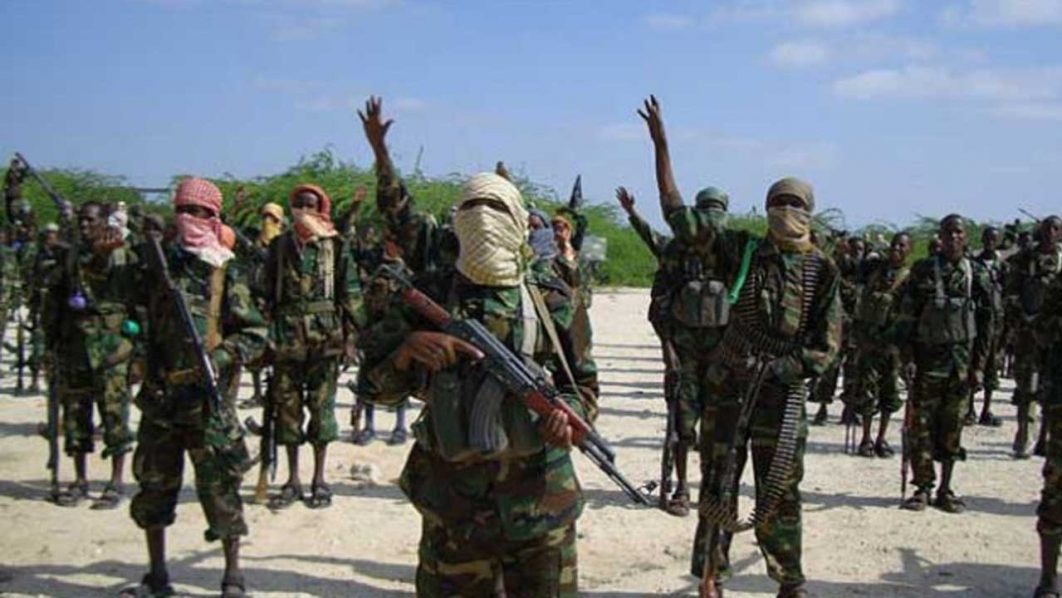
At least 835 people were killed in 612 security incidents across Nigeria’s 36 states and the Federal Capital Territory in October 2026, according to a report by security intelligence firm SARI Global.

The report identified armed bandits and insurgents as the most frequent perpetrators of security incidents and the deadliest actors in the country for the first time in recent months.

The findings were contained in SARI Global’s Nigeria Monthly Security Overview for October 2026. The report attributed the worsening security situation to several major attacks, including a market-day massacre in Taraba State, repeated road blockades in Zamfara State and the assassination of a cleric in Katsina State.

Compared with September, the number of incidents increased by 14 per cent, while fatalities rose by 42 per cent, marking the sharpest monthly increase in deaths recorded by the firm in recent months.

“October was a month of rising volume and sharply rising lethality. SARI Global recorded 612 incidents, 14 per cent more than in September, and at least 835 fatalities, 42 per cent more, across 36 states and the Federal Capital Territory,” the report stated.

It added that armed conflict accounted for 617 of the 835 deaths, including fighters killed during failed attacks and airstrikes, as well as civilian casualties.

“The Armed Conflict category produced 617 of the 835 deaths. A substantial share were armed-group fighters killed in failed assaults and airstrikes, so the rise reflects heavier fighting as well as heavier civilian loss. Non-state armed actors were, for the first time in recent months, both the most frequent initiating actor (221 incidents) and by far the deadliest (480 fatalities).”

A breakdown of the incidents showed that 150 security incidents and 234 deaths were recorded between October 1 and 7. The week’s figures were driven by an Islamic State West Africa Province (ISWAP) attack on a military base in Kukawa, killings in Momo and the crash of a Nigerian Air Force ATR-42 aircraft near a naval base in Igbokoda, Ondo State.

The fourth week, covering October 22 to 28, recorded 123 incidents and 252 deaths. Major incidents during the period included a siege in Birnin Tudu, the Taraba massacre and the assassination of a prominent cleric.

The report identified October 1, 2, 8 and 16 as the days with the highest number of security incidents.

On the actors responsible, SARI Global said non-state armed groups initiated 221 incidents, compared with 218 attributed to government-affiliated forces. The groups were also linked to 480 deaths, against 197 recorded for state forces.

“Non-state armed actors initiated 221 incidents against 218 for government-affiliated forces, and caused 480 fatalities against 197,” the report stated.

It noted that the figure for state forces included the deaths of more than 30 detainees in the custody of the Nigeria Security and Civil Defence Corps in Minna, which an inquiry panel later described as a preventable custodial tragedy.

“A busy security apparatus remains no proof of an improving environment; this month the armed groups simply outpaced it.”

Zamfara State recorded the highest number of incidents, with 69 cases and 137 deaths. Borno State, however, had the highest death toll, with 180 fatalities from 51 incidents, largely linked to clashes between ISWAP and the military around Lake Chad.

Plateau State recorded 65 incidents and 62 deaths, while Katsina had 37 incidents, Kebbi 27, Lagos and Sokoto 22 each, Niger 19, Rivers 18 and Benue 17.

The report highlighted the October 23 attack on Binnari, a market town in Karim Lamido Local Government Area of Taraba State, where armed men attacked a weekly market, the central mosque shortly after Friday prayers and a local vigilante office.

It said residents who fled towards the Benue River were pursued into the water, with several drowning. The death toll, initially put at 10 by the police, later rose to at least 62, with 52 others injured. Fifteen bodies were reportedly recovered from the river.

“The scale and method resemble the mass-casualty bandit attacks of the North West rather than the communal violence more typical of Taraba,” the report said.

It also warned that a second attack on the same community on October 27 showed that the area remained vulnerable.

In Zamfara, the report said bandit attacks had shifted from isolated ambushes to the systematic disruption and control of major roads.

On October 16, armed men blocked the Gusau-Dansadau road and destroyed nine vehicles. They also imposed a N50m levy on communities in Dansadau District, forcing more than 300 residents to flee.

An escorted convoy of traders was attacked near Gurusu on October 11, leaving at least 20 people dead, including soldiers and police officers, despite the presence of security personnel.

Although troops reopened the road on October 21, bandits blocked it again on October 31.

SARI Global also documented repeated ISWAP attacks on military bases in Kukawa, Mairari, Hong, Buni Yadi, Bitta and Bama during the month.

The attacks included an improvised explosive device that killed nine soldiers near Gamboru and an armed drone assault on Gudumbali. The military said it repelled the attacks and killed dozens of fighters.

The report further identified the targeting of religious leaders and the shrinking space for humanitarian operations as emerging security concerns.

It cited the October 26 assassination of Sheikh Yahaya Ibrahim Masussuka in Dutsin-Ma, Katsina State, which Ansaru claimed responsibility for. Other incidents included the killing of a female non-governmental organisation worker in Sokoto State, the looting of an NGO health facility in Ngala and a raid on a Maiduguri compound housing seven United Nations national staff.

The firm also observed increased political tensions ahead of the 2027 general elections. It recorded about 46 incidents linked to political parties, campaigns or political thugs, including attacks on campaigners of the ruling All Progressives Congress in at least five northern states.

SARI Global is a United States-registered security intelligence firm that provides conflict monitoring, threat analysis and operational risk advisory services to international NGOs, United Nations agencies, embassies and companies operating in high-risk environments.

Reps Committee Probes Nine Federal Universities Over Financial Irregularities

By Sabiu Abdullahi

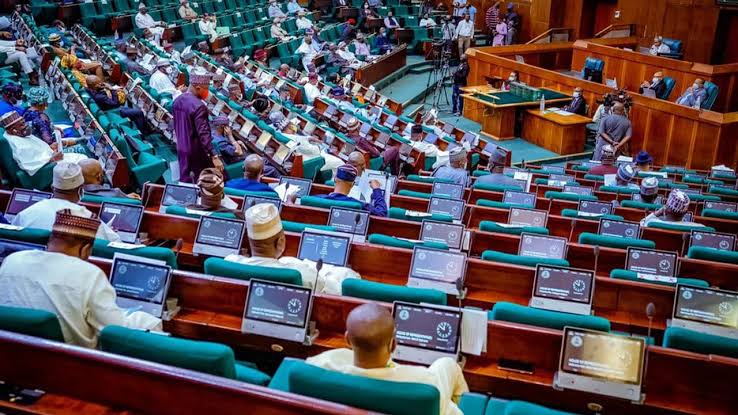
The House of Representatives Committee on University Education has raised concerns over alleged financial irregularities in some federal universities, directing their managements to account for public funds and ensure strict compliance with budgetary provisions.

The committee also summoned the Vice-Chancellor of the University of Lagos, Prof. Folasade Ogunsola, to appear before it next week and submit details of the institution’s 2024, 2025 and 2026 budgets over an alleged N7.1bn discrepancy in its financial records.

The committee chairman, Abubakar Fulata, disclosed this in a statement on Saturday after an oversight visit to universities and inter-university centres across the South-West geopolitical zone.

Fulata said the exercise exposed inconsistencies in financial records, inadequate transparency and possible violations of budgetary rules, warning that such practices could further undermine the university system.

He questioned how some institutions could submit conflicting figures for internally generated revenue and expenditure.

“In some cases, the documents submitted contradict each other. You claimed to have generated N9bn and spent N10bn—where did you get the N1bn from?

“In another instance, you will see N12bn generated as income and only N8bn spent, without any information regarding the whereabouts of the balance of N4bn.”

The lawmaker urged vice-chancellors and university management teams to maintain transparency and accountability, stressing that they must properly account for both government allocations and internally generated revenue.

He said sound financial management was essential to improving the quality of university education and ensuring that public funds were used for their intended purposes.

Fulata acknowledged that lawmakers faced political demands ahead of the 2027 general elections but maintained that political activities would not prevent the National Assembly from carrying out its constitutional oversight duties.

The committee also called on university authorities to observe the federal character principle in staff recruitment and student admissions to ensure fairness and equitable representation.

Institutions directed to update their financial records and submit comprehensive reports on their 2024, 2025 and 2026 budget implementation include the University of Lagos; Obafemi Awolowo University, Ile-Ife; Federal University Oye-Ekiti; Federal University of Technology, Akure; and Federal University of Health Sciences, Ila-Orangun.

Ogunsola was unavailable during the committee’s visit to UNILAG. Officials who represented her were reportedly unable to explain the alleged N7.1bn excess in the university’s 2024 and 2025 financial records or provide further details requested by the lawmakers.

Other institutions visited included the University of Ibadan; Adeyemi Federal University of Education, Ondo; Federal University of Agriculture and Development Studies, Iragbiji; Federal University of Technology and Environmental Studies, Iyin-Ekiti; and the Nigeria French Language Village, Badagry.

The committee said the exercise was part of the National Assembly’s constitutional responsibility to scrutinise public expenditure, monitor budget implementation and ensure that government institutions use public funds for approved purposes.

It added that the exercise was intended to strengthen accountability and address financial and administrative challenges affecting the delivery of quality tertiary education.

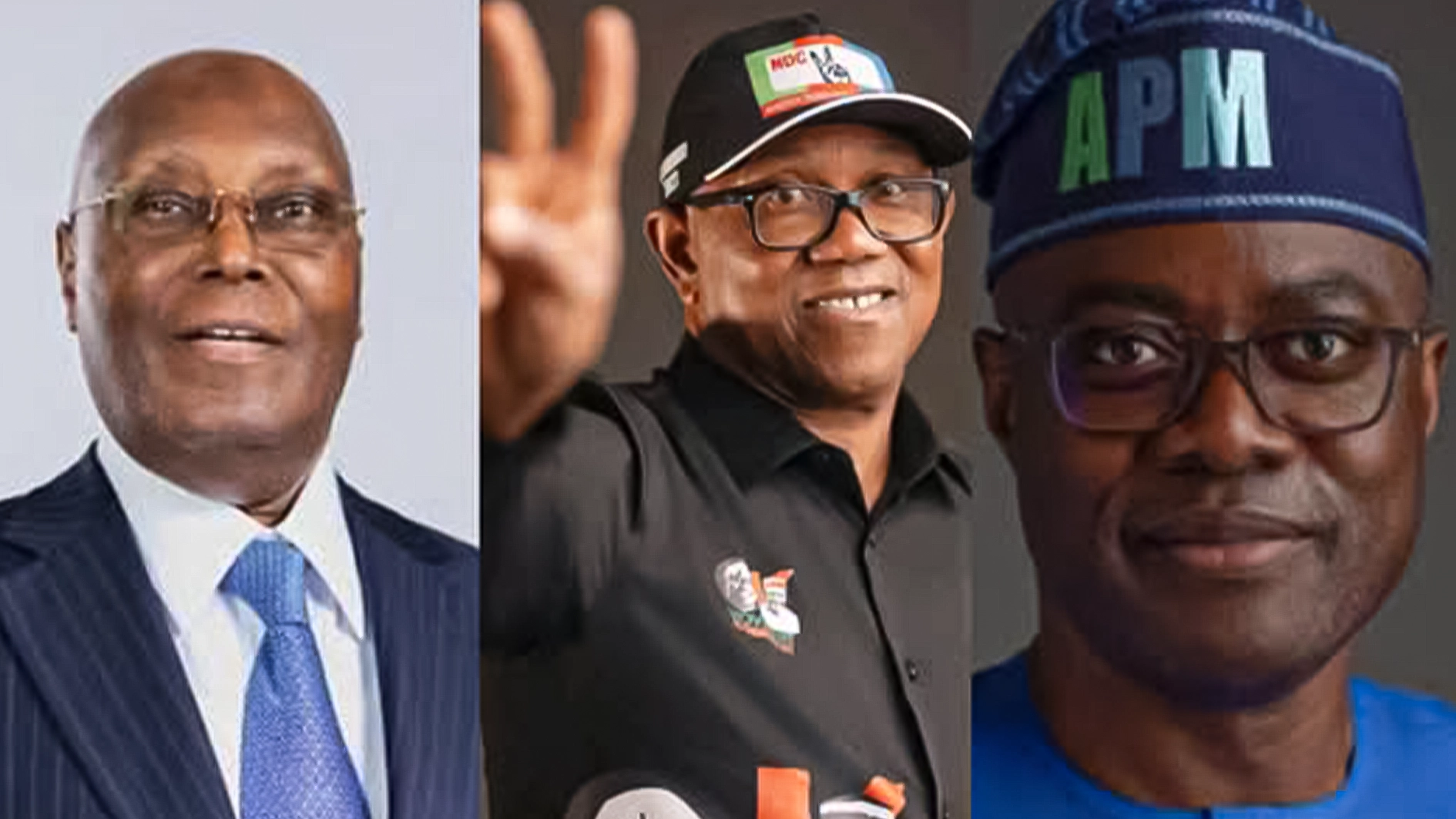
Atiku, Makinde Reportedly Make Progress In Talks For 2027 Alliance

By Sabiu Abdullahi

Former Vice-President Atiku Abubakar and Oyo State Governor Seyi Makinde are reportedly making progress towards a possible political alliance to challenge President Bola Tinubu in the 2027 presidential election.

According to The Punch newspaper, representatives of the two politicians have held several meetings and reached compromises as part of negotiations.

The discussions are said to be separate from wider consultations among opposition leaders seeking to present a common presidential candidate against the ruling All Progressives Congress.

Makinde, who is the presidential candidate of the Allied Peoples Movement, has repeatedly criticised the Tinubu administration and supported efforts to bring opposition parties together ahead of the next general election.

On April 25, he convened an opposition summit at the Government House in Ibadan, where political leaders discussed the possibility of fielding a single candidate against Tinubu. However, the initiative has yet to produce an agreement, as Atiku, Makinde and former Anambra State Governor Peter Obi have maintained their presidential ambitions.

Makinde confirmed on Friday that he was consulting with opposition figures, including Atiku and Obi. Speaking on Arise News, he said the discussions could determine whether they would contest against one another or work together.

“Depending on what we see between now and the election time, we may be rivals; we may be collaborators. One may be the client of the other,” he said.

Sources in the camps of both politicians said that the possibility of an agreement between Atiku and Makinde was high.

A South-West leader of the African Democratic Congress, who spoke on condition of anonymity, described the negotiations as fresh and promising. He expressed confidence that both politicians would soon make their plans public.

Asked when the proposed alliance would be announced, the party chieftain jokingly replied, “before January 16,” in a text message accompanied by a laughing emoji.

An Allied Peoples Movement candidate familiar with Makinde’s political circle also said the governor was expected to work with Atiku in the 2027 election.

“The available information is that the Atiku and Makinde alliance is very possible, and it is taking shape. A series of meetings, both virtual and physical, have been held in the last few weeks, and they are fruitful.

“What is on the ground shows that both parties have reached compromises and they are going to unveil that very soon,” he said.

The Oyo State Commissioner for Information, Dotun Oyelade, confirmed that Makinde was holding discussions with opposition leaders but did not specifically confirm an agreement with Atiku.

He described those involved in the consultations as seasoned politicians “who know the vagaries of contemporary politics, especially as they relate to the Tinubu issues.”

Oyelade said Makinde was open to working with other opposition groups if such an arrangement could provide a practical way to address the country’s challenges.

“As far as Governor Seyi Makinde is concerned, he is not averse to working directly with other opposition tendencies as long as there’s light at the end of the tunnel to end the unequalled sufferings of the masses, because he believes that the level of renewed poverty is absolutely needless,” the commissioner stated.

However, none of the sources disclosed the specific terms of the negotiations or how the proposed alliance would be structured, particularly the question of who would secure the presidential ticket.

The ADC National Publicity Secretary, Bolaji Abdullahi, said opposition parties were still consulting on possible collaboration ahead of the election.

“All opposition parties are still talking. And it’s never too late,” he said.

Atiku’s Senior Special Assistant on Public Communication, Phrank Shaibu, also confirmed that the former vice-president was engaging with opposition leaders.

He said the consultations were aimed at building a common front to address Nigeria’s challenges and provide an alternative to the current administration.

“We are engaging with leaders across the opposition in the shared interest of Nigeria. Together, we will do everything necessary to restore responsible leadership, make life affordable for Nigerians and put our country back on the right path,” he said.

Neither Abdullahi nor Shaibu confirmed that a specific agreement had been reached between Atiku and Makinde.

With the presidential election scheduled for January 16, 2027, opposition leaders face the task of reconciling their interests, agreeing on a common strategy and possibly settling on a consensus candidate.

The report also noted the role of G-100, a political pressure group convened by former Director-General of the Progressives Governors’ Forum, Salihu Lukman, to facilitate a broad opposition coalition ahead of the elections.

The group has held consultations with Atiku, Obi, Makinde and other political figures, arguing that opposition parties could struggle to challenge the APC if they contest separately.

However, the coalition effort has faced uncertainty as several opposition politicians continue to pursue individual presidential ambitions and campaign activities, with no public agreement yet on a common candidate.

Gov Yusuf’s Wife Files for Divorce, Offers to Return Dowry

By Uzair Adam 

The marriage between Kano State Governor Abba Yusuf and his second wife, Zainab Musa Kwankwaso, appears to be heading for dissolution after the governor’s wife approached an Abuja court to seek a divorce.

Zainab, daughter of Senator Rabiu Musa Kwankwaso, has filed a petition before the Upper Area Court in Gudu, Abuja, seeking to end the marriage through khul’i, an Islamic divorce procedure initiated by a wife, usually involving the return of her dowry.

Court documents obtained by DAILY NIGERIAN indicated that the court issued a civil summons, with reference number CV/97/26, directing Governor Yusuf to appear on November 17, 2026.

The couple got married on July 29, 2006, when Zainab was serving as an aide to her father. Their union produced six children.

The divorce proceedings come against the backdrop of the political rift between Yusuf and Kwankwaso, his former political benefactor and father-in-law, which reportedly coincided with growing difficulties in the governor’s marriage.

Zainab reportedly left the Kano Government House on October 28 and travelled to her father’s residence along Miller Road before proceeding to Abuja without her police orderly and other security personnel attached to her.

According to sources, her police orderly raised the alarm after suspecting that something was wrong with her sudden departure and notified his superiors at the Government House.

The governor was subsequently informed, while airport security officials were reportedly instructed to prevent her from boarding her flight. 

They, however, eventually allowed her to travel after concerns that stopping her could lead to an embarrassing confrontation at the airport.

The incident reportedly triggered security-related investigations in Kano, with operatives assigned to protect Zainab’s quarters at the Government House and personnel attached to Kwankwaso’s residence arrested for questioning before being released.

Her elder sister and brother, Ado Kwankwaso, were also reportedly invited by the police over allegations that they facilitated her departure from Kano.

Sources further alleged that there were attempts to have Ado charged with kidnapping.

In her court filing, Zainab attributed her decision to seek divorce to the breakdown of the relationship, describing the marriage as one characterised by a prolonged absence of mutual love, care, affection and emotional attachment.

She also told the court that she had lost her feelings for the governor and developed a strong aversion to continuing the marriage.

The petitioner further argued that remaining in the union could affect her ability to fulfil her religious obligations as prescribed by Allah.

She maintained that attempts to reconcile the couple and restore peace in the marriage had proved unsuccessful, claiming that the governor had also lost interest in the relationship.

Consequently, she offered to refund the dowry Yusuf paid during their wedding as part of the process of securing the dissolution of the marriage.

Khul’i is recognised under Islamic family law as a form of separation initiated by a wife, typically in exchange for compensation to the husband, often through the return of the dowry.

Efforts to obtain the Kano State Government’s position on the matter were unsuccessful. The Commissioner for Information, Sanusi Dawakin Tofa, did not answer calls or respond to a text message seeking the governor’s reaction.

The AI Race and the Muslim World: How Does Waqf Come In?

By Amir Femoh

The world is entering a new technological revolution, and Artificial Intelligence (AI) is rapidly becoming one of its most decisive battlegrounds. Nations are competing to develop powerful AI models, build advanced computing infrastructure, manufacture sophisticated hardware and secure dominance over the technologies that will shape the future of humanity. Unfortunately, much of the Muslim world appears to be watching this revolution from the sidelines.

But what if one of the most powerful instruments for financing this technological transformation is already embedded in our intellectual and civilisational heritage? What if an institution that helped build and sustain Muslim societies for centuries could once again become a vehicle for securing our place in the future?

That institution is Waqf.

In Islamic jurisprudence, Waqf is generally defined as the permanent dedication of an asset, with the principal preserved while its benefits or proceeds are directed toward designated charitable, religious, educational, or public purposes. It is an enduring form of philanthropy designed to generate benefits across generations.

Although the Qur’an does not explicitly mention Waqf in the same way as Zakah and Sadaqah, its foundations are firmly rooted in the Prophetic tradition and the practices of the early Muslim community. One celebrated example is Umar ibn al-Khattab’s endowment of land at Khaybar, following the Prophet Muhammad’s (SAW) advice to preserve the asset and distribute its benefits for charitable purposes.

From the days of Madinah, Waqf gradually evolved into one of the most influential financial and social institutions in Islamic civilisation. Under the Umayyad Empire, administrative structures emerged to supervise charitable endowments. The Abbasid period witnessed further institutional development, with Waqf supporting education, healthcare, religious institutions and public infrastructure. Its influence expanded considerably under the Ottoman Empire, where endowed properties and cash Waqf helped sustain schools, hospitals, libraries, water systems, public kitchens and other essential services.

Its historical significance was not restricted to the Arab world or the Middle East. Across Africa, Islamic scholarship, commerce and public institutions flourished in societies such as Timbuktu, the Borno Empire and the Sokoto Caliphate. Endowments, charitable giving and forms of institutional patronage helped sustain religious learning, scholarship and community welfare. These traditions show that Islamic endowment culture was not confined to one geography but was part of a much wider Muslim civilisational experience.

One important lesson emerges from this history: Waqf enabled societies to mobilise private wealth for public purposes without placing every responsibility on the government treasury.

By financing educational institutions, healthcare facilities, water infrastructure, and other social services through dedicated endowments, governments and political authorities could devote more attention and resources to security, administration, economic expansion, and the long-term prosperity of their territories. Waqf was not a complete substitute for public finance, but it provided an important complementary financial architecture.

This is precisely where the Muslim world must begin thinking differently about the AI revolution.

The Organisation of Islamic Cooperation (OIC) and individual Muslim nations must recognise that AI is no longer simply another technological innovation. It is increasingly connected to national security, economic productivity, scientific discovery, military capabilities, financial systems and geopolitical influence. Countries that fail to develop indigenous capabilities may become permanently dependent on foreign technologies, foreign infrastructure and foreign intellectual property.

Governments already struggling with competing demands on limited public resources cannot be expected to finance every dimension of this technological transformation alone.

This is where a modern Waqf movement could make an extraordinary difference.

Imagine establishing specialised AI Waqf institutions across the Muslim world. Imagine wealthy Muslim entrepreneurs, technology investors and high-net-worth individuals dedicating substantial portions of their wealth to permanent endowment funds specifically designed to finance artificial intelligence research and development.

Such funds could support university laboratories, AI research centres, semiconductor research, robotics, advanced computing infrastructure, machine learning, cybersecurity and the development of indigenous large language models.

They could also finance the design, prototyping and mass production of powerful AI hardware and software. Rather than depending exclusively on government grants or foreign venture capital, promising Muslim researchers and entrepreneurs would have access to patient, long-term capital dedicated to scientific advancement.

The investment returns from carefully managed Waqf assets could continually replenish these research funds, making them sustainable across generations.

Of course, such an ambitious undertaking would require professional management, independent oversight, transparency, competent investment strategies and clearly defined research objectives. Waqf institutions must not become another avenue for corruption, political interference or the mismanagement of public-minded wealth.

But there is another equally important dimension to this conversation: intellectual confidence.

The young Muslim scientist, engineer or researcher who benefits from such a fund must understand that he or she is not beginning this journey in a historical vacuum.

Long before the emergence of modern artificial intelligence, Muslim scholars made remarkable contributions to mathematics, algorithms, cryptography, optics and experimental scientific inquiry. Muhammad ibn Musa al-Khwarizmi’s mathematical writings helped establish the intellectual foundations of algebra and the algorithmic tradition. Al-Kindi made important contributions to cryptanalysis, while Ibn al-Haytham transformed the study of optics through observation, experimentation and rigorous investigation.

These contributions belong to a wider scientific heritage that helped shape the intellectual foundations upon which modern science and computing eventually developed.

Our responsibility is not merely to celebrate these historical achievements. It is to build upon them.

We cannot keep producing conferences celebrating Muslim scientific achievements of a thousand years ago while neglecting the laboratories, computing facilities, research endowments, and industrial capabilities needed to produce the scientific breakthroughs of tomorrow.

The urgency is particularly significant for countries such as Nigeria, Bangladesh and Pakistan. These nations possess substantial human capital, large populations, vibrant young communities and considerable intellectual potential. Yet their technological ambitions remain constrained by inadequate research financing, infrastructure deficits and dependence on imported technology.

They must not allow their economic challenges to become an excuse for technological surrender.

Indeed, the so-called bottom-billion Muslim nations should be among the first to embrace a modern Waqf-driven scientific financing revolution. Their governments, wealthy citizens, Islamic financial institutions, universities and business communities must begin working together to establish dedicated national AI Waqf funds.

The Muslim world does not necessarily need to outspend every major global power. But it must invest intelligently, strategically and consistently in the capabilities that matter.

The question is no longer whether Muslims can afford to participate in the AI race. The question is whether we can afford not to.

Our ancestors used Waqf to build institutions that outlived kings, dynasties and empires. Today’s generation must show the same foresight by using it to build institutions that can shape the technological future.

The next great Muslim civilisation will not be built by nostalgia alone. It will be built through knowledge, capital, institutions, scientific courage and a willingness to invest in generations yet unborn.

Perhaps the next great Waqf should not only build a mosque, a hospital or a university. Perhaps it should build an AI laboratory that changes the future of governance in the Muslim world.

Amir Femoh is a teacher, administrator, and tech entrepreneur. He can be contacted at amirfemoh@gmail.com.

Cooking Gas Price Rises To N1,800 Per Kilogram As Households Face Higher Costs

By Sabiu Abdullahi

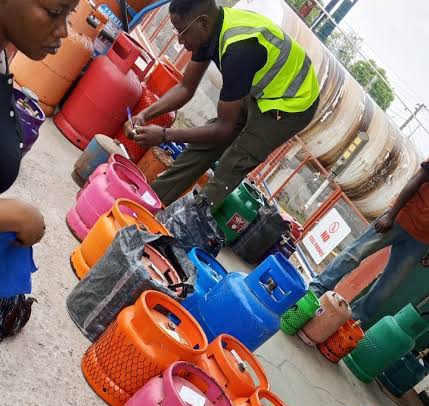
The price of Liquefied Petroleum Gas (LPG), popularly known as cooking gas, has increased to as much as N1,800 per kilogram at some retail outlets in Abuja, further raising the cost of cooking for Nigerian households.

The latest increase followed fresh price adjustments by depot owners and retailers over the past two days.

According to Daily Post, StockGap raised its depot price by N25 to N1,440 per kilogram. Meanwhile, Nigerian Independent Petroleum Company Limited (NIPCO), Mobil, now operating as 11 Plc, and Ardova sold the product at prices ranging between N1,390 and N1,400 per kilogram.

At the retail level, outlets operated by Raniol, Juda Oil and the Nigerian National Petroleum Company Limited (NNPC) in Abuja and neighbouring areas increased their prices to between N1,550 and N1,600 per kilogram, compared with the previous range of N1,400 to N1,500.

Smaller cooking gas dealers now sell the product for between N1,700 and N1,800 per kilogram, depending on the location.

The development comes after NIPCO’s spokesperson, Taofeek Lawal, previously told Daily Post that LPG prices could witness further increases between November and January 2027.

The latest adjustment has also increased the amount consumers must pay to refill their gas cylinders.

For instance, customers who previously spent N17,500 to refill a 12.5kg cylinder at N1,400 per kilogram will now pay N20,000 at the new retail rate of N1,600 per kilogram.

This represents an additional N2,500 in the cost of refilling the same cylinder, further adding to the financial burden on households that depend on cooking gas.