By Sabiu Abdullahi
At least 835 people were killed in 612 security incidents across Nigeria’s 36 states and the Federal Capital Territory in October 2026, according to a report by security intelligence firm SARI Global.
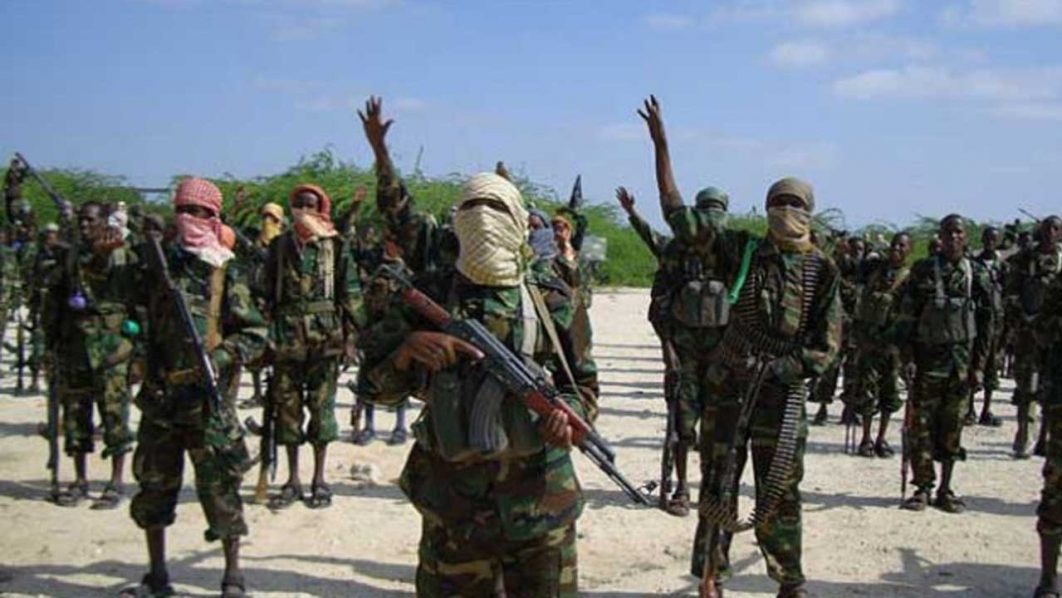
The report identified armed bandits and insurgents as the most frequent perpetrators of security incidents and the deadliest actors in the country for the first time in recent months.
The findings were contained in SARI Global’s Nigeria Monthly Security Overview for October 2026. The report attributed the worsening security situation to several major attacks, including a market-day massacre in Taraba State, repeated road blockades in Zamfara State and the assassination of a cleric in Katsina State.
Compared with September, the number of incidents increased by 14 per cent, while fatalities rose by 42 per cent, marking the sharpest monthly increase in deaths recorded by the firm in recent months.
“October was a month of rising volume and sharply rising lethality. SARI Global recorded 612 incidents, 14 per cent more than in September, and at least 835 fatalities, 42 per cent more, across 36 states and the Federal Capital Territory,” the report stated.
It added that armed conflict accounted for 617 of the 835 deaths, including fighters killed during failed attacks and airstrikes, as well as civilian casualties.
“The Armed Conflict category produced 617 of the 835 deaths. A substantial share were armed-group fighters killed in failed assaults and airstrikes, so the rise reflects heavier fighting as well as heavier civilian loss. Non-state armed actors were, for the first time in recent months, both the most frequent initiating actor (221 incidents) and by far the deadliest (480 fatalities).”
A breakdown of the incidents showed that 150 security incidents and 234 deaths were recorded between October 1 and 7. The week’s figures were driven by an Islamic State West Africa Province (ISWAP) attack on a military base in Kukawa, killings in Momo and the crash of a Nigerian Air Force ATR-42 aircraft near a naval base in Igbokoda, Ondo State.
The fourth week, covering October 22 to 28, recorded 123 incidents and 252 deaths. Major incidents during the period included a siege in Birnin Tudu, the Taraba massacre and the assassination of a prominent cleric.
The report identified October 1, 2, 8 and 16 as the days with the highest number of security incidents.
On the actors responsible, SARI Global said non-state armed groups initiated 221 incidents, compared with 218 attributed to government-affiliated forces. The groups were also linked to 480 deaths, against 197 recorded for state forces.
“Non-state armed actors initiated 221 incidents against 218 for government-affiliated forces, and caused 480 fatalities against 197,” the report stated.
It noted that the figure for state forces included the deaths of more than 30 detainees in the custody of the Nigeria Security and Civil Defence Corps in Minna, which an inquiry panel later described as a preventable custodial tragedy.
“A busy security apparatus remains no proof of an improving environment; this month the armed groups simply outpaced it.”
Zamfara State recorded the highest number of incidents, with 69 cases and 137 deaths. Borno State, however, had the highest death toll, with 180 fatalities from 51 incidents, largely linked to clashes between ISWAP and the military around Lake Chad.
Plateau State recorded 65 incidents and 62 deaths, while Katsina had 37 incidents, Kebbi 27, Lagos and Sokoto 22 each, Niger 19, Rivers 18 and Benue 17.
The report highlighted the October 23 attack on Binnari, a market town in Karim Lamido Local Government Area of Taraba State, where armed men attacked a weekly market, the central mosque shortly after Friday prayers and a local vigilante office.
It said residents who fled towards the Benue River were pursued into the water, with several drowning. The death toll, initially put at 10 by the police, later rose to at least 62, with 52 others injured. Fifteen bodies were reportedly recovered from the river.
“The scale and method resemble the mass-casualty bandit attacks of the North West rather than the communal violence more typical of Taraba,” the report said.
It also warned that a second attack on the same community on October 27 showed that the area remained vulnerable.
In Zamfara, the report said bandit attacks had shifted from isolated ambushes to the systematic disruption and control of major roads.
On October 16, armed men blocked the Gusau-Dansadau road and destroyed nine vehicles. They also imposed a N50m levy on communities in Dansadau District, forcing more than 300 residents to flee.
An escorted convoy of traders was attacked near Gurusu on October 11, leaving at least 20 people dead, including soldiers and police officers, despite the presence of security personnel.
Although troops reopened the road on October 21, bandits blocked it again on October 31.
SARI Global also documented repeated ISWAP attacks on military bases in Kukawa, Mairari, Hong, Buni Yadi, Bitta and Bama during the month.
The attacks included an improvised explosive device that killed nine soldiers near Gamboru and an armed drone assault on Gudumbali. The military said it repelled the attacks and killed dozens of fighters.
The report further identified the targeting of religious leaders and the shrinking space for humanitarian operations as emerging security concerns.
It cited the October 26 assassination of Sheikh Yahaya Ibrahim Masussuka in Dutsin-Ma, Katsina State, which Ansaru claimed responsibility for. Other incidents included the killing of a female non-governmental organisation worker in Sokoto State, the looting of an NGO health facility in Ngala and a raid on a Maiduguri compound housing seven United Nations national staff.
The firm also observed increased political tensions ahead of the 2027 general elections. It recorded about 46 incidents linked to political parties, campaigns or political thugs, including attacks on campaigners of the ruling All Progressives Congress in at least five northern states.
SARI Global is a United States-registered security intelligence firm that provides conflict monitoring, threat analysis and operational risk advisory services to international NGOs, United Nations agencies, embassies and companies operating in high-risk environments.