Month: June 2026

Tinubu Hails Nigeria’s Troops as ‘Shield Between Innocent Citizens and Terror’


By Abdullahi Mukhtar Algasgaini

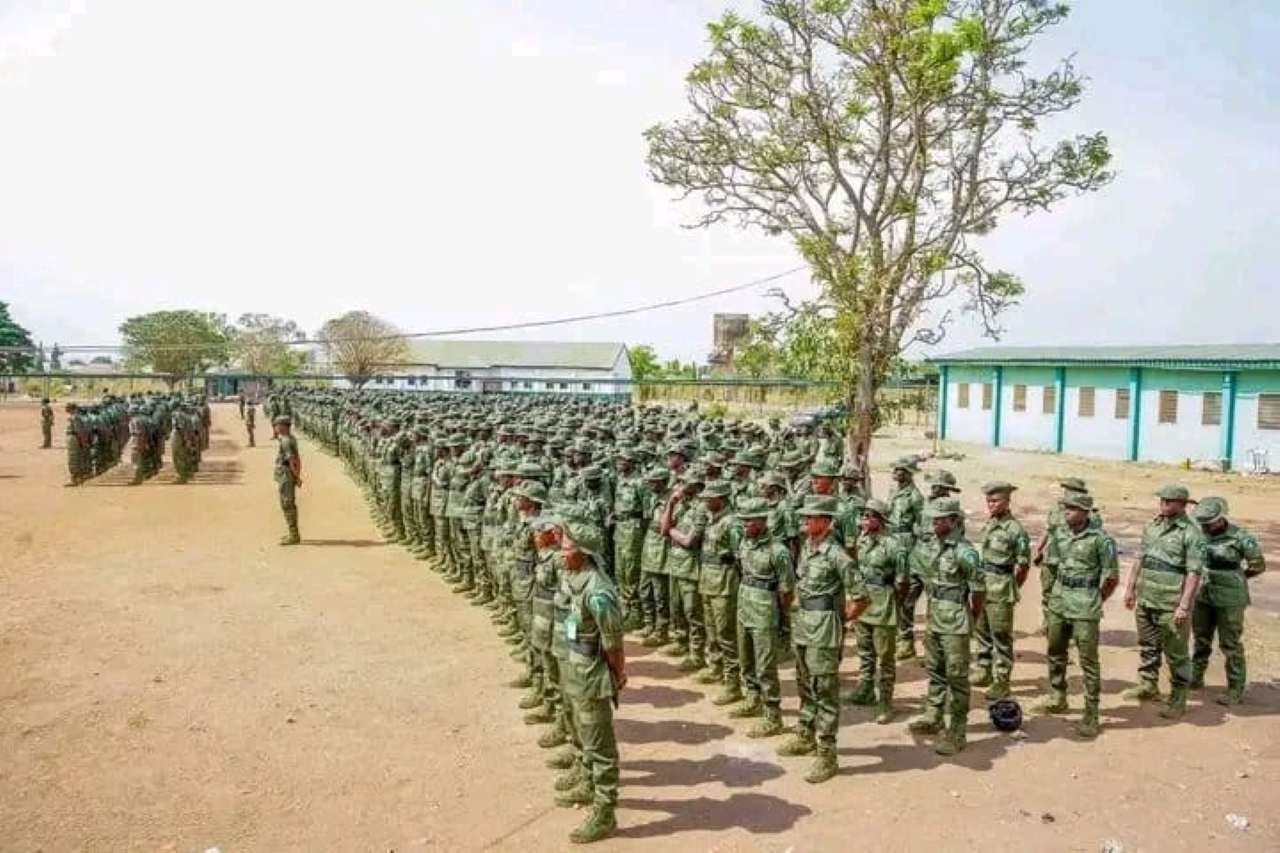
President Bola Tinubu commended Nigerian military personnel and security forces for their sacrifices in the ongoing fight against terrorism, describing them as a “shield” protecting millions of citizens from violent extremists.

In a statement titled Terrorism in the Land, the President praised troops operating in forests, roads, forward bases, air zones, creeks, and other difficult terrains across the country. He acknowledged the emotional and physical toll of the campaign, including long absences from families and the ultimate sacrifice paid by fallen heroes.

“You carry the burden of national protection so that millions of Nigerians can sleep, work, worship, farm, trade, and raise their children in hope,” Tinubu said. “This fight has not been easy. It has come with pain, pressure, and sacrifice. But your courage has remained firm.”

The President extended his gratitude not only to the Armed Forces but also to the police, Department of State Services (DSS), Civil Defence, intelligence agencies, and local security formations. He also recognized the families of service members, saying, “Nigeria remembers that sacrifice, too.”

Tinubu called on citizens to support security efforts by providing timely and useful information, urging: “When you see something, say something. When you know something, report it.”

He rejected any notion that Nigeria would surrender to fear, insisting that terrorists, bandits, kidnappers, and violent extremists would not define the nation’s identity. “Their violence is not our identity. Their hatred does not represent Nigerians of any faith, creed, or community,” he said.

The President concluded with a prayer for the protection of troops, reaffirming that the fight against terror remains a national duty.

Judge to Rule on Recusal Application in ADC Leadership Dispute

By Abdullahi Mukhtar Algasgaini

Justice Peter Lifu of the Federal High Court, Abuja, will on June 16, 2026, decide whether to withdraw from the ongoing leadership tussle within the African Democratic Congress (ADC).

The judge fixed the date on Monday after listening to arguments from lawyers representing parties in the suit, following recusal applications filed by the faction loyal to former Senate President David Mark.

The leadership crisis began when a former Deputy Chairman of the ADC, Nafiu Bala Gombe, approached the court challenging Mark’s position as the national chairman of the party. The suit, marked FHC/ABJ/CS/1819/2025, has already travelled to the Supreme Court and was returned to the Federal High Court on April 30, 2026, for accelerated hearing.

However, the Mark-led ADC is opposing the hearing of the suit by Justice Lifu, who was newly assigned to handle the matter expeditiously. The respondents in the suit include the ADC, Senator David Mark, Rauf Aregbesola, the Independent National Electoral Commission (INEC), and Chief Ralph Nwosu as 1st to 5th respondents respectively.

Recall that Justice Emeka Nwite had on May 8, 2026, adjourned the matter indefinitely after Gombe wrote to the Chief Judge of the Federal High Court, Justice John Tsoho, requesting a transfer of the case to another judge. Days later, the case was reassigned to Justice Lifu, who assumed jurisdiction on June 3, 2026, and ordered accelerated trial.

When the matter came up on Monday, after a heated exchange during the identification of processes, Justice Lifu directed counsel to adopt their motions seeking his withdrawal over allegations of bias.

Apart from the second respondent and INEC, all other parties—including an applicant seeking joinder, the National Welfare Secretary of ADC, Nkemakolam Ukandu—asked Justice Lifu to recuse himself, transfer the matter, or stay proceedings.

Ukandu’s lawyer, Kalu Kalu Agu, cited a petition against the Chief Judge and Justice Lifu pending before the National Judicial Council (NJC), as well as another court case against the NJC, Tsoho, and Lifu filed last Thursday.

However, Gombe’s lawyer, Mr Robert Emukpero, SAN, urged the court to dismiss the motions, arguing there was no evidence of bias against the respondents.

After listening to all parties, Justice Lifu announced that ruling would be delivered on June 16, 2026.

Kwankwaso Reportedly Threatens to Quit NDC Over Kano Candidate List Changes

By Sabiu Abdullahi

Former Kano State Governor and leader of the Kwankwasiyya movement, Senator Rabiu Musa Kwankwaso, has reportedly threatened to leave the Nigeria Democratic Congress (NDC) following the party’s decision to revise the list of candidates submitted by his political bloc in Kano State.

According to reports, the NDC leadership in Kano altered several nominations submitted by the Kwankwasiyya faction. The move was said to be aimed at enforcing an earlier agreement on the sharing of party positions and elective tickets between the two sides.

A document reportedly signed by the Kano State Chairman of the NDC, Hon. Hussaini Isah Mairiga, stated that the adjustments were necessary to reflect the terms of the arrangement reached between the party’s existing structure and the Kwankwasiyya bloc.

The document was copied to the party’s National Leader, Senator Seriake Dickson, Senator Kwankwaso, and the NDC North-West Zonal Chairman.

Under the updated list, the party approved Barrister Isma’il Idris Sani for Kumbotso Federal Constituency, Nasiru Ali Ahmed for Nassarawa, Kabiru Ishaq Sa’id for Kano Municipal, Barrister Dayyabu Jamilu Ibrahim for Doguwa/Tudun Wada, Muhammad Hamisu Abubakar for Dawakin Tofa/Rimin Gado/Tofa, Ibrahim Bashir Bango for Sumaila/Takai, and Abdulmajid Isa Umar Mairigar Fata for Gwale.

The party also revised some Kano State House of Assembly tickets in Dala, Tarauni, Kumbotso, Ungogo and Dawakin Kudu constituencies.

The NDC maintained that there was an existing agreement under which elective positions and party offices would be shared on a 60-40 basis. Under the arrangement, the Kwankwasiyya bloc was allocated 60 per cent, while the original party structure retained 40 per cent.

The development comes days after NDC presidential candidate Peter Obi officially announced Kwankwaso as his running mate for the 2027 general election. The announcement was made on May 31 and confirmed a major political alliance within the opposition ahead of the polls.

Political observers believe the partnership between Obi and Kwankwaso could significantly influence the dynamics of the 2027 presidential race, as both leaders command substantial support across different parts of the country.

Bachirawa Residents Raise Alarm Over Escalating Violence

By Hadiza Abdulkadir

Residents of Bachirawa and surrounding communities in Kano State have raised concerns over a surge in violent clashes allegedly linked to rival groups identified as Habun Daidai and Tsalha Maikare.

According to a statement issued by concerned community members, the violence has intensified since the Sallah celebrations, leaving many residents displaced and several houses destroyed by fire. The affected communities include areas around Kwanar Ungogo, NRC Road, and Bayan Waya (Makera).

The residents alleged that criminal elements operate openly in parts of the area, particularly around Kwanar Ungogo Market, which they described as a hub for drug trafficking and other criminal activities. They further called on the Kano State Commissioner of Police to reorganize personnel in the Bachirawa and Ungogo police divisions to improve security.

The group also appealed to Governor Abba Kabir Yusuf to visit the affected communities or dispatch a high-powered delegation to assess the situation and address the growing insecurity.

The Daily Reality was unable to independently visit the affected areas or verify the claims contained in the statement at the time of filing this report.

For security reasons, the authors of the statement requested anonymity.

Critics Allege ‘Hypocrisy’ as Media, European Football Bodies Face Scrutiny Over Silence Ahead of 2026 World Cup

By Muhammad Abubakar

A debate over perceived double standards in international football has resurfaced on social media, with critics accusing some Western media organisations and European football associations of hypocrisy in their responses to the 2022 and 2026 FIFA World Cups.

The discussion was sparked by an X post from user Yan Goi (@GongR1ight), who contrasted the strong criticism directed at host nation Qatar before the 2022 World Cup with what he described as a muted response to the 2026 tournament, which will be co-hosted by the United States, Canada, and Mexico.

The post cited Norway’s calls for a boycott of the Qatar tournament, Denmark’s public criticism of Qatar’s human rights record, and political gestures by Germany’s national team during the 2022 competition. It also pointed to the BBC’s decision to focus on controversies surrounding Qatar rather than broadcasting the full opening ceremony, a move that drew both praise and criticism at the time.

Critics argue that many of the organisations and commentators who were vocal about labour rights, governance, and social issues in Qatar have been comparatively quiet about concerns linked to the 2026 World Cup, including immigration policies, border enforcement, and other political controversies in the host countries.

Others reject the comparison, arguing that the circumstances surrounding the two tournaments differ significantly and that media outlets have continued to report on issues related to the 2026 World Cup, albeit with less intensity than the coverage seen ahead of Qatar 2022.

The debate has renewed broader questions about consistency in sports journalism and international football governance, with supporters and critics divided over whether similar standards are being applied to different World Cup hosts.

Addressing the Root Causes of Xenophobia

By Blessing Omolola

I hope you find this helpful

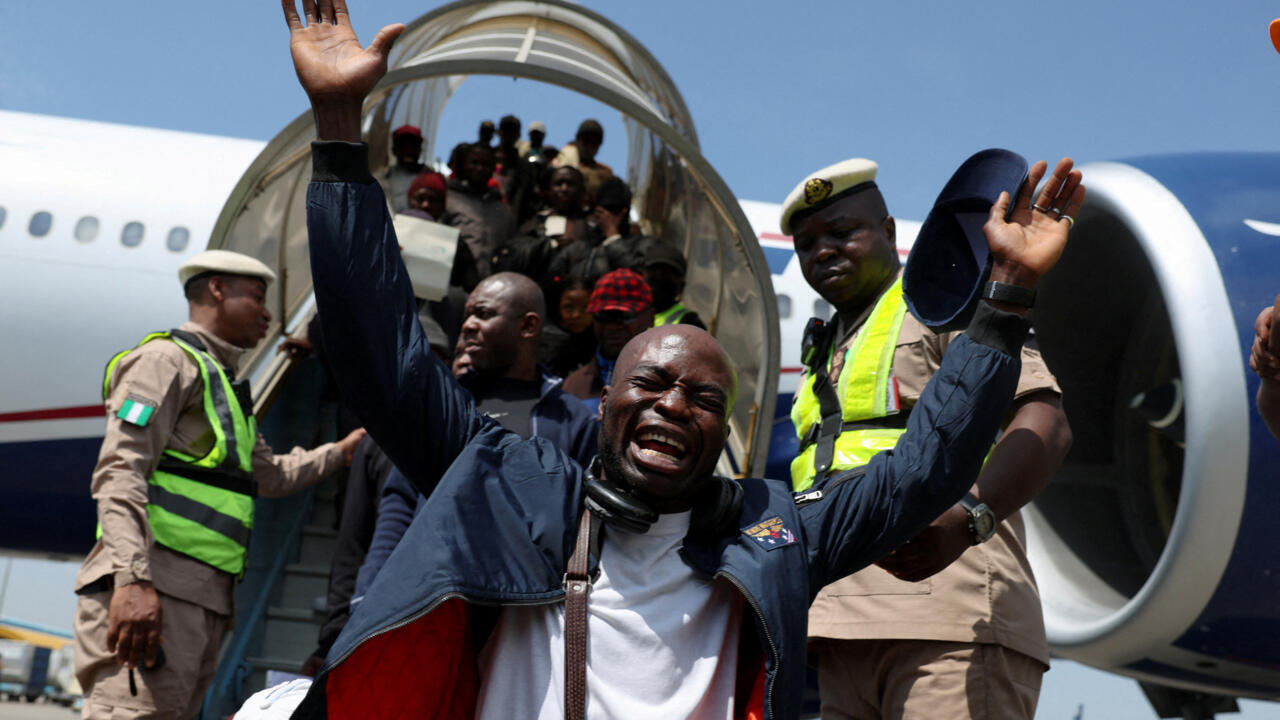
A recent report that Nigerians are seeking to return from South Africa has once again brought a painful, long-standing issue to the forefront. This is the recurring cycle of xenophobia in South Africa.

The Federal Government’s concerns regarding Nigerians seeking evacuation highlight more than just immediate safety risks; they expose deep-seated, unresolved tensions surrounding migration, unemployment, and economic frustration across the continent.

For those who have read the history books, the relationship between Nigeria and South Africa is historically complex. During the apartheid era, Nigeria was a primary supporter of South Africa’s liberation struggle, providing significant political, economic, and moral aid.

Consequently, many Nigerians view these recurring attacks as a fundamental betrayal of continental unity. Following the end of apartheid, South Africa emerged as one of the continent’s most robust economies, naturally attracting migrants seeking better prospects. However, this movement has frequently met with local resistance.

Xenophobic violence in South Africa is a systemic issue affecting various African nationals through repeated waves of unrest. In 2008, widespread attacks in various townships resulted in over 60 deaths and the displacement of thousands of immigrants.

This was followed by another surge in 2015, when violence erupted in Durban and spread across the country. Foreign-owned shops were looted, and several migrants, including Nigerians, Mozambicans, and Zimbabweans, were killed, leading to diplomatic friction.

Most recently, in 2019, attacks resurfaced in Johannesburg and Pretoria, sparking renewed outrage and firm responses from the Nigerian government. These incidents demonstrate that the violence is driven by economic desperation and social tension rather than isolated hostility toward one specific nationality.

As tensions rise, the Nigerians in Diaspora Commission (NiDCOM) has reported that many citizens expressed a desire to return home due to safety fears. However, the Federal Government’s stance that those wishing to return must cover their own transportation costs has sparked significant debate.

Critics argue that citizens in crisis deserve more robust state support, while others point to the logistical and financial strain on the government. This situation emphasises the vulnerability of African migrants during social unrest and the pressing need for stronger diplomatic cooperation to protect citizens living abroad.

But beyond statistics, xenophobia has devastating personal consequences. Consider the story of a young Nigerian entrepreneur in Johannesburg who spent years building a small electronics business to fund her education and support her family.

When violence flared, she was forced to abandon her shop and inventory to save her life. Years of hard work vanished in days. She returned to Nigeria with no capital and significant psychological trauma. This narrative is common among those who face sudden displacement and financial ruin.

The roots of xenophobia in South Africa are firmly planted in socio-economic struggles such as high unemployment, inequality, and poverty. In this environment, immigrants are often scapegoated as competitors for limited jobs and resources. This perspective ignores the reality that many immigrants contribute to the economy by creating small businesses and filling labour gaps.

So, the problem is not the presence of foreigners, but rather unresolved structural economic failures. Violence and collective punishment do not solve unemployment or poverty; instead, they damage diplomatic ties and tarnish Africa’s global image.

Africa is at its strongest when its nations cooperate. The repeated cycles of xenophobic violence undermine the spirit of the “United Africa” that leaders have long championed. The true cost of xenophobia is paid by displaced migrants, South Africa’s international reputation, and the concept of continental unity.

Long-term solutions require emergency evacuations, structural economic reform, better policy action, and public education to foster tolerance. Only by addressing these core issues can Africa achieve true peaceful coexistence.

Oladapo Blessing Omolola a student at Yakubu Gowon University in the Department of Strategic Communication. I can be reached at: blessingomolola0565@gmail.com.

The Trailer Crash That Left Metal in My Hand

‎By Ibrahim Happiness

Every day on Nigerian roads, lives are put at risk not only by reckless driving but also by a transport system that forces heavy-duty trailers and smaller vehicles to share the same lanes and the same dangers. It is a problem visible in plain sight on roads used daily by millions of Nigerians, yet it has never received the urgency it deserves.

Drive from Abuja through Lugbe and Giri, all the way to Gwagwalada, and the evidence is everywhere. Trailers line both sides of the road, some parked, some moving, others broken down in the middle of traffic without warning. Small cars are forced through spaces that should not exist. Motorcycles weave dangerously beside giant wheels. Tricycles take risks next to vehicles many times their size.

And when something goes wrong, whether a tyre bursts, brakes fail, or a driver misjudges, it is rarely the trailer that suffers most. It is the smaller vehicles. It is ordinary people simply trying to get to their destinations.

‎Traffic gridlock along these routes has become routine. Commuters travelling from Abuja to places like Gwagwalada often spend hours trapped in traffic, sometimes late into the night, because trailers block stretches of road, refuse to give way, park carelessly, or are simply too large for the roads they use. Some people sleep in their cars because there is nowhere else to go.

I know this not only through observation but also through painful personal experience that I carry every day in my hand, in my eye, and in my memory.

On a rainy Sunday morning, 11 June 2023, my grandfather and I left home early for church. It was around 7 a.m. The road was slippery, visibility was poor, and, like many Nigerian families, we were simply trying to travel safely.

Then everything changed. A trailer was parked in the middle of the road. Whether it had broken down or been abandoned, I cannot say. What I know is that it sat there in the rain, without warning signs, cones, or visible hazard lights.

A car rammed us from behind. The impact was sudden and violent. My grandfather lost control, and we were pushed into the parked trailer. What followed changed my life forever.

Shards of glass flew into my face and tore my eyeball. My hand was badly broken. In the first moments after the crash, I could not see at all. The pain was intense, but the darkness was worse. Not knowing whether my sight would return is something I would not wish on anyone.

The next day, I underwent eye surgery. Even then, my vision did not return immediately. I spent more than three months in the hospital, undergoing treatment, recovering, and living with uncertainty. My family stood by me, both emotionally and financially, and I remain grateful to them. Slowly, my sight returned. Today, I do not take that blessing for granted.

My hand became another battle. The damage was so severe that surgeons inserted a metal implant to hold the bones together. That implant remains in my hand today. It still causes pain, limits movement, and brings daily discomfort. But I am alive, and that is what I hold on to.

The trailer driver denied responsibility, claiming the vehicle was moving at the time of the crash. It was not. It was parked in the middle of the road. Yet denial was easier than accountability, as is too often the case in trailer-related accidents in Nigeria.

‎That metal in my hand, the surgery on my eye, the months I lost, and the burden my family carried are why I am writing this.

Because my story is not unique, it is one of countless stories that unfold on Nigerian roads every year. Many never make the news. Many families never receive justice. Many lives are permanently altered while the system remains unchanged.

The Lugbe-Gwagwalada road tells this story every day. Like many highways in and around Abuja, it serves workers, students, worshippers, traders, and families. Yet trailers operate there without the infrastructure, discipline, or dedicated space that vehicles of that size require.

The result is chaos so normalised that many people no longer question it. They accept it as the price of travelling in Nigeria, but it should not be.

There is also a serious economic cost. Heavy-duty trailers damage road infrastructure faster than government repair budgets can keep pace with. Their immense weight, especially when overloaded, destroys road surfaces, creates potholes, and weakens road foundations. Billions of naira are spent annually on repairs, much of it due to damage caused by heavy vehicles using roads never designed to withstand such loads.

Yet the idea of dedicated trailer lanes, properly built, clearly marked, and strictly enforced, remains an afterthought rather than an urgent national priority.

Other countries have addressed this challenge. Many highways around the world provide separate lanes for heavy vehicles because planners recognise that vehicles with vastly different sizes, speeds, and stopping distances should not compete for the same space. It is not a complicated policy. It is common sense and saves lives.

Nigeria must now make the same move. Dedicated trailer lanes would reduce accidents, ease congestion, save commuters valuable time, cut road maintenance costs, and protect lives.

No one should carry metal in their hand for life because a trailer was carelessly parked on the road. No one should spend months in the hospital fighting to regain their sight because proper traffic systems are lacking.

This is not a luxury demand. It is not unreasonable. It is a practical, lifesaving measure whose time has long since come. Heavy-duty trailers need their own lanes.

Ibrahim Happiness is a 300-level Strategic Communication student at the University of Abuja and an intern at IMPR. She can be reached at happinessibrahim11@gmail.com.

UDUS Mass Communication Conference: AI Can Transform Media into Driver of Civic Engagement, Development — Prof. Fatma El-Sayed

By Dahiru Kasimu Adamu

A media and journalism scholar from Cairo University, Egypt, Prof. Fatma El-Sayed, has described artificial intelligence (AI) as a transformative force capable of turning the media from a passive observer into an active engine of civic engagement and national development.

Prof. El-Sayed stated this while delivering the pre-conference lecture at the opening of the First International Conference organised by the Department of Mass Communication, Usmanu Danfodiyo University, Sokoto (UDUS). The conference, themed “Media and National Development in the Era of Artificial Intelligence,” was held on Sunday at the Emir Zayyanu Auditorium on the university’s main campus.

Speaking on the opportunities AI presents for Africa, Prof. El-Sayed described the technology as a “leapfrog engine” for development. She identified three major areas in which AI can accelerate progress: overcoming language barriers, enabling communication through voice and video for populations with low literacy levels, and facilitating low-cost, automated content production.

She argued that AI should be viewed as a critical infrastructure requirement rather than merely a technological tool, stressing the need for stable electricity, reliable internet connectivity, and data sovereignty across the continent.

According to her, the ongoing global technological shift has altered traditional development pathways, and she notes that “the old rules of development no longer apply” because AI provides a structural shortcut to economic and social advancement.

Prof. El-Sayed further emphasised the importance of African ownership of the continent’s digital future, asserting that “the future of AI in Africa should be theorised by Africans.”

She urged governments, educational institutions, and media organisations to harness AI responsibly by improving efficiency, reclaiming African narratives, strengthening data governance frameworks, investing in indigenous data resources, promoting equitable international partnerships, developing ethical AI-focused media curricula, and expanding AI literacy among citizens.

Earlier, the Head of the Department of Mass Communication, Dr Umar Jibrin Gwandu, welcomed participants and highlighted the department’s growth and achievements since its establishment.

Dr Gwandu said the conference was designed to prepare future media professionals for the rapidly evolving digital environment and the increasing integration of AI into media and communication practice.

“AI has come to stay, and we must learn to use it as a tool for development, not deception,” he said.

The event attracted media and communication scholars, industry practitioners, students, and other stakeholders from within and outside the university.

Established in 2019, the Department of Mass Communication at UDUS is committed to training professionals who can contribute meaningfully to Nigeria’s media and communication industry. The department has so far graduated two sets of students.

Garba Diso and the Rising Dr Shu’aibu Abdul

By Abbas Datti

Effective representation in the House of Representatives is measured not by a lackadaisical approach and empty promises, but by tangible results delivered to the people. 

Unfortunately, Hon. Garba Diso, the current Gwale Member of the House of Representatives, has fallen short of expectations, particularly in the critical areas of sponsoring bills, raising motions, and youth development, educational support, and economic empowerment. That’s why Gwale youths rally for a vibrant young Dr Shu’aibu Abdul, urging him to contest for the Gwale House of Representatives in the National Assembly during the forthcoming 2027 general elections. 

Over the years, Gwale constituents have witnessed limited investment in the future of young people. There have been few visible scholarship opportunities, job opportunities, and inadequate empowerment initiatives for both young men and women. Unemployment and lack of access to higher education remain pressing challenges; this absence of proactive representation has left many youths without direction or meaningful support.

In contrast, Dr Shu’aibu, the aspirant currently vying for the seat, represents a refreshing shift toward people-centred leadership. Known for sponsoring youth to pursue tertiary education, he has demonstrated a clear commitment to education as a pathway to development.

 Dr Shu’aibu Abdul, a senior lecturer at Maryam Abacha American University and President of the Nigerian Youth Progressive Movement (NYPM), has been recognised in community circles for initiatives supporting young people, including sponsorship programs that help students pursue tertiary education. 

Beyond education, Dr Shu’aibu has also prioritised empowerment programs that benefit both men and women. Through skills acquisition initiatives, small business support, and mentorship opportunities, youths are being equipped with the tools needed to achieve financial independence and community growth.

Abbas Datti writes from Gwale L. G. A of Kano State, via comradeabbasdatti@gmail.com.

Tinubu Vows Nigeria Will Not Yield To Terrorists, Bandits

By Sabiu Abdullahi

President Bola Tinubu has reaffirmed his administration’s commitment to tackling insecurity across the country, declaring that Nigeria will not bow to terrorism, banditry, or criminal threats.

The President made the pledge through the Secretary to the Government of the Federation (SGF), George Akume, during the National Inter-Denominational Church Service held on Sunday at the National Christian Centre in Abuja. The event formed part of activities commemorating the 2026 Democracy Day celebration.

The service, which carried the theme, “God of Hope, Actualise Our Dreams,” attracted several top government officials, including Senate President Godswill Akpabio, Deputy Speaker of the House of Representatives Benjamin Okezie Kalu, Minister of Foreign Affairs Bianca Odumegwu-Ojukwu, and Head of the Civil Service of the Federation, Didi Walson-Jack.

In the President’s message, Akume congratulated Nigerians on 27 years of uninterrupted democratic governance since 1999. He described the achievement as a reflection of the determination and sacrifices of citizens who fought for the return of democratic rule.

He also paid tribute to the heroes of the June 12 struggle, noting that many suffered persecution, sustained injuries, and even lost their lives in the campaign for democracy.

Addressing the nation’s challenges, the SGF said the Federal Government understands the difficulties many Nigerians face, including economic hardship, insecurity, kidnappings, and displacement in several communities.

“The government is sensitive to all these pains, shares in these pains and has heard your cries,” he said.

Akume added that the administration is confronting these issues with compassion and a strong sense of responsibility.

On security, the President acknowledged that recent attacks and abductions underscore the need for greater efforts. He, however, assured Nigerians that securing the release of those still in captivity remains a key national objective.

He further stated that security agencies are receiving the support and resources required to safeguard lives, protect communities, and defend the country’s territorial integrity.

“The government of Nigeria shall never succumb to terror, banditry or any form of criminal intimidation,” he declared.