Month: May 2026

Ex-Air Force Chief Sadique Abubakar Quits Politics

By Sabiu Abdullahi

Former Chief of Air Staff and ex-governorship candidate of the All Progressives Congress (APC) in Bauchi State, Sadique Abubakar, has announced his withdrawal from active politics.

Abubakar disclosed his decision in a brief statement posted on his official X account on Sunday.

“I say Good bye to the murky waters of Nigerian Politics,” he wrote.

“I no longer belong to any political party and will therefore not vie for any office.

“However I will continue to support ordinary Nigerians to the best of my ability.”

The retired air marshal served as Nigeria’s chief of air staff from 2015 to 2021 during the administration of former President Muhammadu Buhari.

After leaving office, he was appointed Nigeria’s ambassador to Chad. He later contested the 2023 Bauchi State governorship election on the platform of the APC after securing the party’s ticket in 2022.

In the election, he polled 432,272 votes and finished behind the incumbent governor, Bala Mohammed of the Peoples Democratic Party (PDP), who secured 525,280 votes.

Abubakar had recently been linked with possible plans to contest the 2027 governorship election under the African Democratic Congress (ADC) after holding consultations with former Vice-President Atiku Abubakar and other opposition figures.

The former military officer left the APC for the ADC in July 2025 after aligning with opposition coalition leaders.

Gunmen Abduct Over 45 Pupils, Teachers in Oyo School Attack as Parents Lament

By Uzair Adam 

No fewer than 45 pupils were abducted during a coordinated attack on three schools in Oriire Local Government Area of Oyo State on Friday, triggering widespread panic and grief across affected communities.

The schools targeted include Baptist Nursery and Primary School in Yawota, Community Grammar School in Esiele, and L.A. Primary School. 

Residents said the attackers stormed the area in the early hours, disrupting school activities and whisking away children and some teachers.

A teacher at Baptist Nursery and Primary School, Elizabeth Olagoke, recounted that the gunmen arrived around 8 am on motorcycles, speaking Yoruba, Hausa, and Pidgin English. She explained that they fired sporadically, creating chaos before moving into classrooms.

“They came into my class first and tried to take me along with a child I was carrying,” she said, noting that she managed to escape after pleading with them. 

According to her, the assailants operated for only a few minutes but left with dozens of pupils drawn from Yawota, Esiele, and Alausa communities. 

She added that a teacher was also abducted, while motorcycles were stolen and a rider killed during the нападение.

The traditional ruler of Esiele, Oba Tajudeen Abioye, confirmed that about 45 pupils were taken, adding that efforts were underway to secure their release. 

A former lawmaker, Bamigboye Abidoye, said the number of abducted pupils from one of the schools alone was significant, while several teachers were also taken from the secondary school.

Security sources disclosed that three suspects had been arrested and transferred to the State Criminal Investigation Department, assuring that operations were ongoing to rescue the victims.

Meanwhile, parents of the abducted children expressed anguish over the incident. One mother, Ajarah Ayanwale, said the attackers initially deceived residents by posing as security personnel.

“We thought they came to protect us,” she said, explaining that panic set in when gunshots followed shortly after.

Another parent, Shukurat Pius, whose young son was taken, said some pupils escaped through windows, but younger children who could not flee were captured. She pleaded with authorities to ensure the safe return of the victims.

For Nafisat Agunle, the ordeal has been devastating since her child went missing. 

She described sleepless nights and constant searching, while Adijat Ibrahim said she still hopes her son will return home.

Other parents narrated similar experiences, with some losing more than one child in the attack. A resident, Gabriel Sunday, said two of his children were abducted while one managed to escape through the bush.

Amid growing fears, security operatives have reportedly surrounded forest areas near the communities, particularly around the Old Oyo National Park axis, where the attackers are believed to have fled. 

The state government said joint teams comprising the Nigerian Army, police, and local security outfits had launched coordinated rescue operations.

Authorities in neighbouring South-West states have also heightened surveillance and deployed additional security personnel to schools and vulnerable communities to prevent further attacks.

Security experts and regional leaders have warned that the нападение signals a growing threat in the South-West, urging stronger collaboration between governments and local security groups to address the worsening situation.

Despite ongoing efforts, uncertainty remains over the exact number of abducted pupils, complicating rescue operations. 

Officials, however, insist that efforts are being intensified to locate the victims and restore calm to the affected communities.

He Chased the Bandits So Nigerians Could Sleep: A Tribute to Muslim Abdurrazak (1994-2026)

By Muhsin Ibrahim

Inna lillaahi wa innaa ilaihi raaji’un

There is a particular cruelty in the timing of some deaths, a cruelty that refuses to be explained away. Muslim Abdurrazak Ibrahim, 31, died on a Friday. Every Friday without fail, he would send a Jumu’at Mubarak message, a small ritual of love and faith that connected him to family and friends across the distance between a soldier’s post and the world back home. On this Friday, he sent nothing. He could not. He had already gone.

Muslim was the firstborn son of Abdurrazak, who named him after his uncle — a tribute to my older brother, Muslim. Abdurrazak, a retired soldier, had fought in battles inside and outside Nigeria and had returned home carrying the weight of friends lost in the trenches of Liberia, Sierra Leone, and beyond. His children, Muslim and his brother Bilal, would both join the Nigerian Army.

The week of his death was, without either of us knowing it, a week of farewells. On Wednesday, my busiest day, Muslim asked to speak with me, which was unusual in itself. We compromised, exchanging texts and voice notes instead. What followed was the most intimate conversation we had ever shared. 

Muslim spoke about his family, including his brother Buhari, who also wanted to join the Army. He spoke at unusual length and with unusual openness. For instance, he did not want Buhari to abandon his education to join the military. He had wanted a video or audio call for more direct contact, as he wanted to leave a wasiya, a will. We did not manage the call. But something was transmitted all the same.

On Thursday evening, he told me he was exhausted after the patrol. He and his colleagues had been chasing armed men on more than fifty motorbikes across the terrain of Kebbi State. They escaped. I prayed for better fortune next time. On Friday, there was no next time. He was killed in combat!

Just hours before his death, he had asked about obtaining a permit to travel home on the 20th of May to celebrate Eid al-Adha with his family in Kano. He had been looking forward to the feast and planning a homecoming.

He had also been planning a wedding. His betrothed, Nana, his girlfriend, his intended, was waiting. The arrangements were underway. He was thirty-one years old, at the beginning of the life he had been building, and then he was gone.

Muslim was a caring son to his parents, a devoted brother to his siblings, and a warm presence in the lives of friends, colleagues, and acquaintances alike. Those who knew him speak of his bravery on the battlefield, his attentiveness during training, his faithfulness in small gestures, such as the weekly Jumu’at message, among many other qualities. He was consistent. He was present. He was the kind of person who, even from a military post in the field, remembered to reach out.

This is the quiet tragedy within the larger one: that Nigeria loses sons and daughters like Muslim regularly, and the country has grown so accustomed to the loss that it barely flinches. The skirmishes, the patrols, the ambushes — they occur on the margins of the national conversation, and the brave men and women who fall in them are sometimes mourned only by their families, in private, without the acknowledgement their sacrifice demands. 

Muslim was not a statistic. He was a person who sent Jumu’at greetings and wanted to come home for Eid to meet family and friends. He had dreams and plans for the future. None of this would now happen.

I was, to my knowledge, the last family member to speak with him. That knowledge sits heavily. But I am also grateful that he reached out, that we spoke at length about family for the first time, and that something of what he wanted to say was said. He left, in those voice notes and texts, a presence that words can only approximate.

Against all odds, we pray for Nigeria’s prosperity. May the sacrifices of these gallant soldiers not be in vain. May Allah (SWT) forgive their shortcomings, accept their martyrdom, and grant their families and loved ones the strength to bear this loss.

May Muslim Abdurrazak Ibrahim rest in the mercy and peace of his Creator. May Nana be comforted. May his parents and siblings find strength. May his name be remembered — not only by those who loved him, but by a country that owes its soldiers more than silence, amin summa amin.

Inna lillaahi wa innaa ilaihi raaji’un — Indeed, to Allah we belong, and to Him we shall return.

Bandits Abduct 42 Schoolchildren in Borno


By Uzair Adam

Nigeria’s worsening security situation took a troubling turn over the weekend following the reported abduction of 42 schoolchildren in Borno State, even as the military announced the killing of a top Islamic State commander during a joint operation with United States forces.

The incident has heightened concerns across the country, with experts warning of possible retaliatory attacks by extremist groups and growing anxiety over the persistence of violence.

The abduction occurred in Askira-Uba Local Government Area, where suspected Boko Haram and ISWAP fighters stormed a primary school and a junior secondary school during early morning lessons.

Ali Ndume, who represents Borno South, confirmed that the attackers took dozens of pupils and students, alongside other children from nearby homes.

According to him, 28 pupils were taken from the primary school, four students from the secondary section, and an additional 10 children from surrounding residences, bringing the total number of abducted victims to 42.

He described the attack as deeply traumatic for the community and urged security agencies to intensify efforts to rescue the victims.

The latest abduction has revived painful memories of past mass kidnappings in the North-East, including the 2014 Chibok schoolgirls incident, and underscored the continued vulnerability of schools in remote areas.

While residents grappled with the attack, the military disclosed details of a separate counter-terrorism operation in the Lake Chad region.

The operation, carried out overnight, reportedly led to the killing of Abu-Bilal al-Minuki, described by US authorities as a senior ISIS figure and a key ISWAP commander.

Military sources said the mission followed months of intelligence gathering involving Nigerian forces and the United States Africa Command.

Air and ground forces were deployed simultaneously, targeting insurgent enclaves and blocking escape routes. Officials described the operation as highly coordinated and executed without casualties on the part of allied forces.

The development drew international attention, with former US President Donald Trump praising the operation and hinting at the possibility of further strikes against terrorist targets in Nigeria.

President Bola Tinubu also welcomed the development, describing it as a significant step in dismantling terrorist networks operating in the region.

However, controversy emerged over claims surrounding the killing of al-Minuki, with some reports suggesting he had previously been eliminated in an earlier operation.

Human rights lawyer Femi Falana urged the government to rely on verified military intelligence rather than external statements.

Security analysts cautioned against celebrating too soon, noting that the death of a high-ranking insurgent leader does not automatically translate into improved security.

They warned that such developments are often followed by retaliatory attacks, especially in vulnerable rural communities.

Meanwhile, former President Goodluck Jonathan expressed concern over what he described as a growing desensitisation to violence among Nigerians.

Speaking in Abuja, he lamented that killings and destruction no longer provoke the level of national outrage they once did, calling for moral renewal and responsible leadership.

Experts and civil society groups also stressed that military action alone cannot resolve the crisis.

They pointed to underlying issues such as poverty, unemployment, weak governance and lack of education as key drivers of extremism, urging the government to adopt a more comprehensive approach.

As insecurity persists across multiple regions, religious groups have also responded.

The Pentecostal Fellowship of Nigeria announced a nationwide three-day fasting and prayer programme, citing concerns over rising violence and economic hardship.

The latest developments highlight the complexity of Nigeria’s security challenges, as the country continues to battle insurgency, kidnapping and other forms of organised violence, with citizens increasingly uncertain about the future.

This is Captain Hamza Ibrahim from Kano State

By Misbahu El-Hamza

A few weeks ago, the HQ Nigerian Army announced the recovery of the remains of two officers, Master Warrant Officer Linus Musa Audu and Private Gloria Mathew, who were “brutally abducted and murdered by IPOB/ESN terrorists in May 2022 while travelling for their traditional wedding.”

I felt some relief for their families. At least they can now properly bury their loved ones and finally let go of the painful uncertainty of whether they were still alive.

But the report also reopened my grief for our lost friend, Hamza Ibrahim.

Hamza was my university coursemate and a very close friend. He and I often confided in each other. After university, he joined the Nigerian Army and later rose to the rank of Lieutenant. He was serving with a unit in Ogoja, Cross River State.

On July 2, 2023, Hamza disappeared while travelling from Abia to Anambra State.

Since then, we have not heard from him. Not by the Nigerian Army. Not by his grieving wife. Not by his father, who died last year, carrying the pain of not knowing what happened to his son. And not by any of us, his friends.

A few months after Hamza went missing, I led a group of our classmates to visit his wife at her family home in Kano. At the time, she was nursing their second child, just a few months old.

Her last memory of Hamza was a phone call on the day he disappeared.

He told her he suspected he was being followed. During the call, he asked whether their daughters were awake and told her to pray for him. She said he sounded unusually tense. That was the last time she heard his voice.

Then, on March 22, 2025, she was invited to his unit in Cross River State and handed a condolence letter and a death certificate.

“That was the worst day of my life,” she recalled.

Yet she still does not believe her husband is dead.

“I have spoken to many of his friends in the Army, and no one can clearly say what happened to Hamza,” she told me.

I once asked whether she or anyone around the family suspected IPOB/ESN involvement. She replied that if such groups had killed him, at least there would have been a body.

She referenced the killing of their family doctor, an Igbo military officer whose body, according to her, was left behind after IPOB/ESN shot him dead.

But in Hamza’s case, she said there was no trace. No confirmed scene. Nobody. Nothing.

To this day, she said many of his military friends still describe his disappearance as a mystery.

It has now been more than two years since we lost Captain Hamza Ibrahim. Ten days after he disappeared, he was promoted in absentia.

And although his wife officially received his death certificate nearly 20 months after that final phone call, she still hopes that one day she and her two daughters will wake up and see their husband and father return home. 

“Allah Ya bayyana mana gaskiya, Ya tona asirin duk wanda yake da hannu a cikin ɓatan shi,” (May Allah reveal the truth and expose whoever had a hand in his disappearance), she said in a broken voice as we were about to leave their house.

For me, it is painful to finally write about Hamza.

One thing I will always remember about him was his compassion toward me. Whenever I ran out of food at the university, Hamza would take me to his room and cook for us. I still remember when he handed me a crisp ₦500 note to buy food and kerosene. That kindness is something I can never forget.

I wanted to write about him shortly after he disappeared, but his wife asked me not to because she had been instructed not to speak to the media, and I respected that. But after reading the Nigerian Army’s report on the recovery of two missing officers, I could no longer keep this painful story to myself.

NPF Mourns 17 Officers Killed in Yobe Terror Attack

By Uzair Adam

The Nigeria Police Force (NPF) has announced the death of 17 of its personnel following a terrorist attack on the Nigerian Army Special Forces School in Buni Yadi, Gujba Local Government Area of Yobe State.

The attack, which occurred in the early hours of May 8, 2026, claimed the lives of the officers who were undergoing specialised operational training at the facility.

The statement was signed by DCP Anthony Okon Placid, the Force Public Relations Officer at the Force Headquarters in Abuja, who conveyed the official position of the police on the tragic incident.

According to the statement, the terrorists launched a coordinated assault on the training institution from multiple directions at about 1:15 a.m., overwhelming the facility.

Several personnel of the Nigerian Army were also reported killed while bravely repelling the attack.

Reacting to the incident, the Inspector-General of Police, Olatunji Rilwan Disu, described the fallen officers as courageous and dedicated, noting that they demonstrated exceptional patriotism through their participation in advanced counter-terrorism and tactical training programmes.

He said the Force deeply mourns their loss and stands in solidarity with their families.

“Their sacrifices will never be forgotten,” the IGP said, while extending heartfelt condolences to the bereaved families on behalf of the entire police force.

In a show of support, the Commissioner of Police in Yobe State, Usman Kanfani Jibrin, visited the training school on behalf of the IGP.

During the visit, he commiserated with the Commandant of the institution, A. C. Enuagu, as well as officers of the Nigerian Army and surviving police personnel.

Jibrin praised the resilience of the surviving officers and urged them to remain resolute in completing their training programme in honour of their fallen colleagues, noting that their commitment would serve as a tribute to those who lost their lives.

The police further assured Nigerians that it is working closely with the Armed Forces and other security agencies to bring those responsible for the attack to justice.

The Force reiterated its commitment to national security, pledging that the courage and service of the fallen officers would continue to be honoured.

Five Confirmed Dead As Abuja Construction Site Collapse


By Uzair Adam

At least five people have been confirmed dead and 11 others are receiving treatment after a three-storey building under construction collapsed in the Gudu area of Abuja in the early hours of Saturday.

Emergency officials said a total of 16 persons were rescued from the rubble, while search and rescue operations were still ongoing as responders continued to comb through the debris for possible survivors.

The structure, located behind Gudu Market near Gaduwa Estate in Durumi 3, reportedly gave way around 3:30am while workers, mostly labourers, were still on site.

The sudden collapse left several people trapped beneath the wreckage.

Victims who survived the incident were rushed to different medical facilities, including the Federal Medical Centre, Asokoro District Hospital, and Maitama District Hospital, where they are currently receiving treatment. Authorities confirmed that five others were brought out dead.

Multiple emergency response agencies were deployed to the scene, including the FCT Emergency Management Department (FEMD), the National Emergency Management Agency (NEMA), the Federal and FCT Fire Services, as well as the FCT Police Command.

They were supported by medical personnel and volunteers, while anxious residents gathered near the cordoned-off area.

The FCT Mandate Secretary for Health Services and Environment, Dr. Adedolapo Fasawe, who visited the site, said the FCT Minister, Nyesom Wike, had directed that all injured persons be treated free of charge.

Confirming the development, the Head of Public Affairs at FEMD, Nkechi Isa, said rescue efforts were still underway.

“Search and rescue operations are ongoing as teams work tirelessly to ensure that anyone still trapped is reached in time,” she said.

Authorities have not yet disclosed the cause of the collapse as investigations are expected to commence after the rescue operation is concluded.

Presidency Says Earlier Report On ISIS Commander’s Death Was Mistaken Identity

By Sabiu Abdullahi

The presidency has said reports circulated in 2024 about the death of Abu-Bilal Al-Manuki, the second-in-command of ISIS, were based on mistaken identity.

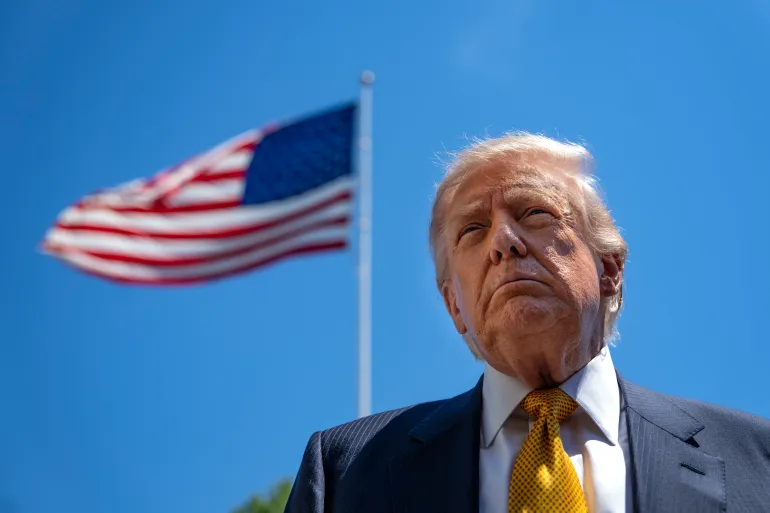
The clarification followed Saturday’s announcement by United States President Donald Trump that Al-Manuki had been killed during a joint military operation involving Nigerian and American troops. President Bola Tinubu also confirmed the operation.

After the announcement, several online users revisited claims that the insurgent leader had already been declared dead by the Nigerian military in 2024.

In response, Bayo Onanuga, special adviser to the president on information and strategy, said security agencies explained that the earlier report connected to a military operation in Kaduna State was inaccurate.

According to Onanuga, Al-Manuki, who is also known as Abu-Mainok or Abu-Bilal Al-Minuki, had appeared on a list of suspected ISWAP commanders reportedly killed during military operations around the Birnin Gwari forest area.

“It is acknowledged within military and intelligence circles that Al-Manuki’s name had appeared among lists of suspected ISWAP/Boko Haram commanders reportedly killed in 2024 during operations around the Birnin Gwari forest axis in Kaduna State,” the statement reads.

“However, security officials now clarify that the earlier listing was a case of mistaken identity or misattribution in the fog of sustained counterinsurgency operations.”

The presidential aide said intelligence findings later showed that Birnin Gwari was not part of Al-Manuki’s area of operation. He said that discovery raised questions about the earlier claim.

Onanuga also stated that the latest mission against the ISIS commander came after several months of intelligence work carried out by Nigerian and American operatives. He said the operation involved surveillance, phone interceptions, and human intelligence tracking.

He added that intelligence agencies began monitoring Al-Manuki in December 2025 and tracked his movements across different locations in northern Nigeria, including Abuja and Maiduguri.

“Security officials said efforts were initially aimed at capturing him alive before the final operation was carried out,” he said.

“Unlike the previous report, security authorities insist that the latest strike was executed with a significantly higher degree of precision, target validation, and multi-source intelligence confirmation.”

Onanuga said security agencies carried out several layers of verification before approving the final operation.

“In their assessment, ‘this time, there is no ambiguity,’” he said.

The presidential spokesperson also defended public communication about counterterrorism operations. He noted that similar mistaken reports had occurred in international campaigns against terrorism, including cases involving former Boko Haram leader Abubakar Shekau and ex-ISIS leader Abu Bakr al-Baghdadi.

“Such cases highlight not failure but rather the evolving, often imperfect nature of intelligence gathering in asymmetric warfare,” he added.

He warned that dismissing joint counterterrorism efforts involving Nigerian authorities and foreign partners could affect public confidence and military morale.

“While public scrutiny remains an essential part of democratic accountability, security experts caution that premature dismissal of military claims can inadvertently undermine operational morale and strategic messaging,” the presidential spokesperson said.

“For now, military authorities remain firm in their position: The latest operation that targeted Abu-Bilal Al-Manuki represents a validated, intelligence-driven success against a senior figure of the Islamic State network. And in their words, this time, they are “100 per cent certain.”

Nigerians Among West Africans Set For Deportation From US To Sierra Leone

By Sabiu Abdullahi

Sierra Leone has agreed to receive hundreds of West African migrants deported from the United States as President Donald Trump’s administration steps up actions against undocumented migrants.

According to Reuters, the first batch of deportees is expected to arrive in Sierra Leone on May 20. The group will reportedly include 25 citizens from Nigeria, Senegal, Ghana and Guinea.

Sierra Leone’s Minister of Foreign Affairs, Timothy Kabba, confirmed the arrangement in an interview with Reuters.

“Sierra Leone signed a Third Country National Agreement with the U.S. to accept 300 ECOWAS citizens from the U.S. per year with a ⁠maximum of 25 a month,” Kabba said.

However, the minister did not disclose what Sierra Leone would gain from the agreement. There is also uncertainty over whether the deportees will be permitted to remain in the country after arrival.

The United States reached a similar agreement with Ghana last year. Under that arrangement, only West African nationals could be transferred to the country.

Some deportees sent to Ghana, including four Nigerians, later filed complaints. They accused authorities of unlawful detention and human rights abuses.

In recent years, the US has deported third-country migrants to several African nations, including the Democratic Republic of Congo, Cameroon, Equatorial Guinea and Eswatini. The policy has attracted criticism from rights groups and legal experts, who questioned the legality of the transfers and raised concerns about the treatment of deportees sent to countries where they are not citizens.

Nigeria was previously approached over the issue. Yusuf Tuggar, who was then Nigeria’s minister of foreign affairs, said the federal government would not accept third-country deportees because of security and economic concerns.

APC Aspirant Mahmud Buba Withdraws From House Of Reps Race Amid Age Controversy


By Sabiu Abdullahi

Mahmud Sadis Buba, widely known as Al-Ajabin Zazzau, has stepped down from the contest to represent Sabon Gari Federal Constituency in the House of Representatives under the platform of the All Progressives Congress (APC).

His withdrawal followed weeks of controversy over allegations of age falsification and inconsistencies in documents linked to his candidacy.

Buba disclosed his decision in a letter addressed to the Kaduna State APC chairman. He also shared the letter on his verified Facebook page on Saturday.

“Please accept this letter as formal notification that I am withdrawing from the race for Sabon Gari Federal Constituency, House of Representatives, effective immediately,” he wrote.

He explained that the decision came after consultations with party leaders, family members and political associates. According to him, ongoing reconciliation efforts within the APC also influenced his action.

“This was not an easy decision. But it was hastened by the reconciliation efforts initiated by stakeholders and leaders of our party. Consequently, after extensive consultations with my family, political associates, and stakeholders within our great party, I have decided that this decision is in the best interest of the All Progressives Congress (APC),” he added.

Buba said party unity remained important ahead of the general elections. He noted that supporting a consensus candidate would strengthen the APC’s chances in the constituency.

“I believe that uniting behind a single candidate is paramount to our victory in the general election and for the continued progress of our constituency and state,” he stated.

The former aspirant also thanked Kaduna State Governor Uba Sani and the APC leadership for giving him the opportunity to participate in the party’s primaries. He described the experience as valuable and rewarding.

He maintained that his withdrawal should not be interpreted as a sign of weakness. He said the move reflected his commitment to unity within the party. Buba also pledged support for whoever eventually emerges as the APC candidate for the constituency.

He further appealed to his supporters to remain peaceful and support the party’s flagbearer.

Before his withdrawal, Buba had faced criticism over claims that he altered his age to satisfy the constitutional requirement for election into the House of Representatives.

The issue gained attention after his appearance before the APC screening committee in Abuja. Several social media users circulated documents that questioned his age and identity details.

Buba had earlier stated in interviews that he was born on August 2, 1995, and was qualified to contest the election. However, critics continued to challenge the claim, alleging discrepancies in some of his records.

Although he did not address the allegations directly in his withdrawal letter, political observers linked his exit to the controversy that surrounded his ambition.

As of the time of filing this report, APC stakeholders in Kaduna State had not issued an official statement on whether the withdrawal was connected to the allegations or part of wider reconciliation efforts within the party.