USA

Fellow nurses honour Alex Pretti after US federal agents shot him dead

By Sabiu Abdullahi

Colleagues of Alex Jeffrey Pretti, a 37-year-old intensive care unit nurse at the Minneapolis Veterans Affairs Medical Center, have paid tribute to him following his death during a federal immigration enforcement operation in Minneapolis.

Pretti, a U.S. citizen and registered nurse known for caring for critically ill veterans, was shot by federal immigration agents on January 24 on the city’s south side. His death has sparked public outrage and renewed debate over the conduct of federal law enforcement during immigration operations.

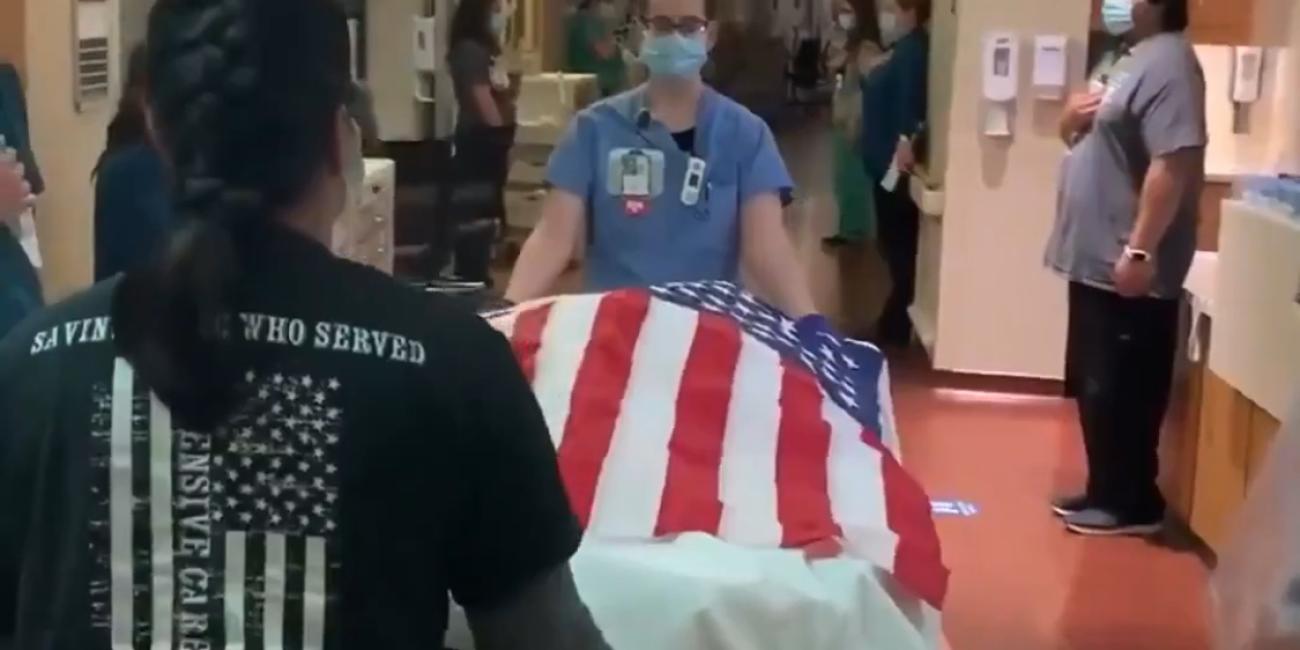
Over the weekend, hospital staff held informal tributes in his honour. A video that circulated widely on social media, posted on Monday by the account @Pamphlets, showed a staff member standing beside the body of a deceased veteran draped in the American flag, while delivering a formal final salute. The footage has drawn attention as colleagues recalled Pretti’s dedication to his patients.

Authorities said Pretti was taken to hospital with multiple gunshot wounds, where he was later pronounced dead. Minneapolis Police Chief Brian O’Hara confirmed the sequence of events. Federal officials initially said the shooting occurred in self-defence, alleging that Pretti approached agents with a handgun.

That version of events has been rejected by Pretti’s family, eyewitnesses, and video recordings captured by bystanders.

In a statement, his parents, Michael and Susan Pretti, expressed grief and anger over their son’s death and criticised what they described as false official accounts.

“We are heartbroken but also very angry,” they said. “Alex was a kindhearted soul who cared deeply for his family, his friends, and the American veterans he served as an ICU nurse at the Minneapolis VA hospital. Alex wanted to make a difference in this world.”

The parents dismissed claims that their son posed a threat and said he was unarmed at the time he was shot.

“I do not throw around the term ‘hero’ lightly,” they said. “However, his last thought and act was to protect a woman. The lies told about our son by the administration are reprehensible. He was holding his phone, his other hand raised, while being pepper-sprayed and trying to shield someone who had been pushed to the ground.”

They also called on the public and the media to review available video evidence and, in their words, “get the truth out.”

The Department of Homeland Security has continued to defend the actions of its agents, stating that a Border Patrol officer fired after perceiving an imminent threat. However, several videos circulating online appear to show Pretti holding only a cellphone shortly before the shooting. This discrepancy has drawn criticism from civil rights groups and some local officials.

At the Minneapolis VA Medical Center, staff members described Pretti as a calm and compassionate caregiver. Colleagues gathered near the hospital entrance to lay flowers and share memories, while expressing grief and anger over his death.

One video that has been widely shared shows Pretti offering a final salute to a deceased veteran who had been under his care. Many have described the moment as a reflection of his commitment to those he served.

“He did difficult, often invisible work every day for veterans who depended on him,” one VA nurse said. “That dedication doesn’t disappear because of the way he died.”

Local authorities confirmed that Pretti was a licensed gun owner with a valid permit, but they have not established whether he had a firearm on him or displayed one during the encounter. Witnesses said he tried to assist another protester before agents pepper-sprayed him and restrained him. Shots were fired shortly after.

The incident is the second fatal shooting involving federal immigration agents in Minneapolis within recent weeks. It has triggered protests, intensified scrutiny of enforcement tactics, and renewed calls for accountability from federal authorities.

Extreme winter storm claims at least 10 lives, leaves nearly one million without power across US

By Sabiu Abdullahi

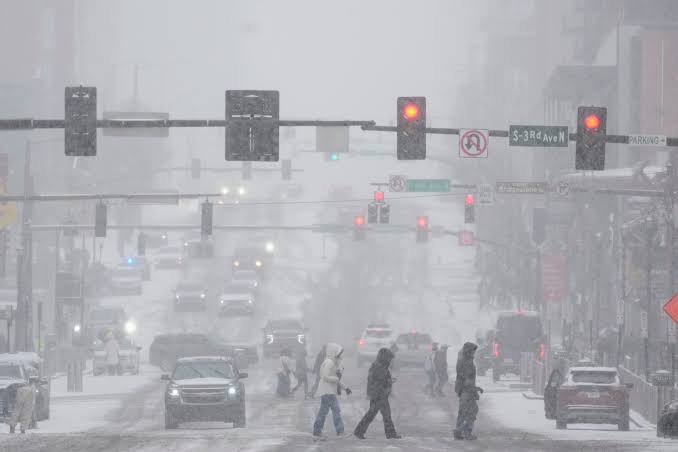
A powerful winter storm sweeping across the United States has claimed at least 10 lives and caused widespread disruption, with authorities urging residents to stay off roads as freezing conditions continued into Monday.

According to a report by Al-Jazeera, at least 20 states, along with the US capital, Washington, DC, declared states of emergency after snow, sleet and freezing rain knocked out electricity to nearly a million people. Power outages, flight cancellations and dangerous travel conditions affected large parts of the country.

As the storm moved east and south, forecasters warned that a trailing Arctic air mass could push temperatures to dangerously low levels for several days. The US National Weather Service (NWS) said Americans should expect similar conditions to continue into Monday morning.

In New York City, Mayor Zohran Mamdani confirmed that five people were found dead outdoors over the weekend during subzero temperatures. While he did not directly link the deaths to the storm, he told reporters there was “no more powerful reminder of the danger of extreme cold”.

Texas authorities reported three deaths, including that of a 16-year-old girl who died in a sledding accident. In Louisiana, the state’s Department of Health said two people died from hypothermia.

PowerOutage.com data showed that more than 840,000 customers were without electricity as of Sunday night. The worst-hit areas were mostly in the southern United States, where the storm strengthened on Saturday. Tennessee recorded more than 300,000 homes and businesses without power after ice brought down power lines. Louisiana, Mississippi and Georgia each reported over 100,000 outages.

Officials warned that the loss of electricity posed a serious risk, especially in the South, where extreme cold is less common and temperatures could break records, according to the NWS. Residents were advised to remain indoors due to hazardous conditions.

Air travel also faced major disruptions. Several major airports in New York, Philadelphia and Washington, DC, cancelled nearly all flights scheduled for the day.

Meteorologists explained that the storm resulted from a stretched polar vortex, a system of cold, low-pressure Arctic air that can expand and send frigid temperatures across North America. Scientists said such events may be linked to climate change, although natural climate variability also plays a role.

The NWS warned that heavy ice could lead to “long-duration power outages, extensive tree damage, and extremely dangerous or impassable travel conditions”, particularly in states not accustomed to severe winter weather.

Authorities also cautioned that life-threatening cold could persist for up to a week after the storm, especially in the Northern Plains and Upper Midwest. Forecasts show wind chill temperatures dropping to as low as -45 degrees Celsius (-50 degrees Fahrenheit), levels that can cause frostbite within minutes.

Rights hypocrisy sparks global rebuke—Gumi

By Abdullahi Mukhtar Algasgaini

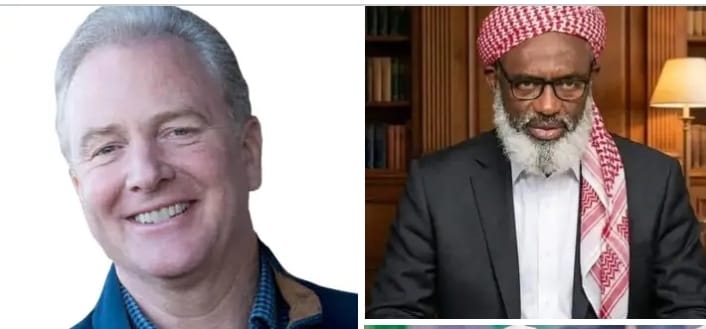
Nigerian Islamic scholar Sheikh Ahmed Gumi has challenged the consistency of international human rights criticism, amplifying a debate initiated by a U.S. senator about selective outrage in global politics.

The cleric took to Facebook to respond to remarks from U.S. Senator Chris Van Hollen (D-MD), who recently questioned whether Washington applies its principles uniformly.

Van Hollen noted the U.S. frequently censures rivals like China and Russia but is less vocal about allies, citing India’s religious freedoms, Turkey’s political rights, and Israel’s treatment of Palestinians.

Gumi highlighted what he called “selective outrage,” suggesting some criticisms are matters of convenience, not principle. “People don’t marvel at the hypocrisy, but those who rely on their ‘friendship’,” he wrote.

The senator argued that this inconsistency erodes America’s credibility, allowing rivals like China to challenge its moral authority, especially in the Global South.

He referenced declining global perceptions of the U.S. and warned that without consistent standards, American values risk being seen as merely “a political cudgel.”

Gumi’s intervention underscores a growing view that geopolitical alliances, not universal principles, often shape global human rights debates.

US warns Canada will regret allowing Chinese electric vehicles into its market

By Sabiu Abdullahi

Senior officials in the administration of United States President Donald Trump have cautioned that Canada will come to regret its decision to permit imports of Chinese electric vehicles, while stressing that such vehicles will not gain access to the US market.

The warning followed an announcement by Canadian Prime Minister Mark Carney that Ottawa had reached a trade arrangement with Beijing to allow up to 49,000 Chinese-made electric vehicles into Canada at a reduced tariff rate.

Speaking on Friday at a Ford manufacturing plant in Ohio, US Transportation Secretary Sean Duffy criticised the move and suggested it would have long-term consequences for Canada.

“I think they’ll look back at this decision and surely regret it to bring Chinese cars into their market,” Duffy said during the event, which was attended by other senior officials and focused on lowering vehicle costs for consumers.

Canada imposed a 100 percent tariff on Chinese electric vehicles in 2024, following similar measures taken by Washington.

However, under the new agreement announced in Beijing, Canada will permit a limited number of Chinese EVs to enter the country at a tariff of 6.1 percent under most-favoured-nation terms.

The shift has raised concerns in the United States, where officials fear the policy could strengthen China’s presence in the North American auto market at a time when Washington is tightening its stance on Canadian vehicles and auto parts.

US Trade Representative Jamieson Greer sought to downplay the immediate commercial impact on American manufacturers, noting that the arrangement would not disrupt US exports to Canada.

“I don’t expect that to disrupt American supply into Canada,” he said. “Those cars are going to Canada – they’re not coming here.”

The Canadian Embassy in Washington did not provide an immediate response to requests for comment.In a separate interview with CNBC, Greer described Canada’s decision as “problematic” and linked US opposition to Chinese vehicles to existing trade protections.

“There’s a reason why we don’t sell a lot of Chinese cars in the United States. It’s because we have tariffs to protect American auto workers and Americans from those vehicles,” he said.

As part of the broader trade discussions in Beijing, Prime Minister Carney said China was expected to reduce tariffs on Canadian canola seed by March 1, bringing the combined rate down to about 15 percent from 85 percent.

Greer questioned the long-term value of that agreement, saying, “I think in the long run, they’re not going to like having made that deal.”

Greer also pointed to US regulations on vehicle cybersecurity as a major barrier for Chinese automakers. He said rules introduced in January 2025 for internet-connected vehicles and navigation systems posed serious compliance challenges.

NATO allies deploy troops to Greenland amid Trump’s push for U.S. control of Danish territory

By Sabiu Abdullahi

Several members of the North Atlantic Treaty Organisation (NATO) have commenced the deployment of military personnel to Greenland following growing diplomatic strain between the United States and its European partners over the future of the Arctic territory.

Denmark, which holds responsibility for Greenland’s defence, confirmed that troops and military hardware were moved to the island under “Operation Arctic Endurance,” a multinational exercise designed to reinforce security collaboration in the region.

France, Germany, Sweden and Norway have all announced plans to dispatch limited numbers of military officers and reconnaissance units to Greenland.

According to CNBC, the teams will participate in coordinated drills on the sparsely populated island.

French President Emmanuel Macron disclosed on social media that French forces had already begun relocating to Greenland and that further deployments would follow.

Sweden’s Prime Minister, Ulf Kristersson, also verified that Swedish officers would take part in the Danish-led exercises alongside other NATO partners.

The troop movements followed high-level talks in Washington involving Danish and Greenlandic officials as well as senior United States government figures, including Vice President J.D. Vance and Secretary of State Marco Rubio.

Before the meetings, President Donald Trump restated his position that the United States “needs Greenland” for national security reasons.

His comments raised concern in both Copenhagen and Nuuk.Danish Foreign Minister Lars Løkke Rasmussen described the discussions at the White House as “frank but constructive.”

He, however, admitted that a “fundamental disagreement” remained regarding the future of the island.“It’s clear that the president has this wish of conquering over Greenland,” Rasmussen said, while reaffirming Denmark’s stance on Greenland’s sovereignty.

Greenland’s authorities, with backing from Denmark and other European partners, have consistently dismissed any proposal that suggests American ownership or direct control.

They insist that defence arrangements should operate within NATO structures and follow international legal standards.

Recent opinion polls show that most Greenlanders oppose U.S. control. A significant majority also favours eventual independence from Denmark.

Denmark has announced additional plans to expand its military footprint around Greenland. The programme includes the deployment of aircraft, naval vessels and more troops.

Defence officials said the measures aim to enhance routine security and reassure residents amid increasing geopolitical pressures.

Although the United States already operates military facilities on the island through long-standing agreements, Trump’s renewed advocacy for greater control has unsettled European leaders. Many fear that any attempt to alter Greenland’s status could undermine NATO unity and international norms.

On Wednesday, Trump again insisted that Americans “need Greenland for the purpose of National Security.”

He warned that Russia or China might seek control of the territory if the U.S. and its allies failed to act.

Trump threatens 25 percent tariff on countries trading with Iran

By Sabiu Abdullahi

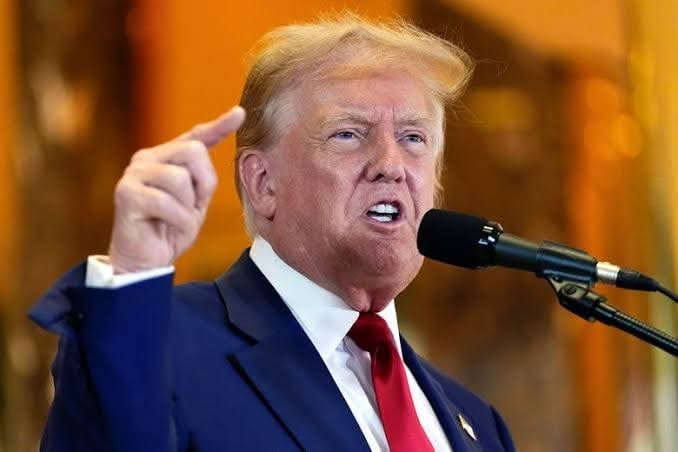
United States President Donald Trump has announced that any country maintaining commercial ties with Iran will face a 25 percent tariff on all business conducted with the United States.

The declaration came on Monday through a post on Trump’s social media platform, Truth Social, where he described the decision as “final and conclusive”, without providing further clarification on how the measure would be implemented.

“Effective immediately, any Country doing business with the Islamic Republic of Iran will pay a Tariff of 25% on any and all business being done with the United States of America,” Trump said in the post.

The statement did not specify the nations that would be affected. However, several major economies maintain active trade relations with Iran. These include Russia, China, Brazil and Turkiye. Iraq and the United Arab Emirates also rank among Iran’s key trading partners, according to data from Trading Economics.

The announcement comes at a time when Iran is experiencing widespread antigovernment protests and violent unrest across the country.

Reports from rights groups suggest that hundreds of people may have been killed, although an internet shutdown has limited independent verification of events on the ground.

In recent weeks, Trump has increased pressure on Tehran while issuing warnings of possible military action if Iran does not reduce its nuclear and military programmes.

“Now, I hear that Iran is trying to build up again, and if they are, we’re going to have to knock them down,” Trump told reporters in December.

“We’ll knock them down. We’ll knock the hell out of them. But, hopefully, that’s not happening.”

Earlier in June, the United States carried out air attacks on three Iranian nuclear facilities during a 12-day conflict that followed military action by Israel.

Legal experts have argued that the US strikes may have breached international law.

Trump parades himself ‘Acting President Of Venezuela’

By Sabiu Abdullahi

A social media post shared by United States President Donald Trump has stirred controversy across diplomatic and political circles worldwide.

Trump uploaded an image on his Truth Social account in which he was portrayed as the “Acting President of Venezuela.”

The post surfaced only days after he signed an Executive Order that declared a national emergency concerning Venezuelan oil proceeds kept in United States Treasury accounts.

The White House said the Executive Order was introduced to advance U.S. foreign policy and national security priorities.

According to official explanations, the order prevents any attachment, judgment, lien, execution, garnishment or other legal action against Venezuelan oil revenues and diluent sales deposited in U.S. Treasury accounts.

The monies, described as “Foreign Government Deposit Funds,” are to remain frozen except where specific authorisation is granted under the new directive.

The order further bans any form of transfer or commercial dealing in the funds. It also nullifies previous instructions that had guided or limited such transactions.

Authorities maintained that the revenues remain the sovereign property of Venezuela but are held in U.S. custody for governmental and diplomatic purposes only and cannot be accessed by private individuals or companies.

The U.S. Embassy has also raised concerns about Venezuela’s security climate. It advised American citizens not to travel to the country and called on those currently there to leave immediately.

In a security advisory dated January 10, 2026, the embassy restated warnings that have been in effect since 2019, when the United States withdrew its diplomatic staff from Caracas and halted consular services.

On January 3, 2026, U.S. military forces carried out a targeted mission in Venezuela which resulted in the capture of President Nicolás Maduro and his wife, Cilia Flores.

More than 200 U.S. Special Operations troops carried out a pre-dawn raid in Caracas. The mission, named Operation Absolute Resolve, focused on several sites, including the Fort Tiuna military complex.

Reports indicated that U.S. forces “dragged” Maduro and Flores from their residence inside the complex. They were transported to the USS Iwo Jima and later flown to New York City.

No American casualties were reported. However, reports said that dozens of Venezuelan security officers and Cuban special forces members acting as bodyguards to Maduro were killed.

Following the operation, Venezuela’s Vice President, Delcy Rodríguez, took the oath of office as acting president through the National Assembly.

She described the raid as a “kidnapping” and accused the United States of breaching Venezuela’s sovereignty.

American authorities described the mission as a law enforcement action. After Maduro and Flores arrived in New York, prosecutors unsealed an indictment.

The charges included narco-terrorism conspiracy, cocaine importation conspiracy and weapons-related offences.

The U.S. Department of Justice alleged that Maduro had presided over what it called a “cocaine-fueled” administration for decades.

ICE killing in Minneapolis triggers protests across US

By Sabiu Abdullahi

Protests have erupted in several parts of the United States following the fatal shooting of a Minneapolis woman, Renee Nicole Good, by an officer of the U.S. Immigration and Customs Enforcement (ICE).

The demonstrations, which began earlier this week, were sparked by public anger over the incident. Activists and civil society groups say the killing reflects what they describe as the growing use of militarised tactics in immigration enforcement under the administration of President Donald Trump.

Indivisible, a civic movement organisation, announced that hundreds of protests were scheduled to take place on Saturday in states including Texas, Kansas, New Mexico, Ohio and Florida.

“ICE’s violence is not a statistic, it has names, families, and futures attached to it, and we refuse to look away or stay silent,” Leah Greenberg, the group’s co-executive director, said in a statement.

In North Carolina, 51-year-old Steven Eubanks attended a rally in Durham. He said he felt compelled to join the protest after learning about the killing of Good.

“We can’t allow it,” Eubanks told The Associated Press news agency. “We have to stand up.”

Federal authorities have defended the officer involved in the shooting. Senior officials in the Trump administration said Good had “weaponised” her vehicle and posed a threat to the life of the ICE agent who shot her.

However, video recordings from the scene showed Good trying to drive away before the fatal shots were fired by ICE agent Jonathan Ross.

The incident has renewed public focus on federal immigration operations across the country. It came as the Department of Homeland Security continues what it described as its largest immigration enforcement drive in the Twin Cities of Minneapolis and Saint Paul. Good, who was 37 years old, was a mother of three.

Many of Saturday’s demonstrations were organised under the banner “ICE Out for Good”. Indivisible said the protests were meant to “mourn the lives taken and shattered by ICE and to demand justice and accountability”.

In Minneapolis, migrant rights groups called for a major rally at Powderhorn Park. Organisers said the gathering would demand an “end to deadly terror on our streets”.

Iranian Army vows to protect national interests as protests intensify following US threats

By Sabiu Abdullahi

The Iranian military has pledged to defend the country’s strategic assets and public property as authorities intensify efforts to contain widespread antigovernment protests triggered by rising living costs.

In a statement released on Saturday by semi-official media outlets, the armed forces accused Israel and what they described as “hostile terrorist groups” of attempting to “undermine the country’s public security.”

The declaration came after United States President Donald Trump issued fresh warnings to Iran’s leadership over the growing demonstrations, which have resulted in dozens of deaths.

“The Army, under the command of the Supreme Commander-in-Chief, together with other armed forces, in addition to monitoring enemy movements in the region, will resolutely protect and safeguard national interests, the country’s strategic infrastructure, and public property,” the military said.

Iran’s Islamic Revolutionary Guard Corps (IRGC) delivered a similar message on Saturday. State television reported that the elite force described the protection of the 1979 revolution’s legacy and national security as a “red line.”

Earlier in the day, United States Secretary of State Marco Rubio reaffirmed Washington’s backing for Iranian protesters following an internet shutdown introduced by Iranian authorities.

“The United States supports the brave people of Iran,” Rubio wrote on X.

His message followed new remarks from Trump, who warned Iran’s leadership, saying, “You better not start shooting because we’ll start shooting too.” Trump stated that Iran’s leaders appeared to be “in big trouble” and repeated his warning that military action could follow if protesters were killed.

He added, “It looks to me that the people are taking over certain cities that nobody thought were really possible just a few weeks ago.”

Demonstrations have spread across the country since January 3, driven by frustration over economic hardship and increasing calls for the removal of the clerical establishment that has governed Iran since the 1979 Islamic Revolution.

Reports from Reuters indicated that unrest continued overnight on Saturday. State media blamed “rioters” for setting a municipal building ablaze in Karaj, west of Tehran. Press TV aired funeral footage of security personnel it said died during clashes in Shiraz, Qom and Hamedan.

Trump backtracks, acknowledges Muslims among victims of Nigeria killings

By Uzair Adam

Former United States President Donald Trump has acknowledged for the first time that Muslims are also victims of ongoing killings in Nigeria, marking a shift from his earlier narrative that focused almost exclusively on Christians.

Trump, who has repeatedly claimed that Christians are being targeted in attacks across the country, made the admission during an interview with The New York Times.

Despite this, he maintained that Christians remain the primary victims of the violence.“I think that Muslims are being killed also in Nigeria. But it’s mostly Christians,” Trump was quoted as saying.

Speaking on a Christmas Day attack on what he described as terror targets in Nigeria, Trump warned that the United States could carry out additional military strikes if the violence continues.

“I’d love to make it a one-time strike … But if they continue to kill Christians, it will be a many-time strike,” he said.

When reminded that his own Africa adviser had previously stated that groups such as Islamic State and Boko Haram have killed more Muslims than Christians, Trump repeated his position, insisting that while Muslims are affected, Christians suffer the most.

In late October, Trump began warning that Christianity was facing what he described as an “existential threat” in Nigeria, accusing the government of failing to protect Christian communities.

He subsequently redesignated Nigeria as a Country of Particular Concern and criticised authorities for what he called a weak response to insecurity.

The Nigerian government later dispatched a high-powered delegation to the United States to brief officials on the country’s security challenges.

Following the visit, senior American officials also travelled to Nigeria to assess the situation firsthand.