University Education

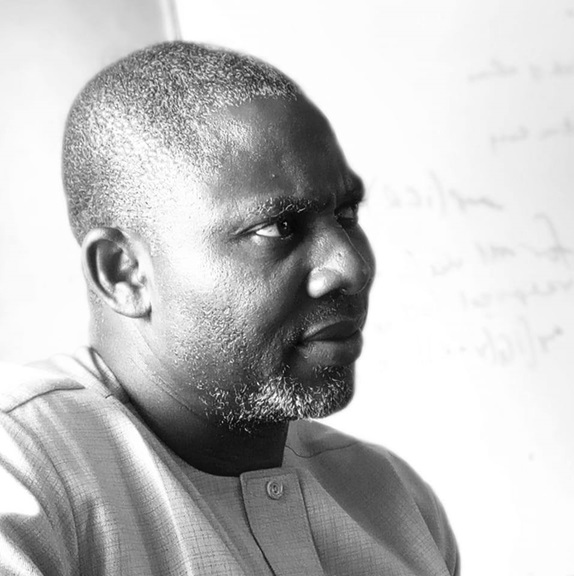
Prof. Amoka slams SAN over “Unpopular Opinion” on Nigerian professors

By Muhammad Abubakar 

Professor Abdelghaffar Amoka of the Department of Physics at Ahmadu Bello University, Zaria, has responded strongly to what he calls a “misinformed and politically biased” opinion by Sunusi Musa, SAN, regarding the state of Nigerian academia.

In a lengthy rejoinder titled “The Impoverished Nigerian Professors and the ‘Unpopular Opinion’ of a Misinformed SAN,” Prof. Amoka criticised Musa for attributing the poverty of Nigerian professors to their alleged lack of productivity and large family sizes. 

Amoka argued that the true cause lies in the systemic neglect and chronic underfunding of the Nigerian education sector, particularly university staff salaries and research funding.

He noted that academic salaries have remained stagnant since 2009, with professors now earning the equivalent of less than $400 per month, a sharp drop from over $3,000 in 2009. He described the situation as a “crime against humanity,” accusing the political class of starving intellectuals while enriching themselves.

Amoka debunked the claim that Nigerian academics are unproductive, citing the international recognition they receive and their contributions to research and student success abroad. 

He further pointed out the lack of sufficient research funding, comparing Nigeria’s meagre investments to the billions spent annually by countries like the US, UK, China, and even smaller nations such as Norway and Malaysia.

The professor further criticised the SAN for bringing personal life choices—such as marriage and family size—into a discussion about national policy failure. He emphasised that productivity in academia depends on conducive working conditions and appropriate incentives.

Amoka ended the piece by urging fellow academics to prioritise their well-being, pursue legitimate side hustles if necessary, and continue doing their best to sustain a struggling system. He warned that the continued devaluation of education poses a threat to the country’s future.

“We are starving the thinkers and feeding those who can’t think. What sort of system are we expecting to create?” he asked.

Nigerian Professor Salary: The re-ignited debate

By Prof. Abdelghaffar Amoka

A Hausa interview by a professor from ABU, lamenting academics’ poor pay, is trending and has re-ignited the debate on the salaries of Nigerian academics on social media. The discussion is championed by my brothers from the region, which is considered by the country as educationally less developed. I didn’t know what to say that I hadn’t said before. It will be like repeating myself.

Professors in Nigeria are now blamed for their financial status. They are expected to stop lamenting and get a side hustle to augment their salaries. A professor whose salary was ₦450,000 in 2009, when the exchange rate was ₦140 per dollar, is blamed for his economic state in 2025, with a salary of about ₦500,000, when the exchange rate is ₦1,600 per dollar. 

Some people are referring to professors abroad as if some of us have not had the experience. A number of us have studied and worked there, and we know how their university system works. I got two grants in the UK during my PhD. They said a professor earns more abroad from their research grants. The primary beneficiaries of research grants are postgraduate students and postdoctoral researchers. Professors are not paid from their grants.

Grants have a budget, and personnel costs are not included. They are paid to the university account and managed by the university. The university pays professors to encourage them to think critically and attract grants for the institution. A university lecturer around the world is paid enough to give him the comfort to think and do his job as it should. Any extra cash from stuff like consultancy is for additional comfort. 

The Executive Secretary of TETfund, Sunny Echono, in July 2024, said: “On salary to lecturer, I feel ashamed because I have the privilege to represent Nigeria at a global conference where former presidents and prime ministers were in attendance. I was asked if it was true that a professor, after 20 years, still earns less than $1,000 a month. I couldn’t answer that question; I only said that we are doing something about it.” I think we should be proud of the salaries of our professors and boldly tell anyone around the world their actual salaries. 

Before you, in your narrow-minded state, blame professors for their financial status, ask yourself why the Nigerian government will pay the same professors about two thousand dollars per month under the Technical Aid Corp (TAC) to go help teach in universities in some African countries? The same professors who are given approximately $ 2,000 to teach in Ugandan universities under TAC are receiving an equivalent of $ 320 per month at home.

You know what? Everyone is right—those for and against. The argument won’t change anything, and it will likely end within a day or two. The new reality is that younger academics have learned from the impact of senior colleagues’ commitment to the academic job. The commitment you considered as “our stupidity”. The younger academics are planning for themselves.

A colleague, after the 8-month strike and the withholding of our 8-month salaries, said the university does not deserve his full-time commitment. That he is going to give the university the time it deserves and use a large chunk of his time for a side hustle to pay his bills, I thought, was unreasonable. I later realised I was the unreasonable one. And he is not doing badly from the side hustle. 

Around this time last year, I was passing and met some of my students in the class without the lecturer. In my usual chat with the students, I asked whose lecture it was. I decided to call a younger colleague, as students were waiting for his class in case he forgot. He picked up the call and said he had forgotten he had a class, but that he was on his farm planting, and that he would see them next week. He was at the farm during work hours and forgot he had a class because the farming hustle is paying the bills. He is actually doing quite well with his side hustle. 

Farming during work hours becomes more important. I reflected on that for several days. There are several examples of young academics who won’t be seen on campus, except when they have a lecture or are on campus for something they consider essential. 

People sometimes question why a whole professor would accept being an adviser or assistant to a political office holder. A trip with the political officeholder boss could get him his one-year gross salary as a professor. Since it’s his fault that he is poor, why shouldn’t he accept such an offer or even lobby for it?

As a consequence of defeat, we have accepted one awkward thing as a part of us. Because we can’t do anything about our tormentors and needed someone to blame, we blamed ourselves, the victims. It’s our fault that we’ve been on the same salary for 16 years, from 2009 to date. It’s our fault that successive governments refused to renegotiate the 2009 agreed salary with ASUU. It is our fault that the government of President Tinubu has kept Yayale Ahmed’s 2009 Renegotiation Committee report since November 2024 without speaking about it. They are still studying it, possibly till May 2027 or beyond. 

Universities are designed to attract the best minds from around the world. Universities, including those in Africa, such as those in Ethiopia, Uganda, Kenya, and Chad, are attracting the best brains. At the same time, we justify the poor pay for academics and still blame them for their inability to compete with their colleagues in the UK, the US, and Iran. We’ll continue to breed our best brains for these countries. 

Meanwhile, as we take all the blame for our economic status as professors, younger academics are devising ways to survive. They don’t want to he like their senior colleagues who bury themselves in their books thinking they are serving the country. They are given more time for their side hustle to pay the bills, and leave the students hanging. They’ll attend to them when we can. The system will bear the consequences of neglect, and our survival plans will be affected.

From a reality check, you can’t think when you are hungry. So, what are your expectations when your thinkers are hungry and you are unfortunately justifying it? We may be on a journey of illusion if you expect a man to look for food to eat and think for you. The future will tell who gains and who loses.

Best wishes to all of us! 

©Amoka

Prof. Haruna Musa emerges most popular candidate in BUK vice-chancellor selection process

By Muhammad Sulaiman

Professor Haruna Musa, Deputy Vice-Chancellor (Academics) at Bayero University, Kano (BUK), has emerged as the most widely accepted candidate in the university’s Vice-Chancellor selection process, following a keenly observed congregation vote held on Tuesday, July 1, 2025.

Prof. Musa, a Professor of Polymer Chemistry, secured a commanding 853 votes, far ahead of his four contenders in a process described as transparent and credible by participants and observers.

The vote, part of BUK’s Vice-Chancellor appointment procedure, serves as an indicator of community acceptability, contributing 20% to the final selection by the Governing Council.

Other contenders included Professors Mahmoud Umar Sani (367 votes), Sani Muhammad Gumel (364 votes), Adamu Idris Tanko (161 votes), and Bashir Fagge (18 votes).

Presiding over the session, Vice-Chancellor Prof. Sagir Adamu Abbas applauded the maturity and democratic spirit shown during the process, describing the outcome as a “collective victory” for the university.

“The result showcases our institutional commitment to transparency and unity,” he said, urging all candidates to support the eventual appointee.

Electoral Committee Chairman Prof. Muhtari Ali Hajara announced that 1,784 staff members were accredited to vote, with 17 votes deemed invalid and four unaccounted for.

Commending the process, Prof. Gumel, one of the candidates, stated: “The election was fair and credible. The result shows the community’s direction.”

Former Minister of Education, Prof. Rukayyatu Ahmed Rufa’i, and ex-VC of NOUN, Prof. Abdalla Uba Adamu, also praised the outgoing VC and the electoral process, urging continued cooperation for the university’s development.

The final appointment now rests with BUK’s Governing Council.

Nigeria has murdered another professor: The shameful death of Prof. Roko

By Muhammad Lawal Ibrahim, PhD

Another brilliant mind has died. Another Nigerian professor, Prof. Abubakar Roko, has just been murdered by the state,not by bullets, nor by bandits, but by an unforgiving system, deliberate neglect, and a government that treats its academics like disposable rags. He needed ₦13 million for medical treatment abroad. After over 20 years of service to this so-called nation, he could not raise it. He lay bedridden, helpless, abandoned, and now he is dead. We must stop calling this “natural death.” This was murder by government negligence.

In a country that throws billions at political cronies, gives lawmakers millions in wardrobe allowances, and funds endless pilgrimages and jamborees, a professor had to be paraded online like a beggar, with students scrambling to raise funds just so their teacher might survive. Yet even that was insufficient. The system choked him to death slowly, much like it is doing to thousands of others right now.

Where are the salaries? 

As of this writing, tertiary institution workers are celebrating Sallah (Eid-ul-Adha) without salaries. Go and verify. Civil servants in other sectors have been paid weeks ago. But those who teach your children, those who write your policies, those who keep the soul of the country alive—are being starved like prisoners of war. And when it was reported that over 1,000 lecturers have died under this current administration, bootlickers and sycophants ask, “What killed them?” What killed them? What didn’t?

Sickness, hunger, depression, suicide, systemic poverty, lack of medical care, all wrapped in the evil legacy of Buhari’s betrayal and now Tinubu’s reign of economic terrorism, killed them and are still counting.

Tinubu’s “Renewed Hope” is academic genocide

Let’s not sugarcoat it. What’s happening in Nigeria’s higher education system today is academic genocide. The federal government has effectively declared war on the ivory tower. Salaries are frozen. Promotions are denied. Research is dead. Morale is nonexistent. Students are turning to fraud and crime. Lecturers are dying in silence, many too ashamed to beg for help. But yes, the president has just approved ₦90 billion for Hajj. Where is the justice in this madness?

A rotten elite and a silent society

The ruling class in Nigeria treats lecturers like slaves while flying abroad for their checkups, educating their children overseas, and stealing public funds to build mansions in Dubai. Meanwhile, professors die waiting for ₦13 million. We are ruled by demons in agbadas, celebrated by cowards, and enabled by silence.

What’s worse is that many Nigerians have been so brutalised that they now laugh off their own destruction. “Lecturers are always complaining.” Yes, because they are slowly being buried alive.

We will not forgive

To those in power, your days of immunity from truth are over. You will be remembered not as leaders, but as executioners. We will not forgive you for the lives you’ve ruined. Not in death. Not in history. Not in the court of God.

You have destroyed one of the few remaining sectors that held credibility in this country. And for what? Your greed? Your power games? Your bottomless stomachs?

Prof. Roko is dead, and I pray for Allah to accept his good, innocent soul into the highest level in paradise, amin. But this article is not about him alone. It is about every Nigerian academic suffering right now in silence. It is about every student being denied a future. It is about a nation killing its own brain and expecting to survive.

Enough is enough. Let this death be a curse on the conscience of every politician who has contributed to this decay.

Let this be a rallying cry for every Nigerian who still has a soul left.

Muhammad Lawal Ibrahim, PhD, wrote from ABU, Zarialawalabusalma@gmail.com.

Over 75% of 2025 UTME candidates score below 200 – JAMB

By Hadiza Abdulkadir

The Joint Admissions and Matriculation Board (JAMB) has revealed that more than 75% of candidates who sat for the 2025 Unified Tertiary Matriculation Examination (UTME) scored below 200 out of the total 400 marks.

The Registrar of JAMB, Prof. Ishaq Oloyede, made this known while presenting the 2025 UTME analysis during a briefing in Abuja. According to him, the performance trend highlights the urgent need for improved learning outcomes and a reassessment of educational standards across the country.

“The results indicate a worrying decline in overall performance, with only a quarter of candidates scoring 200 and above,” Oloyede stated. He attributed the low scores to poor preparation, over-reliance on malpractice, and inadequate teaching methods in some schools.

Education stakeholders have been urged to address the root causes of the poor results, with JAMB reiterating its commitment to upholding examination integrity and improving access to higher education based on merit.

FG releases ₦50bn to university unions, reaffirms commitment to education

By Muhammad Abubakar

The Federal Government has released ₦50 billion to academic and non-academic staff unions of federal universities, fulfilling a promise made by President Bola Ahmed Tinubu as part of efforts to enhance the welfare of university personnel and strengthen Nigeria’s education sector.

Announcing the development, the Honourable Minister of Education, Dr. Maruf Olatunji Alausa, described the disbursement as a strategic move to reaffirm the President’s commitment to transitioning Nigeria into a knowledge-driven economy. He emphasised that the release goes beyond a financial transaction, calling it a bold investment in human capital and youth development.

“This intervention is a reaffirmation of our President’s belief in the capacity of Nigerian youth and the invaluable role played by academic and non-academic staff in nurturing them,” Alausa stated.

In a message conveyed through the ministry, President Tinubu reiterated that ensuring uninterrupted academic activity in Nigerian universities is a core priority of his administration. “Keeping our children in school is not negotiable,” he declared, expressing optimism that strikes in higher institutions would soon be permanently resolved.

The Education Minister also acknowledged the cooperation of university unions, noting that Nigeria is currently experiencing one of the longest periods of academic stability in recent years.

The release of the funds is seen as a significant milestone in the President’s Renewed Hope Agenda and a step toward positioning Nigeria’s education system as a benchmark for excellence on the continent.

UDUS holds its 2024/2025 matriculation on April 9

By Dahiru Kasimu

Usmanu Danfodiyo University Sokoto will hold its 2024/2025 matriculation ceremony on 9 April 2025.

This was contained in a press release signed by the University’s Director of the Information and Public Relations Unit,Ismail Muhammad  Yauri, and issued to the journalists.

He stated that the event, which will take place at the Convention Square Arena on the main campus, is meant for newly admitted UG I and UG II (Direct Entry) students and postgraduate students who are not alumni of the university.

During the matriculation ceremony, Prof. Bashir Garba, the Vice Chancellor of the University, along with the Dean of Student Affairs, scholars, and the Students’ Union, is expected to attend and address students.

Newly admitted students will undergo an orientation program, and eminent academicians will address them on theinformation they need to know about the university, the rules and regulations, in addition to the mode of operations.

The orientation program could also help the students understand how to accomplish their academic pursuits.

Usmanu Danfodiyo University Sokoto, known as the most peaceful university in Sub-Saharan Africa, is one of the second-generation universities established in 1975. It offers eighty-two academic programs across 18 schools, colleges,and faculties located at the permanent site and the University Teaching Hospital.

No-Show: Nigerian professor expresses frustration over students’ absence in his class

By Hadiza Abdulkadir

A postgraduate class at Bayero University faced an unexpected turnout issue during a recent lecture on social media’s role in popular culture. 

Professor Abdalla Uba Adamu, from the Faculty of Communication, scheduled his M.Sc. Popular Culture lecture for 2:00 p.m. on Monday, March 24, 2025. However, when he arrived, he was met with an empty classroom.

In a candid post on his Facebook page, Professor Adamu described the situation, expressing disappointment at the absence of his students, many of whom are mature individuals committed to their education. 

“I will wait one more hour, all by myself,” he wrote, revealing the gravity of the situation as he sat alone in the lecture hall.

The incident raises concerns about student engagement and commitment in higher education, particularly among postgraduate students who are expected to take their studies seriously. 

Professor Adamu’s experience reflects a growing trend of attendance issues in classrooms, prompting discussions among his social media followers about students’ attitudes to learning in Nigerian universities.

As the academic community reacts to this situation, it remains to be seen how institutions will address these challenges in the future.

BUK sets up task force to digitise students’ transcripts

By Hadiza Abdulkadir 

Bayero University, Kano (BUK), has constituted a Task Force Committee to address challenges related to the production and issuance of students’ transcripts. 

The initiative responds to a recent outcry on social media from several former students and staff of the university. Its aim is now to convert all paper-based academic records into electronic format, thereby enhancing efficiency and accessibility.

The committee has scheduled a series of visits across various faculties, beginning with advocacy and sensitisation from January 17 to 21, 2025. 

Faculty-specific engagements will continue in phases until April 18, 2025, covering all academic units, including the College of Postgraduate Studies and Dangote Business School.

Ali Umar Yakasai, Chairman of the Task Force Committee, expressed confidence in the cooperation of faculty members to ensure a smooth digitisation process. 

The university management urges all stakeholders to support the initiative, which is expected to enhance students’ academic experience.

From uncertainty to success: The remarkable journey of BUK’s best graduating student

By Fatimat Ibrahim Abedoh 

Students frequently justify their disappointing academic performance by claiming they intended to pursue a different course but ended up in another or that they dislike their current course. Kudirat Oyiza Abdulkareem has disproved this narrative by demonstrating dedication and a strong desire for success.

When Kudirat Oyiza arrived at Bayero University, Kano (BUK), in 2018, she was filled with uncertainty. She had applied for Medicine, but fate had other plans. She was offered Forestry and Wildlife Management, a course she had never even heard of. At that time, the only image that came to her was of lions.

Her mother was the only one who seemed familiar with the course, as her late father had been a forest officer. However, she was too young to remember what he did. Confused and unsure, she considered rewriting JAMB, but her sister advised her to give the course a chance.

Turning Uncertainty into Excellence

The first semester was tough. The weight of studying a course she had not chosen left her unmotivated. Yet, despite her doubts, she ended the semester with the highest GPA in her faculty with 4.72. Instead of celebrating, her sister reminded her that she could do even better. A friend encouraged her to set a higher standard for herself, grading her performance as though she were still in her secondary school, NIOMCO Staff Secondary School, where an “A” started at 80% instead of BUK’s 70%.

With this mindset shift, she achieved a perfect 5.0 GPA in her second semester at the 100 level.

Finding Purpose Beyond Grades

By the 200 level, she had started seeing Forestry and Wildlife Management beyond academics. She became curious about its real-world applications and how to use her knowledge to tackle climate change, food insecurity, and environmental sustainability. This curiosity led her to connect with forestry students worldwide, engage in meaningful discussions, and explore the impact of her field.

Her passion for the environment extended beyond her studies. She traveled across the country, attending various developmental projects and workshops related to her course, visiting six states. She also volunteered with over 10 organisations, mostly remotely, using her skills to address pressing environmental issues.

In addition to her academic work, she co-founded the Forestry and Wildlife Student Association of Nigeria, BUK chapter, where she served as the financial secretary in her final year.

Overcoming Challenges and Staying Resilient

Her journey was not without challenges. Financial struggles loomed over her education, and there were times when different individuals paid her school fees. Even her faculty stepped in to support her. To ease the burden, she applied to teach during school breaks to earn money, an experience she cherished as it aligned with her passion for teaching.

Time Management: A Key to Success

Despite all her engagements and travels, Kudirat Oyiza remained focused on her academics. Her secret? Time management. She was conscious of how she spent her time, balancing her studies, social life, and work commitments.

“I know my brain doesn’t retain half-baked information,” she admits. 

As a slow learner, she needed to review material multiple times to grasp concepts fully. While others might read something once, she would read it three to four times until it stuck. She also knew that her brain wasn’t efficient at night, so she developed a unique scheduled time for mainly reading mornings. 

She always set targets for herself and monitored her time carefully to meet them. During exams, she allocated time based on the number of questions and avoided dwelling on a single one, no matter how confident she was. This strategic approach to time management became her trademark.

A Grand Finale: Graduating at the Top

Fast-forward to 2025, she graduated as the best student in her department, faculty, and the entire university, which speaks volumes about her determination and resilience.

Looking back, she sees her success as a reward for hard work, not just a gift. 

She remains grateful to God, her siblings, friends, mentors, and everyone who supported her through the highs and lows.

But this is just the beginning. She is eager for the next chapter, ready to take on new challenges with the same grit and passion that brought her this far.

She says, “Do the things others aren’t willing to do, and you will get the things others will never have.”

Fatimat Ibrahim Abedoh, a Fellow PRNigeria, writes via abedohzahara@gmail.com.