Ukraine

The return of naked power: What Africa must learn from today’s global conflicts

By Iranloye Sofiu Taiye

The world has entered a phase in which power no longer feels compelled to wear moral disguises. From Eastern Europe to the Middle East, from East Asia to Latin America, coercion has re-emerged as an acceptable instrument of statecraft, and sovereignty has become increasingly conditional, least respected when convenient and violated when costly restraint disappears.

The Russia–Ukraine war, China’s posture towards Taiwan, Israel’s war in Gaza, and the long-standing pressure campaign against Venezuela are not isolated crises. They are symptoms of a systemic transition: the erosion of post–Cold War restraint and the reassertion of raw power politics in a crowded, mistrustful, and increasingly multipolar international system.

For Africa, this moment is not abstract. It is existential. The same forces reshaping Europe, Asia, and Latin America are already present on the African continent through resource competition, security outsourcing, debt diplomacy, sanctions regimes, proxy alignments, and political conditionality. The difference is that Africa often confronts these forces without a unified strategy, relying instead on appeals to history, morality, or international goodwill. That approach is no longer sufficient.

Realist theory, as articulated by thinkers such as Hans Morgenthau and John Mearsheimer, offers a brutally honest diagnosis of the international system. It reminds us that global politics is characterised by anarchy, not law; that survival, not virtue, motivates states; and that power, not rhetoric, ultimately determines outcomes.

Recent conflicts confirm realism’s core claims: Russia acted in Ukraine not because of moral failure but because it perceived a narrowing window to secure its sphere of influence. China’s pressure on Taiwan is driven less by ideology than by long-term assessments of capability, timing, and strategic opportunity. Israel’s conduct in Gaza reflects the logic of overwhelming deterrence in an insecure regional environment. The United States’ treatment of Venezuela illustrates how economic warfare substitutes for direct military intervention in an era of reputational constraints.

In each case, capability trumped legality, and vulnerability invited pressure. Yet realism, while accurate in diagnosing power behaviour, becomes dangerous when treated as destiny. Taken to its logical extreme, it suggests that weaker states have only three options: submission, alignment, or destruction. This is analytically lazy and politically paralysing.

History and current global practice demonstrate that survival is not reserved for the strongest but for the most strategically positioned. The key distinction between states that withstand pressure and those that collapse is not moral standing but strategic architecture.

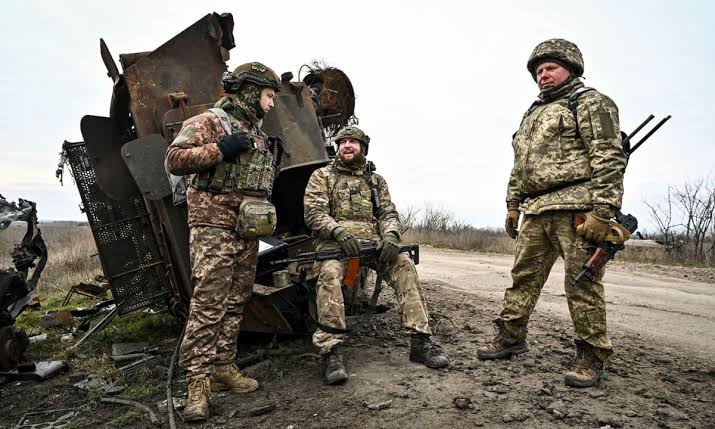
Ukraine did not survive Russia’s invasion because it matched Moscow militarily. It survived because it transformed a bilateral war into a multilateral stake. By embedding its security dilemma within NATO, the EU, and global norms, Ukraine increased the cost of Russian victory beyond the battlefield.

Taiwan’s resilience lies not only in its arms but also in its economy. Its centrality to global semiconductor supply chains converts any military action into a worldwide economic crisis. Invasion becomes irrational not because it is impossible, but because it is prohibitively disruptive.

Palestine commands unprecedented global sympathy yet remains structurally vulnerable. Without credible security guarantees, economic leverage, or institutional power, moral legitimacy alone has not translated into sovereignty.

Venezuela’s leadership adopted confrontational rhetoric without building defensive alliances, diversified economic networks, or institutional shields. The result has been isolation, sanctions, and internal fragility, confirming that outrage without insulation invites coercion. The lesson is stark: states do not survive because they are right; they survive because they are costly to dominate. Afghanistan’s resilience is a case study. 

Africa today occupies a paradoxical position. The continent is: Central to the global energy transition (critical minerals), demographically pivotal, geopolitically courted by rival powers, and numerically powerful in multilateral institutions; alas, Africa remains strategically fragmented. Most African states still approach global politics through the language of gratitude, alignment, or moral appeal rather than through calculated leverage. The continent’s diplomatic posture is often reactive rather than anticipatory.

This is dangerous in a world where: aid is weaponised, debt is politicised, sanctions are normalised, and security assistance comes with strategic strings. Africa risks becoming the quiet theatre of the next great-power contest, not because it is weak, but because it is insufficiently coordinated.

What Africa requires is neither idealism nor cynicism, but strategic realism with agency a doctrine that accepts power politics while refusing subjugation.

Such a doctrine would rest on five pillars.

1. Strategic Indispensability: Africa must move beyond raw resource exportation toward value-chain centrality. Countries that control processing, logistics, and industrial ecosystems are harder to coerce than those that merely supply inputs.

2. Networked Sovereignty: Sovereignty in the 21st century is not isolationist. It is embedded on favourable terms through regional blocs, trade regimes, and security compacts that dilute unilateral pressure.

3. Institutional Power, Not Institutional Faith: Africa must stop treating international institutions as moral referees and start using them as arenas of contestation. Voting blocs, agenda-setting, and procedural leverage matter.

4. Strategic Non-Alignment, Not Passivity: Non-alignment must evolve from rhetorical neutrality into active hedging, diversifying partnerships, avoiding dependency traps, and exploiting multipolar competition without becoming a proxy.

5. Continental Coordination: No African state, regardless of size, can negotiate effectively alone in a hardened global system. Continental coherence in economic, diplomatic, and security-related is no longer aspirational; it is existential.

Conclusively, power will not wait for Africa to be ready; the defining feature of the emerging world order is not chaos, but selective constraint. Power will be exercised where resistance is weak, fragmented, or sentimental and restrained where costs are high, and consequences diffuse. Africa cannot afford another century of learning this lesson too late. The continent must abandon the illusion that shared history, moral standing, or international sympathy will shield it from coercion. Those narratives did not protect Ukraine, Palestine, or Venezuela. They will not protect Africa.

What will protect Africa is a strategy: the ability to anticipate pressure, restructure vulnerability, and convert relevance into leverage. In a world where power has shed its disguises, survival belongs not to the loudest protester, but to the most strategically prepared.

Iranloye Sofiu Taiye is a policy analyst and wrote via iranloye100@gmail.com.
Ukraine slams Infantino over comments on possible Russia ban lift

By Sabiu Abdullahi

Ukraine’s sports minister has criticised Fifa president Gianni Infantino over comments suggesting that world football’s governing body could reconsider the ban placed on Russia, describing his remarks as “irresponsible” and “infantile.”

Russian national teams and clubs were suspended by Fifa and Uefa in February 2022 following Russia’s invasion of Ukraine, a decision that has kept the country out of major tournaments, including the 2022 World Cup, Euro 2024 and the 2026 World Cup.

Despite the ongoing war, Infantino said the ban “has not achieved anything” and “has just created more frustration and hatred,” adding that “having girls and boys from Russia being able to play football games in other parts of Europe would help.”

Reacting in a post on social media, Ukraine’s sports minister, Matvii Bidnyi, said: “Gianni Infantino’s words sound irresponsible – not to say infantile,” adding that they “detach football from the reality in which children are being killed.”

Bidnyi stated that more than 650 Ukrainian athletes and coaches, including over 100 footballers, have been killed since the start of the war, and added: “War is a crime, not politics,” insisting that Russia’s flag and national symbols “have no place among people who respect values such as justice, integrity and fair play.”

Serhii Palkin, chief executive of Ukrainian club Shakhtar Donetsk, also condemned Infantino’s comments, saying they “represent a complete detachment from reality” and amount to “an attempt to pretend that war and aggression do not exist.”

He warned that football cannot ignore events outside the pitch, stating: “Football cannot exist outside reality and it has no right to turn a blind eye to evil,” while stressing that any move to reintegrate Russia would carry “responsibility for complicity in the silencing of war crimes.”

Although Russia has played matches against some non-Western nations outside the Fifa and Uefa framework, the ban remains in place, even as Ukraine continues to oppose any steps toward Russia’s return to international sport.

African men recount how Russia lured them into Ukraine war

By Sabiu Abdullahi

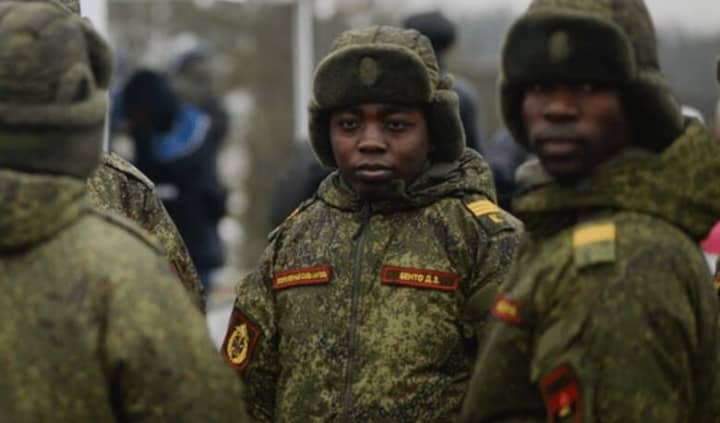
African men searching for work are being misled, pressured and pushed into combat roles in Russia’s war in Ukraine, leaving many dead, injured or missing, according to accounts from victims, returnees and families.

For Anne Ndarua, the pain is constant. Tears fill her eyes whenever she speaks about her only son, Francis Ndung’u Ndarua, a 35-year-old Kenyan who travelled to Russia six months ago after being promised employment as an electrical engineer. Today, she does not know whether he is alive.

Anne said she last spoke directly with Francis in October. Since then, there has been no contact, apart from disturbing videos that later circulated online and revealed what several African families now describe as a lethal recruitment scheme.

According to a CNN report, Anne received a video in December from an unknown Kenyan number. In the footage, Francis warns fellow Africans against travelling to Russia in search of work. He says job seekers are being forced into the Russian military and sent to fight in Ukraine.

“You’ll end up being taken to the military even if you’ve never served in the military, and you’re taken to the frontline battle. And there are true killings,” he says in the video. “Many friends have died in the name of money.”

About a week later, another video appeared online. It shows Francis in military uniform with what appears to be a landmine strapped to his chest. He looks visibly terrified while a Russian-speaking man shouts racist insults and says Francis will be used as a “can-opener” to break through Ukrainian positions.

“It’s so traumatising,” Anne told CNN. She said she could not watch the clip after her daughter described it to her. Anne explained that speaking publicly was her last hope of prompting action from authorities in Kenya and Russia.

“I’m appealing to the Kenyan and Russian governments to work together to bring those children home,” she said. “They lied to them about real jobs and now they’re in war with their lives in danger.”

Before leaving Kenya, Francis lived with his mother in a small settlement outside Nairobi and had no job. Anne said he paid about $620 to a local agent who claimed he could arrange legitimate work in Russia. She later became alarmed when her son reported that he had been pushed into military training shortly after arriving.

Anne said Francis spent only three weeks in basic training before being deployed to the front lines in Ukraine.

A broader CNN investigation points to widespread recruitment of African men by agents linked to Russia. These recruiters allegedly promise civilian jobs, high wages and Russian citizenship, yet many recruits end up conscripted into one of the world’s deadliest conflicts.

CNN reviewed hundreds of chat messages, visas, military contracts, flight records and hotel bookings, and interviewed African fighters and those who managed to return home. The findings describe deception, pressure, unpaid salaries, racism and extreme risk.

Although precise numbers are unknown, governments in Kenya, Uganda, South Africa and Botswana have confirmed that dozens, and possibly hundreds, of their citizens have been drawn into Russia’s war. Media reports across Africa tell similar stories, which have led several governments to warn citizens against suspicious job offers linked to Russia.

Russia’s Defence and Foreign Ministries did not respond to CNN’s requests for comment. The Russian embassy in Nairobi also declined to comment.

CNN spoke with 12 African fighters still in Ukraine, from Ghana, Nigeria, Kenya and Uganda. All said recruiters initially offered civilian roles such as drivers, factory workers, technicians or security guards. They were promised signing bonuses of up to $13,000, monthly pay of up to $3,500 and Russian citizenship after completing service.

Instead, they said they were forced into the army on arrival, given minimal training and sent to combat zones. Several said they were compelled to sign contracts written only in Russian, without translators or legal advice. Many also reported that their passports were seized.

Despite Russian law requiring foreign recruits to understand the language, none of the Africans interviewed said they spoke Russian.

Several fighters said promised payments never arrived. Some accused recruiters or fellow soldiers of stealing money from their bank accounts.

“One Russian soldier forced me at gunpoint to give him my bank card and PIN,” one African fighter told CNN anonymously. “Nearly $15,000 was withdrawn. I’ve been here seven months, and I haven’t been paid a single cent.”

He added that four men who travelled to Russia with him have since died.

Documents examined by CNN indicate that the contracts are far more restrictive than advertised. They include open-ended combat duties, strict loyalty clauses and financial penalties for leaving. The contracts also allow authorities to restrict movement, seize passports and impose long-term secrecy obligations. Promises of retraining or civilian employment are only available after at least five years of service and under limited discharge conditions.

On social media, a different message circulates. In one popular video, a Nigerian man in Russian military uniform encourages Africans to enlist, describing the process as “very, very easy and very good, no stress.” Other clips appear in Igbo, Swahili, Twi and Pidgin English. Ghanaian soldier Kwabena Ballo boasts in one TikTok video: “My salary can feed your father, mother and whole family for two or three years.”

Most African fighters interviewed by CNN reject this portrayal. They described constant danger, racial insults from commanders, unpaid wages and bodies of fellow Africans left on the battlefield for months. Some spoke of colleagues who lost limbs without compensation and suffered severe psychological distress.

“The war here is very hot, and many people are dying on both sides,” said the only African fighter who told CNN he intended to complete his contract. “This was not what these guys expected.”

Despite such accounts, Russian state media continues to highlight African recruits as honoured volunteers. Lawmakers praise them publicly, while televised citizenship ceremonies present Russia as inclusive.

Patrick Kwoba, a 39-year-old Kenyan carpenter, said he believed the online images. After seeing an African friend in the Russian army appearing prosperous on social media, he paid an agent $620 and was promised a $23,000 signing bonus.

“I thought I was going to be a security guard, not a combatant,” Kwoba said in Nairobi after escaping.

He described his four months in Ukraine as “hell.” After three weeks of training, he was sent to the front and later injured during a Ukrainian drone and grenade attack.

“When I asked for first aid using the code ‘3-star,’ my Russian partner chased me away and started shooting at me,” he said.

Kwoba escaped during recovery leave in St. Petersburg and made his way to the Kenyan embassy in Moscow. Embassy officials helped him return home with temporary travel papers.

“So long as you’ve stepped in the Russian military, you escape or you die,” he said. “If you finish your contract, they still force you to stay.”

Kwoba still needs surgery to remove shrapnel from his body and says he is lucky to be alive.

Another returnee, 32-year-old Kenyan photographer Charles Njoki, applied through a Russian army recruitment portal to support his pregnant wife. He sold his car to fund the journey and arrived in Russia within a week. While he was in training, his wife miscarried, news he learned days later because recruits’ phones had been taken away.

Njoki was injured in a drone strike and now lives with permanent damage to his hand and spine. He believes African fighters were deliberately placed in the most dangerous positions.

“They tell you that you’ll guard places, not fight,” he said. “But you end up on the front line.”

Putin calls European leaders “little pigs” as he vows Ukraine war goals will be met

By Maryam Ahmad

Russian President Vladimir Putin struck a defiant tone in a speech to his defence ministry, insisting that Russia’s goals in the war in Ukraine “will undoubtedly be achieved,” either through diplomacy or by “military means.”

While signalling openness to what he described as “substantive talks” with the United States, Putin dismissed European leaders in crude terms, referring to them as “little pigs” as they discuss proposals to increase funding for Ukraine.

The comments come as diplomatic activity intensifies in Europe. Ukrainian President Volodymyr Zelensky is expected to join European Union leaders in Brussels on Thursday, where discussions will focus on continued political, military and financial support for Kyiv amid the protracted conflict.

Russian court sentences Colombian national to 28 years for fighting alongside Ukrainian forces

By Sabiu Abdullahi

A court in Russia’s Kursk region has sentenced a Colombian citizen to 28 years behind bars after finding him guilty of fighting as a “mercenary” with the Ukrainian Armed Forces against Moscow.

The sentencing was announced on Tuesday, with Russian authorities stating that the man took part in combat operations within Ukraine’s military, including in the border region of Kursk.

In its ruling, the court declared that the individual had participated “in the armed conflict as a mercenary in the Armed Forces of Ukraine,” and added that he was “sentenced to imprisonment for 28 years.”

Russian officials have consistently maintained that foreign nationals who support Ukraine on the battlefield are violating Russian law.

The Colombian’s involvement on the side of Kyiv further reflects the international dimension of the ongoing war.

The conviction comes amid continued hostilities between Russia and Ukraine, which have seen rising casualties on both sides.

It also aligns with Moscow’s broader efforts to clamp down on foreign fighters it accuses of aggravating the conflict.

The Russian government has not released the name of the convicted individual, nor has it provided further details regarding the specific charges or dates of the alleged combat activities.

The situation remains a stark reminder of the far-reaching consequences of the war, now drawing individuals from different continents into its orbit.

Pope Leo XIV calls for peace in Ukraine and Gaza in his first Sunday message

By Hadiza Abdulkadir

In his first Sunday message as Pope, Leo XIV made a powerful plea for peace, urging an immediate end to the conflicts in Ukraine and Gaza. 

Addressing the faithful gathered in St. Peter’s Square, the pontiff called for “an authentic and lasting peace” in Ukraine, emphasising the devastating human cost of the ongoing war. 

He further implored for a ceasefire in Gaza, demanding the release of all Israeli hostages held captive.

“The world yearns for peace,” Pope Leo XIV stated, his voice resonating across the square. “We must strive for dialogue and understanding, putting an end to the violence that inflicts immeasurable suffering. In Ukraine, let the weapons fall silent, and in Gaza, let the hostages be released.”

His message underscored the Vatican’s continued commitment to promoting peace and reconciliation in conflict-plagued regions. 

The Pope’s appeal resonated with many, who hope his words may inspire concrete action toward achieving a lasting resolution.

Zelenskyy calls for peace talks, expresses readiness to work with Trump

By Hadiza Abdulkadir

Ukrainian President Volodymyr Zelenskyy has reiterated his country’s commitment to achieving peace and stated that his country is prepared to negotiate as soon as possible. 

In a statement posted on social media, Zelenskyy emphasised that “nobody desires peace more than Ukrainians” and expressed his readiness to collaborate with U.S. President Donald Trump’s leadership to secure a lasting resolution. 

He proposed initial measures, including a prisoner exchange and an immediate ceasefire on aerial and naval assaults, contingent on Russia’s reciprocity.

Zelenskyy also acknowledged the critical role the U.S. has played in supporting Ukraine’s sovereignty, particularly highlighting Trump’s past decision to provide Javelin missiles. He stressed the importance of continued cooperation with Washington and expressed disappointment over a recent White House meeting that did not go as expected. 

Calling for constructive dialogue, Zelenskyy urged U.S. officials to work together to make things right and advance peace efforts.

The Ukrainian leader reiterated his country’s readiness to sign a security and mineral resources agreement at any moment. He described the deal as a step toward stronger security guarantees and expressed hope for effective implementation.

Hamas did not start this war, Israel did

By Ismail Obansa Nimah

Theodor Herzl must be restless in his tomb for what is happening in Palestine. He must have forgotten to remember that even though he succeeded in creating Zionism to champion his vision for a Jewish state in the heart of Palestine, the territory he uprooted people from and where he currently rests was never really his. In it were millions of good-hearted people, living a beautiful life in their homes, farms, families, freedom, peace and prosperity. Until all they had was brutally taken away by the entity Herzl created, the state of Israel.

The Jewish homeland chanted by Herzl since the first worldwide Jewish conference in 1897 and seen by thousands of Jews as their God-given right and as “a land with no people for a people without land”, is for the first time since its creation up in an unprecedented amount of flames.

The West championed the Balfour Declaration after the First World War. It gave the territory of Palestine to a foreign occupation to establish the apartheid state of Israel in total injustice and disregard for the basic human rights of the indigenous people of Palestine.

After the Balfour Declaration,  the Zionist movement gained momentum and confidence. Jews worldwide, particularly in Europe, began to migrate and seek refuge in Palestine. The Palestinians welcomed and gave refuge to the Jews escaping persecution, particularly during the second world war and the Holocaust by Nazi Germany. But to the Palestinian’s dismay, their kind gestures were met with a very painful backstabbing.

 Following the Second World War, the Israeli Declaration of Independence, formally the Declaration of the Establishment of the State of Israel, was proclaimed on 14 May 1948. That declaration triggered resistance from the Palestinian and neighbouring Arab states. It questioned how people’s lands and homes could be stolen from them that easily.

The resistance led to the first armed confrontation between Palestinians and the newly founded state of Israel, together with their allies, resulting in the 1948 Nakbah, which not only saw  78% of Mandatory Palestine become illegally occupied by Israel but also saw the expulsion and flight of 700,000 Palestinians, the subsequent depopulation and destruction of over 500 Palestinian village and geographic erasure, the denial of the Palestinian right of return, the creation of permanent Palestinian refugees in their lands, and the “tyrannical destruction of the Palestinian society, all of which has continued till date.

The events of 1948 uncovered fierce resistance across occupied Palestinian territories and other Muslim nations—one that gave birth to the likes of Hamas, Hezbollah, and the Palestinian resistance fighters.

Since 1948, Israel has continued expanding its occupation and settlements in the Palestinian Territories. It thrashed the two-state solution and violated almost every international law in its systemic oppression, tyranny and ethnic cleansing of the Palestinians. It has carried out numerous indiscriminate attacks and killings of innocent Palestinians. The apartheid regime in Israel has illegally demolished thousands of Palestinian homes, destroyed heritages, desecrated religious sanctuaries, particularly Al-Aqsa Mosque, murdered countless unarmed civilians, including numerous children, women and the elderly and denied Palestinians basic human rights, including their freedom.

At the heart of the Palestinian resistance is the Gaza Strip (the headquarters of Hamas), which has endured decades of Israeli terror, bombardments and siege. The Gaza Strip is a densely populated area with a land, sea and air blockade by Israel since 2007. It is basically a prison.  Israel has carried out countless inhumane, unprovoked attacks across the strip, with the most deadly being in 2014 and the most recent occurring just five months ago. On average this year, 2 Palestinians have been killed daily by Israel across its occupied territories.

The hypocrisy of the Western powers fuelling the Israeli regime for decades has allowed successive generations of Palestinians to take bold and brave initiatives, like what is currently unfolding, to defend and resist the Israeli apartheid occupation. And it appears that the more fight they put to resist, the better they get at it. One may ask, what makes the Palestinians so different from the Ukrainians?

 With the seeming cowardice stance of the Arab Nations in their pursuit of a normalisation agenda at the expense of the Palestinians, it became increasingly clear that if the Palestinians would achieve anything at all, then they would either have to fight bravely and indeed as they currently are or die trying but retaining their honour and dignity with them.

This recent attack has sent a clear message to the world that if peace and stability must be achieved, then attention must be paid to the oppressed and not the oppressor. A man who has already lost so much would not mind throwing all that is left to defend his honour and dignity. The Palestinians have been stretched too thin, and they, more than anyone, have all the right to defend themselves in this war that the creation of Israel started.

Ismail Obansa Nimah wrote via nimah013@gmail.com.

Vladimir Putin blames West over death of Russian journalist in Ukraine

By Uzair Adam Imam

The Russian President, Vladimir Putin, has blamed the Western powers over the death of Russian journalist in Ukraine.

Putin described the death of the journalist as “a heinous, premeditated crime” committed by Western powers and Kyiv.The Russia’s foreign ministry on Saturday vowed a decisive “response” against the perpetrators.

The Daily Reality reports that Russian military announced that Rostislav Zhuravlev, a war correspondent working for the state RIA Novosti news agency, had been killed. He died as a result of a Ukrainian strike in the southern Zaporizhzhia region on Saturday.

“As a result of a strike by the Ukrainian army using cluster munitions, four journalists were wounded in various levels of severity,” the Russian army said in a statement.

“During an evacuation, the RIA Novosti journalist Rostislav Zhuravlev died from his wounds that resulted from the cluster munitions exploding.

“Everything indicates that the attack on the group of journalists was not carried out by chance,” the Russian foreign ministry said.

“The competent international organisations prefer, as before in such cases, to turn a blind eye to this heinous crime”, it added.

According to the ministry, “the journalists were gathering material for a report on the bombing by the Kyiv regime militants of settlements in the Zaporizhzhia region using cluster munitions banned in many countries around the world.”

Nigeria’s economy in chain since the start of Ukraine war – Minister

By Uzair Adam Imam

The Federal Government has said that the adverse effects of the war in Ukraine and the ongoing security challenge in Nigeria have contributed to the aggravation of the fragile economic situation in the country.

At the start of the war, the Organisation for Economic Cooperation and Development (OECD) warned that the world economy would pay a “hefty price” for the war in Ukraine, encompassing weaker growth, stronger inflation and potentially long-lasting damage to supply chains.

In Nigeria, inflation is already hitting living standards and reducing consumer spending as business owners become less optimistic about production.

The Minister of State, Budget and National Planning, Prince Clem Ikande Agba, disclosed this Tuesday at the 63rd National Conference of Nigerian Economic Society. 

The 3-day conference, which started Tuesday at the Maryam Abacha American University of Nigeria, Kano, was themed “Fiscal Sustainability and Policy Response for Economic Recovery in Nigeria”.

The Minister, represented by the Director Macro Economic, Mr Felix Okonkwo, said fiscal discipline is what Nigeria needs to build a stable and inclusive economy.

Agba stated that the Federal Government is focused on addressing the revenue issues, which it considers essential to the economic and financial health of the country.

He added that insufficient revenue was why Nigeria could not contain its fiscal deficit after the recession, meaning that the country’s capacity to continue to support and raise capital expenditure has not been improved.

He said, “The adverse effect of the War in Ukraine, insecurity, global food crisis, oil theft in the Niger Delta, rising energy prices, massive depreciation of the naira exchange rate, high fuel subsidy and increasing inflation as well as insufficient fiscal buffer aggravated the fragile economic situation in the country.”

The chairman of the occasion, Shamsuddeen Usman, said the conference aimed at providing possible ways to restore the country’s economic stability through enhancing fiscal policies.

The President of the Nigerian Economic Society, Prof. Umma Jalingo, who organized the event, said the association was founded three years before Nigeria’s independence and was aimed at enhancing the country’s economy.