‘Lack Of Cleaner Energy Kills 100,000 Nigerians Every Year’
By Sabiu Abdullahi
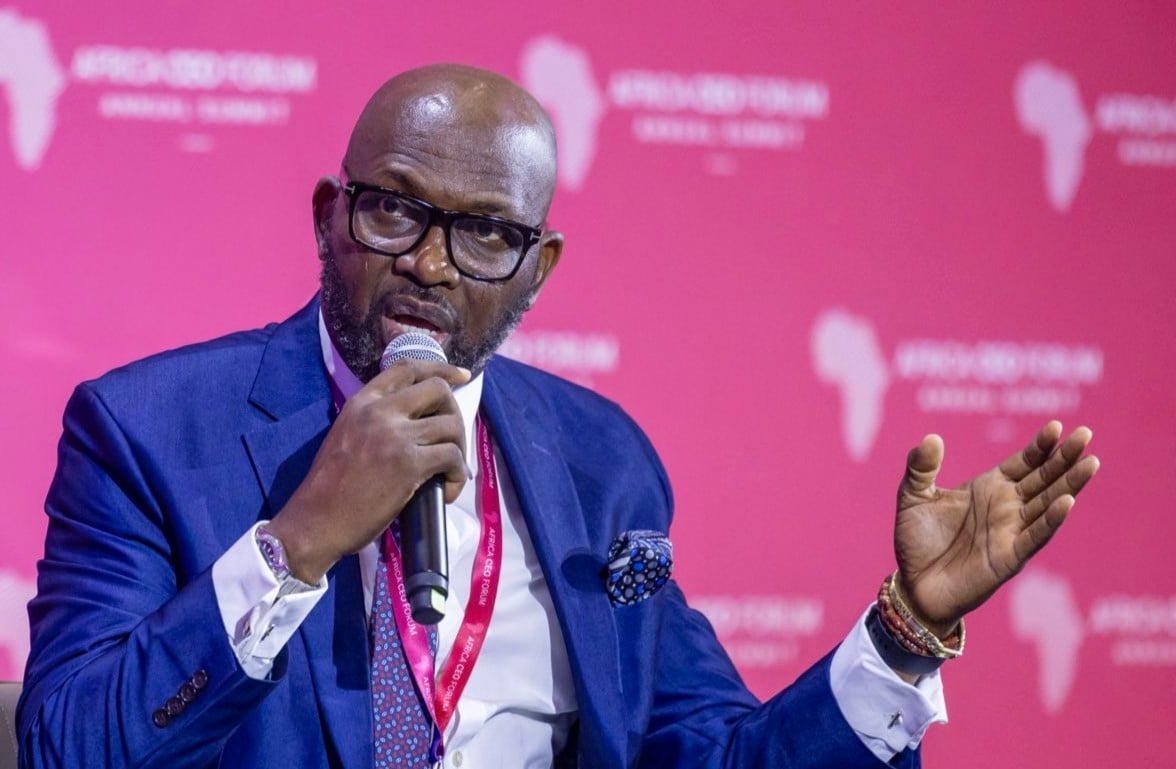
Tony Attah, the Chief Executive Officer and Managing Director of Renaissance Africa Energy Company, has said about 100,000 Nigerians die every year because they do not have access to cleaner energy sources.
Attah spoke on Thursday at the Africa CEO Forum held in Kigali, Rwanda. He said the situation extends across the continent, where more than 400,000 deaths are linked to poor access to cleaner energy.
He stressed the importance of natural gas to Africa’s electricity sector and described cleaner energy as critical to improving living conditions across the continent.
“When you look in Nigeria, 100,000 people die every year from lack of access to cleaner energy. Just look at that poor woman who is trying to put food on the table, and she has to cook through the smoke, using poor quality fuels, walking in and out of that every day,” he said.
“Think about it. One child on the left, one on her right, one on her back. They go in day in (and) day out. That is where your 100,000 people come from. The overall number for Africa is more than 400,000.”
Attah said Africa should not accept such statistics despite its huge gas reserves.
“That’s not the narrative that you should feel proud of as an African, that’s not the narrative that you should feel proud of as somebody in the industry that says we have 620 tcf of gas that can provide life,” he said.
“Essentially, gas is life, and that’s how Africa has to see gas. And if we as producers see it that way, we now need to get that same logic to the minds of the leadership, because integration is what has to happen in Nigeria.”
The energy executive also urged African countries to invest in their own natural resources instead of relying heavily on foreign financiers.
According to him, Nigeria’s electricity supply remains inadequate for its population of more than 200 million people.
“If you look at Nigeria, we have over 200 million people. The total spinning reserves of electricity is under 20 gigawatt. And what is available for the population is about five. So 5,000 megawatt for 200 million people,” he said.
“Of course, there are millions of generators all over the place. But no economy can take off on the back of diesel generators. In the same vein, no economy should expect to take off on the balance sheet of others.”
Attah argued that Africa must reclaim financial resources tied up abroad if the continent hopes to fund its own development.
“So those $4-$5 trillion that Amaodu referenced, that is sitting elsewhere but belongs to Africa, has to come back, and that is how Africa will start to take centre stage in financing itself,” he said.
“You can’t keep expecting people to want to finance you and then you want to lead them or you want to stand up to them — you must be subservient if someone is financing you. As they say, who pays the piper dictates the tune.”
He further called for a shift from exporting raw gas to using the resource to create economic value within Africa.
Also speaking at the forum, Chairman of McKinsey Africa, Acha Leke, said Africa possesses about 10 per cent of the world’s proven gas reserves and could sustain production at current levels for another 70 years.
Despite this, he noted that only three per cent of gas produced on the continent is traded within Africa.
Leke said 34 per cent of African gas is exported outside the continent, while most of the gas consumed within Africa is concentrated in Algeria, Nigeria, Egypt and Libya.
According to him, the continent’s gas infrastructure was designed mainly for exports rather than for regional distribution and trade.