Tokyo 2020

Tokyo 2020 Olympics: the challenges and the way forward for Nigeria

By Abdulrazak Iliyasu Sansani

Every four years, the whole world assemble in the biggest celebration of sports in the World, the Olympics. Right from the strenuous preparations, several months of intense training, which number up to 47 months and some weeks for a legion of athletes. The Olympics offer pure, undiluted enchantment that has the entire world spellbound. Nothing eclipses it in terms of an array of amusements at display that thrills the spectators. 

This is just the minor aspect of it. It has far-reaching essence for all the nations that participate in it. It is not only the festival of sporting excellence at the highest level but also it brings much more to the table: pride that comes with winning the bragging rights, the ecstasy of athletes succeeding, and the joyous moments which leads to the pure jubilant mood in any nation that gets to reach the podium. 

It appears no nation goes to the Olympics to make up numbers. So it seems in principle, but in reality, the reverse is the case. Any country that flunks inadequately preparing for the most significant sporting events has sufficiently orchestrated to fail deliberately. There aren’t two ways about it. 

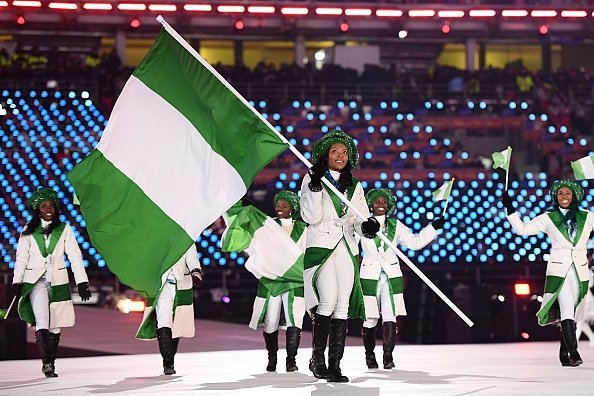
Nigeria, my beloved country, has been going to the Olympics for years. However, with all due respect to the athletes, we have yet to attain our potentials. We ought to have done much better as a nation endowed with seas of talents in every hamlet. With this established, I will dwell on our recent Olympics performance where we finished as 74th on the medals table with a solitary silver and a single bronze. That is two medals for a country of over two hundred million citizens that sent 55 athletes where ten were expelled even before it commenced. It is woeful, abysmal, and beyond the pale. Nigeria deserves much better. 

Some may make excuses for Nigeria’s dismal performance because of our vast population, while some may use that as the reason we have done better. But here are some facts for us to use and judge fairly. First, Nigeria’s name is missing on the gold medals table because we didn’t win gold, which is understandable. But on the entire medals table, I have seen some making excuses because of our vast population or otherwise for winning or not winning medals: we did even worse on the per capita table of medals won in the 2020 Tokyo Olympics. 

San Marino, a country with a tiny population of 33,931 citizens, is far less than my local government of Gassol. In short, roughly the population size of my Ward, Wuro Jam: average a medal per 11,310 of her citizens because of the three trophies won. Bermuda, a British overseas territory is second with one medal won. This means a medal for every 63,918 of her population. It must be noted Bermuda isn’t even an independent nation, though it has its Olympics delegation. With a population barely the size of my local government, Grenada won a single medal in the Summer Olympics: 393,244 on average, a medal per 196,622 of her citizens. With 20 medals and a population of 4,82 233, New Zealand averages a medal per 241,111 of her citizens. This completes the top 5. 

With 71 medals won and a population of 144,1096,512, Russian Federation has a medal for every 2, 029,532. This makes it the number 41 on the table. The United States was the overall winner of the Olympics with 113 medals, and a population of 331,002,652 has a medal per 2,929,227 of her big population. Brazil, with 21 medals and a population of 212,559,417, has a medal for every 10,121,877. Astonishingly, even China, the most populous country globally, with a population of 1,439,323,776, has a medal per 16,355,952 of her citizens because of her 88 medals won in Tokyo.

Indonesia, with a population of 273,523,615, sits 91 on the table with five medals. This makes it a medal for every 54,704,723 of its citizens, which is also ahead of Nigeria. Nigeria with two medals is only above India on the log: Nigeria’s 206,139,589 estimated population has a medal per 103,069,794 of her citizens. This makes Nigeria 92nd on the list. With seven medals and a population of 1,380,004,385, India has a medal per 197,143,483 of its citizens. This is a sample of how the per capita table looks.

However you look at it, Nigeria ought to have done better and must do better. There is no room for excuses. We must decisively work towards a greater future for our dear country. To argue otherwise would be suicidal or rather a fatal blow to the aspirations of an ebullient, cerebral, and talented nation that should be aiming for the pinnacle half of the overall table. Once we are successful in doing that: Nigeria’s claim of being the giant of Africa will be valid, especially in sports. 

Talking about the giant of Africa, I believe it isn’t in sports. But if you have a good look at the medals table, most of the most prominent economists and most developed nations are at the upper part of the table. So it is saddening to see the ‘Giants of Africa’ languishing far behind in the world and not among the top 5 in Africa. Kenya had one of her worst performances in recent years for even the best in Africa, with ten medals won in the just-concluded Olympics. 

Hence, we can’t use them as a model of success. Indeed, it is not enough to be the best in Africa or 19th in the world if your performance is nothing to write home about. I followed Facebook posts where many Kenyans bitterly complained about their nation’s dire performance despite being the best in Africa. Yet, I felt that it is how an ambitious and visionary country should behave. Not the revelling of mediocrity for political sake or any other reason.

Do not get me wrong. I don’t mean our athletes shouldn’t be rewarded. On the contrary, all our Olympians should be rightfully taken care of. For donning our national jerseys and deriving joy in representing our country: they deserve some accolades. But that should not deter us from being accountable for our nation’s performance. It is the right thing to do for any country that craves excellence has to do the proper thing. You don’t become the best by wishful thinking. Concrete efforts have to match with ambitions for us to reach our targets effectively. 

From now on, Nigeria needs to plan to succeed deliberately. The fire brigade approach in Nigeria’s preparations for the Olympics must be discarded immediately. It has not yielded any positive results. It will never do. Nigeria’s desire to perform well at the Olympics should go with meticulous plans on the ground. 

We must commence from the basis. Nigeria’s policy of education has to create room for sports right from Primary school. Physical and Health Education must not only be on paper. Today, it exists in most schools, even in urban areas on the paper. There is no corresponding example in reality. If we cannot get it right here, there is little chance of getting it right at bigger stages. The government at all levels must provide ample funds for the execution of a lot of projects. 

In the recently concluded Olympics, Nigeria competed in 10 sports: Athletics, Badminton, Canoeing, Swimming, Basketball, Gymnastics, Table Tennis, Taekwondo, Wrestling, and Rowing. There are sports that Nigerians are pretty good at. There are sports that we admire as Nigerians. There are sports that we have prospects for but have completely ignored. We must identify all these and put these sports to where they belong. 

Once this is done, the next thing is to provide funds for building sports complexes, stadia, or any sports grounds based on our sporting priorities which must be rooted in sporting preeminence. Then, with that completed, we should hire coaches, or rather trainers. And be sure there are sufficiently catered for, given all the assistance for advanced training in tackling the tough and highest level of sports: all these must be adequately funded for effective execution of these plans. 

Funds are scarce these days, with the Covid-19 pandemic, terrorism, kidnapping, inter-tribal crisis, dwindling oil revenue, and other factors in Nigeria. This shouldn’t be the reason not to seek ways to sponsor such a laudable plan, though. We could do so by using all options, plans, or partnerships to get the desired result. All Nigerian sports enthusiasts, policymakers must make spirited efforts and corporations to deliver the intended result. 

Alternatively, to save cost, we could use the existing sports infrastructure to conduct inter-house sports competitions, inter-local government sports contests, interstate sports competition, youth sporting events, National Sports festival and other sporting events that will produce promising athletes that will become great Olympians, who will, in the end, stand proudly on the podium, medals strapped on their neck, the green, white green flag flying high on the sky. The bottom line is that government must encourage more participation in sports in a conducive atmosphere. All these are doable, with a state-backed programme to salvage our dear country and set her on course for its glorious days. She manifested potentials shown with the right policies, the political will to do it, and implementation achievable.

Abdulrazak Iliyasu Sansani writes from Turaki B, Jalingo, Taraba State. He can be contacted via abdulrazaksansani93@gmail.com.
Tokyo 2020 Olympics: 5 lessons from the Men’s Football Tournament

By Aliyu Yakubu Yusuf


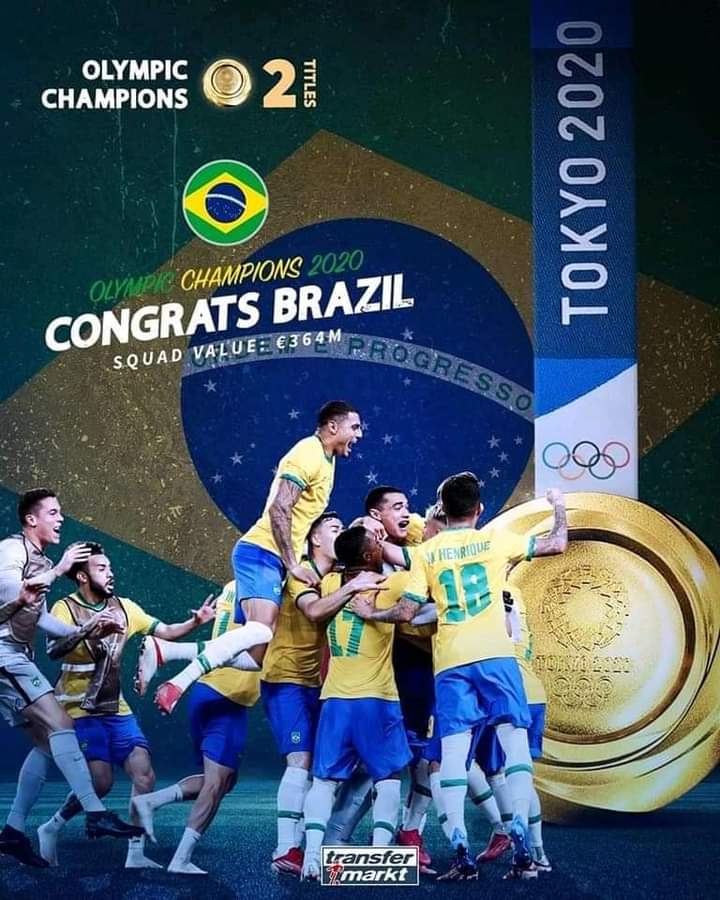
The curtains have fallen following yet another gripping edition of Olympic football games. Brazil has successfully defended the crown they won at home four years previously. The vanquished Spanish team fought back valiantly in the second half after going behind in the first. But with the game teetering towards a dreaded penalty shootout, Brazil’s substitute, Malcolm, delivered the decisive knockout blow that put paid to Spain’s quest for the gold medal. Here are the five things I learned from the tournament:

  • Brazil are worthy winners

Ever since the first ball was kicked about two weeks or so ago, it was apparent that barring any surprises that are characteristics of football games, the team that’s going all the way is either Brazil or anyone that overcomes them. Unlike most of the other big guns, Brazil takes this tournament seriously. After a disappointing ending at the Copa America, Brazil was keen to win this tournament to restore some sort of pride as the undisputed biggest footballing superpower. Brazil was, at times, irresistible in the group stages. Their triumphs over Germany and Saudi Arabia, which were sandwiched by a scoreless draw with plucky Ivory Coast, saw them play some scintillating football, with Everton striker Richarlison scoring five goals. Although the goals somewhat dried up in the knockout stages, the Selecao were never really troubled by any of their opponents en route to clinching the trophy.

  • The evergreen Daniel Alves still has it

It would be a crying shame to talk about Brazil without talking about the mercurial Dani Alves. Alves is the best right-back I have ever seen. And that’s a massive compliment because even Brazil alone had had the likes of Cafu and Maicon. The sight of Alves terrorising hapless opponents alongside Lionel Messi at Barcelona was a joy to behold for most football aficionados. So I wasn’t surprised at all when Brazil named him as one of their three overaged players. After all, this is a man who can do whatever it takes—fair or not—to win. Little wonder he’s the most decorated footballer in the whole history of football. This trophy is just another feather to his impressive cap. Even at the ripe age of 38, Alves is still one of the best players in his position. Brazil’s captain fantastic still has it.

  • Traditional heavyweights failed at the first hurdle

While Brazil sailed through the tournament, other traditional big countries badly underperformed. Argentina, Germany and France all failed to get past the group stages. For Argentina, it was just business as usual. For a country that won this very tournament consecutively at both 2004 and 2008 editions, it was a colossal failure not to have qualified for the knockouts for the second Olympics tournament running. The fact that they couldn’t qualify from a pool that contains Spain, Egypt and Australia tells you all you need to know about how bad this team had been. Like Argentina, France and Germany also failed to give a good account of themselves. Ever since a diabolical first half that saw them went 3-0 down in the first game against Brazil—and eventually lost the game 4-0—Germany never recovered. Although they defeated Saudi Arabia 3-2 in the next match, they huffed and puffed in their final group game but failed to see off the sturdy Ivory Coast. And that was their tournament done. As for France, the little said about them, the better.

  • The host country has so much to cheer about

Japan performed quite admirably in this tournament. Despite being drawn in a scary-looking group including France, Mexico, and South Africa, Japan qualified with maximum points. They scraped past New Zealand via penalty shootout in the quarter-finals before succumbing to Spain and Marco Asensio in the second half of the extra time in the semis. Although they went out in a cruel fashion, Japan can take courage from their outstanding performance. Despite being the host country, no one expected them to be the fourth-best team before the kick-off. However, in Takefuso Kubo, who is already at Real Madrid, Japan has a gem for whom they can dare to dream.

  • African countries flatter to deceive… again

For African countries, it was a case of one step forward, two steps backwards. Apart from South Africa that conspired to lose all their group games, Africa’s other two representatives began the tournament on positive notes. Egypt’s defeat is somewhat understandable as they went out to the eventual winners Brazil by the narrowest of margins. That’s after qualifying from a pool featuring both Spain and Argentina. The ouster of Ivory Coast, however, is pretty much frustrating for any fan of African football. After qualifying from the group that contains both Brazil and Germany, they were within a hair’s breadth of knocking out Spain before they inexplicably bottled it. They scored what looked like a winning goal in the 91st minute of the quarter-finals only to manage somehow to give up an equaliser in the 93rd minute before shipping three further goals in the extra time. That was some way of going out of a tournament. For Africa, Nigeria’s 1996 and Cameroon’s 2000 victories are but fading memories.

Aliyu Yakubu Yusuf is a lecturer at the Department of English and Literary Studies, Bayero University, Kano. He can be reached via aliyuyy@gmail.com.

2020 Tokyo Olympic: Brazil wins men’s soccer

By Muhammad Adamu

Brazil have the Olympic men’s soccer gold medal after a 2-1 victory over Spain in extra time. Brazil’s medal comes on the same pitch that it won the 2002 World Cup.

Brazil are now the second nation after Argentina to have won back-to-back Olympic gold medals after building on their 2016 success at these Tokyo Games.

Mikel Oyarzabal cancelled out Matheus Cunha’s opener after Richarlison missed a penalty, but Malcom ensured Brazil took home the gold medal with his goal in the 108th minute.

Why are northern players always absent or underdogs in the Nigerian national team?

By Salisu Uba Kofar-Wambai

It is very mind-blowing to view a national football team that ideally suppose to possess the quality of national outlook looking so sectional and tribal. Unfortunately, for quite a long time, the Nigerian football national team has been dominated by only what we called “southern players” at almost every level.

One will wonder why the utmost and utterly lopsidedness? After all, with its advantages, thanks to its vast population over the South, northern Nigeria has the upper hand to have more visibility in such national assignments. However, the reverse is always the case. Is that signifying that the northern folks lack interest in sports, especially football? Or does it mean that the North is consciously hiding its light under a bushel? NO! 

If one wakes up at dawn in northern cities and towns, the young, agile athletes are often the first people to meet exercising to their respective football pitches.

Moreover, the geographical advantage in terms of the landmass, with all the potentialities of its flatness, accurate for football arena and pitches against terrain nature and scarcity of southern land is another pointer that ought to have shot north ahead.

It is an indisputable fact that if you take around northern states, you will invariably discover that numerous football clubs are established in several places in the region. You will find players who can match the skills and talents of Messi, Ronaldo, Zidane, Figos, but all – or most – go nowhere. They mostly played in their small villages and ended up uncelebrated.

In Kano alone, the heart of the North, there are more than thousands of clubs playing in different levels and capacities. The Sports Ministry is, year-in-year-out, organising leagues for these clubs from league A to Z. These clubs produce young talents that can play at every level of football worldwide.

With globalisation and communication technologies taking centre stage of our lives, if one goes to viewing centres, where foreign leagues matches are shown, the story and impression one will get is that football has become part and parcel of our youths’ routine. It’s now popular culture. Football is always the topic of discussion on the lips of northern youth. Therefore, the football obsession comes in both ways – theoretical and practical, respectively. But why northern players are almost absent or underdogs in the national team?

And again, with football now going lucrative venture that quickly shoots up people to billionaire charts, with the abject poverty bedevilling the north and youth joblessness, sports can do a lot towards alleviating these monsters if taken significantly.

The central question is why many a time Kano clubs are the favourites and always win all Nigerian secondary schools? I think the appropriate answers to these questions are:

The North should embrace sports as a way of livelihood like its southern counterparts and encourage its youth to put in their best. The North should also give them support in terms of mentorship, send people of interest, read coaching courses, and, of course, financial assistance. Our well-to-do and government should facilitate our talents to get contracts in Europe through agents that secure clubs for players.

Our soccer administrators should make it compulsory for every coach vested with the responsibility of forming teams, especially in the under-17 and under-20, to always go round Nigeria for the players’ selection process. In most cases, those coaches sit back in their regions, select players from the South because they have already stereotyped northerners as worthless in that respective. And it is mostly the players of these levels that graduate into senior national teams levels and secure lucrative contracts to play in the prestigious leagues of Europe.

Northern youth should also try to go off weeds smoking; it is unfortunate to see a talented footballer and later find out that he’s a weed smoker. Most of them end up without achieving anything for obvious reasons. They should equally try to finish their secondary schools and be ready to go anywhere to play and show their resilience.

And above all, parents should pray for the guidance of their kids.

By doing this, I think the North will avoid the situation we are currently experiencing where northerners are a dot in the circle in the team of players representing Nigeria in the ongoing Olympics games in Japan.

Salisu Uba Kofar-Wambai is a PhD student at the Department of Mass Communication, Bayero University, Kano. He can be reached via salisunews@gmail.com.