Tax

How Nigeria’s new tax reforms will transform local supply chains

By Salisu Uba, PhD, FCIPS

Nigeria has embarked on a significant fiscal reform with the introduction of the Deduction of Tax at Source (Withholding) Regulations 2024, effective from 1 July 2024. Signed into law by the Minister of Finance, these regulations dismantle a nearly five-decade-old withholding tax (WHT) regime, signalling a pivotal shift in the nation’s economic structure. For supply chain and business stakeholders, understanding and capitalising on these changes is crucial for fostering sustainable, value-added growth in an evolving market.

Streamlining Taxation to Boost Supply Chain Efficiency

The new WHT regulations offer significant rate reductions that directly benefit the supply chain ecosystem. Notably, the WHT rate for payments to Nigerian companies for professional, management, technical, and consultancy services has been halved from 10% to 5%. This reduction eases financial pressures and improves liquidity, enabling businesses to reinvest savings into key areas such as logistics, technology, and workforce development. With enhanced cash flow, supply chains become more agile, swiftly responding to market demands while reducing operational bottlenecks.

Additionally, the WHT rate for payments related to other services and the supply of goods or materials to Nigerian residents has decreased from 5% to 2%. In the supply chain sector, where margins are often tight, this reduction helps lower overheads. It allows companies to reallocate resources to optimise inventory management, strengthen supplier relationships, and invest in advanced supply chain capabilities. These savings can translate into more competitive consumer pricing, strengthening market positioning and driving business growth.

Fostering Sustainable Infrastructure Development

Infrastructure is vital to the smooth functioning of supply chains, and the new regulations demonstrate the government’s commitment to supporting this critical area. The WHT rate on payments to Nigerian residents for constructing roads, bridges, buildings, and power plants has been slightly reduced from 2.5% to 2%. While modest, this adjustment reflects a broader strategy to enhance Nigeria’s infrastructure. Improved infrastructure facilitates more reliable and efficient logistics, reducing transit times and minimising disruptions, which bolsters supply chains’ overall resilience.

Empowering Small and Medium Enterprises (SMEs)

Small and medium enterprises (SMEs) are the backbone of Nigeria’s supply chain, serving as key suppliers and service providers. The new regulations offer exemptions for companies and unincorporated bodies with a turnover of 25 million Naira or less on transactions up to 2 million Naira, provided the supplier has a Tax Identification Number (TIN). This exemption reduces the administrative burden on SMEs, encouraging formalisation and integration into the broader supply chain framework and tax system. These reforms promote diversity and resilience by supporting SMEs, ensuring smaller players thrive alongside more giant corporations and contributing to a more robust, dynamic supply chain ecosystem.

Enhancing Compliance and Transparency

The extension of WHT liability to payment agents and the requirement to issue receipts for withholding tax deductions are vital steps towards greater transparency and accountability within the supply chain. These measures ensure tax obligations are met promptly and accurately, reducing the risk of disputes and fostering trust among business partners. For procurement professionals, enhanced compliance simplifies auditing and mitigates the risk of financial discrepancies, enabling more efficient and reliable supply chain management. Transparent tax practices also enhance Nigeria’s business ethics and foreign investment.

Strategic Adaptation: Navigating the Transition

Adapting to the new WHT regime requires careful planning and proactive engagement. Supply chain experts should thoroughly reassess existing contracts to ensure they align with the revised tax obligations. This may involve renegotiating terms with suppliers and partners to accommodate the new WHT rates and compliance requirements. Working closely with tax advisors and leveraging expert guidance can help businesses navigate the reforms’ legal, tax, and financial implications, minimising disruptions and capitalising on the benefits of the new regulations. Proactive adaptation will turn potential challenges into greater efficiency and competitive advantage opportunities.

Sustainable Value Creation in the Supply Chain

The overarching objective of Nigeria’s WHT reforms is to create a fairer and more efficient tax environment that supports sustainable business growth. For the supply chain sector, reduced tax burdens enhance operational efficiency, while support for SMEs and infrastructure development lays the foundation for long-term resilience and innovation. Businesses can invest in sustainable practices such as green logistics solutions and supply chain transparency initiatives by lowering costs and improving cash flow. These investments contribute to environmental sustainability, build competitive advantage, and create added value for stakeholders. I also encourage the government to look into its supply chain to increase transparency, promote equal opportunities, prioritise local procurement of all goods and services, and digitally transform the function across MDAs.

Conclusion

Nigeria’s Deduction of Tax at Source (Withholding) Regulations 2024 represents a transformative step in modernising the country’s tax framework. The implications for supply chains are profound, offering opportunities to enhance efficiency, support small businesses, and invest in sustainable growth. By strategically adapting to these changes, companies can transition smoothly, leveraging the new tax environment to build more resilient, value-driven supply chains. 

As Nigeria continues to refine its economic policies, the supply chain sector stands to benefit from a more equitable and supportive fiscal landscape, driving sustainable growth and long-term prosperity. The Federal Government and the Presidential Fiscal Policy and Tax Reforms Committee, led by Taiwo Oyedele, deserve commendation for their forward-thinking approach. These reforms alleviate immediate financial pressures on businesses and pave the way for a more dynamic, resilient, and value-added supply chain ecosystem in Nigeria.

Salisu Uba, PhD, FCIPSis a Fellow of the Chartered Institute of Procurement and Supply Chain UK and Founder of NatQuest – a supply chain technology company based in the UK.
Nigeria Customs Service, Joint Tax Board sign MoU to foster collaboration 

By Sabiu Abdullahi 

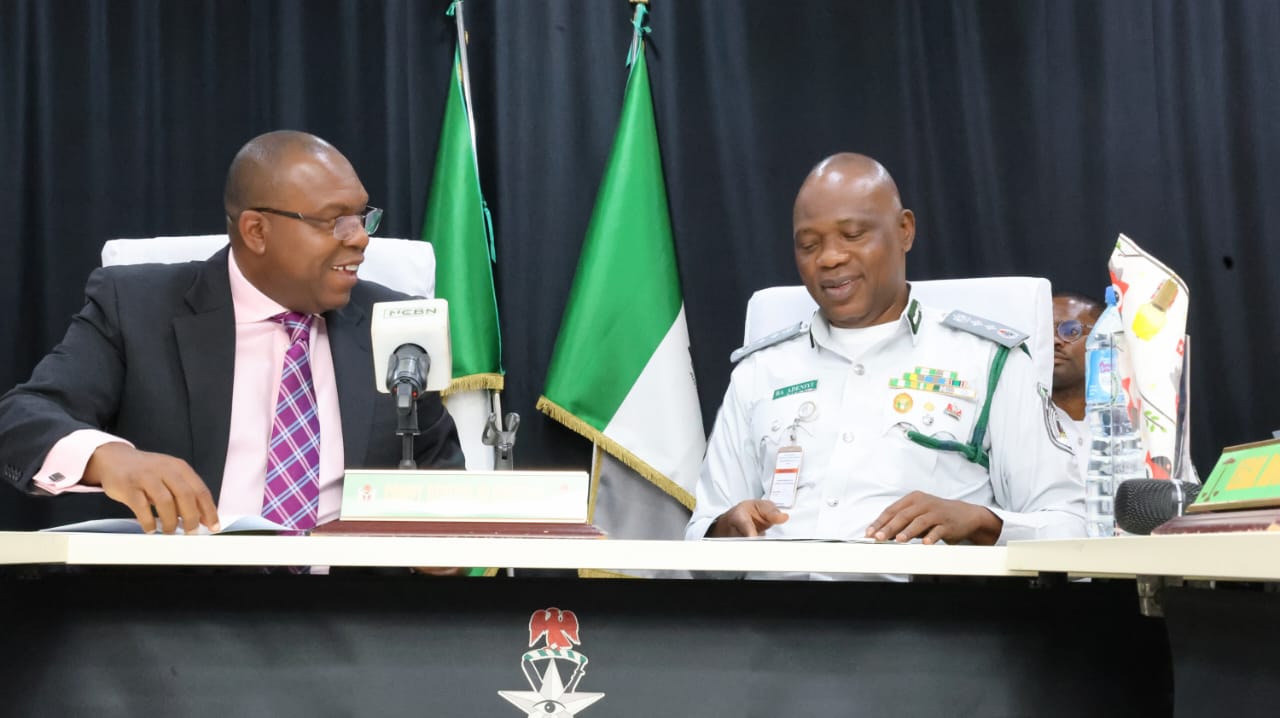
The Nigeria Customs Service (NCS) and the Joint Tax Board (JTB) have inked a memorandum of understanding (MOU).

The MOU, signed on March 18, 2024, at the NCS headquarters in Abuja, marks a great step towards fostering a more robust economic landscape in Nigeria. 

The signing ceremony, which followed a productive meeting held on January 16, 2024, saw the participation of key stakeholders, including the Comptroller-General of Customs, CGC Bashir Adewale Adeniyi MFR, and the Secretary of the Joint Tax Board, Olusegun Adesokan.

Both parties expressed their commitment to collaborative efforts aimed at enhancing tax management and facilitating economic growth. During the event, CGC Bashir Adewale Adeniyi MFR underscored the significance of the collective endeavour, emphasising the tireless efforts invested in finalising the MOU.

He highlighted the MOU’s role in laying a solid foundation for future initiatives and integrating fiscal policies to streamline data facilitation processes. 

The MOU signifies a landmark achievement in strengthening strategic collaboration between the NCS and the JTB.

It is poised to pave the way for enhanced coordination and synergy in driving economic development initiatives across the nation. 

In his remarks, Olusegun Adesokan, the Executive Secretary of the Joint Tax Board, commended the foresight of the parties involved in reaching this milestone.

He lauded the dedication and vision demonstrated by the teams, noting that the successful signing of the MOU is a testament to their commitment to advancing Nigeria’s economic interests. 

The MOU between the Nigeria Customs Service and the Joint Tax Board reflects a shared commitment to fostering sustainable economic growth and ensuring effective tax management practices.

As both entities embark on this collaborative journey, the prospects for a more vibrant and prosperous economy for Nigeria appear brighter than ever before. 

This partnership heralds a new era of cooperation and synergy in tackling the challenges and opportunities inherent in the nation’s fiscal landscape, setting the stage for transformative outcomes and lasting impact on Nigeria’s economic trajectory.

Governor Fintiri and the complex cattle tax increment

By Zayyad I. Muhammad

Taxes and royalties collection is a fundamental avenue for a government to generate revenues to fund infrastructure and human capital development.

Adamawa State needs other sources of revenue apart from the free petro-dollar from the centre. The state is poor, with a fragile economy, including thousands of unemployed youths and people engaged in unproductive jobs.

The World Bank says – most developing countries with fragile economies “often face the steepest challenges in collecting taxes.”

There is a correlation between the timing of introducing new taxes, peoples’ economic strength and politics. No government can survive local politics if it introduces new taxes at the wrong time- especially when it faces a re-election bid. Governor Ahmadu Umaru Fintiri is seeking re-election in the 2023 governorship election.

Governor Ahmadu Umaru Fintiri’s introduction of a new cattle tax regime appears ill-timed, unplanned, and poorly communicated to the concerned people. So many explanations from the Governor’s aides, yet no one understands them because the basics in tax administration were left out – new tax collection should be optimized, but with minimal burden on the taxpayers, it should be fair & equitable, and at the appropriate time.

The Adamawa state government said that the ‘Adamawa State Agribusiness Support Programme (ADAS)’ is designed to take full advantage of the agricultural opportunities within the state and will focus on three areas of the Crop Value chain, Livestock and Aquaculture. The government further said – the Agric bond will draw twenty-five billion Naira annually, which will be used to offset many of the state’s liabilities and loans, and open a window for generating huge revenue as well as galvanizing the market in the Agric business, especially the livestock subsector” including the upgrade of cattle markets in Mubi, Ganye, Song, Gombi, Ngurore, Tungo, Malabu, and Wuro Bokki.

The Fintiri government failed to do its homework in two areas – balancing the economic needs and political necessity. The cattle tax is as historic as northern Nigeria. The five thousand Naira (N5,000) imposed on every cattle is exorbitant and unaffordable according to many people in the business

On the other hand, there are thorny politics associated with the cattle tax’, and the people related to the business are complex and critical in the socio-political settings of northern Nigeria, thus before tinkering with the tax, there is a significant requirement for discussion, engagements, and understandings. The livestock business is a vital sector, so to speak!  as a result of poor timing and lack of discussion with stakeholders on the new increase in the cattle tax, the Mubi cattle market, one of the biggest in the north, didn’t operate last week. The security agents sealed the market on Tuesday, September 13, 2022.

Well, the Governor has found himself in a catch-22 situation because the upward review on tax for cattle and grains was one of the conditions the government must fulfil in accessing the capital market’s 100 billion naira agribusiness bond. Governor Fintiri has already collected 25 billion Naira from the 100 billion. And the investors are the ones to be collecting the taxes

Governor Fintiri is a history, policy, and strategy student, but often some of his decisions lack political strategy. He doesn’t have good political advisers or seeks any advice most of the time.

Zayyad I. Muhammad writes from Abuja, 08036070980, zaymohd@yahoo.com.

Katsina: Villagers neutralise armed bandits while collecting ‘tax’

By Uzair Adam Imam 

Citizens in Kahiyal in Bugaje word of Jibia, Katsina State, have bravely stood up to bandits who invaded the village to collect tax from the innocent people. 

The Daily Reality gathered that two armed bandits came into the village in broad daylight, asking people to give them money. 

The villagers feigned to oblige but only for one of them to quickly grab the bandit’s rifle while dropping the money. Other locals, who also had their weapons, helped him.

A citizen, Professor Abdussamad Umar Jibia, narrated the incident on his Facebook wall.

He said the bandits “stayed in one place and asked the villagers to contribute money and bring it to them. 

“The villagers did that. However, unfortunately for the criminals, the person who brought the money dropped it and quickly grasped the boy holding the rifle. 

“Other villagers who were ready with their local weapons rushed on the criminals and finished them off as it should be,” he said.

Insecurity and banditry are the major security issues bedevilling the northwestern part of the country, leading to thousands of deaths while numerous others are forced to migrate.

The criminals impose unlawful taxes on countless farmers and others living in the affected areas.