Strike

We suspended the strike despite our demands not met – ASUU

By Ahmad Deedat Zakari

The Academic Staff Union of Universities, ASUU, has suspended its eight-months-old strike.

The union disclosed this in a press statement signed by its president, Emmanuel Osodeke, on Friday.

Speaking on the reasons for the strike suspension, ASUU said the intervention of President Muhammadu Buhari and the Speaker of the House of Representatives, Femi Gbajabiamila were imperative for the suspension of the strike action. The union argues that their demands were not satisfactorily addressed .

The statement partly reads: “While appreciating the commendable efforts of the leadership of the House of Representatives and other patriotic Nigerians who waded into the matter, NEC noted with regrets that the issues in dispute are yet to be satisfactorily addressed.

However, as a law-abiding Union and in deference to appeals by the President and Commander in Chief of the Armed Forces of Nigeria. His Excellency, President Muhammadu Buhari, and in recognition of the efforts of the Speaker of the House of Representatives, Rt. Hon. Femi Gbajabiamila, and other well-meaning Nigerians, ASUU NEC resolved to suspend the strike action embarked upon on 14th February 2022.

Consequently, all members of ASUU are hereby directed to resume all services hitherto withdrawn with effect from 12:01 on Friday, 14th October 2022.”

ASUU to call off strike in few days

By Uzair Adam Imam

The Academic Staff Union of Universities (ASUU) promised to end its strike after meeting the Speaker of the House of Representatives, Femi Gbanjabiamila.

The union, which has been on strike since February 14, disclosed this yesterday after meeting with Gbanjabiamila and some ASUU members.

The lecturers down tools to press their demand home which include the Federal Government’s failure to meeting the agreements reached with the union.

The meeting was a last-minute move to persuade the striking union and came after the Court of Appeal, Abuja, on Friday intructed the union to call off its incessant strike.

Gbanjabiamila said, “This is a recap to seal the deal on what has been a long-fought battle; a long hard road for everybody – for ASUU, the students and the government.

“As you would recall, some weeks ago the House got involved in this crisis and we had long, tough, intense meetings with ASUU.

“We had meetings with those on the government side and we are happy to report that as the result of the consultation and intervention of the House, very significant progress has been made and we are more or less at the end of the road save for dotting some “I”s and crossing some “T”s.

“I believe we have covered ground, covered most of the thorny issues and it is basically, what we have agreed with ASUU is basically to put everything on paper and sign off. I believe if we had met yesterday and the papers had been drawn up, ASUU, I am sure, would have called off the strike today.

“But we only just met behind closed doors now and so we have to draw up the agreement as I have stated to you, and hopefully in the next couple of days, of course, ASUU has to get back to its bases as well. Once that is agreed, I am very hopeful and very excited about the possibility or probability the strike would be called off in a matter of days.”

“We did this for the sake of our students and children and I hope it would be a thing of the past. I thank you very much, ASUU. I also thank Nigerians for their patience, and the students, having endured these many months. But I believe that this has hopefully come to an end in a matter of days.”

The ASUU President, Professor Emmanuel Osodeke, commended the House leadership for its intervention.

He said, “If the way the National Assembly has intervened; if you have done that long ago from the beginning, or those who are in charge of labour and education have done exactly this, we will not be where we are today.”

Our struggle is bigger than you – ASUU-KASU replies El-Rufa’i

By Muhammad Sulaiman

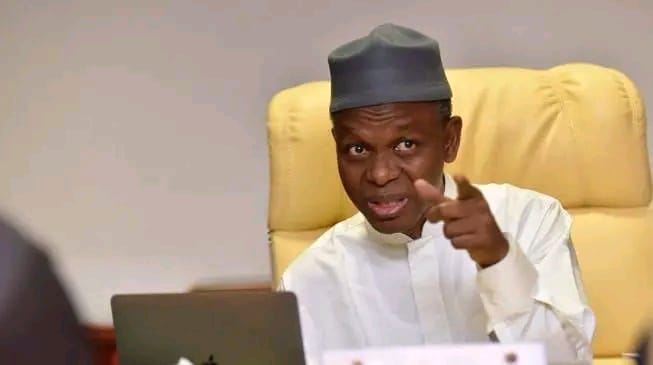
The ongoing academic dispute between the Academic Staff Union of Universities (ASUU) members, and the Federal Government of Nigeria, has taken a new dimension in Kaduna State. The governor of Kaduna State, Malam Nasiru El-Rufa’i, has threatened to sack the Union members if they fail to resume their normal academic activities at Kaduna State University. However, the ASUU branch at the Kaduna State University (KASU) responded, saying that they are far above his usual tactics. They added that they would not, in any way, stoop to his intimidation and threats.

Excerpts of the ASUU Zonal press release, signed by its coordinator, Comrade Abdulkadir Muhammad, read:

“The Kano Zone of ASUU comprising Ahmadu Bello University, Zaria (ABU), Bayero University Kano (BUK), Federal University, Dutse (FUD), Kano University of Science and Technology, Wudil (KUST), Kaduna State University (KASU), Sule Lamido University, Kafin Hausa (SLU) and Yusuf Mataima Sule University, Kano (YUMSU) met on 7th August 2022 and deliberated on the intimidation meted on the ASUU members at KASU by the Government of Nasir Ahmed El-Rufai due to the ongoing nationwide strike action embarked upon as directed by the ASUU National. The Governor had threatened to sack all academic staff that have been on strike in the branch as he usually does on similar matters. ASUU as a Union had experienced similar threats in the past, and that had never deterred it from the patriotic struggles to salvage our public universities from imminent collapse.

As you are fully aware, our roll-over strike action has now entered its sixth month. The goal of the strike is to get government to timely and substantially address ASUU’s demands, namely: revitalization funds for public universities, Earned Academic Allowance (EAA), conclusion of the renegotiation of the 2009 Agreement, Visitation Panels to universities, and stoppage of the proliferation of state universities and governance issues in them, and deployment of UTAS as a payment system in Federal Universities. These demands were agreed upon, with timelines, by the Federal Government in the MoU and MoA it signed willingly with ASUU in February, 2019 and December, 2020 respectively.

The rhetorical question as to why ASUU is always embarking on strike action has been asked time and again by the concerned citizens and stakeholders. The straightforward answer is that ASUU is strongly convinced that if academics fail to fight the cause of university education, the fate that befell public primary and secondary schools would soon become the lot of the public university system in Nigeria. It is also worthy of note that ASUU as a Union does not derive pleasure in the disruption of academic calendar and hindering students from graduating in good time. Strike action always comes as the Union’s last resort after exhausting all other options and consultative avenues.

KASU has benefited immensely from the TETFund interventions, revitalization fund, staff development and provision of research grants, which are dividends of ASUU strikes. In fact, KASU is one of the universities that could rightly be described as “TETFund University” since virtually all buildings in the University were constructed through TETFund interventions. At this juncture, we challenge the Visitor of KASU to show a single structure he constructed on KASU campuses during his two-term tenure as Governor of Kaduna State. It is therefore illogical for the Government of Nasir El-Rufai to bluff that members of ASUU-KASU should either break away from the National strike or be sacked. Since the issuance of this threat, our members have constantly been intimidated and coerced by the University Council and Management through opening of registers, conduct of a comic exercise called examinations, selective stoppage of staff salaries, among others.

These theatrical exercises that the University Management confused and referred to as examinations that are currently going on in KASU are characterized by non-coverage of course outlines, incomplete lecture contact hours, non-participation of lecturers who taught the courses in the setting of the examination questions and supervisions, involvement of students in invigilation and non-moderation of question papers, which are clear violations of the laid down rules and regulations governing the conduct of examinations.

The Union would not fold its arms while the University evaluation system is being bastardized and abused by the Management of KASU. Therefore, ASUU demands that all the so-called examinations so far conducted be discarded in order to maintain and respect the sacred system of evaluation in the university system. The examinations must be re-conducted after following the due process and suspension of the ongoing strike action, otherwise, the Union will be left with no option but to write a petition to the National Universities Commission (NUC) and the Independent Corrupt Practices Commission (ICPC) against the Management of KASU.

The ASUU-Kano Zone commends the commitment and resilience of ASUU-KASU members for not succumbing to the antics of Kaduna State Government and its agents. The Union calls on its members in KASU to remain resolute and prosecute the strike action to its logical conclusion. Finally, the Union thanks the good people of Kaduna State for their patience, understanding, support and cooperation.”

ASUU’s undying struggle

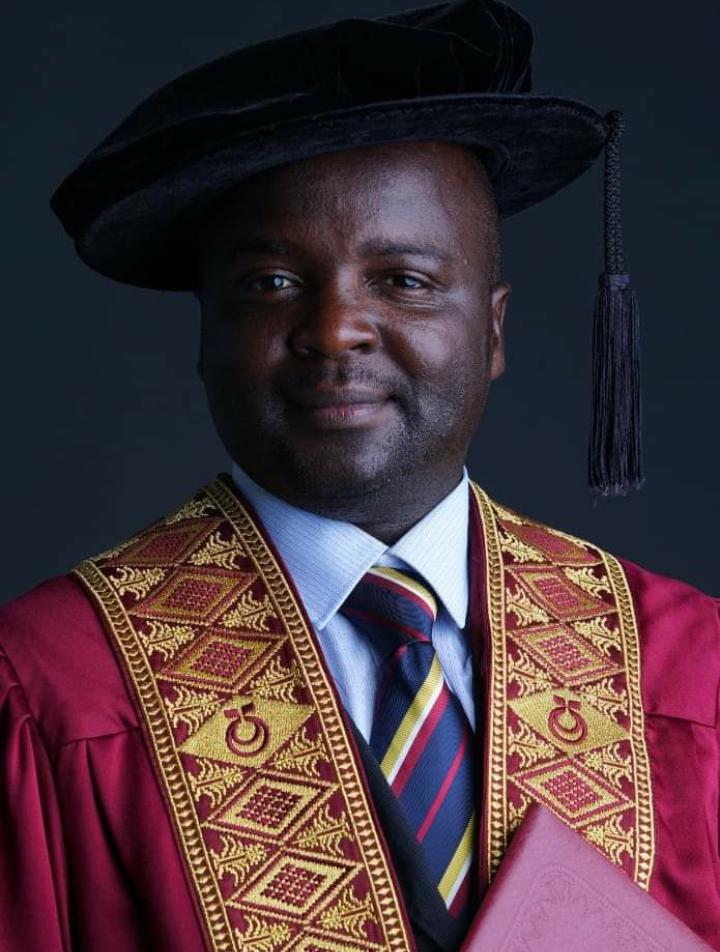
By Auwal Mustapha Imam, PhD

Nigerian politics should copy ASUU politics. There’s no union, party, association, society or any group in Nigeria that has the structures as firm as that of ASUU. None has united, tolerant and harmonized structures as ASUU. ASUU is mindless of the religion, region, ethnicity or tribe of who becomes its leader, the only thing ASUU members are after is, someone that has the capacity to face and challenge any inappropriation, misconduct, injustice or insincerity from the powers that be.

The leadership has been like that since its inception. No one cares wether or not the leader is a Muslim/Christian or any tribe. If the leader is a Christian from the South, he challenges the powers and addresses the problems of every Muslim lecturer from the North, devoid of consideration of his faith. This goes vice versa.

When my teacher and mentor Dr. Nasir Isa Fagge, a Muslim from Bayero University, Kano was the President of ASUU, he faced and challenged the then President Goodluck Ebele Jonathan, a Christian from the South. None of either ASUU members or Nigerians complained that he was harsh because the President was a Southern Christian. All they were after was the result and the struggle.

Now that President Buhari, a Muslim from the North is the President, the two consecutive ASUU leaders Professor Biodun Ogunyemi (immediate past) and Professor Emmanuel Osodoke (the present) are fiercely challenging the Buhari’s government for the betterment of education in Nigeria, where both Muslims and Christians from all angles of the country can benefit. None of either ASUU members or Nigerians are complaining that the strike lingers because a Northerner is the President. All we are after is the result and the struggle.

Whereas, in Nigerian politics, one’s religion, region and ethnicity are scrutinized and looked at first before even his intellectual capacity. This has thrown us into a deep mess that led us to underdevelopment and public service abuses. Every organization recruits not based on merit, but connection, relationship and nepotism. This can never allow us to establish a structure that will ensure transparency and good governance.

ASUU’s structure, opinions and decisions are both descending and ascending. All deliberations from the local chapters ascend to the zone, then to the national. Likewise, all communications and decisions descend from the national to the zones and to the local chapters. Every member of ASUU is a stakeholder and all opinions are listened to and respected. This is why it is difficult for government to break the structure and penetrate with any inducement to corner the loyalty of some members to the agreement of government’s policies against ASUU.

ASUU’s structure enables unity and enforces loyalty to decisions. If your voice is heard and respected, you have no reason to go against the decision you took part in. This is why every member is loyal.

My master, Professor Mutari Hajara Ali of Physics Department BUK, once told me how he used his Vespa then for commercial “achaba” to survive the harsh policies of the then government of no-work-no-pay against them. I know many lecturers who are currently into commercial transportation services with their vehicles to survive the policy and endure the strike.

To all ASUU members, struggles and sacrifices are part of the job. Hence, nor starvation can force ASUU to retreat, unless its demands are met. Many of us are into hardships, but to us, the struggle needs to reach a logical conclusion rather than back down because of hunger.

Aluta Continua!

ASUU Strike: NLC threatens nationwide protest on July 26

By Uzair Adam Imam

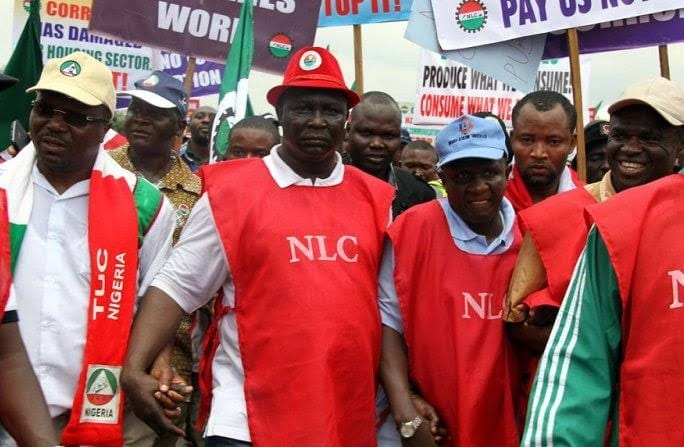
The National Labour Congress (NLC) has threatened to embark on a nationwide protest 26/7 of July in solidarity with the strike by the Academic Staff Union of Universities (ASUU).

The union has been on a strike since February 14th, 2022, over the government failure to meet their demands.

The Daily Reality recalls that the issues are bordering on funding universities, as well as on salaries and allowances of lecturers.

The NLC president, Comrade Ayuba Wabba, in a statement jointly signed with his secretary, Emmanuel Ugboaja, disclosed that the protest aimed at getting the university students back to school.

The statement read, “we bring you fraternal greetings from the national secretariat of the Nigeria Labour Congress (NLC),” the letter read.

“In line with the decisions of the National Executive Council (NEC) meeting of the Nigeria Labour Congress held on the 30th of June 2022, we have scheduled as follows the National Days of Protest to get our children back to school and support our unions in Nigeria’s public universities fighting for quality education.

“Dates: Tuesday, 26th July 2022 and Wednesday, 27th July 2022.

“Venue: All the State Capitals of the Federation and Abuja the Federal Capital Territory. Take off Point: NLC State Secretariats and the Labour House, Abuja

“You are requested to immediately convene the meetings of your SAC to disseminate this information and to fully mobilize workers in the states for this very important protest for good governance,” the statement added.

ASUU NEC members to meet tomorrow amidst one–month warning strike

By Muhammad Sabiu

The Academic Staff Union of Universities (ASUU) will meet on Sunday for its National Executive Council (NEC) to assess the ongoing strike and determine the appropriate action to take next.

The union’s president, Emmanuel Osodeke, a soil science professor, stated this on Saturday but did not provide details about the scheduled meeting.

A member of the NEC who did not want to be named to avoid sanctions, however, indicated that the meeting would be held in Abuja.

Recall that about a month ago, the union declared a one-month warning strike to mount pressure on the Federal Government to have its promises fulfilled.

Therefore, tomorrow’s meeting is the determinant as to whether the strike will continue or not.

ASUU vs FG: A solution to the university revitalization fight

By Professor Abdelmalik Abdelghaffar Amoka

ASUU in 2008, provided pictorial documentation on the state of infrastructural decay in public universities to the Federal Government (FG). After several struggles and strikes, FG put together a Committee on the NEEDS assessment of the public universities, headed by Prof. Mahmood Yakubu, the then TETFund Boss. Prof Mahmood Yakubu’s committee after a thorough work recommended that 1.3 trillion naira is required to revitalize all the public universities (Federal and State universities) to make them suitable learning environments for the normal human being.

Just like the 2021 visitation panel report and the 2021 report of the renegotiated 2009 agreement, the NEEDS Assessment report was dumped somewhere till ASUU declared another strike in 2013 for the report to get attention. An agreement was then reached between ASUU and FG after the 2013 strike that the fund will be spread from 2013 to 2018. GEJ’s government released 200 billion naira for 2013 before he was voted out and Buhari’s government took over in 2015. As of 2013, Gen Muhammadu Buhari, Mal. Adamu Adamu, Mal Nasiru El-Rufai, Alh Lai Muhammed, and APC as a party believe that the government of Jonathan was “irresponsible” for their failure to implement the agreement reached with ASUU on public universities. They gave all sorts of convincing supporting reasons why FG can meet the demands of ASUU. El-Rufai was in OBJ’s government and he knows how government works. So, hypocrisy did not come to people’s mind, they didn’t see any point in doubting his position and his 2013 post on the ASUU strike went viral.

The general public is always on the fence during these fights for university revitalization. Some choose who to support based on where their loyalty lies at that moment. That is the reason why those who were against the FG on the ASUU strike in 2013 and now supporting FG on ASUU strike on the same issues. Since 2015, the APC government has refused to release the funds for public universities. After about 4 ASUU strike actions for the last 7 years of the government of President Buhari, they have not been able to release up to 100 billion naira for universities revitalization. Meanwhile, they are adding more universities.

There is this class of public school beneficiaries that believe that FG does not have 1 trillion naira to fix our universities to make them attractive to any student except through the introduction of tuition fees. But some of us think that the people, including civil servants, are too poor to afford tuition for University education, else it will become an elitist institution. Public schools produce us and some of us are super-rich. So, if we believe that FG is actually broke to fund education, then we can intervene to revitalize the public universities in the interest of national development and for the love of the country.

Nigerians are cheerful givers. Our business moguls, media celebrities are fond of gifting their friends. Not sure if it’s for show-off. For example, Nightlife boss, Obinna Iyiegbu, popularly known as Obi Cubana got cash and other gifts worth over 250 million naira for his mother’s burial in July 2021. David Adeleke, popularly known as Davido in November 2021 raised 200 million naira within hours that he donated to the orphanage. I recently saw an unconfirmed impressive list of donations for the Attah of Igala coronation from my brothers. There are several of such donations. This is evidence that Nigerians are cheerful givers.

Nigeria’s generous donation of one million dollars to the Humanitarian Trust Fund for Afghanistan shows that even the government is generous. Only a cheerful giver will use 100 billion naira to rehabilitate non-functional refineries that are still not functioning. Only a cheerful giver will pay 69 billion naira as salaries to refinery workers that generated zero revenue and only go to work to warm their office chairs.

The public primary school system is dead, the public school system is dead, and the public university system has nearly collapsed. But why don’t we extend this generosity and cheerful giving to the education of the ordinary Nigerian? why can’t the elites donate a fraction of the money they sent abroad to educate their kids?

The agreement in 2013 was for FG to release N210 billion naira every year for 5 years. 9 years later, not up to 23% of the fund was released to the universities after 9 years. Maybe FG is actually broke even though they are establishing more universities and the key players are getting richer. A poor and broken man doesn’t add to his responsibilities.

Let’s apply the principle of our supposed generosity and cheerful giving to solving our education problem. Let’s open a public schools revitalization endowment fund. Let’s get 100 thousand cheerful givers from politicians, businessmen, captains of industries, Bank CEOs, celebrities, and the noisy “Abroadians” to donate 200 thousand naira every month for a year. That will give us 240 billion naira revitalization fund annually. Do that for 5 years and we’ll have 1.2 trillion naira to revitalize public universities.

Put up Board of Trustee and Fund management team from the donors to ensure that the fund is shielded from mismanagement. Nobody wants to see his money misused. Then, ASUU won’t have to go on strike for revitalization and will limit ASUU’s demands to welfare. The government won’t be looking for tuition fee that is not there or students’ loan that is not sustainable, students won’t have to stay at home for months due to strike. The university will be good enough for our big men that ship our money abroad. The industries will get a quality workforce. The universities will be attractive to international students and we’ll start earning forex from education.

But unfortunately, our cheerful giving in Nigeria does not extend to public education. Public education made us and we are either part of those destroying it or watching it destroyed without any slight resistance. It’s like a case of climbing to the top through the public education ladder and destroying the ladder after getting to the top. And unfortunately, the supposed middle class, a class that is nearly wiped out, that needs the ladder is afraid of the oppressors but blames ASUU.

Amoka is a social analyst, prolific writer and a Professor of Physics, Ahmadu Bello University, Zaria, Nigeria.

Parents, students plead to FG as ASUU mulls over fresh strike

By Uzair Adam Imam

Students and their parents are worried as the Academic Staff Union of Universities (ASUU) threatens to embark on a fresh indefinite strike.

Recall that ASUU suspended its nine-month-long strike in 2020 after reaching an agreement with the Federal Government. Still, after a year, the government is yet to fulfil its promises to the union.

The ASUU’s strike has been described as one of the most lingering issues that has been paralysing Nigerian universities, leading to the delay in students’ graduation and the deterioration of the education system in the country.

Not only that, many people argue that the strike has destroyed the future of many promising youths.

In a statement on Thursday, the Chairperson of ASUU Kano State Branch, Comrade Haruna Musa, and the Union’s Secretary, Comrade Yusuf U. Madugu, declared Monday, February 7, 2022, as a lecture-free day.

Its essence is for ASUU to use the day to sensitise university students, parents and other stakeholders on the brewing crisis arising from the Federal Government’s failure to implement the existing agreements with the union judiciously.

Educational sector at the receiving end

A lecturer at the Department of Nigerian Languages, Bayero University, Kano, Dr Muhammad Sulaiman Abdullahi, said that the strike was killing the country’s educational sector and the economy.

Dr Abdullahi cried: “It is a sad development. It looks childish and an endless menace, especially to the Nigerian educational system. Strike has become a thorn in the flesh of Nigeria’s general development. No nation can prosper morally in such a nasty situation. It is, indeed, unfortunate.”

He added that the situation “generally makes people, teachers, students and their parents to become very dull and uncertain of their future. You can take it to the banks that crime rate will somersault, and new bad things will manifest within the wider community”.

Students at risk

The president of the Mass Communication Students Association (MACOSA), Bayero University, Kano chapter, Comrade Sadisu Sada, decried that industrial action in Nigerian universities had been there for quite a long time.

He said, “It is worrying. The issue affects students directly. And for me, the government is to blame.

“ASUU is doing her best to give the educational system all that it requires. If not, education would have died.”

Umar Isah Dandago, an undergraduate of the Department of Mass Communication in the university, also voiced his grievance, saying this would delay his graduation.

Dandago said: “We would have graduated if not for the 2020 strike. This is a serious problem. A lot of people want to do something, like setting up a new business after university, but because of the strike, it’s becoming almost impossible.”

He, therefore, urged the Federal Government to give ASUU what it demanded, saying, “I believe it’s not even half of what’s being squandered in some things that are not important to us. So let’s get the education we deserve as Nigerians so that we’ll be proud of our leaders and our country.”

Also speaking, Comrade Ibrahim Mukhtar Sulaiman, a level 300 student, said: “Sadly, students taking a four-year course will graduate in five, six or seven years. And this affects not only their academic careers but also their personal life.”

Parents raise alarm

As the strike looks imminent, some parents lamented that the brewing crisis between the government and ASUU jeopardises their children’s future.

A parent, Malam Adamu Kolo, who looked disturbed by the imminent strike, said that his son would have graduated if not for ASUU incessant strike.

Malam Adamu Kolo said, “My son would have graduated this year if not because of ASUU incessant strike. You can see that I am poor. I am hopeless. Our hope is on this boy.”
Nigerian Universities to embark on fresh strike

By Khadija Muhammad

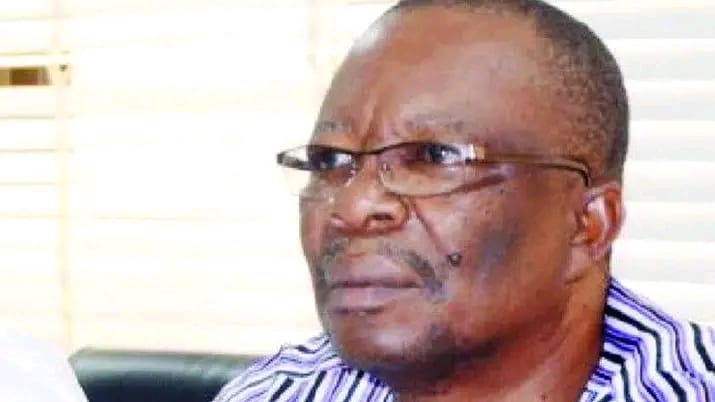
The national president of the Academic Staff Union of Universities (ASUU), Professor Emmanuel Osodeke, expressed concern over how the Federal Government of Nigeria is handling the demands of the universities unseriously. Together with other union leaders, he expressed their dismay at a press conference in Abuja on November 15, 2021.

The Academic Staff Union of Universities (ASUU) issued a three-week ultimatum to the Federal Government to address all issues as agreed in the December 2020 Agreement.

ASUU President, Professor Emmanuel Osodeke, stated this on Monday while addressing reporters in Abuja.

The president warned that the union might be compelled to embark on another nationwide strike should the government fail to implement the Memorandum of Action signed with ASUU before suspending the last industrial action.

According to the ASUU President, all the issues, including unpaid academic earned allowances and the universities revitalisation fund, have not been addressed almost one year after an agreement was reached.

The ultimatum is part of the resolutions reached at the National Executive Council (NEC) meeting of ASUU held in the nation’s capital.

It can be recalled that ASUU embarked on a nationwide strike in March 2020 following its disagreement with the government over the funding of the universities and the Integrated Payroll and Personnel Information System (IPPIS), among other issues. Accordingly, it had proposed the University Transparency and Accountability Solution (UTAS) to replace IPPIS. But in a bid to get the lecturers back to class, the Minister of Labour and Employment, Chris Ngige, convened a series of meetings with leaders of the union and relevant government officials.

Amid the strike that lasted several months and negotiations that ended in a deadlock, the government and ASUU later signed a Memorandum of Action in December 2020. This led to the suspension of the protracted industrial action that lasted nine months. However, not after the government offered a cumulative N65 billion to the lecturers to address earned academic allowances and revitalisation of universities.

On the IPPIS tussle, both parties agreed on the UTAS, while the government would pay the university lecturers’ salary arrears on a different platform.

ASUU had on several occasions warned that it would indeed go on strike if the federal government continued to break the promises and throw away all the agreements reached.

Our varsities don’t deserve another strike – Buhari pleads to ASUU

By Uzair Adam Imam

President Muhammadu Buhari has appealed to the leadership of the Academic Staff Union of Universities (ASUU) to embrace peace, stating that Nigerian universities have had enough strikes.

Buhari, who was representated by Professor Ingnatuis Onimawo, made the plea on Saturday, 23-10-2021 as he was delivering a speech at a convocation ceremony in the University of Ilorin.

The president also stated that the dialogue is always better than the conflict as no any gain ever driven from crisis.

However, he added that a lot of time had been wasted as a result of Corona virus pandemic, thereby saying the university system cannot afford to withstand any crisis now.

  1. The president was quoted saying: “Let me also use this opportunity to appeal to members of ASUU to embrace peace. They should realise that dialogue is always better than conflict. No one gains from crisis. While government alone cannot solve all challenges facing a society, this administration is willing to listen to complaints and alternative points of views to managing a situation.”

“The university system cannot withstand any crisis now considering the time it had lost to Coronavirus pandemic,” he said.

Speaking on the issue of Corona virus, the president said: “I expect our universities to conduct researches targeted at discovering an antidote to it. Universities are expected to focus their research on challenges facing our societies and find practical solutions within the context of national development.”

“I therefore challenge the Universities to give their best in the fight against this common and unrelenting enemy of humanity. I enjoin our researchers to collaborate among themselves and look forward to bringing an effective solution to this medical challenge.”

“The nation expects University of Ilorin to play a leading role in the research efforts to develop Covid 19 in Nigeria.

“The nation expects nothing less from the Nigerian University system”, he added.