Southern Nigeria

Abba Kyari: The Super Cop on the Fall – Muhd El-Bonga Ibraheem

By Muhammad El-Bonga Ibraheem 


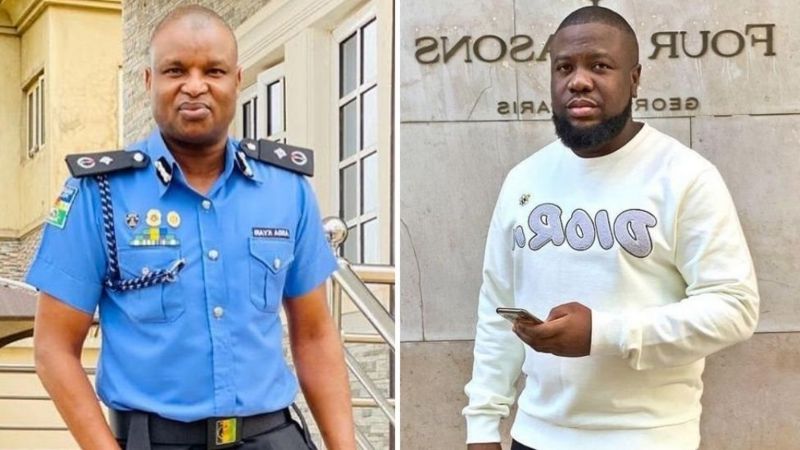
The damning and weighty allegations against DCP Abba Kyari, who many consider a cult hero within the Nigerian security system, is confoundingly infelicitous. The FBI indicted the fine police officer for being in cahoot with the internationally recognised fraudster known as Hushpuppi, who has been in US custody since July 2020 for multiple crimes perpetrated in and outside America. 


DCP Abba Kyari is an officer I so much respect. In fact, in him, I see a bright future for the police force given his expertise and tenacity in arraigning criminals and finding a way out where there is seemingly none. This development, however, evidently leaves me very sad that the person we hold in high regard isn’t what we really think he is, at least from what he portrays to the public and from what the FBI concludes from their thorough investigations. 

Over the years, the Deputy Commissioner of Police has attracted quite a myriad of attention that transcends across the nooks and crannies of the country. There is this general belief that whenever the police want to fish out criminals or swiftly achieve some desired results, Abba Kyari, nicknamed “Jack Bauer”, is the man for the job. He led many successful operations that culminated in the arrest of some criminals at the top of the Nigerian kidnapping echelon, notably Evans, the billionaire kidnapper. That singular arrest catapulted his reputation and made him a cult hero amongst the ranks and files of the police force and within the psyche of the Nigerian masses, who are usually downtrodden. Not very long ago, his men hunted the killers of the late APC chieftain Ahmed Gulak who was iniquitously murdered by IPOB terrorists masquerading as “unknown gunmen” in Imo State. 


Despite his unrivalled excellence as a super cop, nonetheless, that doesn’t mean Abba Kyari isn’t infallible. The FBI said Abba Kyari received orders from Hushpuppi to arrest and detain a criminal “colleague” after their falling out having scammed a Qatari national of more than $1m. The report added that Abba Kyari allegedly supplied an account of which a “thank you” message, which the FBI alludes could be from the proceeds of the crime, was sent to him by Hushpuppi.


At this juncture, no matter how much you want to twist the issue, Kyari shot himself on foot by cavorting with people of dodgy characters. The fact that an internationally known criminal in the mould of Hushpuppi— with criminal networks spanning from Nigeria to America, Britain, Korea etc.— can make one call to a police officer to have someone arrested for scuppering a “job” is indeed shocking and also speaks volumes about the influence he exerts in the force. The duo chatted many times where Kyari was egregiously revealed to have received direct orders from Hushpuppi regarding how the police should treat the arrested person. DCP Abba Kyari’s relationship with Hushpuppi also involved buying clothes for the fraudster to the extent that the latter would come and get them from the former’s office. While a police officer remains everyone’s friend, Kyari’s frolicking with Hushpuppi is too difficult to be whitewashed unless the investigations are finalised to determine his innocence if indeed he is. 

Although Abba Kyari had already responded to the weighty allegation, his explanations don’t hold any water, for he needs to prove to everyone keenly fixated on the issue, beyond any reasonable doubt, that he’s indeed not guilty. Much to his chagrin, Kyari edited the Facebook post conveying his initial response many times and subsequently deleted it. The various chats where Hushpuppi ordered Kyari and his men to arrest his so-called colleague and be dealt with like an armed robber without any form of investigation is an indication that they could have been frolicking for a long time. The “arrest” of Hushpuppi’s colleague for weeks is a preemptive move to prevent him from scuppering an ongoing “job” of scamming a Qatari national where the fraud money was later laundered in the US. This is where the FBI fingered Kyari as a possible co-conspirator in the whole issue. 


 The FBI is reputedly known for being painstakingly meticulous regarding their investigations. If they’re really on your case, nothing is usually left untouched, for they do back up their reports with undeniable, substantiated facts and documents. I have read an analysis from a lawyer friend who argued that the US has no jurisdiction to request Kyari’s extradition to be questioned in the US since he committed the alleged crime in Nigeria. The US— and by extension, the developed nations— always fear that justice may not be served, knowing full well how our system here in Nigeria operates. Is it not in this same Nigeria that James Ibori got cleared of any wrongdoing by Nigerian courts, having committed one of the greatest corruption in our history? But later on, James Ibori finally met his waterloo when he was arrested in the UK and forced to serve many years in a UK prison. 


Some of our northern people have started defending Kyari, painting the whole thing an ethnic colouration. I read a post where someone said the Igbos support Kanu and his proscribed IPOB group at all costs; the Yorubas support Igboho against all odds; therefore, he asks: why shouldn’t we, as northerners support our own? You see, this habit of shielding glaring depravities is one of the reasons why Nigeria continues to lag in all facets of development; it is also the reason why we continue to grope for exemplary leadership to lead us to the promised land within our fold. What is wrong should be dismissed by all and sundry regardless of religious and ethnic ties. Besides, the duo of Igboho and Kanu have openly declared their rebellion against the Nigerian nation. As for Abba Kyari, he is a civil servant in our most crucial agency whose responsibility is to serve and protect the interest of all Nigerians regardless of their ethnic disposition or religious affiliation, which explains why his issue is huge. Unfortunately, he got himself soiled in a huge mess that has the propensity to obliterate all his outstanding brilliance records.

The police suspension of the super cop to pave a berth for an investigation into the matter is a commendable move. Whatever sprouts out of from the investigation, Kyari should blame himself for it’s the offshoot of his actions, having chosen to dine and wine with criminals. When you rise to fame through something magnificent, you shouldn’t do anything to bring it down, for posterity will always forget your good days but will loudly judge and label you with your few bad instances. Sadly, such is the case of Kyari today. 

Muhammad El-Bonga Ibrahim writes from Abuja. He can be reached via bonga2004@icloud.com.

Massive extortion on Nigerian highways: A travelogue

By Tordue Simon Targema

Although extortion by security agents mounting roadblocks on Nigerian highways is not a new phenomenon, the trend has assumed an alarmingly worrisome dimension recently. A foreigner plying Nigerian roads in a commercial vehicle would think Nigerian security agents are double-tasked to be collecting taxes as well from drivers! Perhaps, the confidence which the officers demonstrate while collecting the illegal money and the coercive techniques which they deploy in doing so will dispel any doubt from the foreigner that such money is illegal and extortionist in nature. Sadly, this is the situation motorists and commuters on Nigerian highways have found themselves in.

I have extensively travelled across Nigeria. As an academic staff of a university, I have the privilege of travelling across the country. For instance, after obtaining my bachelor’s degree in the northeast, I moved to the northwest and obtained a master’s degree, and am currently pursuing my doctorate degree in the south-south. This has given me extensive exposure to Nigerian roads. Also, I have attended several academic conferences in each of the six geopolitical zones. My experience on Nigerian roads is a very horrible one, made so by a multiplicity of factors such as the deplorable nature of the roads and massive extortion by security agents. These have made the thought of travelling in Nigeria by road a dreaded one even to people who are extremely adventurous by nature, to talk less of those who have a phobia for travelling.

My experience on a recent trip to one of the south-south states from the northeast spurred me to pen down this piece. In what appeared to be a painfully interesting drama series, we watched cheerfully, albeit in deep anguish as our driver bargained with our security agencies who, I learnt, have raised the charge from the normal 50 naira to 100 naira, a development that did not go down well with commercial drivers. My driver was highly agitated paying the new charge but could not help it. He devised all possible gimmicks to resist it which could not help out. First, he attempted evading as many of these checkpoints as he could- army, police, civil defence, immigration, road safety and vigilante, custom, produce tax force ….name it! But this strategy usually backfired, as each of the checkpoints he evaded would call the very next checkpoint ahead and ask them to bundle us right back.

In no time, he realized that this was not by any means a workable strategy, and with intense pressure from the equally agitated passengers, decided to cooperate. Of course, he had to, because the few experiences we had with the checkpoints he evaded were terrible, as the security agencies were utterly aggressive and would at each of such instances traumatize him, heap up charges against him and intimidate him as much as they could to coerce him into submission. Worst of all, each of those checkpoints he evaded demanded – and actually collected from him – far more than their normal 100 naira. To cap it all, he nearly had an accident in the process of evading one of such checkpoints! Obviously, evading the checkpoints was not the way to go; a different strategy was, thus, imminent.

Mind game, pleading, teasing and joking with the security agencies was the next strategy. At each of the checkpoints, he would use any of these he felt was the most appropriate. For instance, if he had discovered by virtue of experience, appearance or instinct that a certain officer was a northerner, he was sure to use emotional appeal as a way to escape the payment. Language would have been a formidable force in this regard but for the obsession of our officers with money who would still insist he tip them after the pleasantries. You would feel their whole being and soul depend squarely on the illicit money they collect from drivers! Well, on a handful of occasions, this strategy worked and he was waived the charge.

Teasing and joking with the security operatives was the next strategy, but after it, they would always ask: anything for the boys? In such cases, our driver would retort: oga, when I de return, I’ll see you. At this, some would let go, but most would remind him that that is what he said while he was coming down! In such unfortunate cases, he would have no escape but to cooperate.

Another strategy he adopted was to tell them he had no change. In such cases, he would give them a thousand naira note to prove he has no change. This was a counterproductive strategy and in no time, he had to drop it, perhaps, forced by pressure from passengers because it was time-wasting. Why? Upon receipt of the thousand naira note, the officers would not let him go with it, but reluctantly look for change from their previous collections and give him. In the event they did not get it there, they would have to wait until collections from other drivers coming behind us complete the change! This generated intense condemnations of the passengers who felt that he was wasting their time and asked him to be cooperating or if indeed he had no change as he claimed, look for change at a filling station. Of course, the driver himself was pissed off with the attitude of the officers and had no choice but to change strategy.

Next was the use of prospective NYSC members as a bargaining point. This strategy worked for him significantly- not without difficulties though. Luckily for him, he had about four prospective NYSC members from the south-south deploying to their orientation camp as his passengers. Trust our smart driver; it took him no time at all to activate this as a point of a bargain! Oga, na kopas I carry ooo, he would tell each officer that rudely returned his 50 naira. Boom! Questions from all angles would start pouring out: kopa never pay for their transport? Na for free you carry them? Blablabla. At these, he would strongly insist that the prospective corps members were government properties, that the car he was driving is a government vehicle (the car actually had SURE-P inscribed on it), and that the officers too are government agents, hence, there is no point collecting much from him for conveying the corps members to their orientation camp. This would usually weaken the officers who would never give up but instead, as a final push, return to us: where are the kopas? At this we would all chorus: na we ooo! Of course, even those of us that were not corps members would join in to add to the echo. They would then tease us, ask us some few jovial questions, collect the 50 naira and then we move.

This was one of his most effective strategies. Despite its seeming efficiency, some of the rude officers would outrightly reject his 50 naira, ask him to go and park and delay us until he gets the sense in his head to give them their rightful 100 naira. Indeed, it was their entitlement. A look at the manner in which it was being demanded and collected dispels every doubt that such collections are illicit. At some of the checkpoints, the officers would, without saying anything else, ask the driver to go and park. At such points, he would oblige, park his vehicle, come down and walk up to them to give them their due. I found this arrogant and irritating too. Why? If you are shameless enough to descend so low and extort poor commercial drivers, then you should be prepared to keep aside all silly notions of pride and dignity and take it right there on the road before the prying eyes of passengers and all onlookers. But some of our pompous officers feel they are above this, and would rather the driver park, walk back and pay them their dues. No thought of the delay such would cause the commuters, no. they simply wanted their money and nothing else!

In one of the states in the north-central region, this worrisome trend has assumed yet another funny dimension. Trucks (used for pushing water and other commodities) are used at checkpoints, perhaps, because they are easier to push and much more flexible than logs of woods. Still in the same state, the officers- almost at each checkpoint- have engaged the services of jobless young men who stand on the road and coordinate the illicit deal for them. At these points, such young men are as pitiless and brutal as the sun or heavy rain on a lone traveller in the heart of a desert. They would neither listen to any plea nor get amused by the jokes of the driver. Never would they give in to any of his antics or gimmicks, worst of all, they have scant or no regard at all for NYSC! If anything, the mention of it gets them irritated. They got our driver really hard at this. Who be kopa? Na weting kopa de give me? They would ask him. And their gallant officers were ever ready to step in should any driver underrate them. Perhaps, the driver understood that they are traps to lure the wrath of the officers. He would oblige, give them the 100 naira once all tricks fail and then they would pull away their trucks and we would move on.

As we drove deeper into the night, the due increased. Rightfully, it increased to 200 naira, then 300 naira. It got to a point where we had to go down and collectively beg the officers that we are NYSC members deploying to our orientation camp, that they should give us consideration. They first turned deaf ears at us- perhaps, out of guilt- but later allowed our driver to pass. Clearly, our infuriated driver saw that he would not continue at that pace. He had to find a town nearby, parked at a filling station and we passed the night there.

You would think the proliferation of security checkpoints on our highways is an assurance of safety! At this, I bet my last kobo that you are woefully wrong. Around 4:30 am, we hit the road again. At the first checkpoint after we took off, an officer- after collecting his due – whispered to the driver that the road was not safe. Armed robbers were on operation some miles away! Armed robbers with this heavy security presence? I asked myself. The driver had to stop again. At first, we thought it was a lie but could not take the risk of defying the caution, so we stayed there till daybreak. Around 6:00 am, we continued and, lo and behold, came to the spot of the armed robbers’ operation! Two 18-seater buses stood there, their front tires flattened with bullets and the windscreen pierced through with bullets too. No passenger was wounded, even as they stood there, traumatized. They were unlucky. They got robbed. An old woman who could not stand the trauma fainted and was rushed to the nearby hospital afterwards. We stopped by and the stranded passengers eagerly narrated their ordeals. We couldn’t help out because our vehicle had no space for more passengers, and so, we only kept them solidarity companionship of about five minutes and moved on.

No doubt, the rising tide of insecurity contributes significantly to the deployment of security operatives on the highways. This explains why their presence is most conspicuous in conflict-tone and banditry-ridden states. Little wonder too that they feel their services on the roads are indispensable and they should be handsomely appreciated or rewarded by the people they protect. Now, I am not disputing this fact, neither I’m I underrating their importance. But I feel strongly that the government whose primary prerogative is to secure the lives and property of citizens should saddle the responsibility of catering for the welfare and incentives of the security operatives they deploy on the highways squarely, and not to push it to vulnerable drivers and commuters.

Of course, commuters bear the financial burden too, indirectly through arbitrary increments and hikes of transport fares. A friend of mine boarded a commercial bus and was charged 6,050 naira as transport fare. Curiously, he asked what the 50 naira on top is meant for and was promptly told it will be used for settling security operatives at checkpoints. I do not envy Nigerian commercial drivers, I really don’t. Jalingo to Porthacourt for instance has way over a hundred security checkpoints. Imagine giving 100 naira at each of the checkpoints, that’s way over 10,000 naira. In essence, an average commercial driver uses the transport fare of about two passengers just for settling security operatives at checkpoints. This is outrageous and really unfortunate, to imagine that the cost of spare parts has skyrocketed to an unprecedented degree. I won’t talk of fuel and lubricants required to service the vehicles. I began to ponder: what do the drivers take home after giving returns to their companies, fuelling the vehicles, minor and major repairs here and there, and settling our officers on the highways? No answer came in handy. I simply shook my head and redirected my thoughts to the music in my earpiece. That made more sense and in no time, I got engrossed in my thoughts and forgot about the security men as though they never existed.

It is sad to admit that although our security operatives deserve our daily prayers due to the danger they face daily confronting bandits and terrorists here and there, this extortionist tendency has taken away the public sympathy they deserve and earn them a curse and disrespect from commuters and drivers. This is very bad. It is about time the government checked the rising trend. In the interest of our commercial drivers and commuters, all forms of extortion on the highways must be abolished. Government should be prepared to shoulder the responsibilities of our officers on the highways and when that is done, deal decisively with officers found extorting vulnerable passengers.

I must confess that this is one area president Muhammadu Buhari’s administration has dashed my expectations woefully. In 2015, just before his inauguration, I recall travelling to another part of the country. A security officer was boisterously threatening to beat up our driver for refusing to give him his due. The sharp reaction of our young driver created a scene and in no time, the officer trumped up charges that never existed on the young man- driving licence, manifest, vehicle papers, commuters’ national identification documents, bla-bla-bla. He eventually got the driver who succumbed to the pressure that was already mounting and paid the due.

After we passed, I told the elderly man seating beside me with an air of confidence: the General has come, let me see how they will do this come next month. The old man chuckled and asked me: you think so? I replied in the affirmative. He smiled again and, with a tone of indifference, told me that nothing would actually change. In fact, he charged me to expect the worst. A conversation ensured and I tried my best to explain to him that although I was not president Buhari’s fan and did not think I will ever be, I was confident that once he takes over, all forms of extortions- especially the obvious ones like those on the highways would cease with immediate effect. The old man simply dismissed my argument in a predictive tone:  well, time shall tell better. I affirmed his submission and hoped for a day when extortion on the highways would become a thing of the past in Nigeria, a day that has refused to, and seem never to arrive anytime soon.

Concerned authorities should note that while this day delays its arrival, the effects on commercial drivers and commuters are, at the moment, unbearable. The time to end extortion on our highways is now. By the way, the deplorable condition of our roads is one other thing that usually stress-out life from commuters! In my next article, I shall relieve my experience on the Jalingo-Numan and Odukpani-Uyo roads. I am sure you will find it heart touching too, for now, I leave you in peace.

Tordue Simon Targema writes from the Department of Mass Communication, Taraba State University Jalingo. Email: torduesimon@gmail.com.
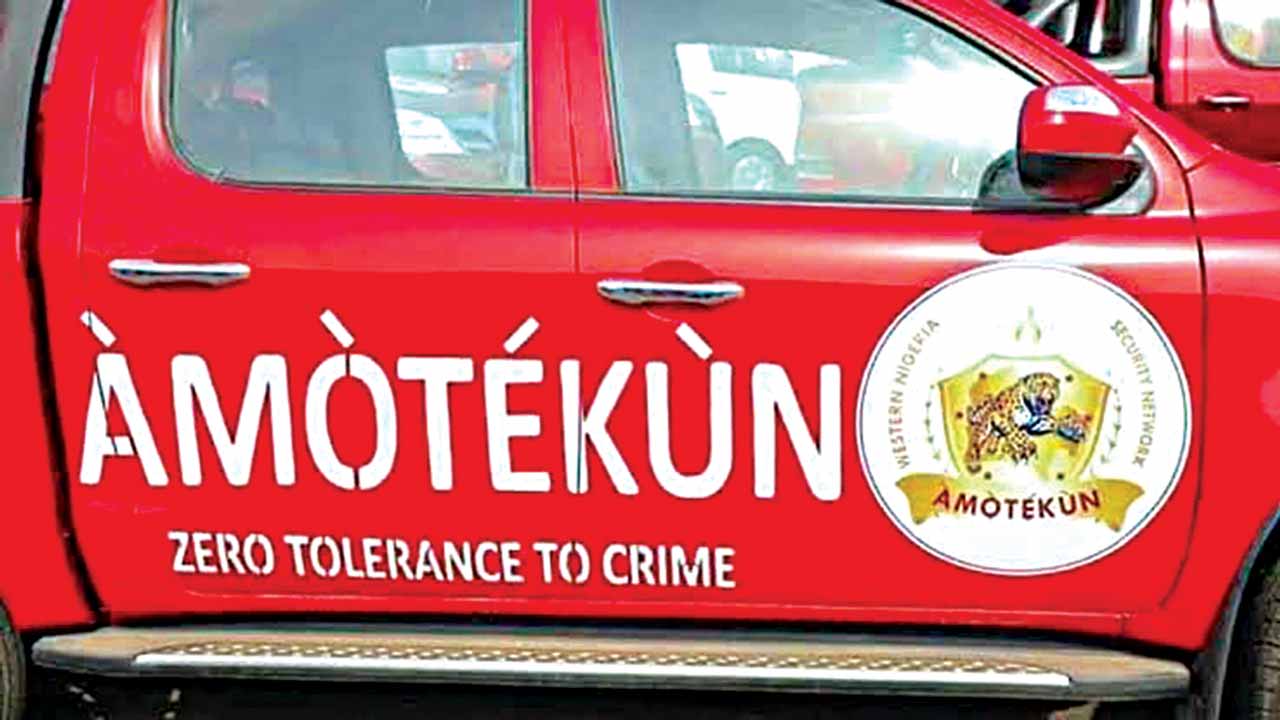
Amotekun eliminates two suspected kidnappers in Oyo

By Muhammadu Sabiu

Two suspected kidnappers have been reportedly killed by men of the southwest security outfit, popularly known as Amotekun, in Iwajowa Local Government Area, Oyo State

The state Commandant of Amotekun, Olayinka Olayanju, told journalists that the kidnappers were killed during an operation by the Amotekun security outfit on Friday, July 30.

HumAngle, an online newspaper, quoted him as saying, “It is true. There was an operation yesterday afternoon.

“With the support of local vigilantes and hunters, we killed two of them,” he added

Recall that reports indicated that the kidnappers launched an attack on Iwere Ile town on Friday in a failed attempt to abduct some community residents. Officers of Amotekun engaged the assailants in a gun duel and eliminated two of them.

Killings and kidnappings are not a threat only in Northern Nigeria—the southwest is also badly hit by the menace.

Mr President, please, let them go!

By Muhammad Tsaure

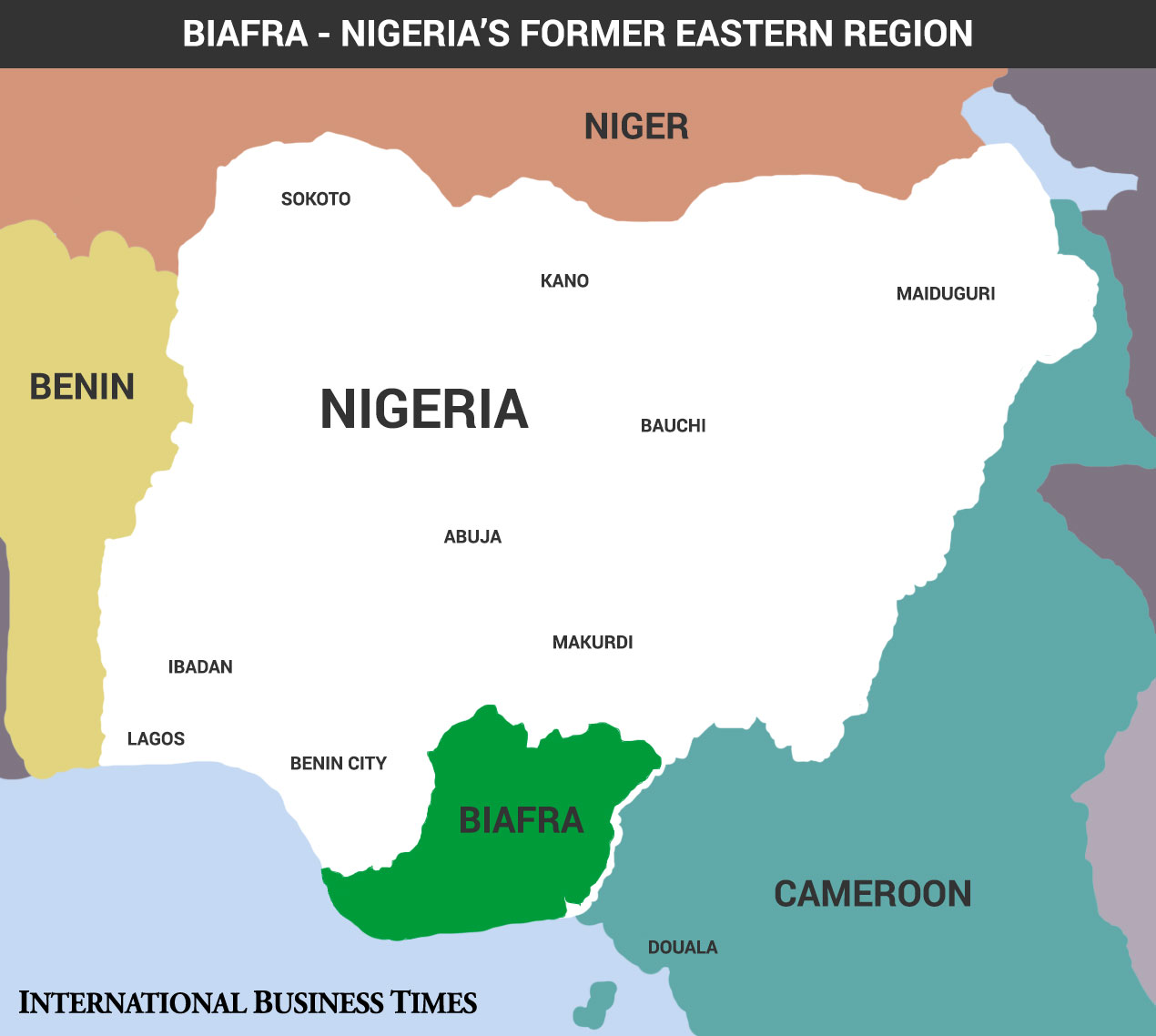
The Biafra saga is no longer South East or South-South issue; instead, it has culminated into something more devastating and absolute hatred to Buhari in particular and Northern Nigeria in general.  I garnered series of experiences primarily based on the discussion I held with a significant number of people from the southeastern region. I learned from them that they mainly think the North doesn’t want them to leave the union because the proportionate percentage of the country’s GDP comes from their region. Thus, if they secede, the North will be left bankrupt and nowhere to turn to.

Unknown to many of those people, this thought is nothing short of ignorance about the exact nature of Northern Nigeria. The North is endowed with whatever a country needs to survive, prosper and develop. We are not parasites, as they claim. But, if they want to go, please, let them go in peace. Nigeria doesn’t necessarily need Igbos to survive.

The North has come of age now; we can fend for ourselves and don’t need any region to live and survive as a country. Whoever wants to go, let them go. The North has treated Igbo people with dignity, love and leniency. The entire Biafra States are not up to Kaduna State in terms of population as well as geography.

In 2015 I was at the Niger-Delta University (NDU) at Wilberforce Island for a conference organised by the Literary Society of Nigeria. After presenting my research paper entitled “Diaspora Literature: A Protest Literature or Romanticism?” We went along with other colleagues to Yenagoa (the capital city of Bayelsa State) to explore or otherwise become a group of tourists. But, to my amazement, the entire Bayelsa State is not up to Bichi local government area in Kano or Funtua local government of Katsina State. Yet, they have three Senators; representing Bayelsa Central, Bayelsa West and Bayelsa East and five Members House of Representatives, and one minister of State on Petroleum.

The conference lasted for six days, and I visited the entire eight (8) local government areas of Bayelsa State. You hardly believe whether or not people are living in some of these local governments. Houses scattered, each community has its language or dialect.

The same week I came back home, I went to Bichi local government of Kano state to verify my assumption or guess. On reaching there, the conclusion I had to make was that Bichi local government is far larger in terms of population, buildings, and whatever one could think of than Bayelsa State. And nobody in the North ever complains about that.

Muhammad Tsaure is the Principal of Government Secondary School, Tsaure. He can be reached via 76muhammadtsaure@gmail.com.

Why are northern players always absent or underdogs in the Nigerian national team?

By Salisu Uba Kofar-Wambai

It is very mind-blowing to view a national football team that ideally suppose to possess the quality of national outlook looking so sectional and tribal. Unfortunately, for quite a long time, the Nigerian football national team has been dominated by only what we called “southern players” at almost every level.

One will wonder why the utmost and utterly lopsidedness? After all, with its advantages, thanks to its vast population over the South, northern Nigeria has the upper hand to have more visibility in such national assignments. However, the reverse is always the case. Is that signifying that the northern folks lack interest in sports, especially football? Or does it mean that the North is consciously hiding its light under a bushel? NO! 

If one wakes up at dawn in northern cities and towns, the young, agile athletes are often the first people to meet exercising to their respective football pitches.

Moreover, the geographical advantage in terms of the landmass, with all the potentialities of its flatness, accurate for football arena and pitches against terrain nature and scarcity of southern land is another pointer that ought to have shot north ahead.

It is an indisputable fact that if you take around northern states, you will invariably discover that numerous football clubs are established in several places in the region. You will find players who can match the skills and talents of Messi, Ronaldo, Zidane, Figos, but all – or most – go nowhere. They mostly played in their small villages and ended up uncelebrated.

In Kano alone, the heart of the North, there are more than thousands of clubs playing in different levels and capacities. The Sports Ministry is, year-in-year-out, organising leagues for these clubs from league A to Z. These clubs produce young talents that can play at every level of football worldwide.

With globalisation and communication technologies taking centre stage of our lives, if one goes to viewing centres, where foreign leagues matches are shown, the story and impression one will get is that football has become part and parcel of our youths’ routine. It’s now popular culture. Football is always the topic of discussion on the lips of northern youth. Therefore, the football obsession comes in both ways – theoretical and practical, respectively. But why northern players are almost absent or underdogs in the national team?

And again, with football now going lucrative venture that quickly shoots up people to billionaire charts, with the abject poverty bedevilling the north and youth joblessness, sports can do a lot towards alleviating these monsters if taken significantly.

The central question is why many a time Kano clubs are the favourites and always win all Nigerian secondary schools? I think the appropriate answers to these questions are:

The North should embrace sports as a way of livelihood like its southern counterparts and encourage its youth to put in their best. The North should also give them support in terms of mentorship, send people of interest, read coaching courses, and, of course, financial assistance. Our well-to-do and government should facilitate our talents to get contracts in Europe through agents that secure clubs for players.

Our soccer administrators should make it compulsory for every coach vested with the responsibility of forming teams, especially in the under-17 and under-20, to always go round Nigeria for the players’ selection process. In most cases, those coaches sit back in their regions, select players from the South because they have already stereotyped northerners as worthless in that respective. And it is mostly the players of these levels that graduate into senior national teams levels and secure lucrative contracts to play in the prestigious leagues of Europe.

Northern youth should also try to go off weeds smoking; it is unfortunate to see a talented footballer and later find out that he’s a weed smoker. Most of them end up without achieving anything for obvious reasons. They should equally try to finish their secondary schools and be ready to go anywhere to play and show their resilience.

And above all, parents should pray for the guidance of their kids.

By doing this, I think the North will avoid the situation we are currently experiencing where northerners are a dot in the circle in the team of players representing Nigeria in the ongoing Olympics games in Japan.

Salisu Uba Kofar-Wambai is a PhD student at the Department of Mass Communication, Bayero University, Kano. He can be reached via salisunews@gmail.com.

A pointer to a tough post-2023

 As we move closer to 2023, when power may be shifted to the South, social and political events point to a bleak future for the North. The North/South relationship is at its lowest level; tension is growing by the day, the body polity is being heated, and behind the scene, enemies of the country are planting the seeds of animosity. 

A bad omen is set for a bleak 2023 early this month when the Southern governors met in Lagos. Their communique strongly called for a power shift to the South come 2023. The governors had forgotten that leadership rotation was the brainchild of the North, that it was a political concession meant to heal old wounds following the June 12 political turmoil. They also forgot that when President Umar Musa died two years into his first term, the same South flouted the power shift arrangement. Former President Jonathan openly said this section of the country hated him because they said the power shift arrangement be honoured. 

Two recent social unrests define the Noth/South relationship and the political tension that’s setting. First was a disagreement between a Northerner, tomato seller and a Yoruba woman that degenerated into killings and displacement of mostly Northerners in Ibadan. Then came the IPOB’s sit-at-home order in the South East, where ethnic persecution of the Northerners ensued. Many were killed and hundreds displaced.

Recently, there seems to be a collective animosity towards the North and whatever the North represents. The problem with many Nigerians is that they can’t differentiate between elitism, elitist tendencies and the massive social gaps between the two classes. Historically, these same elites from either side of the divide have been known to exert elitist solidarity in perpetuating their own interests, in the process, alienating the masses. 

Most of these Southern grievances emanate from skewed political appointments by President Buhari. They forget that Buhari’s government is the reincarnation of Jonathan’s. Once, Air Marshall Alex Badeh, Major General Minimah, Air Vice Marshall Amosu were chiefs of defence, army staff and air staff, respectively. Only Admiral Jibrin was from another faith. Moreover, the President, Secretary to the Government, Senate President, Speaker of the House of Representatives, Minister of Finance were from the same faith. The same with the ‘Kitchen Cabinets.’ Remember the powerful economic team? Hausas say ‘idan ɗan maye ya manta…’

Granted that President Buhari’s government suffers from poor public relations from the President himself to his public relations team. So also was Jonathan. Towards the end of 2014 and the beginning of 2015, shortly before the general elections, Jonathan and his wife, Patience, went to churches in Abuja and South East preaching the gospel of hatred. I am not condoning nor defending the present arrangement, far from that; I am reminding us about the past lest we forget. 

The recent Afenifere political blunder is a clear pointer that Southerners would politically persecute the Northerners when power is shifted to the South. Afenifere strikes intentionally and timely to cause disaffection. Like Chalie Hebdo, they know that to Muslims, Prophet Muhammad (SAW) is the centre of gravity; he’s the Prophet, the Divine link, the undisputed spiritual leader, the guide, the intercessor, the light, the mercy and blessing to humanity. To the Muslims, Prophet Muhammad (SAW) is the best that could happen to the world. Yet, they intentionally came out to hurt feelings and cause disaffection.

They claimed to be liberals, but where’s the so-called liberalism when you lack empathy? Where’s the so-called freedom of expression when it overlooks inclusion ànd pluralism? Where’s the so-called free press when it can’t draw a line between the intellectual identification of feelings, sensitivity, thoughts of a people on the one hand, and on the other hand, the subjective urge to exhibit petty tribal solidarity?  

What Afenifere does is self-immolation. This is because there’s no ethnic group in Nigeria that’s socio-culturally cohesive, an ethnic group that’s equally infiltrated by the two major religions like Yoruba. Religious consciousness is new to them. Now the Yoruba Muslims would undoubtedly realise that Afenifere doesn’t represent them. Thus, setting an unprecedented social trajectory of an ethnic group stratified along religious faultline. It would be the worst-case scenario, for this would divide families, friends, and social groups along religious lines as is found in the North, the root cause of social unrest.

The North may have a majority in the service chiefs and defence, yet they can’t secure the North from the clutch of marauding bandits. We have the minister of finance who can’t lessen the Noth’s skydiving poverty! 

As 2023 draws closer, it seems, whoever is selected to be president from the South, there may be the tendency of political persecution of the North, and the basis of this would be justified on the failure of the current leadership to stabilize the region. When finally we demand attention, they would respond that our kin couldn’t give us what we demand from them. For now, the sociopolitical trajectories portend a bleak future. But for now, only time will tell.

Salisu Yusuf can be reached at salisuyusuf111@gmail.com.

‘North needs the likes of The Daily Reality’ — Com. Muhammad Garba

Being the only non-profit oriented media organisation focusing primarily on issues and problems bedevilling northern Nigeria, The Daily Reality is a dream comes true.

During a courtesy call by The Daily Reality newspaper members to the Kano State Commissioner of Information, Hon. Muhammad Garba, in his office on Wednesday, 13th July 2021, the commissioner expressed his happiness, adding that:

“The concept of The Daily Reality is very commendable. We really appreciate your effort. This shows that you know what is happening [in this country and beyond]. The only thing we can add is to pray to Almighty Allah to sustain your effort. Honestly speaking, every person who is abreast with what is happening in Nigeria knows about this gap you come to bridge. Media shouldn’t be seen as the sole affair of politicians. It is for all. You can invest in the media not just to make money but also to protect your people, your business, ideology or to champion a certain cause like this thing you are doing. Of course, the media business is challenging. It takes time before it yields the desired result. This is why our people (Northerners) prefer such businesses they will invest today and harvest [profit] tomorrow.”

Recalling the challenges he faced in convincing Northern politicians, business moguls and other influential personalities to invest in media, Hon. Garba narrated that:

“When I was the president of the Nigerian Union of Journalists (NUJ), these were the issues I kept presenting to our leaders, but unfortunately, some of them thought that media investment is for Southerners alone. I visited many politicians, business people and elder statesmen, but they dumped me. Until today, our people don’t understand the power of media and the danger of living without media protection. Sadly, every month, many state governments and business tycoons in the North pay some media giants in the South huge money to support their programmes, businesses and give them favourable coverage. Yet, they criticise and condemn some of their actions. Though that is the duty of the press. Now, where is our New Nigerian? Who failed New Nigerian? Therefore, I urge you to expand your activities to other states. Be objective, fair, neutral and avoid politicising issues. The North needs your help. Our people need your help. We will give you the necessary support,” said Hon. Commissioner.

Southern governors should prepare for boomerang

By Muhammad Mahmud

Even as the nation is struggling to bring an end to the Boko Haram crisis, which could’ve been effectively tamed but for the inane and complacent manner the leadership of some Northeastern states treated the issue initially, we could not but gape at the myopic decision of the Southern governors to fly the kite of moral support to their organized thugs who were recently suppressed by the authorities. 

At their meeting on Monday, July 5 2021, the southern governors “resolved that if for any reason security institutions need to undertake an operation in any State, the Chief Security Officer of the State MUST be duly informed.” (Emphasis mine).

It is unmistakable that the governors were referring to the recent success recorded by the nation’s security agencies in arresting many IPOB members, including their “supreme leader” Nnamdi Kanu, and the arrests at the residence of a tribal warlord, Sunday Igboho.

One cannot but wonder how on earth these governors will be so insensitive to the flights of their people. The gory stories emanating from the arrested members of IPOB, where 2000 fresh skulls of innocent southern girls were targeted and how lives of fellow southerners who never aligned themselves to the “cause” were to be wasted, are enough to galvanize the governors into taking stern action against those terrorists. But to the shock of the whole nation, these governors, who never even found it worth their time to give a one minute silence to mourn souls of the ten brutally killed girls, have the temerity to demand that they must be informed whenever the criminals are to be arrested. 

Perhaps the support for IPOB and Igboho militia by the southern governors has everything to do with what Rochas Okorocha said, in an interview with BBC, that it was the fear of what the IPOB boys could do to them that stops Igbo elders from speaking against them. This gives a picture of caged and gagged elders who have no option but to simply watch as the boys took their entire region into uncertainty. This means that Kanu’s group has evolved into a monster that no Igbo could dare criticize even from afar. 

Maybe the southeastern leaders fear that what happened to the four Ogoni chiefs could befall them if they dare oppose IPOB. On May 21 1994, four Ogoni chiefs were beaten to death by angry Ogoni youths. The victims’ names were Edward Kobani, Alfred Badey, Samuel Orage, and Theophilus Orage. Their crime was that they were suspected to be against the MOSOP. Perhaps the Igbo leaders fear the Ogoni chiefs’ treatment from IPOB; that’s why they are backing them. 

But suppose Igbo elders are so terrified with the IPOB to the extent that they are hypnotized into submission, or they are so emotionally sympathetic to the “cause”. In that case, it is very dumbfounding that the south-southern governors couldn’t see the danger of backing IPOB for the simple fact that they (IPOB) made it categorically clear that any non-Igbo will be, and shall remain, a third-class citizen in the region. Suppose the south-western governors found it strategically right to support IPOB in supporting their tribal warlord, Igboho; what exactly is in it for the south-southern region? Their governors seem to be either coerced/harangued into submission or too foolish to figure this out for their people.  I believe if a south-southerner like Reno Omokri is among the governors, he will object to this. 

It appears as if the southern leaders are no longer in control. They seem to be tele-guided by the prevailing emotions in their regions instead of playing the leadership role of directing towards a better future for their people. 

Notwithstanding some of their failures and the resentments of their people, Northern elders are more in control and seem to be leading. When some northern youths issued a quit notice to the Igbos, in a reaction to the IPOB’s agitation, the leaders of the north rebuffed them. Governor El-Rufa’i even ordered their arrest. When some northern youths initiated “Shege Ka Fasa” as an answer to south-western governors’ backed “Amotekun”, the leaders of the north stopped them, and they complied. Even Boko Haram, with their firepower, did not frighten northern leaders into opposing the federal government to support them!

If the southern leaders are publicly backing their criminals with a kind of moral encouragement by attacking the federal government’s crush on them, they should, rest assured, know that it will boomerang. They should have taken lessons from what happened during the early stage of Boko Haram in the northeast.

During the initial stage of Boko Haram, they enjoyed massive support from their people. This is partly because they appeal to their people’s sentiments. All they need is to list eloquently, in a highly sentimental manner, the ills and backwardness that bedevilled the people in addition to hunger, poverty, diseases etc. and finally quote relatively congruent verses of the Qur’an and sayings of the Messenger of Allah (peace be upon him) to drive home their point that “Jihad” is the only way out and they, as the conveyors of that message, are the ones to lead. It was full of promises of a utopian state that will replace the current dystopian state. And that appealed to many, more especially as most of the movement members were children of the elite. What a perfect gulp of toxic will that be on the gullible, the strata of his/her social status notwithstanding.

It was only after the actual road to Sambisa was taken that the people realized, albeit too late, how wrong they were and how naive they behaved.

Now the IPOB and the tribal warlord, Sunday Igboho, are getting the support of the southern governors because they appeal to the sentiments of regionalism and tribalism (or drum up support for their political agenda), only time will reveal the sour fruits that will shower down. I hope some leaders will be blunt enough to put aside political correctness and act appropriately before that happens.

Malam Muhammad writes from Kano. He can be reached via meinagge@gmail.com.