Social Media

Twitter plans to charge $20 per month for verification badge

By Ahmad Deedat Zakari

The social media app, Twitter, plans to start charging $20 dollars per month for users whose Twitter accounts are verified.

According to reports by The Verge, verified users would have 90 days to subscribe or lose their blue tick badge.

This is coming after Elon Musk completed the acquisition of Twitter. It is believed to be amongst the many policies expected from Twitter’s new owner.

Musk has been critical of Twitter’s verification process before acquisition. He announced in a tweet on Sunday, October 30, 2022, that the the entire verification process is currently being revamped.

“The whole verification process is being revamped right now ” He tweeted

Employees working on the new features were reportedly given a deadline of November 7 to complete their task or get fired by Musk.

Ethics of posting death news on social media

By Dr Aliyu Dahiru Muhammad

My brilliant friend Dr Muhsin Ibrahim, who tries to mentor and guide many followers on social media, raised a concern about how some people announce death news on social media. I found the topic interesting, especially the responses it generated. So, I contributed my points of view which I am reproducing here for the benefit of others.

1. I think we should learn the ethics of announcing death to a relative and the general public. For instance, posting the news on sick beds or even a corpse picture is unethical and unprofessional.

2. We should be aware and sensitive whether we are the ones to inform others or not. For instance, I post this kind of news when the death directly affects me, a relative, close friends etc. However, some elders represent their areas and people respect and trust them.

3. We should be mindful of the time and how we announce if we are to do it. For instance, it was reported that one of the wives of the Prophet’s companion, whose son died, prepared him and dressed well before her husband came back. When he returned, she brought him food and had a marital relationship with him. After that, she asked him if someone kept trust in him and he now comes to take it, would he mind? He said no, it belongs to the owner. She now told him that Allah, that gave us our son, had taken him back. He now took a deep breath and started asking why you appeared the way you did until they had so and so relationship. She said to calm him down and allow him to submit easily to Allah’s will. Interestingly, they got another son who excelled among the companions in that relationship.

4. We should be ready and prepared, not panic always, and accept the sad reality. Since it’s the time of information and communication technology, and we use it for almost everything in our life, why not announce the death of our beloved ones? I rarely call on some people because after the closest relatives, neighbours and friends, as you have hundreds of contacts, it will be faster to let people know, and many people would tell you; I ATTENDED THE JANAZA because I saw your post. We know the benefits of praying for a person that passes away especially attending the funeral (Janazah) and seeking Allah’s forgiveness for them. We all want that, so there is no problem if we let people know with WISDOM.

5. We should pray even if we don’t type anything on a post, as Allah accepts a believer’s prayer. By so doing, we are actually attracting rewards to ourselves.

6. Since visiting the graveyard is difficult for some of us due to the situation we are in, the environment or other reasons, this may still remind us that death is inevitable. It’s coming to us all. It also sensitizes us to get ready and pray that it comes to us when Allah is pleased with us inshaAllah.

7. We should remember, one day, it’s ours, others will post, and we pray to Allah; whoever sees that, if he knows us, he will testify we lived a good life and have a good relationship with others and try to follow the teachings of our religion on all matters. May Allah forgive us, take our lives as faithful, and grant us your RahmaYa ArhamarRahimin.

Aliyu Dahiru Muhammad, PhD, wrote from Bayero University, Kano.

Suic*de: Measuring our well-being with pseudo scales 

By Lawal Dahiru Mamman

An attempt to kill oneself in response to a tragic or stressful situation is termed ‘attempted suicide’, while success in such an attempt is referred to as ‘suicide.’ This profoundly affects families, especially when such an attempt is successful, and when one survives, they battle other mental disorders.

For suicide not to be seen only as a storm in a teacup, the International Association for Suicide Prevention, in conjunction with the World Health Organisation in 2003, slated the 10th of September to annually commemorate what it termed ‘World Suicide Day’. Issues surrounding suicide are discussed with the hope of ending the horrendous act on the day.

This year’s event got me reminiscing on an incident in my neighbourhood three years ago where a nine-year-old girl in Primary 4 sent herself to the grave by hanging. What would have prompted her? This question continues to resonate in the minds of those unfortunate to see her hanging lifeless. 

Seven hundred thousand people commit suicide yearly, according to the world health organisation (WHO), with 70% occurring in low and middle-income countries. WHO’s country representative to Nigeria, Dr Walter Mulombo, said: “for every suicide, twenty (20) other people are making an attempt and many more have the thought to commit same.”

Ingestion of pesticides, hanging and firearms are said to be the most common method of committing suicide globally. In high-income countries, suicide has been associated with mental disorders like depression and alcohol use disorder. In contrast, in low-income countries, life problems like financial crises, relationship break-ups, chronic pain and illness take credit – these are primarily associated with adults.

On the other hand, children may become suicidal due to poor performance in school, coupled with pressure at home to do better, bullying, losing friends, etc.

Thanks to civilisation and technological advancement, people have become more and more isolated. At the same time, others try to emulate the more often pseudo lives of others they see on TV or social media. Mr A wants his child to be as bright as the child of Mr B; Mrs X wants her husband to provide the luxury Mr Y is providing for his family; Mr M wants his wife to be as dazzling as the wife Mr N, the list goes on. All these think this way while still battling financial crises and others. 

While the authority is setting up mental healthcare centres, and organisations are trying to do the same at workplaces, families need to start being the haven they should be for their members. Parents should understand that failure for children is just okay when they have given their best while helping them be the best version of themselves.

Generally speaking, marriages, relationships, education, intelligence, social status, and all that encompasses life should not be measured using the yardstick we see in the media. As the saying goes, not all that glitters is gold.

Nigeria is a place where religion is held in high esteem. Therefore, religious leaders could take it upon themselves during sermons to discourage suicide. The haves should remain humble and thankful for their possessions, while the have-nots should not despair for whatever position they find themselves in; others aspire to get there.

Dale Carnegie, an American writer, stated, “It is not what you have, who you are, where you are or what you are doing that makes you happy or unhappy. It is what you think about it.” Understanding this will go a long way in curtailing suicide.

When all hands come on deck, we would be “Creating Hope Through Action.”

Lawal Dahiru Mamman, a corp member, writes from Abuja and can be reached via dahirulawal90@gmail.com.

Kogi man launches social media platform, seeks local endorsement

By Ishaka Mohammed

A 37-year-old man from Kogi State, Yusuf Shuaib, has launched a social media platform to bridge the gap between Nigerians and owners of social media companies.

The platform, named Ayema Social, was completed in June 2022, but the application was officially launched in September.

Yusuf holds a bachelor’s degree in Islamic Studies from Prince Abubakar Audu University (PAAU) (formerly Kogi State University), Anyigba, Kogi State. He started his technology journey during his service year in Kano in 2009 when he enrolled in an information technology diploma.

In a chat with The Daily Reality, Yusuf revealed that he wanted to do something to change the popular belief that Islamic studies graduates can only become teachers or lecturers. However, his interest in becoming a developer had barely sparked off until after observing the role of social media in the 2015 general elections. 

Concerning the number of users so far, Yusuf said Ayema Social had recorded over 260 users within its two weeks of launch. “It was made public earlier this month [September] after being subjected to a series of tests for over two months, and our target is a minimum of a million users by December, God willing,” he said.

He also revealed that the application had been endorsed by some dignitaries, including the member representing Ankpa/Olamaboro/Omala Federal Constituency, Honourable Abdullahi Ibrahim (Halims); the executive director of special projects at Nisa Premier Hospital, Abuja, Mr Tijjani Baba; and a senior officer of the Nigerian Air Force, Group Captain Ishaka Yakubu.

The founder, however, disclosed that only Android phones support the application version at the moment as he is still sourcing money to work towards making it accessible to users of Apple phones and iPads.

Regarding the security of users, Yusuf told The Daily Reality that the platform, which is named after his mother, Ayema, is bound by extant law global standards for data security and confidentiality, adding that the company is also in technical support partnerships with both Rayjoh Global Resources and Logical Address Limited.

Ayema Social shares many features with Facebook, and users can opt for either the website www.ayema.ng or its Android application version available on Google Play Store.

FACT-CHECK: How true is the claim that 90% of Northerners are not on social media? 

By Muhammed-Bello Buhari

Claim: Atiku, Nigeria’s former Vice President and the Peoples Democratic Party presidential candidate, Atiku Abubakar, claimed that 90 per cent of northerners are not on social media while responding to a question in an exclusive pre-recorded interview on Arise TV aired on Friday, July 22.

Atiku made the claim, suggesting that the Labour Party cannot make inroads in northern Nigeria. He played down the possibility of Labour Party’s presidential candidate, Peter Obi, causing an upset to his presidential ambition during the next year’s general elections.

His words:

“It is very difficult to expect a miracle to happen simply because Peter Obi is in the Labour Party. After all, they were saying through social media [that] they had more than one million votes in Osun state.

“But how many voters turned for the Labour Party? And then again, mark you; you’re talking about social media. In the north, 90 per cent of our people are not tuned to social media.”

With this claim, social media was awash with all sorts of counterclaims. Nigerians on Facebook and Twitter knocked the former vice president out for his comment, alleging that such a claim is untrue.

Verification:

According to the Digital Report 2021 by Datareportal—one of the world’s most trusted sources of social media data, insights and trends—the number of social media users in Nigeria was equivalent to 15.8% of the total population (208.8 million) in January 2021. This means there were 33.00 million social media users in Nigeria in January 2021.

This same report recorded the total population of the northern region to be 128.17 million. This is also in line with the National Bureau of Statistics figures on Nigeria’s demographics, using data from the National Population Commission.

So assuming that the divide of the social media users in Nigeria between the south and the north is 50-50. i.e. of the 33 million users, 16.5 million are northerners. This means that of the 128.17 northerners, only 12.9 per cent are on social media, representing 87.1 per cent are not on social media.

And given the apparent disparities in internet usage between the north and south due to market size, urbanization, economic development, income, telephone density and employment, which are the major contributory factors to the divide as reported in the research conducted on the digital divide in Nigeria, there’s at least a 60-40 percentage divide between the south and north in terms of internet and social media usage.

As such, 40 per cent of Nigeria’s 33 million social media users is 13.2 million. This means that of the 128.17 northerners, only 10 per cent are on social media, which also means that 90 per cent are not on social media.

Verdict: Atiku’s claim that 90 per cent of northerners are not on social media is backed up by data. Findings have shown that only 10 per cent of northerners are on social media. Therefore, the claim is valid.

Muhammed-Bello Buhari is a freelance fact-checker based in Kaduna and can be reached via embbuhari@gmail.com.

Young man reportedly dies after donating kidney to ailing mother

By Ahmad Deedat Zakari

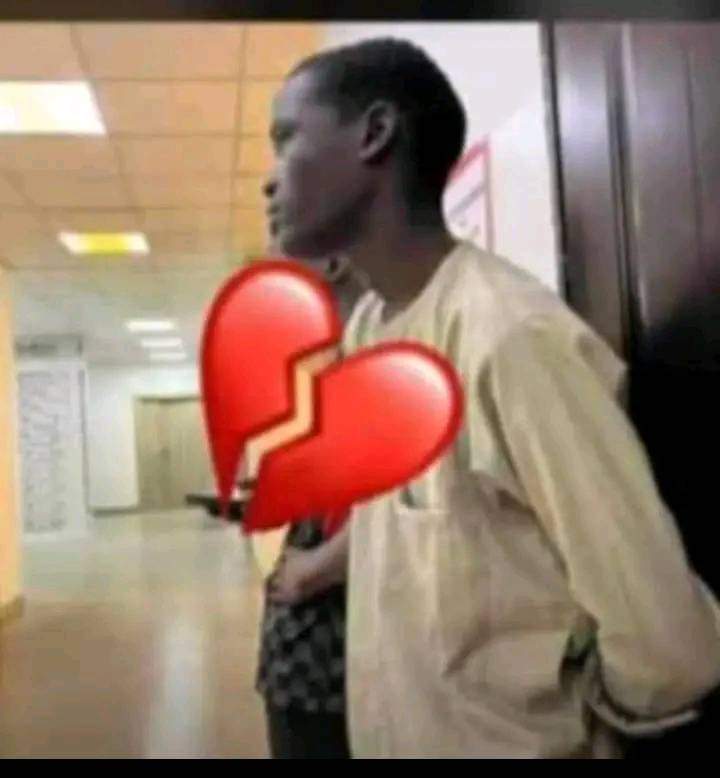
A young man reportedly passed away after donating kidney to his ailing mother who needed a transplant.

According to Ahmed Muntaqa, who announced the young man’s demise on Facebook, the mother is doing well after the transplant but the young man died.

“This young man died shortly after donating kidney to his mother. What a heart touching death. 💔💔The mother survived the surgery and she’s alive as we speak now. May the soul of this gentleman rest in peace and may Jannatul Firdaus be his last abode..” Muntaqa wrote on Facebook.

The identity of the donor who is now reportedly dead is sketchy at the time of fielding this report, however, many have taken to their social media account to pray for the dead donor and commend the wonderful gesture.

Baffa Sanusi, a lawyer who shared Muntaqa’s post prayed that God should give people the strength to take care of their parents.

“Ya Allah give us the strength to take care of our parents, like they took care of us when we were little,” Sanusi wrote.

Arewa Media Problem: Three major fundamentals

By Tijjani Muhammad Musa

Our primary problems in Northern Nigeria (Arewa) as far as the media landscape is concerned are a lack of support and patronage for our own media outlets, shallow-mindedness of our Arewa celebrities and self-centeredness of our social media influencers. Let me briefly explain these.

When a media outlet is floated, whether physically or online, many of our intelligentsia would choose to ignore it and refuse to contribute to its development, survival or sustenance. Some even find it offensive to see their writings featured on such platforms. So how can you imagine them making any effort towards reaching more people via such channels with their brilliant ideas?

This lack of encouragement by the intellectual elites of the Arewa region eventually quashes the zeal of the owners of the medium. So they end up laying their medium to rest, and nobody bothers to ask them why.

Next, our Arewa celebrities are primarily uneducated, digitally unsophisticated or advanced in thinking enough to realize the importance of their newfound status.

Instead of leveraging their popularity to drive home the concerns and aspirations of their people, their region and religion across the country or even globally, most of them just let the star status get into their heads. Thus, they end up as an ill wind that blows nobody good.

Finally, our Social Media influencers, most of them except for a minute few, are more or less acting like local champions, without any focus on using their influence to change the mindset of their followers.

These so-called influencers are constantly striving to create and upload content that only keeps the fire of attention from their followers burning, thereby getting them more and more Likes, comments, and emotes.

Very few among the influencers bother to target being a voice of the masses they represent. In contrast, their voices could be heard echoing the primary issues that concern their embattled region on a national and global scale so that something is done about it.

And they also would refuse to echo and make a trend of burning matters that affect their people, region and religion. A typical example is the acquisition of PVC for the 2023 elections. Have you seen any Arewa Social Media influencers making it a topic of importance? Almost none!

That attitude is unlike that of their counterparts across the divide and globe, who would each lend their support and credence to any trending topic of local, state, regional, national and global concern. Create and add their voices to any other SMI’s effort, so it assumes a loudness nobody can ignore.

Ours would instead choose to write or talk about what will keep their fans entertained, no matter how mundane that is.

Tijjani Muhammad Musa, alias Poetic Tee, is the Chairman of the Association of Nigerian Authors (ANA) Kano Chapter. He can be reached via mmtijjani@gmail.com.

2023: CITAD launches hate speech monitoring team

By Muhammad Aminu

The Center for Information Technology and Development (CITAD) has launched a hate speech monitoring team to monitor and record politically inclined cases of hate speech on social media as the 2023 general elections approach.

In a press briefing in Kano, the head of monitoring team, Malam Hamza Ibrahim, said the team would provide database for incidents of hate speech in Nigeria.

Mal. Ibrahim noted that monitors were trained to monitor utterances in both English and the Nigerian languages on the Nigerian political process leading to the 2023 election.

“The essence of the monitoring is to record instances of hate speech and sensitise stakeholders about them and devise strategies to counter them,” he said.

According to him, hate speech on social media when left uncountered could impede unity and diversity of Nigeria as a country.

He cautioned political actors to avoid engaging in hate speech in their electioneering as many elected political actors engaged in it during the 2019 elections.

“In 2019, politicians used hate speech for political gain and incited violence. Government elected officials used hate speech.

“Politicians need to be cautioned. We advised that as we approach the 2023 election, politicians’ utterances should be free from inciting violence and hate speech.”

He called on scial media influencers, bloggers and the media to support in countering hate speech which he described as “a cancer that must be eliminated.”

He regretted that youths were mostly used hence targeting the youths in CITAD’s intervention against the menace of hate speech.

He further revealed that June 18 was set aside by the United Nations to observe countering of hate speech. That signifies the serious attention it’s getting because of its roles in conflicts that could lead to loss of lives and displacement.

“It’s timely recognition by the UN because many lives were lost due to conflicts induced by hate speech,” he noted.

The team unveiled a publication titled “Extinguishing Hate Speech: Roles for Politicians, Religious and Community Leaders” to help guide key stakeholders to ensure peaceful election in 2013.

“It is based on researches across Nigeria with recommendation for political, religious and community leaders on how prevent and tackle hate speech,” he concluded.

In another development, CITAD converged a roundtable on the draft code of practice released by the National Information Technology and Development Agency (NITDA) to guide operations of major social media platforms in Nigeria.

Experts argued that while some parts of the codes were needed to checkmate the excesses of the giant tech, others were aimed at stifling freedom of speech and expression.

They called on Nigerians to have their inputs before the draft codes were operationalized in the country.

Bauchi polytechnic suspends staff for supporting Tinubu on social media 

By Muhammad Sabiu

Raliya Kashim, a senior staff member of the Bauchi State-owned Abubakar Tatari Ali Polytechnic, has been suspended by the institution’s management for supporting All Progressive Congress (APC) presidential candidate Asiwaju Bola Tinubu.

Maimako Baraya, a spokesman for the polytechnic, signed the letter announcing the suspension.

The main opposition, the Peoples’s Democratic Party (PDP), is in charge of Bauchi State.

Kashim works as the polytechnic’s deputy general manager of consulting services.

She was aware of the state’s public service law prohibiting civil servants from participating in party politics, according to Mr Baraya’s letter.

Baraya was quoted to have said in the letter, “The employee recently posted videos containing campaign materials of the presidential and the governorship candidates of the All Progressives Congress (APC), which is a clear violation of the code of ethics for public servants.”

“We wish to assure the general public that there would be no sacred cow, and it will never be intimidated by the activities of political jobbers, fifth columnists and enemies of the state.”

SPECIAL REPORT: Arewa women and cyberbullying

By Uzair Adam Imam 

Cyberbullying against women is one of the lingering issues women face across social media spaces over time.

The menacing issue, however, has now escalated to become a global problem affecting women emotionally and chasing them away from online spaces.

The Daily Reality interviewed some women about the hazard. They recounted that the kind of messages they received from men were disgusting. 

The women decried that most of these disgusting messages often demand nude pictures or videos and propose love, irrespective of one’s marital status. 

This issue is most common on Twitter, Facebook, Instagram and WhatsApp, among other social media platforms. 

Zahra Madaki, one of the women interviewed, complained that social media is never an exciting place for women to go as cyberbullying exacerbates daily.

She stated, “Social media platforms such as Facebook and Instagram are very annoying nowadays. That’s why I decided to stop using them.

“Everyone is after love affairs. So, anyone will keep proposing for love as they see you online. It’s so annoying,” Madaki complained. 

On request for sex, pornography

According to Aisha Jibril, not her real name, women are victims of all naughty things on social media platforms today. 

She complained that some men request sex, and nude pictures or videos, as you begin to chat with them. The development, she said, distresses many women.

She stated, “there was a time someone on Facebook asked me if I ever watched pornography. I was shocked because, at that time, I didn’t know the meaning of the word. 

“I had to ask my elder sister what the meaning of the word was. Before I could respond to his earlier message, this man sent me a porn movie. 

“I shivered with fear that my phone nearly fell on the floor. I was terrified. I had never before that time had such an experience. I hardly slept that night,” Aisha said. 

Another source, Khadijat Muhammad Bah, also decried the menace, blaming men for being irresponsible in their relations with girls.

Bah said, “we ladies are seeing and reading all kinds of rubbish. Some men out there send nude pictures and always request nude photos.

“Some would insult and curse because you refuse to give them your contact. Some of them just want sex. 

“One day, I posted my picture on my story, and one guy said, ‘wow, those lips are for me’. And that was one reason that always stopped me from putting my picture on my story,” she lamented. 

According to a source who preferred not to be named, her sister once met someone on Facebook. Their relationship started as a friendship before the guy finally asked for sex, which later led to their breakup.

She said, “the guy kept pleading with her to come to his apartment. But she refused. We were surprised at how shameless this guy was.”

Someone keeps on disturbing me – Housewife

A housewife who spoke to The Daily Reality complained that someone kept disturbing her on social media.

The woman said she told the guy to stop chatting with her because she was married, but the guy turned a blind eye. 

She said, “This man started adding me to some irresponsible dating groups on WhatsApp. But, I thank God that through the help of my brother, we solved the issue and blocked the son of bitch afterwards.”

Another housewife complained that some men that chatted her up used to send her some porn photos, but she deleted them instantly.

She added, “these guys chat and comment on our posts anyhow. They tend to forget about our marital status. They forget that our spouses and relatives also see our online activity and would be sad to see such naughty and irresponsible comments under our posts. 

Cyberbullying: An unfortunate reality in dear need of mitigation

Dr Rukayya Aliyu, a senior lecturer at Bayero University, Kano, urged the technology firms that build these sites to act and make online spaces safe for women. 

Aliyu described the menace of cyberbullying as an “unfortunate incidence” in dire need of mitigation.

She stated, “Cyberbullying is an unfortunate incidence, but unfortunately, it is challenging to overcome because it happens on social media platforms, which are free and uncensored. 

“However, it can be managed to some extent with measures from the sites themselves, which can only be minimal.  The reality is regulation by the government might not be effective considering the lapses in regulating traditional media, to which the government has better control and access. 

Women ought to be responsible and mindful of their online activity 

Dr Rukayya also urged women to be mindful of what they post on social media platforms to avoid insults and indecent comments. 

She said, “on my take as a woman, it’s displeasing, but then fellow women should understand that most abuses come as reactions to our post and engagement with the platforms. Therefore, we should be responsible in our dealings and always be conscious that whatever goes on on any internet-connected platform is no longer personal. People have a right to their opinions. 

“If we don’t want to be abused or bullied, we ought to be responsible and mindful of our digital or cyber identities. However, we shouldn’t rule out that no matter how ‘decent’ or responsible our social engagements are, there are people who will still castigate, blackmail, abuse and bully us. 

“So before engaging, we ought to be conscious of the implications and be ready to surmount them through confidence and steadfastness in what we do,” Dr Rukayya added.